Image 1 of 6
1 / 6
Plant Reference
Brassica, Genus, oleracea, Species, var., Variety, sabellica, Variety, 'Vates', Cultivar,
- Genus & species
- Variety
- Cultivar
vates kale
Open-pollinated cultivar developed in the US (mid-20th century); the species B. oleracea is native to Mediterranean and Atlantic coastal Europe
SunFull Sun – Part Shade
WaterMedium
Overview
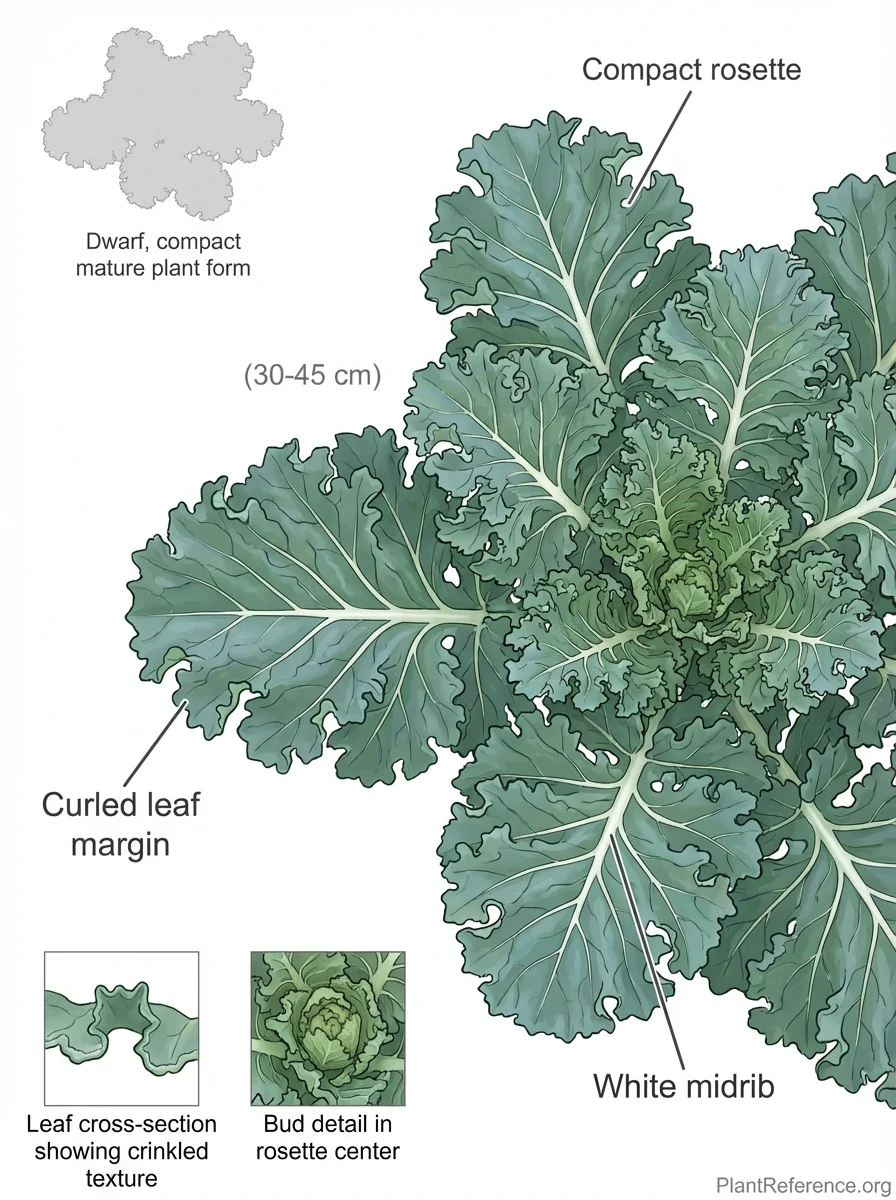
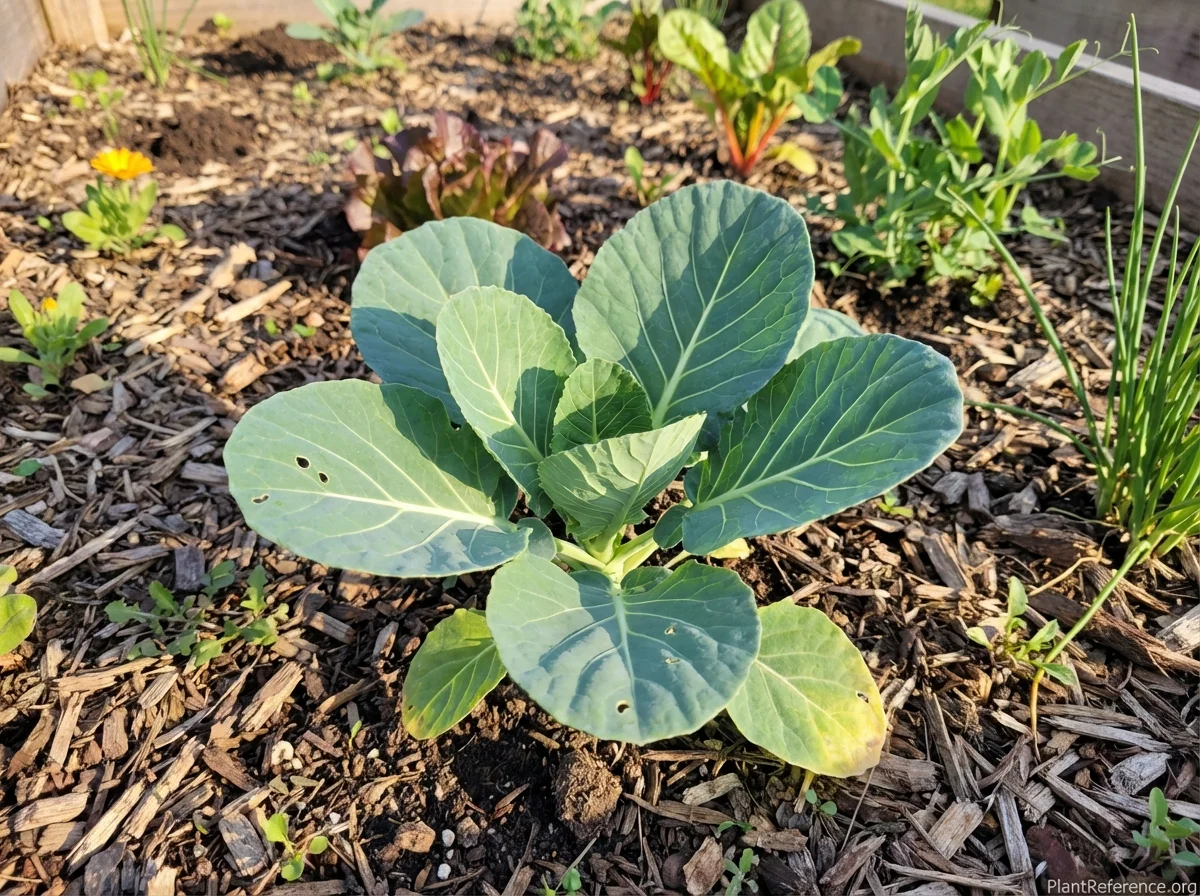
Brassica oleracea var. sabellica 'Vates' is Vates kale (Vates dwarf blue curled kale), a compact cool-season annual forming a low mounding rosette 12-16 inches (30-40 cm) tall and 12-15 inches (30-38 cm) wide. Deeply curled savoyed blue-green leaves 6-8 inches (15-20 cm) with prominent white midribs — the most compact of the common curly kale cultivars. In the mustard family (Brassicaceae). The botanical variety sabellica designates curly/Scotch-type kale within B. oleracea. Open-pollinated: seed can be saved (unlike the F1 hybrids Winterbor and Redbor). The dwarf habit (12-16 inches / 30-40 cm) distinguishes Vates from taller curly types like 'Winterbor' (18+ inches / 45+ cm). Develops purple undertones in cool weather. Cold-hardy to 20°F (-7°C) — the flavor and tenderness improve markedly after frost. Cool-season crop: bolts in sustained heat above 80°F (27°C). The curly leaves trap soil and insects more readily than flat-leaved types — wash thoroughly. Sow early spring through late summer. Harvest by cut-and-come-again starting at 25-30 days; full-size at 55-65 days. Contains goitrogens (reduced by cooking). Cabbage worms (Pieris rapae), aphids, and flea beetles are the primary pests. Deer-resistant. Non-toxic (edible crop). Full sun to partial shade. Annual. Growth rate is moderate.
Native Range
Open-pollinated cultivar developed in the US (mid-20th century). The species B. oleracea is native to Mediterranean and Atlantic coastal Europe.Suggested Uses
Grown in vegetable gardens, raised beds, and containers of at least 3 gallons (11 L). The most compact curly kale. Open-pollinated — save seeds. Cool-season. Cold-hardy. Deer-resistant. Non-toxic. Annual.How to Identify
Appearance
Size & Dimensions
Height1' - 1'4"
Width/Spread1' - 1'3"
Bloom Information
Detailed Descriptions
Flower Description
Bright yellow, 4-petaled (cruciform), in terminal clusters when boltingFoliage Description
Blue-green with prominent white midribs; deeply curled and savoyed (heavily ruffled); develops purple undertones in cool weather; 6-8 inches (15-20 cm)Growing Conditions
Sun Requirements
Requires 4-10 hours of direct sunlight daily
• Full Sun: 6+ hours of direct sunlight
• Partial Shade: 3-6 hours of direct sunlight
• Full Shade: Less than 3 hours of direct sunlight
Care & Maintenance
Care Guide
Full sun to partial shade. Rich well-drained soil pH 6.0-7.0. Cool-season crop — bolts above 80 degrees F (27 degrees C). Cold-hardy to 20 degrees F (-7 degrees C). Flavor improves after frost. Open-pollinated — save seeds. Curly leaves trap soil — wash thoroughly. Contains goitrogens. Cabbage worms, aphids, flea beetles. Deer-resistant. Non-toxic. Annual.Pruning
Harvest outer leaves by cut-and-come-again starting at 25-30 days (baby leaf) or 55-65 days (full size). Leave the central growing point intact. Remove bolting stalks and flower buds. Remove yellowed or pest-damaged leaves.Container Growing
Suitable for container growing
Minimum container size: 3 gallons
Toxicity
Non-toxicPlanting Guide
Planting Methods & Timing
Planting Method
both
Indoor Start
4 weeks before last frost
Direct Sow Timing
Early spring through late summer. Hardy to 20 degrees F (-7 degrees C).
Days to Maturity
55–65 days
Plant Spacing
12 inches
Companion Planting
Avoid Planting With
Botanical Flashcard