Image 1 of 3
1 / 3
Plant Reference
Brassica, Genus, oleracea, Species, 'Calabrese', Cultivar,
- Genus & species
- Cultivar
calabrese broccoli
Cultivar from the Calabria region of southern Italy; the species B. oleracea is native to Mediterranean and Atlantic coastal Europe
Overview
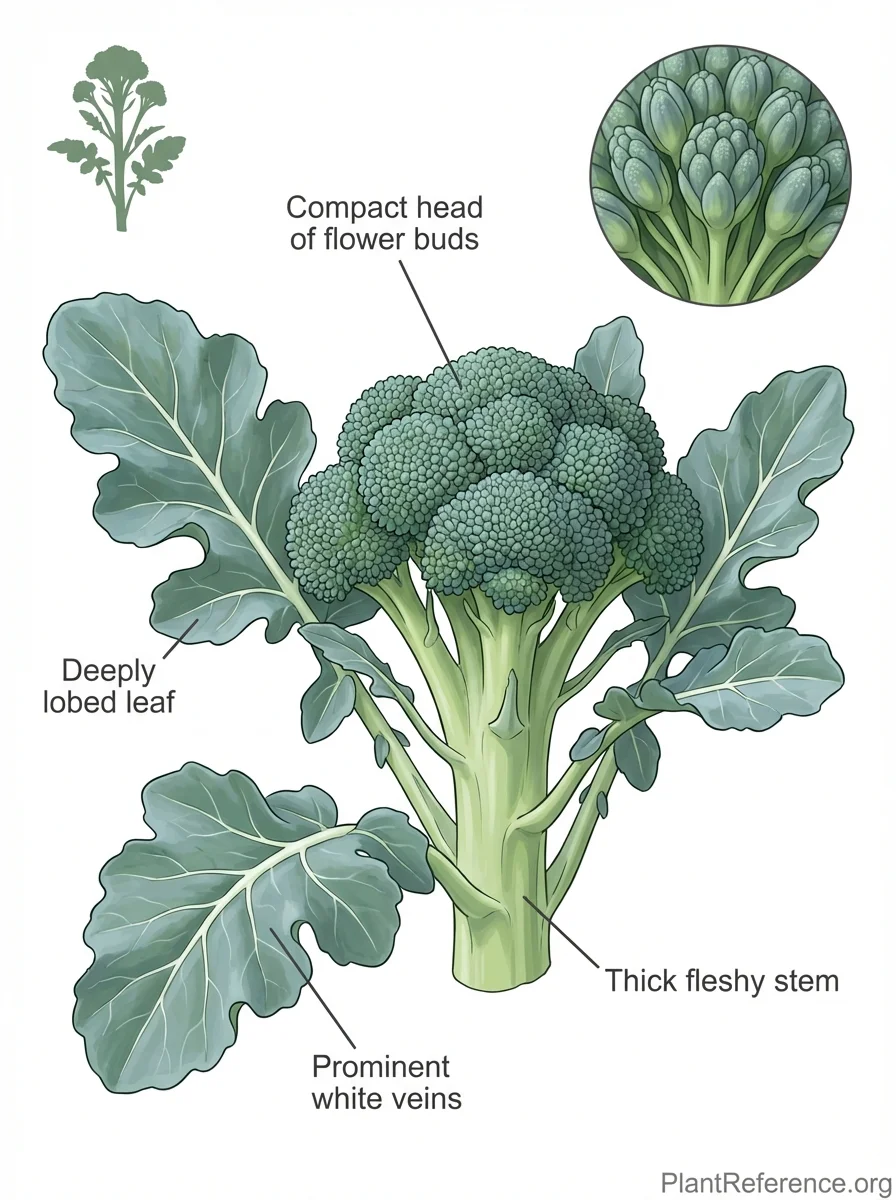
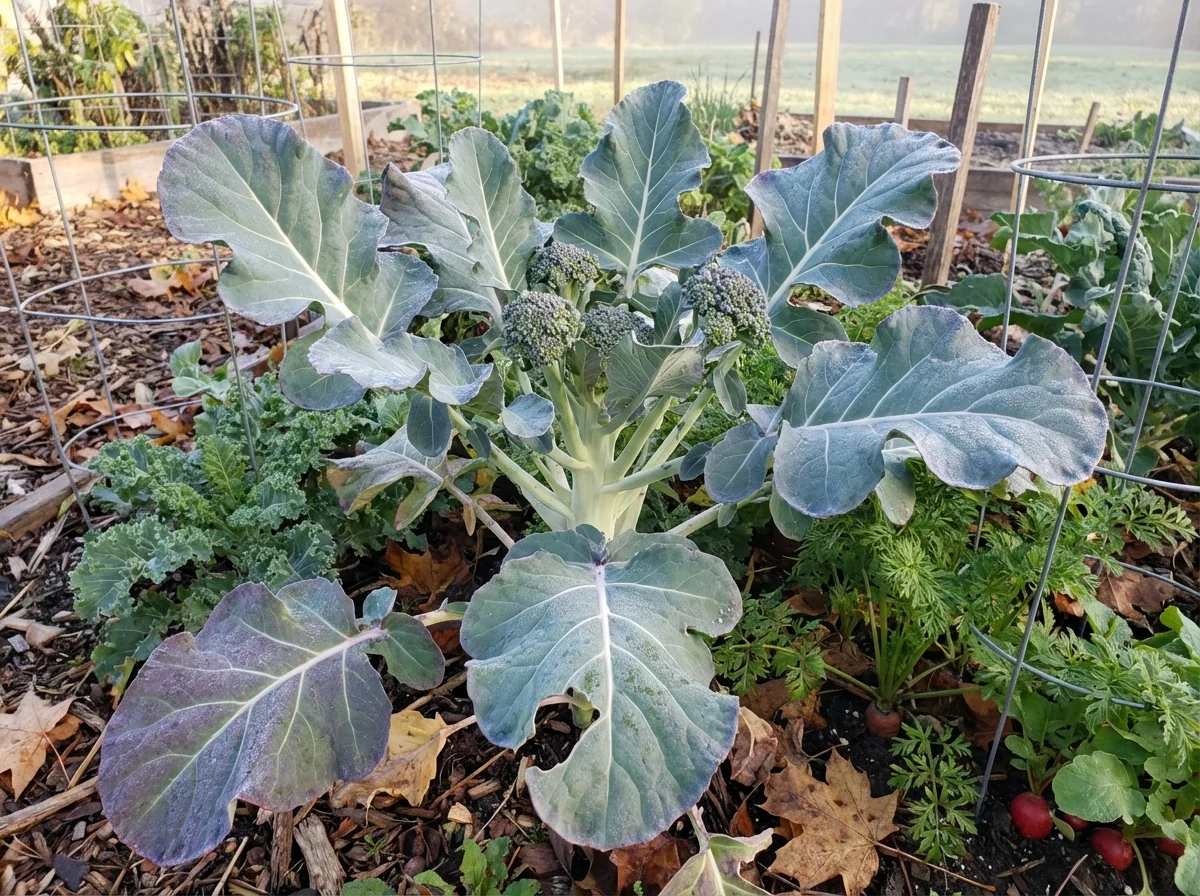
Brassica oleracea 'Calabrese' is Calabrese broccoli (Italian green sprouting broccoli), a cool-season annual growing 18-30 inches (45-75 cm) tall and 18-24 inches (45-60 cm) wide. The harvest is a dome-shaped central head 6-8 inches (15-20 cm) across — a tight cluster of unopened flower buds on a sturdy central stem. Blue-green waxy leaves with white veining. In the mustard family (Brassicaceae). Named after the Calabria region of southern Italy. The species B. oleracea also includes cabbage, kale, cauliflower, Brussels sprouts, and kohlrabi — all the same species, differentiated by centuries of selective breeding. After the central head is cut, secondary side shoots develop from the leaf axils and produce smaller heads 1-3 inches (2.5-7 cm) for 4-6 additional weeks. Cool-season crop: bolts in sustained heat above 80°F (27°C). The buds must be harvested while tight — once they begin to separate or show yellow, the texture becomes gritty. Start indoors 6 weeks before last frost, or sow in late summer for fall harvest. Contains goitrogens (reduced by cooking). Cabbage worms (Pieris rapae), aphids, and flea beetles are the primary pests. Not deer-resistant. Non-toxic (edible crop). Full sun. Annual. Growth rate is moderate.
Native Range
Cultivar from the Calabria region of southern Italy. The species B. oleracea is native to Mediterranean and Atlantic coastal Europe.Suggested Uses
Grown in vegetable gardens, raised beds, and containers of at least 5 gallons (19 L). Cool-season crop — spring and fall harvests. The central head plus secondary side shoots for extended harvest. Italian heirloom. Contains goitrogens. Not deer-resistant. Non-toxic. Annual.How to Identify
Appearance
Size & Dimensions
Height1'6" - 2'6"
Width/Spread1'6" - 2'
Bloom Information
Detailed Descriptions
Flower Description
Small bright yellow 4-petaled (cruciform) flowers if allowed to bolt — the broccoli 'head' is a cluster of unopened flower budsFoliage Description
Blue-green with prominent white veining; large, broadly ovate, waxy surface; 8-12 inches (20-30 cm)Growing Conditions
Sun Requirements
Requires 6-10 hours of direct sunlight daily
• Full Sun: 6+ hours of direct sunlight
• Partial Shade: 3-6 hours of direct sunlight
• Full Shade: Less than 3 hours of direct sunlight
Care & Maintenance
Care Guide
Full sun (6+ hours). Rich moist soil pH 6.0-7.0. Cool-season crop — bolts in heat above 80 degrees F (27 degrees C). Start indoors 6 weeks early. Consistent moisture — water stress causes loose heads. Side-dress with nitrogen after transplant. Harvest central head at 6-8 inches (15-20 cm) while buds are tight. Contains goitrogens. Cabbage worms, aphids, flea beetles. Not deer-resistant. Non-toxic. Annual.Pruning
Harvest the central head at 6-8 inches (15-20 cm) diameter when buds are tight — cut at a 45-degree angle 6 inches (15 cm) below the head. Secondary side shoots develop and produce smaller heads for 4-6 weeks. Remove yellowed or pest-damaged leaves.Container Growing
Suitable for container growing
Minimum container size: 5 gallons
Toxicity
Non-toxicPlanting Guide
Planting Methods & Timing
Planting Method
transplant
Indoor Start
6 weeks before last frost
Direct Sow Timing
Early spring 2-3 weeks before last frost; or late summer for fall harvest
Days to Maturity
60–90 days
Plant Spacing
18 inches
Botanical Flashcard