Image 1 of 3
1 / 3
Plant Reference
Brassica, Genus, oleracea, Species, 'Cheddar', Cultivar,
- Genus & species
- Cultivar
Cheddar cauliflower
Coastal western and southern Europe (species origin); modern hybrid bred for orange color
Overview
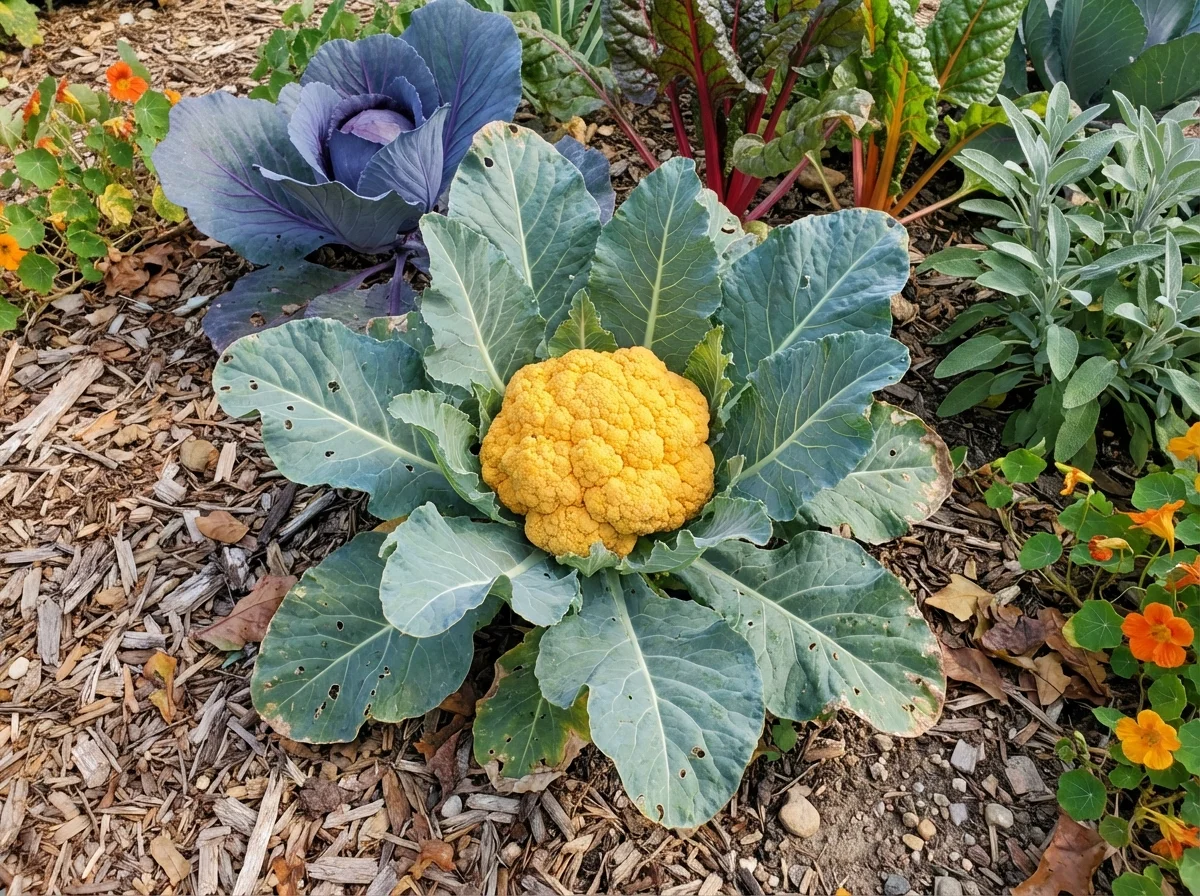
Brassica oleracea 'Cheddar' is an annual vegetable in the family Brassicaceae reaching 18-24 inches (45-60 cm) tall and 18-24 inches (45-60 cm) wide with an upright habit and a rosette of large wrapper leaves surrounding a central head (curd). The cultivar is a hybrid cauliflower bred for orange curd color, with elevated beta-carotene content approximately 25 times higher than white cauliflower; the curd is dense, firm, and 6-8 inches (15-20 cm) in diameter at harvest. Wrapper leaves are large and blue-green, 12-18 inches (30-45 cm) long, and partially self-blanch the head. Days to maturity are 58-68 from transplant. Growth rate is moderate. The cultivar is cool-season and heads form most reliably at 60-65°F (16-18°C). The orange color intensifies with cooking (unlike white cauliflower, which can yellow unattractively). The curd does not need blanching because the orange color is not affected by sun exposure.
Native Range
Brassica oleracea (cauliflower group) descended from wild cabbage native to coastal western and southern Europe. The cultivar 'Cheddar' is a modern hybrid developed for orange color and elevated beta-carotene.Suggested Uses
Grown in vegetable gardens for culinary use: roasting, steaming, raw with dip, and soups. Vivid orange curd. 25 times the beta-carotene of white cauliflower. Color intensifies with cooking. Self-blanching. 58-68 days from transplant. Cool-season. Not suited to hot climates or to gardens where sustained temperatures exceed 75°F during head development.How to Identify
Appearance
Size & Dimensions
Height1'6" - 2'
Width/Spread1'6" - 2'
Bloom Information
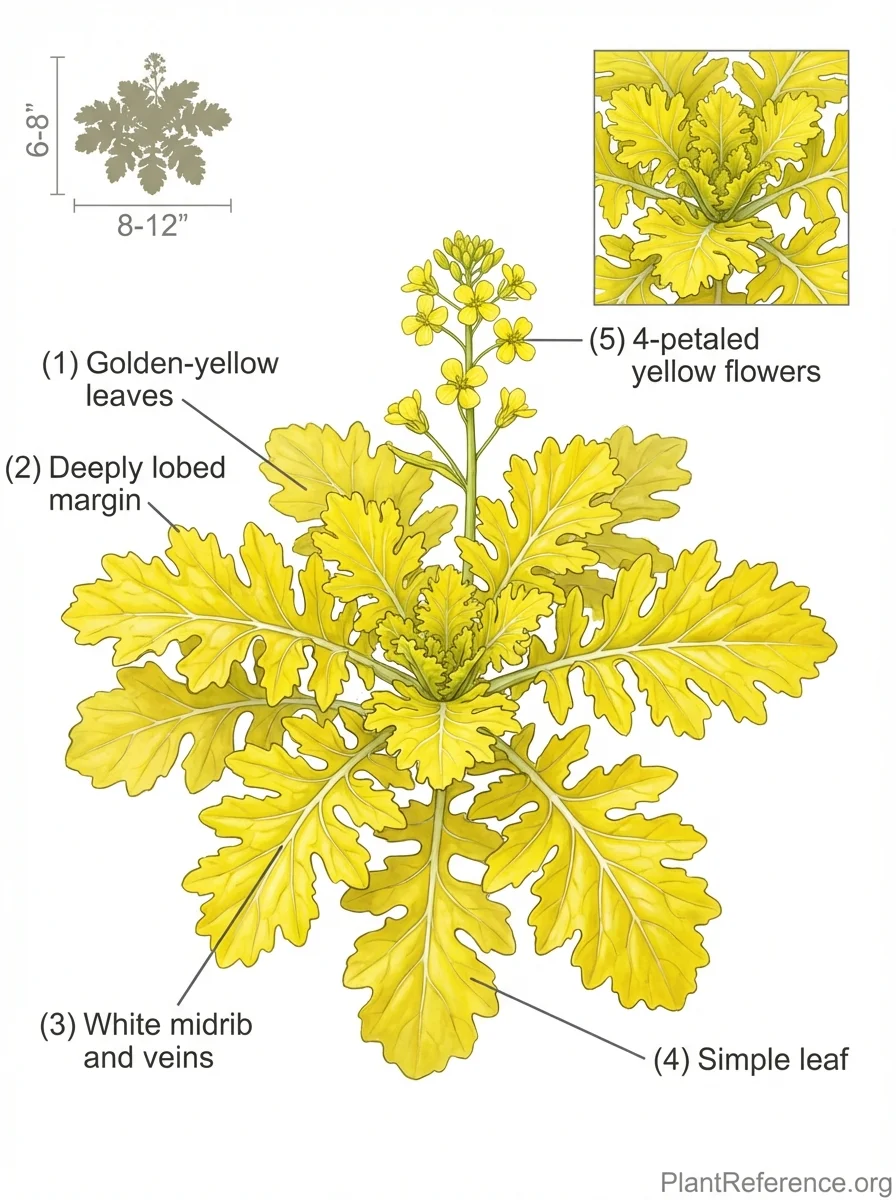
If the curd is not harvested, the curd loosens and produces yellow four-petaled flowers. Harvest takes the curd when dense and firm, before any loosening. Bolts in heat.
Detailed Descriptions
Flower Description
Yellow; four-petaled; borne only on bolting plants; harvest precedes looseningFoliage Description
Blue-green; large wrapper leaves 12-18 inches (30-45 cm); surrounding the orange curd; deciduousGrowing Conditions
Sun Requirements
Requires 6-8 hours of direct sunlight daily
• Full Sun: 6+ hours of direct sunlight
• Partial Shade: 3-6 hours of direct sunlight
• Full Shade: Less than 3 hours of direct sunlight
Care & Maintenance
Care Guide
Seeds are started indoors 6-8 weeks before the last frost. Transplanted after hardening off. Rich moist well-drained soil at pH 6.0-7.0. Consistent moisture and fertility are critical for head formation. Cool temperatures of 60-65°F (16-18°C) during head development support reliable curd formation. Days to maturity are 58-68 from transplant. The cultivar is self-blanching, so wrapper leaves do not need to be tied. Harvest falls when the curd reaches 6-8 inches and feels firm.Pruning
Pruning does not apply. The entire head is harvested by cutting the stem below the curd.Container Growing
Suitable for container growing
Minimum container size: 5 gallons
Toxicity
Non-toxicPlanting Guide
Botanical Flashcard