Brassica oleracea 'Lacinato', Lacinato Kale
1 / 7
Annuals

Brassica oleracea 'Lacinato'

Lacinato Kale

BrassicaceaeMediterranean

At a Glance

Typeannual
Habitupright rosette
Foliagedeciduous
Height18-24 inches
Width12-18 inches
Maturity1 years

Growing Zones

USDA Hardiness Zones

2a - 10b
Zone 2a
Zone 2b
Zone 3a
Zone 3b
Zone 4a
Zone 4b
Zone 5a
Zone 5b
Zone 6a
Zone 6b
Zone 7a
Zone 7b
Zone 8a
Zone 8b
Zone 9a
Zone 9b
Zone 10a
Zone 10b
These zones indicate the coldest temperatures this plant can typically survive.
Frost Tolerancehardy

Key Features

Attracts Pollinators
Attracts Butterflies
Container Friendly
Maintenancemoderate

Overview

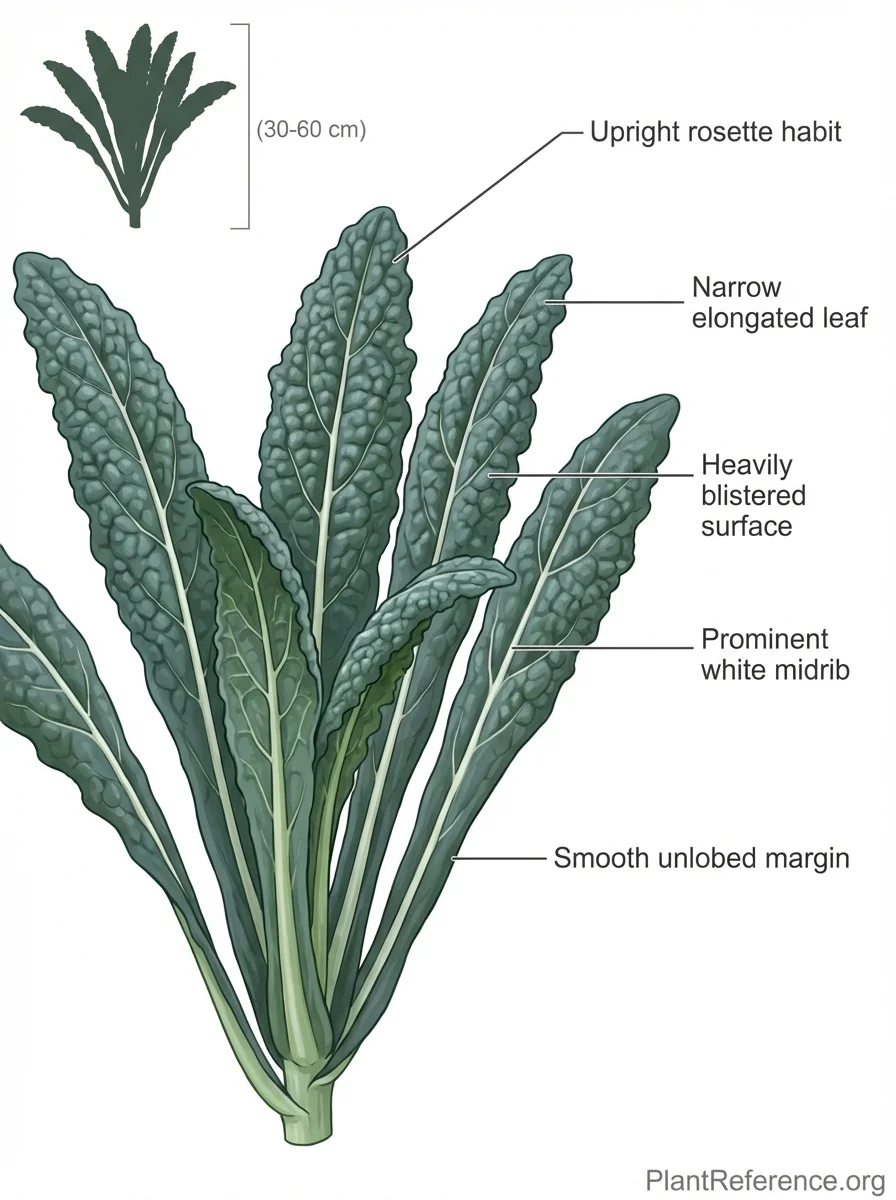
Brassica oleracea 'Lacinato' is an extraordinary heirloom kale cultivar that commands attention with its dramatic architectural presence and uniquely textured foliage that sets it apart from all other members of the brassica family. This distinguished cool-season annual develops into a stately, upright rosette of narrow, elongated leaves that create an almost prehistoric silhouette, earning it the popular nickname 'dinosaur kale' among gardeners and chefs alike. The remarkable leaves are characteristically dark blue-green to nearly black in coloration, measuring 2-3 inches wide and 8-12 inches long, with heavily blistered, deeply textured surfaces that feel substantial and leathery to the touch, creating a distinctive pebbled appearance reminiscent of ancient reptilian skin. Unlike the frilly, deeply cut edges found in traditional curly kale varieties, Brassica oleracea 'Lacinato' produces completely flat, strap-like leaves with smooth, unlobed margins and prominent white to pale green midribs that create striking visual contrast against the dark, matte foliage. The plant develops on a sturdy central stem that reaches 18-24 inches in height, supporting the dense crown of leaves in a compact, non-spreading habit that maximizes garden space efficiency. When allowed to bolt during hot weather or in its second growing season, Brassica oleracea 'Lacinato' produces typical brassica flowers - small, bright yellow four-petaled blooms arranged in terminal clusters that attract beneficial pollinators and can be harvested as edible flowers before seed development begins.

Native Range

Brassica oleracea originated along the rocky Mediterranean and Atlantic coastlines of Western and Southern Europe, where wild cabbage ancestors still thrive naturally on coastal cliffs and salt-tolerant rocky shores. The specific 'Lacinato' cultivar has deep historical roots in Tuscany, Italy, where it has been cultivated continuously since at least the 18th century as an essential component of traditional Italian cuisine, known locally as 'Cavolo Nero' or black cabbage. This treasured heritage variety was developed through generations of selective breeding by Italian farmers who prized its exceptional cold tolerance, distinctive appearance, and superior culinary qualities that improve dramatically in sweetness after frost exposure.

Suggested Uses

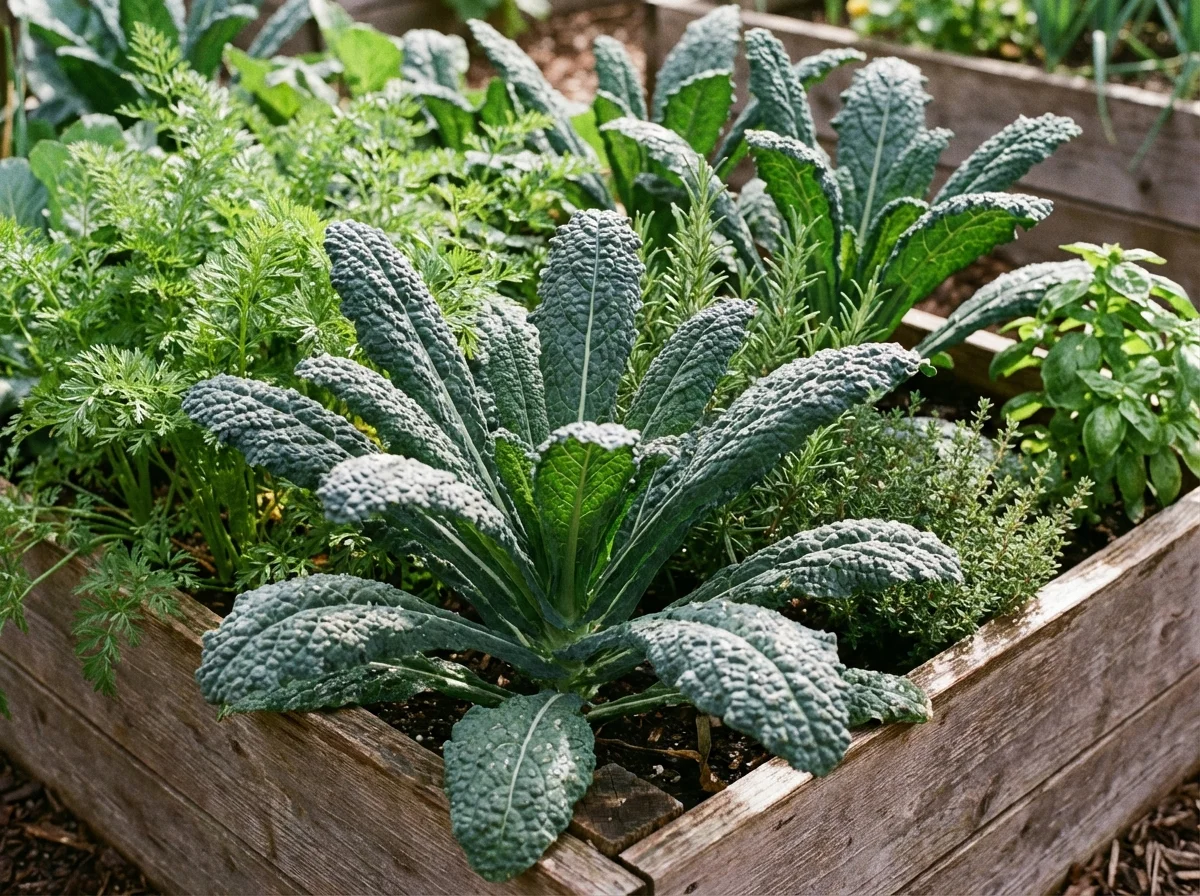
Brassica oleracea 'Lacinato' excels in vegetable gardens, raised beds, and large containers where its dramatic architectural form adds striking textural interest and bold dark color to mixed cool-season plantings. The distinctive textured foliage makes it outstanding for ornamental kitchen gardens, formal potagers, and sophisticated edible landscapes where food plants serve dual decorative purposes alongside flowers and herbs. Plant in succession every 2-3 weeks from early spring through late summer for continuous harvests, and consider it essential for fall and winter gardens in mild climates where it can overwinter and provide fresh greens during the coldest months. Brassica oleracea 'Lacinato' works beautifully as a dramatic backdrop plant in mixed vegetable beds, providing structural interest and visual weight while colorful companions like rainbow chard, red lettuce, and flowering herbs create appealing foreground contrasts.

How to Identify

Brassica oleracea 'Lacinato' can be instantly identified by its unmistakable dark blue-green to nearly black leaves featuring heavily blistered, deeply textured surfaces that create a distinctive pebbled appearance resembling dinosaur skin. The leaves are characteristically narrow and elongated, measuring 2-3 inches wide and 8-12 inches long, with completely smooth, unlobed margins and perfectly flat surfaces that clearly distinguish them from the frilly, curled varieties of other kale cultivars. A prominent white or pale green midrib runs down the center of each leaf, creating sharp visual contrast against the dark foliage. The plant maintains a distinctly upright, compact growth habit with leaves arranged in a neat rosette pattern, and the foliage feels notably thick, substantial, and leathery with a uniquely rough, bumpy texture that is unmistakable when touched.

Appearance

Size & Dimensions

Height1'6" - 2'
Width/Spread1' - 1'6"

Reaches mature size in approximately 1 years

Colors

Flower Colors

yellow

Foliage Colors

blue
green
black

Bloom Information

Bloom Period

J
F
M
A
M
J
J
A
S
O
N
D
SpringSummer
Late spring to early summer when allowed to bolt, typically in the second year for overwintered plants or during hot weather stress

Detailed Descriptions

Flower Description

Bright yellow

Foliage Description

Dark blue-green to nearly black with heavily textured, blistered surfaces and prominent white to pale green midribs

Growing Conditions

Sun Requirements

Full Sun
Partial Shade
• Full Sun: 6+ hours of direct sunlight
• Partial Shade: 3-6 hours of direct sunlight
• Full Shade: Less than 3 hours of direct sunlight

Soil Requirements

pH Range6.0 - 7.5(Neutral)
357912
Soil Types
loam
Drainage
well drained

Water & Climate

Water Needs

moderate

Frost Tolerance

hardy

Time to Maturity

60-75 days

Care & Maintenance

Care Guide

Brassica oleracea 'Lacinato' thrives in rich, well-draining soil that has been generously amended with compost or well-aged manure to provide consistent nutrition throughout the growing season. Plant in full sun for optimal growth and maximum leaf production, though it tolerates partial shade well, particularly in hot climates where afternoon protection prevents premature bolting. Maintain consistent soil moisture by providing 1-1.5 inches of water weekly, including natural rainfall, and water at soil level rather than overhead to prevent foliar diseases common to brassicas. Apply a 2-3 inch layer of organic mulch around plants to retain moisture, regulate soil temperature, and suppress weeds effectively. Feed every 3-4 weeks with balanced, slow-release fertilizer or side-dress with compost to support continuous leaf production. Brassica oleracea 'Lacinato' actually improves dramatically in flavor and sweetness after exposure to light frosts, developing more complex taste, so extend the harvest season by protecting plants during hard freezes with row covers or cold frames. Monitor regularly for common brassica pests including cabbage worms, aphids, and flea beetles, using floating row covers during the seedling stage for effective organic pest prevention.

Pruning

Brassica oleracea 'Lacinato' benefits from regular harvesting rather than traditional pruning to maintain productivity and encourage continuous leaf production throughout the growing season. Begin harvesting outer leaves when they reach 6-8 inches in length, using clean garden shears to cut leaf stems at the base while preserving the central growing point for continued production. Practice 'cut-and-come-again' harvesting by taking only the oldest, outermost leaves and allowing younger interior leaves to develop from the crown for sustained production. Remove any yellowing, damaged, or pest-affected leaves immediately to prevent disease spread and maintain plant health. If flower stalks begin to emerge, pinch them off promptly at the base to redirect energy into leaf production and prevent remaining foliage from becoming tough and bitter, unless you want to harvest edible flowers or collect seeds.

Maintenance Level

moderate

Container Growing

✓ Suitable for container growing

Minimum container size: 5 gallons

⚠️ Toxicity Warning

Brassica oleracea 'Lacinato' is generally safe for human consumption and exceptionally nutritious when properly prepared, though raw consumption in very large quantities may potentially interfere with thyroid function due to naturally occurring goitrogens that are neutralized by cooking methods such as steaming, sautéing, or roasting. The leaves contain moderate levels of oxalates, so individuals with a history of kidney stones should consume in moderation and consider light cooking to reduce oxalate content. Safe for most pets in small amounts as an occasional treat, providing beneficial nutrients including vitamins A, C, and K, but large quantities may cause digestive upset in dogs and cats due to high fiber content and natural sulfur compounds that can be difficult for pet digestive systems to process efficiently.

Planting Guide

Planting Methods & Timing

Planting Method

both

Indoor Start

4 weeks before last frost

Direct Sow Timing

early spring 2-4 weeks before last frost, or late summer 10-12 weeks before first fall frost

Days to Maturity

60–75 days

Plant Spacing

12 inches

Companion Planting

Good Companions

tomatoes
peppers
onions
carrots
beets
lettuce
spinach
herbs
radishes
garlic

Avoid Planting With

strawberries
beans
fennel
pole beans
Brassica oleracea 'Lacinato' (Lacinato Kale) - Identification & Care Guide | PlantRef