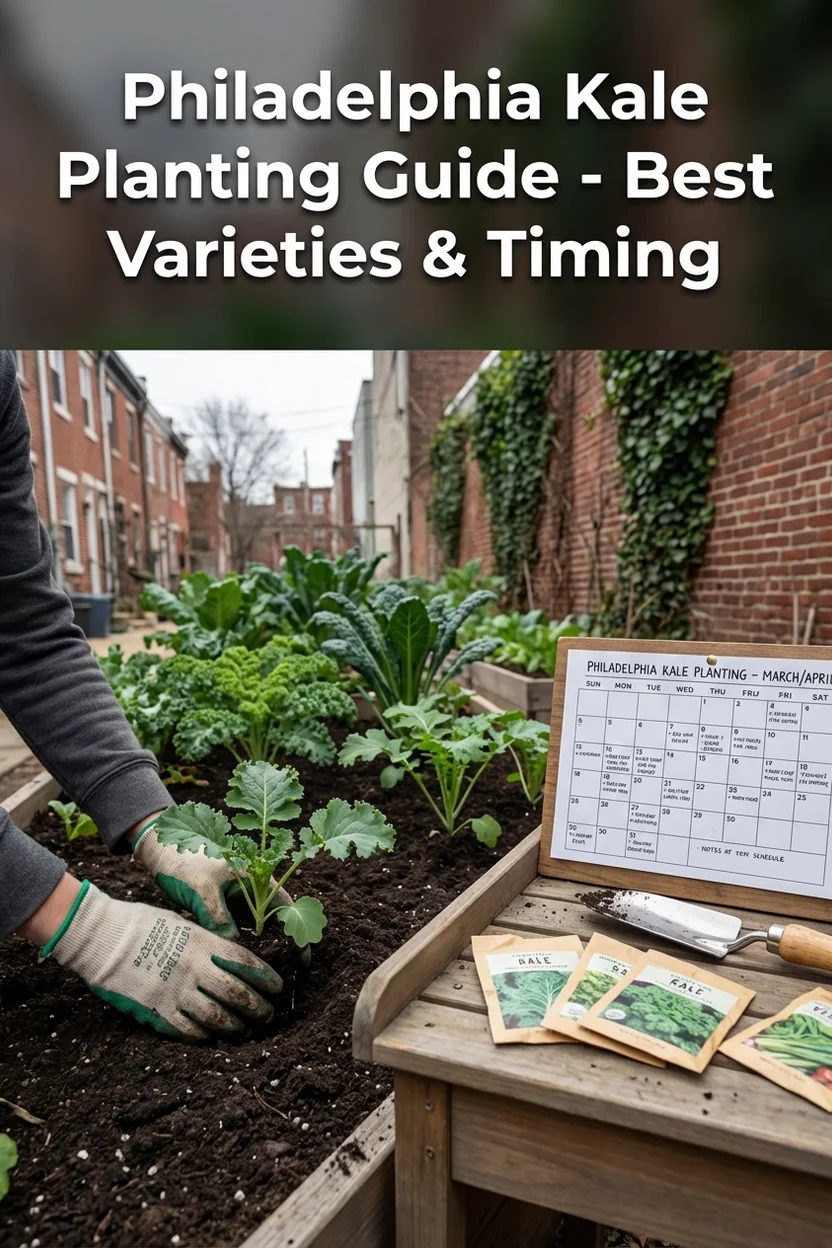
When to Plant Kale in Philadelphia: Complete Guide + Best Varieties for Zone 7a
Pets & Toxicity
Recorded toxicity for plants linked in this guide. An unknown status is not a safety assessment.
No linked plant is recorded as toxicDetailsHide
Brassica oleracea 'Red Russian' — Toxicity
Non-toxicView Brassica oleracea 'Red Russian' plant profileBrassica oleracea var. sabellica 'Vates' — Toxicity
Non-toxicView Brassica oleracea var. sabellica 'Vates' plant profile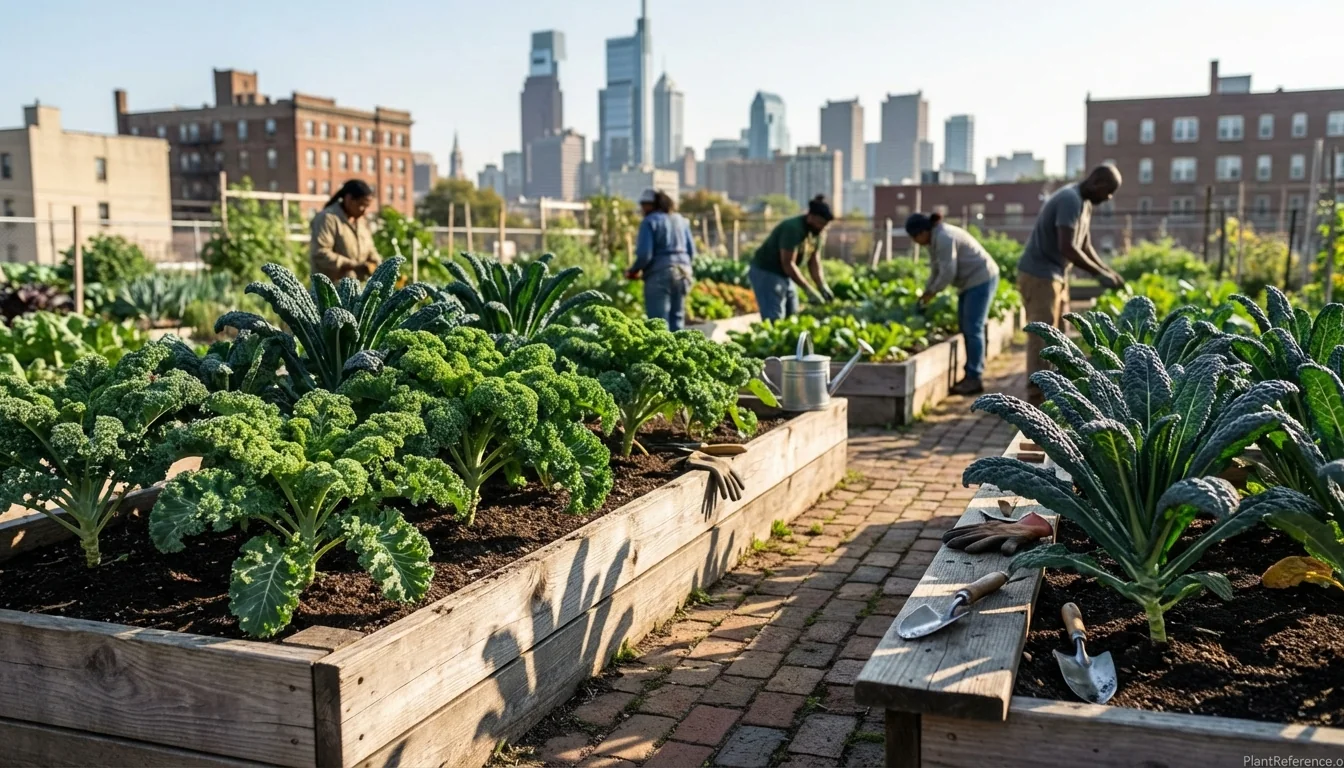
— Image © Plant Reference 2026
Philadelphia gardeners have a tremendous advantage growing kale—our Zone 7a climate provides two distinct planting windows that produce exceptional crops. After forty years of growing vegetables in this region, I can tell you that kale performs better here than almost anywhere else in the country.
Best Kale Varieties for Philadelphia's Climate
Philadelphia's Zone 7a climate supports all major kale varieties, but some perform exceptionally well in our specific conditions. Our last frost date of April 9 and first frost date of November 4 gives us a 209-day growing season—plenty of time for two complete kale crops with different characteristics.
Variety | Days to Maturity | Best For | Notes for Philadelphia |
|---|---|---|---|
60-75 days | Fall/winter harvest | Survives Philadelphia winters with protection | |
60-75 days | Year-round growing | Heat tolerant for spring, cold hardy for fall | |
50-60 days | Quick spring crops | Fast maturity beats summer heat | |
60-75 days | Ornamental winter | Beautiful purple color intensifies in cold | |
55-65 days | Container growing | Compact size perfect for urban gardens |
🌿Brassica oleracea 'Winterbor' stands out as Philadelphia's champion variety. This deeply curled kale handles our variable winter temperatures beautifully, surviving down to 10°F (-12°C) with minimal protection. The thick, frilled leaves hold up to ice and snow while developing incredible sweetness after our first November frosts.
🌿Brassica oleracea 'Lacinato' offers the best of both seasons. Its flat, savoyed leaves resist bolting better than curly types during Philadelphia's sometimes unpredictable spring weather. The variety's Italian heritage means it's adapted to similar climate conditions as our Mid-Atlantic region.
For quick spring harvests, 🌿Brassica oleracea 'Red Russian' matures fastest at just 50-60 days. This variety's tender leaves are perfect for salads when harvested young, and it handles the transition from cool spring to warm early summer better than other types.
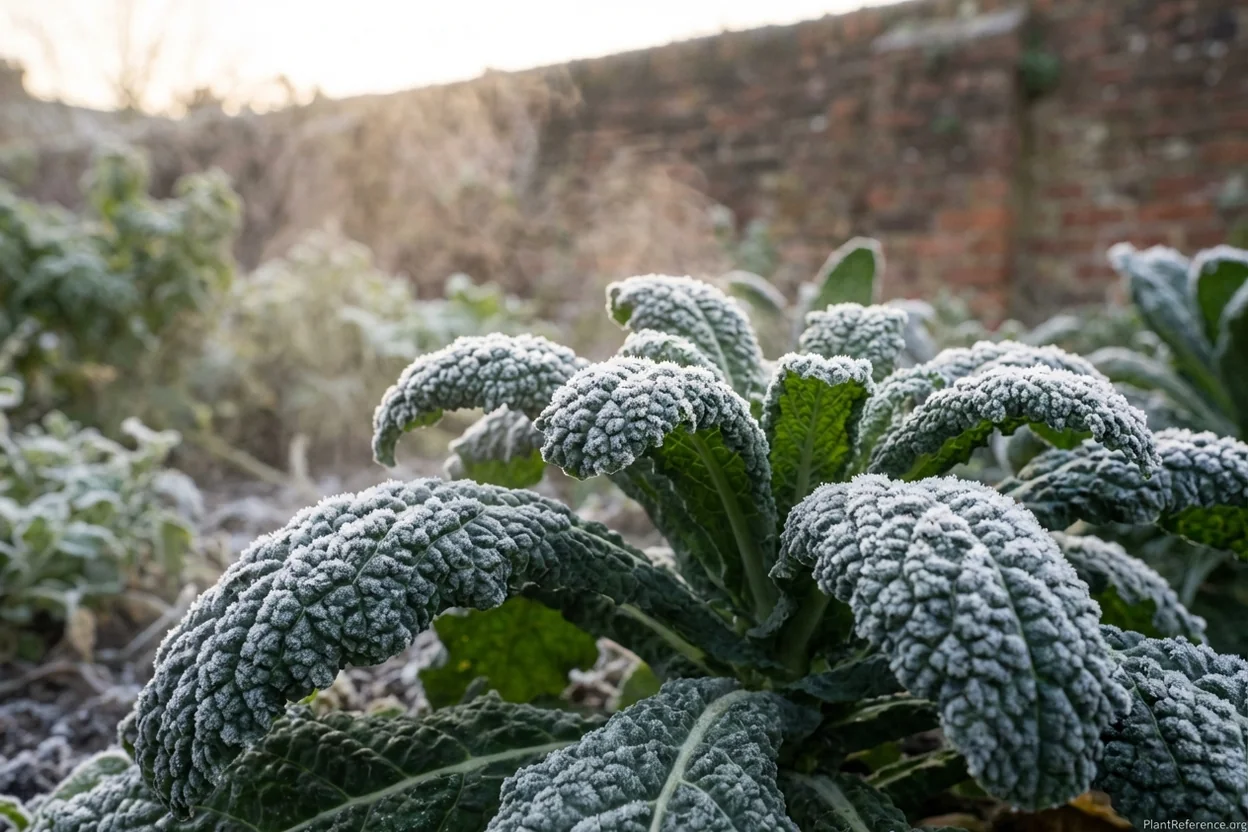
🌿Brassica oleracea 'Redbor' deserves special mention for Philadelphia gardeners who want edible landscaping. This variety transitions from green to deep burgundy-purple as temperatures drop, creating stunning fall and winter color while providing nutritious harvests. It's particularly striking against Philadelphia's historic brick architecture.
🌿Brassica oleracea 'Vates' works perfectly for container growing on rooftops, balconies, and small urban spaces. At just 12-16 inches tall, it produces impressive yields in limited space while resisting both heat and cold stress.
Specific Planting Dates for Philadelphia
Philadelphia's Zone 7a designation gives us flexibility that gardeners in colder regions envy. Here are the precise planting dates I recommend after decades of trial and refinement.
Spring Planting Schedule: - Indoor seed starting: February 15-March 1 - Direct seeding outdoors: March 15-April 1 - Transplant seedlings: March 20-April 5 - Harvest begins: May 15-June 1 - Final harvest: July 15 (before heat stress)
Start spring kale indoors during February's coldest weeks. Philadelphia homes stay warm enough for germination, and seedlings develop strong root systems before transplanting. Direct seeding works well from mid-March onward when soil temperature reaches 40°F (4°C).
The key to spring success is getting plants established before our sometimes volatile April weather. Young kale plants handle light frosts easily, but they need time to develop before summer heat arrives.
Fall Planting Schedule (Superior crop): - Direct seeding outdoors: August 1-15 - Transplant seedlings: August 10-20 - Harvest begins: October 1-15 - Peak flavor harvest: November 15-December 15 (after frosts) - Winter harvest: December-March (with protection)
Fall planting produces Philadelphia's best kale. August seeding allows plants to establish during late summer warmth, then mature as temperatures cool. The result is tender, sweet leaves that improve dramatically after our first frost.
I plant my main fall crop on August 10th every year. This timing ensures full-sized plants by October 1st, ready to benefit from cooling temperatures and increased rainfall.
Succession Planting for Continuous Harvest:
Plant small amounts every 2-3 weeks during both seasons:
Spring succession: March 15, April 1, April 15
Fall succession: August 1, August 15, September 1
This staggered approach provides continuous harvests and insurance against weather extremes or pest problems affecting any single planting.
Complete Growing Guide for Philadelphia
Soil Preparation for Philadelphia Gardens:
Philadelphia's clay-heavy soil requires amendment for optimal kale growth. Our soil typically tests between pH 6.0-6.8, which suits kale well, but drainage improvements are essential.
Add 2-3 inches of compost to existing beds each spring. The organic matter improves drainage in clay soil while providing slow-release nutrients throughout the growing season. I use locally sourced mushroom compost from Pennsylvania farms—it's affordable and perfectly suited to our soil conditions.
Test soil pH every few years. If pH drops below 6.0 (common in areas with heavy rainfall), add lime in fall. Kale grows best between pH 6.0-7.5, and proper pH helps prevent clubroot disease.
Seeding Technique:
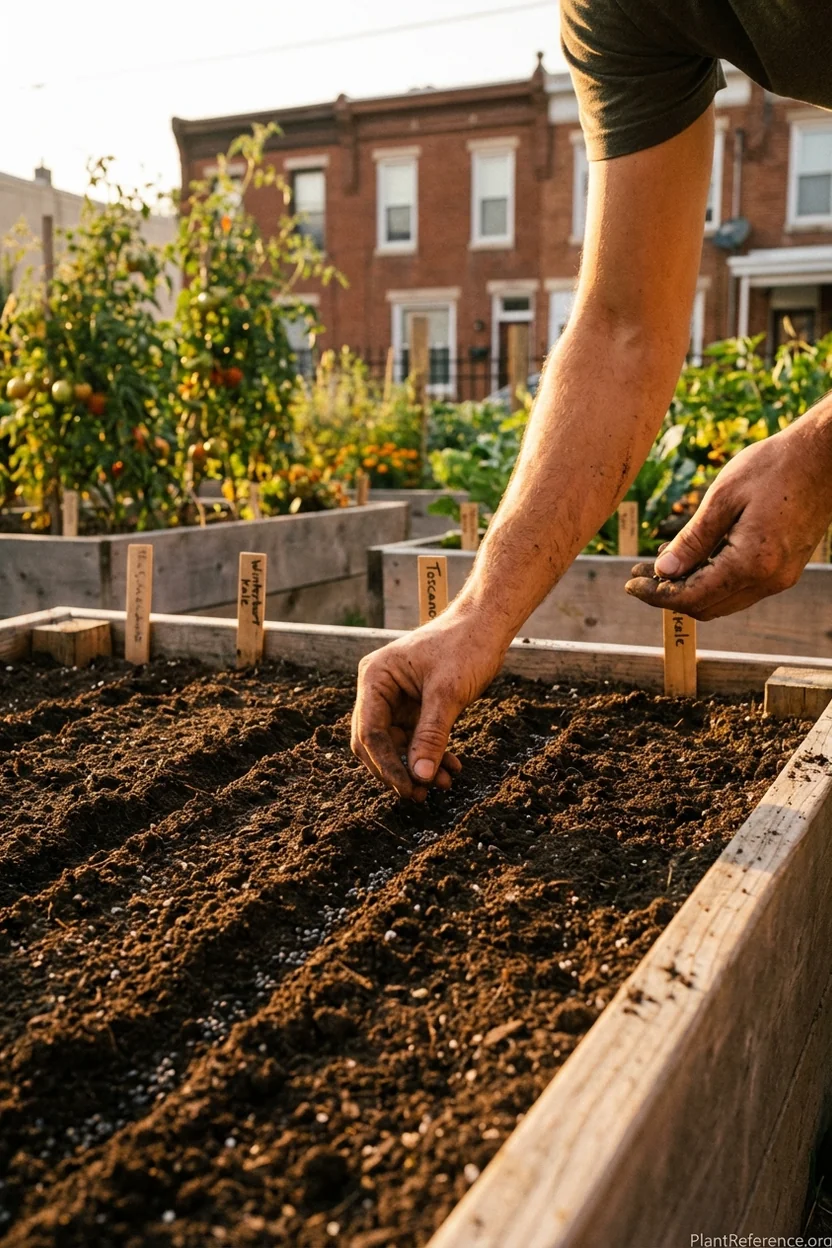
Direct seed kale ½ inch deep in rows spaced 18 inches apart. Plant seeds 2 inches apart, then thin to 12-inch spacing when seedlings reach 3 inches tall. Philadelphia's clay soil can crust over seeds, so cover with a light layer of compost instead of soil.
For transplants, start seeds indoors 6-8 weeks before outdoor planting. Use quality potting mix and keep soil consistently moist. Philadelphia's variable spring weather makes transplants more reliable than direct seeding for spring crops.
Watering Strategy for Philadelphia Climate:
Philadelphia receives about 42 inches of annual rainfall, distributed fairly evenly throughout the year. However, summer dry spells and winter freezing require attention.
Spring watering: Check soil moisture 2 inches deep. Water deeply when dry, typically every 5-7 days during April-May growth period. Avoid overhead watering during humid periods to prevent fungal diseases.
Summer care: Spring-planted kale needs consistent moisture as temperatures rise. Mulch heavily around plants and water early morning to reduce heat stress.
Fall/Winter watering: Fall-planted kale requires less supplemental water due to increased rainfall and lower evaporation. Water only during extended dry periods, and avoid watering when freezing temperatures are predicted.
Fertilization Schedule:
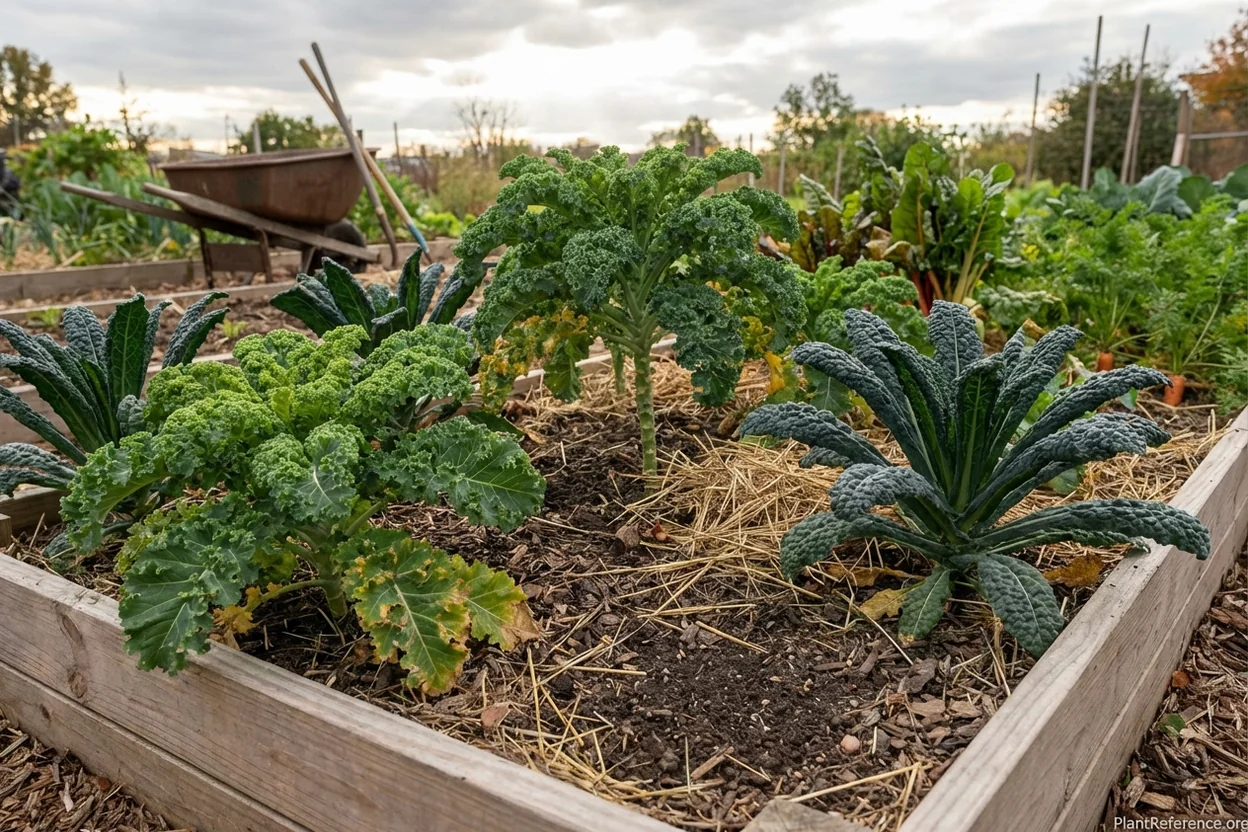
Kale is a heavy nitrogen feeder during vegetative growth. I use a three-stage fertilization approach that works perfectly with Philadelphia's growing seasons.
Stage 1 - Initial planting: Mix 2-4 inches of compost into soil before planting. This provides slow-release nutrition for the first 4-6 weeks.
Stage 2 - Active growth: Side-dress with balanced organic fertilizer (5-5-5) when plants reach 6 inches tall. Repeat every 4 weeks during active growing periods.
Stage 3 - Pre-winter prep: For overwintering kale, stop nitrogen feeding 6 weeks before first frost. This allows plants to harden off properly for winter survival.
Fish emulsion works excellently for quick nitrogen boosts during rapid growth periods. Apply every 2 weeks during peak growing season (May-June for spring crops, September-October for fall crops).
Troubleshooting Philadelphia-Specific Problems
Cabbage Worms (Major Philadelphia pest):
Philadelphia's humid summers create ideal conditions for imported cabbageworm and cabbage looper populations. These green caterpillars appear in May-June on spring crops and again in late summer on fall plantings.
Prevention: Cover young plants with floating row covers immediately after planting. Remove covers once plants are well-established (8-10 inches tall) to allow beneficial insect access.
Control: Apply Bt (Bacillus thuringiensis) spray weekly during active caterpillar periods. This organic control specifically targets caterpillars without harming beneficial insects.
Aphid Management in Humid Conditions:
Philadelphia's high humidity combined with warm temperatures creates severe aphid pressure, especially on spring plantings.
Early detection: Check undersides of leaves weekly starting in April. Look for clusters of small, soft-bodied insects.
Control methods: Strong water spray dislodges aphids effectively. Apply insecticidal soap in early morning before temperatures rise above 80°F (27°C).
Biological control: Encourage ladybugs and lacewings by planting diverse flowers nearby. These beneficial insects control aphids naturally.
Flea Beetle Damage on Seedlings:
These tiny jumping beetles create shot-hole damage on young kale plants, particularly problematic during Philadelphia's variable spring weather.
Protection: Row covers provide complete protection during the vulnerable seedling stage. Remove covers once plants develop thick, mature leaves (usually 6-8 weeks after planting).
Organic treatment: Diatomaceous earth dusted on leaves deters flea beetles, but requires reapplication after rain.
Spring Bolting Prevention:
Philadelphia's unpredictable spring weather—warm spells followed by cold snaps—can trigger premature flowering in spring-planted kale.
Variety selection: Choose bolt-resistant varieties like 🌿Brassica oleracea 'Lacinato' and 🌿Brassica oleracea 'Red Russian' for spring plantings.
Timing adjustment: Plant later (April 1-15) to avoid the most volatile spring weather periods.
Protection: Use shade cloth during unexpected warm spells in May-June to prevent heat stress that triggers bolting.
Winter Protection Strategies:
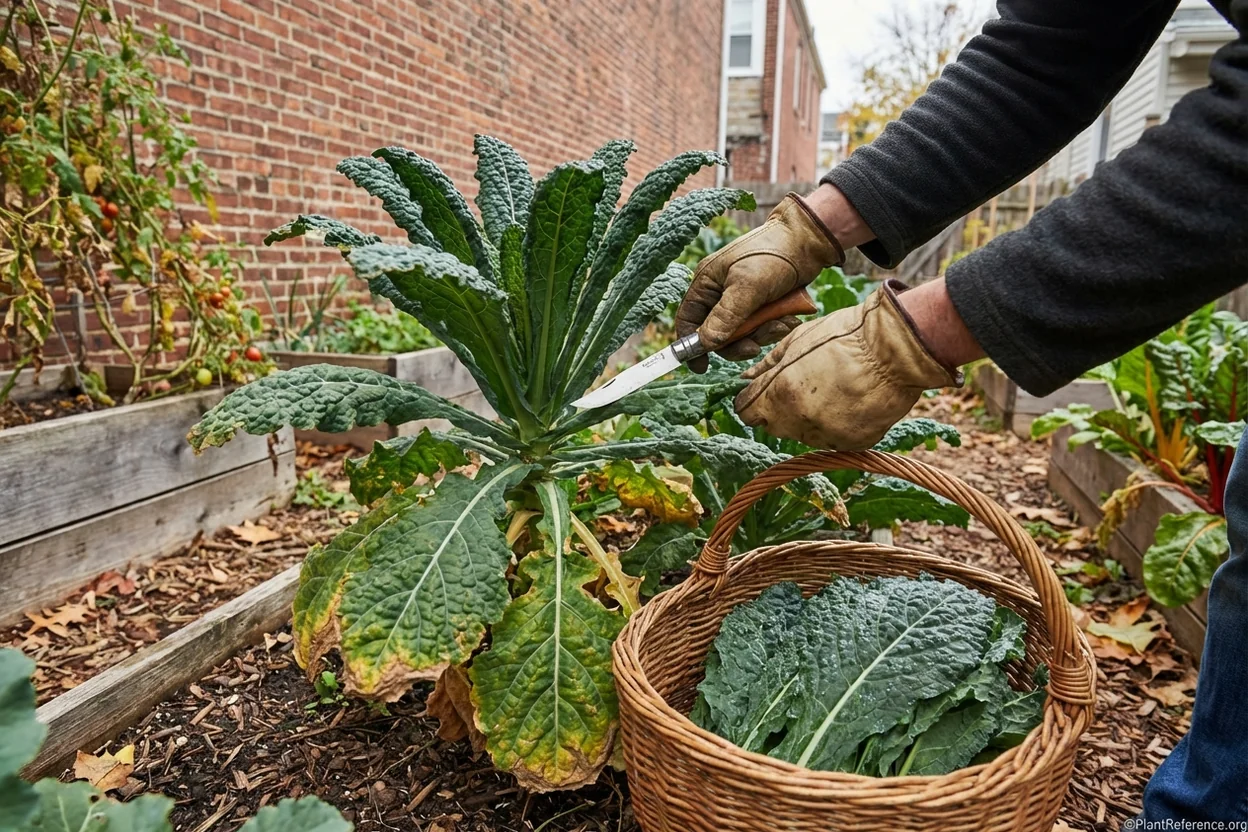
Philadelphia's Zone 7a winters allow kale overwintering with minimal protection, but preparation ensures consistent harvests through cold periods.
Mulching: Apply 4-6 inches of straw mulch around plants in November. This insulates roots and prevents freeze-thaw cycles that damage plants.
Row covers: Use lightweight frost blankets during periods when temperatures drop below 15°F (-9°C). Remove covers during warm winter days to prevent overheating.
Variety selection: 🌿Brassica oleracea 'Winterbor' and 🌿Brassica oleracea 'Redbor' handle Philadelphia winters best with minimal protection.
Harvest & Storage
Philadelphia kale produces best when harvested regularly using the "cut-and-come-again" method. This approach keeps plants productive for 3-4 months per planting.
Harvesting Technique:
Start harvesting when plants reach 8-10 inches tall, typically 6-8 weeks after planting. Cut outer leaves first, leaving the central growing point intact. Never harvest more than one-third of the plant at one time.
Peak Harvest Timing:
Spring crops: May 15-July 1 - Harvest regularly before summer heat reduces quality Fall crops: October 1-December 15 - Peak quality occurs after first frost (November 4 average) Winter harvest: December-March - Harvest on mild days when leaves are not frozen
The transformation that occurs after Philadelphia's first frost is remarkable. Kale leaves become noticeably sweeter and more tender as plants convert starches to sugars for cold protection.
Storage Methods:
Fresh kale stores 7-10 days refrigerated in plastic bags. Wash leaves just before use to maintain quality.
For long-term storage, blanch leaves for 2 minutes, cool quickly in ice water, drain thoroughly, and freeze in labeled containers. Frozen kale works excellently in soups, smoothies, and cooked dishes.
Dehydrating kale creates nutritious chips. Use a dehydrator at 135°F (57°C) for 6-8 hours, or oven-dry at lowest temperature setting with door slightly open.
Frequently Asked Questions
Reading about plants and recognising them are different skills. These three build the second.
- Daily PlantIdentify the day’s mystery plant from a close-up photograph.
- Keyed OutWork a dichotomous key, lead by lead, to name a hidden specimen.
- Name That PlantName a specimen from botanical clues dealt hardest first.
Free to play, no account needed
Frank retired from the city parks department after 28 years, the last fifteen as a grounds supervisor overseeing park plantings and maintenance crews. He now spends his time volunteering at a local historic garden, maintaining his own half-acre property in the Roxborough neighborhood, and writing about landscape maintenance, seasonal timing, and the practical side of keeping plants healthy through Mid-Atlantic winters and humid summers. Frank knows what works at scale and what's a waste of time—he's planted thousands of trees and shrubs and watched plenty of them fail. His advice tends toward what's proven and durable rather than what's trendy.