When to Plant Carrots in Nashville: Zone 7a Dates + Best Varieties
Pets & Toxicity
Recorded toxicity for plants linked in this guide. An unknown status is not a safety assessment.
No linked plant is recorded as toxicDetailsHide
Daucus carota ssp. sativus 'Rainbow' — Toxicity
Non-toxicView Daucus carota ssp. sativus 'Rainbow' plant profileDaucus carota ssp. sativus 'Chantenay' — Toxicity
Non-toxicView Daucus carota ssp. sativus 'Chantenay' plant profileDaucus carota ssp. sativus 'Nantes' — Toxicity
Non-toxicView Daucus carota ssp. sativus 'Nantes' plant profileDaucus carota ssp. sativus 'Imperator' — Toxicity
Non-toxicView Daucus carota ssp. sativus 'Imperator' plant profileDaucus carota ssp. sativus 'Danvers 126' — Toxicity
Non-toxicView Daucus carota ssp. sativus 'Danvers 126' plant profile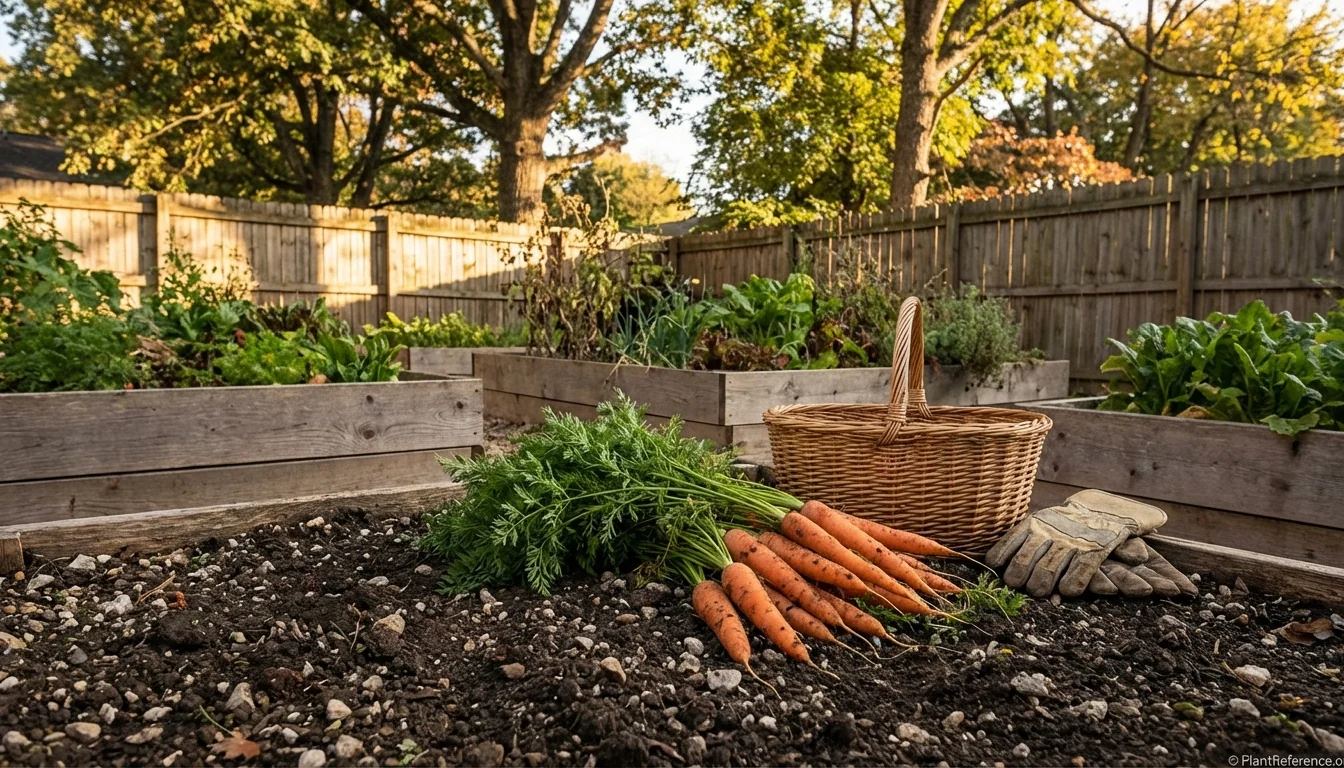
— Image © Plant Reference 2026
My grandfather grew carrots in the Mississippi Delta without a single raised bed—just deep alluvial soil and good timing. Nashville's soil is nothing like that Delta bottomland, but the timing principle holds. Carrots are a cool-season crop that wants soil temperatures between 40-75°F (4-24°C), and Nashville gives you two windows where those conditions line up. The 203-day growing season is shorter than what you get farther south, which means tighter planting windows and less room for error. But the flip side is that Nashville's moderate climate avoids the extreme heat that makes carrot growing a struggle in places like Dallas and Atlanta.
Best Carrot Varieties for Nashville's Zone 7a Climate
Nashville sits in the Central Basin, where the native soil is a mix of clay and limestone residuum. It's generally heavier than sandy loam but lighter than the Piedmont red clay that covers much of the Southeast. The pH tends to run neutral to slightly alkaline (6.5-7.5) thanks to the underlying limestone bedrock. Rock fragments in the soil profile can deflect carrot roots, so variety selection needs to account for both soil density and obstruction.
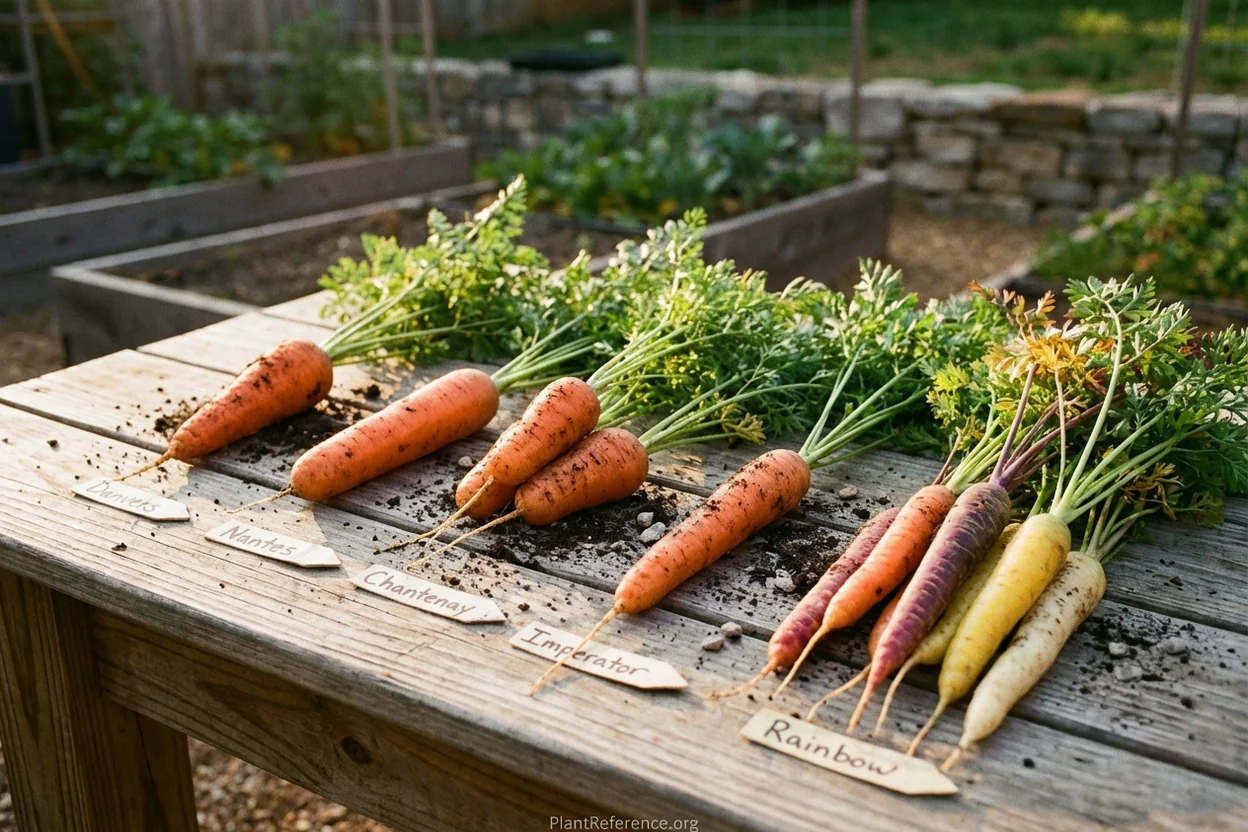
🌿Daucus carota ssp. sativus 'Danvers 126' (DAW-kus kuh-ROH-tuh) is the most dependable variety for Nashville conditions. The conical root generates outward force that navigates around small rock fragments rather than hitting them head-on. At 70-80 days to maturity, 🌿Daucus carota ssp. sativus 'Danvers 126' fits both planting windows comfortably. The firm, high-fiber flesh stores well through winter—my grandfather kept Danvers in a root cellar through March, and they held up fine.
🌿Daucus carota ssp. sativus 'Nantes' produces the sweetest, most tender roots of any variety. The cylindrical shape creates exceptional eating quality with a nearly coreless texture. 🌿Daucus carota ssp. sativus 'Nantes' needs loose, rock-free soil to grow straight, so it belongs in amended beds or raised beds. The cultivar 'Bolero' adds disease resistance that helps during Nashville's humid spring and fall transitions.
🌿Daucus carota ssp. sativus 'Chantenay' is the short, reliable option when soil depth is limited. At 4-5 inches (10-13 cm) long with broad shoulders, 🌿Daucus carota ssp. sativus 'Chantenay' stays above the rocky subsoil that sits close to the surface in many Nashville neighborhoods. Works in containers and shallow raised beds. Pull before 2 inches (5 cm) diameter to avoid a woody core.
🌿Daucus carota ssp. sativus 'Imperator' requires 12 inches (30 cm) of loose, obstruction-free soil—a tall order in Nashville where limestone fragments appear at 6-8 inches in many locations. Reserve 🌿Daucus carota ssp. sativus 'Imperator' for deep raised beds with imported soil. The cultivar 'Sugarsnax 54' delivers high sugar content in the classic long form.
🌿Daucus carota ssp. sativus 'Rainbow' produces white, yellow, orange, and coral roots from one hybrid packet. At 70-75 days to maturity, it fits both windows and adds visual variety. Moderate depth requirements work in most amended Nashville beds.
Variety | Days to Maturity | Best For | Notes for Nashville |
|---|---|---|---|
70-80 days | Native soil and storage | Top pick; conical root navigates limestone fragments in Central Basin clay | |
65-75 days | Amended beds and fresh eating | Sweetest flavor; needs rock-free soil; 'Bolero' for disease resistance | |
65-75 days | Shallow soil and containers | Short roots stay above rocky subsoil; reliable where depth is limited | |
75-85 days | Deep raised beds only | Needs 12+ inches rock-free soil; not for native Nashville ground | |
70-75 days | Specialty and nutrition | Multiple colors; moderate depth works in amended beds |
Specific Planting Dates for Nashville
Nashville averages an April 10 last frost and October 30 first frost, giving you 203 frost-free days. That's shorter than Zone 7b cities like Raleigh and Charlotte, which means tighter windows on both ends.
Spring Planting
Start sowing in early March, about five weeks before the April 10 last frost. Carrots tolerate light frost without damage. Continue succession sowings every two weeks through mid-April. Nashville's spring weather can be variable—warm spells in March followed by cold snaps in April are common—but carrots handle these fluctuations without issue. The spring window extends until mid-June before sustained soil heat degrades root quality.
Fall Planting
Fall is Nashville's premium carrot season, but the window is tighter than in cities farther south. Start sowing in late August and finish by mid-September. You need 65-80 days before the October 30 first frost for roots to reach harvestable size. Fall soil temperatures are warm enough for fast germination (5-7 days), and roots develop as temperatures cool through September and October. The first frost triggers starch-to-sugar conversion that produces the sweetest carrots of the year.
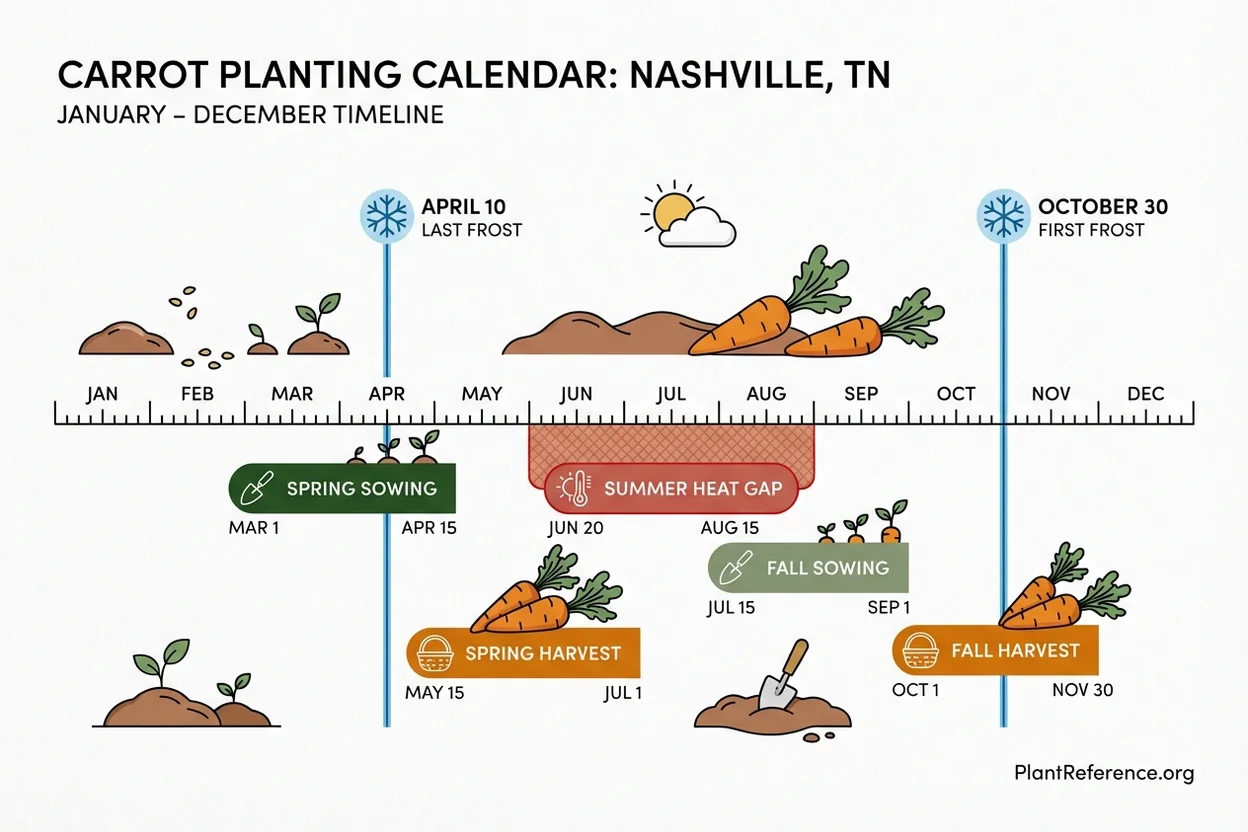
Spring sowing window: March 1 - April 15
Spring harvest: May through mid-June (before sustained heat)
Summer heat gap: Late June through mid-August
Fall sowing window: August 25 - September 15
Fall harvest: October through December (with mulch protection)
Best flavor: Fall harvest after cooling soil converts starch to sugar
Complete Growing Guide for Nashville
Soil Preparation
Nashville's Central Basin soil differs from the red clay found across much of the Southeast. The underlying limestone bedrock weathers into a clay-loam with neutral to slightly alkaline pH (6.5-7.5) and scattered rock fragments. Carrots prefer pH 6.0-6.8, so Nashville soil often sits right at the upper edge of tolerance. Rock fragments at 6-8 inches below the surface deflect roots and cause forking.
For in-ground beds, work the top 10-12 inches (25-30 cm) and remove visible rock fragments by hand. Incorporate 3-4 inches (8-10 cm) of finished compost to improve structure and lower pH slightly. A soil test through the UT Extension Service confirms your specific pH and helps determine whether sulfur amendment is needed. Skip lime—Nashville soil doesn't need it. Best Soil Mix for Raised Beds: Creating the Perfect Growing Medium
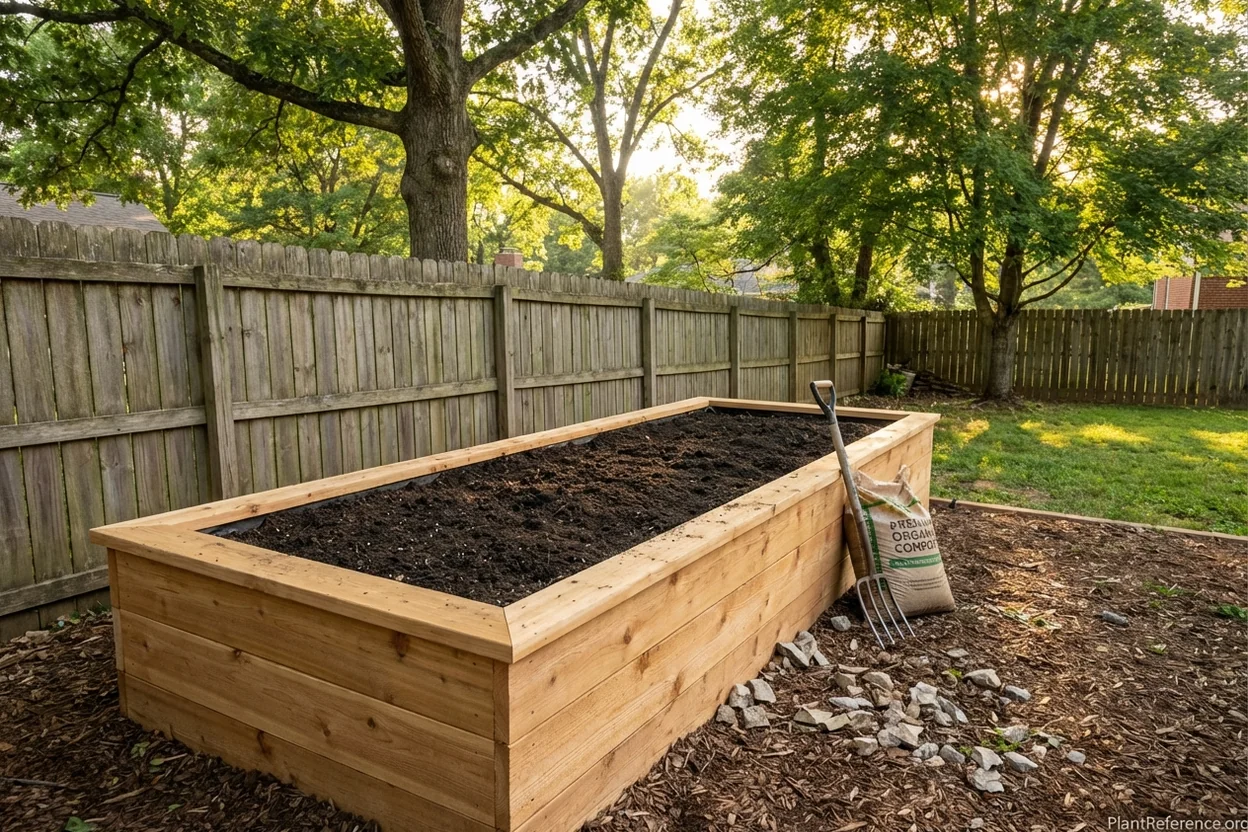
For raised beds, build to at least 12 inches (30 cm) deep with 60% topsoil, 30% compost, and 10% coarse sand or perlite. This eliminates the rock fragment problem entirely and gives you complete control over soil chemistry. Cedar or composite materials handle Nashville's humid climate well. How to Build a Raised Garden Bed: Step-by-Step Construction Guide
Seeding
Sow seeds 1/4 inch (0.6 cm) deep in rows 12 inches (30 cm) apart. Cover with vermiculite or fine compost rather than native soil. Nashville's clay-loam can crust after heavy rain, blocking the weak mechanical force of emerging carrot seedlings. This is less severe than in pure Piedmont clay, but it still causes germination failures in uncovered beds. Best Soil for Raised Beds: 6 Commercial Mixes Tested and Compared
Spring sowings germinate in 14-21 days in cool soil. Lay burlap over the row to hold surface moisture during this period. Nashville's spring rainfall is generous but arrives in intense bursts—cover seedbeds with floating row cover to prevent rain from compacting the surface. Fall sowings germinate faster (5-7 days) in warm late-August soil. Light daily watering keeps the seed zone moist.
Thinning
Thin in two stages: first to 1 inch (2.5 cm) when seedlings reach 2 inches (5 cm), then to 2-3 inches (5-8 cm) at 4-5 inches (10-13 cm). Cut at the soil line with scissors rather than pulling. Nashville soil is softer than pure clay, but pulling still disturbs neighboring roots. Raised Bed Vegetable Garden Layout: Planning for Maximum Production
Watering
Carrots need 1 inch (2.5 cm) of water weekly during early growth, increasing to 1.5-2 inches (4-5 cm) during root development. Nashville receives about 47 inches of rainfall annually—generous, but delivered in intense bursts that can overwhelm beds followed by dry stretches that stress developing roots.
Drip irrigation on a timer delivers the consistent moisture carrots need regardless of rainfall patterns. Nashville's clay-loam retains moisture better than sandy soil, so check at 2-inch depth before irrigating. Overwatering promotes the root rot that thrives in Nashville's heavy, humid conditions. Raised Bed Irrigation Systems: Watering Solutions for Consistent Growth
Mulching
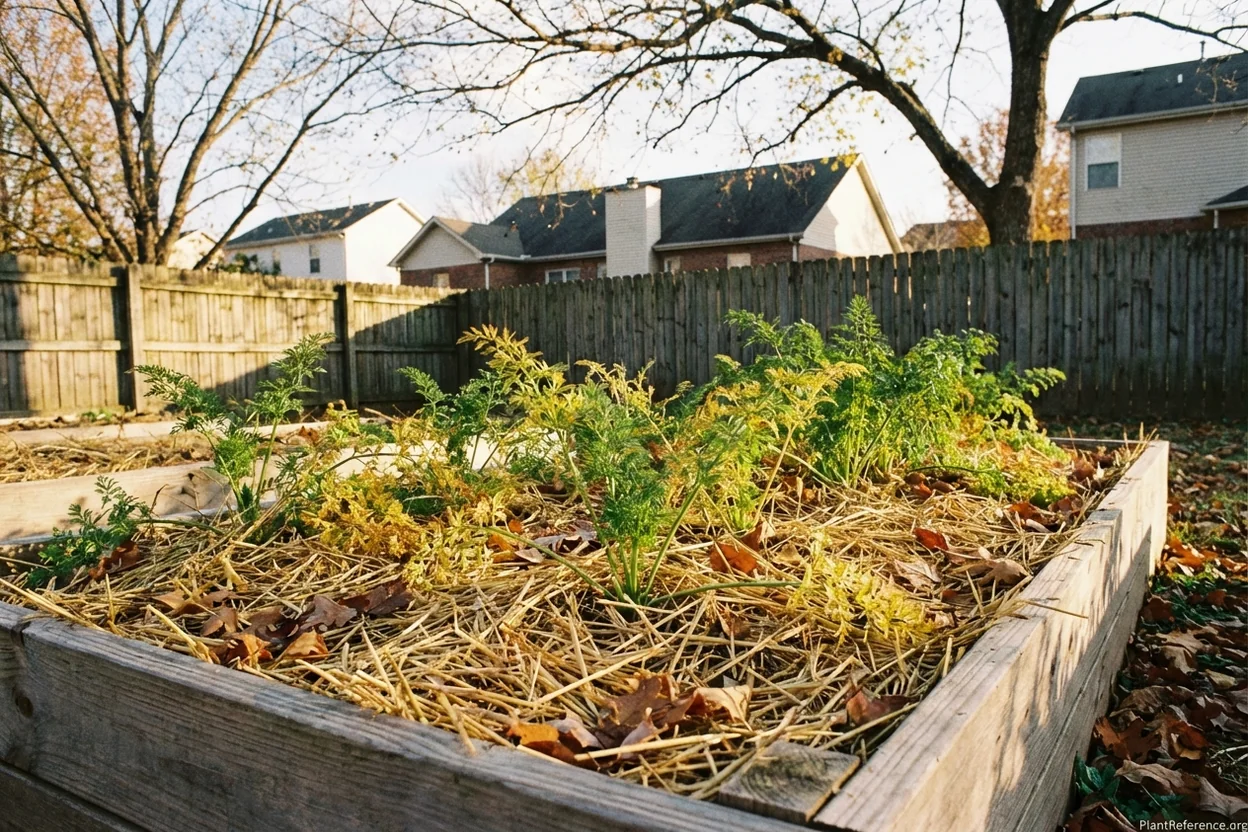
Apply 2-3 inches (5-8 cm) of straw or shredded leaves after seedlings establish. In spring, mulch moderates soil temperature as Nashville warms through May. In fall, mulch is critical—Nashville's October 30 first frost comes earlier than cities in Zone 7b, and 3-4 inches of straw extends your harvest window into November and December. Nashville's abundant hardwood trees provide excellent free leaf mulch. Raised Bed Soil Settling and Compaction: Prevention and Solutions
Troubleshooting Nashville-Specific Problems
Summer Heat Gap
Nashville's summer pushes soil temperatures above 75°F (24°C) from late June through mid-August, triggering bitter terpenoid compounds in carrot roots. The gap runs about 6-8 weeks—comparable to Raleigh and shorter than Atlanta or Dallas. Harvest spring carrots by mid-June and start fall sowings by late August. Nashville's variable spring weather occasionally delivers surprise late heat in May, so monitor soil temperature rather than relying strictly on calendar dates. When to Plant Peppers in Nashville: Complete Guide + Best Varieties for Zone 7a
Limestone Rock Fragments
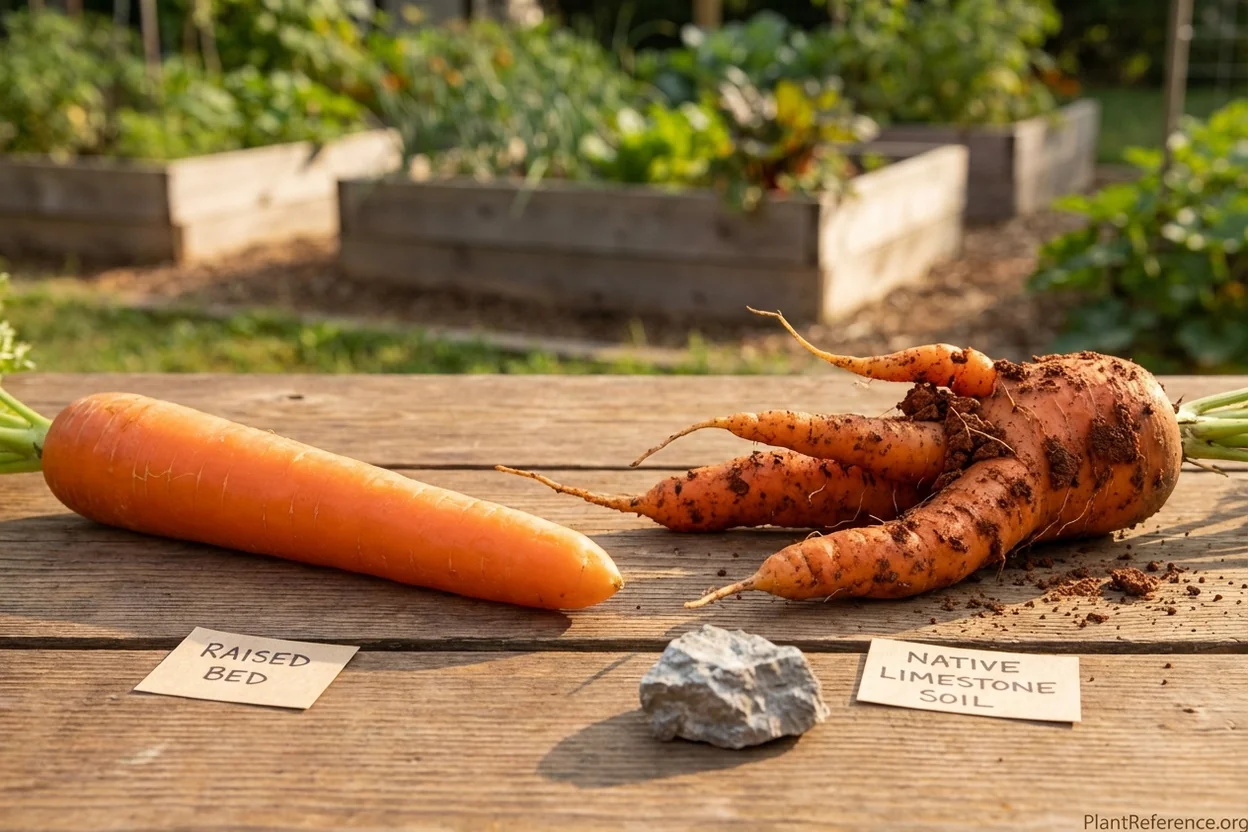
Nashville's Central Basin soil contains limestone fragments that deflect carrot roots, causing forking and irregular shapes. The problem is worst in neighborhoods where bedrock sits close to the surface—common across much of the city. Conical varieties like 🌿Daucus carota ssp. sativus 'Danvers 126' navigate around small fragments better than cylindrical types. For rock-free roots, raised beds filled with imported soil eliminate the issue entirely. When to Plant Squash in Nashville: Complete Guide + Best Varieties for Zone 7a
Heavy Spring Rainfall and Drainage
Nashville's spring rainfall averages 4-5 inches per month, delivered in intense storms that can waterlog beds for days. Saturated soil promotes damping-off disease in seedlings and root rot in developing carrots. Raise beds at least 6 inches above grade for drainage, and add coarse organic matter to the soil profile to create channels for water movement. In-ground beds on flat terrain may need French drains or gravel trenches alongside rows. Poor Drainage in Raised Beds: Causes and Fixes for Waterlogged Soil
Leaf Blight and Humidity
Nashville's humidity promotes Alternaria and Cercospora leaf blight during warm, wet shoulder seasons. Space rows 12 inches (30 cm) apart for airflow, irrigate at soil level, and remove infected foliage promptly. The Nantes cultivar 'Bolero' provides above-average resistance. Neem oil every 7-14 days offers organic control when conditions favor infection. When to Plant Tomatoes in Nashville: Complete Guide + Best Varieties for Zone 7a
Harvest & Storage
Spring carrots reach harvest size when shoulders measure 3/4-1 inch (2-2.5 cm) in diameter, typically 65-85 days after sowing. Nashville's spring allows harvest through mid-June before heat degrades quality. Water the bed the day before harvest to soften the soil, then loosen alongside the row with a garden fork. Nashville's clay-loam releases roots more easily than pure clay, but a fork still prevents tip breakage. When to Plant Kale in Nashville: Complete Guide + Best Varieties for Zone 7a
Fall carrots are the prize. Roots that develop through October's cooling temperatures reach peak sweetness from starch-to-sugar conversion. Nashville's first frost around October 30 comes earlier than Zone 7b cities, so plan accordingly—you need roots at harvestable size by late October. Apply 3-4 inches (8-10 cm) of straw mulch after the first frost and continue harvesting through November and December. Nashville winters occasionally dip into single digits°F (-13 to -18°C), so monitor forecasts and harvest before severe cold arrives.
For long-term storage, remove foliage immediately—leaves pull moisture from the root. Store unwashed carrots in perforated plastic bags at 32-38°F (0-3°C). 🌿Daucus carota ssp. sativus 'Danvers 126' stores for four to five months under proper refrigeration. When to Plant Onions in Nashville: Complete Guide + Best Varieties for Zone 7a
Frequently Asked Questions
Reading about plants and recognising them are different skills. These three build the second.
- Daily PlantIdentify the day’s mystery plant from a close-up photograph.
- Keyed OutWork a dichotomous key, lead by lead, to name a hidden specimen.
- Name That PlantName a specimen from botanical clues dealt hardest first.
Free to play, no account needed
Marcus manages the grounds at a historic property in Memphis and runs a side business doing residential garden design. He grew up helping his grandfather maintain a large vegetable garden in the Mississippi Delta and carried that knowledge into formal training—he has a degree in landscape technology. Memphis sits in a sweet spot for growing: long warm seasons, decent rainfall, and mild enough winters that many marginally hardy plants survive. Marcus writes about Southern gardening traditions, ornamental garden design, and dealing with the humidity and heavy rainfall that define the Mid-South climate.