When to Plant Carrots in Atlanta: Zone 8a Dates + Best Varieties
Pets & Toxicity
Recorded toxicity for plants linked in this guide. An unknown status is not a safety assessment.
No linked plant is recorded as toxicDetailsHide
Daucus carota ssp. sativus 'Chantenay' — Toxicity
Non-toxicView Daucus carota ssp. sativus 'Chantenay' plant profileDaucus carota ssp. sativus 'Nantes' — Toxicity
Non-toxicView Daucus carota ssp. sativus 'Nantes' plant profileDaucus carota ssp. sativus 'Imperator' — Toxicity
Non-toxicView Daucus carota ssp. sativus 'Imperator' plant profileDaucus carota ssp. sativus 'Rainbow' — Toxicity
Non-toxicView Daucus carota ssp. sativus 'Rainbow' plant profileDaucus carota ssp. sativus 'Danvers 126' — Toxicity
Non-toxicView Daucus carota ssp. sativus 'Danvers 126' plant profile
— Image © Plant Reference 2026
Atlanta's 230-day growing season is generous by any measure, but carrots only get to use about half of it. The reason is heat. When soil temperatures climb above 75-80°F (24-27°C)—which happens reliably by late May and doesn't let up until mid-September—carrots develop bitter, woody roots that nobody wants to eat. So the strategy here is simple: grow carrots hard in spring and fall, and give them a rest during the summer months. I've seen this work across all three community gardens I manage. The gardeners who time it right pull sweet, full-sized roots twice a year. The ones who try to push through July end up composting their harvest.
Best Carrot Varieties for Atlanta's Zone 8a Climate
Atlanta sits on Piedmont red clay, and that clay is the defining factor in variety selection. Native soil in most Atlanta neighborhoods is dense, acidic (pH 5.5-6.5), and compacts into a surface that might as well be concrete after a summer thunderstorm. Carrots need loose, friable ground to develop straight roots, so your choice of variety needs to account for what your soil can actually provide.
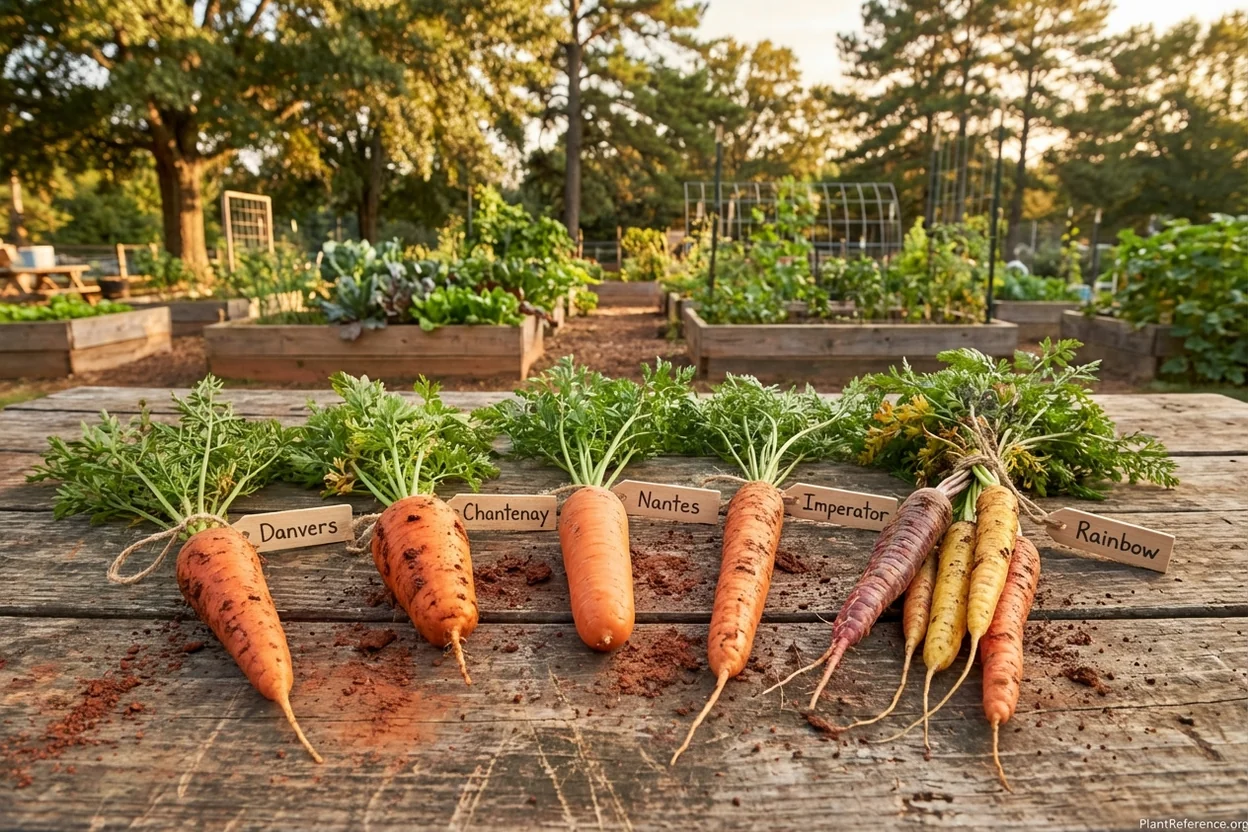
🌿Daucus carota ssp. sativus 'Danvers 126' (DAW-kus kuh-ROH-tuh) is my top recommendation for Atlanta gardens working with native or partially amended clay. The conical root generates outward force as it grows, physically displacing soil particles instead of trying to push through resistance head-on. At 70-80 days to maturity, 🌿Daucus carota ssp. sativus 'Danvers 126' fits the spring window with time to spare before summer heat arrives. The firm, high-fiber flesh stores well through winter.
🌿Daucus carota ssp. sativus 'Chantenay' is the variety I recommend for community garden plots where soil work has been inconsistent. At 4-5 inches (10-13 cm) long with broad shoulders, 🌿Daucus carota ssp. sativus 'Chantenay' stays in the amended topsoil layer and avoids the clay horizon entirely. It works in containers and shallow raised beds that many community gardeners rely on. Pull before the diameter exceeds 2 inches (5 cm) or the core turns woody.
🌿Daucus carota ssp. sativus 'Nantes' produces the sweetest, most tender roots of any variety—but it requires well-amended or raised bed soil to perform. The cylindrical shape doesn't tolerate clay resistance the way conical varieties do. If you've built raised beds or deeply amended your plot, 🌿Daucus carota ssp. sativus 'Nantes' rewards the effort with exceptional eating quality. The cultivar 'Bolero' adds disease resistance that's valuable in Atlanta's humid conditions.
🌿Daucus carota ssp. sativus 'Imperator' needs 12 inches (30 cm) of loose, obstruction-free soil. In native Atlanta clay, that doesn't exist. Reserve 🌿Daucus carota ssp. sativus 'Imperator' for purpose-built raised beds filled with a custom soil blend. The cultivar 'Sugarsnax 54' delivers grocery-store length with high sugar content.
🌿Daucus carota ssp. sativus 'Rainbow' adds visual appeal and nutritional variety with white, yellow, orange, and coral roots from one F1 hybrid packet. At 70-75 days to maturity, it fits both planting windows and works in amended beds.
Variety | Days to Maturity | Best For | Notes for Atlanta |
|---|---|---|---|
70-80 days | Native clay and storage | Top pick for Atlanta red clay; conical root handles dense soil | |
65-75 days | Community gardens and containers | Short roots avoid clay subsoil; reliable in shallow or compacted plots | |
65-75 days | Amended soil and raised beds | Sweetest flavor but requires loose soil; 'Bolero' for disease resistance | |
75-85 days | Deep raised beds only | Needs 12+ inches loose ground; not for native Atlanta clay | |
70-75 days | Specialty and nutrition | Multiple colors; fits both spring and fall windows |
Specific Planting Dates for Atlanta
Atlanta's March 25 average last frost and November 10 first frost give you a 230-day frost-free window. But carrots only grow well when soil temperatures stay between 40-75°F (4-24°C). That creates two distinct planting windows with a dead zone through summer.
Spring Planting
Start sowing in late February, about four weeks before the March 25 last frost. Carrots tolerate light frost, so there's no risk to early planting as long as the soil is workable. Continue succession sowings every two weeks through mid-March. Spring-planted carrots need to reach harvestable size by late May or early June—once soil temperatures hit 80°F (27°C), root quality deteriorates fast.
Fall Planting
This is Atlanta's premier carrot season. Sow from early September through early October, timing the first sowing roughly 8-10 weeks before the November 10 first frost. Fall soil temperatures are still warm enough for fast germination (5-7 days instead of spring's 14-21), and the roots bulk up as temperatures cool through October and November. The cooling soil triggers starch-to-sugar conversion that produces the sweetest carrots of the year.
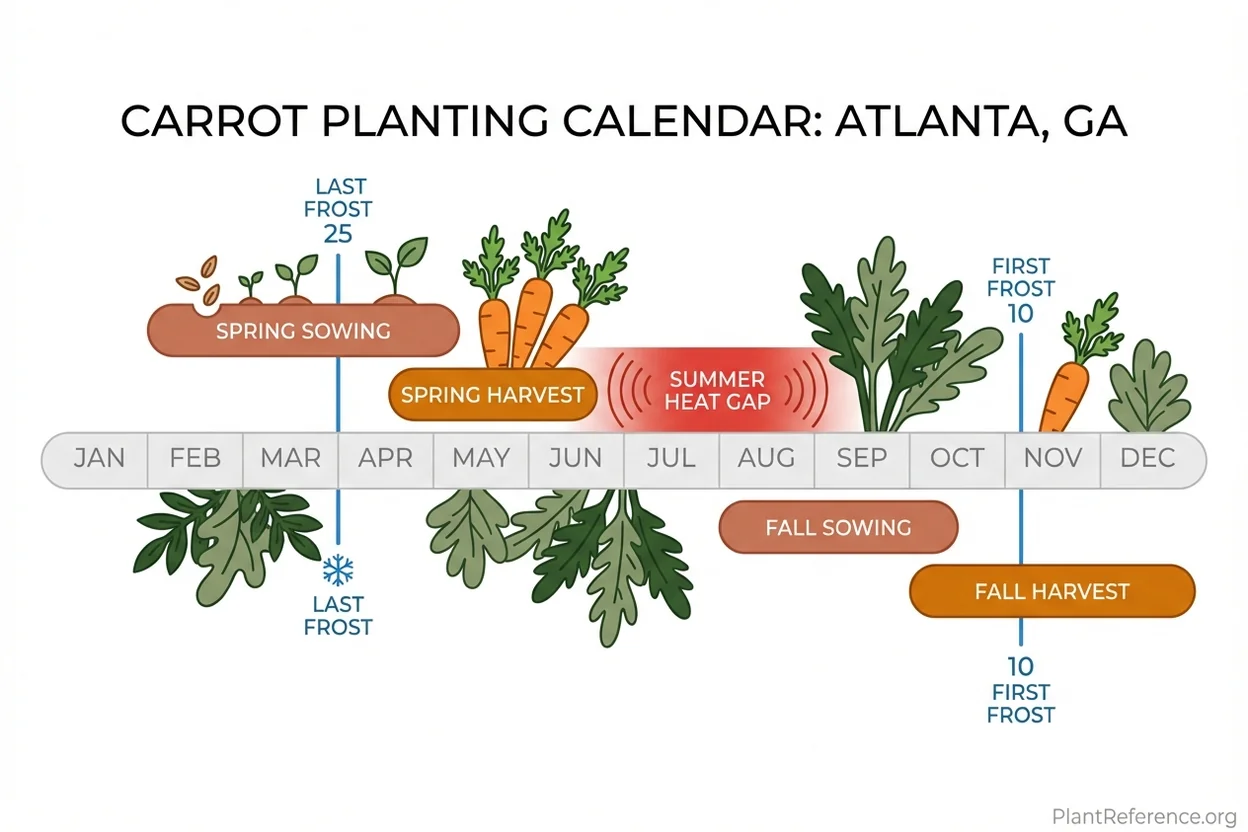
Spring sowing window: February 20 - March 15
Spring harvest: May through early June (before soil hits 80°F)
Summer heat gap: June through August (no carrot planting)
Fall sowing window: September 1 - October 5
Fall harvest: November through December
Best flavor: Fall harvest after cooling soil triggers sugar conversion
Complete Growing Guide for Atlanta
Soil Preparation
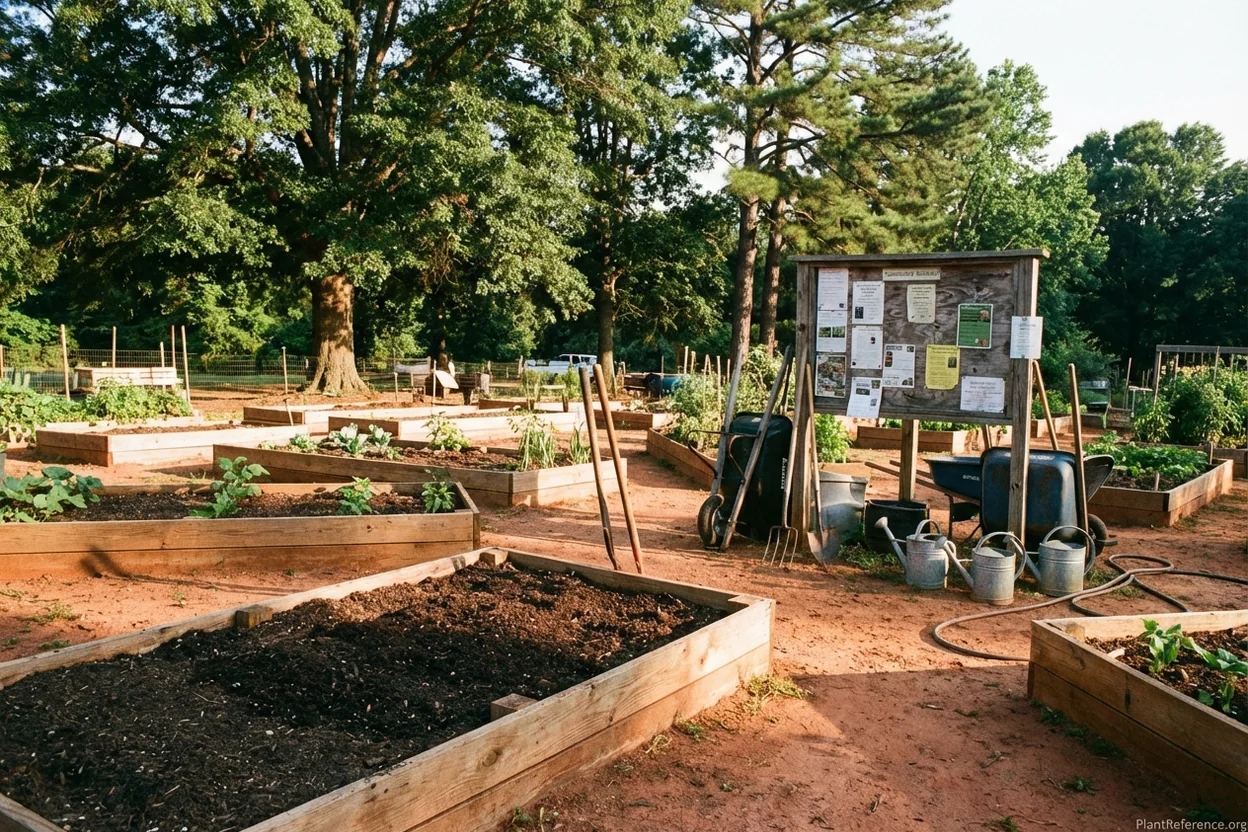
Atlanta's Piedmont red clay is the biggest obstacle to growing carrots here. The clay is dense, poorly drained, and compacts severely after rain. Roots that hit unbroken clay fork, stunt, or stop growing entirely. Your approach depends on how much effort you can invest upfront.
For in-ground beds, double-dig to 12 inches (30 cm) and incorporate 4-6 inches (10-15 cm) of finished compost plus coarse builder's sand. The compost improves drainage and adds organic matter; the sand creates air pockets that roots can penetrate. This is hard work in Georgia clay, but it transforms the soil. Test your soil pH through the UGA Extension Service—Atlanta clay typically runs 5.5-6.5, and carrots prefer 6.0-6.8. Add lime if needed to bring the pH up. Best Soil Mix for Raised Beds: Creating the Perfect Growing Medium
For raised beds—and this is what I recommend for anyone serious about carrots in Atlanta—build to at least 12 inches (30 cm) deep and fill with 60% topsoil, 30% compost, and 10% coarse sand. This completely bypasses the clay problem. Line the bottom with landscape fabric to prevent clay from wicking moisture up into your blend. How to Build a Raised Garden Bed: Step-by-Step Construction Guide
Seeding
Sow seeds 1/4 inch (0.6 cm) deep in rows 12 inches (30 cm) apart. Cover with vermiculite or fine compost—not native clay soil. Atlanta's clay crusts hard after rain, and carrot seedlings don't have the mechanical strength to break through that surface. Crusting is the number one cause of poor germination stands in this area. Best Soil for Raised Beds: 6 Commercial Mixes Tested and Compared
For spring sowings, lay burlap or a board over the seeded row to maintain moisture during the 14-21 day germination period. Check daily from day 5 and remove the cover as soon as seedling loops appear. Fall sowings germinate much faster—5-7 days—because the warm soil speeds enzymatic activity in the seed. Keep the surface moist with light daily watering until seedlings emerge.
Thinning
Thin in two stages: first to 1 inch (2.5 cm) when seedlings reach 2 inches (5 cm) tall, then to 2-3 inches (5-8 cm) at the 4-5 inch (10-13 cm) stage. Snip at the soil line with scissors—pulling in clay soil disturbs neighboring roots more than in sandy ground. In community garden plots where space is limited, consistent thinning is the difference between full-sized roots and pencil-thin stubs. Raised Bed Vegetable Garden Layout: Planning for Maximum Production
Watering
Carrots need 1 inch (2.5 cm) of water per week during active growth, increasing to 2 inches (5 cm) as roots bulk up. Atlanta's rainfall is generous—about 50 inches annually—but it comes in unpredictable thunderstorms rather than steady, soaking rain. A 2-inch downpour followed by a week of dry weather is worse for carrots than consistent light rain.
Use drip irrigation or soaker hoses to provide steady, even moisture. Erratic watering causes root splitting as cells expand unevenly after a dry spell. In raised beds with a sandy mix, you'll need to water more frequently than in-ground beds because the amended soil drains faster than native clay. Raised Bed Irrigation Systems: Watering Solutions for Consistent Growth
Mulching for Temperature Control
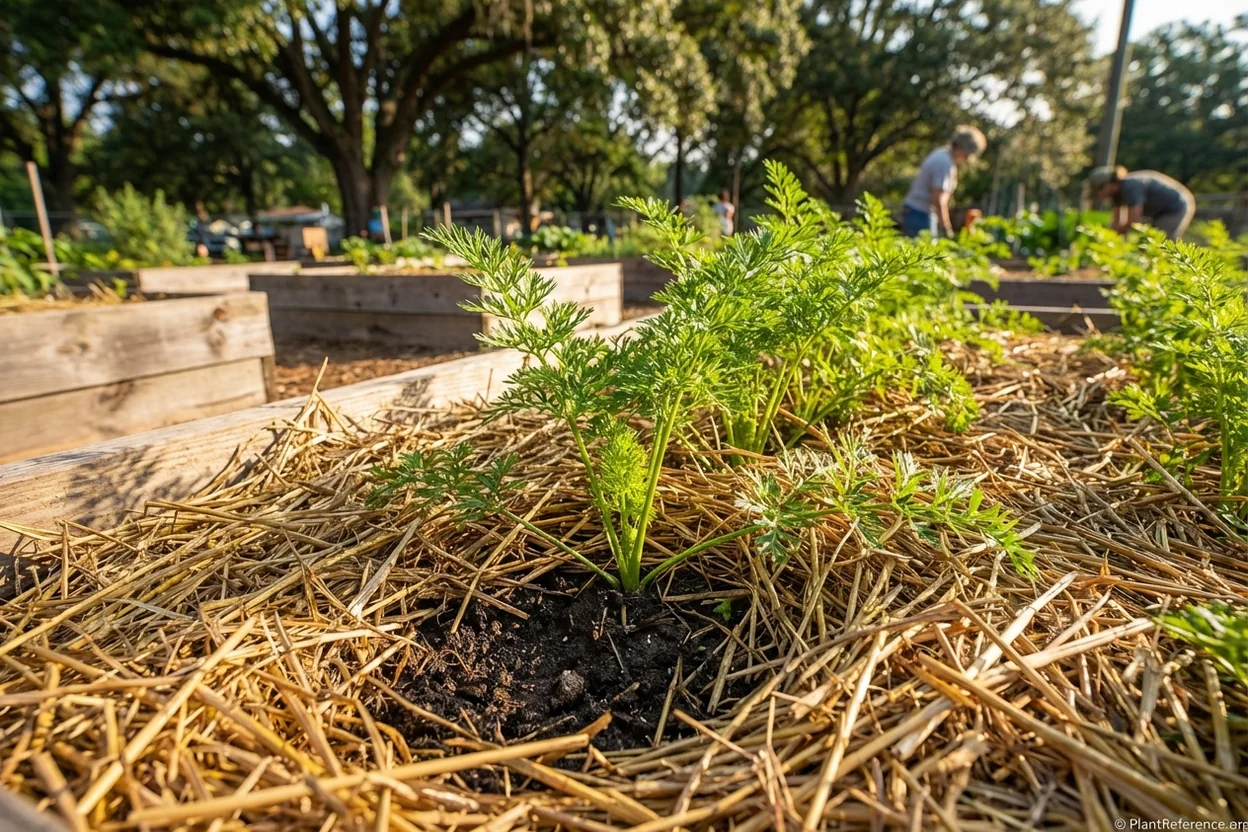
Mulch is critical in Atlanta's carrot beds. Apply 2-3 inches (5-8 cm) of straw or shredded leaves after seedlings are established. In spring, mulch keeps roots cool as temperatures climb toward the May-June heat threshold. In fall, mulch moderates soil temperature swings between warm days and cool nights, promoting steady root development. When to Plant Kale in Atlanta: Complete Guide + Best Varieties for Zone 8a
Troubleshooting Atlanta-Specific Problems
Summer Heat and Bitterness
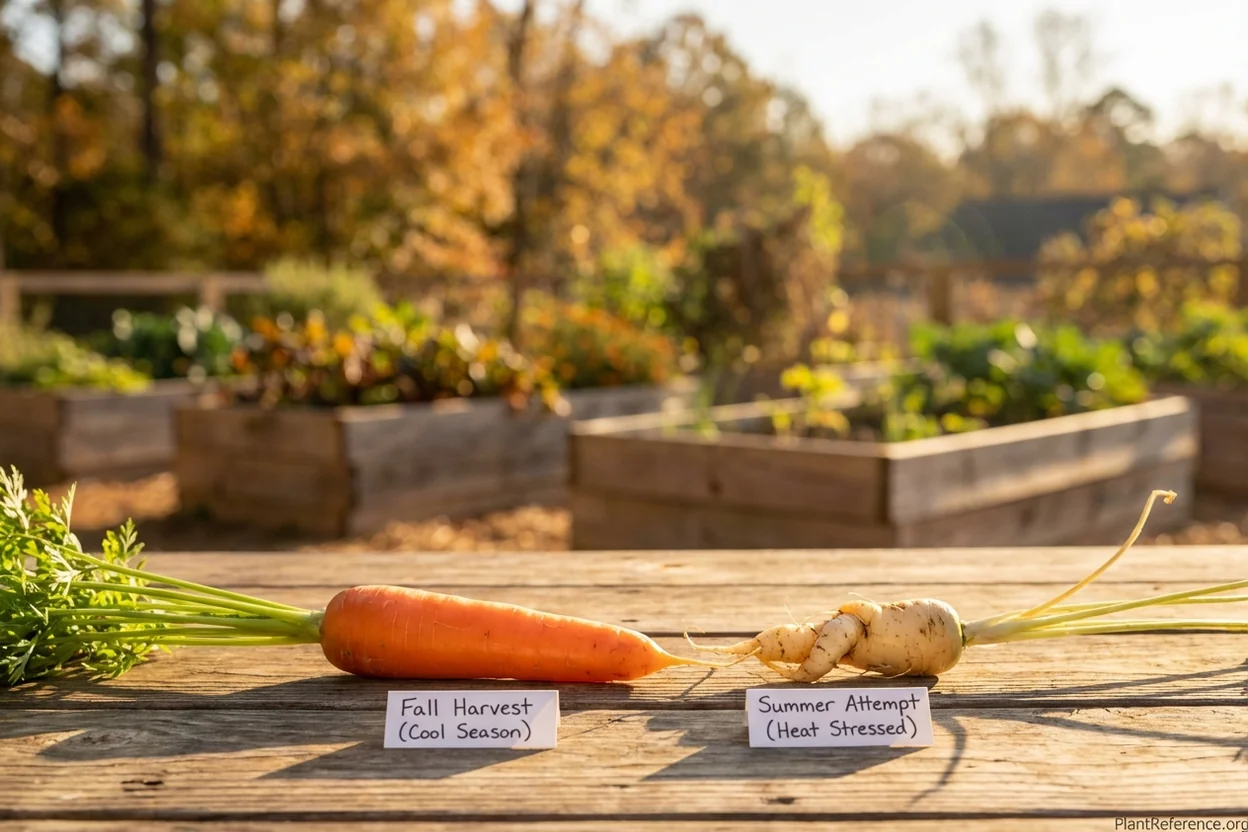
When soil temperatures exceed 75-80°F (24-27°C), carrots produce terpenoid compounds that create bitter, unpleasant flavor. Atlanta crosses this threshold reliably by late May and stays above it through mid-September. The solution is timing, not technology—harvest spring carrots before June and don't sow fall crops until September when soil begins cooling. Heavy mulch extends the spring window by a week or two at most. When to Plant Peppers in Atlanta: Complete Guide + Best Varieties for Zone 8a
Clay Crusting After Rain
Atlanta's thunderstorms dump heavy rain that compacts the soil surface into a hard crust. Carrot seedlings lack the force to push through crusted clay, resulting in patchy or nonexistent stands. Cover seeds with vermiculite instead of native soil, and protect newly seeded beds from direct rain impact with floating row cover or a light shade cloth during the first two weeks. Poor Drainage in Raised Beds: Causes and Fixes for Waterlogged Soil
Southern Root-Knot Nematode
Root-knot nematodes are a significant soil pest in Georgia's warm soils. These microscopic worms invade root tissue and create galls that deform the carrot, producing knobby, unusable roots. Soil solarization in July and August—covering moistened soil with clear plastic for 4-6 weeks—uses Atlanta's intense summer heat to kill nematodes in the top 6-8 inches. Crop rotation helps but doesn't eliminate the problem since nematodes attack a wide range of vegetables. When to Plant Squash in Atlanta: Complete Guide + Best Varieties for Zone 8a
Leaf Blight in Humid Conditions
Atlanta's humidity promotes Alternaria and Cercospora leaf blight on carrot foliage, particularly during the warm, wet shoulder seasons. Infected leaves develop brown lesions that reduce photosynthesis and slow root development. Space rows 12 inches (30 cm) apart for airflow, avoid overhead irrigation, and remove infected foliage promptly. The Nantes cultivar 'Bolero' offers above-average resistance to both blights. When to Plant Tomatoes in Atlanta: Complete Guide + Best Varieties for Zone 8a
Harvest & Storage
Spring carrots reach harvestable size when shoulders measure 3/4-1 inch (2-2.5 cm) in diameter, typically 65-85 days after sowing. In Atlanta, urgency matters—harvest the entire spring crop before soil temperatures hit 80°F (27°C), usually by late May or early June. Use a garden fork to loosen clay soil alongside the row before pulling. Yanking carrots straight out of compacted clay snaps off root tips every time. When to Plant Green Beans in Atlanta: Complete Guide + Best Varieties for Zone 8a
Fall carrots are the prize crop. Roots that mature during October and November's cooling temperatures develop peak sweetness from starch-to-sugar conversion. Atlanta's first frost around November 10 doesn't kill carrots—it improves them. You can leave fall roots in the ground through December in most years, harvesting as needed. Apply 3-4 inches (8-10 cm) of straw mulch after the first frost to insulate against occasional hard freezes that dip into the low 20s°F (-5°C).
For long-term storage, remove foliage immediately—the leaves pull water from the root. Store unwashed carrots in perforated plastic bags at 32-38°F (0-3°C). 🌿Daucus carota ssp. sativus 'Danvers 126' stores for four to five months under proper conditions, carrying you from the November harvest well into spring. When to Plant Onions in Atlanta: Complete Guide + Best Varieties for Zone 8a
Frequently Asked Questions
Reading about plants and recognising them are different skills. These three build the second.
- Daily PlantIdentify the day’s mystery plant from a close-up photograph.
- Keyed OutWork a dichotomous key, lead by lead, to name a hidden specimen.
- Name That PlantName a specimen from botanical clues dealt hardest first.
Free to play, no account needed
Grace is a community garden organizer in Atlanta who manages three neighborhood garden plots across the city. She came to gardening through food justice work—she saw how many Atlanta neighborhoods lacked access to fresh produce and decided to do something about it. Grace has a background in public health and brings that lens to everything she writes about food growing, soil safety in urban settings, and making gardens work for the communities they serve. She grows a wide range of vegetables, with a focus on crops that produce heavily in Atlanta's long growing season. Grace is practical and community-minded—she thinks about gardens as shared spaces, not just personal projects.