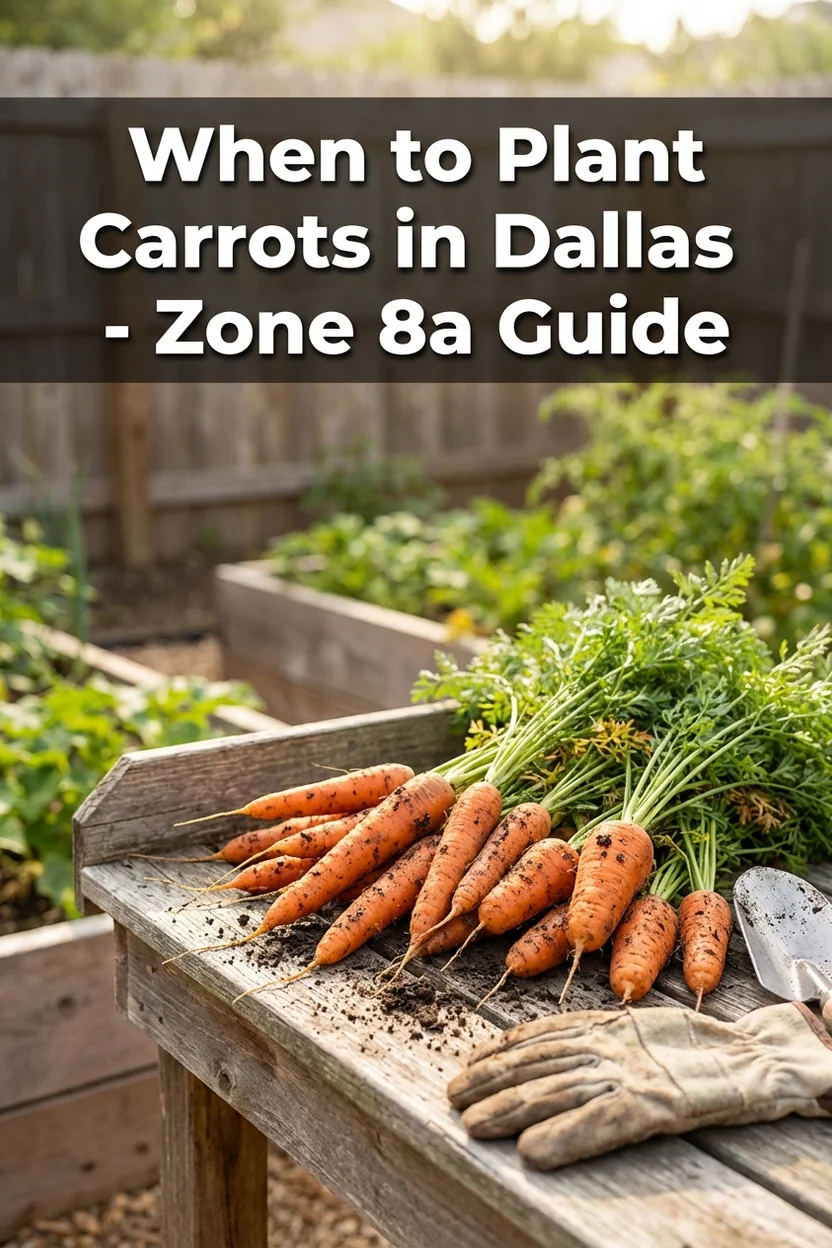
When to Plant Carrots in Dallas: Zone 8a Dates + Best Varieties
Pets & Toxicity
Recorded toxicity for plants linked in this guide. An unknown status is not a safety assessment.
No linked plant is recorded as toxicDetailsHide
Daucus carota ssp. sativus 'Nantes' — Toxicity
Non-toxicView Daucus carota ssp. sativus 'Nantes' plant profileDaucus carota ssp. sativus 'Imperator' — Toxicity
Non-toxicView Daucus carota ssp. sativus 'Imperator' plant profileDaucus carota ssp. sativus 'Chantenay' — Toxicity
Non-toxicView Daucus carota ssp. sativus 'Chantenay' plant profileDaucus carota ssp. sativus 'Rainbow' — Toxicity
Non-toxicView Daucus carota ssp. sativus 'Rainbow' plant profileDaucus carota ssp. sativus 'Danvers 126' — Toxicity
Non-toxicView Daucus carota ssp. sativus 'Danvers 126' plant profile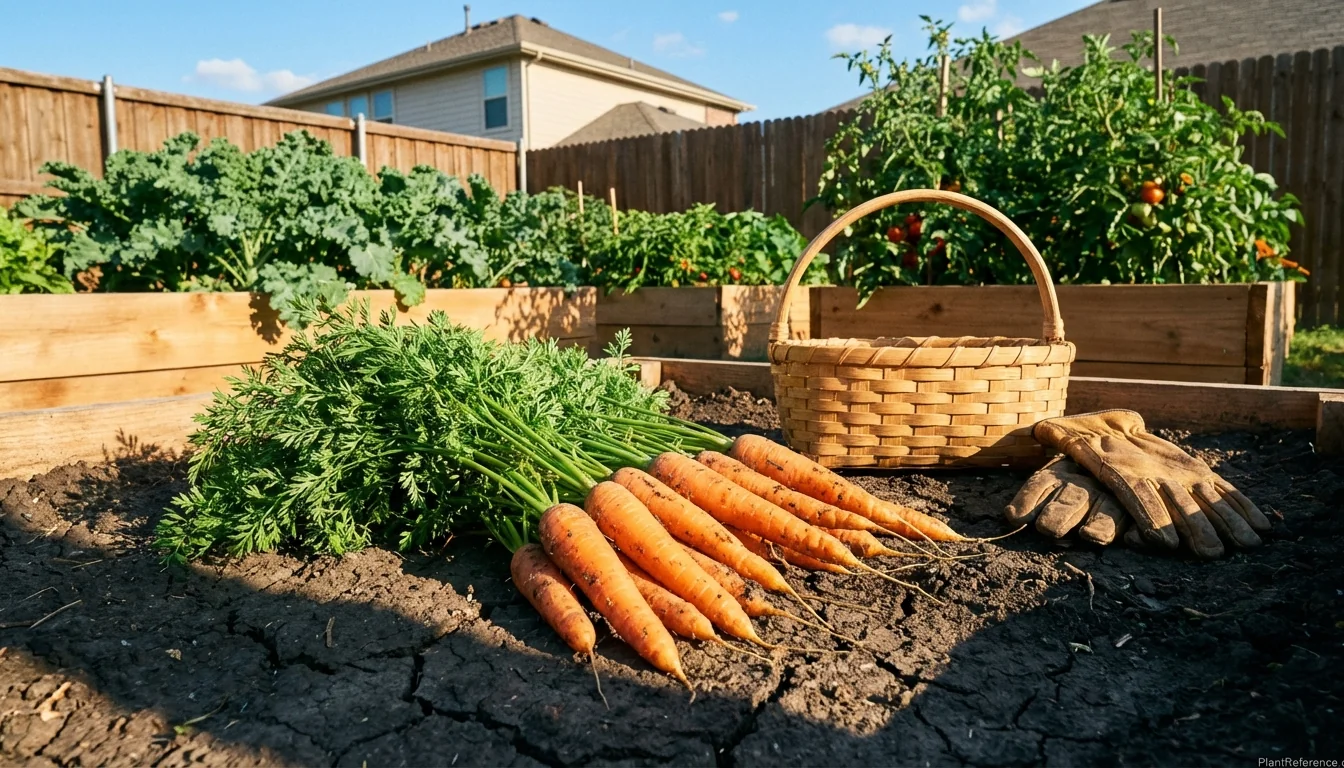
— Image © Plant Reference 2026
I spend most of my working days dealing with warm-season turf grass, so when people ask me about growing vegetables in Dallas, I start with the same advice: respect the heat. Carrots are a cool-season crop that tastes best when soil temperatures stay between 40-75°F (4-24°C). Dallas blows past that upper limit by late May and doesn't come back down until mid-September. The gardeners who fight that reality end up with bitter, woody roots. The ones who work with it pull two solid harvests a year from some of the richest soil in Texas.
Best Carrot Varieties for Dallas's Zone 8a Climate
Dallas sits on the Blackland Prairie, and the soil here is nothing like what you'll find in most of the country. The native clay is dark, heavy, and alkaline—pH 7.5 to 8.5—with a shrink-swell characteristic that cracks wide open in drought and seals tight after rain. Carrots need loose ground to grow straight, so variety selection comes down to matching root shape to what your soil can handle.
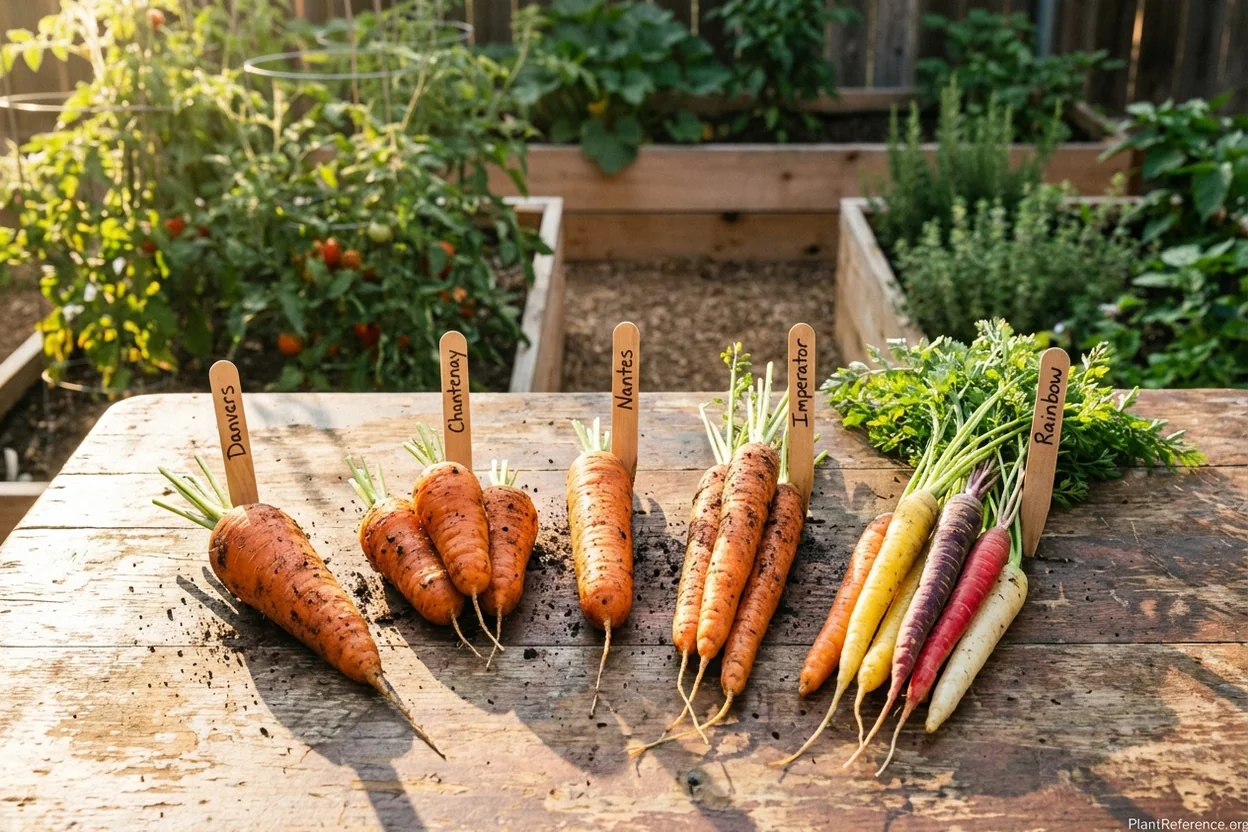
🌿Daucus carota ssp. sativus 'Danvers 126' (DAW-kus kuh-ROH-tuh) is the variety I recommend first for Dallas. The conical root pushes through heavy soil better than any cylindrical type, and its 70-80 day maturity fits comfortably in both planting windows. 🌿Daucus carota ssp. sativus 'Danvers 126' also stores well—the firm, high-fiber flesh holds for months in cold storage, stretching your fall harvest through winter.
🌿Daucus carota ssp. sativus 'Chantenay' is the practical choice for beds that haven't been deeply amended. At 4-5 inches (10-13 cm) long with broad shoulders, 🌿Daucus carota ssp. sativus 'Chantenay' stays in the topsoil layer and avoids the dense clay below. Works in containers, shallow raised beds, and those first-year garden plots where the soil is still a work in progress. Pull before the diameter exceeds 2 inches (5 cm)—beyond that, the core gets woody fast.
🌿Daucus carota ssp. sativus 'Nantes' delivers the best eating quality of any variety—sweet, tender, nearly coreless—but requires well-amended or raised bed soil. The cylindrical root can't generate the lateral force needed to push through Blackland Prairie clay. If you've built raised beds or deeply worked your ground, 🌿Daucus carota ssp. sativus 'Nantes' is worth every bit of that effort. The cultivar 'Bolero' adds disease resistance valuable in Dallas's humid spring.
🌿Daucus carota ssp. sativus 'Imperator' needs 12 inches (30 cm) of loose, obstruction-free soil. In native Dallas clay, that's not happening without purpose-built raised beds. The cultivar 'Sugarsnax 54' delivers high sugar content in the classic long, slender form. Reserve it for deep raised beds with a custom soil blend.
🌿Daucus carota ssp. sativus 'Rainbow' produces white, yellow, orange, and coral roots from one hybrid packet. At 70-75 days to maturity, it fits both windows and adds variety to the harvest. Moderate depth requirements work in amended beds.
Variety | Days to Maturity | Best For | Notes for Dallas |
|---|---|---|---|
70-80 days | Native clay and storage | Top pick for Blackland Prairie clay; conical root handles alkaline soil | |
65-75 days | Shallow beds and containers | Short roots stay above dense clay; reliable in unimproved ground | |
65-75 days | Amended soil and raised beds | Best flavor but needs loose soil; 'Bolero' resists spring humidity diseases | |
75-85 days | Deep raised beds only | Needs 12+ inches loose soil; not for native Dallas clay | |
70-75 days | Specialty and nutrition | Multiple colors; fits both spring and fall windows |
Specific Planting Dates for Dallas
Dallas averages a March 15 last frost and November 25 first frost, giving you 255 frost-free days. That's a long season on paper, but carrots only thrive during the cool bookends. Summer shuts production down completely.
Spring Planting
Start sowing in late February, about two to three weeks before the March 15 last frost. Carrots handle light frost without damage, so there's no risk to early planting. Continue succession sowings every two weeks through mid-March. The goal is getting roots to harvestable size before soil temperatures hit 80°F (27°C)—which in Dallas happens by late May in most years. Spring carrots need to be out of the ground by early June at the latest.
Fall Planting
Fall is the money season for Dallas carrots. Sow from mid-September through mid-October, once soil temperatures have dropped back below 85°F (29°C). September soil is still warm enough for fast germination—5-7 days compared to spring's 14-21—and roots develop through October and November as temperatures fall steadily. The cooling soil converts stored starch to sugars, producing the sweetest carrots of the year. Dallas's late first frost on November 25 gives fall carrots generous time to size up.
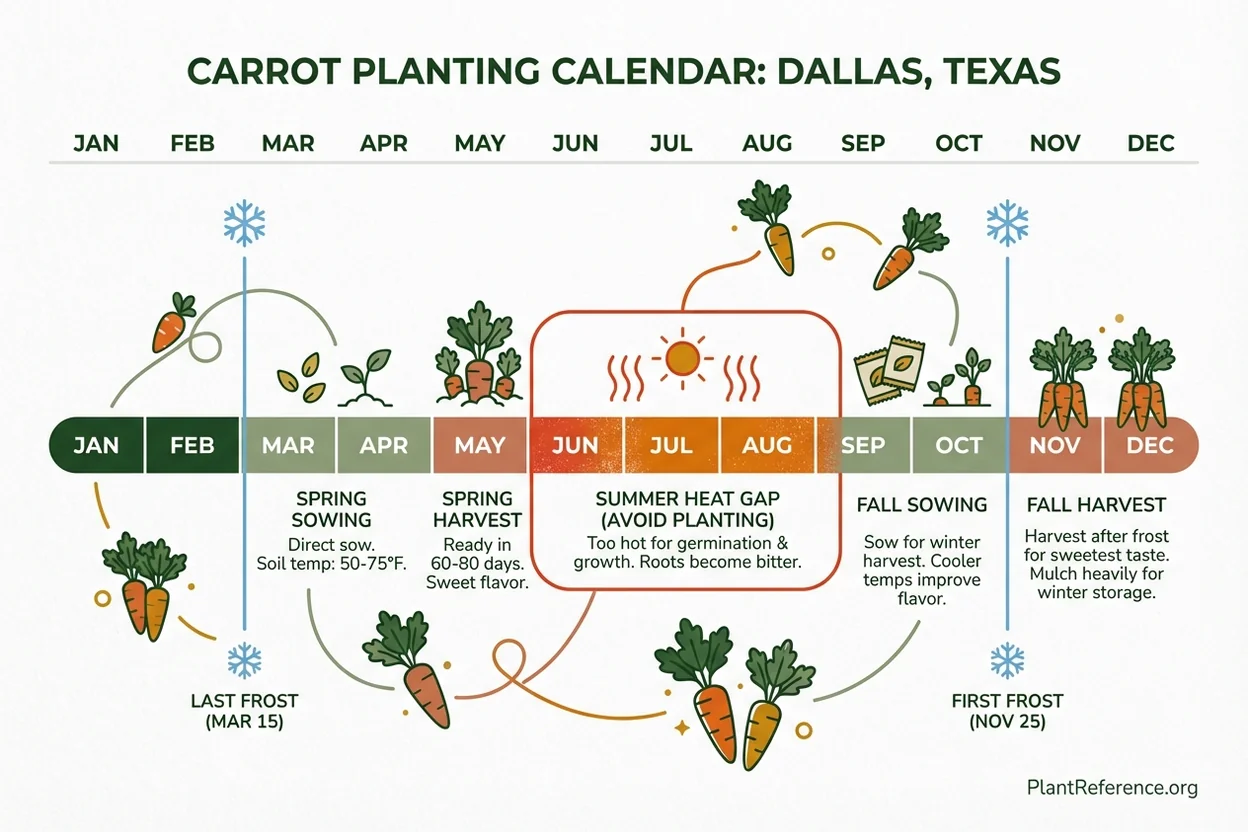
Spring sowing window: February 20 - March 15
Spring harvest: May through early June (before soil exceeds 80°F)
Summer heat gap: June through mid-September (no carrot planting)
Fall sowing window: September 15 - October 15
Fall harvest: November through January
Best flavor: Fall and early winter harvest after cooling triggers sugar conversion
Complete Growing Guide for Dallas
Soil Preparation
The Blackland Prairie clay under most Dallas neighborhoods is fertile but physically challenging. It's heavy, alkaline (pH 7.5-8.5), and has a shrink-swell property that creates deep cracks in drought and compacts into a solid mass after rain. Carrots fork or stunt when roots hit unbroken clay.
For in-ground beds, work the soil to 12 inches (30 cm) deep when moisture levels allow crumbling. Incorporate 4-6 inches (10-15 cm) of finished compost and coarse builder's sand. The compost lowers pH slightly toward the 6.0-6.8 range carrots prefer and improves drainage. Skip gypsum for breaking up clay—Dallas soil already has plenty of calcium, and gypsum only helps with sodium-induced compaction, which isn't the issue here. A soil test through the Texas A&M AgriLife Extension confirms your specific pH and nutrient levels. Best Soil Mix for Raised Beds: Creating the Perfect Growing Medium
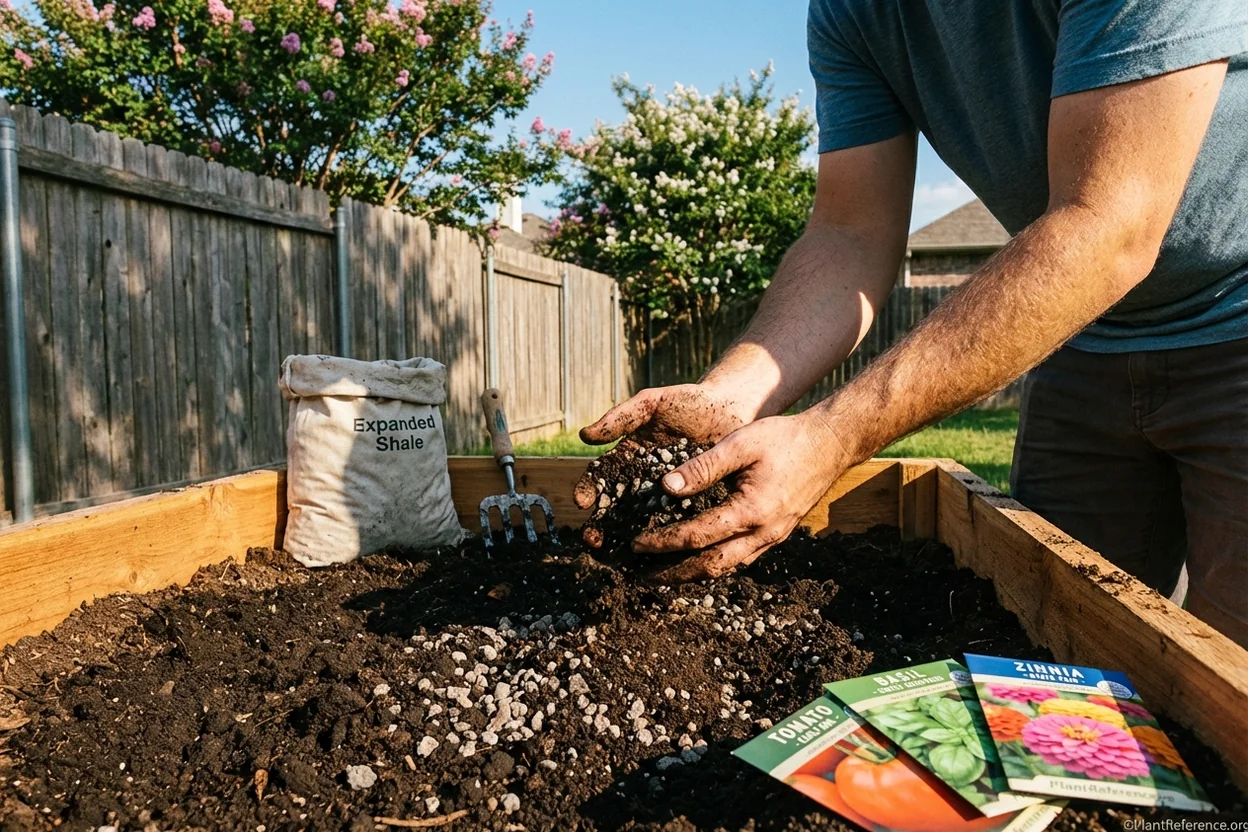
Raised beds are the most reliable path to straight carrots in Dallas. Build to at least 12 inches (30 cm) deep and fill with 60% topsoil, 30% compost, and 10% expanded shale—a Texas alternative to perlite that provides permanent drainage improvement without breaking down. Cedar or composite boards handle Dallas heat and humidity better than untreated pine. How to Build a Raised Garden Bed: Step-by-Step Construction Guide
Seeding
Sow seeds 1/4 inch (0.6 cm) deep in rows 12 inches (30 cm) apart. Cover with vermiculite or fine compost—never native clay. Dallas Blackland Prairie clay crusts hard after rain, and carrot seedlings don't have the strength to punch through. That crust is the leading cause of failed germination stands in North Texas. Best Soil for Raised Beds: 6 Commercial Mixes Tested and Compared
For spring sowings, lay burlap over the row to hold surface moisture during the 14-21 day germination period. Check daily from day 5 and remove the cover when the first seedling loops appear. For fall sowings, the warm soil speeds germination to 5-7 days, but the surface dries quickly in September heat. Light watering twice daily keeps the seed zone moist without saturating the bed.
Thinning
Thin in two stages: first to 1 inch (2.5 cm) when seedlings hit 2 inches (5 cm) tall, then to 2-3 inches (5-8 cm) at 4-5 inches (10-13 cm). Cut at the soil line with scissors instead of pulling—clay grips roots tight, and pulling one seedling disturbs everything around it. Raised Bed Vegetable Garden Layout: Planning for Maximum Production
Watering
Carrots need 1-2 inches (2.5-5 cm) of water weekly during active growth. Dallas rainfall averages about 37 inches annually but arrives erratically—you might get 3 inches in a single thunderstorm followed by three weeks of nothing. That boom-and-bust pattern is the worst possible scenario for carrots. Roots split when heavy rain follows a dry spell because cells expand faster than cell walls can accommodate.
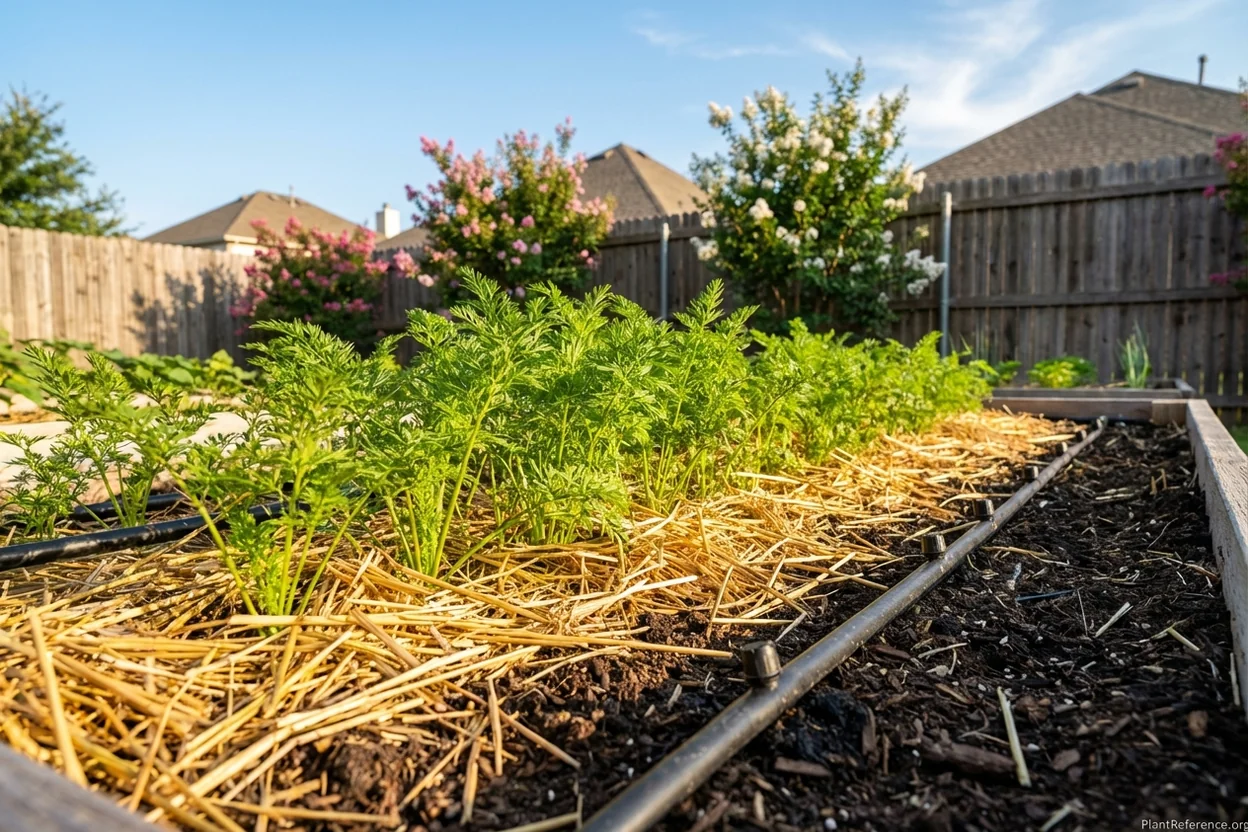
Drip irrigation on a timer solves this. Run lines alongside carrot rows and deliver consistent, slow moisture regardless of what the sky does. In raised beds with an expanded shale mix, you'll water more frequently since the blend drains faster than native clay. During fall planting, don't let September heat trick you into overwatering—feel the soil at 2-inch depth before irrigating. Raised Bed Irrigation Systems: Watering Solutions for Consistent Growth
Mulching
Apply 2-3 inches (5-8 cm) of straw or shredded hardwood mulch after seedlings establish. In spring, mulch keeps soil temperatures down as Dallas heats up, buying you an extra week or two before the heat threshold hits. In fall, mulch moderates the temperature swings between 85°F afternoons and 50°F nights that characterize October in North Texas. Raised Bed Soil Settling and Compaction: Prevention and Solutions
Troubleshooting Dallas-Specific Problems
Extreme Summer Heat
Dallas summer soil temperatures regularly exceed 90°F (32°C) at root depth—far above the 75-80°F threshold where carrots produce bitter terpenoid compounds. Triple-digit air temperatures in July and August make any carrot production impossible, even with shade cloth and heavy mulch. The only solution is timing: harvest spring carrots by early June and don't sow fall crops until mid-September when soil finally cools. When to Plant Peppers in Dallas: Complete Guide + Best Varieties for Zone 8a
Alkaline Soil and Nutrient Lockout
Blackland Prairie clay runs pH 7.5-8.5, well above the 6.0-6.8 range carrots prefer. At high pH, iron, manganese, and zinc become chemically unavailable even when present in the soil. Yellowing between leaf veins—interveinal chlorosis—is the visible symptom. Amend with sulfur to lower pH gradually, and use chelated micronutrient foliar sprays as a short-term fix. Annual compost additions slowly bring pH down over multiple seasons. Raised Bed Soil pH Problems: Testing, Adjusting, and Maintaining Balance
Clay Cracking and Root Exposure
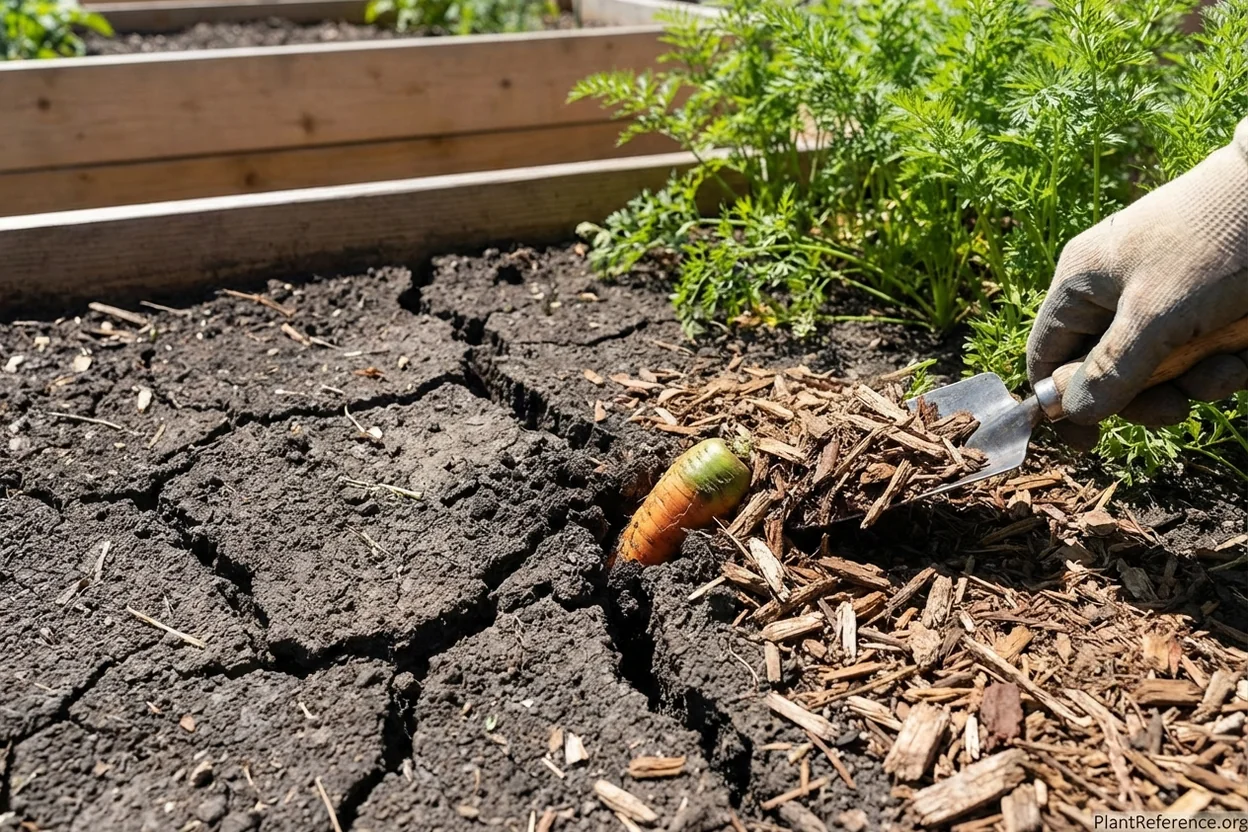
When Dallas goes weeks without rain—common in late summer and early fall—Blackland Prairie clay shrinks and cracks. Those cracks can expose carrot shoulders to direct sunlight, triggering chlorophyll production that turns the crown green and bitter. Hill soil or mulch over exposed shoulders immediately. Fall plantings are especially vulnerable during the September transition period. When to Plant Squash in Dallas: Complete Guide + Best Varieties for Zone 8a
Aphids and Leaf Blight
Green peach aphids colonize carrot foliage in both spring and fall. Heavy infestations stunt root development and produce honeydew that attracts sooty mold. A strong water spray dislodges most aphids. For persistent problems, neem oil every 7-14 days provides organic control. Dallas humidity also promotes Alternaria leaf blight—space rows for airflow and avoid overhead irrigation. When to Plant Tomatoes in Dallas: Complete Guide + Best Varieties for Zone 8a
Harvest & Storage
Spring carrots reach harvest size when shoulders measure 3/4-1 inch (2-2.5 cm) in diameter, typically 65-85 days after sowing. In Dallas, speed matters—get the entire spring crop out of the ground before soil crosses 80°F, usually by early June. Water the bed thoroughly the day before harvest to soften the clay, then loosen alongside the row with a garden fork. Pulling carrots straight out of dry Blackland Prairie clay is a guaranteed way to snap off root tips. When to Plant Green Beans in Dallas: Complete Guide + Best Varieties for Zone 8a
Fall carrots are the real payoff. Roots that mature through November's cooling temperatures develop peak sweetness. Dallas's late November 25 first frost gives fall carrots more time than most Southern cities, and the frost itself improves flavor through cold-induced sugar conversion. You can leave roots in the ground through December and into January with 3-4 inches (8-10 cm) of straw mulch for insulation against occasional hard freezes.
For long-term storage, cut foliage immediately after harvest—leaves pull moisture from the root. Store unwashed carrots in perforated plastic bags at 32-38°F (0-3°C). 🌿Daucus carota ssp. sativus 'Danvers 126' stores for four to five months under proper refrigeration, carrying you from the November harvest well into spring. When to Plant Onions in Dallas: Complete Guide + Best Varieties for Zone 8a
Frequently Asked Questions
Reading about plants and recognising them are different skills. These three build the second.
- Daily PlantIdentify the day’s mystery plant from a close-up photograph.
- Keyed OutWork a dichotomous key, lead by lead, to name a hidden specimen.
- Name That PlantName a specimen from botanical clues dealt hardest first.
Free to play, no account needed
James is a lawn care professional in Dallas who runs a small residential maintenance company. He started mowing lawns as a teenager and worked his way up to running crews for a large landscaping firm before going out on his own. James specializes in warm-season turf grasses—Bermuda, St. Augustine, and Zoysia—and knows how to keep a lawn alive through Texas summers without wasting water. He's also experienced with the transition zone challenges that Dallas faces, where warm-season and cool-season grasses overlap. James takes a practical, science-informed approach to lawn care and pushes back on the idea that a good lawn requires heavy chemical inputs.