When to Plant Cucumbers in Dallas: Complete Guide + Best Varieties for Zone 8a
Pets & Toxicity
Recorded toxicity for plants linked in this guide. An unknown status is not a safety assessment.
No linked plant is recorded as toxicDetailsHide
Cucumis sativus 'Marketmore 76' — Toxicity
Non-toxicView Cucumis sativus 'Marketmore 76' plant profileCucumis sativus 'Straight Eight' — Toxicity
Non-toxicView Cucumis sativus 'Straight Eight' plant profileCucumis sativus 'Boston Pickling' — Toxicity
Non-toxicView Cucumis sativus 'Boston Pickling' plant profile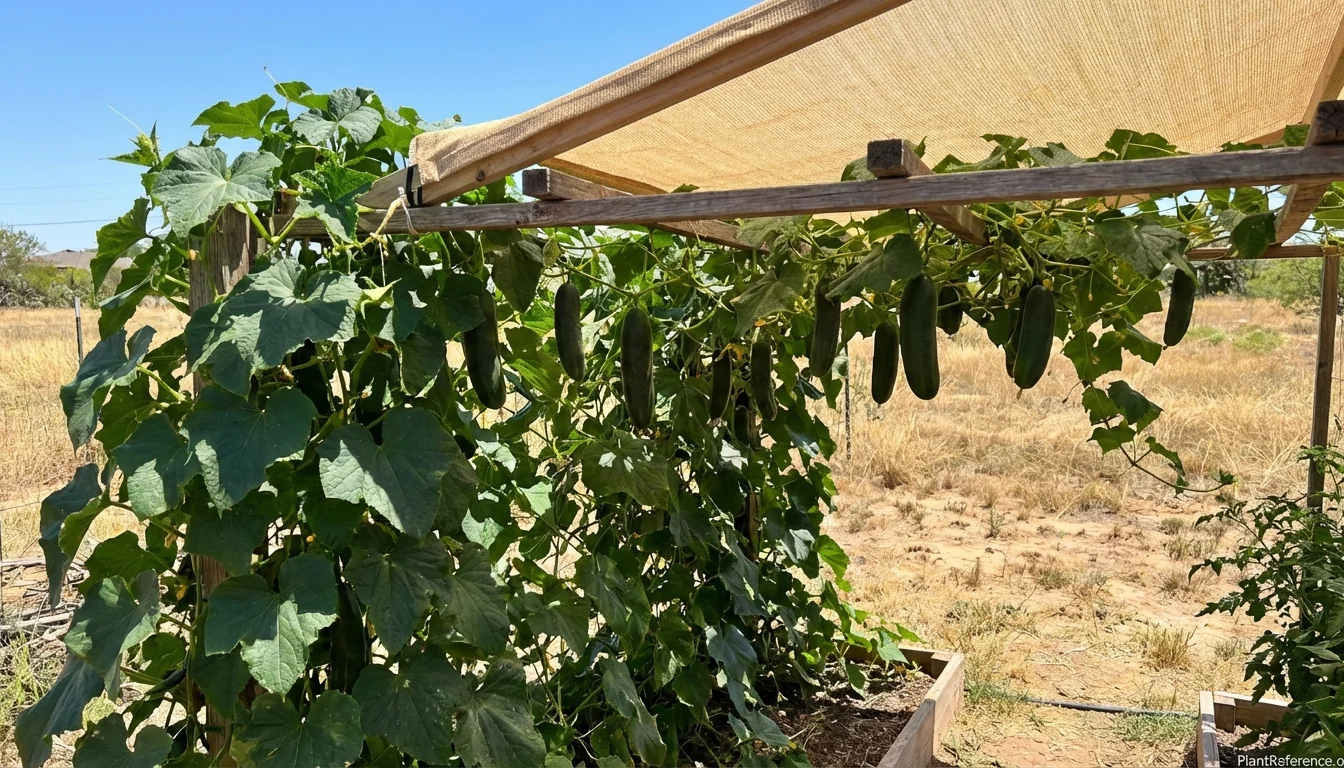
— Image © Plant Reference 2026
Dallas gives you 255 growing days on paper, but cucumbers don't care about frost dates when the real problem is heat. Our summers routinely push past 100°F (38°C) for weeks at a time, and that kind of sustained heat doesn't just slow cucumber production—it stops it. Pollen becomes sterile above 90°F (32°C), vines stop setting fruit, and the cucumbers that do form turn bitter from heat-induced cucurbitacin production. The smart approach in Dallas is to think of cucumbers as a two-season crop: an aggressive spring planting that produces hard from April through mid-June, and a fall planting that picks up again from September through November. That gap in the middle isn't a failure—it's Dallas summer doing what Dallas summer does. Work with it instead of fighting it. When to Plant Tomatoes in Dallas: Complete Guide + Best Varieties for Zone 8a
Best Cucumber Varieties for Dallas' Climate
Dallas sits in USDA Zone 8a with a March 15 last frost and November 25 first frost—255 days. But effective cucumber production splits into spring (March-June) and fall (September-November) windows, with extreme summer heat creating a mid-season gap. Variety selection here prioritizes heat tolerance and the ability to maintain fruit quality during temperature extremes. Disease resistance matters less than in the humid Southeast because our summer heat and lower humidity reduce Downy Mildew pressure, though Powdery Mildew still appears in fall.
Variety | Type | Days to Harvest | Disease Resistance | Best For |
|---|---|---|---|---|
Slicing | 65 days | High (Scab, CMV, moderate DM/PM) | Best heat-tolerant slicer with stay-green | |
Specialty | 65 days | Moderate (Rust, drought tolerant) | Superior Texas heat and drought tolerance | |
🌿Cucumis sativus 'Persian' (Beit Alpha) | Specialty | 55 days | Moderate (PM) | Bred for hot Mediterranean climates |
Pickling | 55 days | Low-Moderate | Fast spring harvest, fall pickling | |
Slicing | 63 days | Low (CMV tolerance only) | Early spring only, bitters quickly in heat | |
🌿Cucumis sativus 'Marketmore 76' (fall crop) | Slicing | 65 days | High | Late July planting for fall harvest |
🌿Cucumis sativus 'Marketmore 76' earns the top spot for Dallas because its "stay-green" gene prevents the yellowing and quality collapse that happens to other slicers during our heat waves. It maintains fruit quality longer under heat stress than any other open-pollinated variety I've seen in Texas conditions. The disease resistance package is a bonus for the fall crop when Powdery Mildew appears as humidity rises in October.
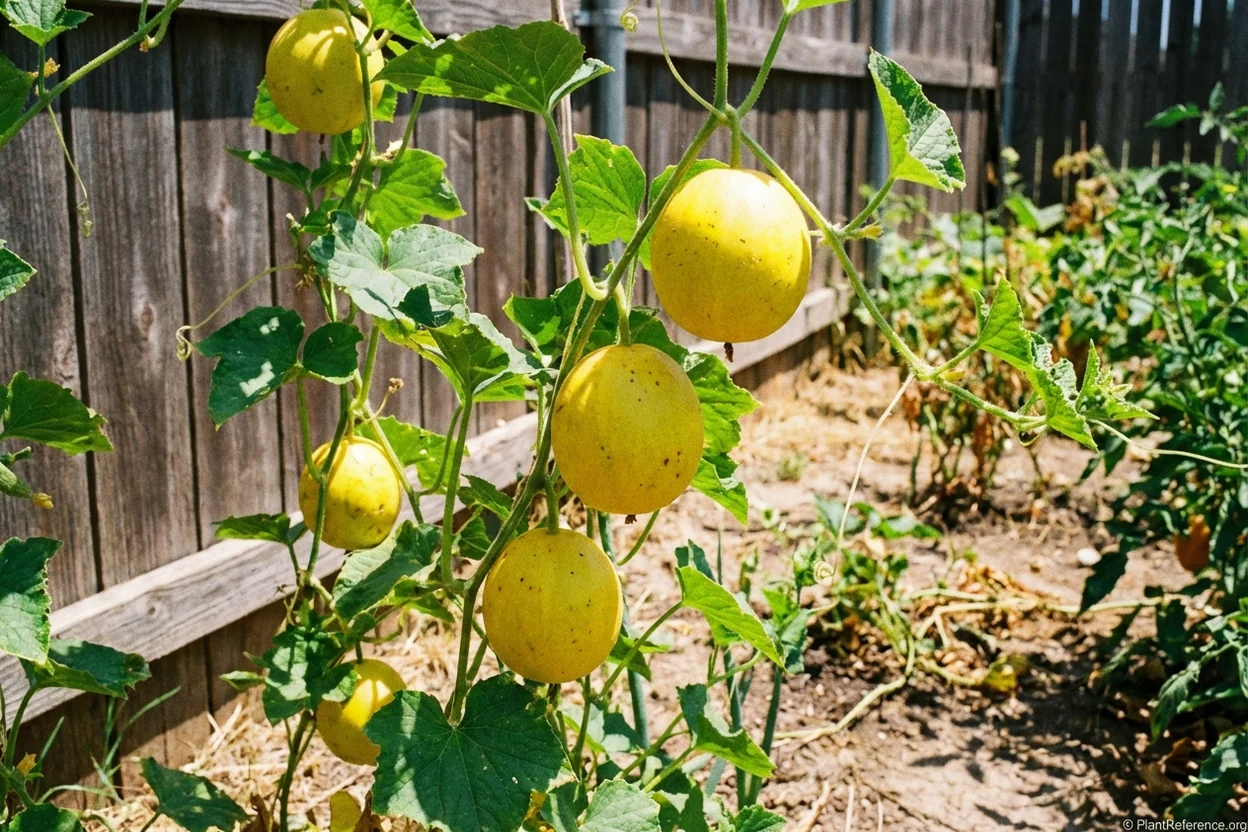
🌿Cucumis sativus 'Lemon' is the heat champion for Dallas gardens. Research shows it demonstrates superior drought tolerance and heat resistance compared to 🌿Cucumis sativus 'Boston Pickling' and 🌿Cucumis sativus 'Straight Eight'. Its ancestral genetics adapted to arid environments give it a genuine advantage during Texas heat waves. The round, yellow, burpless fruit stays mild even under stress conditions that make other varieties unpleasantly bitter.
🌿Cucumis sativus 'Persian' types were bred for hot Mediterranean climates, making them naturally suited to Dallas conditions. The Beit Alpha strains produce heavy yields of thin-skinned snacking cucumbers at 55 days, and their parthenocarpic trait means fruit sets without pollinators—valuable during extreme heat when even bees reduce activity. Keep irrigation consistent because their thin skins dehydrate quickly in our dry heat.
🌿Cucumis sativus 'Straight Eight' is the first variety to fail in Dallas heat. It produces bitter fruit rapidly once temperatures exceed 90°F and lacks the genetic tools to handle our summer. Plant it only for early spring eating—March transplants through early May at best. When to Plant Peppers in Dallas: Complete Guide + Best Varieties for Zone 8a
Specific Planting Dates for Dallas Gardens
Dallas cucumber timing revolves around one reality: avoid the worst heat. Spring plantings need to produce before mid-June. Fall plantings go in after the worst heat breaks in late September. The gap between isn't wasted time—it's when you rest the soil, prep for fall, and let common sense prevail.
Indoor Seed Starting (spring): February 20-March 1 (2-3 weeks before last frost). Dallas warms early—you don't need the long indoor growing period Northern gardeners require. Start at 75°F (24°C) for 3-5 day germination.
Transplant Outdoors (spring): March 18-28 (right after last frost, soil at 60°F/16°C). Dallas soils warm quickly in spring. Our Blackland Prairie clay absorbs heat efficiently. Harden off seedlings for 5 days.
Direct Sow (spring): March 20-April 15. Soil hits 60°F (16°C) by mid-March in most Dallas gardens. Direct sowing works well because our warm soils germinate seeds fast—often within 4-5 days. Don't sow after April 15 because 65-day varieties won't mature enough production before June heat arrives.
Spring Production Window: Late April through mid-June. This is your primary harvest window. Once daytime temperatures consistently exceed 95°F (35°C) and nighttime lows stay above 75°F (24°C), fruit quality drops rapidly. Harvest everything aggressively through June and accept that production will crash in July.
Fall Planting: July 25-August 15. Start seeds indoors or direct sow into pre-moistened soil. Shade cloth over new sowings protects from residual August heat. Soil temperature isn't the issue in fall—it's too hot. Water thoroughly before and after sowing to prevent seed desiccation. Transplants handle the heat transition better than direct-sown seedlings.
Fall Production Window: September 15 through November 20. As temperatures moderate in September, cucumber vines revive and produce the best fruit of the year. The fall crop often outperforms spring in both quality and total yield because temperatures are more consistently in the optimal range.
Final Sowing Deadline: August 15. A 55-day variety sown August 15 matures by mid-October with six weeks of harvest before the November 25 frost. Raised Bed Vegetable Garden Layout: Planning for Maximum Production
Complete Growing Guide for Dallas
Soil Challenges: Blackland Prairie Clay and Alkalinity
Dallas sits on Blackland Prairie soil—heavy, expansive clay that cracks in drought and turns to concrete when it dries. It's fertile but drains poorly when wet and becomes hydrophobic when dry. Work 4-6 inches (10-15 cm) of compost into the top 12 inches (30 cm) before every planting season. Dallas clay also runs alkaline—pH 7.5-8.5 is common. Cucumbers prefer 6.0-6.8, so sulfur amendments are often necessary. Get a soil test through the Texas A&M AgriLife Extension for under $15 before spending money on amendments. How to Build a Raised Garden Bed: Step-by-Step Construction Guide
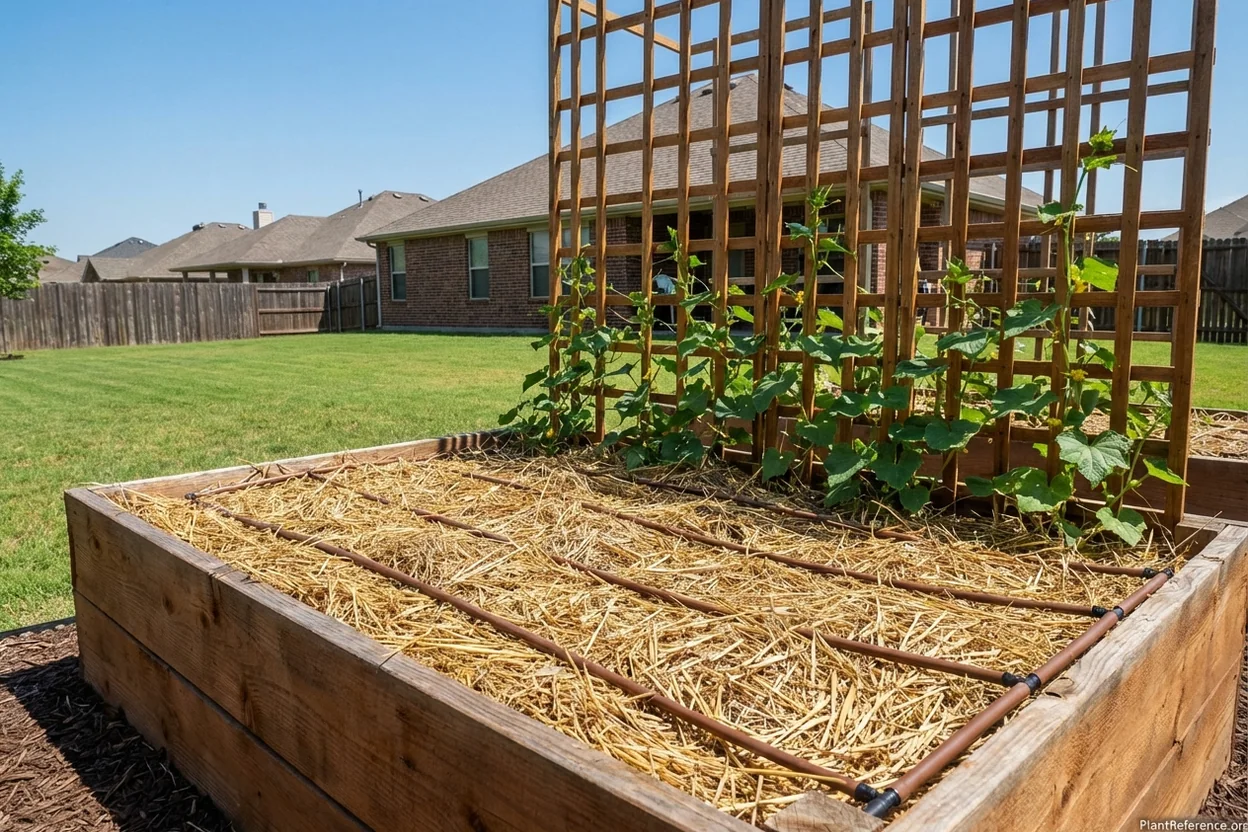
Raised beds are the most practical and reliable solution for Dallas cucumber growing. They bypass the drainage and alkalinity problems entirely. Build from cedar or composite materials—in our heat, untreated pine warps and splits within a year. Fill with 60% topsoil, 30% compost, and 10% expanded shale (a Texas-local drainage amendment that outperforms perlite in our heat because it doesn't break down).
Shade Cloth: Mandatory for Dallas Summers
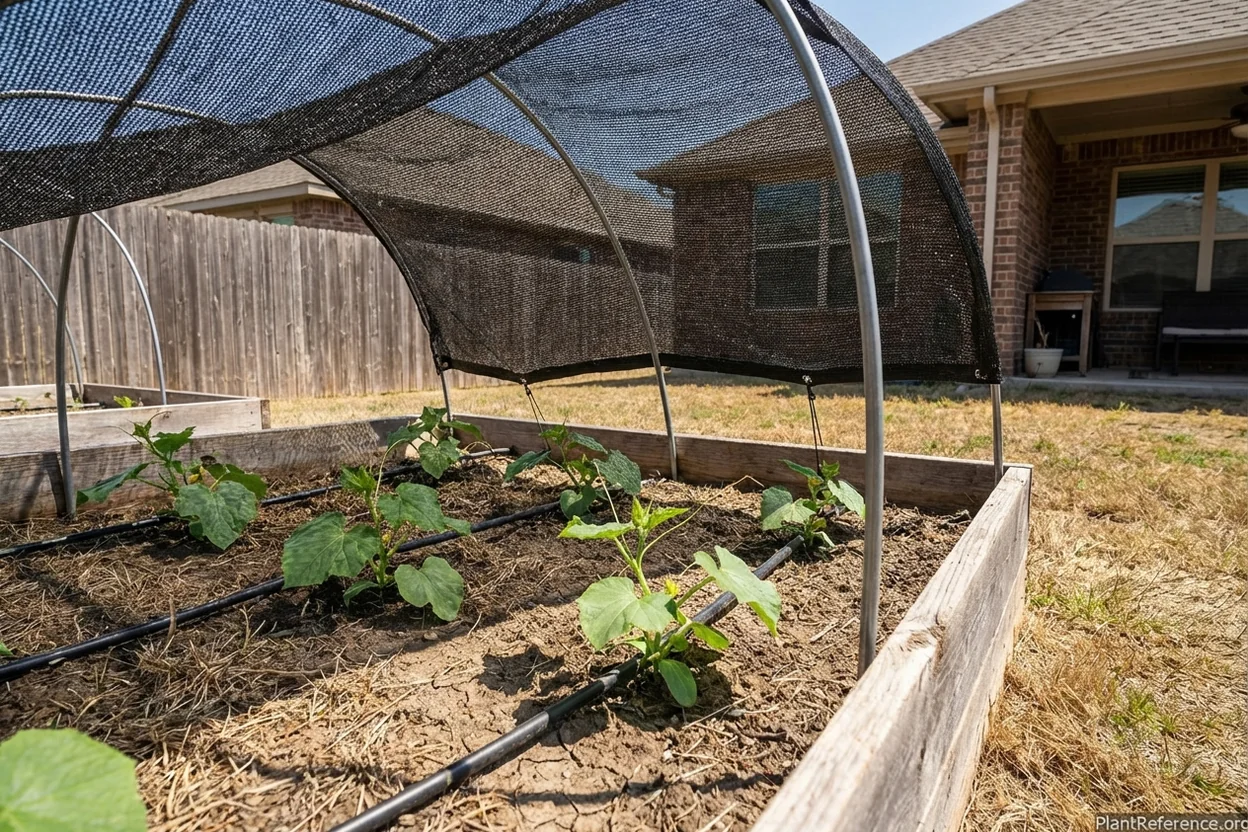
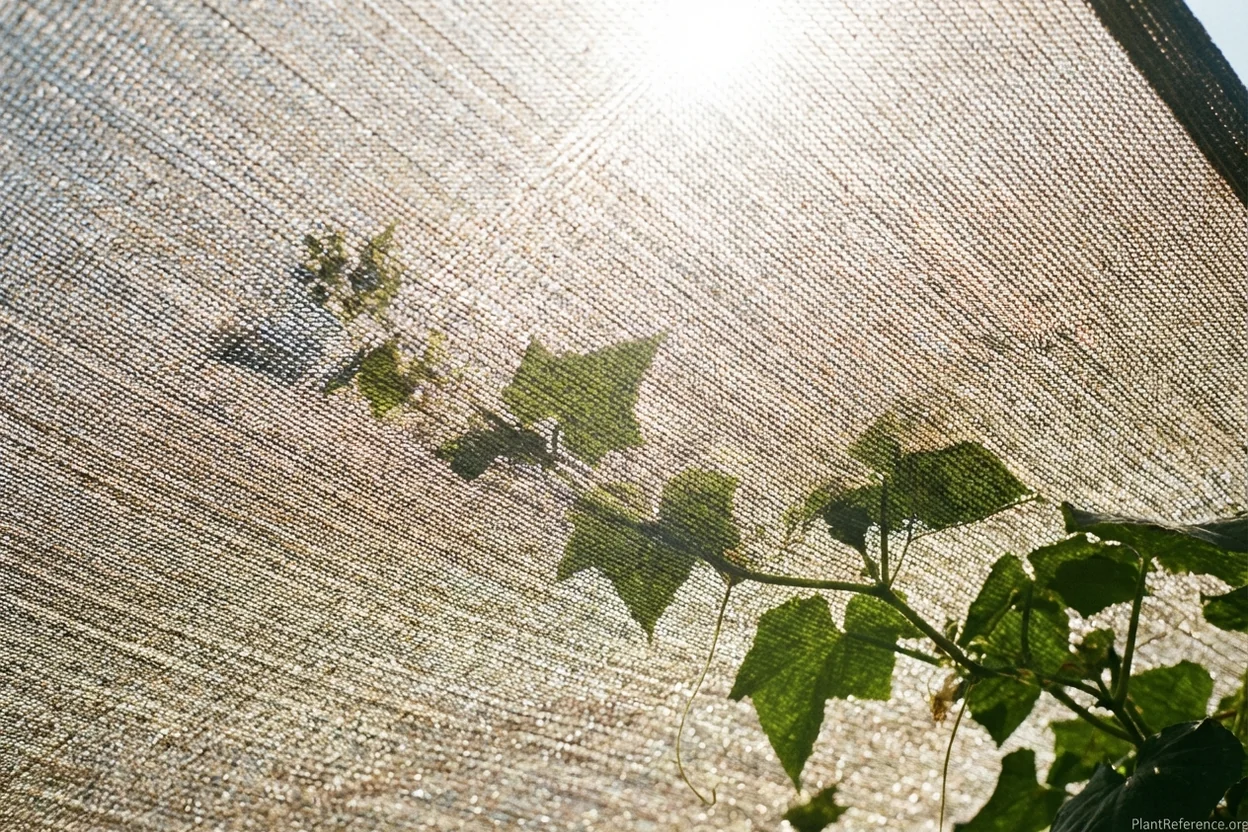
Shade cloth (30-50% density) is practically mandatory for mid-summer cucumber survival in Dallas. It reduces leaf surface temperature by 10-15°F, prevents sunscald on fruit, and reduces water loss from transpiration. Install 30% shade cloth over established spring vines in June to extend their productive life by 2-3 weeks. Use 50% shade cloth over fall transplants in August until temperatures moderate in late September. Remove once daytime highs drop below 90°F consistently. 5 Best Drip Irrigation Kits for Raised Beds (Tested for Easy Installation)
Watering
This is where Dallas cucumber growing either succeeds or fails. Cucumbers need 1.5 to 2 inches (4-5 cm) per week in our heat—more than in cooler climates. Drip irrigation on a timer is non-negotiable. Dallas water restrictions often limit landscape irrigation, but drip irrigation to food gardens is typically exempt—check your municipality's rules. Water deeply in the early morning before heat builds. Evening watering in our warm, humid fall conditions invites Powdery Mildew.
Mulch 3-4 inches (8-10 cm) with straw or shredded hardwood to reduce evaporation from our intense sun. In Dallas heat, unmulched soil surface temperatures can exceed 140°F (60°C)—hot enough to literally cook shallow roots.
Trellising
Trellis vertically for two reasons: airflow for disease management and fruit protection from ground-level heat. Soil surface temperatures in Dallas hit extremes that scorch fruit resting on bare ground. A 6-foot (1.8 m) trellis keeps fruit in the air where temperatures are 10-20°F cooler than at ground level. Anchor trellises firmly—Dallas thunderstorms deliver straight-line winds that flatten lightweight structures.
Feeding
Dallas clay provides decent mineral nutrition but the alkaline pH locks up iron, manganese, and zinc. Side-dress with balanced fertilizer at flowering and every two weeks during production. Apply chelated iron if you see yellowing between leaf veins (interveinal chlorosis)—this is a pH-driven nutrient lockout issue, not a watering problem. Fish emulsion works well as a supplemental feed and won't raise soil pH further. Avoid lime-based fertilizers that push already-alkaline Dallas soils even higher. When to Plant Squash in Dallas: Complete Guide + Best Varieties for Zone 8a
Troubleshooting Dallas-Specific Problems
Extreme Heat and Pollen Sterility
The defining challenge for Dallas cucumbers. Temperatures above 90°F (32°C) cause pollen sterility—flowers form but fruit doesn't set. Above 100°F (38°C), vines go into survival mode and stop flowering entirely. Shade cloth, consistent deep watering, and heavy mulch are the primary tools. 🌿Cucumis sativus 'Marketmore 76' maintains pollen viability at higher temperatures than other varieties. 🌿Cucumis sativus 'Persian' types bypass the problem with parthenocarpic fruit set. Accept the mid-summer production gap and focus on maximizing the spring and fall windows. Raised Bed Too Hot in Summer: Protecting Plants from Heat Stress
Alkaline Soil and Nutrient Lockout
Dallas pH above 7.5 locks up micronutrients. Yellowing between leaf veins with green veins remaining indicates iron chlorosis—common in our alkaline conditions. Apply chelated iron as a foliar spray for quick correction and amend soil with elemental sulfur over time to lower pH. Raised beds with controlled soil mix avoid this problem entirely.
Cucumber Beetles
Active from March through November in Dallas—nearly the entire growing season. Row covers over spring transplants exclude beetles during establishment. Remove at flowering. Kaolin clay spray deters feeding on exposed plants. In fall, beetle pressure typically decreases as populations decline with shorter days. Raised Bed Pest Problems: Identification and Organic Control Methods
Powdery Mildew in Fall
The primary disease concern in Dallas, appearing on fall crops as humidity rises in October and November. Space plants for airflow, trellis vertically, and apply neem oil preventatively every 7-10 days from October. 🌿Cucumis sativus 'Marketmore 76' has intermediate resistance that extends fall production 2-3 weeks compared to susceptible varieties.
Harvest & Storage
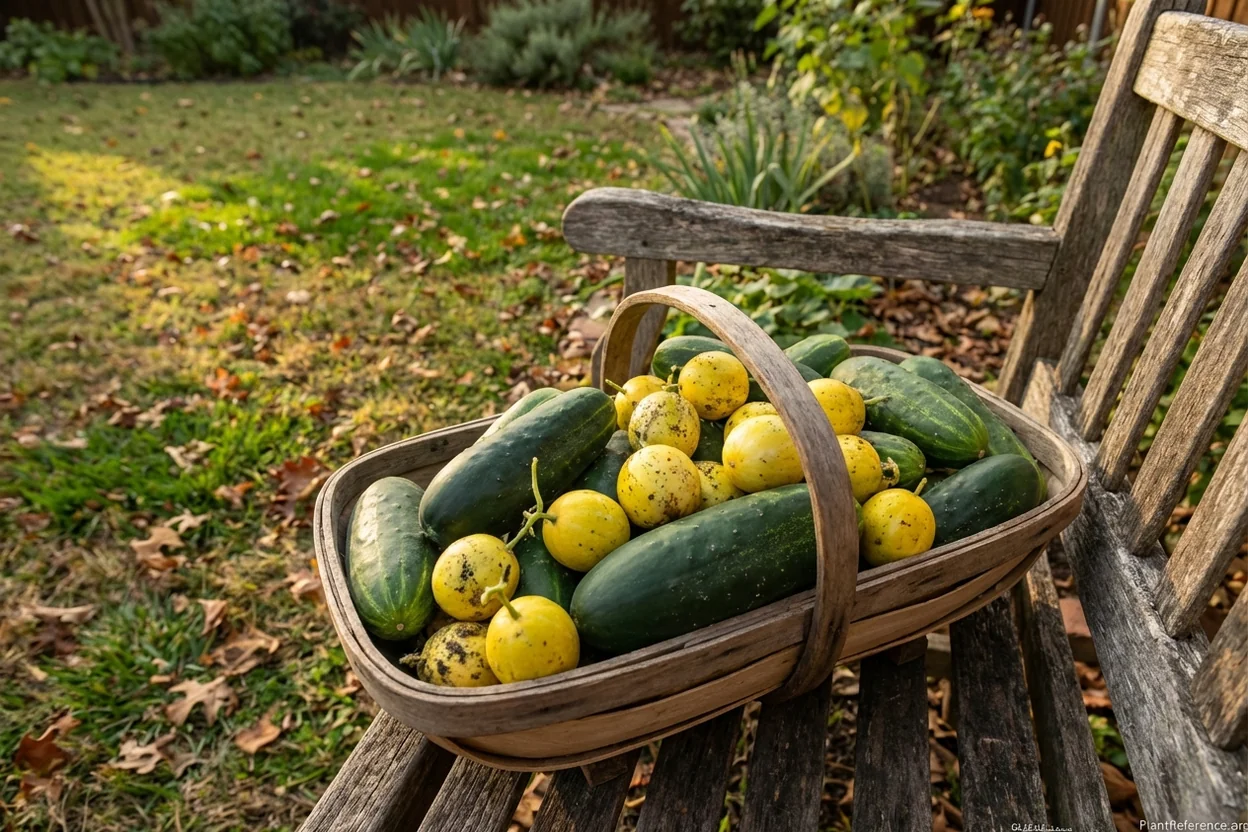
Harvest slicing cucumbers at 6-8 inches (15-20 cm) and pickling types at 2-4 inches (5-10 cm). During spring production, check vines daily—Dallas heat drives extremely rapid fruit development. In the fall crop window, every 2-3 days is sufficient as cooler temperatures moderate growth rate. Never leave overripe fruit on the vine.
Harvest before 8 AM in summer—fruit picked at 100°F (38°C) deteriorates within hours. During the moderate fall window, any morning harvest works. Cut with pruners rather than pulling. A healthy 🌿Cucumis sativus 'Marketmore 76' plant in the spring window produces 8-12 slicers; in fall, 10-15 slicers because temperatures stay in the optimal range longer.
Fresh cucumbers store 7-10 days refrigerated in a towel inside a loose bag. 🌿Cucumis sativus 'Boston Pickling' from the fall planting produces exceptional refrigerator pickles—the moderate growing temperatures develop crisp, flavorful fruit that holds its crunch in brine. The fall pickling harvest is the payoff for planning two planting seasons instead of fighting through one miserable summer. The Complete Guide to Raised Bed Gardening for Beginners (2025)
Frequently Asked Questions
Reading about plants and recognising them are different skills. These three build the second.
- Daily PlantIdentify the day’s mystery plant from a close-up photograph.
- Keyed OutWork a dichotomous key, lead by lead, to name a hidden specimen.
- Name That PlantName a specimen from botanical clues dealt hardest first.
Free to play, no account needed
James is a lawn care professional in Dallas who runs a small residential maintenance company. He started mowing lawns as a teenager and worked his way up to running crews for a large landscaping firm before going out on his own. James specializes in warm-season turf grasses—Bermuda, St. Augustine, and Zoysia—and knows how to keep a lawn alive through Texas summers without wasting water. He's also experienced with the transition zone challenges that Dallas faces, where warm-season and cool-season grasses overlap. James takes a practical, science-informed approach to lawn care and pushes back on the idea that a good lawn requires heavy chemical inputs.