When to Plant Cucumbers in Atlanta: Complete Guide + Best Varieties for Zone 8a
Pets & Toxicity
Recorded toxicity for plants linked in this guide. An unknown status is not a safety assessment.
No linked plant is recorded as toxicDetailsHide
Cucumis sativus 'Straight Eight' — Toxicity
Non-toxicView Cucumis sativus 'Straight Eight' plant profileCucumis sativus 'Marketmore 76' — Toxicity
Non-toxicView Cucumis sativus 'Marketmore 76' plant profileCucumis sativus 'Boston Pickling' — Toxicity
Non-toxicView Cucumis sativus 'Boston Pickling' plant profile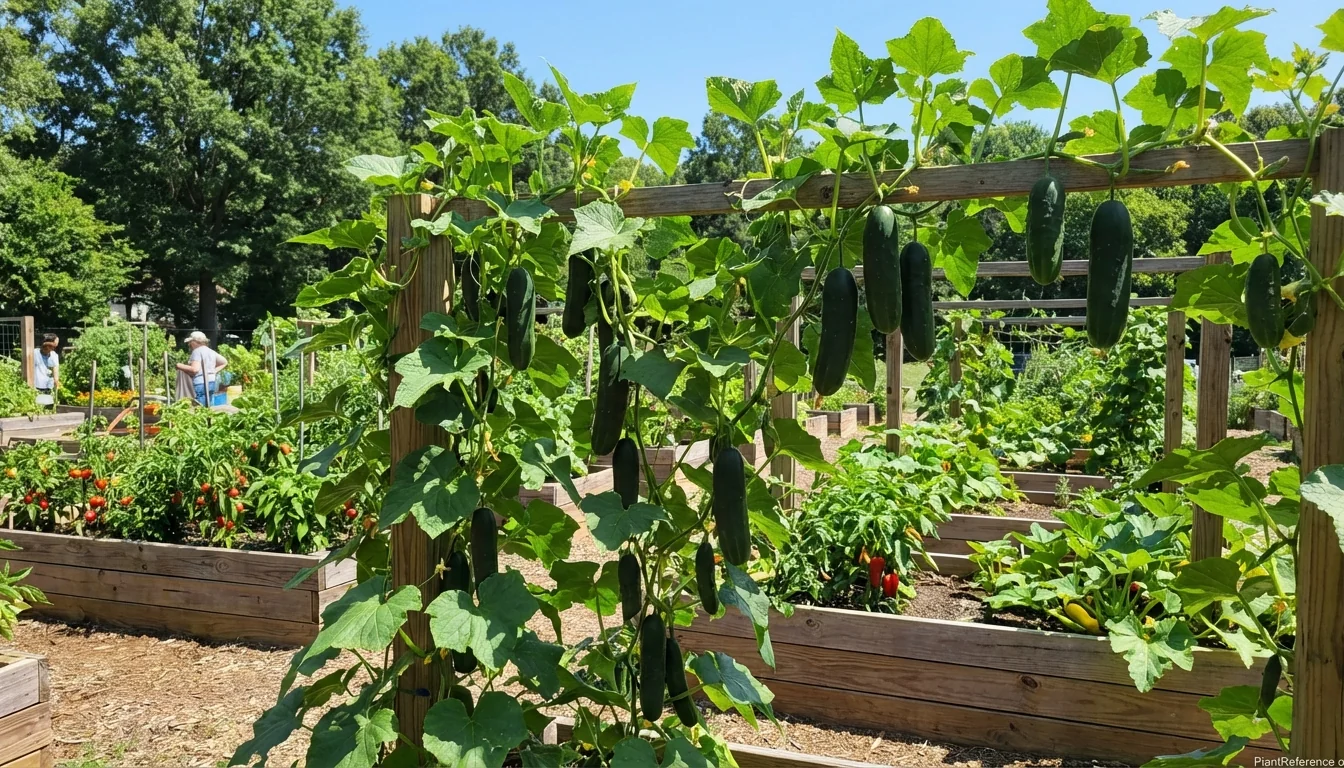
— Image © Plant Reference 2026
Atlanta's growing season is a gift—230 days gives us time to grow cucumbers from late March through early November if we plan it right. I manage three community garden plots across the city, and cucumbers are one of the most requested crops at every site. They produce heavily, they're straightforward to grow, and they share well with neighbors who are new to fresh vegetables. The challenge in Atlanta isn't getting cucumbers to grow—our heat and humidity drive explosive vine growth. The challenge is keeping them alive through our brutal disease pressure. Downy Mildew (Pseudoperonospora cubensis) hits Atlanta cucumbers harder than almost anywhere in the country because our humidity and temperature combination creates ideal conditions for the pathogen. The gardeners who harvest consistently from April through October are the ones who plant resistant varieties and use succession planting to replace vines as they decline. That's the approach I teach at every community garden workshop. When to Plant Tomatoes in Atlanta: Complete Guide + Best Varieties for Zone 8a
Best Cucumber Varieties for Atlanta's Climate
Atlanta sits in USDA Zone 8a with a last frost around March 25 and first frost near November 10—230 growing days. Disease resistance isn't just important here—it's the single factor that determines whether your cucumber planting produces for two months or crashes in two weeks. Atlanta sits in the primary corridor for Downy Mildew spore migration up the Eastern Seaboard, and our humidity keeps the pathogen active from May through October. Varieties without resistance genes are essentially disposable in our climate.
Variety | Type | Days to Harvest | Disease Resistance | Best For |
|---|---|---|---|---|
Slicing | 65 days | High (Scab, CMV, moderate DM/PM) | Essential for Atlanta disease pressure | |
Pickling | 55 days | Low-Moderate | Fast harvest, fall pickling crop | |
🌿Cucumis sativus 'Persian' (Beit Alpha) | Specialty | 55 days | Moderate (PM) | Containers, community garden shares |
Specialty | 65 days | Moderate (Rust, drought tolerant) | Heat tolerance, novelty | |
Slicing | 63 days | Low (CMV tolerance only) | Early spring only, before disease peaks | |
🌿Cucumis sativus 'Marketmore 76' (fall crop) | Slicing | 65 days | High | August planting for fall harvest |
🌿Cucumis sativus 'Marketmore 76' is non-negotiable for Atlanta. I don't grow anything else as a primary slicer across our community gardens, and I recommend it to every home gardener in the metro area. The resistance to Scab, Cucumber Mosaic Virus, and intermediate Downy and Powdery Mildew resistance gives it 3-4 weeks more productive life than susceptible varieties in our conditions. The "stay-green" gene maintains fruit quality during our 95°F+ heat waves, preventing the yellowing and bitter fruit that other varieties produce under heat stress. Consistent 8-inch (20 cm) dark green slicers.
🌿Cucumis sativus 'Straight Eight' has a narrow window in Atlanta: early spring, before humidity-driven disease pressure peaks in June. It produces excellent early-season fruit from March transplants, but research confirms rapid decline once Downy Mildew arrives. Think of it as a starter crop, not a main crop. Have 🌿Cucumis sativus 'Marketmore 76' successions ready behind it.
🌿Cucumis sativus 'Lemon' handles Atlanta's heat surprisingly well. Its drought tolerance and heat-adapted genetics mean it produces even during the worst of July and August when other varieties struggle with pollen sterility above 90°F (32°C). The mild, burpless fruit is popular with community garden members who are new to cucumbers.
🌿Cucumis sativus 'Boston Pickling' at 55 days is the fall crop champion. Plant in August and it matures into the cooling nights of September and October that produce the crispest, best-flavored pickling cucumbers of the year. Every community garden plot I manage plants a fall round of this variety specifically for preservation. When to Plant Peppers in Atlanta: Complete Guide + Best Varieties for Zone 8a
Specific Planting Dates for Atlanta Gardens
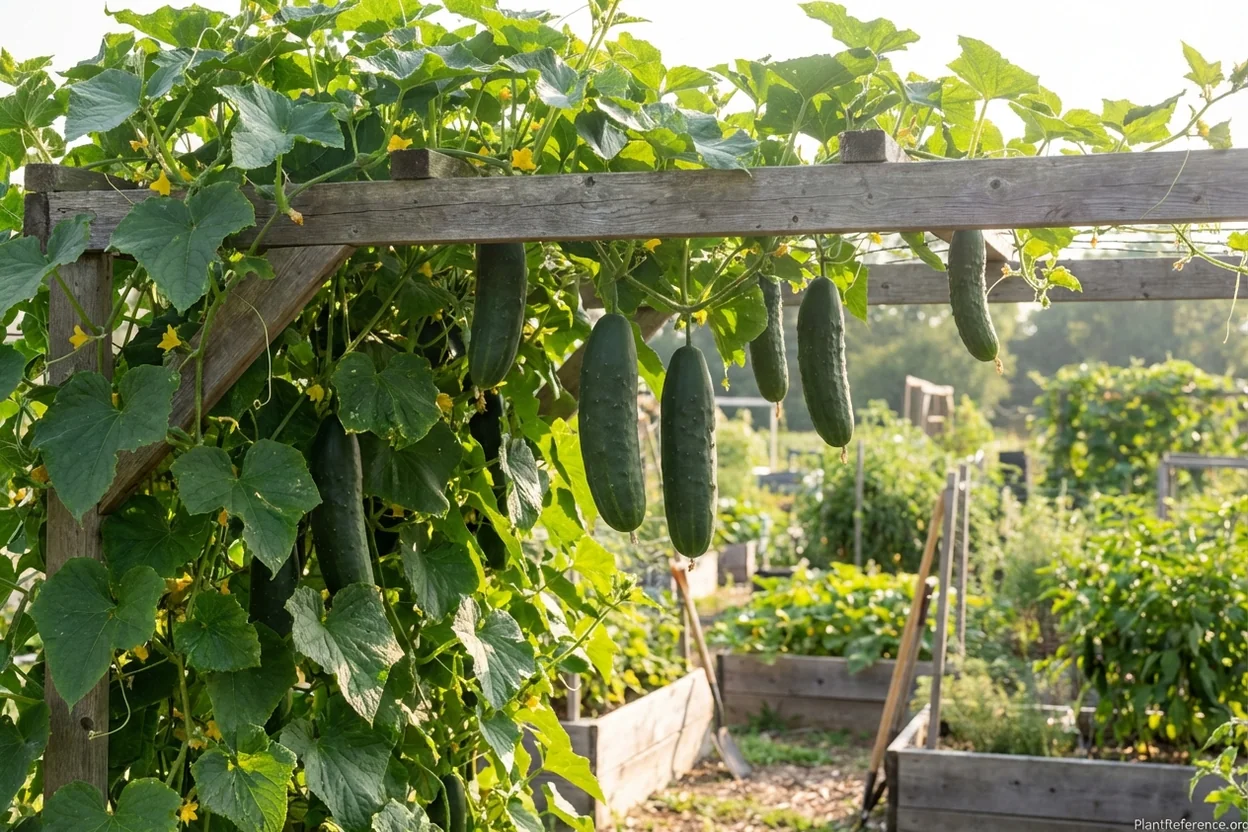
Atlanta's two-season approach to cucumbers maximizes our 230-day window. Spring plantings produce from May through July before disease pressure peaks. Fall plantings go in during August and produce through October into early November. Succession planting bridges the gap and ensures you're never without cucumbers for long.
Indoor Seed Starting (spring): March 1-10 (2-3 weeks before last frost). Atlanta warms fast in March—you don't need the 4-week head start that Northern gardeners require. Start in biodegradable pots at 75°F (24°C) for quick 3-5 day germination.
Transplant Outdoors (spring): March 28-April 7 (right after last frost, soil at 60°F/16°C). Atlanta's red clay soils warm quickly in spring sun. Harden off seedlings for 5 days—our March nights can still dip into the 40s but transplants handle that without damage.
Direct Sow (spring): April 1-May 15. Soil reaches 60°F (16°C) by early April in most Atlanta gardens. Direct sowing works well here because our warm soils germinate seeds quickly—5-7 days typical. Plant 1 inch (2.5 cm) deep, 6 inches (15 cm) apart, thin to 18 inches (46 cm).
Succession Plantings: Every 3 weeks from April through August. Atlanta's long season supports 4-5 successions—more than almost any other city on the East Coast. This isn't optional; it's essential. Your spring planting will decline to Downy Mildew by July. Fresh June and July successions carry production into fall. The August planting is your fall crop.
Fall Planting: August 1-September 1. This is the planting many Atlanta gardeners miss—and it's often the best crop of the year. Cooler fall temperatures reduce disease pressure, improve pollination rates, and produce higher-quality fruit than the heat-stressed summer harvest. 🌿Cucumis sativus 'Boston Pickling' (55 days) planted August 1 matures by late September with six weeks of harvest before frost.
Final Sowing Deadline: September 1. A September 1 sowing of 55-day varieties matures around October 26—tight but workable before the November 10 frost. Later plantings need row cover protection. Raised Bed Vegetable Garden Layout: Planning for Maximum Production
Complete Growing Guide for Atlanta
Soil and Site Preparation
Full sun—8 hours minimum. Atlanta's tree canopy is beautiful but creates shade challenges for vegetable gardens. Identify the sunniest spot before planting. Our native red clay is fertile but drains poorly and compacts severely. Work 4-6 inches (10-15 cm) of compost into the top 12 inches (30 cm)—this is especially important in community garden plots where soil has often been compacted by foot traffic and equipment. Target pH 6.0-6.8. Georgia's Cooperative Extension provides soil testing for under $15 through your county office.
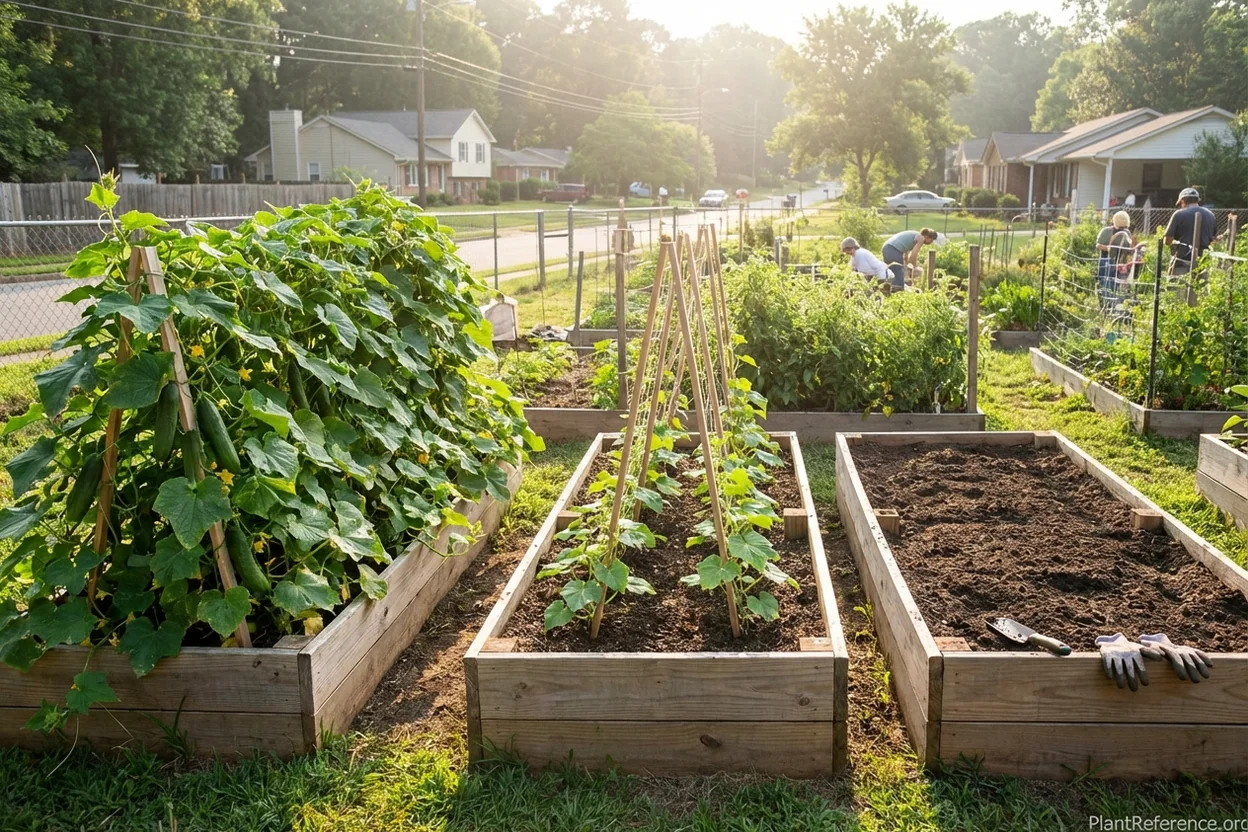
Raised beds are the best investment for Atlanta cucumber growing. They solve the drainage problem, prevent the compaction that plagues community garden plots, and warm earlier in spring. Build from rot-resistant materials—in Atlanta's humidity, untreated pine lasts only 2-3 years. Cedar or composite lumber lasts much longer. Fill with 60% topsoil, 30% compost, and 10% perlite. How to Build a Raised Garden Bed: Step-by-Step Construction Guide
For community garden plots with in-ground clay, heavy compost additions and permanent raised pathways between rows prevent the compaction that kills cucumber root systems. I've learned this the hard way across three different garden sites.
Trellising
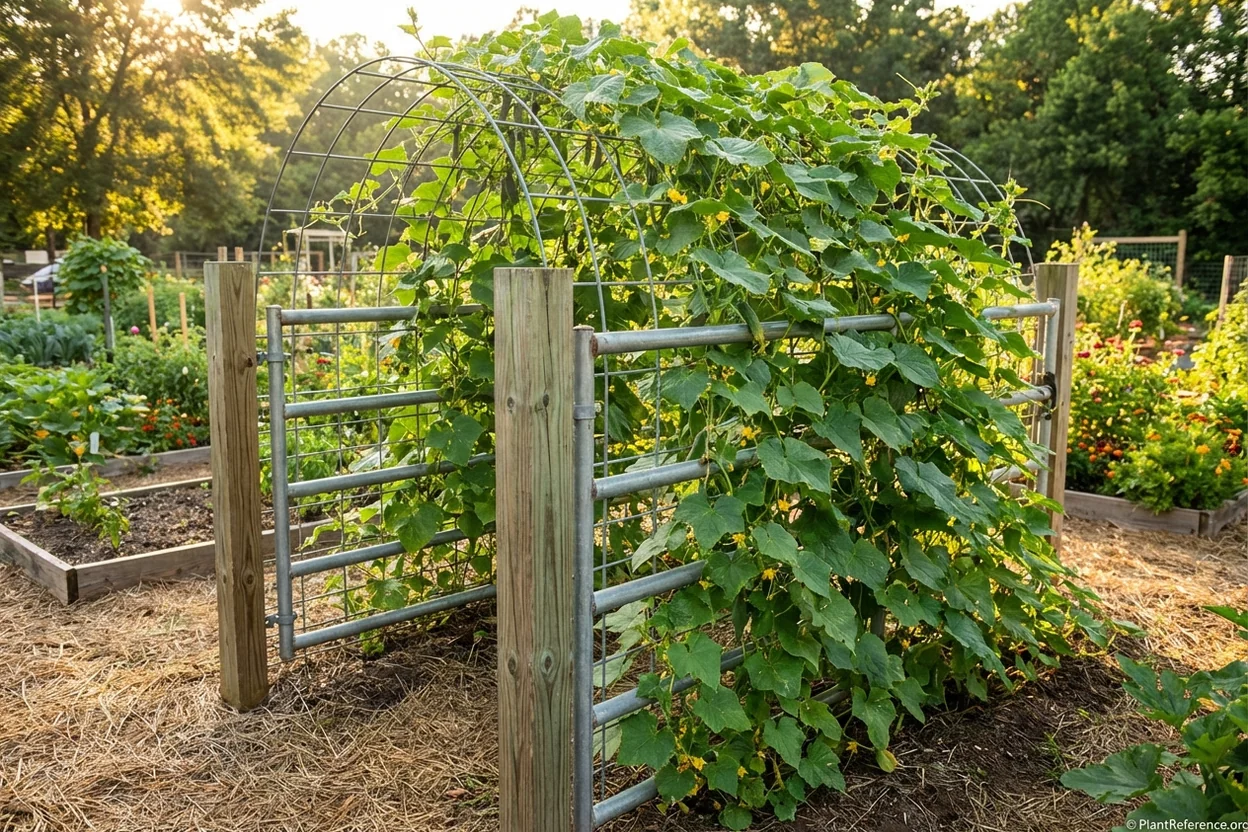
Trellising is absolutely critical in Atlanta—more so than in any other region. Our high humidity makes foliage disease pressure extreme, and getting cucumber leaves and fruit off the ground is the single most effective cultural control. Build sturdy 6-foot (1.8 m) trellises using treated posts and cattle panels or heavy-gauge wire. Atlanta's summer thunderstorms produce high winds that flatten lightweight structures. Invest in sturdy materials—you'll use these trellises for years. 5 Best Drip Irrigation Kits for Raised Beds (Tested for Easy Installation)
Watering and Feeding
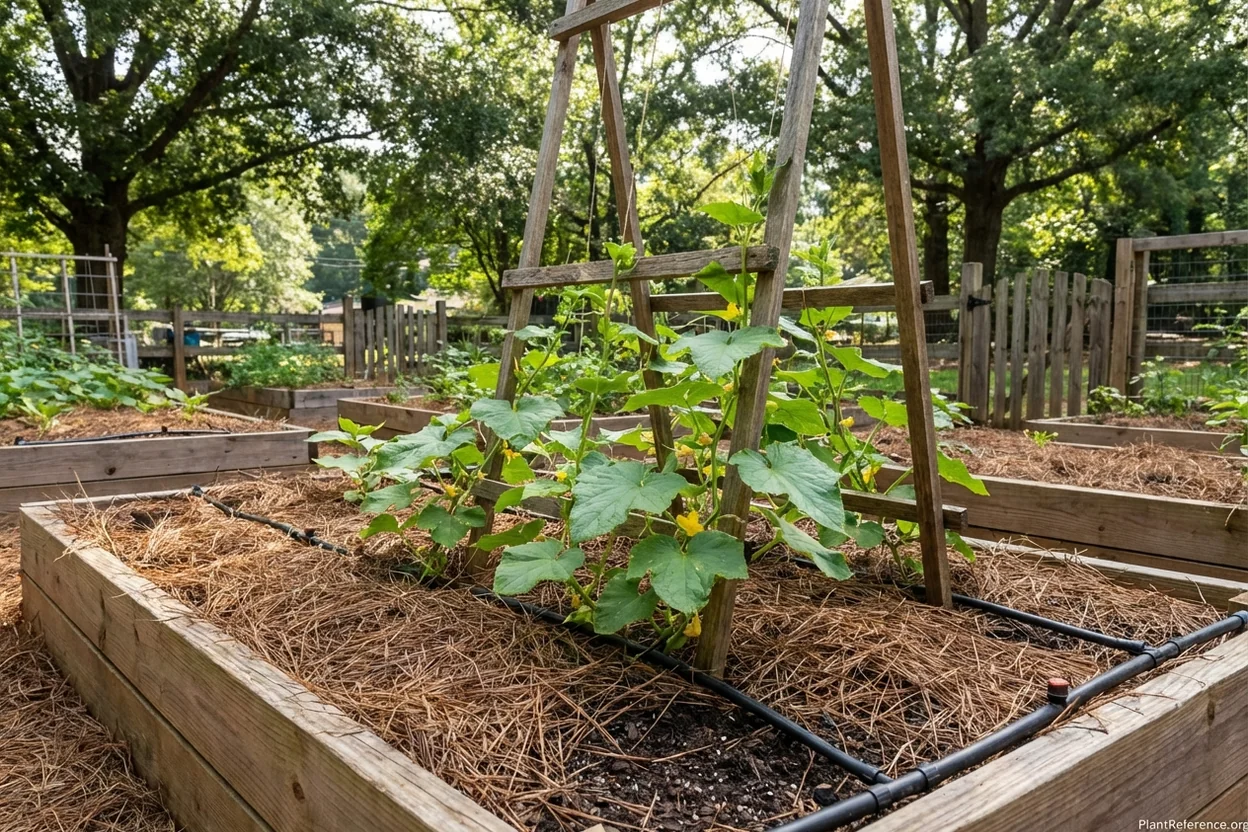
Cucumbers need 1 to 1.5 inches (2.5-4 cm) weekly. Atlanta gets plenty of summer rainfall, but it comes in intense thunderstorm bursts that waterlog clay soil one day and leave it bone-dry three days later. Drip irrigation on a timer provides the consistency cucumbers demand. Water at the base—overhead irrigation in Atlanta's humidity is an open invitation for Downy Mildew. If your community garden uses overhead sprinklers, water early morning and only when needed.
Mulch 3-4 inches (8-10 cm) with straw or pine straw after transplanting. In Atlanta's heat, mulch isn't just for moisture retention—it keeps root zone temperatures from spiking above 95°F (35°C) during our hottest weeks. Side-dress with balanced fertilizer at flowering and again at first fruit set. Compost tea biweekly supports soil biology through our intense growing season.
Pollination
Atlanta's heat creates a different pollination challenge than cool-climate cities. Temperatures above 90°F (32°C) cause pollen sterility in standard cucumber varieties—flowers form but pollen grains are non-viable. This is why fruit set often drops during July and August heat waves. 🌿Cucumis sativus 'Marketmore 76' maintains pollen viability better than 🌿Cucumis sativus 'Straight Eight' in heat. 🌿Cucumis sativus 'Persian' types bypass the problem with parthenocarpic fruit set—valuable during the hottest weeks when even pollinators reduce their activity. Plant pollinator-attracting flowers like zinnias and sunflowers in community garden borders to support bee populations. When to Plant Squash in Atlanta: Complete Guide + Best Varieties for Zone 8a
Troubleshooting Atlanta-Specific Problems
Downy Mildew
The number one cucumber problem in Atlanta and the reason succession planting is mandatory here. Downy Mildew spores overwinter in southern Florida and migrate north with weather systems, reaching Georgia by May—earlier than almost anywhere else on the East Coast. Angular yellow spots on upper leaf surfaces that darken to brown spread rapidly in our humidity. Plant 🌿Cucumis sativus 'Marketmore 76' for resistance, trellis aggressively for air circulation, use drip irrigation exclusively, and remove infected leaves immediately. Even with resistance, expect spring plantings to decline by July. Your June and July successions are the insurance that carries production through fall. Raised Bed Pest Problems: Identification and Organic Control Methods
Heat Stress and Bitter Fruit
Atlanta routinely exceeds 95°F (35°C) in July and August with heat index values above 105°F (40°C). These conditions cause pollen sterility, flower drop, and cucurbitacin-driven bitterness—especially in 🌿Cucumis sativus 'Straight Eight'. Consistent deep watering is the most effective prevention. Mulch heavily to moderate soil temperature. 🌿Cucumis sativus 'Marketmore 76' handles heat significantly better than susceptible varieties. The fall planting (August sow) sidesteps the worst heat entirely—another reason the fall crop is often the best of the year.
Cucumber Beetles
Present from April through October in Atlanta. Striped and spotted cucumber beetles vector bacterial wilt and cause direct feeding damage to foliage, flowers, and fruit. Row covers over spring transplants provide early protection—remove at flowering. In community gardens where row covers aren't practical, trap cropping with Blue Hubbard squash planted two weeks before cucumbers concentrates beetles for targeted removal. Kaolin clay spray creates a physical feeding barrier. Raised Bed Too Hot in Summer: Protecting Plants from Heat Stress
Red Clay Drainage
Atlanta's red clay becomes waterlogged after thunderstorms, suffocating cucumber roots. Symptoms look like drought—wilting despite wet soil. Raised beds are the most reliable solution. For in-ground community plots, deep composting and creating raised planting rows 6-8 inches (15-20 cm) above path level improves drainage enough for successful production. Avoid planting in low spots where water collects after storms. Best Soil Mix for Raised Beds: Creating the Perfect Growing Medium
Harvest & Storage
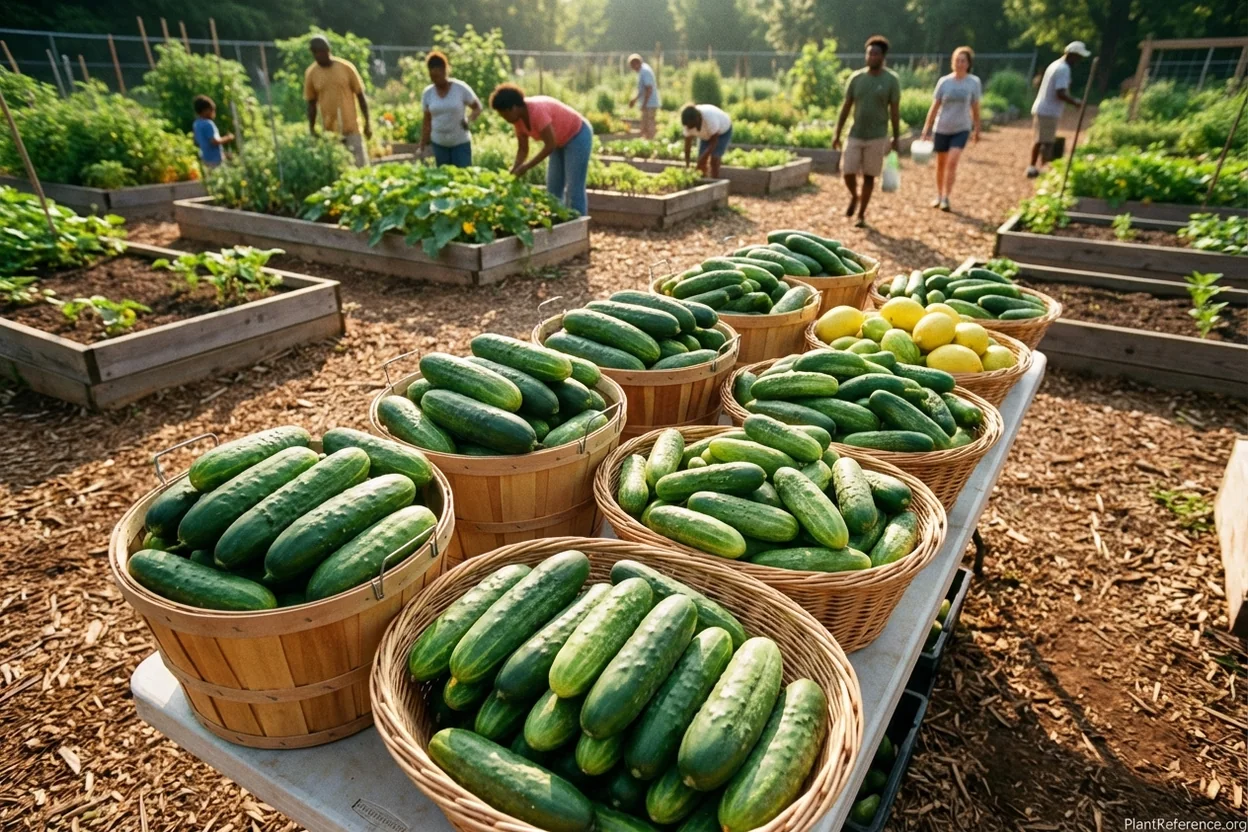
Harvest slicing cucumbers at 6-8 inches (15-20 cm) and pickling types at 2-4 inches (5-10 cm). Check vines daily—Atlanta's heat drives extremely rapid fruit development and cucumbers double in size in 36-48 hours during peak summer. Overripe fruit tells the plant to stop producing. In a climate where we're fighting disease pressure at every stage, losing productive days to unharvested fruit is a waste of the plant's remaining vigor.
Cut with pruners rather than pulling. Harvest before 9 AM in summer—fruit picked at 95°F wilts within minutes and stores poorly. A healthy 🌿Cucumis sativus 'Marketmore 76' plant produces 10-15 slicing cucumbers per planting cycle. With 4-5 succession plantings over the season, total yield from a single garden row can reach 50-75 cucumbers—more than enough for a family and neighbors.
Fresh cucumbers store 7-10 days refrigerated in a towel inside a loose bag. 🌿Cucumis sativus 'Boston Pickling' from the fall planting makes the best refrigerator pickles of the year—the cooler autumn growing conditions produce exceptional crunch and flavor that summer-grown fruit can't match. Community gardens benefit from organized preservation days where gardeners process the fall pickling harvest together. The Complete Guide to Raised Bed Gardening for Beginners (2025)
Frequently Asked Questions
Reading about plants and recognising them are different skills. These three build the second.
- Daily PlantIdentify the day’s mystery plant from a close-up photograph.
- Keyed OutWork a dichotomous key, lead by lead, to name a hidden specimen.
- Name That PlantName a specimen from botanical clues dealt hardest first.
Free to play, no account needed
Grace is a community garden organizer in Atlanta who manages three neighborhood garden plots across the city. She came to gardening through food justice work—she saw how many Atlanta neighborhoods lacked access to fresh produce and decided to do something about it. Grace has a background in public health and brings that lens to everything she writes about food growing, soil safety in urban settings, and making gardens work for the communities they serve. She grows a wide range of vegetables, with a focus on crops that produce heavily in Atlanta's long growing season. Grace is practical and community-minded—she thinks about gardens as shared spaces, not just personal projects.