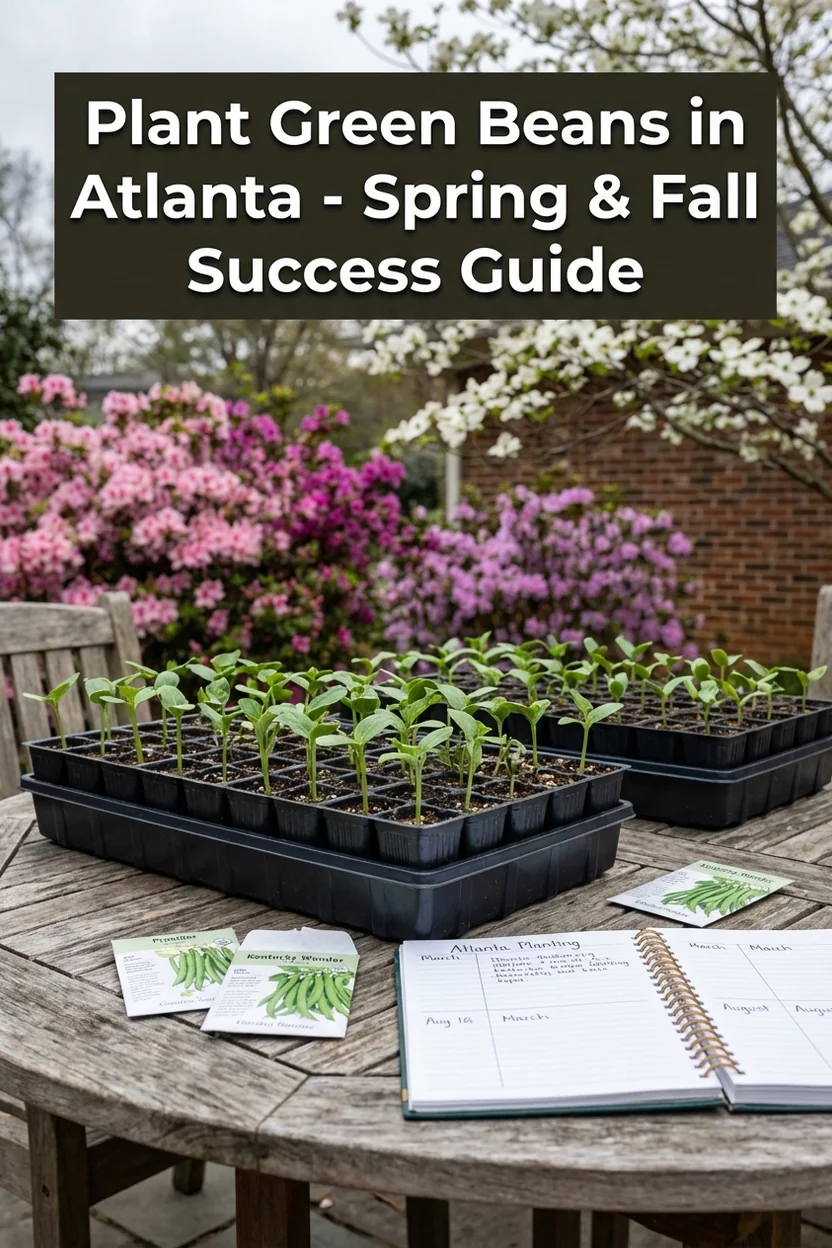
When to Plant Green Beans in Atlanta: Complete Guide + Best Varieties for Zone 8a
Pets & Toxicity
Recorded toxicity for plants linked in this guide. An unknown status is not a safety assessment.
No linked plant is recorded as toxic (3 linked plants checked)DetailsHide
Phaseolus vulgaris 'Blue Lake' — Toxicity
Non-toxic when cooked. Raw pods carry lectins (phytohemagglutinin) that cause digestive upset on raw consumption — pods are cooked before eatingView Phaseolus vulgaris 'Blue Lake' plant profilePhaseolus vulgaris 'Kentucky Wonder' — Toxicity
Non-toxicView Phaseolus vulgaris 'Kentucky Wonder' plant profile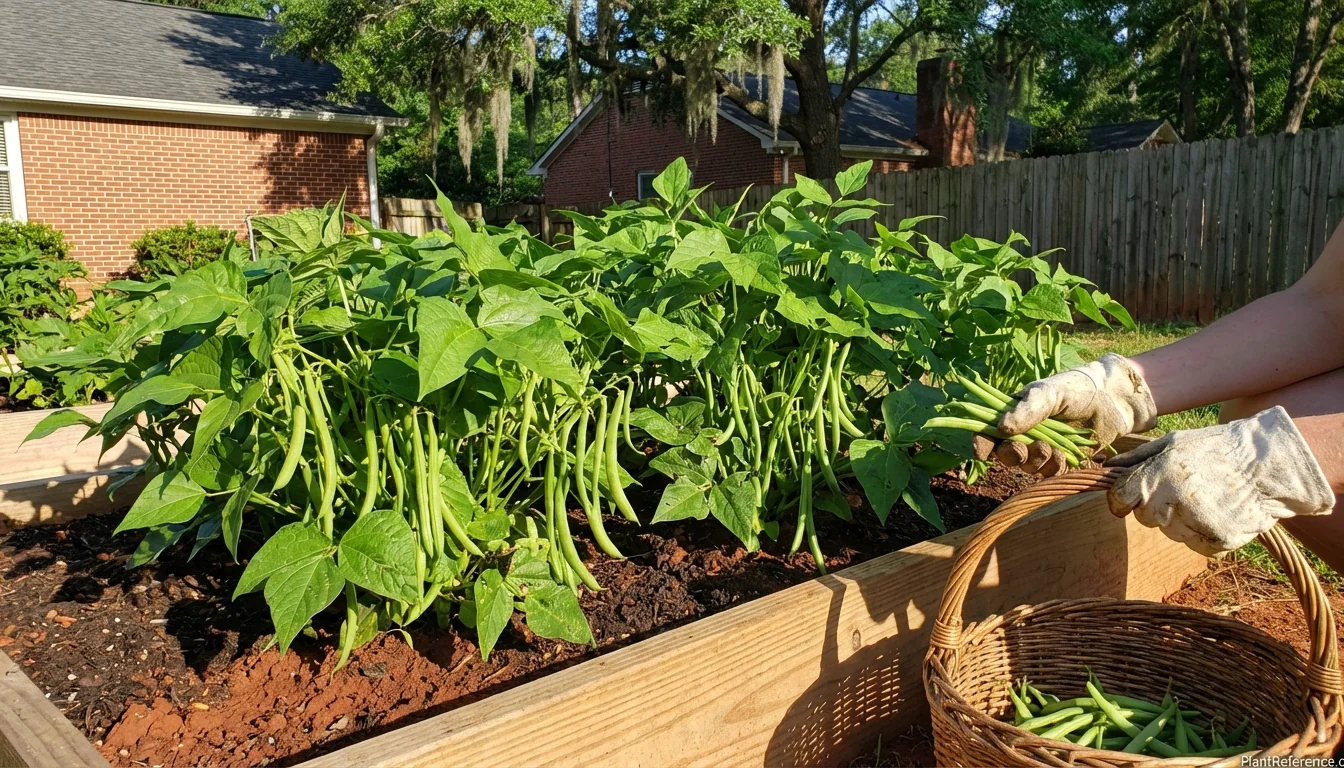
— Image © Plant Reference 2026
Atlanta gardeners hit the jackpot with green beans. Your Zone 8a climate provides 230 frost-free days from March 25 to November 10, creating two distinct growing seasons perfect for beans. Skip the scorching summer months and plant twice—you'll harvest more beans with less stress on both you and your plants.
Best Green Bean Varieties for Atlanta's Zone 8a Climate
The key to Atlanta bean success lies in variety selection matched to each growing season. I've tested these six varieties extensively in Georgia's red clay and humidity, and they deliver consistent results when planted at the right times.
Variety | Days to Maturity | Best Season | Plant Type | Notes for Atlanta |
|---|---|---|---|---|
50-55 days | Spring & Fall | Bush | Heat-tolerant, reliable germination | |
53-60 days | Spring & Fall | Bush | Disease-resistant, handles humidity | |
55-60 days | Spring preferred | Bush | Easy harvest visibility | |
55-65 days | Fall preferred | Bush | Best flavor in cooler weather | |
55-60 days | Fall only | Bush | Heat-sensitive, stunning fall crop | |
60-70 days | Fall preferred | Pole | Long harvest season, space-efficient |
Spring Season Champions (April-June Harvest)
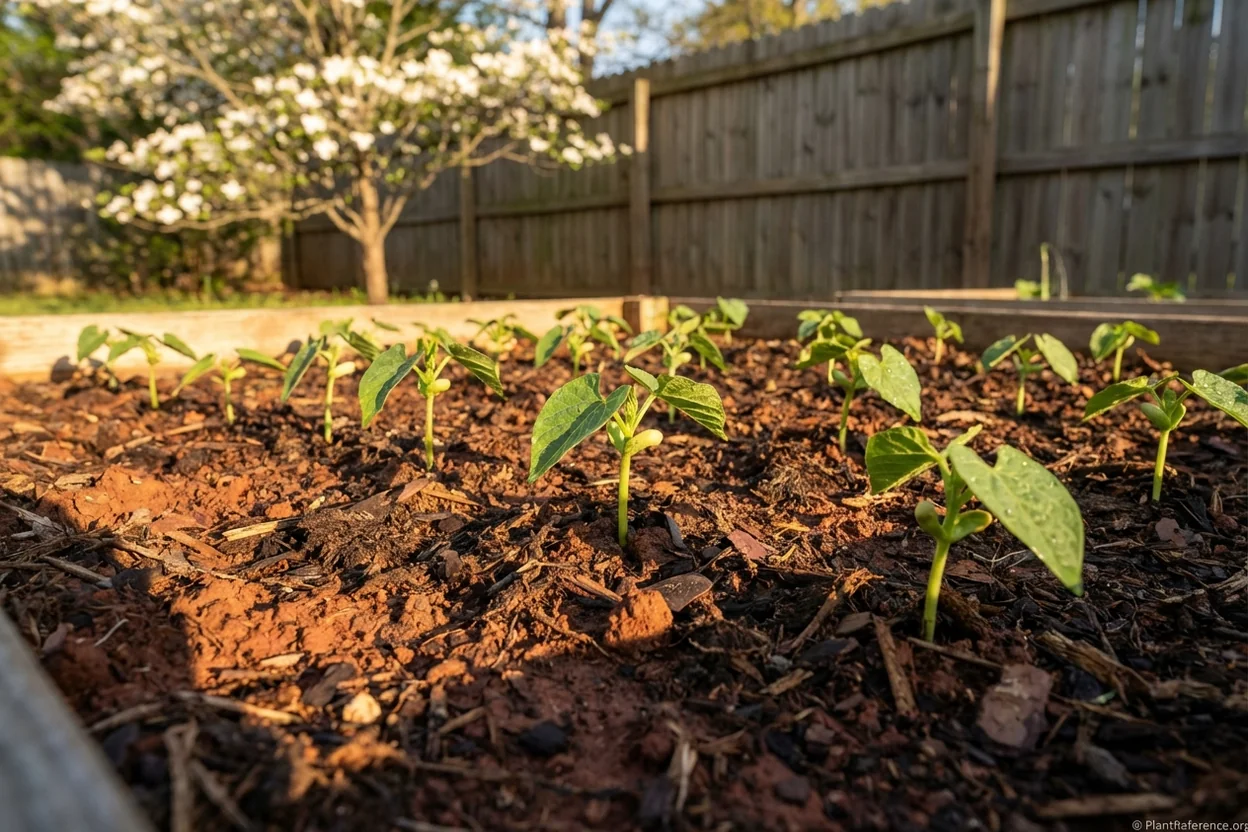
🌿Phaseolus vulgaris 'Provider' earns its name in Atlanta's challenging spring conditions. This variety germinates reliably in cool soil and produces pods before the heat hits. Plant April 15-May 15 for harvest starting June 5.
🌿Phaseolus vulgaris 'Roma II' handles Atlanta's spring humidity better than most Romano types. The broad, flat pods are excellent for fresh eating and freeze beautifully. Its disease resistance package specifically targets the fungal issues common in Georgia's humid springs.
Fall Season All-Stars (August-October Harvest)
Fall is actually Atlanta's premium bean season. Cooler nights improve pod quality, and pest pressure drops significantly after the summer heat breaks.
🌿Phaseolus vulgaris 'Kentucky Wonder' thrives in fall conditions. Plant August 1-15 for harvest starting October 1. The pole habit requires trellising, but one planting provides beans through the first frost.
🌿Phaseolus vulgaris 'Blue Lake' produces its finest pods in fall weather. The temperature swings between warm days and cool nights (70-85°F days, 55-65°F nights) create ideal conditions for tender, flavorful beans.
Why Summer Planting Fails in Atlanta
I've learned this lesson the hard way: don't plant beans in June or July. When temperatures exceed 90°F during flowering, bean plants drop their blossoms faster than you can water them. The plant redirects energy to survival rather than pod production. Save yourself the frustration and wait for August.
Specific Planting Dates for Atlanta Gardeners
Atlanta's last frost averages March 25, but soil temperature matters more than air temperature for bean success. Here's your precise planting calendar based on thirty years of Georgia gardening.
Spring Planting Window: April 15 - May 30
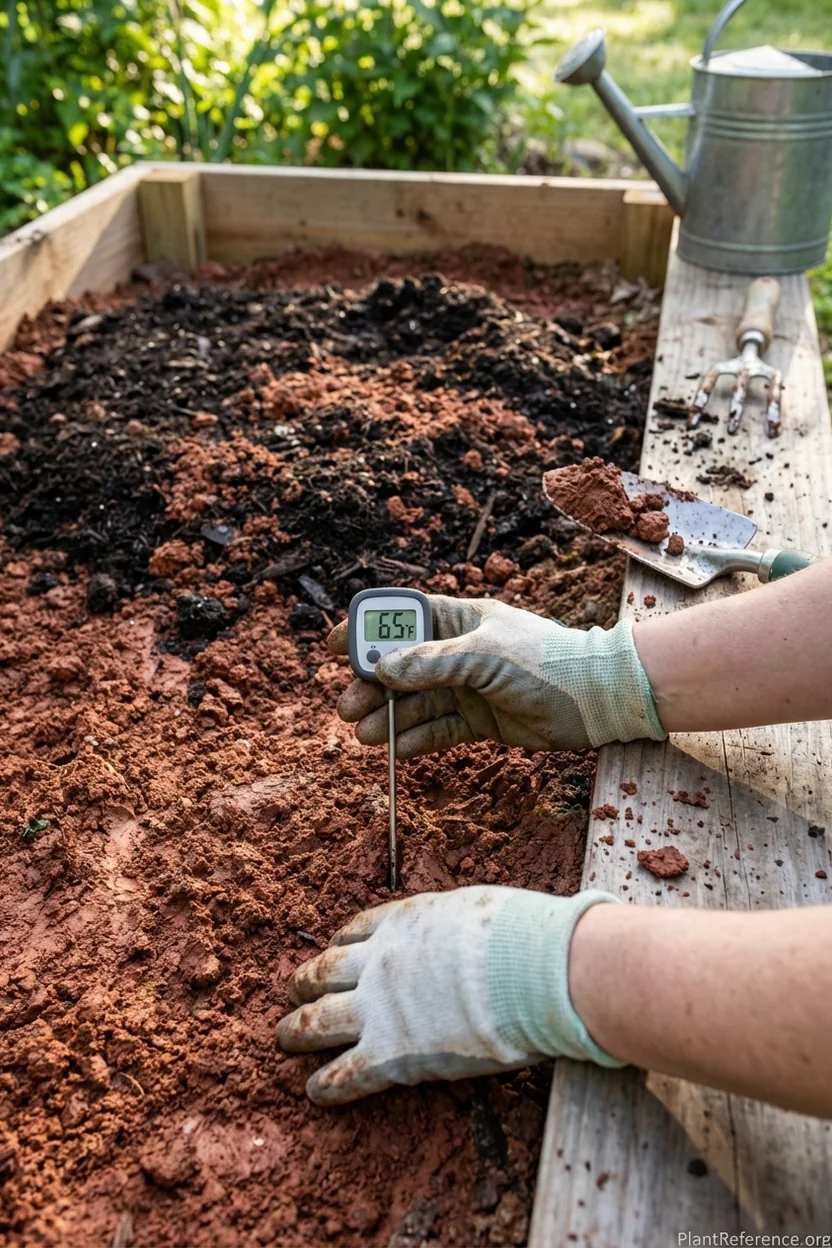
Optimal Spring Start: April 15 - Soil temperature: 60-65°F (16-18°C) - Air temperature: Consistent 50°F+ (10°C+) nights - First harvest: June 5-15 (depending on variety)
Wait until April 15 even if the weather seems warm earlier. Beans planted in cold soil (below 60°F) rot instead of germinating. I check soil temperature with a thermometer at 2-inch depth for three consecutive mornings.
Spring Succession Schedule: - First planting: April 15 (🌿Phaseolus vulgaris 'Provider') - Second planting: May 1 (🌿Phaseolus vulgaris 'Roma II') - Final spring planting: May 30 (🌿Phaseolus vulgaris 'Purple Queen')
Summer Break: June 1 - July 31
Skip this period entirely. Focus on harvesting your spring crop and preparing beds for fall planting.
Fall Planting Window: August 1 - September 15
Prime Fall Start: August 1 - Plant pole beans first (longest maturity) - Soil temperature: 75-80°F (24-27°C) - First harvest: September 30-October 15
Fall Succession Schedule: - August 1: 🌿Phaseolus vulgaris 'Kentucky Wonder' (needs 70 days) - August 15: 🌿Phaseolus vulgaris 'Blue Lake' (needs 65 days) - September 1: 🌿Phaseolus vulgaris 'Provider' (needs 55 days) - September 15: Final planting (🌿Phaseolus vulgaris 'Provider' only)
Calculating Your Last Fall Planting
Atlanta's average first frost is November 10. Count backward from this date:
70 days = August 2 (last date for 🌿Phaseolus vulgaris 'Kentucky Wonder')
60 days = September 11 (last date for 🌿Phaseolus vulgaris 'Roma II')
55 days = September 16 (last date for 🌿Phaseolus vulgaris 'Provider')
Add a 7-day safety buffer for weather variations. This gives you September 15 as your absolute final planting date.
Complete Growing Guide for Atlanta's Two Bean Seasons
Success with Atlanta beans requires adapting your technique to each season's unique challenges. Spring battles cool soil and unpredictable weather, while fall contends with residual heat and shifting day lengths.
Soil Preparation for Georgia Red Clay
Atlanta's notorious red clay needs amendment before it will grow quality beans. I've been working the same garden beds for twenty years, and this preparation method works every time.
Clay Amendment Recipe (per 100 square feet): - 4 cubic yards coarse compost - 2 cubic yards aged pine bark fines - 1 cubic yard coarse sand (not fine sand) - 50 pounds pelleted lime (if pH test shows below 6.0)
Work amendments 8-10 inches deep. Never work wet clay—it forms concrete-hard clumps that take years to break down. Wait until soil crumbles in your hand rather than forming a ball when squeezed.
Test soil drainage by digging 12-inch deep hole and filling with water
If water remains after 24 hours, build raised beds 6-8 inches high
Add drainage layer of coarse gravel at bottom of raised beds
Top-dress beds with 2 inches compost each season
Spring Season Growing Strategy
Spring in Atlanta means dealing with temperature swings, late cold snaps, and increasingly humid conditions as summer approaches.
Spring Planting Technique: Plant beans 1 inch deep in clay soil, 1.5 inches in amended soil. Space according to variety requirements: 4 inches for bush types like 🌿Phaseolus vulgaris 'Provider', 6 inches for vigorous varieties like 🌿Phaseolus vulgaris 'Blue Lake'.
Row spacing depends on your harvesting method. For hand harvesting, 24-inch rows work fine. For easier cultivation and better air circulation (important in Atlanta's humidity), use 36-inch rows.
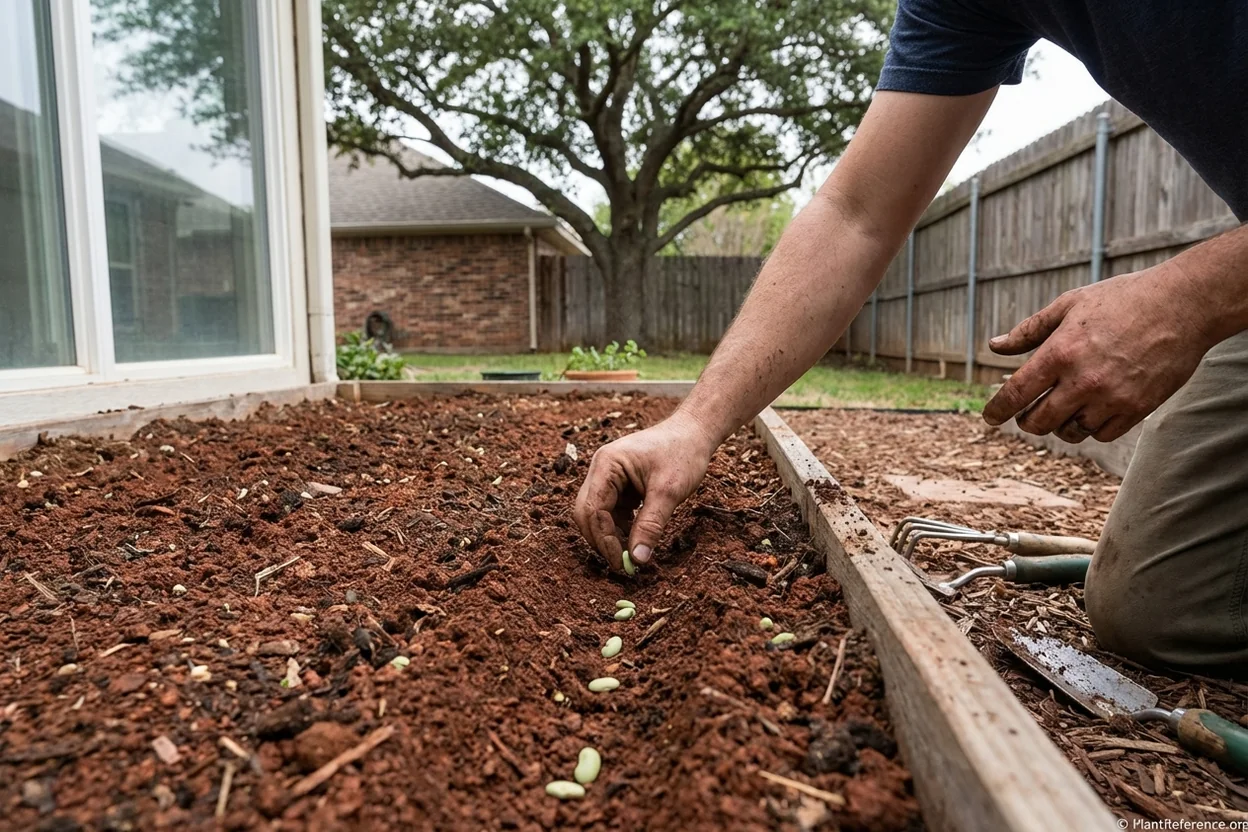
Managing Spring Weather Swings: Keep row cover handy for unexpected late cold snaps. Atlanta can see 40°F nights even into early May. Row cover also helps seeds germinate faster in cool soil by raising temperature 5-10 degrees.
Remove covers when plants begin flowering. Beans are self-pollinating, but air movement improves pod set. More importantly, Atlanta's spring humidity builds up under covers and encourages fungal diseases.
Fall Season Excellence
Fall bean growing in Atlanta is pure joy compared to spring's uncertainty. Warm soil ensures rapid germination, and cooling temperatures improve pod quality throughout the harvest.
Fall Planting Advantages: - Soil temperature perfect at 75-80°F (24-27°C) - Germination in 5-7 days instead of 10-14 days - Lower pest pressure after summer heat breaks - Superior pod quality in cool nights - Extended harvest into November
Water Management by Season: Spring beans need consistent moisture but excellent drainage. Atlanta's spring rains can waterlog clay soil. Plant in raised beds or add drainage amendments.
Fall beans need deeper watering less frequently. The residual summer heat means deeper soil stays warm, encouraging root growth. Water deeply twice weekly rather than daily light watering.
Fertility and Nitrogen Fixation
Beans fix their own nitrogen through root nodules, but they need phosphorus and potassium to do it effectively. Atlanta's clay soil typically has adequate potassium but may lack available phosphorus.
Recommended Fertilizer Schedule: - Pre-planting: 5-10-10 fertilizer at 2 pounds per 100 square feet - Mid-season (flowering): Side-dress with 0-10-10 or compost - Never use high-nitrogen fertilizer—it prevents nodule formation
Check for proper nitrogen fixation by digging up a plant after 4 weeks and examining root nodules. Healthy nodules are pink inside when cut open. Brown or gray nodules indicate poor fixation.
Troubleshooting Atlanta-Specific Bean Problems
Thirty years of Atlanta bean growing has taught me every problem this climate can throw at your plants. Here's how to identify and solve the most common issues.
Problem | Symptoms | Likely Cause | Quick Fix |
|---|---|---|---|
Blossom Drop | Flowers form but fall before pods develop | Temperatures above 90°F during flowering | Plant by May 30 for spring; wait until August for fall |
Anthracnose | Dark, sunken spots on pods and stems | Water splash spreading fungus | Water at soil level; use drip irrigation |
White Mold | White, cottony growth on stems | High humidity and dense planting | Increase spacing to 6 inches; improve air flow |
Rust | Orange-red pustules on leaf undersides | Fungal spores in humid conditions | Remove affected leaves; apply copper fungicide |
Mexican Bean Beetles | Skeletonized leaves; yellow egg clusters | Pest population building | Hand-pick eggs; use row covers until flowering |
Stink Bugs | Dimpled, twisted pods with corky spots | Piercing insects injecting enzymes | Remove weeds; encourage beneficial insects |
Poor Germination | Seeds rot in soil without sprouting | Cold, wet clay preventing oxygen | Fill seed furrow with potting mix; wait for 60°F soil |
Heat Stress and Blossom Drop
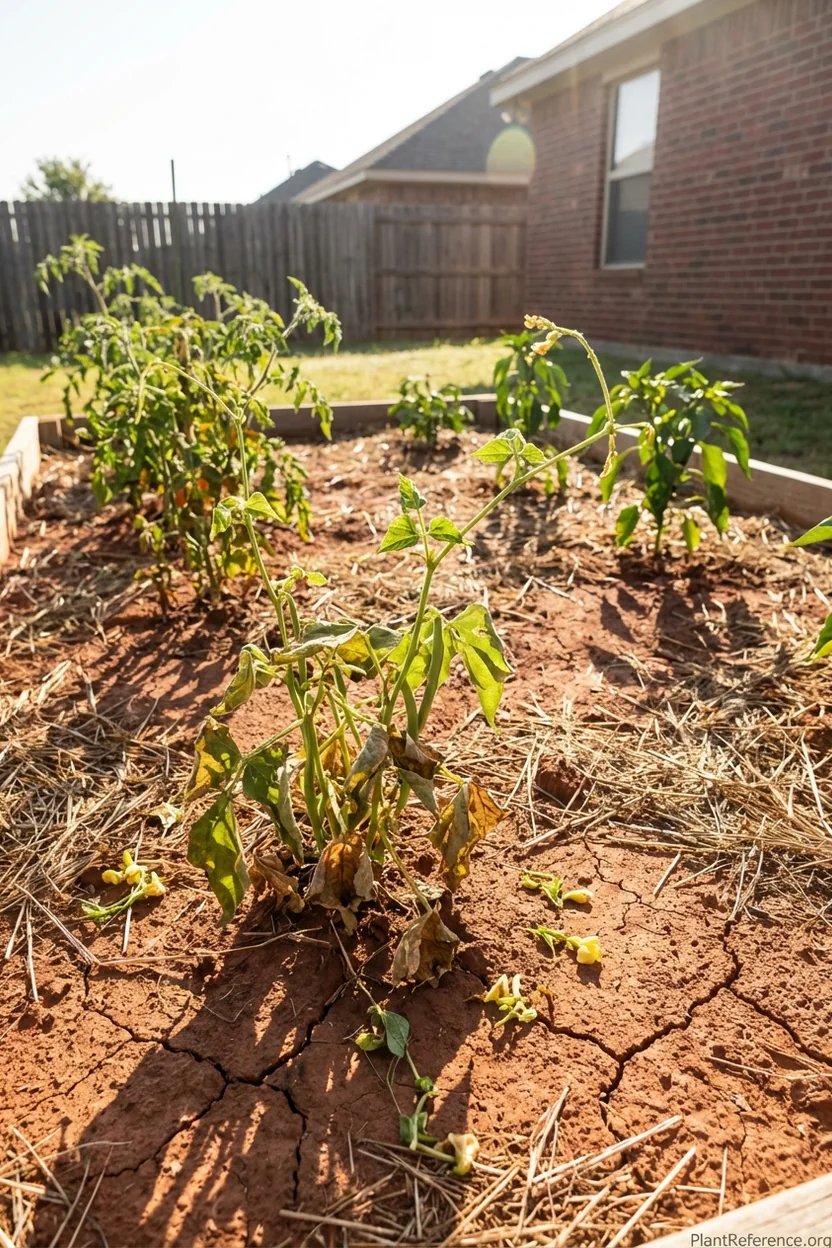
Problem: Plants flower but don't set pods, especially during late spring heat waves.
Diagnosis: When daytime temperatures exceed 90°F (32°C) during flowering, bean plants abort blossoms to conserve energy. This is physiological, not a disease or pest issue.
Solution: Time plantings to avoid peak heat. Plant spring beans by May 15 to finish before June heat. Wait until August for fall plantings when temperatures moderate.
Prevention: Use shade cloth (30% shade) during extreme heat if you must grow through summer, but yields will still be poor.
Fungal Diseases in Humid Conditions
Atlanta's humidity creates perfect conditions for bean diseases, especially during spring's frequent rain.
Anthracnose: Dark, sunken spots on pods and stems. Spread by water splash. - Solution: Avoid touching wet plants. Water at soil level, not overhead. - Resistant varieties: 🌿Phaseolus vulgaris 'Roma II' shows good resistance.
White Mold: White, cottony growth on stems, especially in dense plantings. - Solution: Increase spacing to 6 inches even for bush varieties in humid years. - Prevention: Plant in raised beds for better drainage and air circulation.
Rust: Orange-red pustules on leaf undersides, common in fall. - Solution: Remove affected leaves immediately. Apply copper fungicide if severe. - Timing: Most common September-October when humidity remains high but temperatures drop.
Pest Management
Mexican Bean Beetle: Copper-colored beetles that skeletonize leaves. - Identification: Adults are round with black spots. Larvae are spiny and yellow. - Control: Hand-pick egg masses (yellow clusters on leaf undersides). Use row covers until flowering. - Timing: Peak populations June-July and again in September.
Stink Bugs: Increasingly problematic in Atlanta, they pierce pods and inject enzymes. - Damage: Dimpled, twisted pods with corky spots. - Control: Beneficial insects like spined soldier bugs. Remove weeds that harbor stink bugs.
Poor Germination in Clay Soil
Problem: Seeds rot before sprouting, especially in spring.
Diagnosis: Cold, wet clay soil prevents proper germination. Seeds absorb water but lack oxygen.
Solution: Create seed furrows and fill with potting mix instead of clay soil. This provides perfect germination environment while roots establish in native soil.
Prevention: Never plant when soil is wet enough to form a ball when squeezed.
Harvest and Storage in Georgia Heat
Harvesting in Atlanta requires timing and technique to maintain quality in hot, humid conditions. The difference between crisp, tender beans and tough, stringy pods often comes down to harvest timing and immediate handling.
Harvest Timing by Variety
**Bush Varieties (🌿Phaseolus vulgaris 'Provider', 🌿Phaseolus vulgaris 'Roma II'):** Check daily once pods begin forming. Harvest when pods snap crisply and seeds inside are still small. In Atlanta heat, this window is narrow—2-3 days maximum before pods become tough.
**Pole Varieties (🌿Phaseolus vulgaris 'Kentucky Wonder'):** Continuous harvest every 2-3 days keeps plants producing. Pick all mature pods to signal the plant to keep flowering. Skip a harvest and the plant thinks its job is done.
Beating the Heat During Harvest
Never harvest beans when wet from dew or rain—handling wet plants spreads diseases. In Atlanta's humid mornings, this often means waiting until 10-11 AM.
However, don't wait too long. Pods harvested in 90°F+ heat lose quality quickly. The sweet spot is 8-10 AM after dew dries but before peak heat.
Harvest early morning after dew evaporates (8-10 AM)
Use sharp scissors instead of pulling pods
Place harvested beans immediately in cool water
Never leave harvested beans in sun or hot car
Process within 2 hours of harvest for best quality
Storage for Atlanta's Climate
Atlanta's heat and humidity destroy bean quality quickly. Fresh beans deteriorate in hours without proper handling.
Immediate Cooling: Plunge harvested beans into cold water immediately. This "hydro-cooling" removes field heat and stops quality loss.
Refrigeration: Store at 40-45°F (4-7°C) with high humidity (95%). Place in perforated plastic bags in refrigerator crisper drawer. Use within 3-5 days.
Blanching for Freezing: Atlanta gardeners preserve beans by blanching and freezing. Blanch small beans 2 minutes, large beans 3 minutes in boiling water, then immediately into ice water.
Avoiding Storage Mistakes: Never store beans below 35°F—they develop brown spots and bitter flavor. Don't store with ethylene-producing fruits like tomatoes, which accelerate aging.
Frequently Asked Questions
Reading about plants and recognising them are different skills. These three build the second.
- Daily PlantIdentify the day’s mystery plant from a close-up photograph.
- Keyed OutWork a dichotomous key, lead by lead, to name a hidden specimen.
- Name That PlantName a specimen from botanical clues dealt hardest first.
Free to play, no account needed
Dot grew up on a small farm in rural Virginia and has maintained a vegetable garden for decades. After retiring from teaching elementary school, she became a Master Gardener volunteer and spends her time mentoring new gardeners at community garden plots in Richmond. She's especially knowledgeable about heirloom varieties, seed saving, and traditional growing methods passed down from her grandmother. Dot's no-nonsense advice comes from extensive trial and error—she's seen every tomato disease, pest problem, and weather disaster imaginable. Her biggest pet peeve is gardeners who overcomplicate simple tasks. "Plants want to grow," she often says. "Your job is to not get in their way."