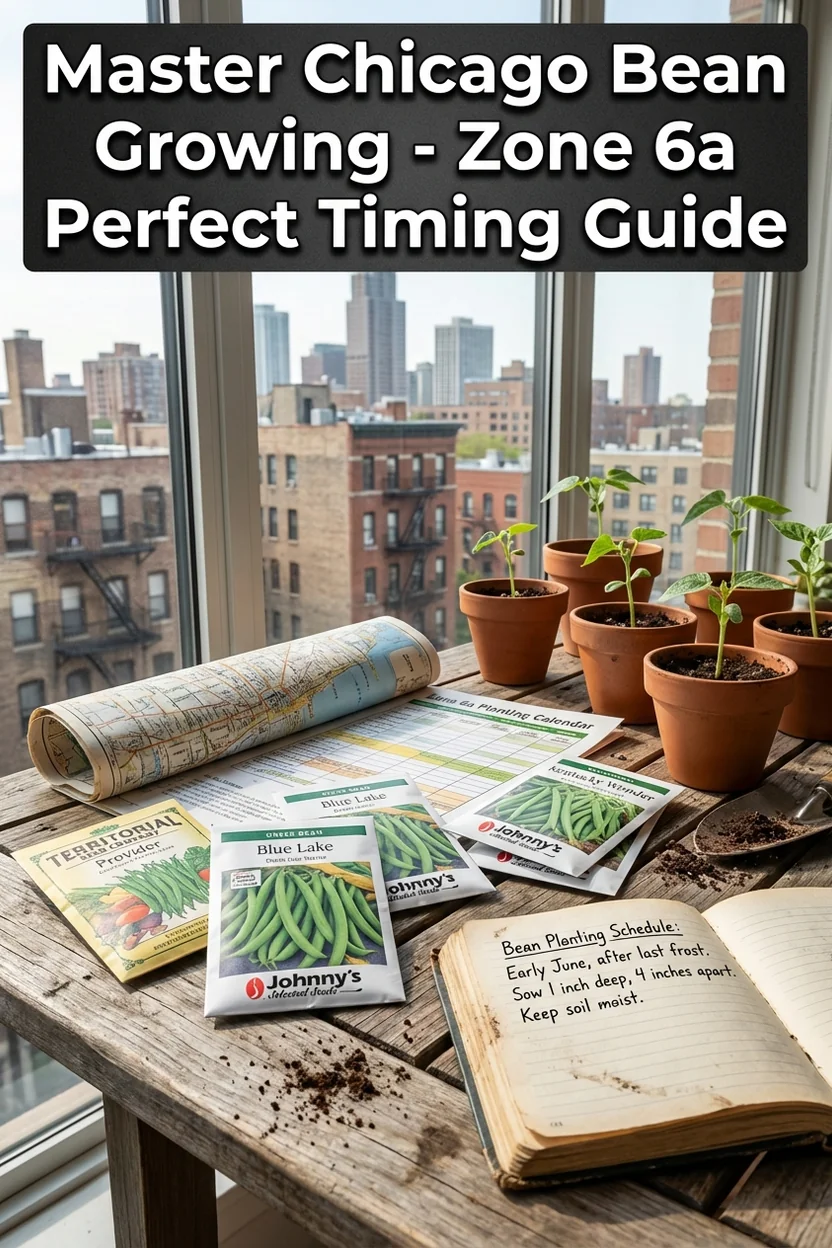
When to Plant Green Beans in Chicago: Complete Guide + Best Varieties for Zone 6a
Pets & Toxicity
Recorded toxicity for plants linked in this guide. An unknown status is not a safety assessment.
No linked plant is recorded as toxicDetailsHide
Phaseolus vulgaris 'Blue Lake' — Toxicity
Non-toxic when cooked. Raw pods carry lectins (phytohemagglutinin) that cause digestive upset on raw consumption — pods are cooked before eatingView Phaseolus vulgaris 'Blue Lake' plant profilePhaseolus vulgaris 'Kentucky Wonder' — Toxicity
Non-toxicView Phaseolus vulgaris 'Kentucky Wonder' plant profilePhaseolus vulgaris 'Purple Queen' — Toxicity
Non-toxicView Phaseolus vulgaris 'Purple Queen' plant profilePhaseolus vulgaris 'Dragon Tongue' — Toxicity
Non-toxicView Phaseolus vulgaris 'Dragon Tongue' plant profile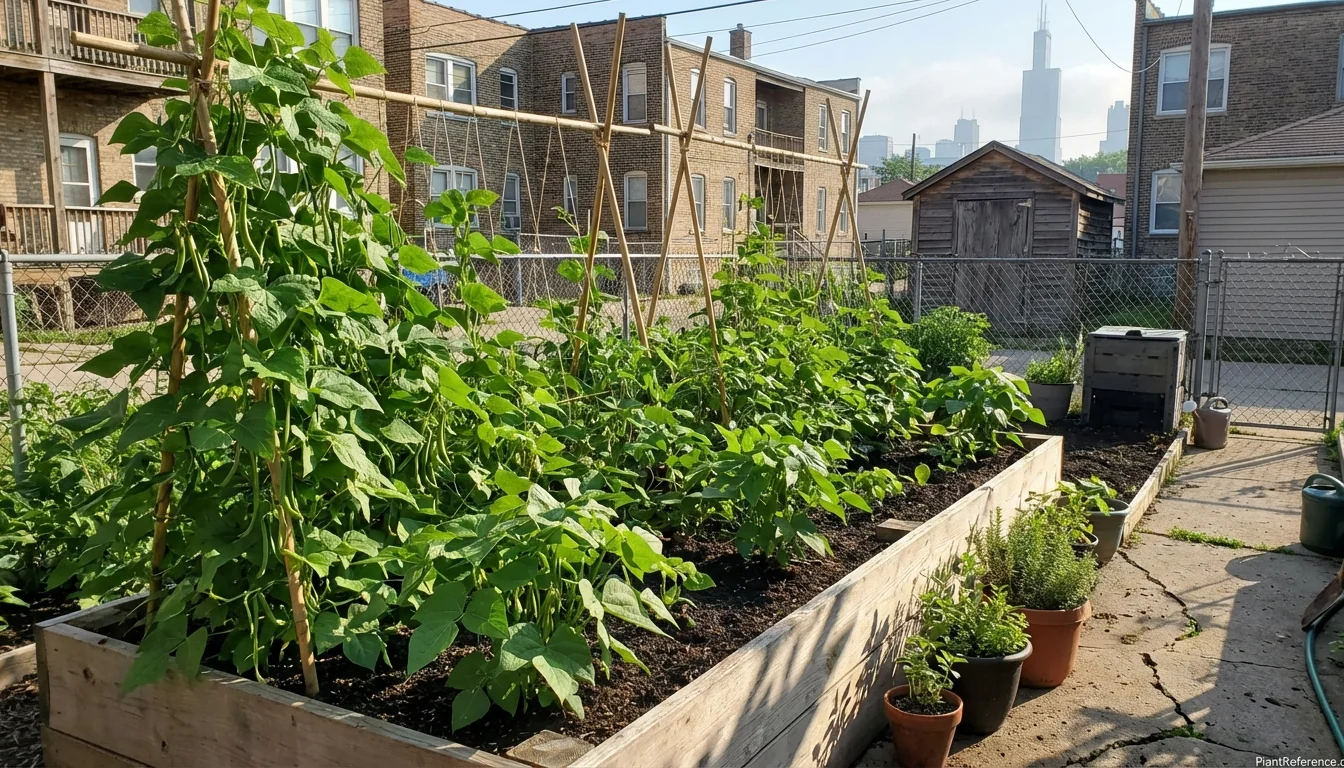
— Image © Plant Reference 2026
Growing green beans in Chicago's Zone 6a climate offers excellent opportunities for home gardeners willing to work with our 158-day growing season. With our last frost typically hitting May 9th and first frost arriving October 14th, you've got enough time for multiple successive plantings of bush varieties or a full season of productive pole beans.
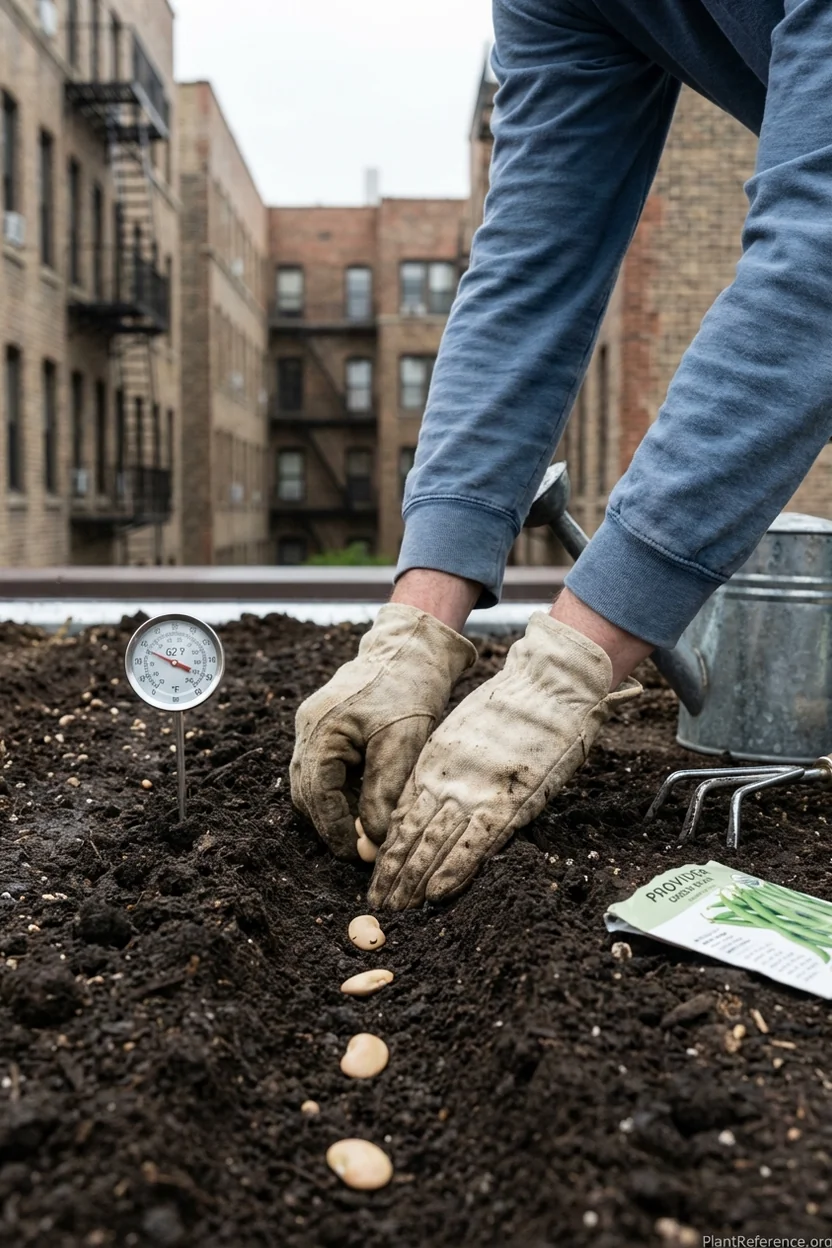
I've been growing beans in the Midwest for forty years, and I'll tell you what works best in Chicago's urban environment. The key is understanding that beans are warm-season crops that won't tolerate even a light frost. That means waiting until soil temperatures are consistently above 60°F (15°C) - usually around May 23rd in the Chicago area, about two weeks after our average last frost date of May 9th.
Best Green Bean Varieties for Chicago's Climate
Chicago's Zone 6a climate with 158 growing days gives you excellent options for both bush and pole bean varieties. Here's what I recommend based on decades of Midwest growing experience:
Variety | Days to Maturity | Best For | Notes for Chicago |
|---|---|---|---|
50-55 days | Quick harvest, succession planting | Perfect for Zone 6a, plant every 2 weeks | |
53-60 days | Romano-style beans, preserving | Heat tolerant for Chicago summers | |
55-60 days | Easy harvesting, kids' gardens | Purple pods visible against green leaves | |
55-65 days | Classic flavor, canning | Industry standard for quality | |
55-60 days | Gourmet markets, unique appearance | Yellow pods with purple streaks | |
60-70 days | Vertical growing, continuous harvest | Pole variety ideal for small Chicago yards |
For Chicago gardeners, I always recommend starting with 🌿Phaseolus vulgaris 'Provider' - it's the most reliable variety I know. At 50-55 days to maturity, it gives you the flexibility to plant multiple successions and still beat our October frost. The compact bush habit works perfectly in smaller urban spaces.
If you're dealing with limited space - and most Chicago gardeners are - 🌿Phaseolus vulgaris 'Kentucky Wonder' pole beans are your best friend. These indeterminate vines will climb 6-8 feet up a trellis or fence, producing beans continuously from mid-July through September. One 10-foot row of pole beans will out-produce three 10-foot rows of bush beans over the season.
For those wanting something different, 🌿Phaseolus vulgaris 'Dragon Tongue' brings gourmet appeal with its yellow pods streaked with purple. They're tender and stringless when harvested young, perfect for Chicago's farmers markets.
Bush Beans vs. Pole Beans for Chicago
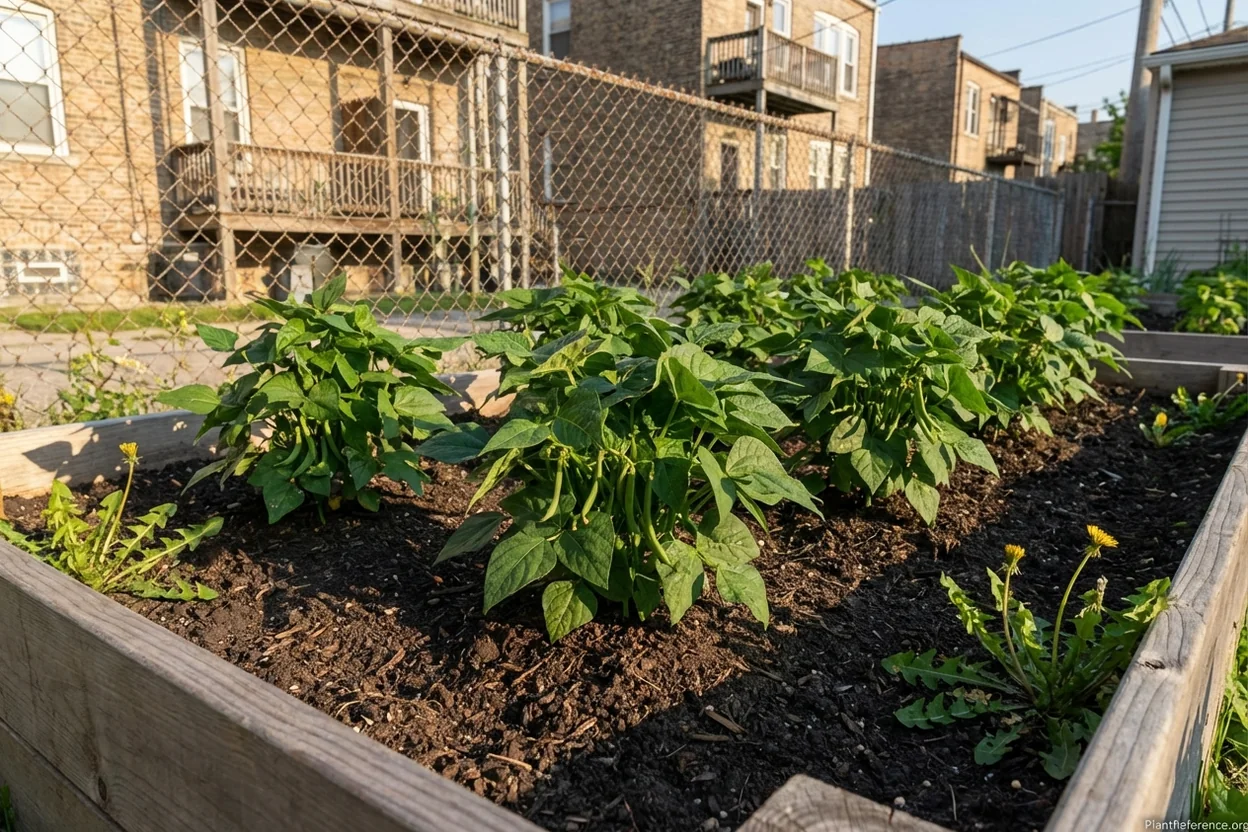
Bush varieties like 🌿Phaseolus vulgaris 'Provider', 🌿Phaseolus vulgaris 'Roma II', and 🌿Phaseolus vulgaris 'Purple Queen' grow 18-24 inches tall and produce their entire crop within 2-3 weeks. This concentrated harvest is perfect for:
Succession planting every 2-3 weeks for continuous harvest
Preserving and canning large batches at once
Smaller spaces that can't accommodate trellises
Beginning gardeners who want simple, predictable results
Pole varieties like 🌿Phaseolus vulgaris 'Kentucky Wonder' require support structures but offer advantages for Chicago's urban environment:
Vertical growing maximizes production in small spaces
Continuous harvest over 6-8 weeks from single planting
Better air circulation reduces fungal disease pressure
Easier picking at eye level rather than bending over
Specific Planting Dates for Chicago
Here's your exact planting calendar for green beans in Chicago, Zone 6a:
Spring Planting Schedule
First Planting: May 23-30 - Soil temperature: 60°F (15°C) minimum - Varieties: Any, but 🌿Phaseolus vulgaris 'Provider' most reliable - Risk: Late cold snap possible but soil warm enough for germination
Second Planting: June 15-22 - Peak planting window with warm soil - All varieties perform excellently - Prime time for 🌿Phaseolus vulgaris 'Kentucky Wonder' pole beans
Third Planting: July 1-8 - Last reliable succession for bush beans - Still time for 50-day varieties before frost - Avoid pole beans - insufficient time to mature
Final Planting: July 15 (DEADLINE) - Only fastest varieties like 🌿Phaseolus vulgaris 'Provider' (50 days) - Harvest by September 3rd with safety margin - Risk increases with later planting
Growing Season Calculations
With Chicago's first frost averaging October 14th, work backwards from harvest needs:
🌿Phaseolus vulgaris 'Provider' (50 days): Latest planting July 25th
🌿Phaseolus vulgaris 'Blue Lake' (60 days): Latest planting July 15th
🌿Phaseolus vulgaris 'Kentucky Wonder' (70 days): Latest planting July 5th
I always plant with a 10-day safety buffer because Chicago weather can be unpredictable. That means my real deadlines are July 15th for Provider, July 5th for Blue Lake, and June 25th for Kentucky Wonder.
Complete Growing Guide for Chicago
Soil Preparation for Chicago Conditions
Chicago's heavy clay soils need amendment before planting beans. I've learned this the hard way over forty years of Midwest gardening. Beans need well-draining soil that warms quickly in spring.
Soil Requirements: - pH: 6.0-7.0 (slightly acidic to neutral) - Drainage: Critical - beans rot in waterlogged soil - Temperature: 60°F (15°C) minimum at 2-inch depth
Chicago Soil Amendments:
Add 2-3 inches compost to heavy clay soil each spring
Mix in coarse sand (not fine sand) to improve drainage
Consider raised beds for problem drainage areas
Test soil pH - Chicago soils often run alkaline from limestone
Planting Techniques for Chicago
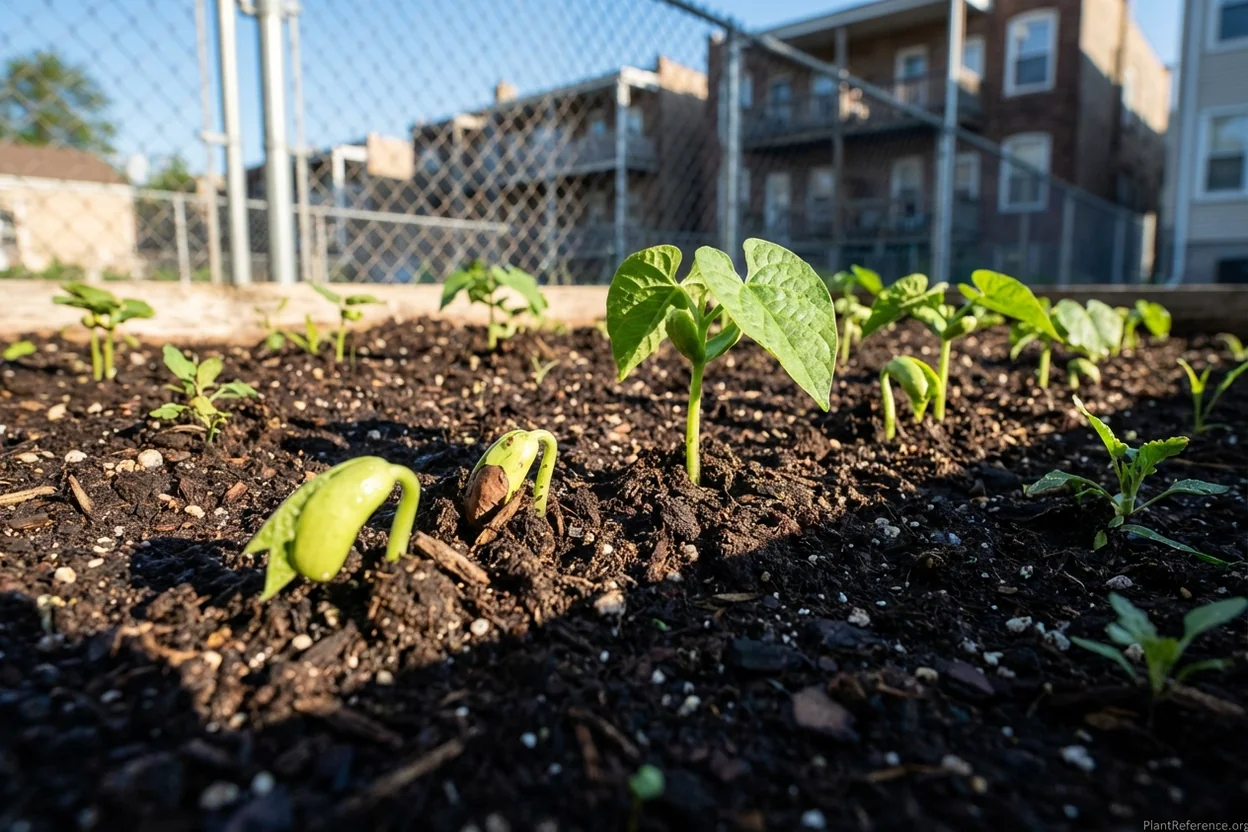
Direct Sowing Method (beans don't transplant well):
Plant seeds 1-2 inches deep in prepared soil
Space bush varieties 4 inches apart in rows
Space pole varieties 6 inches apart along trellis
Water gently after planting - avoid soil crusting
Row Spacing for Chicago Gardens: - Bush beans: 18-24 inch row spacing - Pole beans: 30-36 inch row spacing for trellis access - Intensive beds: Plant in blocks rather than rows
Support Systems for Pole Beans
🌿Phaseolus vulgaris 'Kentucky Wonder' and other pole varieties need sturdy support in Chicago's sometimes windy conditions:
Trellis Options: - 6-8 foot stakes with netting or wire mesh - Bamboo pole teepees (8-10 feet tall) - Existing fences or walls with added horizontal wires - Cattle panels attached to T-posts
Install support structures before planting. Beans wrap around supports counterclockwise and won't redirect once they've started climbing.
Watering Schedule for Chicago Climate
Chicago's rainfall averages about 1 inch per week during growing season, but it's often uneven. Consistent moisture is critical during two phases:
Germination (Days 0-10): - Keep top 2 inches of soil consistently moist - Water daily if no rain - Use gentle spray to avoid disturbing seeds
Flowering and Pod Development (Days 35-60): - 1-1.5 inches water per week - Deep, infrequent watering better than daily sprinkles - Mulch around plants to retain moisture
Fertilizing Green Beans in Chicago
As legumes, green beans fix their own nitrogen through root nodules. Over-fertilizing with nitrogen actually reduces yield by promoting leaf growth over pod production.
Pre-Plant Fertilization: - Work 2-3 inches compost into soil before planting - Add phosphorus if soil test shows deficiency - Avoid high-nitrogen fertilizers
Mid-Season Feeding: - Side-dress with compost halfway through growing season - Apply potassium if plants show stress during hot weather - Monitor for nutrient deficiencies in container plantings
Troubleshooting Chicago-Specific Problems
Chicago's urban environment and Zone 6a climate create specific challenges for green bean growers. Here's how to handle the most common problems:
Weather-Related Issues
Late Spring Cold Snaps: Chicago can get surprise late frosts through Memorial Day weekend. If you've planted early and cold threatens:
Cover plants with row covers or bedsheets overnight
Use water-filled containers around plants for heat retention
Small plants can be protected with individual milk jug cloches
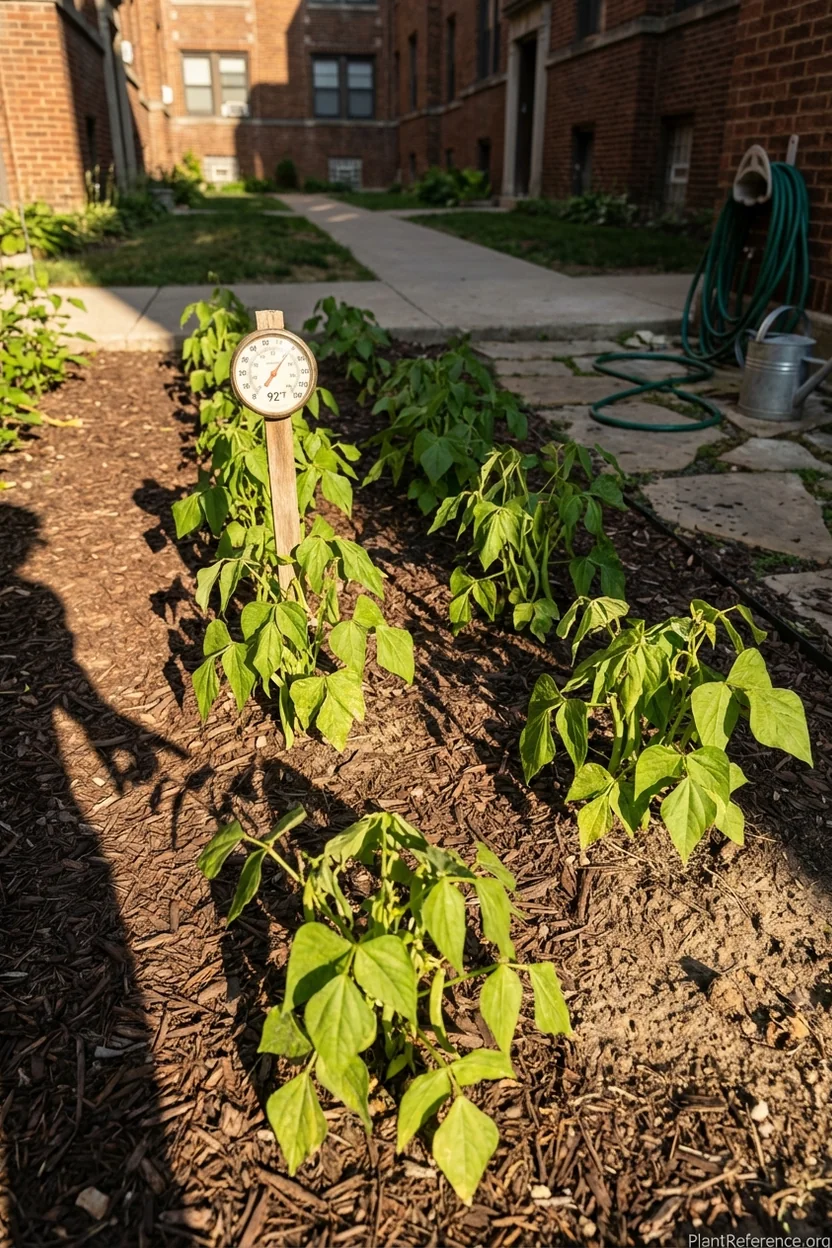
Summer Heat Stress: July and August temperatures above 90°F (32°C) can cause blossom drop:
Provide afternoon shade during extreme heat waves
Maintain consistent soil moisture
Mulch heavily to keep roots cool
Consider succession planting to avoid peak heat
Pest Management in Urban Chicago
Mexican Bean Beetles: Chicago's urban heat islands can increase pest pressure. Watch for copper-colored beetles with black spots:
Check undersides of leaves weekly for orange egg clusters
Hand-pick adults and larvae in small gardens
Use floating row covers early in season
Apply neem oil or insecticidal soap for severe infestations
Slugs in Shady Areas: Chicago's humidity and urban moisture retention create ideal slug conditions:
Apply diatomaceous earth around young plants
Set up beer traps near problem areas
Clear plant debris where slugs hide during day
Encourage natural predators like ground beetles
Disease Prevention
White Mold (Sclerotinia): Chicago's humid summers can trigger this fungal disease:
Space plants properly for air circulation
Water at soil level, not on foliage
Remove infected plant material immediately
Rotate bean crops to different garden areas yearly
Bacterial Blight: Spread by working with wet plants:
Never work in bean patch when plants are wet
Avoid overhead watering if possible
Choose resistant varieties like 'Provider' and 'Roma II'
Remove and destroy affected plants
Harvest & Storage
Proper harvesting technique determines both immediate quality and continued production from your Chicago bean crop.
When to Harvest
**Snap Beans (🌿Phaseolus vulgaris 'Blue Lake', 🌿Phaseolus vulgaris 'Provider'):**
Pick when pods are pencil-thick and snap crisply
Seeds should be barely visible as small bumps
Harvest every 2-3 days to encourage continued production
**Romano Beans (🌿Phaseolus vulgaris 'Roma II'):**
Pick when pods are broad and flat but still tender
Can grow larger than snap beans while remaining edible
Best flavor when 6-8 inches long
**Wax Beans (🌿Phaseolus vulgaris 'Dragon Tongue'):**
Harvest when yellow color is vibrant
Purple streaks should be clearly visible
More tender than green beans - check daily
Harvesting Technique
Always harvest with two hands - hold the stem with one hand while picking pods with the other. Yanking pods can damage the plant and reduce future production.
Best Harvesting Times:
Early morning when pods are crisp and full of moisture
Avoid harvesting during heat of day when pods are limp
Never harvest when plants are wet from dew or rain
Storage and Preservation
Fresh green beans keep best at 40-45°F (4-7°C) with high humidity:
Short-term Storage (1-2 weeks):
Store in perforated plastic bags in refrigerator
Don't wash until ready to use
Remove any damaged or yellowing pods
Long-term Preservation:
Blanch in boiling water for 3 minutes before freezing
Can whole or cut beans using pressure canner method
Dehydrate for storage in sealed containers
Pickle young, tender pods for gourmet preserves
Chicago's 158-day growing season allows for excellent preservation harvests. I typically plan succession plantings so I can process large batches for winter storage while still having fresh beans for the table.
Frequently Asked Questions
Reading about plants and recognising them are different skills. These three build the second.
- Daily PlantIdentify the day’s mystery plant from a close-up photograph.
- Keyed OutWork a dichotomous key, lead by lead, to name a hidden specimen.
- Name That PlantName a specimen from botanical clues dealt hardest first.
Free to play, no account needed
Pat has been gardening in Milwaukee for over thirty years, through every kind of Wisconsin weather. She worked as a school librarian and started gardening seriously when her kids were small—she wanted them to know where food came from. Now retired, she's a certified Master Gardener and runs the plant sale at her local garden club every spring. She specializes in cold-hardy perennials, native wildflower meadows, and the art of getting a vegetable garden producing in Wisconsin's short but intense growing season. Pat is practical and patient—she's seen enough Wisconsin winters to know that gardening here is a long game, and she writes with the steady confidence of someone who's been doing this a long time.