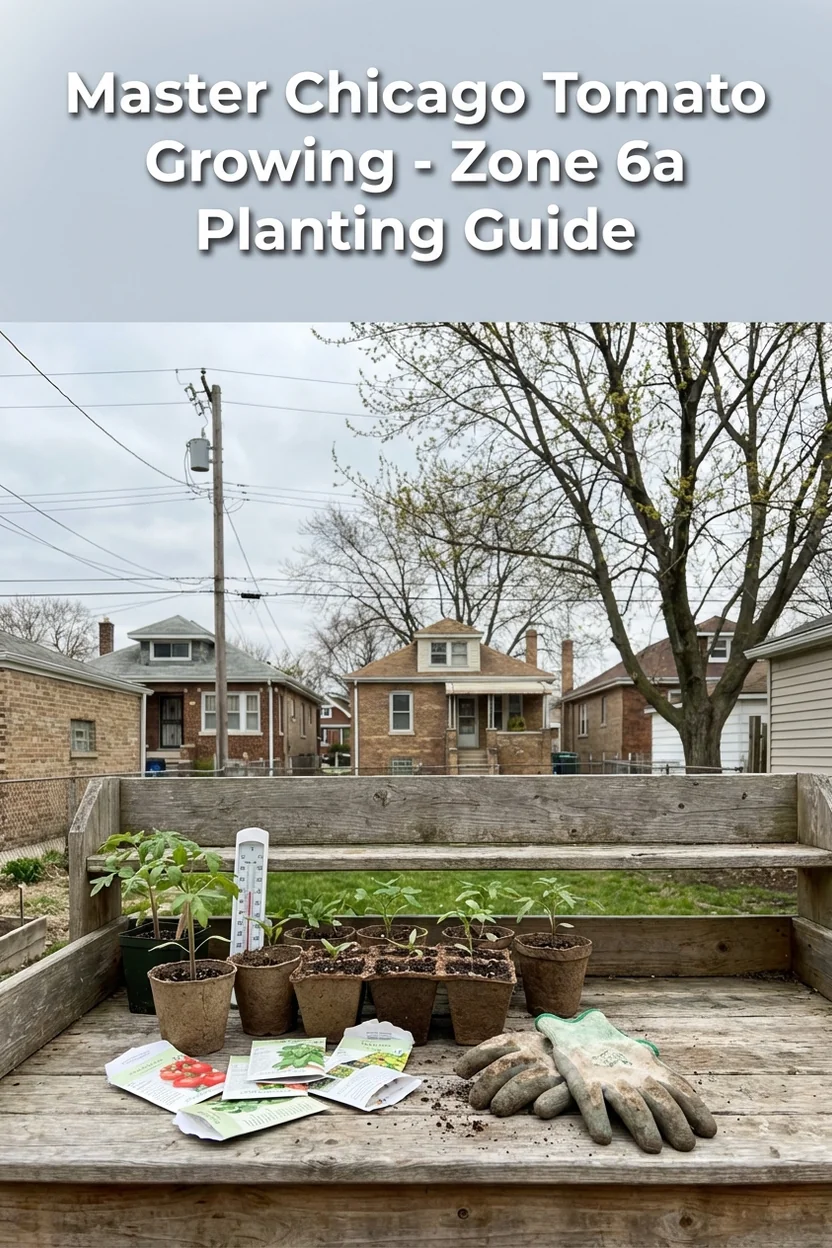
When to Plant Tomatoes in Chicago: Complete Guide + Best Varieties for Zone 6a
Pets & Toxicity
Recorded toxicity for plants linked in this guide. An unknown status is not a safety assessment.
Toxic to pets: early girl tomato, Stupice tomato, Sungold cherry tomato and 3 moreDetailsHide
Solanum lycopersicum 'Early Girl' — Toxicity Warning
Toxic to petsView Solanum lycopersicum 'Early Girl' plant profileSolanum lycopersicum 'Stupice' — Toxicity Warning
Toxic to petsView Solanum lycopersicum 'Stupice' plant profileSolanum lycopersicum 'Sungold' — Toxicity Warning
Toxic to petsView Solanum lycopersicum 'Sungold' plant profileSolanum lycopersicum 'Cherokee Purple' — Toxicity Warning
Toxic to petsView Solanum lycopersicum 'Cherokee Purple' plant profileSolanum lycopersicum 'San Marzano' — Toxicity Warning
Toxic to petsView Solanum lycopersicum 'San Marzano' plant profileSolanum lycopersicum 'Brandywine' — Toxicity Warning
Toxic to petsView Solanum lycopersicum 'Brandywine' plant profile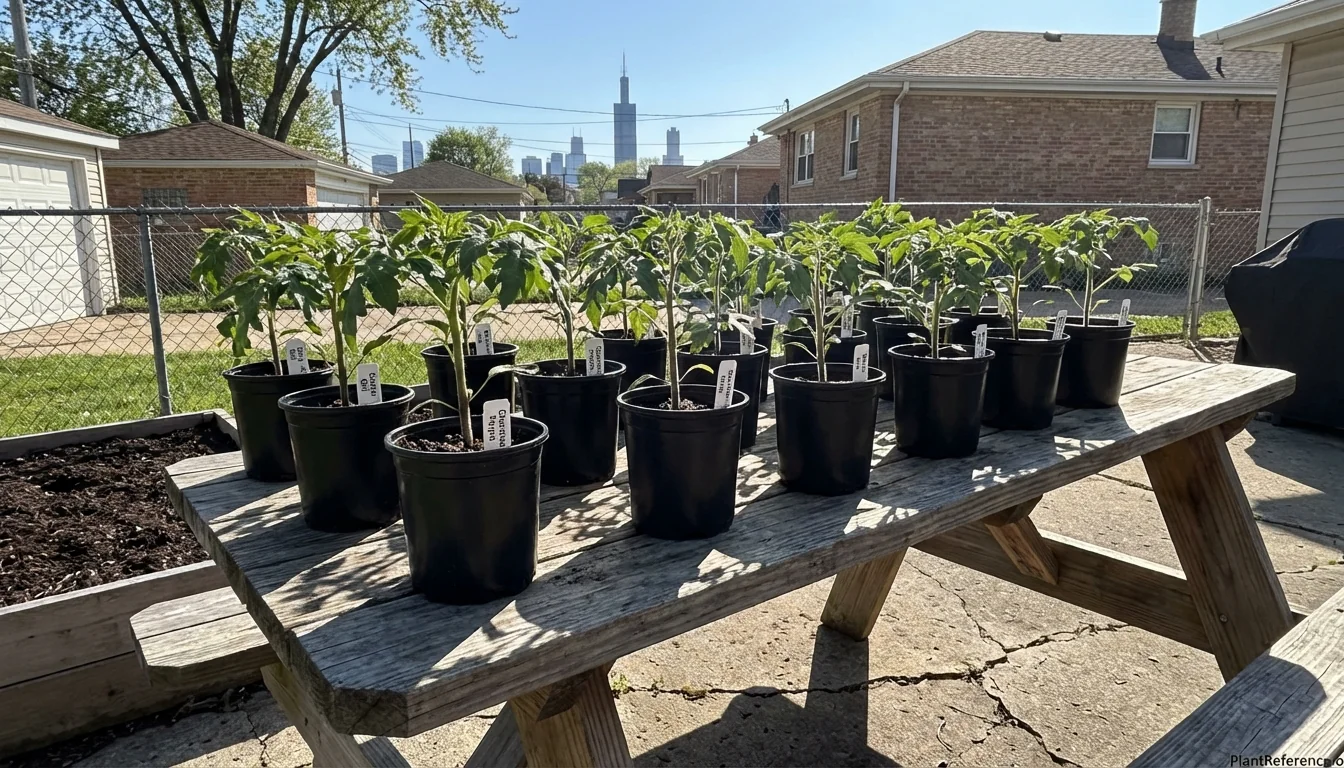
— Image © Plant Reference 2026
Chicago gardeners face unique challenges when growing tomatoes in Zone 6a. With a last frost date of May 9 and first frost arriving October 14, you have exactly 158 days to work with—enough for most varieties if you time everything correctly.
I've been growing tomatoes in the Midwest for over forty years, and I'll tell you what works in Chicago's unpredictable climate. The key to success is choosing varieties that can handle those sudden temperature drops off Lake Michigan and making sure you don't rush the planting process. Chicago's Zone 6a designation means you can grow excellent tomatoes, but timing is everything.
Best Tomato Varieties for Chicago's Zone 6a Climate
Chicago's moderate growing season allows for both early and late-season varieties, but you need to choose wisely. The lake effect can bring unexpected cool snaps even in summer, so I always recommend varieties with some cold tolerance.
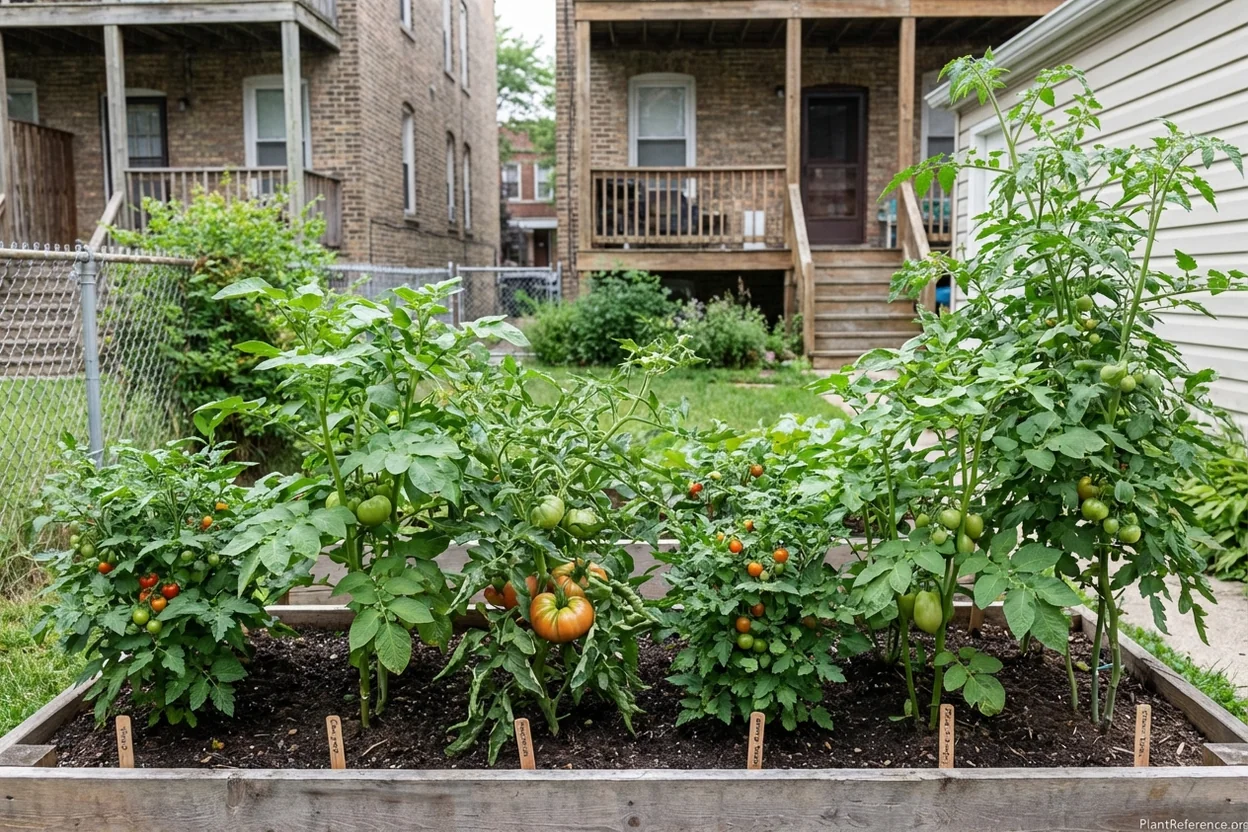
Here are the six varieties that perform best in Chicago's climate:
Variety | Days to Maturity | Best For | Notes for Chicago |
|---|---|---|---|
50-62 days | Quick harvest | Perfect for Chicago's unpredictable springs | |
52-60 days | Cold tolerance | Sets fruit even during cool Lake Michigan weather | |
55-65 days | Cherry tomatoes | Productive until first frost in October | |
75-90 days | Flavor | Handle Chicago humidity better than most heirlooms | |
78-85 days | Paste/sauce | Excellent for fall canning before frost | |
80-100 days | Premium slicing | Requires protection from lake effect winds |
Early Season Champions (50-65 days)
🌿Solanum lycopersicum 'Early Girl' is my go-to recommendation for Chicago. This hybrid sets fruit at lower temperatures than most varieties—crucial when Lake Michigan keeps things cool well into June. You'll have ripe tomatoes by mid-July, beating the rush and giving you a full harvest before any early fall surprises.
🌿Solanum lycopersicum 'Stupice' comes from cold-climate Czechoslovakia and handles Chicago's variable weather like a champion. It actually seems to enjoy those cool morning mists coming off the lake that stress other varieties.
🌿Solanum lycopersicum 'Sungold' ** cherry tomatoes are practically foolproof in Chicago. They produce abundantly and handle temperature swings better than large-fruited varieties. Kids love them, and they're perfect for Chicago's urban container gardens.
Mid to Late Season Varieties (70-100 days)
🌿Solanum lycopersicum 'Cherokee Purple' is the heirloom that actually works in Chicago. Unlike finicky varieties like 🌿Solanum lycopersicum 'Brandywine', Cherokee Purple tolerates humidity and produces reliably. The flavor is exceptional—smoky and complex.
🌿Solanum lycopersicum 'San Marzano' thrives in Chicago's moderate summers. The paste tomatoes are perfect for making sauce to preserve your harvest. With 158 growing days, you have plenty of time for these late varieties to mature.
🌿Solanum lycopersicum 'Brandywine' is challenging but possible in Chicago. Plant it in your most protected spot, away from lake winds. The massive pink fruits are worth the effort if you can provide consistent conditions.
Specific Planting Dates for Chicago
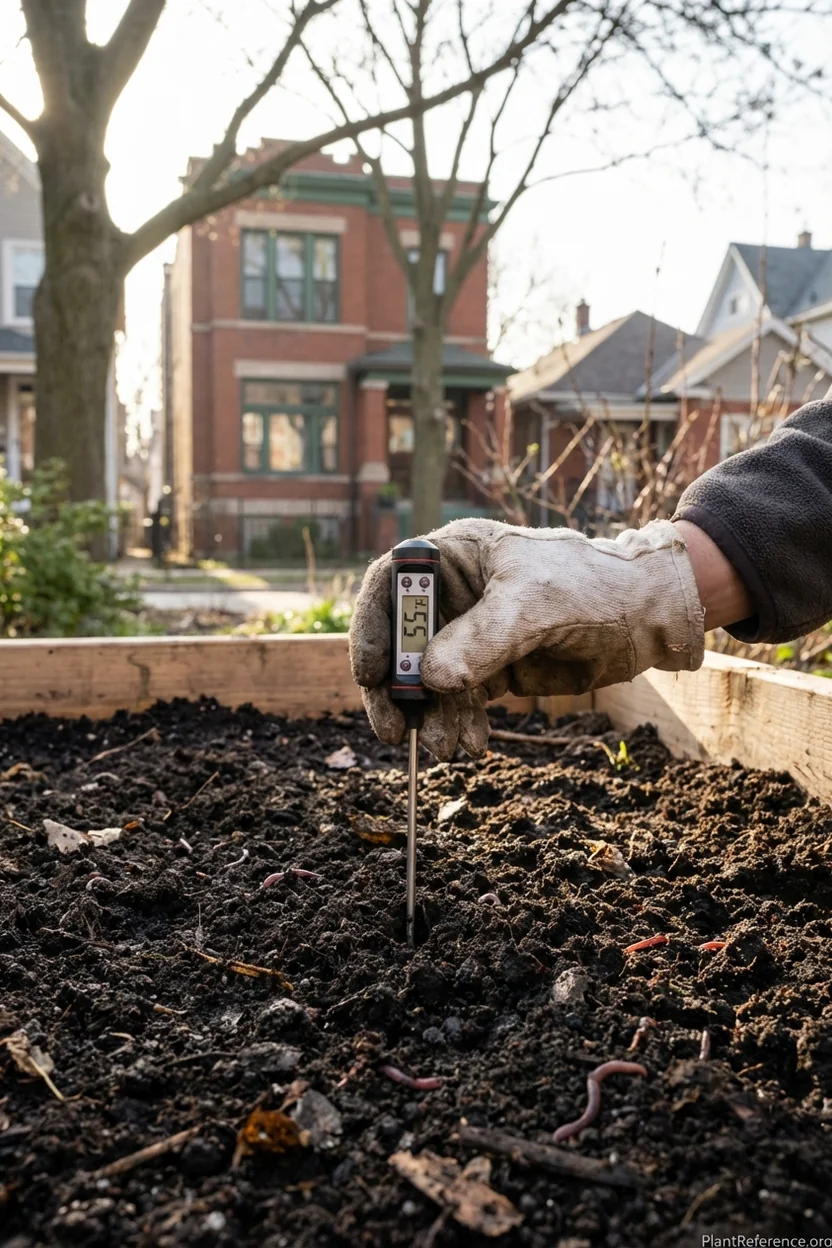
Chicago's last frost date is May 9, but don't let that fool you into planting too early. Lake Michigan keeps soil temperatures low well past the air temperature, and tomatoes need warm soil to establish properly.
Indoor Seed Starting Timeline
March 15-22: Start seeds indoors. Chicago's variable spring weather makes this timing critical—not too early to get leggy seedlings, not too late to miss the planting window.
April 15-22: Begin hardening off process. Chicago spring can be brutal on tender seedlings, so take two full weeks to acclimate them gradually.
May 1-8: Final hardening preparations. Watch the long-range forecast—lake effect can bring surprise cold snaps even after the official last frost date.
Outdoor Transplanting Dates
May 15-20: Prime transplanting window. Soil should be at least 55°F (13°C) at 6-inch depth. This timing gives you the full 158-day growing season while avoiding frost damage.
May 21-25: Acceptable backup dates if weather delays your plans. You'll still get excellent production with this timing.
After May 25: Only plant if using season extenders like wall-o-water or row covers. Late planting reduces your harvest window significantly.
Growing Season Timeline
Here's what to expect month by month in Chicago:
May: Transplant and establishment. Protect from unexpected cool nights and strong lake winds.
June: Rapid vegetative growth. This is when Chicago tomatoes really take off as soil warms and days lengthen.
July: First harvest begins for early varieties. 🌿Solanum lycopersicum 'Early Girl' and 🌿Solanum lycopersicum 'Stupice' start producing mid-month.
August: Peak production season. All varieties should be producing heavily. This is canning and preserving time.
September: Late harvest continues. Chicago's September weather is often ideal for tomatoes—warm days, cool nights.
October 1-14: Final harvest before first frost. Green tomatoes can ripen indoors if frost threatens early.
Complete Growing Guide for Chicago
Chicago's urban environment creates unique growing conditions. Heat islands, reflected light from buildings, and protection from lake winds can all work in your favor if you understand how to use them.
Soil Preparation for Chicago Gardens
Chicago clay soil is notorious, but it's actually excellent for tomatoes once you amend it properly. I never fight the clay—I work with it.
Add 2-3 inches of compost each spring to break up clay and improve drainage
Create raised beds 8-12 inches high to warm soil faster in spring
Test soil pH annually—Chicago clay tends to be alkaline (pH 7.0-8.0)
Add sulfur in fall to lower pH to 6.0-6.8 for optimal nutrient uptake
Install drainage tiles if your area has standing water issues
The key is building organic matter over time. Don't try to fix Chicago clay in one season—it's a multi-year project that gets better each year.
Planting Techniques for Zone 6a
Deep Planting: In Chicago, I plant tomato seedlings deeper than anywhere else I've gardened. Bury 2/3 of the stem to encourage root development along the buried portion. This creates a stronger root system to handle lake winds.
Wind Protection: Chicago's constant breeze requires sturdy support systems. Use 6-foot stakes or substantial cages from day one. Lake winds can snap an unsupported tomato plant overnight.
Mulching Strategy: Apply 3-4 inches of organic mulch after soil warms in late May. This moderates soil temperature swings and conserves moisture during Chicago's hot summers.
Watering and Nutrition
Chicago's humidity means you need to water less frequently but more deeply than in arid climates. Overwatering is actually more common than underwatering here.
Watering Schedule: Deep watering twice weekly is better than daily shallow watering. Chicago clay holds moisture well once properly amended.
Fertilization Program: Side-dress with compost monthly. Chicago's long growing season means plants need sustained nutrition, not quick-release synthetic fertilizers that promote excessive leaf growth.
Disease Prevention: Good air circulation is critical in Chicago's humid summers. Space plants 3-4 feet apart and remove lower branches that touch the soil.
Troubleshooting Chicago-Specific Problems
Forty years of growing in the Chicago area has taught me that certain problems crop up repeatedly. Here's how to handle them:
Lake Effect Challenges
Temperature Swings: Lake Michigan can drop temperatures 10-15°F below inland areas, especially in late May and early June. Keep row covers handy for unexpected cool nights.
High Humidity: Chicago's position between the lake and prairie creates humid conditions perfect for fungal diseases. Preventive copper sprays in June can save your crop.
Wind Damage: Constant lake breeze requires extra-sturdy support systems. I use 8-foot metal stakes driven 2 feet deep for indeterminate varieties.
Urban Growing Issues
Soil Contamination: Many Chicago lots have lead-contaminated soil from old paint. Test your soil and use raised beds with imported soil if levels are high.
Air Pollution: Chicago's air quality can stress plants during summer inversions. Varieties with thick waxy leaves like 🌿Solanum lycopersicum 'Early Girl' handle pollution better than thin-leaved heirlooms.
Reflected Heat: South-facing walls and concrete create hot spots that can stress plants. Use these warm microclimates for heat-loving varieties but provide afternoon shade.
Disease Management
Chicago's humid summers create perfect conditions for tomato diseases:
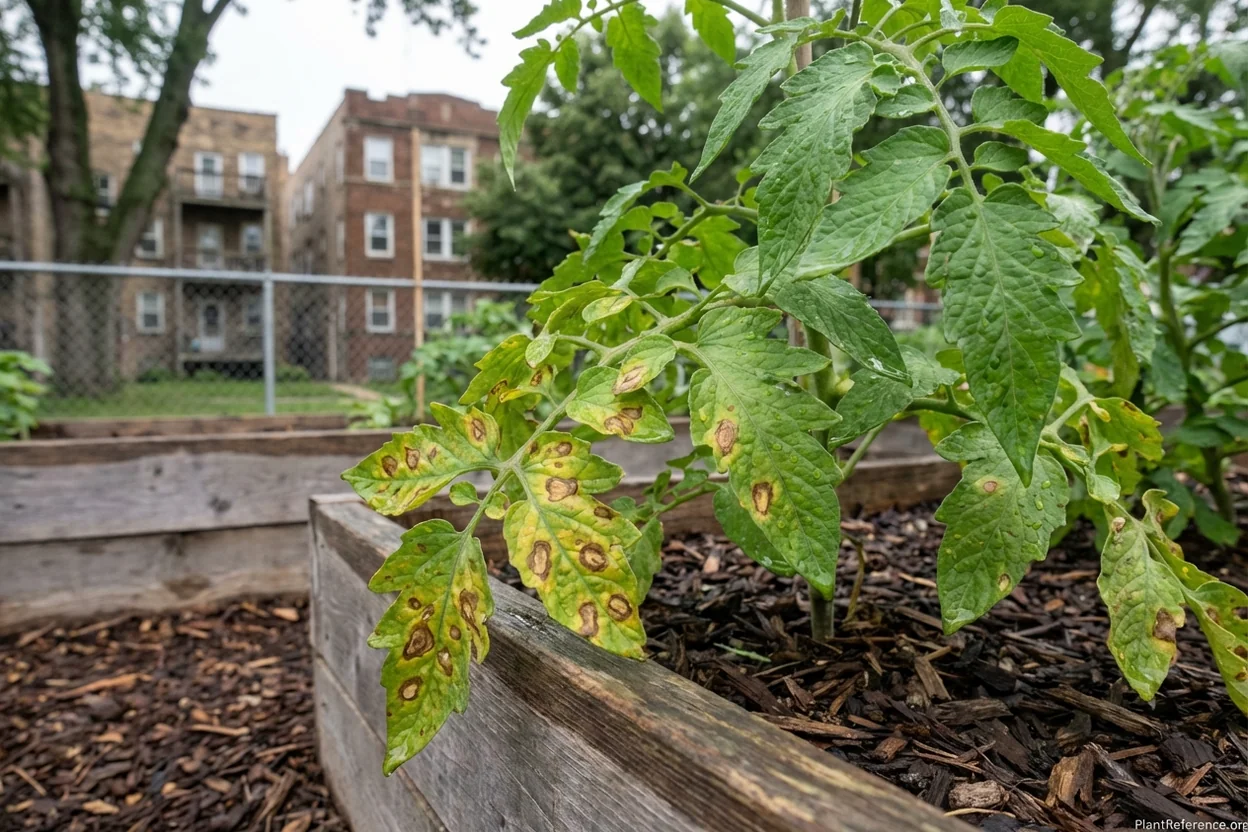
Early Blight: Appears as brown spots with yellow halos on lower leaves. Remove affected foliage immediately and improve air circulation.
Late Blight: Shows up during cool, wet periods in August-September. Copper fungicides applied preventively are your best defense.
Septoria Leaf Spot: Small dark spots that spread rapidly in humid conditions. Mulch heavily to prevent soil splash and water at soil level only.
Harvest & Storage
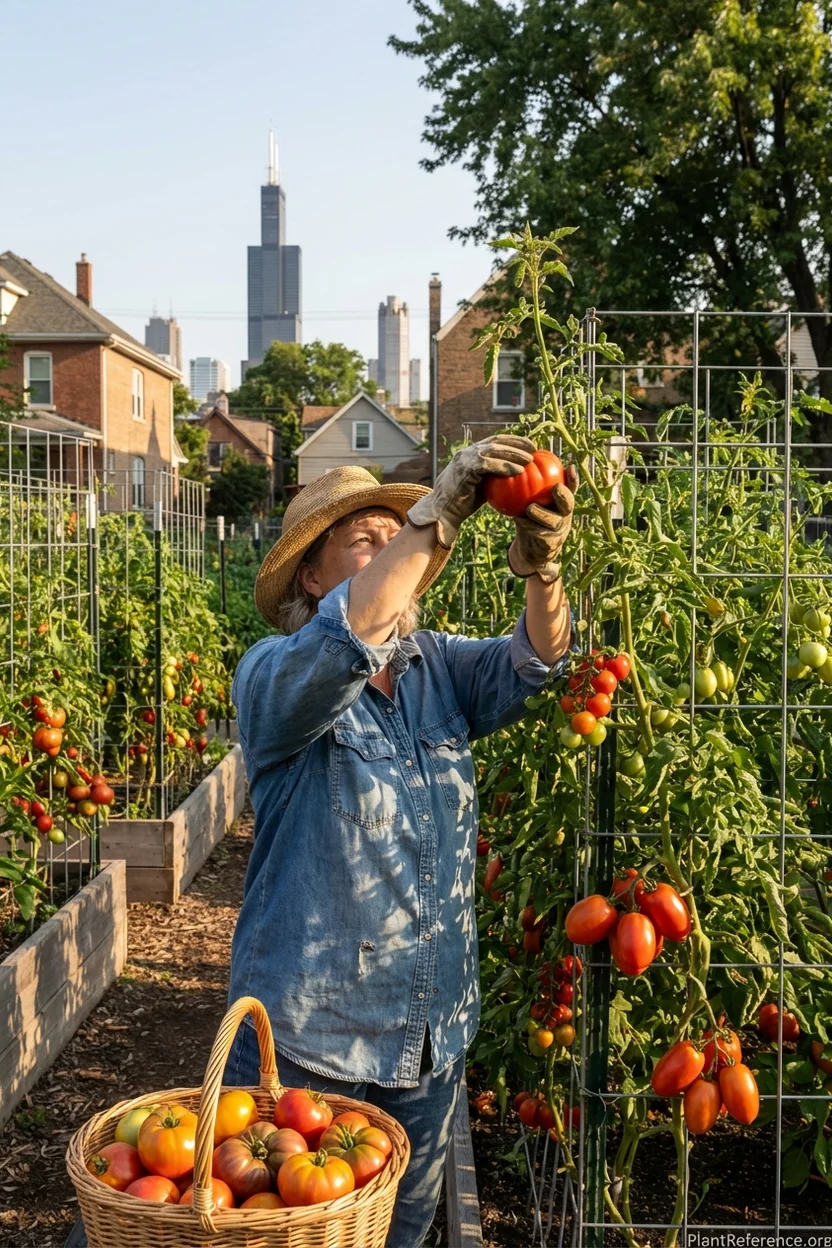
Chicago's 158-day growing season gives you an excellent harvest window if you manage it properly. Peak production typically runs from late July through September.
Optimal Harvest Timing
Early Varieties (July 15-August 31): 🌿Solanum lycopersicum 'Early Girl' and 🌿Solanum lycopersicum 'Stupice' provide your first harvest. Pick these regularly to keep plants producing.
Mid-Season Varieties (August 1-September 30): 🌿Solanum lycopersicum 'Cherokee Purple' and 🌿Solanum lycopersicum 'Sungold' hit their stride in Chicago's ideal August weather.
Late Varieties (August 15-October 14): 🌿Solanum lycopersicum 'San Marzano' and 🌿Solanum lycopersicum 'Brandywine' mature just before first frost, perfect for fall preservation.
Extending the Season
Chicago gardeners can often extend harvest past the October 14 average first frost:
Row Covers: Lightweight fabric covers can protect plants through light frosts, often extending harvest 2-3 weeks.
Container Growing: Large containers can be moved to protected areas when frost threatens.
Green Tomato Harvest: Pick mature green tomatoes before hard frost and ripen them indoors on windowsills.
Storage and Preservation
With Chicago's abundant harvest, preservation is key:
Fresh Storage: Ripe tomatoes keep 1-2 weeks at room temperature, longer in cool basements typical of Chicago homes.
Freezing: Whole tomatoes freeze well for winter sauce-making. Chicago's Italian neighborhoods have used this method for generations.
Canning: San Marzano paste tomatoes are perfect for sauce canning during Chicago's peak season in late August.
Frequently Asked Questions
Reading about plants and recognising them are different skills. These three build the second.
- Daily PlantIdentify the day’s mystery plant from a close-up photograph.
- Keyed OutWork a dichotomous key, lead by lead, to name a hidden specimen.
- Name That PlantName a specimen from botanical clues dealt hardest first.
Free to play, no account needed
Pat has been gardening in Milwaukee for over thirty years, through every kind of Wisconsin weather. She worked as a school librarian and started gardening seriously when her kids were small—she wanted them to know where food came from. Now retired, she's a certified Master Gardener and runs the plant sale at her local garden club every spring. She specializes in cold-hardy perennials, native wildflower meadows, and the art of getting a vegetable garden producing in Wisconsin's short but intense growing season. Pat is practical and patient—she's seen enough Wisconsin winters to know that gardening here is a long game, and she writes with the steady confidence of someone who's been doing this a long time.