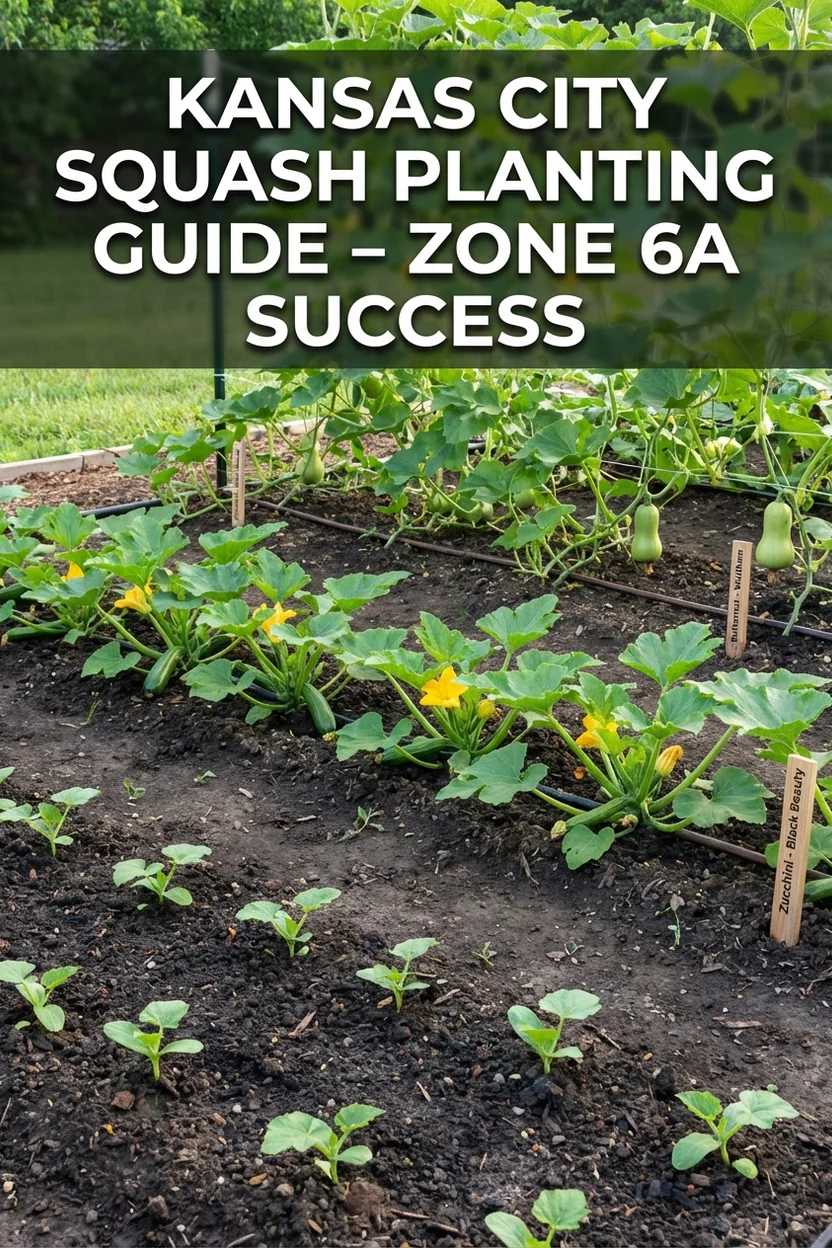
When to Plant Squash in Kansas City: Complete Guide + Best Varieties for Zone 6a
Pets & Toxicity
Recorded toxicity for plants linked in this guide. An unknown status is not a safety assessment.
No linked plant is recorded as toxicDetailsHide
Cucurbita pepo 'Black Beauty' — Toxicity
Non-toxic as an edible cropView Cucurbita pepo 'Black Beauty' plant profileCucurbita pepo 'Yellow Crookneck' — Toxicity
Non-toxic as an edible cropView Cucurbita pepo 'Yellow Crookneck' plant profile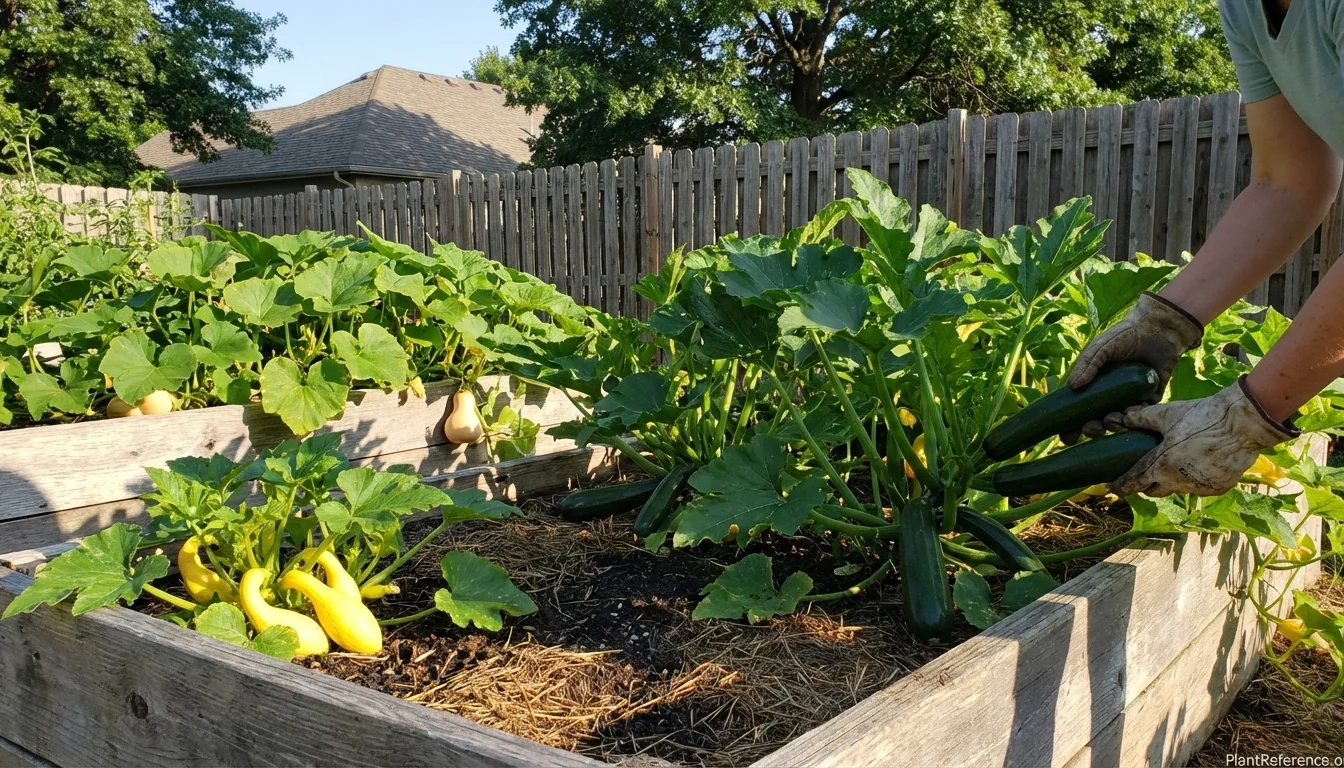
— Image © Plant Reference 2026
Kansas City gardeners have a sweet spot for growing squash—our 193-day season from April 14 to October 24 gives us plenty of time for both quick summer varieties and long-season winter storage types. I've been growing squash in Missouri for over thirty years, and I can tell you that timing is everything when you're working with these heat-loving plants.
Best Squash Varieties for Kansas City's Climate
Zone 6a gives us excellent flexibility for squash selection. Our long, hot summers are perfect for vigorous growth, but you need to pick varieties that can handle Missouri's intense heat and occasional drought.
Variety | Days to Maturity | Best For | Notes for Kansas City |
|---|---|---|---|
45-55 days | Quick summer harvest | Heat-tolerant, handles July temperatures well | |
50-60 days | Continuous production | Excellent heat tolerance, prolific in Missouri summers | |
50-60 days | Small space gardens | Compact bush habit, perfect for limited space | |
85-100 days | Long-term storage | Vine borer resistant, excellent for Kansas City pest pressure | |
80-100 days | Fall harvest | Moderate space requirements, good storage | |
80-100 days | Fresh eating | Sweet flavor, thin edible skin | |
Cucurbita pepo 'Spaghetti' | 88-100 days | Unique texture | Long storage, fascinating pasta substitute |
Cucurbita maxima 'Kabocha' | 95-110 days | Gourmet cooking | Excellent flavor but needs full 110 days |
For Kansas City specifically, I recommend focusing on 🌿Cucurbita pepo 'Black Beauty' zucchini and 🌿Cucurbita moschata 'Butternut' as your core varieties. The zucchini handles our hot July temperatures without missing a beat, and butternut's resistance to squash vine borers makes it a reliable choice here in Missouri where pest pressure can be intense.
Summer Squash Champions for Missouri Heat
🌿Cucurbita pepo 'Black Beauty' zucchini is my go-to recommendation for Kansas City gardens. This variety thrives in our hot summers, producing 6-8 inch fruits continuously from late June through September. The compact bush habit means it only spreads 3-4 feet, making it perfect for smaller suburban lots.
🌿Cucurbita pepo 'Yellow Crookneck' offers similar heat tolerance with distinctive curved fruits that add visual interest to your harvest. The warty skin thickens quickly, so harvest these at 4-6 inches for best eating quality.
Winter Squash for Long-Season Success
🌿Cucurbita moschata 'Butternut' is hands-down the best winter squash for Kansas City. Its solid stems resist the vine borers that plague other varieties here, and the long vines produce 2-4 pound fruits that store beautifully through winter. Plan on 10-15 feet of vine spread for full-sized plants.
🌿Cucurbita pepo 'Acorn' varieties work well in our climate, especially if you're dealing with space constraints. These semi-bush plants only spread 4-6 feet but still produce excellent winter storage squash.
For gardeners wanting something different, 🌿Cucurbita pepo 'Delicata' offers sweet potato-like flavor with edible skin. The cream-colored fruits with green stripes are beautiful and delicious, though they don't store as long as other winter types.
Specific Planting Dates for Kansas City
Kansas City's last frost typically occurs around April 14, but don't rush to plant squash immediately. These tropical natives need warm soil—at least 65°F—to germinate properly and avoid cold shock.
Direct Sowing Schedule
Summer Squash Direct Sowing: - Earliest safe date: May 1 (soil temperature 65°F+) - Optimal planting window: May 1-15 - Second succession planting: June 15-30 (to replace plants lost to vine borers) - Latest productive planting: July 15
Winter Squash Direct Sowing: - Short-season varieties (80-90 days): May 1-15 - Medium-season varieties (90-100 days): May 1-8 - Long-season varieties (100+ days): April 25-May 1 (with row cover protection if needed)
Transplant Schedule
Starting transplants indoors gives winter squash varieties a crucial head start, especially longer-season types like Cucurbita maxima 'Kabocha'.
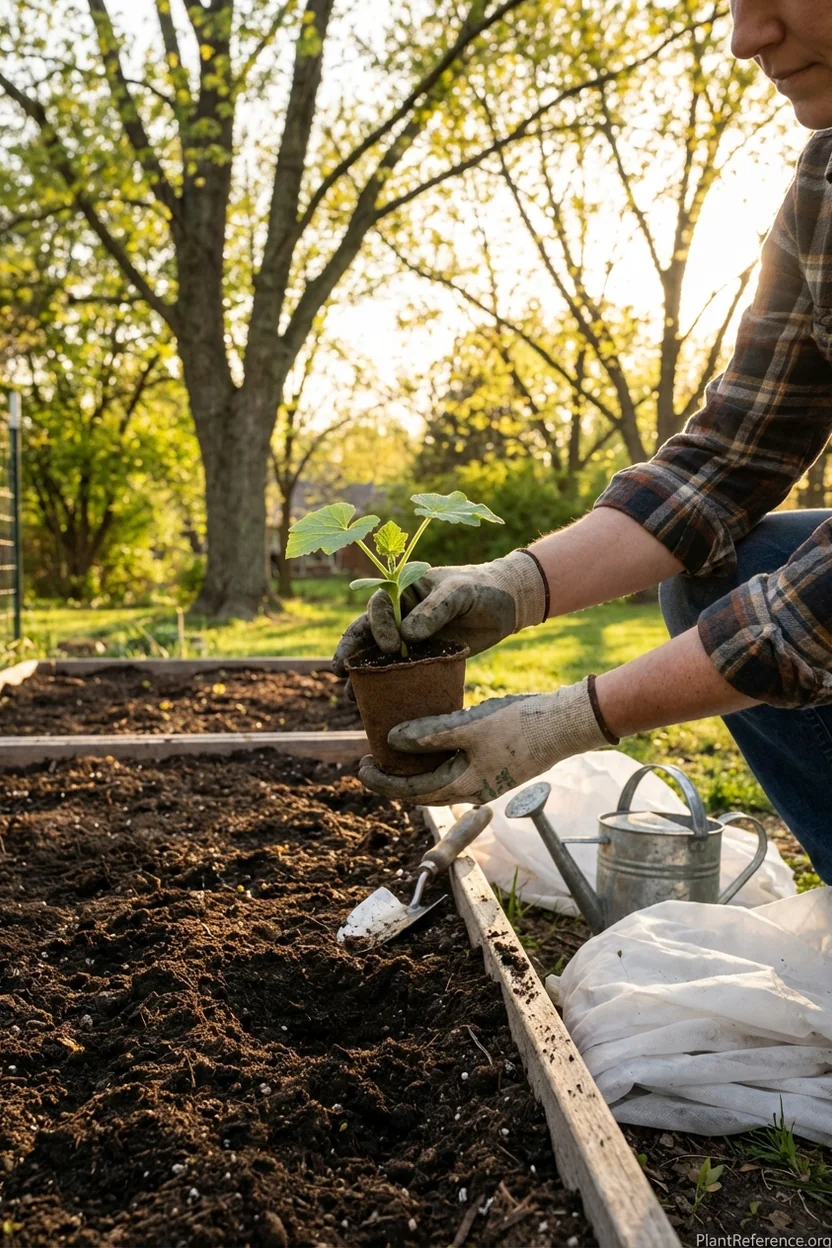
Indoor Seed Starting: - Start seeds: April 1-15 (3-4 weeks before transplant date) - Use biodegradable pots to avoid root disturbance - Maintain 70-75°F for germination - Provide strong light once sprouted
Transplanting Outdoors: - Transplant date: May 15-30 (after soil warms to 65°F) - Harden off for 7-10 days before planting - Use wall-o-water or row covers for early transplants
Complete Growing Guide for Kansas City
Soil Preparation for Missouri Clay
Kansas City's heavy clay soil needs amendment before squash planting. I've learned that working with our clay rather than fighting it produces the best results.
Soil Amendment Process:
Test soil pH in early April (target 6.0-6.8)
Add 2-3 inches of compost worked into top 8 inches
Create raised beds or mounds for improved drainage
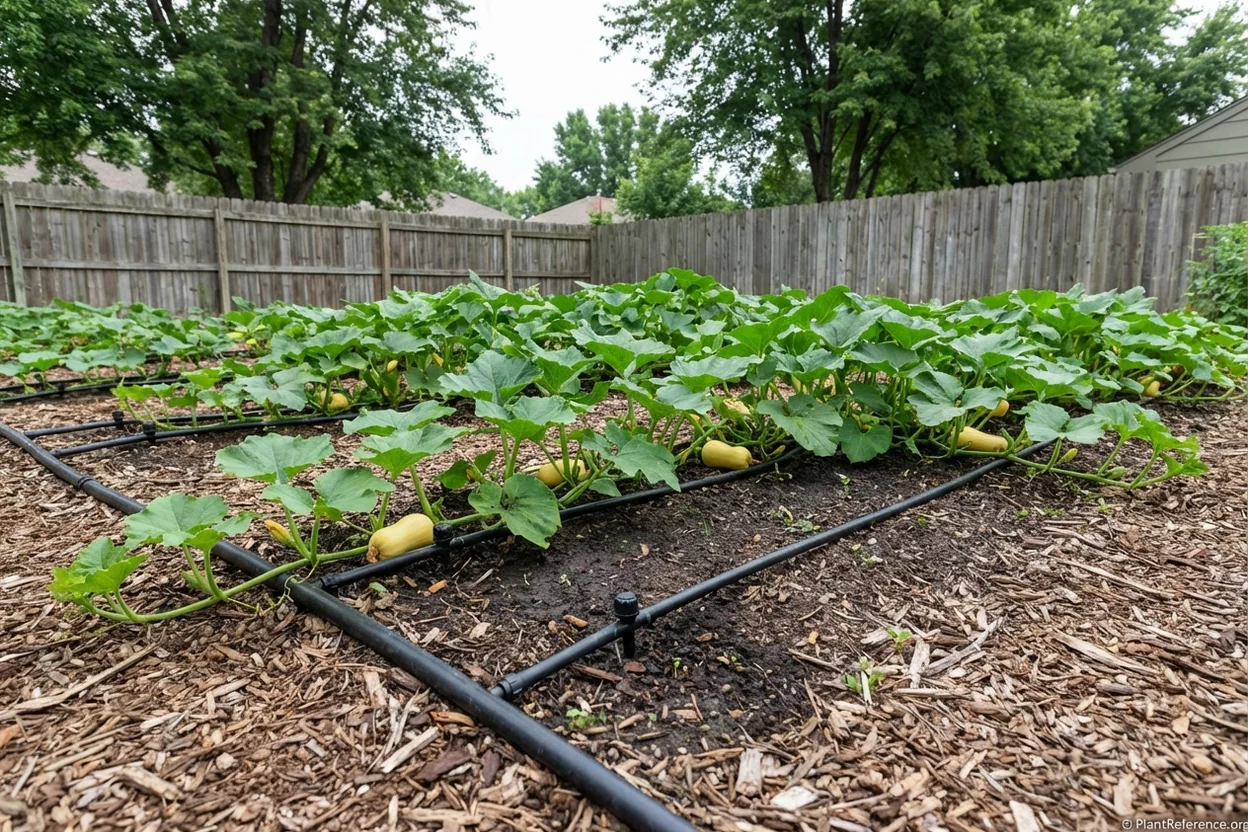
Install drip irrigation before planting to avoid compacting amended soil
Clay holds moisture well once amended, which helps during our hot July and August dry spells. However, it can become waterlogged during spring rains, making good drainage essential.
Spacing and Layout Strategy
Proper spacing prevents the crowded conditions that invite powdery mildew and pest problems in Kansas City's humid summers.
Recommended Spacing:
Summer squash (bush types): 3-4 feet (0.9-1.2 m) between plants
Semi-vining winter squash: 4-6 feet (1.2-1.8 m) between plants
Full-size winter squash: 6-8 feet (1.8-2.4 m) between plants
Rows: 6-8 feet (1.8-2.4 m) apart for cultivation access
I plant summer squash on the north side of winter squash so the smaller plants don't get shaded out as the big vines spread.
Watering Strategy for Hot Summers
Kansas City summers can be brutal—we often hit 95°F (35°C)+ in July and August with sporadic rainfall. Consistent moisture is crucial for preventing blossom end rot and maintaining fruit quality.
Irrigation Guidelines:
Deep watering 2-3 times per week rather than daily light watering
1-2 inches (2.5-5 cm) per week total (including rainfall)
Mulch heavily to conserve moisture and suppress weeds
Water early morning to reduce disease pressure
Drip irrigation or soaker hoses prevent foliar diseases
During fruit development, maintain consistent soil moisture. Irregular watering causes cracking in winter squash and bitter flavors in summer types.
Fertilizing Through the Season
Squash are heavy feeders that need different nutrients as they progress from vegetative growth to fruit production.
Nutrition Schedule:
Pre-Planting: Work 2-4 inches (5-10 cm) of aged compost into planting area
Early Growth (first 4 weeks): Side-dress with balanced fertilizer (10-10-10)
Flowering Stage: Switch to phosphorus-rich fertilizer to promote fruit set
Fruit Development: Potassium-rich fertilizer for fruit quality and disease resistance
For summer squash, continue light nitrogen applications every 3-4 weeks to maintain production. For winter squash, stop nitrogen applications once fruits are set to encourage maturity and storage quality.
Pollination Management
Squash flowers require pollination to produce fruit. In Kansas City, we have good native bee populations, but hand pollination ensures success during poor weather periods.
Natural Pollination:
Male flowers appear first (don't panic about early blossom drop)
Female flowers identifiable by small fruit at base
Flowers open early morning, close by midday heat
Squash bees and bumblebees are primary pollinators
Hand Pollination Technique:
Identify fresh female flower (open, receptive stigma)
Collect pollen from male flower using small brush or cotton swab
Transfer pollen to female flower center
Work between 6-10 AM before flowers close
Mark pollinated flowers to track success
Troubleshooting Kansas City-Specific Problems
Squash Vine Borers
This is the #1 pest problem for squash in Kansas City. The clear-wing moth lays eggs at stem bases in June and July, and the larvae bore into stems causing sudden wilt.
Prevention Strategies:
Plant 🌿Cucurbita moschata 'Butternut' varieties with solid, resistant stems
Use row covers until flowering begins
Time plantings to avoid peak egg-laying period
Check plants weekly for entry holes and sawdust-like frass
Treatment Options:
Slit affected stems and remove borers manually
Cover wounded stems with moist soil to encourage new root formation
Apply beneficial nematodes to soil as biological control
Remove and destroy affected plant material
Squash Bugs
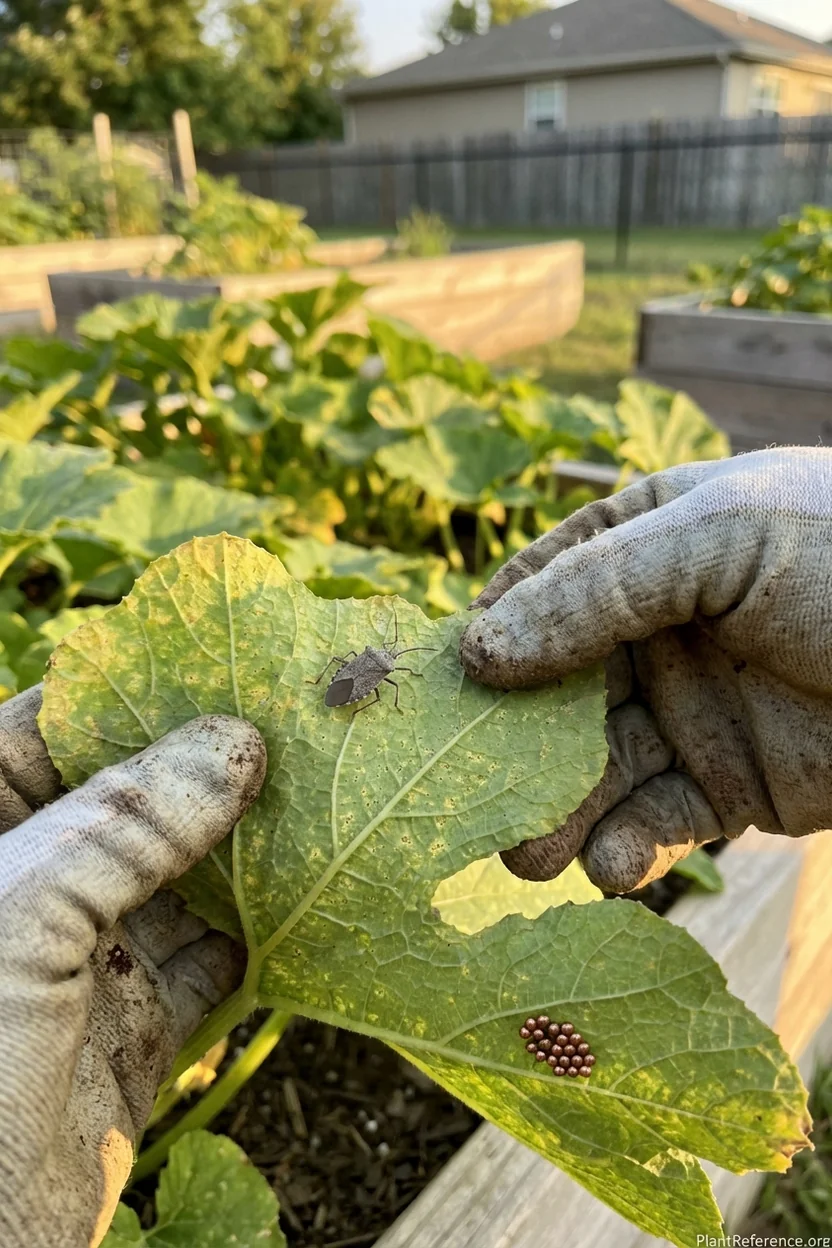
These shield-shaped insects suck plant juices and inject toxins causing yellowing and wilting. They're particularly problematic during Kansas City's hot, dry summer periods.
Management Approach:
Hand-pick adults in early morning when they're sluggish
Check leaf undersides weekly for copper-colored egg masses
Remove egg masses before they hatch
Use row covers on young plants
Clean up garden debris where bugs overwinter
Powdery Mildew
Kansas City's combination of hot days and cool, humid nights creates perfect conditions for powdery mildew, especially in late summer.
Prevention Methods:
Space plants properly for air circulation
Water at soil level, not on foliage
Choose resistant varieties when available
Remove lower leaves that touch ground
Treatment Options:
Spray with baking soda solution (1 tbsp per quart water)
Apply neem oil in early morning or evening
Use milk spray (1 part milk to 10 parts water)
Remove severely affected leaves
Heat Stress and Blossom Drop
During Kansas City's hottest weeks in July and August, squash plants may drop blossoms or produce deformed fruit.
Heat Management:
Provide afternoon shade during extreme heat (95°F / 35°C+)
Maintain consistent soil moisture
Mulch heavily to keep soil cool
Consider succession planting for continuous harvest
Harvest & Storage
Summer Squash Harvest
Summer squash should be harvested while young and tender for best eating quality and continued production.
Harvest Timing:
🌿Cucurbita pepo 'Black Beauty': 6-8 inches (15-20 cm) long
🌿Cucurbita pepo 'Yellow Crookneck': 4-6 inches (10-15 cm), curved neck still tender
🌿Cucurbita pepo 'Pattypan': 2-3 inches (5-8 cm) diameter, skin easily dented with fingernail
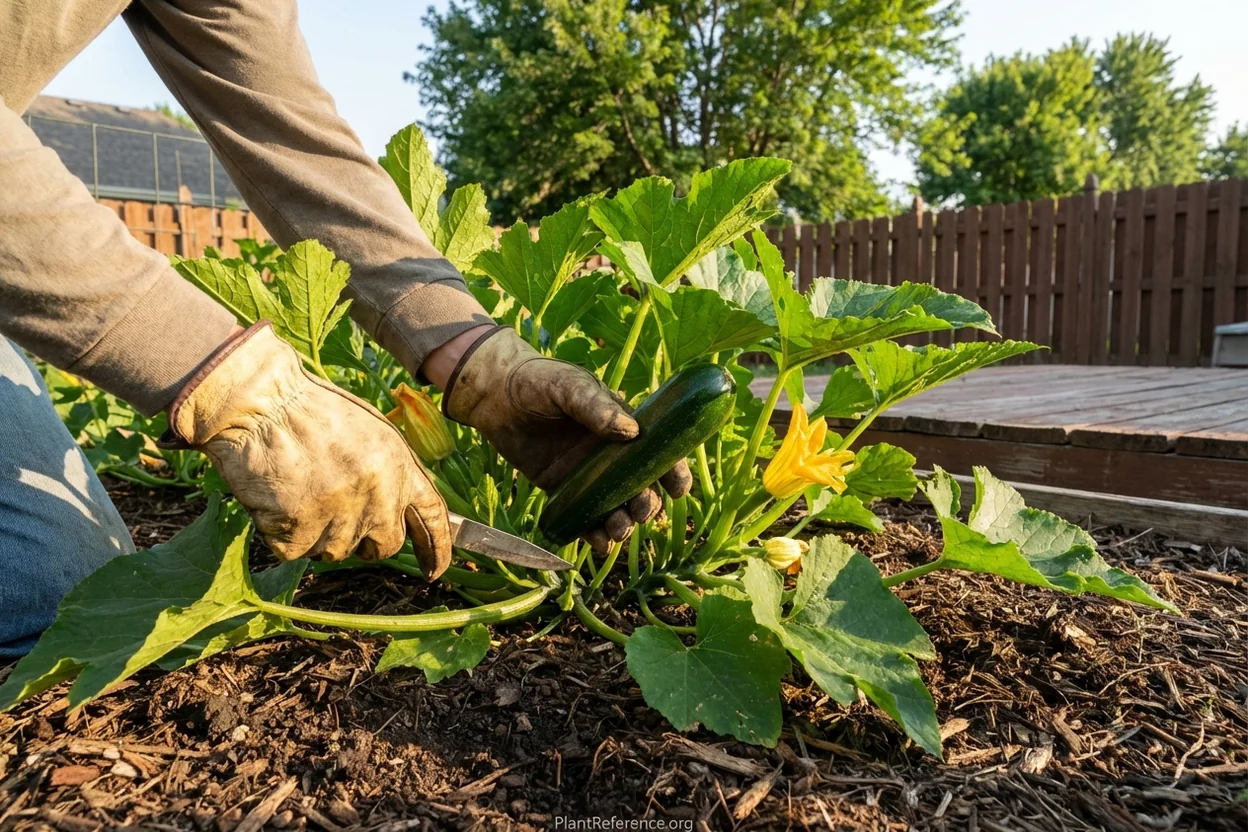
Harvest every 2-3 days during peak production to keep plants producing. Use a sharp knife to cut stems rather than pulling fruit.
Winter Squash Harvest
Winter squash must be fully mature before Kansas City's first frost around October 24.
Maturity Indicators:
Stem becomes dry and corky
Skin hardens (cannot be dented with fingernail)
Color deepens and becomes dull rather than glossy
Vines begin to die back naturally
Harvest Process:
Cut from vine leaving 2-3 inches (5-8 cm) of stem attached
Handle carefully to avoid bruising
Cure in sunny location for 7-10 days if weather permits
Move to 50-55°F (10-13°C) storage before first frost
Storage Guidelines:
🌿Cucurbita moschata 'Butternut': 3-6 months at 50-55°F (10-13°C)
🌿Cucurbita pepo 'Acorn': 1-3 months (don't cure, store immediately)
🌿Cucurbita pepo 'Delicata': 1-2 months maximum
Cucurbita maxima 'Kabocha': 3-5 months after proper curing
Frequently Asked Questions
Reading about plants and recognising them are different skills. These three build the second.
- Daily PlantIdentify the day’s mystery plant from a close-up photograph.
- Keyed OutWork a dichotomous key, lead by lead, to name a hidden specimen.
- Name That PlantName a specimen from botanical clues dealt hardest first.
Free to play, no account needed
Bill is a third-generation nurseryman who runs a small family garden center on the outskirts of Kansas City. His grandfather started the business in the 1960s, and Bill took over after working as an ag teacher for a decade. He knows the plants that work in the Kansas City area better than anyone—he's grown most of them himself and watched customers succeed or fail with the rest. Bill specializes in trees and shrubs for the Midwest, perennial borders that handle the region's hot summers and cold winters, and helping customers make sensible choices rather than impulse buys. He writes the way he talks to customers: patient, knowledgeable, and honest about what's worth the money and what isn't.