Plant Reference
Cucurbita, Genus, pepo, Species, 'Black Beauty', Cultivar,
- Genus & species
- Cultivar
black beauty zucchini
Open-pollinated cultivar with All-America Selections recognition in 1957; the species {Cucurbita pepo} is native to Mexico and the southern United States where wild pepo squash species formed part of the early Indigenous agricultural complex of the Americas
Overview
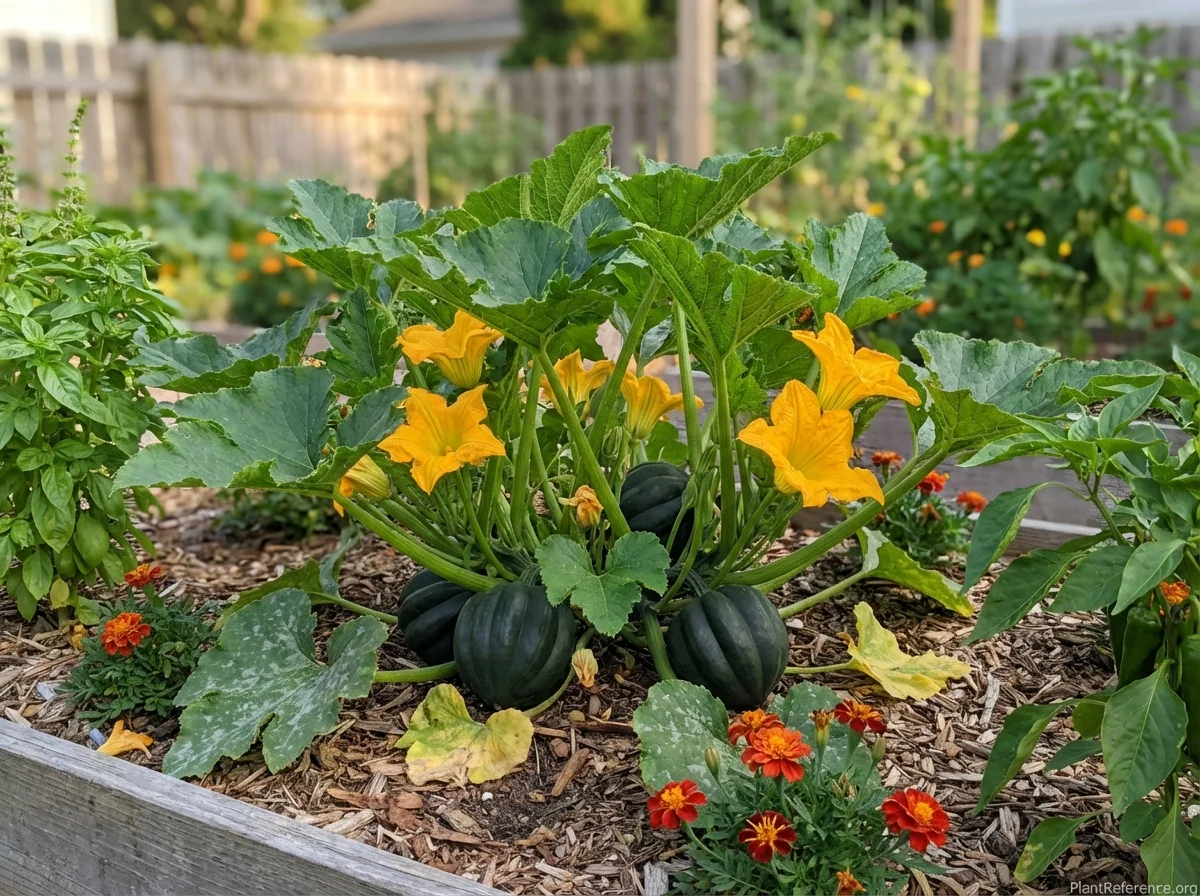
Cucurbita pepo 'Black Beauty' is Black Beauty zucchini, a bush-type summer squash annual reaching 18–24 inches (45–60 cm) tall and 36–48 inches (90–120 cm) wide. The cultivar produces glossy dark green (nearly black) cylindrical fruit 6–8 inches (15–20 cm) long and 2 inches (5 cm) in diameter, maturing in 45–55 days from seed. Bright yellow trumpet-shaped monoecious flowers 3–4 inches (7–10 cm) across open through the bloom window. Dark green deeply lobed leaves carry silver-white mottling along the leaf veins. The cultivar is open-pollinated and was recognized by All-America Selections in 1957. Monoecious flowering means male flowers appear 7–10 days before the first female flowers, so no fruit set occurs during the initial male-only phase of the bloom window. Bee pollination is required for fruit set. The cultivar runs the most prolific summer squash cultivars in commercial cultivation, with a single plant producing 6–10 pounds (2.7–4.5 kg) of fruit per season under standard garden conditions. The trumpet flowers run edible as stuffed squash blossoms in addition to the fruit harvest. Harvesting runs every 2–3 days at the 6–8 inch fruit stage; overripe fruit left on the plant reduces new fruit production across the remaining season. The prickly stem hairs cause skin irritation on contact, so harvesting is done with gloves to manage this skin-irritation risk. Squash vine borer (Melittia cucurbitae), squash bugs (Anasa tristis), and powdery mildew (Podosphaera xanthii) run the primary pest and disease pressures across the growing season. The cultivar runs non-toxic as an edible crop.
Native Range
Cucurbita pepo 'Black Beauty' is an open-pollinated cultivar with All-America Selections recognition from 1957. The species Cucurbita pepo is native to Mexico and the southern United States where wild pepo squash species formed part of the early Indigenous agricultural complex of the Americas — pepo squash domestication traces to roughly 8,000–10,000 years ago in southern Mexico, predating the domestication of corn and beans across the same regional agricultural traditions.Suggested Uses
Planted in vegetable gardens, raised beds, and containers of at least 5 gallons (19 L) across full-sun positions in any tender-annual climate zone. Bush type means the cultivar requires no trellis or staking infrastructure. Prolific harvest at 6–10 pounds (2.7–4.5 kg) per plant. Edible flowers in addition to the fruit harvest. Open-pollinated so seeds can be saved and grow true to type. Native parent species supporting Indigenous-agriculture heritage narratives. The cultivar runs non-toxic as an edible crop.How to Identify
Appearance
Size & Dimensions
Height1'6" - 2'
Width/Spread3' - 4'
Bloom Information
Summer through fall (July–October). Bright yellow trumpet-shaped monoecious flowers open continuously across the bloom window. Male flowers appear 7–10 days before female flowers in the initial bloom phase. Bee pollination is required for fruit set. Fruit runs 45–55 days from seed.
Detailed Descriptions
Flower Description
Bright yellow trumpet-shaped flowers 3-4 inches across; monoecious with separate male and female flowers carried on the same plant; male flowers held on longer stems and female flowers carrying a miniature fruit at the base of the flowerFoliage Description
Dark green with silver-white mottling along the leaf veins; large deeply lobed (palmate) leaf blades 8-12 inches across; rough leaf surface texture with prickly hairs on the stems and petiolesGrowing Conditions
Sun Requirements
Requires 6-10 hours of direct sunlight daily
• Full Sun: 6+ hours of direct sunlight
• Partial Shade: 3-6 hours of direct sunlight
• Full Shade: Less than 3 hours of direct sunlight
Care & Maintenance
Care Guide
Full sun (6+ hours daily) in rich moist soil (pH 6.0–7.0) supports the cultivar's cultivation needs. Bee pollination is required for fruit set, so positions away from heavy insecticide use support reliable pollination across the growing season. Harvesting runs every 2–3 days at the 6–8 inch fruit stage. Overripe fruit left on the plant reduces new fruit production across the remaining season. The prickly stem hairs cause skin irritation, so harvesting is done with gloves to manage the skin-irritation risk. Squash vine borer, squash bugs, and powdery mildew run the primary pest and disease pressures. The cultivar runs non-toxic as an edible crop.Pruning
Damaged or yellowed leaves are removed through the season to support air circulation through the dense foliage canopy. No vine pruning runs on bush types because the determinate growth habit does not produce long vines. Harvesting runs every 2–3 days. Lower leaves touching the soil are removed in humid conditions to reduce powdery mildew pressure on the lower canopy.Pruning Schedule
Prune: August–September
summer
Container Growing
Suitable for container growing
Minimum container size: 5 gallons
Toxicity
Non-toxic as an edible cropPlanting Guide
Planting Methods & Timing
Planting Method
both
Indoor Start
2 weeks before last frost
Direct Sow Timing
After last frost when soil temperature reaches 65 degrees F (18 degrees C)+
Days to Maturity
45–55 days
Plant Spacing
36 inches