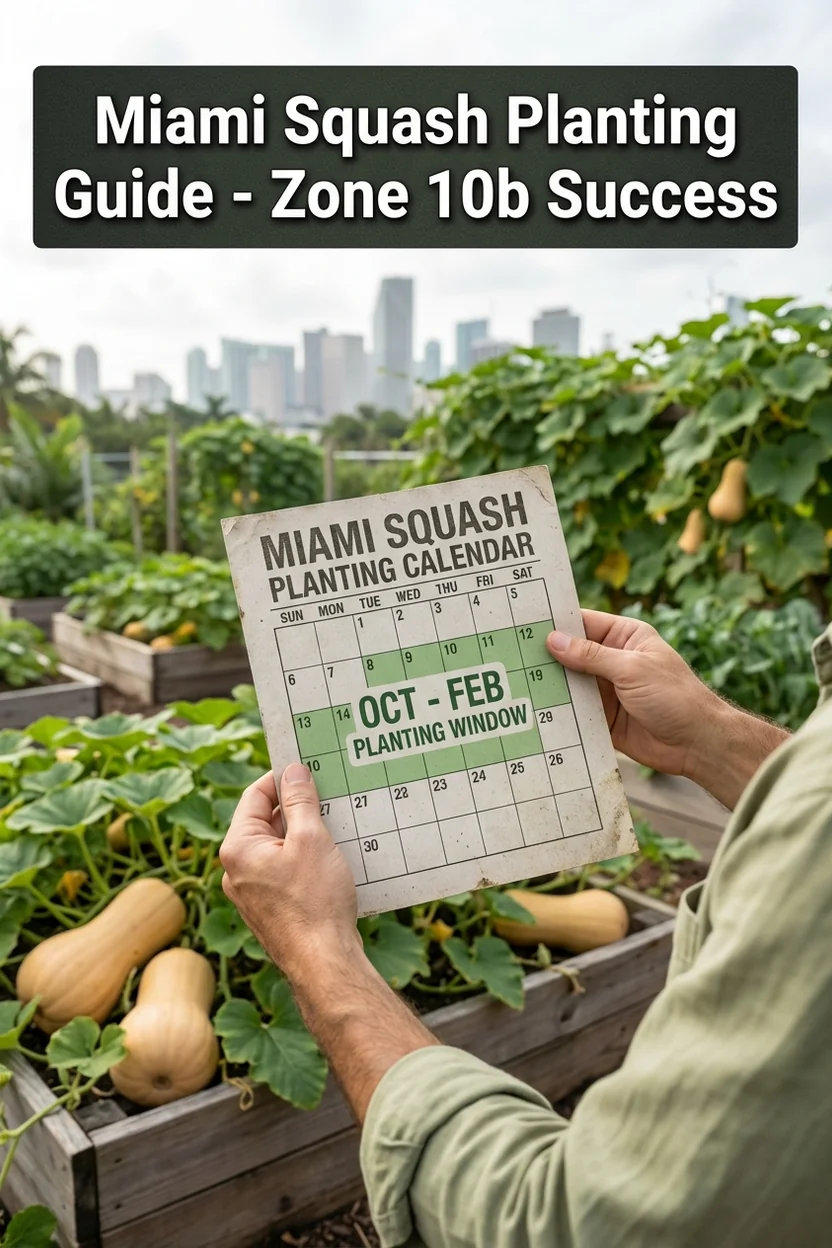
When to Plant Squash in Miami: Complete Guide + Best Varieties for Zone 10b
Pets & Toxicity
Recorded toxicity for plants linked in this guide. An unknown status is not a safety assessment.
No linked plant is recorded as toxicDetailsHide
Cucurbita pepo 'Black Beauty' — Toxicity
Non-toxic as an edible cropView Cucurbita pepo 'Black Beauty' plant profileCucurbita pepo 'Yellow Crookneck' — Toxicity
Non-toxic as an edible cropView Cucurbita pepo 'Yellow Crookneck' plant profile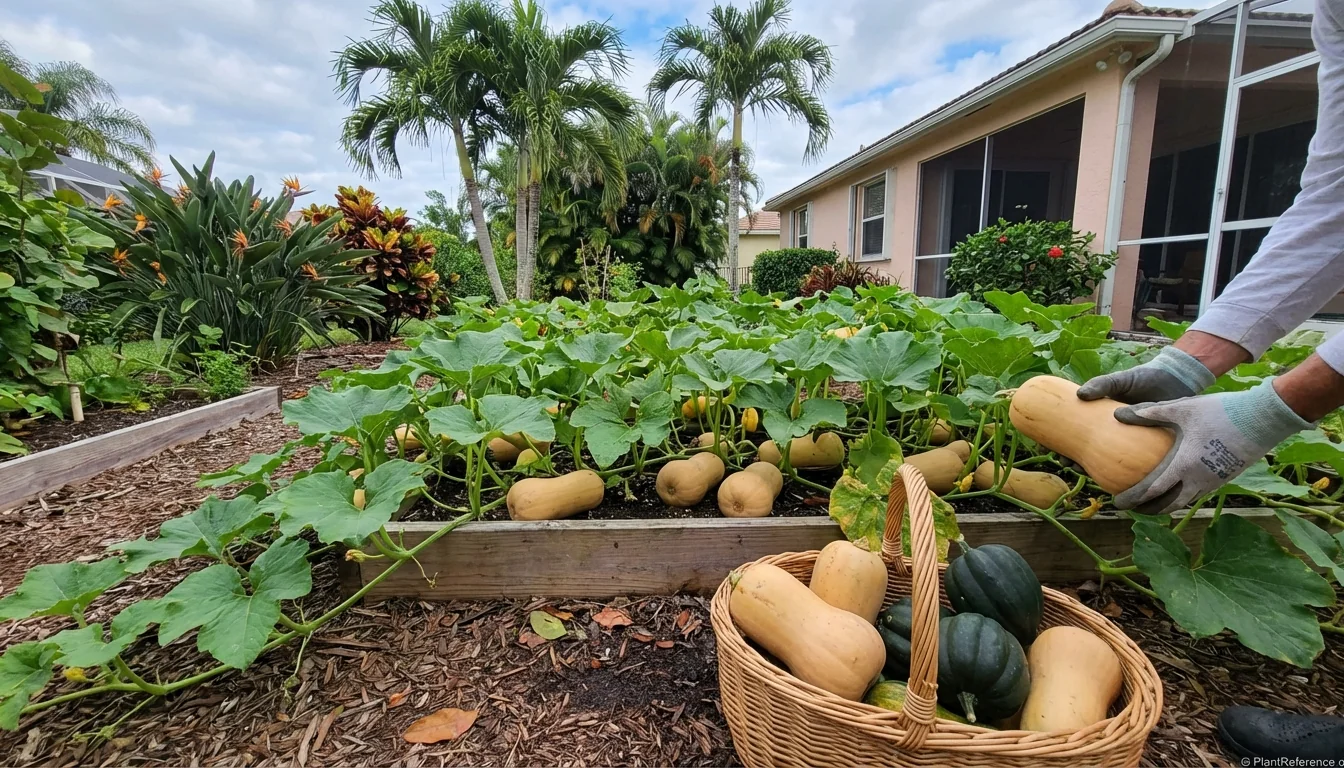
— Image © Plant Reference 2026
Miami's year-round growing season creates unique opportunities for squash cultivation, but success requires working with South Florida's subtropical climate rather than against it. When to plant squash in Miami depends entirely on avoiding the brutal summer months when nighttime temperatures above 80°F (27°C) cause blossom abortion and heat stress.
Best Squash Varieties for Miami's Zone 10b Climate
Miami's limestone soil, high humidity, and intense summer heat create specific challenges that require careful variety selection. Not all squash varieties thrive in Zone 10b's unique conditions.
The key to Miami squash success lies in understanding that our "growing season" is actually the reverse of most gardening advice. While northern gardeners plant in spring for summer harvest, Miami gardeners plant in fall for winter and early spring production.
Variety | Days to Maturity | Best Planting Window | Heat Tolerance | Miami Performance |
|---|---|---|---|---|
85-100 days | October 15 - December 1 | Excellent | Top performer - vine borer resistant | |
45-55 days | November 1 - January 15 | Good | Reliable for winter harvest | |
50-60 days | November 1 - January 15 | Fair | Moderate success in cooler months | |
80-100 days | October 1 - November 15 | Good | Performs well with adequate water | |
80-100 days | October 15 - November 30 | Fair | Challenging - requires disease management | |
95-110 days | September 15 - October 15 | Poor | Difficult - heat stress common |
Summer Squash for Miami (November - January Planting)
🌿Cucurbita pepo 'Black Beauty' zucchini performs remarkably well in Miami's winter months. The cooler 70-80°F (21-27°C) daytime temperatures prevent the rapid flowering and heat stress that plagues summer plantings. Plant seeds directly in the garden from November 1 through January 15 for continuous harvest through spring.
🌿Cucurbita pepo 'Yellow Crookneck' requires slightly more attention in Miami's humid conditions. The variety shows moderate susceptibility to powdery mildew, which thrives in our humid winters. Space plants 36 inches (91 cm) apart and ensure excellent air circulation.
Winter Squash Champions for South Florida
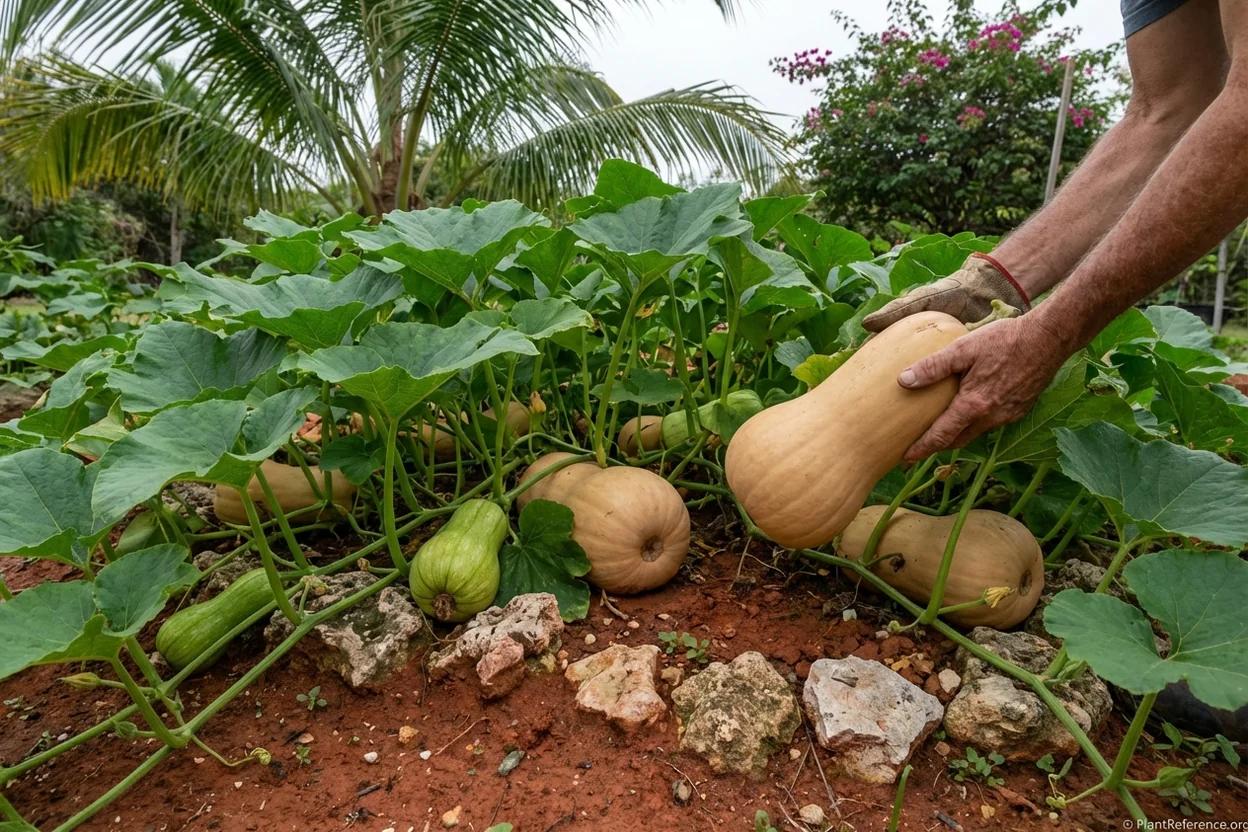
🌿Cucurbita moschata 'Butternut' stands as Miami's premier winter squash variety. This species evolved in tropical climates, making it naturally adapted to high humidity and heat. Most importantly, Butternut's solid stems resist the squash vine borer that devastates other varieties in South Florida.
The secret to Butternut success in Miami lies in timing. Plant seeds from October 15 through December 1 when nighttime temperatures consistently stay below 80°F (27°C). This allows the plants to establish strong root systems before any late-season heat stress.
Specific Planting Dates for Miami Squash Success
Miami's frost-free climate allows flexible planting, but success depends on avoiding the May through September heat dome when nighttime temperatures remain above 80°F (27°C).
Primary Growing Season: October through February
October 1-15: Ideal window for long-season winter squash like 🌿Cucurbita moschata 'Butternut' and 🌿Cucurbita pepo 'Acorn'. These varieties need 80-100 days to maturity and benefit from the gradually cooling temperatures.
October 15 - November 1: Perfect timing for 🌿Cucurbita moschata 'Butternut' planted for January through March harvest. This window provides the optimal balance of warm soil for germination and cooling air temperatures for flowering.
November 1-15: Last opportunity for winter squash varieties. Plant 🌿Cucurbita pepo 'Delicata' during this window for February harvest before spring heat begins building.
November 15 - January 15: Prime window for summer squash varieties. 🌿Cucurbita pepo 'Black Beauty' zucchini planted during this period produces heavily through March and early April.
Secondary Season: Late January through March
January 15 - February 15: Final planting window for quick-maturing summer squash. 🌿Cucurbita pepo 'Black Beauty' planted in February provides April harvest before heat stress begins.
February 15 - March 15: Marginal window requiring careful monitoring. Only attempt fast-maturing varieties and be prepared to provide afternoon shade as temperatures climb.
Avoid These Periods Completely
April through September: Nighttime temperatures above 80°F (27°C) cause pollen sterility and blossom abortion. Even with shade cloth and intensive watering, squash plants struggle and rarely produce quality fruit during these months.
Complete Growing Guide for Miami's Tropical Climate
Growing squash successfully in Miami requires adapting traditional techniques to our unique limestone soil, high humidity, and intense summer heat.
Soil Preparation for Miami's Limestone Base
Miami's notorious limestone "soil" requires significant amendment for successful squash production. The underlying oolitic limestone provides excellent drainage but lacks organic matter and has a pH often exceeding 8.0.
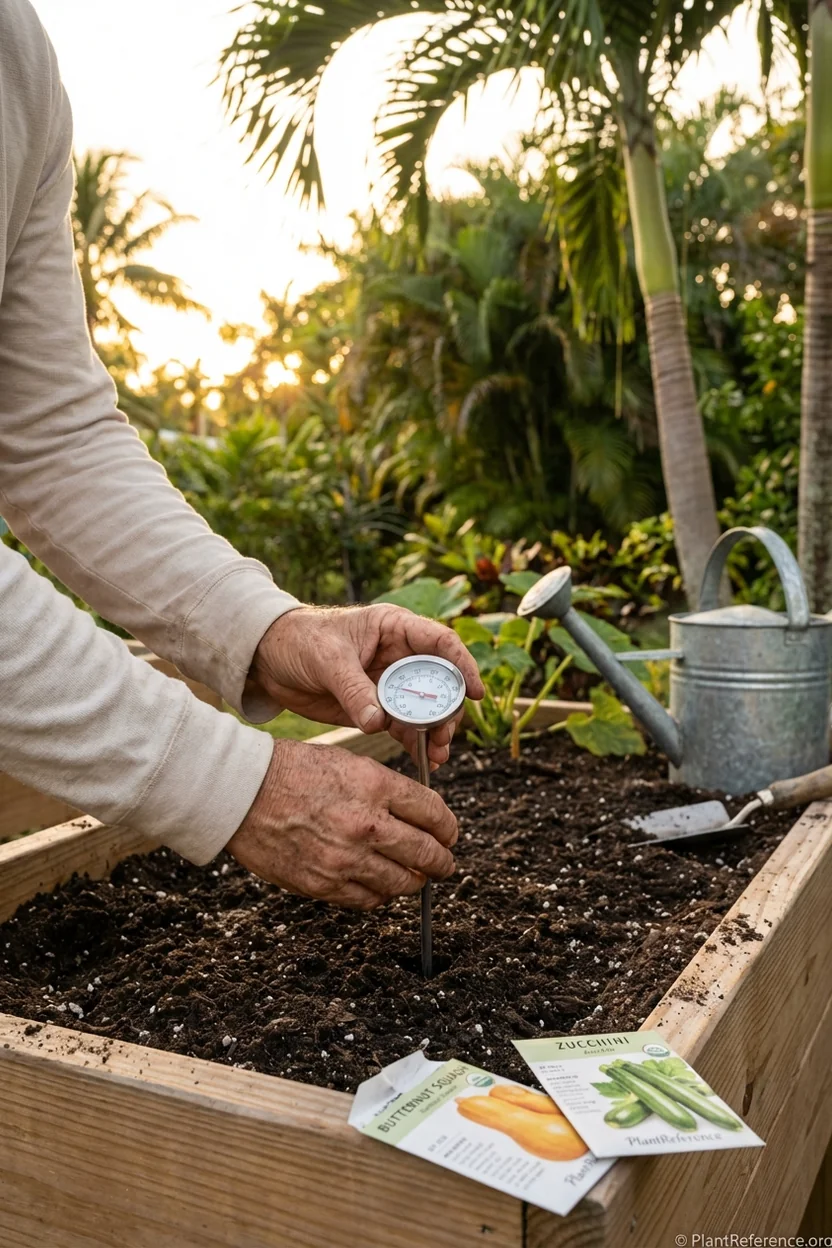
Create raised beds 8-12 inches (20-30 cm) high using a mixture of quality compost, aged cow manure, and coarse sand. This elevation improves drainage during our intense summer rains while providing the organic matter squash plants demand.
Add 2-3 inches (5-8 cm) of compost annually to maintain soil structure. The high temperatures and humidity decompose organic matter rapidly, requiring consistent replenishment.
Water Management in the Subtropics
Miami's distinct wet and dry seasons create unique irrigation challenges. During the October through February growing season, rainfall averages only 2-3 inches (5-8 cm) per month, requiring supplemental irrigation.
Install drip irrigation or soaker hoses to provide consistent moisture while keeping foliage dry. Overhead sprinklers in Miami's humid climate create ideal conditions for powdery mildew and other fungal diseases.
Water deeply twice weekly during the dry season, providing 1-2 inches (2.5-5 cm) total. Squash plants have shallow root systems and suffer quickly from drought stress, leading to blossom end rot and poor fruit development.
Pest Management in Year-Round Growing Conditions
Miami's frost-free climate means pest populations never experience the winter die-back that provides natural control in northern climates. Integrated pest management becomes critical for sustainable squash production.
Squash Vine Borer Prevention: The most devastating pest for 🌿Cucurbita pepo 'Ronde de Nice' varieties. Adults emerge year-round but peak activity occurs during March through May and again in September.
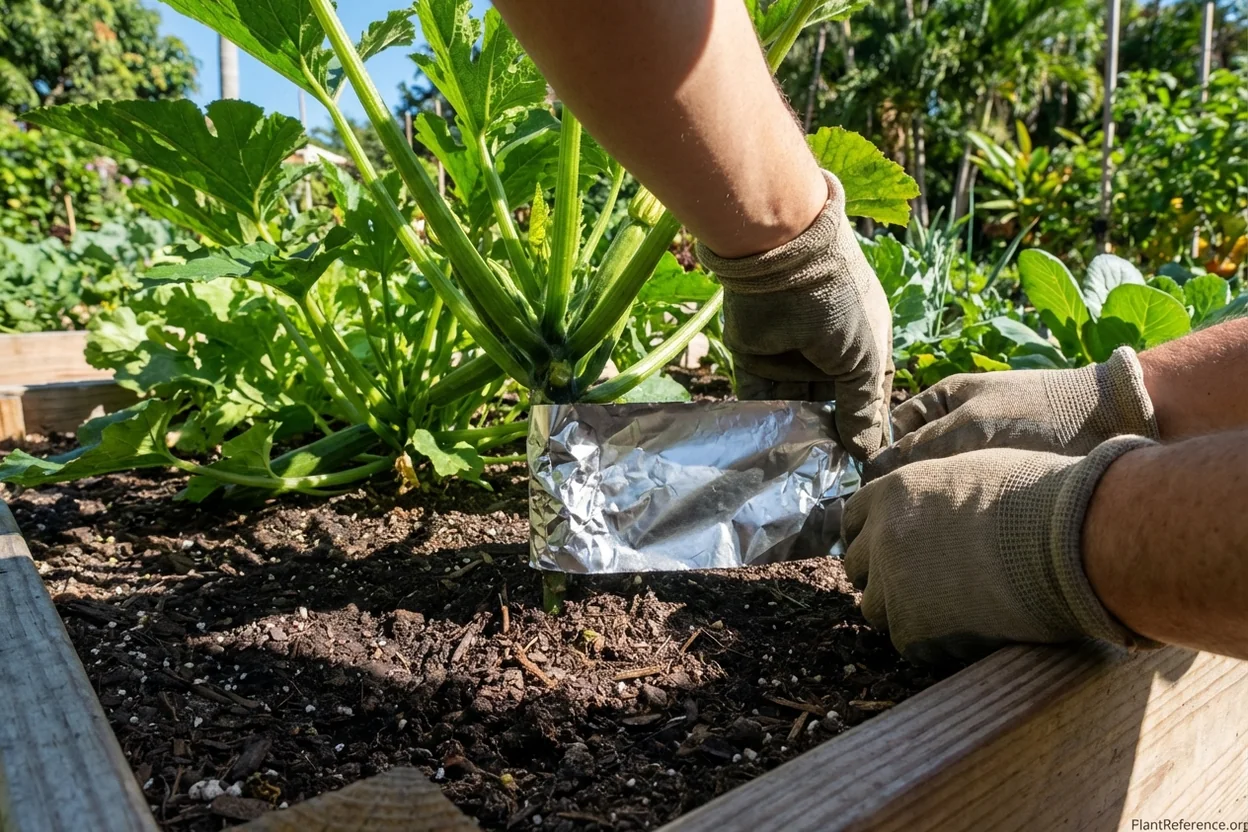
Wrap vine bases with aluminum foil or floating row covers during peak egg-laying periods. 🌿Cucurbita moschata 'Butternut' varieties with solid stems show natural resistance and should be prioritized in high-pressure areas.
Pickleworm Management: This subtropical pest migrates into South Florida annually, with peak damage occurring June through September - fortunately outside our primary growing season.
Whitefly Control: Miami's warm temperatures support massive whitefly populations that vector plant viruses. Yellow sticky traps placed throughout the garden provide monitoring and some control. Reflective mulch (aluminum-faced) confuses whiteflies and reduces landing rates.
Pollination Strategies for High-Humidity Conditions
Miami's high humidity can affect pollen viability and bee activity, particularly during the muggier winter months. Understanding squash pollination becomes critical for fruit production.
Squash flowers open early morning and close by midday heat. In Miami's humid conditions, this window may be shortened further as flowers become stressed by high moisture levels combined with warming temperatures.
Hand pollination provides insurance against poor natural pollination. Collect male flowers (identified by thin stems) between 6:00 AM and 8:00 AM when pollen is most viable. Transfer pollen to female flowers (those with small squash-like swelling at the base) using a small brush or the male flower directly.
Troubleshooting Miami-Specific Squash Problems
Miami's unique climate creates specific challenges rarely addressed in general gardening guides. Understanding these regional issues prevents crop failure.
Heat Stress and Blossom Abortion
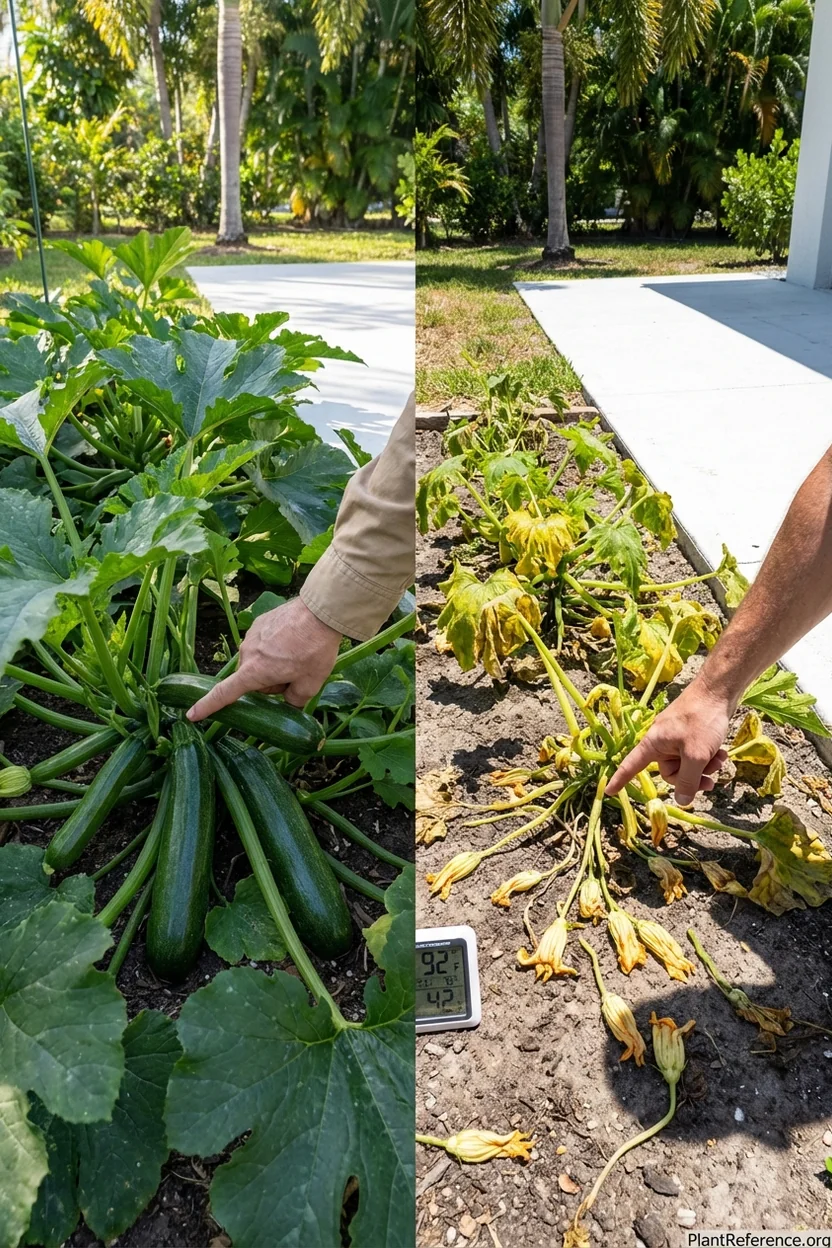
Symptoms: Plants produce abundant male flowers but few or no female flowers. Existing female flowers turn yellow and drop without developing fruit.
Cause: Nighttime temperatures above 80°F (27°C) cause hormonal disruption preventing female flower development. Daytime temperatures above 95°F (35°C) render pollen sterile.
Solution: Time plantings for October through February when temperatures remain moderate. Provide afternoon shade using 30% shade cloth during warmer periods. Maintain consistent soil moisture to help plants cope with heat stress.
Powdery Mildew in Humid Conditions
Symptoms: White, powdery coating appears on leaf surfaces, typically starting on older leaves and spreading upward.
Cause: High humidity combined with poor air circulation creates ideal conditions for Podosphaera xanthii.
Solution: Space plants 48 inches (122 cm) apart minimum to improve airflow. Apply preventive milk spray (1 part milk to 9 parts water) weekly during humid periods. Remove affected leaves immediately and dispose of in trash, not compost.
Bacterial Wilt from Cucumber Beetles
Symptoms: Entire plant wilts suddenly despite adequate soil moisture. Cutting stems reveals brown discoloration and bacterial ooze.
Cause: Cucumber beetles vector Erwinia tracheiphila bacteria. Miami's year-round beetle populations increase transmission rates.
Solution: Use floating row covers during plant establishment. Apply kaolin clay (Surround) to create physical barrier on leaves. Once plants are infected, remove immediately to prevent spread.
Root Rot in Poorly Drained Soils
Symptoms: Plants show stunted growth, yellowing leaves, and eventual collapse despite proper watering.
Cause: Miami's summer rainy season can waterlog heavy soils, leading to Pythium and Fusarium root rots.
Solution: Build raised beds 8-12 inches (20-30 cm) high with coarse organic amendments. Ensure drainage by incorporating perlite or coarse sand. Avoid planting during the June through September rainy season.
Harvest & Storage in South Florida
Miami's warm, humid climate affects both harvest timing and storage methods for squash varieties.
Summer Squash Harvest (December through April)
Harvest 🌿Cucurbita pepo 'Black Beauty' zucchini at 6-8 inches (15-20 cm) length when skin is glossy and easily punctured with a fingernail. In Miami's warm conditions, squash can grow from perfect size to overripe within 48 hours.
Check plants daily during peak production. Overmature fruits become seedy and drain plant energy, reducing overall yield. Remove any oversize fruits even if not using them to maintain plant productivity.
🌿Cucurbita pepo 'Yellow Crookneck' reaches optimal harvest at 4-6 inches (10-15 cm) length. The curved neck is fragile and prone to breaking during harvest, so handle carefully.
Winter Squash Harvest (January through April)
🌿Cucurbita moschata 'Butternut' reaches maturity when the stem becomes corky and dry, and the skin cannot be punctured with a fingernail. In Miami, this typically occurs 85-100 days after planting, usually February through April depending on planting date.
Cut squash from the vine leaving 2-3 inches (5-8 cm) of stem attached. This stem stub helps prevent rot during storage. Handle carefully to avoid bruising, which leads to rapid deterioration in warm, humid conditions.
Storage Challenges in High Humidity
Miami's year-round humidity and warmth create significant challenges for winter squash storage. Traditional root cellar storage at 50-55°F (10-13°C) is nearly impossible without air conditioning.
Short-term Storage (2-4 weeks): Store cured winter squash in air-conditioned space at 65-70°F (18-21°C) with good air circulation. Check weekly for soft spots or decay.
Long-term Storage: Consider preserving techniques rather than fresh storage. Butternut squash freezes well when cooked and puréed. Dehydrating slices provides shelf-stable storage suitable for Miami's climate.
Summer Squash Storage: Use immediately or refrigerate for maximum 1 week. Miami's heat accelerates deterioration, making fresh use or immediate preservation essential.
Frequently Asked Questions
Reading about plants and recognising them are different skills. These three build the second.
- Daily PlantIdentify the day’s mystery plant from a close-up photograph.
- Keyed OutWork a dichotomous key, lead by lead, to name a hidden specimen.
- Name That PlantName a specimen from botanical clues dealt hardest first.
Free to play, no account needed
Maria is a tropical plant grower in Miami who maintains a half-acre property packed with palms, fruit trees, and tropical ornamentals. She grew up in Puerto Rico surrounded by tropical plants and moved to South Florida for college, earning a biology degree. Maria worked at a major tropical botanic garden for several years before transitioning to freelance writing and consulting. She specializes in tropical fruit growing, hurricane-resilient landscaping, and the particular challenges of gardening in South Florida—salt air, limestone soil, intense rain, and the threat of tropical storms. Maria's practical about the realities of tropical gardening: it's not paradise if you don't understand what you're dealing with.