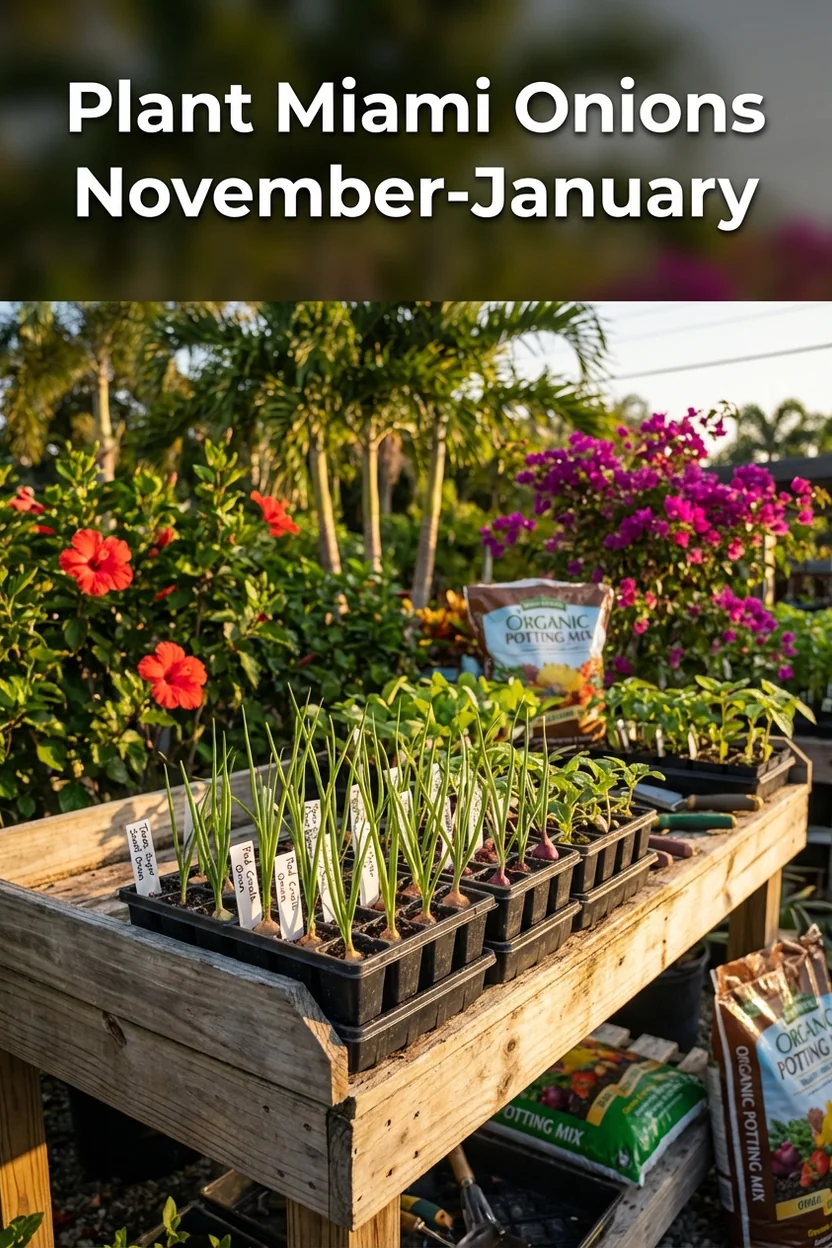
When to Plant Onions in Miami: Complete Guide + Best Varieties for Zone 10b
Pets & Toxicity
Recorded toxicity for plants linked in this guide. An unknown status is not a safety assessment.
Toxic to pets: California early softneck garlic, Texas super sweet onion, red creole onionDetailsHide
Allium sativum 'California Early' — Toxicity Warning
Toxic to cats and dogs if eaten; cats are especially susceptible, and raw, cooked or concentrated plant material can damage red blood cells and cause anaemia.View Allium sativum 'California Early' plant profileAllium cepa 'Texas Super Sweet' — Toxicity Warning
Toxic to cats and dogs if eaten; cats are especially susceptible, and raw, cooked or concentrated plant material can damage red blood cells and cause anaemia.View Allium cepa 'Texas Super Sweet' plant profileAllium cepa 'Red Creole' — Toxicity Warning
Toxic to cats and dogs if eaten; cats are especially susceptible, and raw, cooked or concentrated plant material can damage red blood cells and cause anaemia.View Allium cepa 'Red Creole' plant profile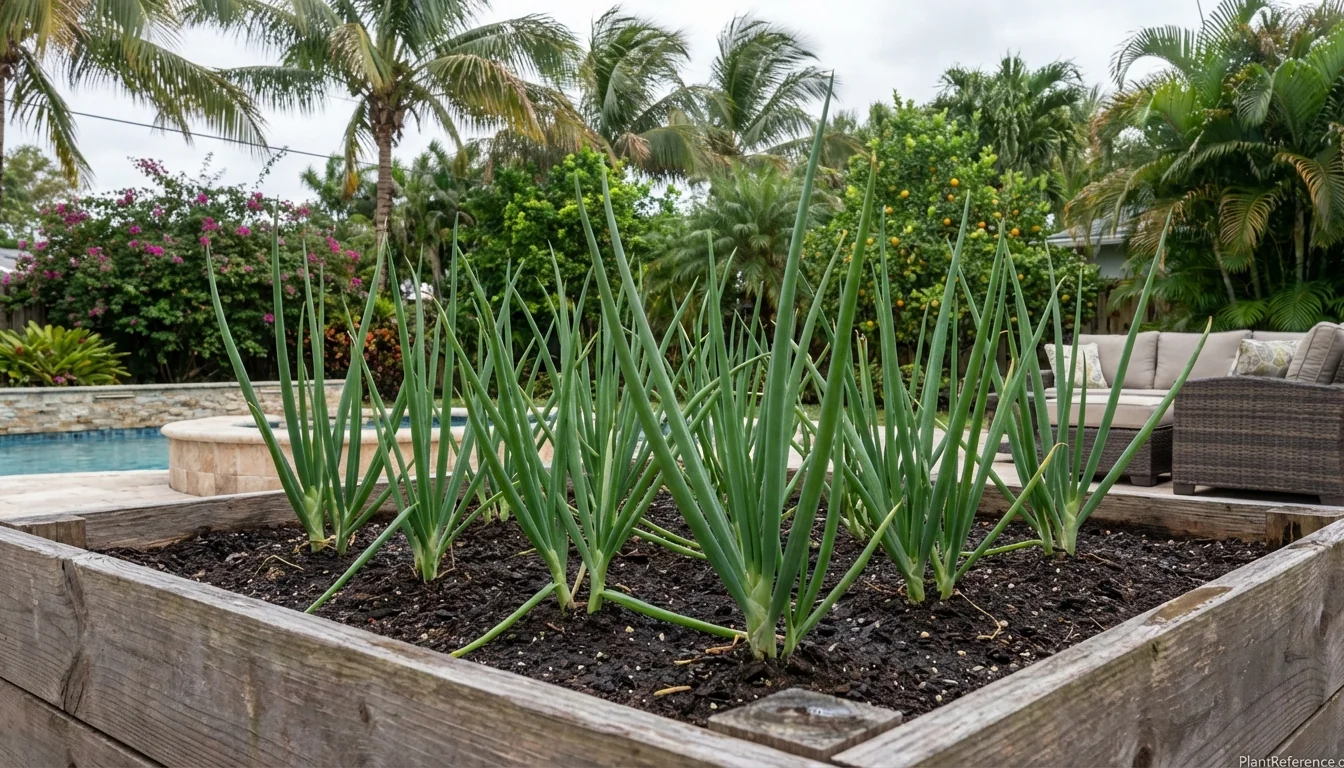
— Image © Plant Reference 2026
After forty years of growing vegetables in challenging climates, I'll tell you straight: Miami's year-round warmth is both a blessing and a curse for onion growers. Most gardeners fail because they plant the wrong varieties or follow advice meant for northern climates. Success in Miami requires understanding one crucial fact—only short-day onions will bulb properly in South Florida's unique day-length conditions.
Best Onion Varieties for Miami's Climate
Miami sits at 26°N latitude, which means summer days never exceed 13.5 hours of daylight. This creates a fundamental problem: most onion varieties need 14-16 hours of daylight to trigger bulb formation. Plant the wrong type, and you'll get massive green tops but no bulbs—essentially expensive scallions.
Here's what works in Miami's climate:
Variety | Days to Maturity | Best For | Notes for Miami |
|---|---|---|---|
110-120 days | Sweet eating | Perfect for Zone 10b, disease resistant | |
100-110 days | Storage | Heat tolerant, best keeper for Miami | |
Allium cepa 'Granex Yellow' | 95-105 days | Quick harvest | Early maturity beats summer heat |
Allium cepa 'Southern Belle Red' | 100-115 days | Red variety | Mild flavor, good fresh eating |
Why Short-Day Varieties Are Essential
Short-day onions are programmed to begin bulbing when days reach just 10-12 hours long. In Miami, this happens naturally as days lengthen from winter into spring. Plant in December, and your onions will grow green foliage through the mild winter months, then suddenly switch to bulb formation as daylight increases in February and March.
I've watched too many Miami gardeners waste entire seasons trying to grow 'Walla Walla' or other long-day varieties. These plants will sit there producing beautiful green growth month after month, never forming bulbs because Miami's longest day (June 21st) provides only 13.5 hours of daylight—nowhere near the 15+ hours these varieties require.
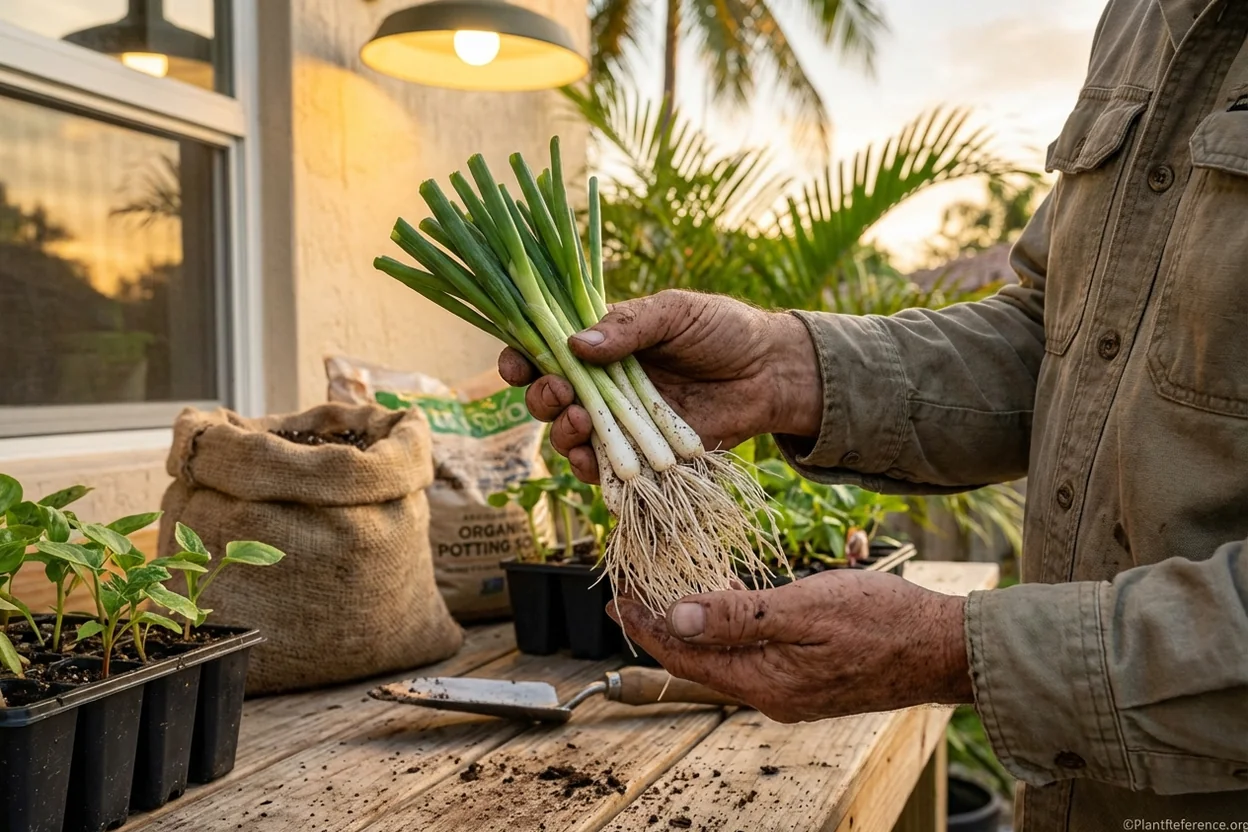
Garlic Challenges in Miami
I'll be honest about garlic in Miami—it's tricky. Garlic needs 4-8 weeks of temperatures below 40°F (4°C) to form proper cloves. Miami rarely sees temperatures that cold, so most garlic varieties produce "rounds"—single solid bulbs instead of segmented heads.
Your best options for Miami garlic:
🌿Allium sativum 'California Early' softneck variety with lowest cold requirements
Pre-chill store-bought bulbs in refrigerator for 6-8 weeks before planting
Plant in December or January during coolest months
Accept that yields will be lower than in northern climates
Specific Planting Dates for Miami
Miami's lack of frost gives you flexibility, but timing still matters for quality bulbs and pest avoidance.
Optimal Planting Window: November 15 - January 15
Why This Window Works:
Avoids intense summer heat that stresses young plants
Provides 3-4 months of cool growing weather for vegetative development
Times harvest for April-May before rainy season begins
Minimizes pest pressure during plant establishment
Monthly Breakdown:
November Planting (November 15-30):
Pros: Longest growing season, largest potential bulb size
Cons: Still hot, requires more watering and shade protection
Best for: Experienced gardeners with irrigation systems
December Planting (December 1-31):
Pros: Ideal balance of growing time and cooler weather
Cons: None—this is the sweet spot for Miami onions
Best for: Most Miami gardeners should target this window
January Planting (January 1-15):
Pros: Coolest weather, easiest establishment
Cons: Shorter growing season, smaller bulbs
Best for: Late starters or second succession planting
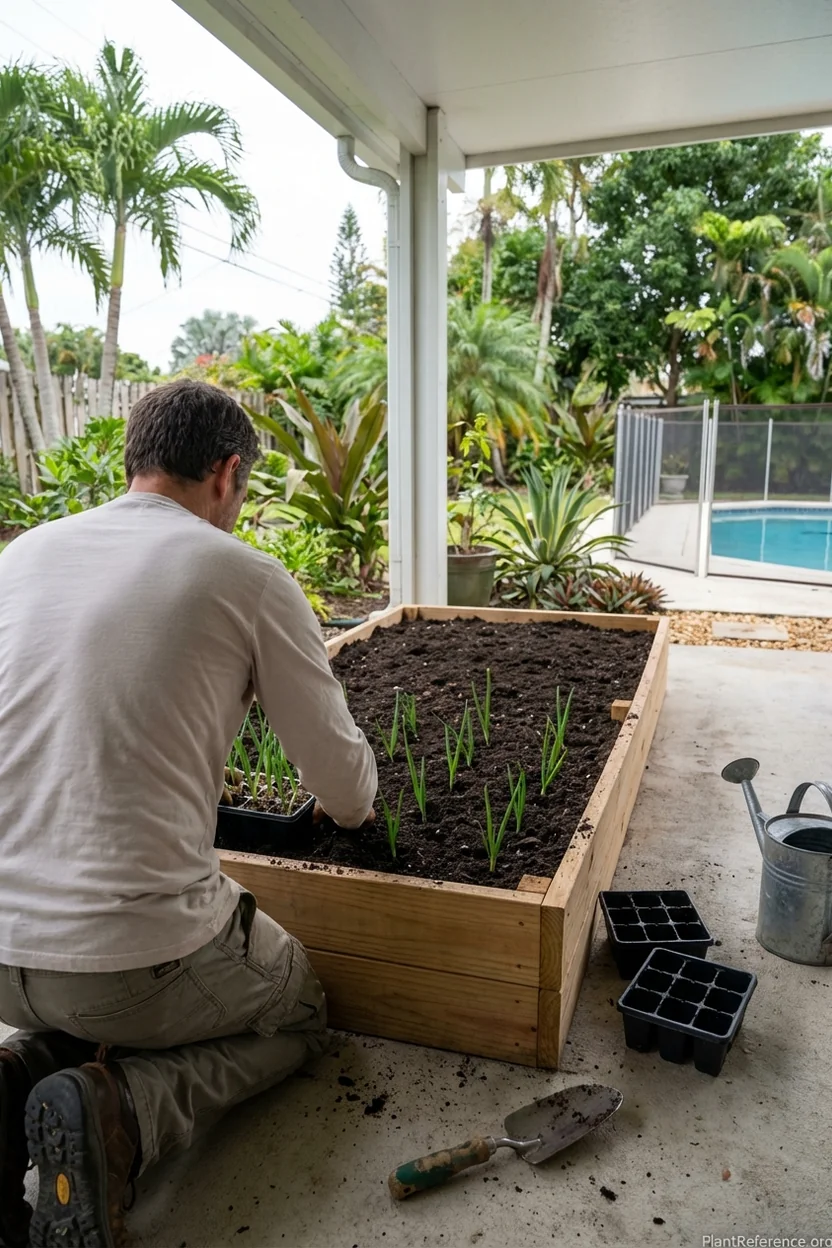
Succession Planting Strategy
Plant every 3-4 weeks from November through January for continuous harvest:
First planting: November 20 (harvest April 1)
Second planting: December 20 (harvest May 1)
Third planting: January 20 (harvest May 30)
This spreads your harvest season and reduces risk if one planting encounters problems.
Complete Growing Guide for Miami
Soil Preparation
Miami's sandy soils drain quickly but lack nutrients and organic matter. I've learned that successful onion growing here starts with serious soil improvement.
Essential Soil Amendments:
Add 3-4 inches of compost to plant beds
Mix in aged cow manure for slow-release nitrogen
Incorporate perlite if drainage is still poor
Test pH—aim for 6.0 to 6.8 (Miami soils often run alkaline)
Add sulfur to lower pH if testing above 7.0
Planting Technique
Use transplants rather than seeds or sets in Miami. Seeds germinate poorly in warm soil, and sets are rarely available in appropriate short-day varieties.
Step-by-Step Planting:
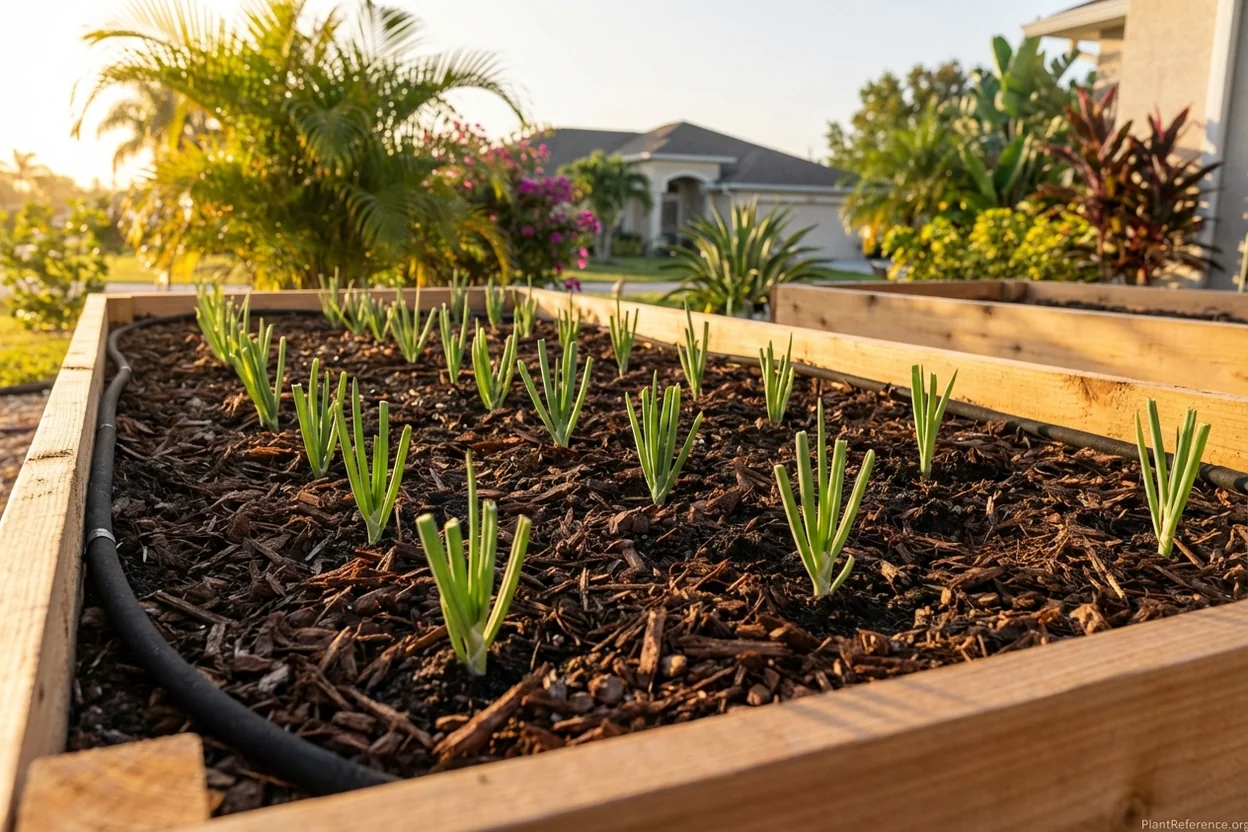
Trim transplant roots to 2 inches, tops to 4 inches
Dig holes 1 inch deep, 4 inches apart in rows
Plant with root ball just below soil surface
Water immediately after planting
Apply 2-inch layer of mulch around plants
Fertilization Schedule
Miami's year-round growing season and frequent rains require a different fertilization approach than northern gardens.
Pre-Planting:
Work 10-10-10 granular fertilizer into soil at 2 pounds per 100 square feet
Add bone meal for phosphorus (1 pound per 100 square feet)
Monthly Feeding (November through March):
Apply liquid fish emulsion every 2 weeks
Side-dress with compost monthly
Stop all nitrogen feeding when bulbs begin to swell (typically March)
Watering Strategy
Miami's sandy soils drain rapidly, requiring frequent watering during establishment.
First Month: Water daily until transplants establish new growth Months 2-3: Water every 2-3 days, keeping soil consistently moist Final Month: Reduce watering as bulbs mature and tops begin to yellow
Install drip irrigation or soaker hoses if possible. Miami's afternoon thunderstorms provide inconsistent moisture, and onions need steady water supply during bulb development.
Troubleshooting Miami-Specific Problems
Heat Stress During Establishment
Miami's winter temperatures still average 70-75°F (21-24°C), which can stress newly transplanted onions.
Solutions:
Provide afternoon shade during hottest parts of winter days
Use shade cloth (30% shade) for first 2-3 weeks after planting
Plant on north side of taller crops for natural shading
Water more frequently until roots establish
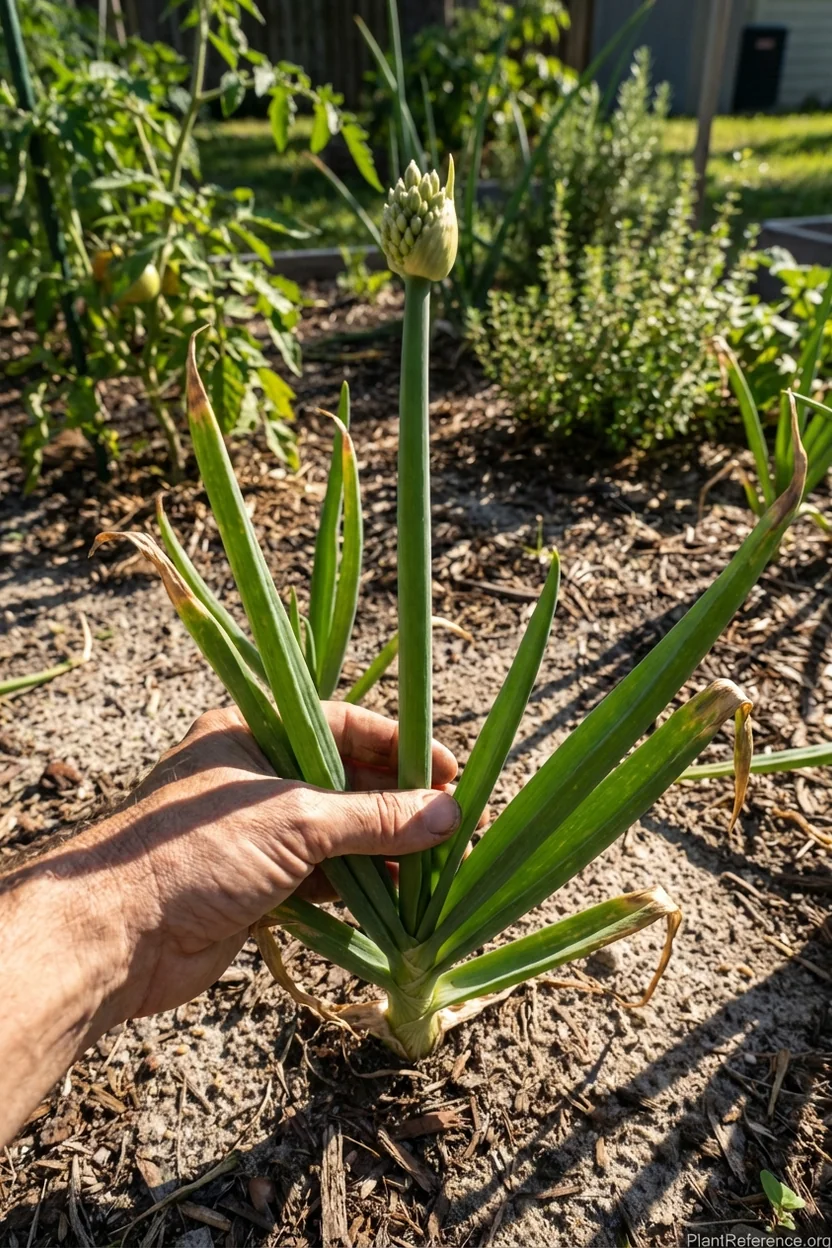
Bolting (Premature Flowering)
Even short-day onions can bolt if exposed to temperature stress in Miami's variable winter weather.
Prevention:
Choose bolt-resistant varieties like 🌿Allium cepa 'Texas Super Sweet'
Avoid planting during cold snaps (below 50°F/10°C for extended periods)
Provide consistent moisture to reduce plant stress
Remove flower stalks immediately if they appear
Pest Pressure
Miami's warm, humid conditions favor several onion pests year-round.
Thrips:Tiny insects that cause silvery streaks on leaves
Spray with insecticidal soap weekly
Use reflective mulch to confuse thrips
Encourage beneficial insects with diverse plantings
Onion Maggots:Larvae tunnel into bulbs
Use row covers immediately after planting
Rotate planting areas annually
Remove all plant debris after harvest
Fungal Diseases in High Humidity
Miami's humidity creates perfect conditions for fungal problems.
Downy Mildew and Pink Root:
Ensure excellent drainage in planting beds
Space plants for good air circulation
Water at soil level, not on foliage
Apply preventive fungicide sprays during humid periods
Choose disease-resistant varieties when available
Harvest & Storage
Harvest Timing
Miami onions typically mature 100-120 days after planting, putting harvest in April-May for most plantings.
Harvest Indicators:
Tops begin to yellow and fall over naturally
Bulb necks feel firm when gently squeezed
Outer skin becomes papery
Stop watering 1-2 weeks before harvest to improve storage life
Harvesting Technique
Carefully lift bulbs with a garden fork rather than pulling by tops. Miami's sandy soil makes this easy, but damaged bulbs won't store well.
Curing for Storage
Miami's humidity makes proper curing critical but challenging.
Curing Process:
Lay harvested onions on screens in single layers
Cure in garage or covered area with good ventilation
Use fans to improve air circulation
Cure for 2-3 weeks until outer skins are papery and necks are tight
Never cure outdoors—Miami's humidity prevents proper drying
Storage Expectations
Short-day onions are sweet because of high water and sugar content, which limits storage life compared to northern storage varieties.
Storage Timeline: - 🌿Allium cepa 'Texas Super Sweet': 1-2 months maximum - 🌿Allium cepa 'Red Creole': 3-4 months in ideal conditions - Store in coolest, driest place available (air-conditioned space ideal) - Use sweet varieties first, save Red Creole for longer storage
Maximizing Your Harvest
Plan to use or preserve most of your Miami onion harvest within 2-3 months. Focus on fresh eating, dehydrating, or freezing rather than expecting long-term storage like northern varieties provide.
Frequently Asked Questions
Reading about plants and recognising them are different skills. These three build the second.
- Daily PlantIdentify the day’s mystery plant from a close-up photograph.
- Keyed OutWork a dichotomous key, lead by lead, to name a hidden specimen.
- Name That PlantName a specimen from botanical clues dealt hardest first.
Free to play, no account needed
Maria is a tropical plant grower in Miami who maintains a half-acre property packed with palms, fruit trees, and tropical ornamentals. She grew up in Puerto Rico surrounded by tropical plants and moved to South Florida for college, earning a biology degree. Maria worked at a major tropical botanic garden for several years before transitioning to freelance writing and consulting. She specializes in tropical fruit growing, hurricane-resilient landscaping, and the particular challenges of gardening in South Florida—salt air, limestone soil, intense rain, and the threat of tropical storms. Maria's practical about the realities of tropical gardening: it's not paradise if you don't understand what you're dealing with.