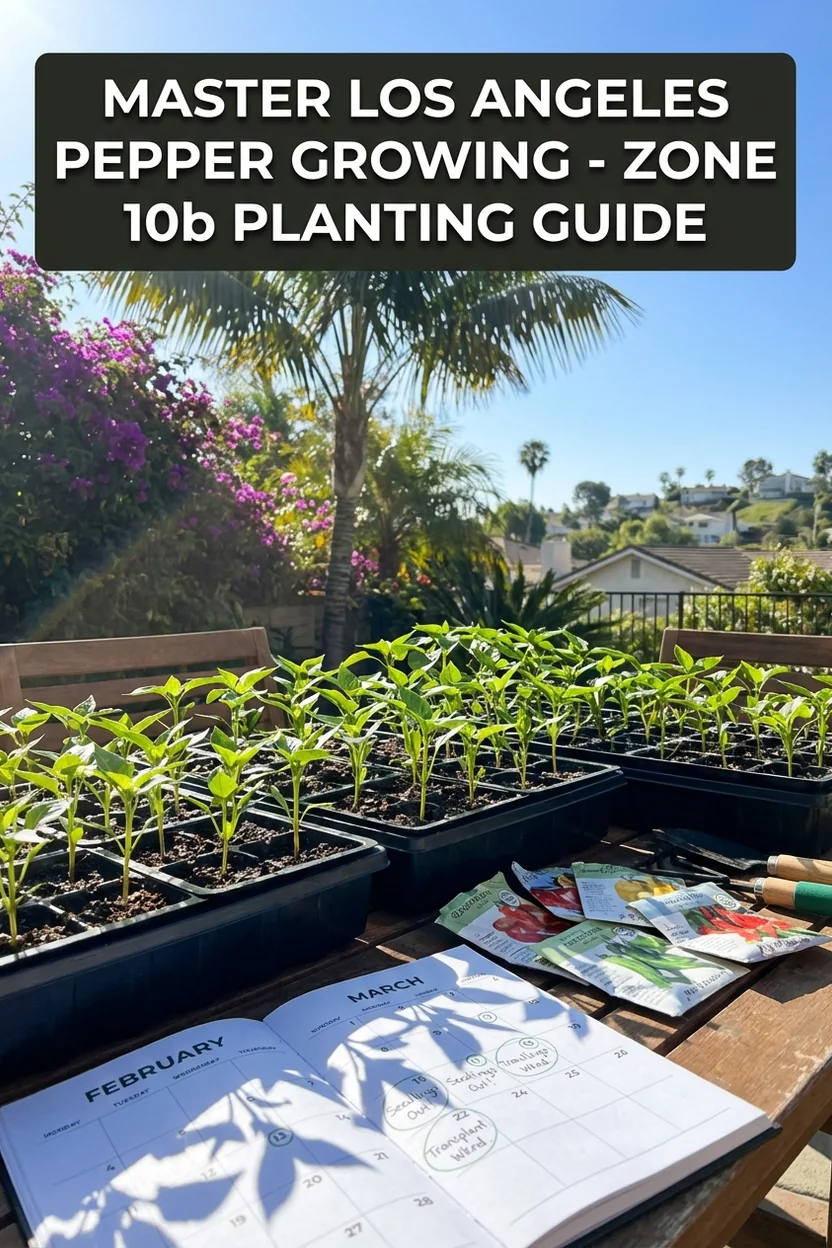
When to Plant Peppers in Los Angeles: Complete Guide + Best Varieties for Zone 10b
Pets & Toxicity
Recorded toxicity for plants linked in this guide. An unknown status is not a safety assessment.
Toxic to pets: Poblano pepperDetailsHide
Capsicum annuum 'California Wonder' — Toxicity
Non-toxicView Capsicum annuum 'California Wonder' plant profileCapsicum chinense 'Habanero' — Toxicity: Not assessed
Fruit contains capsaicin at 100,000–350,000 Scoville Heat Units — strong enough to cause severe burning on skin, eyes, and mucous membranes through simple contact with cut fruit or the hand that held it. Nitrile gloves are used during handling and food preparation; face and eye contact is avoided. The fruit is irritating rather than toxic in the usual sense, but the heat level can cause significant discomfort and real injury if mishandled. The plant is kept out of reach of children and pets.View Capsicum chinense 'Habanero' plant profileCapsicum annuum 'Poblano' — Toxicity Warning
Toxic to petsView Capsicum annuum 'Poblano' plant profileCapsicum annuum 'Jalapeño' — Toxicity: Not assessed
Capsaicin in fruit causes burning sensations in mouth and on skin. Fruit and handling oils are irritating to eyes and mucous membranes but are not toxic in the usual sense. Gloves are used during harvesting and processing; hands are washed thoroughly before touching face. Small amounts are generally safe for pets but can cause digestive upset.View Capsicum annuum 'Jalapeño' plant profile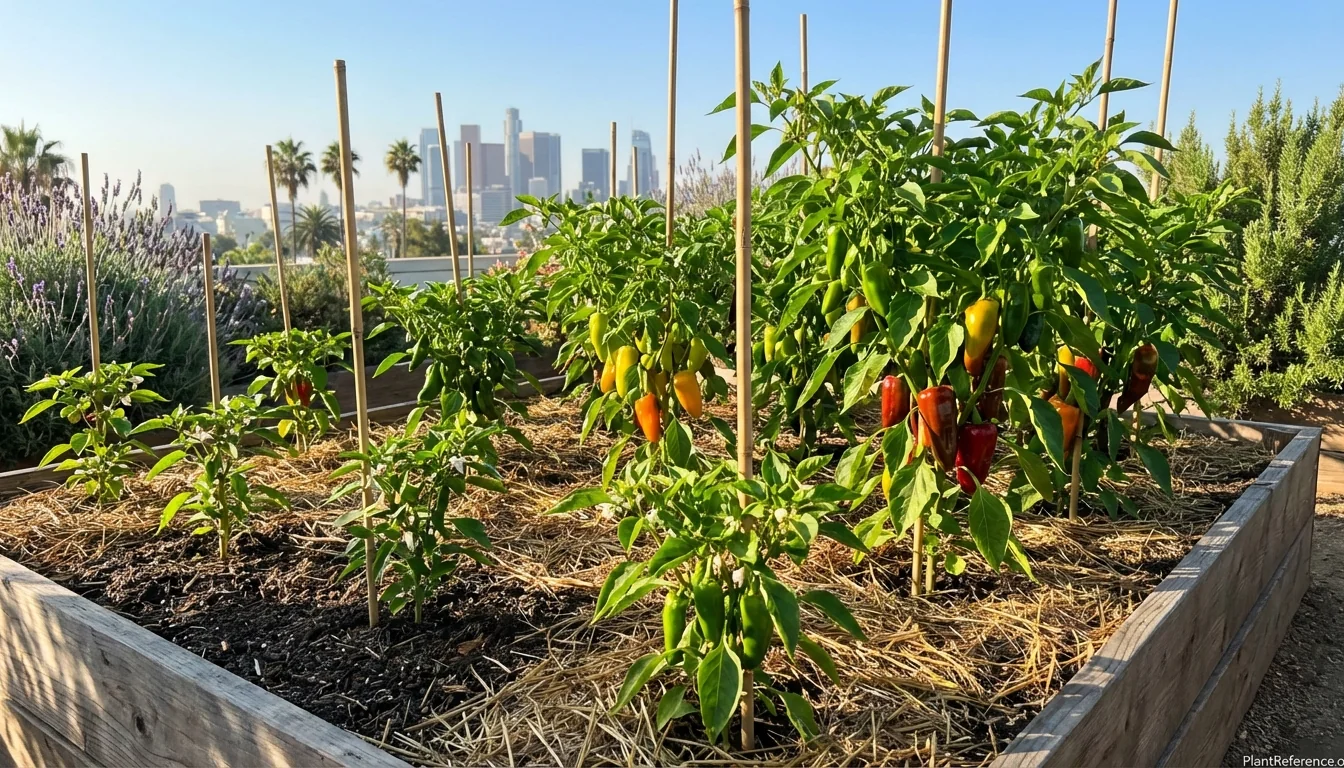
— Image © Plant Reference 2026
Los Angeles gardeners enjoy one of the longest pepper growing seasons in North America, thanks to our mild Zone 10b climate and year-round sunshine. After forty years of growing peppers from Pasadena to Manhattan Beach, I can tell you that timing is everything, even in paradise.
Best Pepper Varieties for Los Angeles Climate
Los Angeles' Mediterranean climate with hot, dry summers and mild winters creates unique opportunities for pepper cultivation. Our Zone 10b designation means we rarely see freezing temperatures, but that doesn't mean all varieties perform equally well.
The key to success in LA is understanding our climate challenges: intense summer sun, low humidity, and occasional Santa Ana winds that can stress plants. I've tested dozens of varieties over the decades, and these eight consistently outperform others in Southern California conditions.
Variety | Days to Maturity | Heat Level (SHU) | Best For Los Angeles | Notes for Zone 10b |
|---|---|---|---|---|
70-80 days | 500-2,500 | Roasting, stuffing | Developed in SoCal, heat tolerant | |
70-80 days | 0 | Fresh eating, stuffing | Classic LA variety, needs afternoon shade | |
65-80 days | 1,000-2,000 | Cooking, rellenos | Thrives in dry heat, heavy producer | |
70-80 days | 2,500-8,000 | Salsa, pickling | Plant spring and fall for continuous harvest | |
60-70 days | 50-200 | Grilling, appetizers | Quick harvest, perfect for succession planting | |
65-75 days | 0-500 | Pickling, fresh | Early variety, good for beginners | |
70-85 days | 30,000-50,000 | Drying, hot sauce | Excellent for LA's dry climate | |
90-120 days | 100,000-350,000 | Hot sauce, specialty use | Needs consistent water, protect from wind |
The Anaheim pepper deserves special mention—it was literally developed for Southern California growing conditions in the 1890s. These peppers handle our intense summer sun better than almost any other variety and have become the backbone of California's pepper industry.
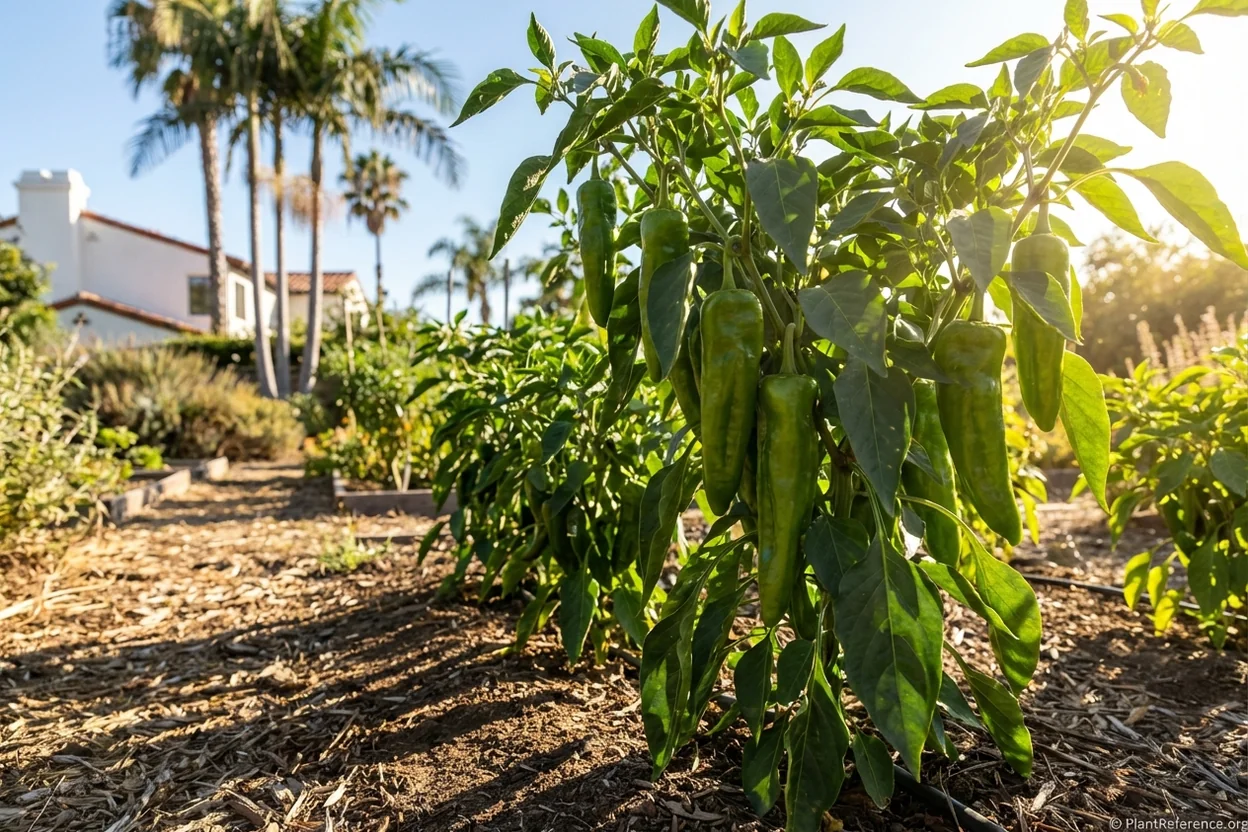
For bell peppers, 🌿Capsicum annuum 'California Wonder' remains my top recommendation despite being an old variety. Modern hybrids often struggle with our intense UV levels, but this heirloom has the thick, waxy leaves needed to protect the fruit from sunscald.
Heat lovers should focus on 🌿Capsicum chinense 'Habanero', which actually prefers our warm nights. Unlike northern growers who struggle to get these plants to fruit, LA gardeners can achieve multiple harvests per year from a single plant.
Specific Planting Dates for Los Angeles Zone 10b
Our Zone 10b classification means our average annual minimum temperature stays above 35°F (1.7°C), giving us tremendous flexibility in planting times. However, peppers still require warm soil and protection from occasional cold snaps.
Primary Spring Planting Window:
Indoor seed starting: January 1-15
Transplant outdoors: February 15 - March 15
Soil temperature: Wait until soil reaches 60°F consistently
Harvest period: May through October
This timing takes advantage of our mild winter-to-spring transition and positions plants to establish before summer heat peaks. Starting seeds indoors during the short days of January requires supplemental lighting, but transplants will be ready right after our February 15 last frost date.
Secondary Fall Planting Window:
Indoor seed starting: July 1-15
Transplant outdoors: August 15 - September 1
Harvest period: October through February
Protection needed: Row covers during December-January cold snaps
Fall planting works exceptionally well in Los Angeles because our autumn weather is ideal for pepper growth—warm days, cool nights, and reduced pest pressure. Plants established in late summer will produce through our mild winter with minimal protection.
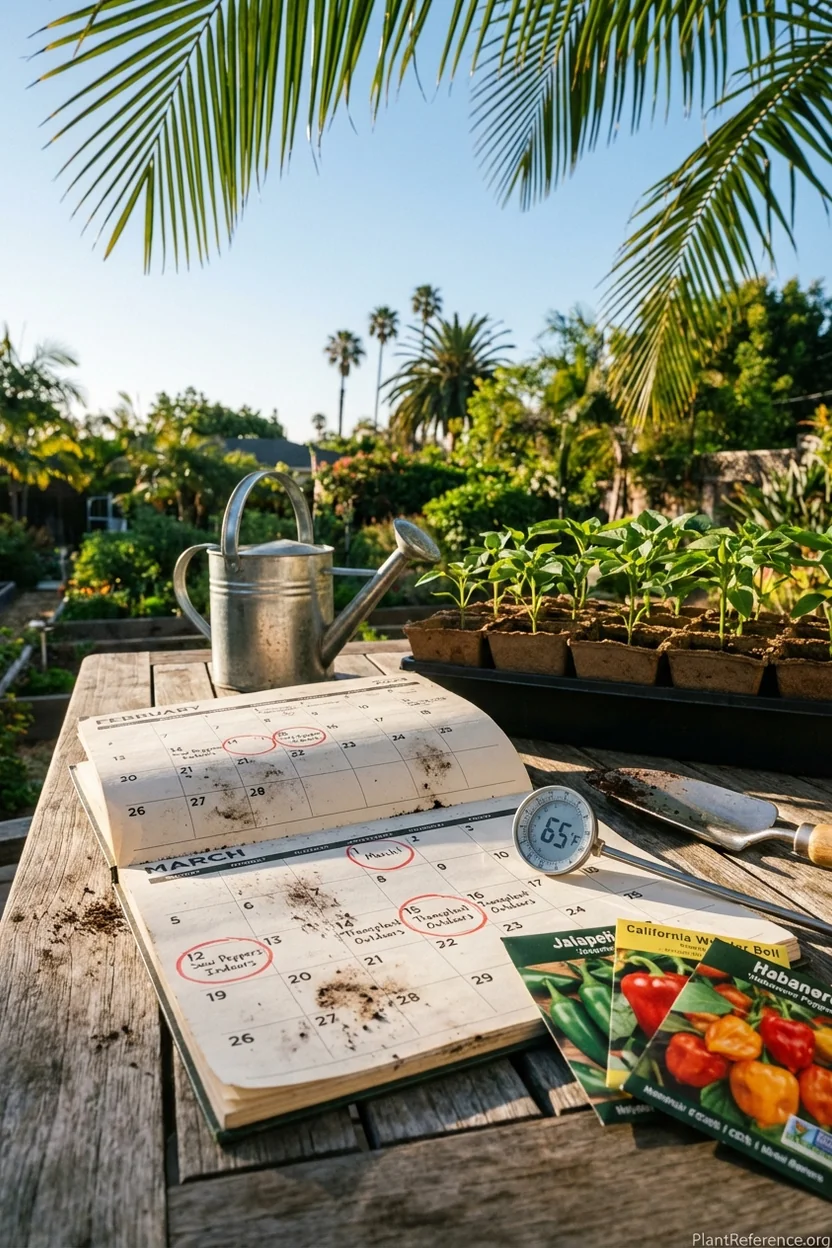
Monthly Breakdown for Los Angeles:
January: Start seeds indoors with heat mats and grow lights February: Harden off transplants; direct seed after February 15 March: Plant transplants outdoors; continue succession seedings April-June: Main growing season; provide afternoon shade if needed July: Start fall crop seeds indoors August: Transplant fall crop; harvest summer peppers September-November: Peak harvest from both spring and fall plantings December: Harvest continues; protect plants during cold snaps
The key difference between LA and other climates is our ability to grow year-round. I keep productive pepper plants alive for 2-3 years by protecting them during our brief winter cold periods.
Complete Growing Guide for Los Angeles
Growing peppers successfully in Los Angeles requires understanding our unique combination of advantages and challenges. Our long growing season is fantastic, but intense sun, low humidity, and occasional Santa Ana winds demand specific strategies.
Soil Preparation Los Angeles soils vary dramatically—from sandy coastal areas to heavy clay inland. Most need significant amendment for peppers.
Test soil pH; peppers prefer 6.0-6.8, but LA soils often run alkaline
Add 2-3 inches of compost to improve drainage and water retention
For clay soils, work in coarse sand or perlite to prevent waterlogging
Install drip irrigation before planting—hand watering isn't practical in our climate
Apply 2-inch layer of organic mulch to conserve moisture and moderate soil temperature
Site Selection The intense Southern California sun requires careful positioning:
Provide morning sun with afternoon shade (3-4 PM protection)
Protect from Santa Ana wind corridors using fencing or larger plants
Ensure good air circulation to prevent fungal issues
Consider raised beds for improved drainage during winter rains
Space plants 18-24 inches apart—wider than other climates due to extended growing season
Watering Strategy Our Mediterranean climate means long dry periods followed by occasional deluges:
Deep, infrequent watering works better than daily light irrigation
Maintain consistent moisture—fluctuations cause blossom end rot
Water early morning to reduce evaporation and disease pressure
Reduce watering during winter months when growth slows
Monitor soil moisture 6 inches deep; surface drying is normal
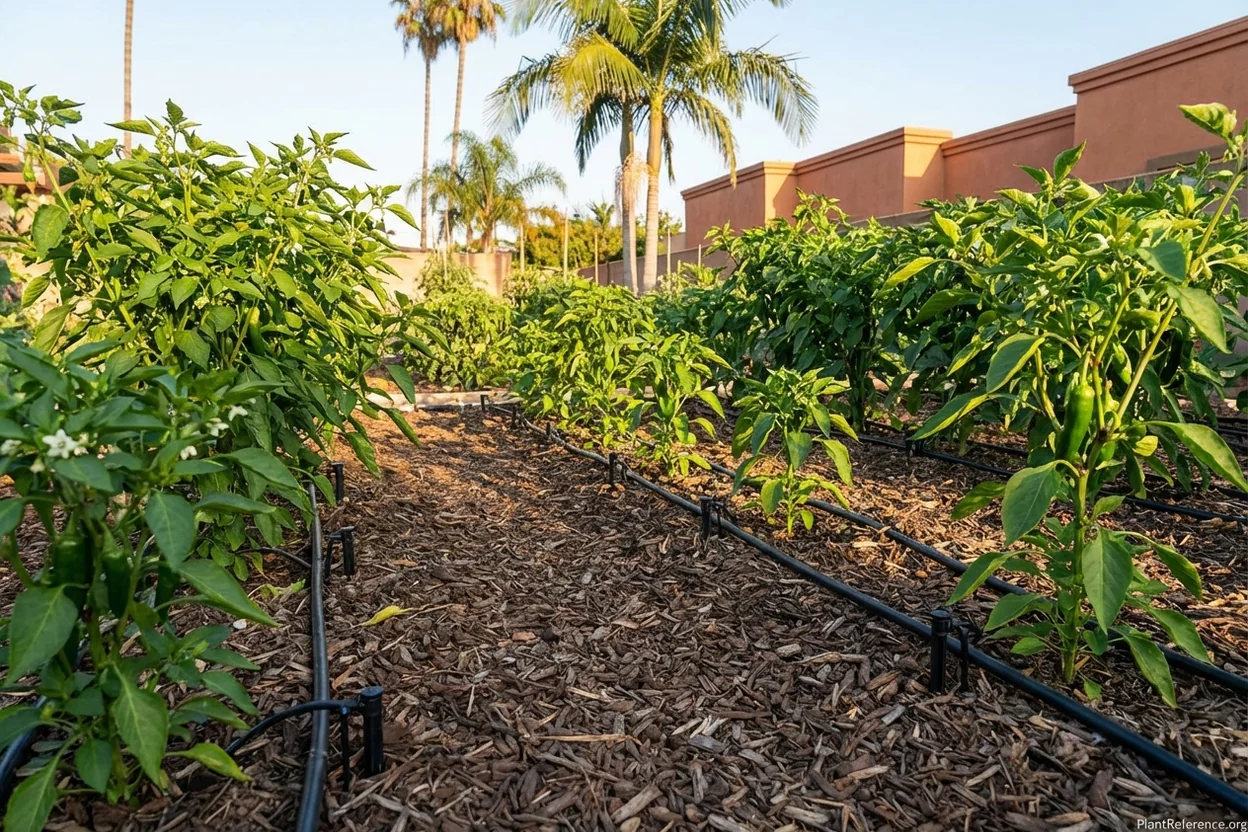
Fertilization for Extended Season Year-round growing means different nutritional needs:
Apply balanced organic fertilizer (10-10-10) at transplanting
Side-dress with compost monthly during active growing season
Reduce nitrogen in fall to encourage fruit ripening over new growth
Add calcium to prevent blossom end rot in our low-humidity climate
Supplement with magnesium if leaves show yellowing between veins
Season Extension Techniques Even in Zone 10b, maximizing production requires strategy:
Use row covers or frost blankets during December-January cold snaps
Prune plants lightly in late winter to stimulate new growth
Succession plant every 3-4 weeks for continuous harvest
Remove spent plants in December and replant for fresh start
Overwinter productive plants in containers that can be moved if needed
Troubleshooting Los Angeles-Specific Problems
Los Angeles pepper growers face unique challenges compared to other regions. After decades of growing here, I've learned to recognize and solve these problems quickly.
Sunscald and Heat Stress Our intense sun can damage even heat-tolerant peppers:
Symptoms: White or brown patches on fruit, wilted leaves during hottest part of day Solutions: Install 30% shade cloth over plants during July-August heat waves. Ensure adequate foliage cover by avoiding excessive pruning. Water deeply to help plants cope with heat stress.
Santa Ana Wind Damage These hot, dry winds can devastate pepper plants:
Symptoms: Broken stems, rapid wilting, torn leaves Solutions: Install windbreaks using fabric screens or plant taller companion crops. Stake plants securely with bamboo poles. Increase watering frequency during wind events to combat rapid moisture loss.
Aphid Infestations Our mild winters allow aphid populations to persist year-round:
Symptoms: Curled leaves, sticky honeydew, stunted growth Solutions: Encourage beneficial insects with diverse plantings. Spray off small infestations with strong water stream. Apply insecticidal soap in early morning or evening to avoid leaf burn in intense sun.
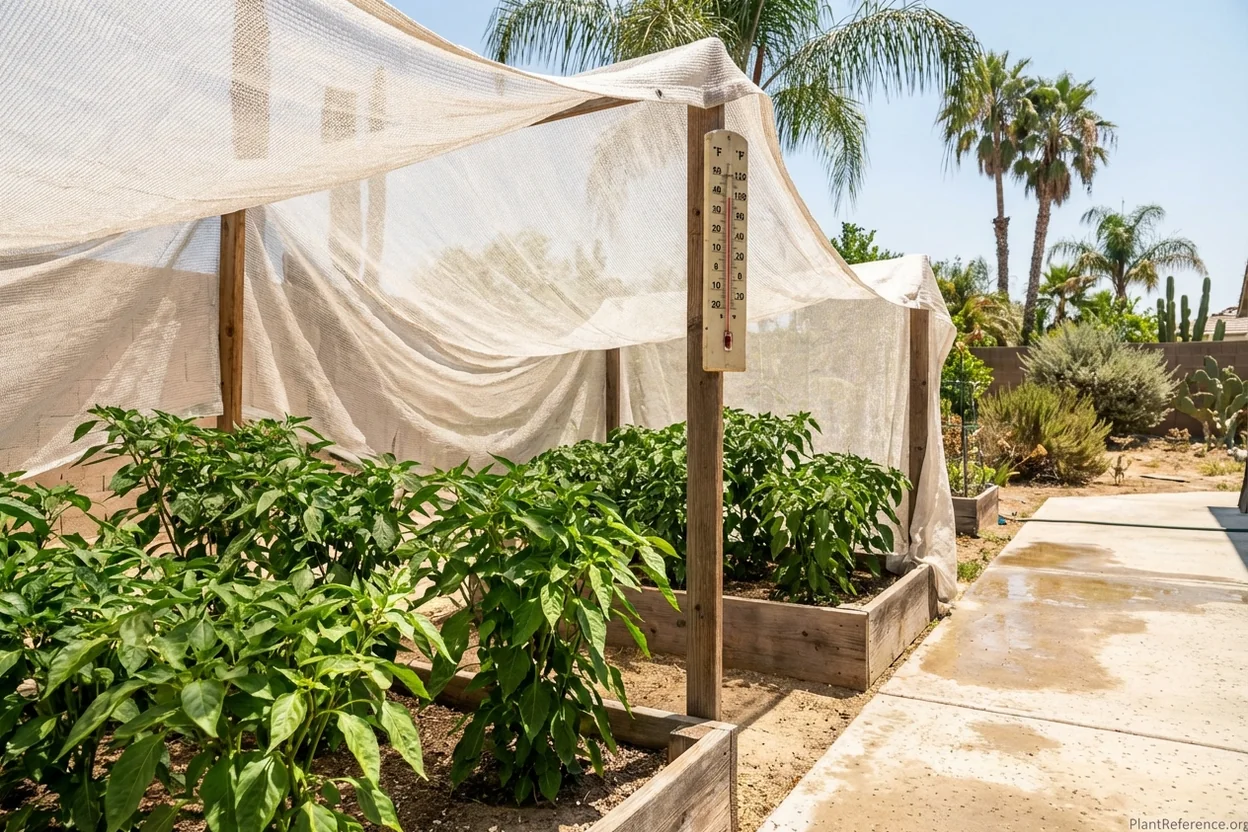
Inconsistent Fruit Set Temperature fluctuations during spring and fall transitions can affect flowering:
Symptoms: Flowers drop without forming fruit, uneven fruit development Solutions: This is usually temporary as plants adjust to changing seasons. Maintain consistent watering and avoid disturbing plants during flower formation. Problem typically resolves within 2-3 weeks.
Winter Cold Damage Even mild Zone 10b occasionally drops below pepper tolerance:
Symptoms: Black, mushy areas on leaves and stems after cold nights Solutions: Monitor weather forecasts for temperatures below 40°F. Cover plants with frost blankets or old sheets. Move container plants to protected areas. Remove damaged plant parts once temperatures warm.
Harvest & Storage
Los Angeles' extended growing season means peppers can be harvested nearly year-round with proper planning. The key is understanding when each variety reaches peak quality and how to store them for maximum enjoyment.
Harvest Timing by Variety
🌿Capsicum annuum 'Shishito' and 🌿Capsicum annuum 'Sweet Banana' should be harvested young and tender, typically when 3-4 inches long. These varieties quickly become tough and seedy if left too long on the plant.
🌿Capsicum annuum 'Jalapeño' peppers are ready when they reach full size but are still firm and glossy. The development of corky white striations (called "stress lines") indicates peak flavor. For chipotle production, allow them to turn fully red before harvesting.
🌿Capsicum annuum 'California Wonder' and other bell types should be harvested when walls are thick and the fruit has reached full size. Green bells can be picked anytime after reaching 3-4 inches across, while colored varieties need additional time to develop their characteristic hues.
Harvest in early morning when fruits are cool and turgor pressure is highest
Use clean, sharp pruning shears to avoid damaging plants
Leave 1/4 inch of stem attached to prevent rot entry points
Handle hot peppers with gloves to avoid capsaicin burns
Pick regularly to encourage continued production
Storage Methods LA's dry climate is excellent for pepper preservation:
Fresh storage: Most peppers keep 1-2 weeks in refrigerator crisper drawer. 🌿Capsicum annuum 'Anaheim' and 🌿Capsicum annuum 'Poblano' can be roasted and frozen for year-round use.
Drying: 🌿Capsicum annuum 'Cayenne' and other thin-walled varieties dry perfectly in our low humidity. String peppers on thread and hang in garage or covered patio area.
Frequently Asked Questions
Reading about plants and recognising them are different skills. These three build the second.
- Daily PlantIdentify the day’s mystery plant from a close-up photograph.
- Keyed OutWork a dichotomous key, lead by lead, to name a hidden specimen.
- Name That PlantName a specimen from botanical clues dealt hardest first.
Free to play, no account needed
Aisha manages a small tropical nursery on the east side of Houston, specializing in plants that can handle the Gulf Coast's humidity, heat, and unpredictable flooding. She studied horticulture in college and worked at a wholesale grower before opening her own operation. Growing up, her parents kept a kitchen garden with okra, bitter gourd, and curry leaf plants—a tradition she's continued. Houston's subtropical climate lets her grow things most of the country can't, but it also means dealing with fungal issues, standing water, and summers where it's too hot for even tomatoes. Aisha writes about tropical and subtropical plant care, humidity management, and working with heavy clay soils.