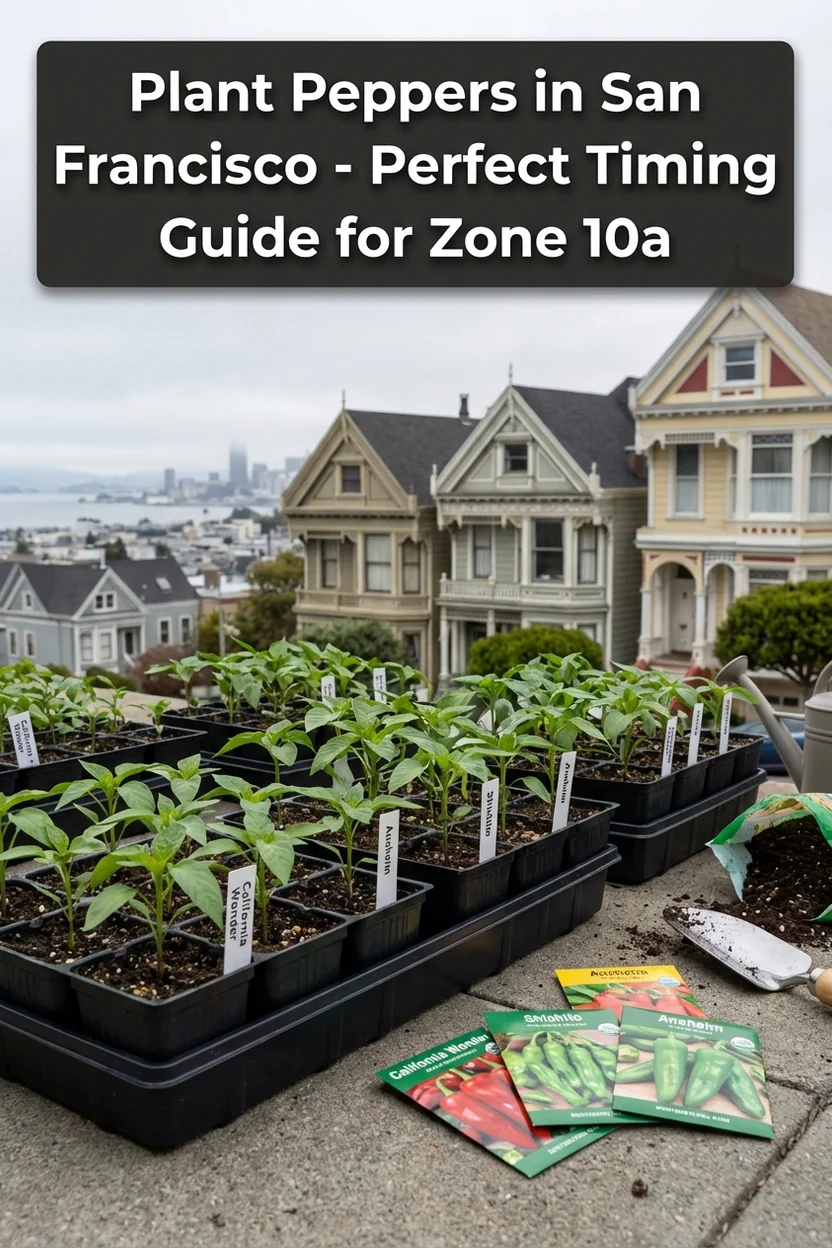
When to Plant Peppers in San Francisco: Complete Guide + Best Varieties for Zone 10a
Pets & Toxicity
Recorded toxicity for plants linked in this guide. An unknown status is not a safety assessment.
Toxic to pets: Poblano pepperDetailsHide
Capsicum chinense 'Habanero' — Toxicity: Not assessed
Fruit contains capsaicin at 100,000–350,000 Scoville Heat Units — strong enough to cause severe burning on skin, eyes, and mucous membranes through simple contact with cut fruit or the hand that held it. Nitrile gloves are used during handling and food preparation; face and eye contact is avoided. The fruit is irritating rather than toxic in the usual sense, but the heat level can cause significant discomfort and real injury if mishandled. The plant is kept out of reach of children and pets.View Capsicum chinense 'Habanero' plant profileCapsicum annuum 'California Wonder' — Toxicity
Non-toxicView Capsicum annuum 'California Wonder' plant profileCapsicum annuum 'Jalapeño' — Toxicity: Not assessed
Capsaicin in fruit causes burning sensations in mouth and on skin. Fruit and handling oils are irritating to eyes and mucous membranes but are not toxic in the usual sense. Gloves are used during harvesting and processing; hands are washed thoroughly before touching face. Small amounts are generally safe for pets but can cause digestive upset.View Capsicum annuum 'Jalapeño' plant profileCapsicum annuum 'Poblano' — Toxicity Warning
Toxic to petsView Capsicum annuum 'Poblano' plant profile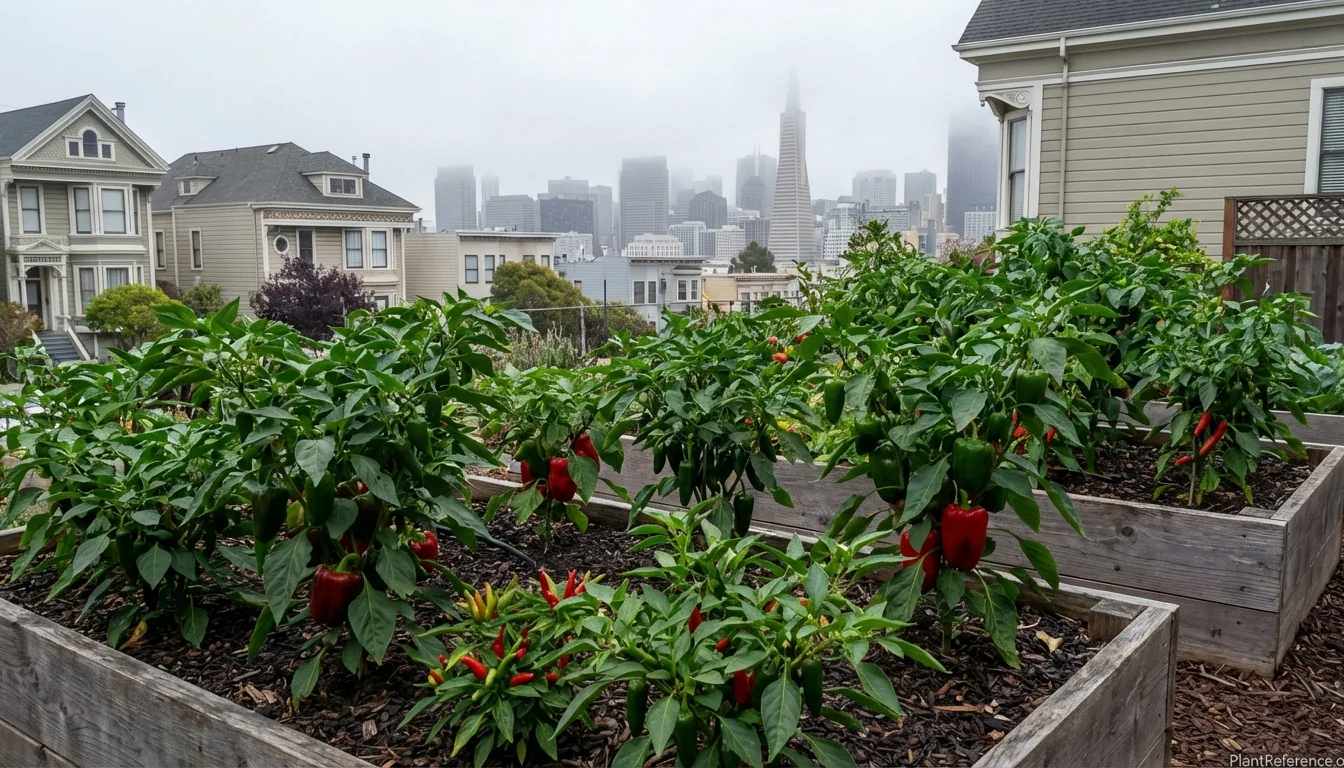
— Image © Plant Reference 2026
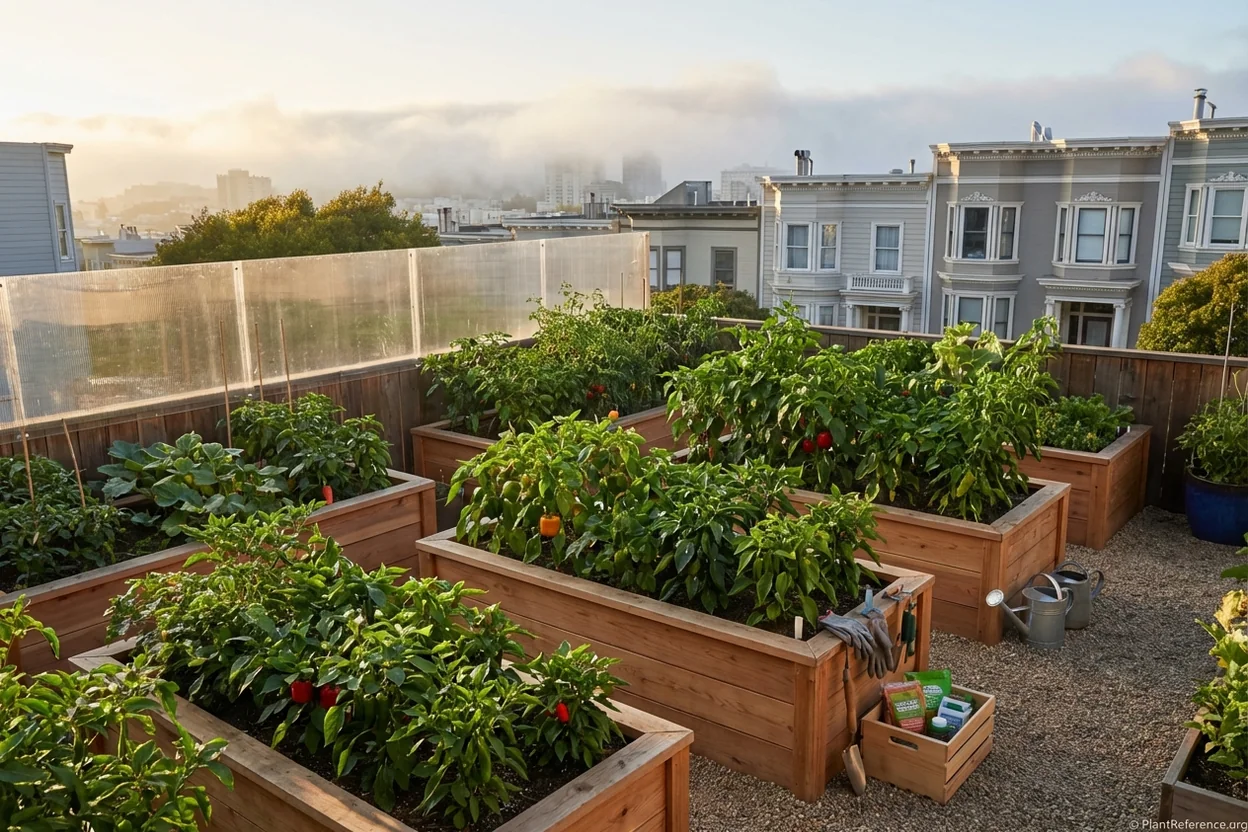
San Francisco's unique Zone 10a climate creates both opportunities and challenges for pepper growers. Unlike most of the country, you can grow peppers year-round here, but the persistent summer fog and cool temperatures mean you need to choose varieties carefully and time your plantings right.
After forty years of vegetable gardening, I've learned that San Francisco's climate is unlike anywhere else in the country. Your Zone 10a designation means no killing frosts, but that summer fog rolling in from the Pacific creates conditions more like Zone 8 during growing season. The key is working with this climate, not against it.
Best Pepper Varieties for San Francisco's Climate
San Francisco's cool summers and mild winters require careful variety selection. Not all peppers thrive in your marine-influenced climate.
Variety | Days to Maturity | Best For | Notes for San Francisco |
|---|---|---|---|
60-70 days | Cool-season growing | Excellent fog tolerance, harvest green | |
65-75 days | Pickling, fresh eating | Reliable producer in cool summers | |
70-80 days | Fresh eating, stuffing | Needs warmest microclimate in garden | |
70-80 days | Salsa, pickling | Grows well but may not develop full heat | |
70-80 days | Roasting, cooking | Good fog tolerance, harvest green | |
75-85 days | Stuffing, dried (ancho) | Plant in protected location | |
80-90 days | Drying, hot sauce | Long season variety for warmest spots | |
100-120 days | Hot sauce | Requires greenhouse or very protected spot |
The varieties that consistently perform well in San Francisco share common traits: they're either early maturing or exceptionally tolerant of cool, humid conditions.
Cool-Season Champions
🌿Capsicum annuum 'Shishito' is your best bet for reliable production. These Japanese peppers actually prefer the cool, humid conditions that would stress other varieties. Plant them in February, and you'll have peppers by May – well before the summer fog settles in.
🌿Capsicum annuum 'Sweet Banana' peppers handle cool nights better than most sweet varieties. Their yellow color develops even in lower light conditions, making them perfect for San Francisco's often overcast summers.
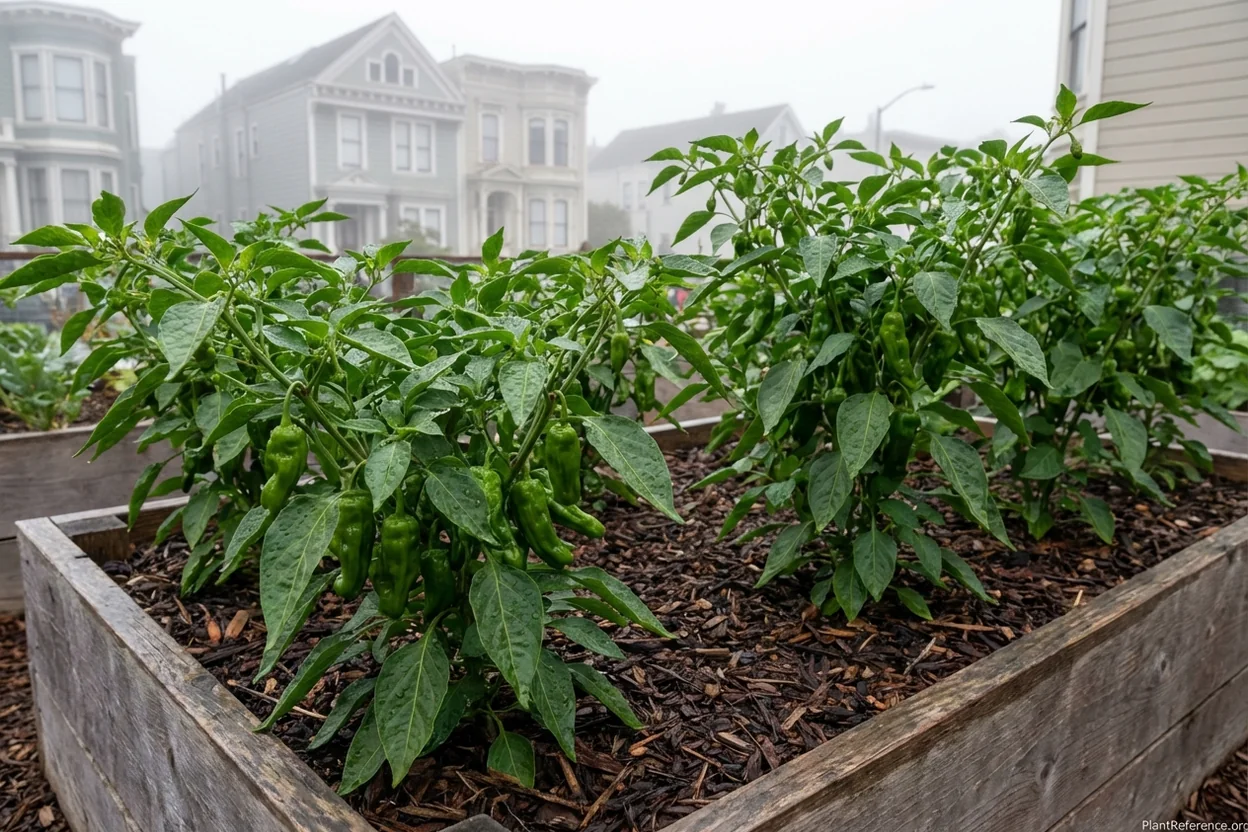
Heat-Loving Varieties Need Help
🌿Capsicum chinense 'Habanero' and large bell peppers like 🌿Capsicum annuum 'California Wonder' struggle in San Francisco's natural climate. If you want to grow these, you'll need to create a warmer microclimate using south-facing walls, wind protection, or even a small greenhouse.
Specific Planting Dates for San Francisco
San Francisco's year-round growing season means you have multiple planting windows, but timing still matters for optimal production.
Spring Planting (Primary Season)
February 15 - March 15: Start cool-season varieties - 🌿Capsicum annuum 'Shishito': February 15 - March 1 - 🌿Capsicum annuum 'Sweet Banana': February 20 - March 10 - 🌿Capsicum annuum 'Anaheim': March 1 - March 15
March 15 - May 1: Start heat-loving varieties - 🌿Capsicum annuum 'California Wonder': March 15 - April 1 - 🌿Capsicum annuum 'Jalapeño': March 20 - April 15 - 🌿Capsicum annuum 'Poblano': April 1 - April 15 - 🌿Capsicum chinense 'Habanero': March 15 (greenhouse) or May 1 (outdoors)
Fall Planting (Secondary Season)
August 1 - September 15: Second planting for winter harvest - 🌿Capsicum annuum 'Shishito': August 15 - September 1 - 🌿Capsicum annuum 'Sweet Banana': August 1 - August 15 - 🌿Capsicum annuum 'Anaheim': August 15 - September 1
The fall planting takes advantage of San Francisco's warm autumn months (September-November) before the marine layer settles in for winter.
Seed Starting Timeline
Indoor Seed Starting: Start seeds 6-8 weeks before transplant dates
February transplants: Start seeds December 15
January 1
March transplants: Start seeds January 15
February 1
April transplants: Start seeds February 15
March 1
Direct Seeding: Only recommended for fast-growing varieties like 🌿Capsicum annuum 'Shishito' and 🌿Capsicum annuum 'Sweet Banana' planted after March 15 when soil temperatures reach 60°F (15°C) consistently.
Complete Growing Guide for San Francisco
Growing peppers successfully in San Francisco requires understanding the city's unique microclimates and working with the marine influence rather than fighting it.
Site Selection and Microclimate Management
Choose the Warmest Spot: In San Francisco, every garden has microclimates. Plant peppers in the warmest, most protected area – typically against a south or west-facing wall that blocks the afternoon wind and reflects heat.
Wind Protection: The persistent westerly winds can stress pepper plants and increase evaporative cooling. Use fences, screens, or taller plants as windbreaks, especially for varieties like 🌿Capsicum chinense 'Habanero' that need maximum heat accumulation.
Elevation Matters: Higher elevations in the city often stay above the fog line. If you're in the Sunset or Richmond districts, consider container growing so you can move plants to capture maximum sun during foggy periods.
Soil Preparation
San Francisco's sandy soils drain well but need organic matter for water retention and nutrient availability.
Soil Amendments: Add 2-4 inches of compost or aged manure before planting. The organic matter helps sandy soils retain moisture during dry periods and improves nutrient availability.
Drainage: Even in well-draining sandy soil, create raised beds 6-8 inches high to ensure perfect drainage during winter rains. Peppers hate wet feet, especially during the cool, wet season from December through February.
pH Adjustment: Test soil pH – San Francisco soils often run slightly acidic due to organic matter decomposition and rainfall. Peppers prefer 6.0-7.0 pH, so add lime if necessary.
Planting and Spacing
Spacing: Space plants 18-24 inches apart in rows 30 inches apart. The wider spacing improves air circulation, which is crucial in San Francisco's humid conditions to prevent fungal diseases.
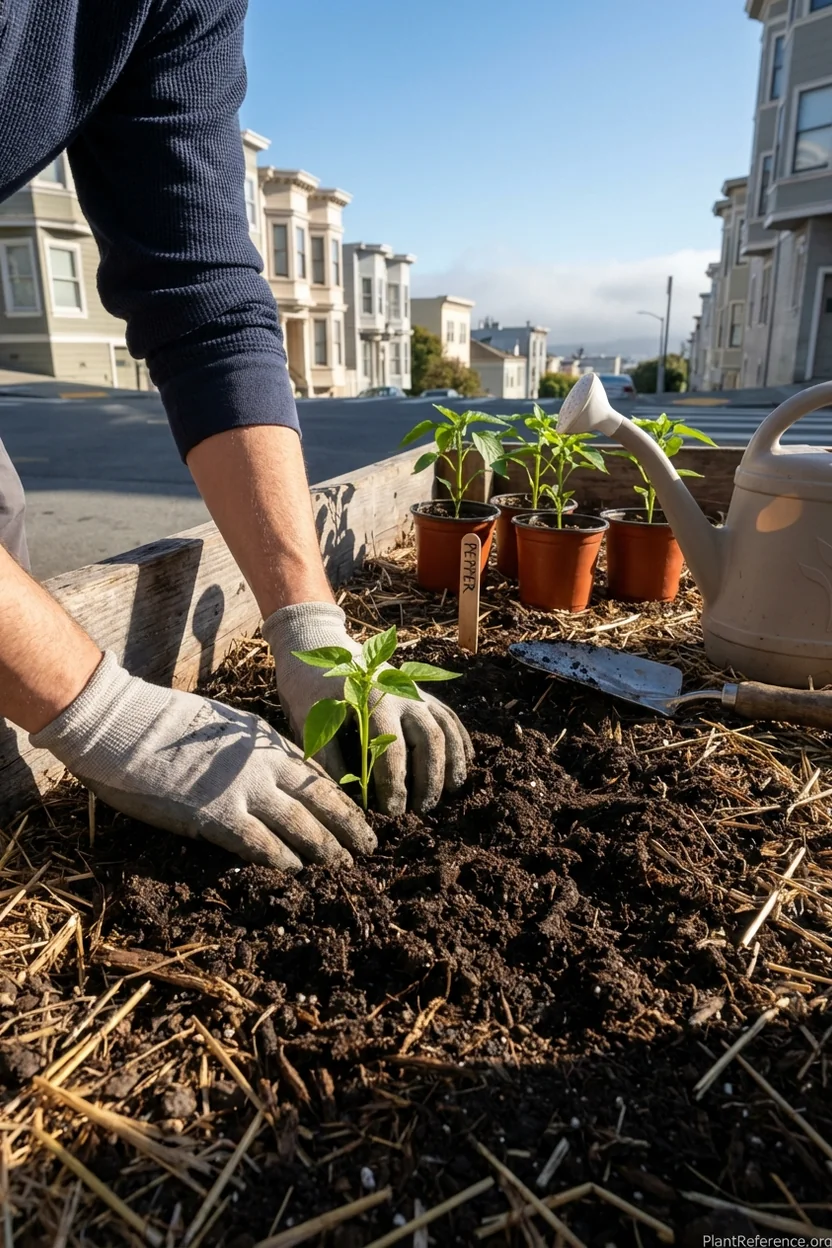
Transplant Timing: Wait until soil temperature reaches 60°F (15°C) consistently before transplanting. Even though there's no frost risk, cold soil will stunt growth for weeks.
Hardening Off: Even in San Francisco's mild climate, harden off seedlings gradually over 7-10 days. The transition from indoor warmth to outdoor cool can shock plants.
Watering and Irrigation
San Francisco's dry summers require consistent irrigation, but the timing matters.
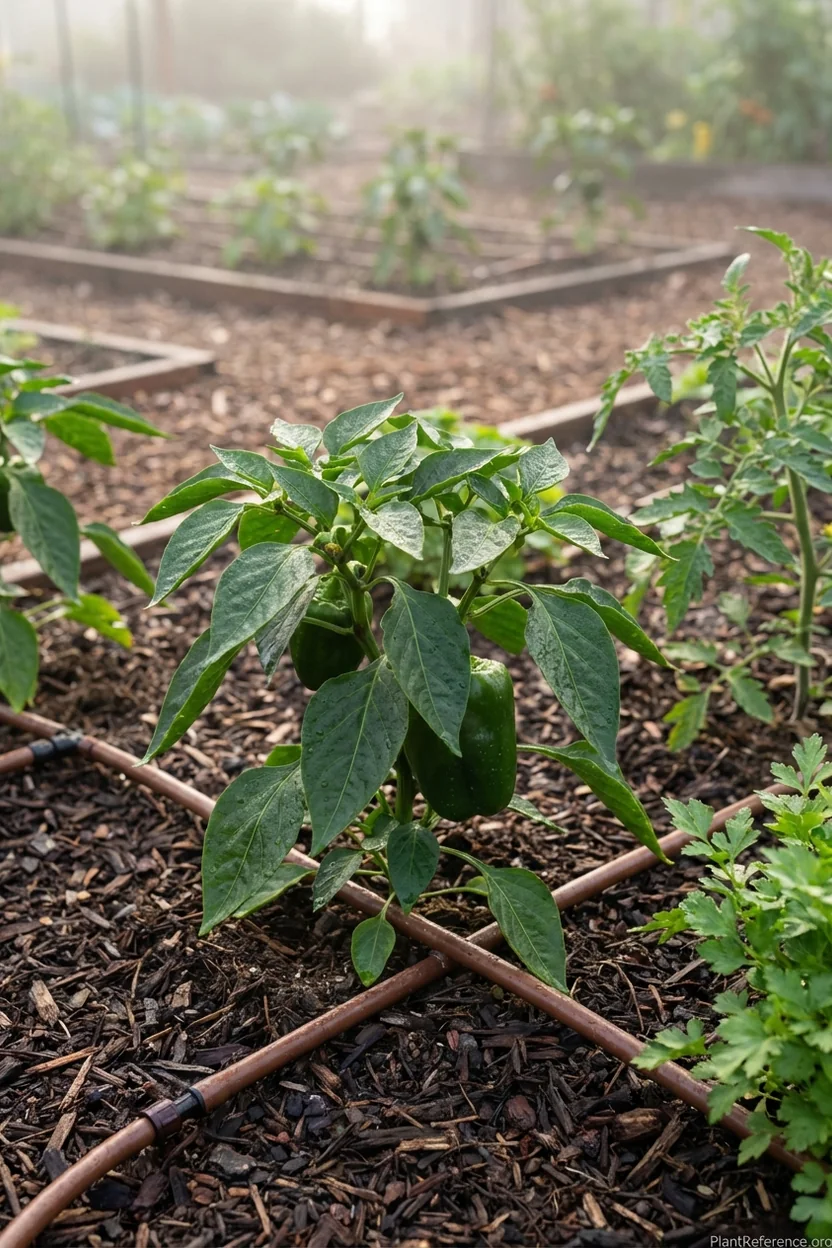
Deep, Infrequent Watering: Water 1-2 times per week, providing 1-2 inches total. Sandy soils drain quickly, so deep watering encourages deep root development.
Morning Watering: Water early morning (6-8 AM) so plants dry before the afternoon fog and wind arrive. Wet foliage in cool, humid conditions invites disease.
Mulching: Apply 2-3 inches of organic mulch around plants, keeping it 2 inches from the stem. This conserves moisture during dry periods and moderates soil temperature.
Fertilization
Base Fertilization: Mix a balanced organic fertilizer (10-10-10 or 5-5-5) into soil at planting time.
Side-Dressing: Side-dress with compost or balanced fertilizer every 4-6 weeks during active growing season (March-October).
Avoid Excess Nitrogen: Too much nitrogen promotes leafy growth at the expense of fruit production. This is especially problematic in San Francisco's cool climate where flowering is already challenging.
Troubleshooting San Francisco-Specific Problems
San Francisco's unique climate creates specific challenges that gardeners in other regions don't face.
Cool Summer Temperatures
Problem: Peppers dropping flowers or failing to set fruit during June-August fog season.
Solution: Create warm microclimates using south-facing walls, cold frames, or clear plastic covers. Consider growing heat-loving varieties in containers so you can move them to capture maximum sun.
Variety Selection: Focus on cool-tolerant varieties like 🌿Capsicum annuum 'Shishito' and 🌿Capsicum annuum 'Anaheim' that set fruit at lower temperatures.
Persistent Marine Layer
Problem: Lack of direct sunlight during summer months reduces photosynthesis and fruit development.
Solution: Choose garden locations that receive maximum morning sun (east-facing is ideal). Morning sun is more reliable than afternoon sun, which often gets obscured by fog.
Reflective Mulches: Use reflective mulches (aluminum foil or mylar) to increase light availability to plants during overcast periods.
High Humidity and Fungal Issues
Problem: Powdery mildew, bacterial spot, and other fungal diseases thrive in San Francisco's humid conditions.
Solution: Improve air circulation with proper spacing (24 inches between plants). Water at soil level using drip irrigation or soaker hoses. Remove any infected plant material immediately.
Resistant Varieties: Choose varieties with known disease resistance when available.
Inconsistent Fruit Ripening
Problem: Peppers reaching full size but remaining green, especially bell peppers and thick-walled varieties.
Solution: Be patient – ripening takes longer in cool conditions. Focus on green harvest for varieties like 🌿Capsicum annuum 'Anaheim' and 🌿Capsicum annuum 'Poblano' which are excellent eaten green.
Heat Accumulation: Use black plastic mulch or plant in containers with dark-colored pots to increase soil temperature and heat accumulation around roots.
Wind Damage
Problem: Persistent westerly winds can break stems, increase water loss, and stress plants.
Solution: Install windbreaks on the windward (west) side of pepper beds. Stake tall varieties like 🌿Capsicum annuum 'California Wonder' and 🌿Capsicum annuum 'Poblano'.
Container Strategy: Grow sensitive varieties in heavy containers that can be moved to protected locations during windy periods.
Harvest & Storage
San Francisco's extended growing season allows for continuous harvest from early summer through late fall, and even winter harvest with protection.
Harvest Timing
Green Stage: Most peppers can be harvested green for immediate use. 🌿Capsicum annuum 'Anaheim' and 🌿Capsicum annuum 'Poblano' are traditionally harvested green.
Full Maturity: Allow 2-4 weeks beyond full size for color development. In San Francisco's cool climate, this may take longer than stated days to maturity.
Continuous Harvest: Pick peppers regularly to encourage continued production. Plants will continue flowering and fruiting until temperatures drop below 50°F (10°C) consistently.
Storage Methods
Fresh Storage: Store unwashed peppers in perforated plastic bags in refrigerator for 1-2 weeks.
Freezing: 🌿Capsicum annuum 'Anaheim' and 🌿Capsicum annuum 'Poblano' freeze well whole after roasting. 🌿Capsicum annuum 'Jalapeño' can be sliced and frozen for cooking use.
Drying: 🌿Capsicum annuum 'Cayenne' and thin-walled hot peppers dry well in San Francisco's low humidity. String them up in a well-ventilated area.
Roasting and Preserving: Roast thick-walled varieties like 🌿Capsicum annuum 'Poblano' and 🌿Capsicum annuum 'Anaheim' over open flame, peel, and freeze or can for year-round use.
Winter Growing
San Francisco's mild winters allow year-round growing with minimal protection.
Cold Frames: Simple cold frames extend the growing season for cool-tolerant varieties like 🌿Capsicum annuum 'Shishito'.
Container Growing: Move containers to protected locations during occasional cold snaps (below 40°F/4°C).
Row Covers: Lightweight row covers provide 4-6°F of protection during the coldest months (December-February).
Frequently Asked Questions
Reading about plants and recognising them are different skills. These three build the second.
- Daily PlantIdentify the day’s mystery plant from a close-up photograph.
- Keyed OutWork a dichotomous key, lead by lead, to name a hidden specimen.
- Name That PlantName a specimen from botanical clues dealt hardest first.
Free to play, no account needed
David is a software engineer who got into gardening after buying a fixer-upper in the Sunset District with a neglected backyard. San Francisco's microclimates fascinated him—he quickly learned that what grows three blocks away might not work in his fog belt yard. David now maintains a productive vegetable garden despite the marine layer, growing cool-season crops almost year-round and experimenting with season extension techniques. He volunteers at a local community garden and writes about urban food growing, microclimate gardening, and the particular challenges of Bay Area conditions. His approach is methodical—he keeps detailed notes and isn't afraid to share what didn't work.