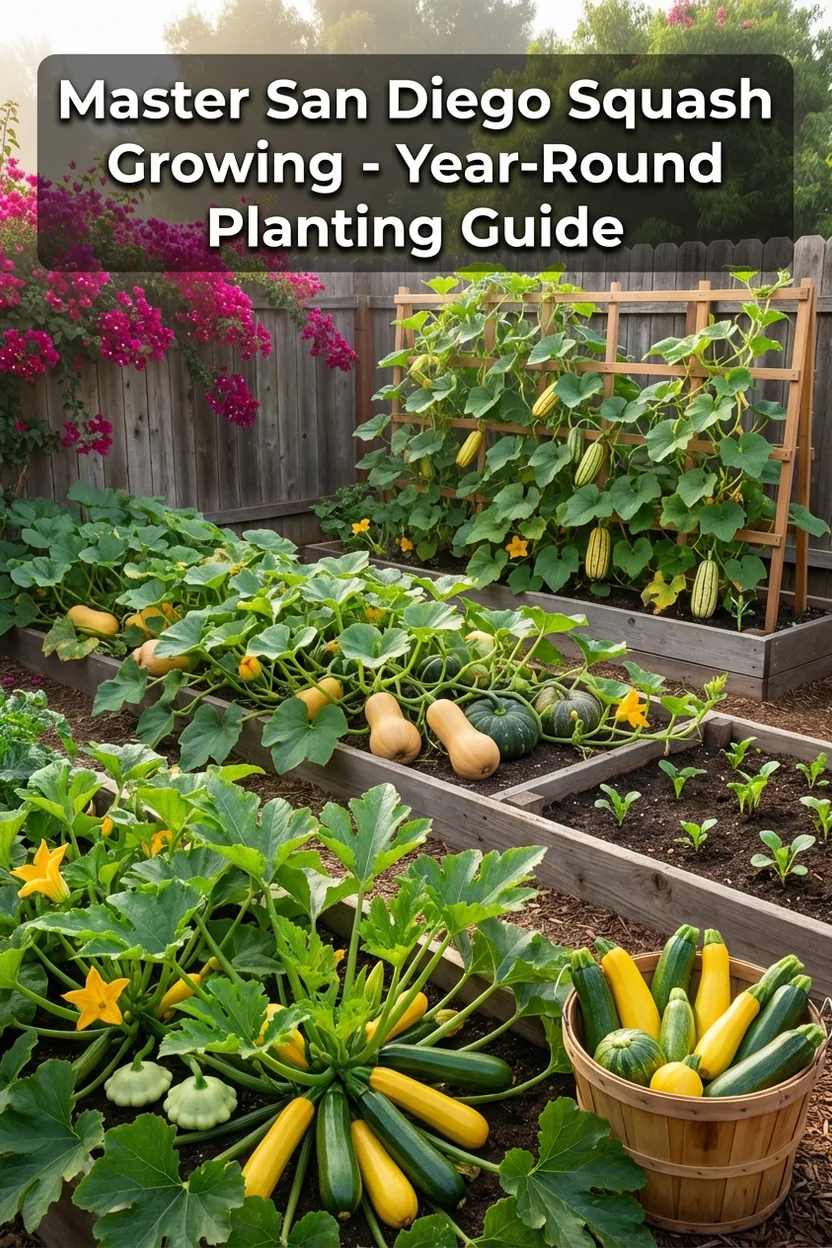
When to Plant Squash in San Diego: Complete Guide + Best Varieties for Zone 10b
Pets & Toxicity
Recorded toxicity for plants linked in this guide. An unknown status is not a safety assessment.
No linked plant is recorded as toxicDetailsHide
Cucurbita pepo 'Black Beauty' — Toxicity
Non-toxic as an edible cropView Cucurbita pepo 'Black Beauty' plant profileCucurbita pepo 'Yellow Crookneck' — Toxicity
Non-toxic as an edible cropView Cucurbita pepo 'Yellow Crookneck' plant profile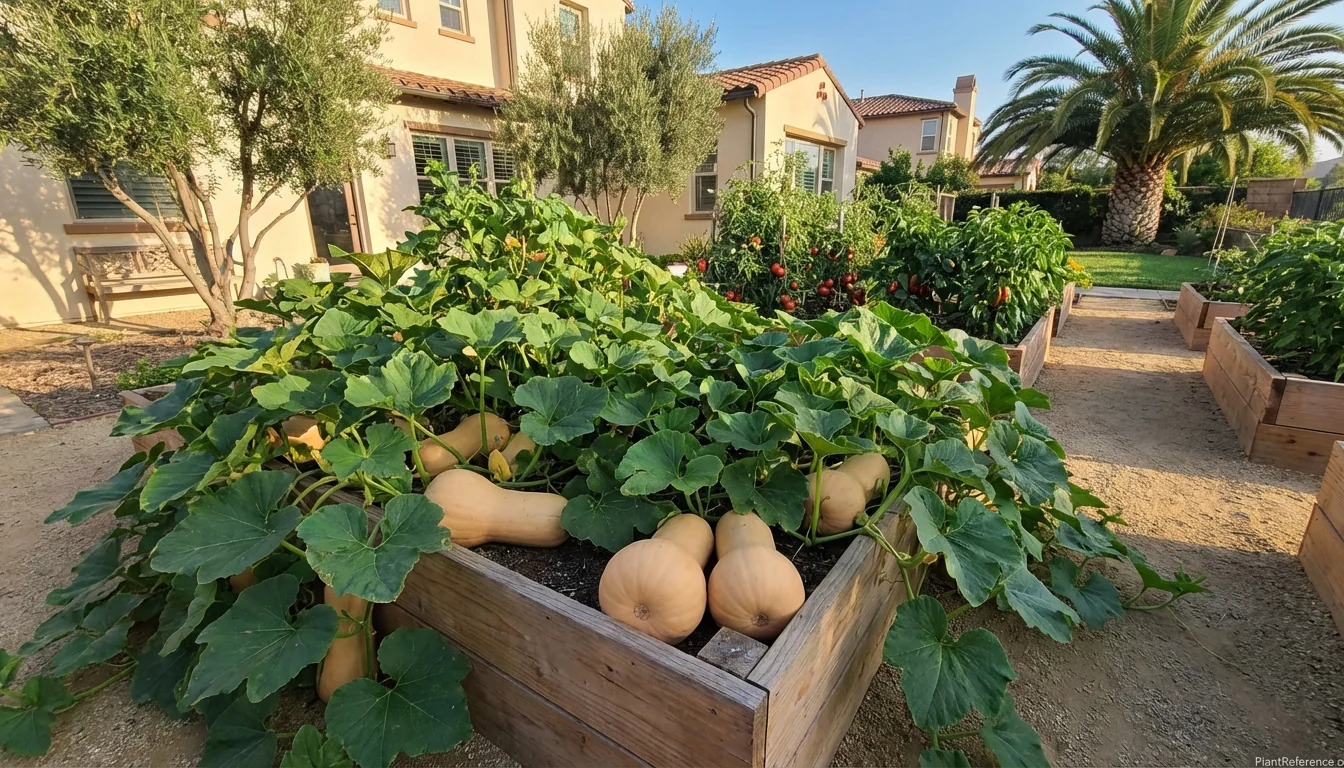
— Image © Plant Reference 2026
San Diego's Zone 10b climate creates a squash paradise that most gardeners can only dream of. With temperatures rarely dropping below 35°F (2°C) and a growing season stretching from February 1 to December 20, you have 322 days to work with—nearly the entire year.
Best Squash Varieties for San Diego's Zone 10b Climate
San Diego's Mediterranean climate with its mild, wet winters and warm, dry summers creates unique opportunities and challenges for squash production. Understanding which varieties thrive in your specific microclimate is crucial for success.
The key to successful squash growing in San Diego lies in understanding our two distinct seasons: the mild growing period from February through May, and the hot inland summer from June through September. Coastal areas remain more moderate year-round, while inland valleys can exceed 90°F (32°C) regularly during summer months.
Summer Squash Varieties for Year-Round Production
Summer squash varieties offer the most flexibility in San Diego's climate, with the ability to plant and harvest nearly year-round with proper planning.
Variety | Days to Maturity | Best Planting Window | Heat Tolerance | Notes for San Diego |
|---|---|---|---|---|
45-55 days | March-September | Moderate | Most reliable producer, excellent in coastal areas | |
50-60 days | March-August | Good | Handles inland heat better than zucchini | |
50-60 days | March-September | Moderate | Compact bush perfect for small San Diego gardens |
🌿Cucurbita pepo 'Black Beauty' zucchini remains the most reliable summer squash for San Diego gardens. Its 45-55 day maturity allows for multiple plantings throughout our extended season. Plant every 4-6 weeks from March through August for continuous harvest. The compact bush habit makes it perfect for San Diego's smaller urban lots.
🌿Cucurbita pepo 'Yellow Crookneck' shows superior heat tolerance compared to dark-skinned zucchini varieties, making it the top choice for inland San Diego areas where temperatures regularly exceed 85°F (29°C). The lighter-colored skin reflects heat rather than absorbing it.
🌿Cucurbita pepo 'Pattypan' varieties excel in San Diego's consistent temperatures. Their bush habit requires only 3-4 feet (90-120 cm) of space, perfect for container growing on patios or in raised beds. Harvest when fruits are 2-3 inches (5-8 cm) in diameter for peak flavor.
Winter Squash for San Diego's Extended Season
San Diego's long growing season makes it possible to grow even the longest-season winter squash varieties, but timing becomes critical to avoid summer heat stress during fruit development.
🌿Cucurbita moschata 'Butternut' is perfectly suited to San Diego's climate. Plant from March through May to allow 85-100 days before extreme summer heat. The species originates from tropical regions and shows excellent resistance to the bacterial wilt that can plague other varieties in our warm, humid conditions near the coast.
🌿Cucurbita maxima 'Kabocha' varieties require careful timing in San Diego. Plant no later than April 15 to ensure the 95-110 day maturity period completes before inland temperatures consistently exceed 90°F (32°C). Coastal gardeners have more flexibility, with planting possible through May.
🌿Cucurbita pepo 'Delicata' offers the quickest winter squash option at 80-100 days. Its thin, edible skin eliminates the need for peeling, making it perfect for San Diego's health-conscious culinary scene. Plant March through June for fall harvest.
🌿Cucurbita pepo 'Spaghetti' requires consistent moisture to develop its characteristic stringy flesh texture. San Diego's dry summers make drip irrigation essential. Plant March through May and maintain consistent soil moisture throughout the 88-100 day growing period.
Specific Planting Dates for San Diego Gardeners
San Diego's unique climate allows for an extended planting season that most gardeners nationwide cannot achieve. However, success requires understanding our distinct seasonal patterns and heat thresholds.
Spring Planting Season (Primary Window)
March 1-15: Ideal for all varieties. Soil temperatures consistently reach 65°F (18°C), perfect for seed germination. This timing allows summer squash to establish before any heat stress and gives winter varieties the full season to mature.
March 15-31: Excellent for summer squash and most winter varieties. Begin monitoring soil moisture more carefully as spring rains decrease. 🌿Cucurbita pepo 'Black Beauty' planted now will begin producing in early May.
April 1-30: Prime time for heat-tolerant varieties. Focus on 🌿Cucurbita pepo 'Yellow Crookneck' and 🌿Cucurbita moschata 'Butternut' which handle increasing temperatures well. Coastal areas can plant any variety through April.
Summer Planting Considerations
May 1-31: Last chance for long-season winter squash like 🌿Cucurbita maxima 'Kabocha'. Summer squash can still be planted, but provide afternoon shade in inland areas. Monitor for heat stress as temperatures climb.
June 1-30: Summer squash only in coastal areas. Inland gardeners should wait for fall planting. If planting, choose morning sun locations and provide afternoon shade protection.
July-August: Coastal summer squash continues. Inland areas too hot for reliable germination. Focus on preparing beds for fall planting season.
Fall Planting Revival
September 1-15: Resume full planting schedule as temperatures moderate. Excellent time for succession planting of summer varieties that will produce through December. Plant 🌿Cucurbita pepo 'Delicata' now for holiday harvest.
September 15-30: Final opportunity for 80-90 day varieties. Summer squash planted now will produce until the December 20 average first frost date.
Succession Planting Strategy
San Diego's extended season makes succession planting of summer squash highly effective. Plant 🌿Cucurbita pepo 'Black Beauty' every 4-6 weeks from March through August to maintain continuous production. Each planting will produce for 4-6 weeks before declining, ensuring seamless harvest transitions.
Recommended succession schedule:
Planting 1: March 15 (harvest May 1-June 15)
Planting 2: May 1 (harvest June 15-July 30)
Planting 3: June 15 (harvest August 1-September 15)
Planting 4: August 1 (harvest September 15-November 1)
Complete Growing Guide for San Diego's Mediterranean Climate
San Diego's Mediterranean climate creates specific growing conditions that require adapted techniques for optimal squash production. Understanding soil preparation, irrigation management, and microclimate utilization will maximize your harvest.
Soil Preparation for Year-Round Growing
San Diego's varied soil types—from coastal sandy loam to inland clay—require different amendment strategies. Most urban areas feature imported soil that may lack organic matter and beneficial microbial activity.
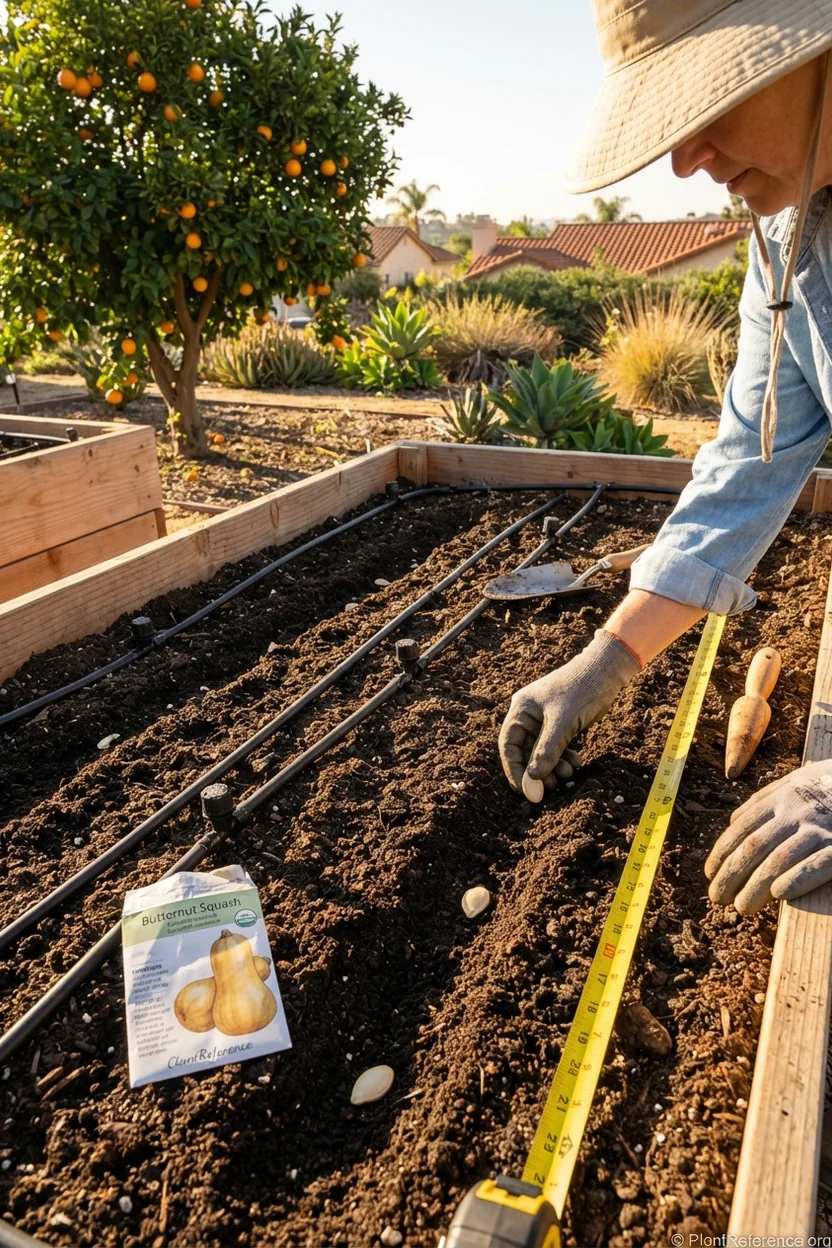
Test soil pH using a digital meter, aiming for 6.0-6.8 for optimal nutrient availability. San Diego's alkaline irrigation water tends to raise soil pH over time, making regular testing important. Add sulfur at 1 lb per 100 square feet (4.5 kg per 93 square meters) if pH exceeds 7.0.
Incorporate 2-3 inches (5-8 cm) of quality compost before each planting season. San Diego's year-round growing depletes soil faster than seasonal climates. Choose compost made from local green waste when possible, as it contains beneficial microorganisms adapted to our climate.
Create raised beds 8-12 inches (20-30 cm) high to improve drainage during winter rains and allow better soil warming in cooler months. Squash roots require well-drained conditions, and even our mild winter rains can create temporary waterlogging in clay soils.
Irrigation Management in San Diego's Dry Climate
San Diego receives only 10-12 inches (25-30 cm) of annual rainfall, with most occurring November through March. Summer squash requires 1-2 inches (2.5-5 cm) of water weekly, while winter squash needs consistent moisture during fruit development.
Install drip irrigation with 2-gallon-per-hour (7.5 L/hr) emitters spaced every 18 inches (45 cm) along the planting row. This provides precise water delivery while conserving our limited water resources. Avoid overhead sprinklers that waste water and promote fungal diseases.
Water early morning (5-7 AM) to minimize evaporation
Apply mulch 3-4 inches (8-10 cm) thick around plants
Monitor soil moisture at 6 inches (15 cm) depth
Reduce watering frequency as winter squash approaches maturity
Group squash with other high-water vegetables for irrigation efficiency
Monthly irrigation schedule:
March-May: 3-4 times weekly as plants establish
June-August: Daily drip irrigation for summer varieties
September-November: 3-4 times weekly as temperatures moderate
December-February: 1-2 times weekly, adjust for rainfall
Managing San Diego's Microclimates
San Diego's diverse microclimates—from cool coastal areas to hot inland valleys—require different approaches to squash growing. Understanding your specific microclimate determines variety selection and planting timing.
Coastal Zone (within 5 miles of ocean): Consistent temperatures 65-75°F (18-24°C) allow year-round growing of most varieties. Marine layer provides natural humidity but delays morning sun. Plant on south or east-facing slopes for maximum sun exposure.
Inland Valleys: Experience temperature swings from 40°F to 100°F (-4°C to 38°C). Plant heat-tolerant varieties and provide afternoon shade during summer months. Utilize thermal mass like stone walls to moderate temperature extremes.
Mountain/Desert Interface: Elevation changes create significant temperature variations. Follow zone maps carefully, as areas above 2,000 feet (610 m) may experience occasional frost. Plant against south-facing walls for heat accumulation.
Pest Integration in San Diego Gardens
San Diego's warm climate allows continuous pest reproduction cycles, requiring integrated management approaches rather than seasonal treatments.
Squash vine borer pressure remains moderate in San Diego compared to humid climates. The dry air reduces larval survival rates, but inspect plants weekly for entry holes and frass (sawdust-like excrement). Remove affected vines immediately and plant 🌿Cucurbita moschata 'Butternut' varieties for their natural resistance.
Aphid management becomes critical during our dry spring months when beneficial insects are still building populations. Blast established plants with water weekly to dislodge aphids, and plant sweet alyssum nearby to attract beneficial insects early in the season.
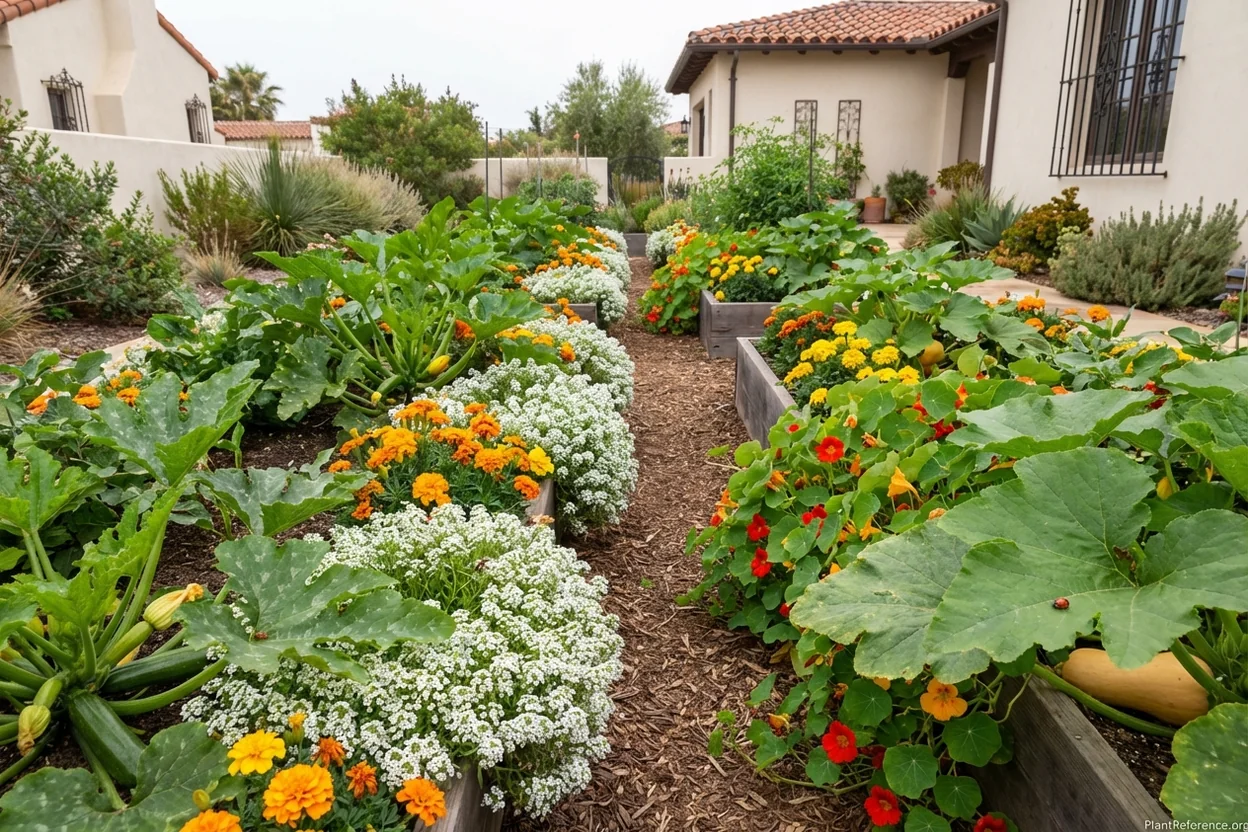
Whitefly control requires early intervention before populations explode in summer heat. Deploy yellow sticky traps in March as temperatures warm, and maintain trap monitoring through November. Introduce whitefly predators like Delphastus catalinae, a beetle native to Southern California.
Maximizing Small Space Production
San Diego's high property values create pressure to maximize production in limited garden space. Vertical growing and succession planting become essential strategies.
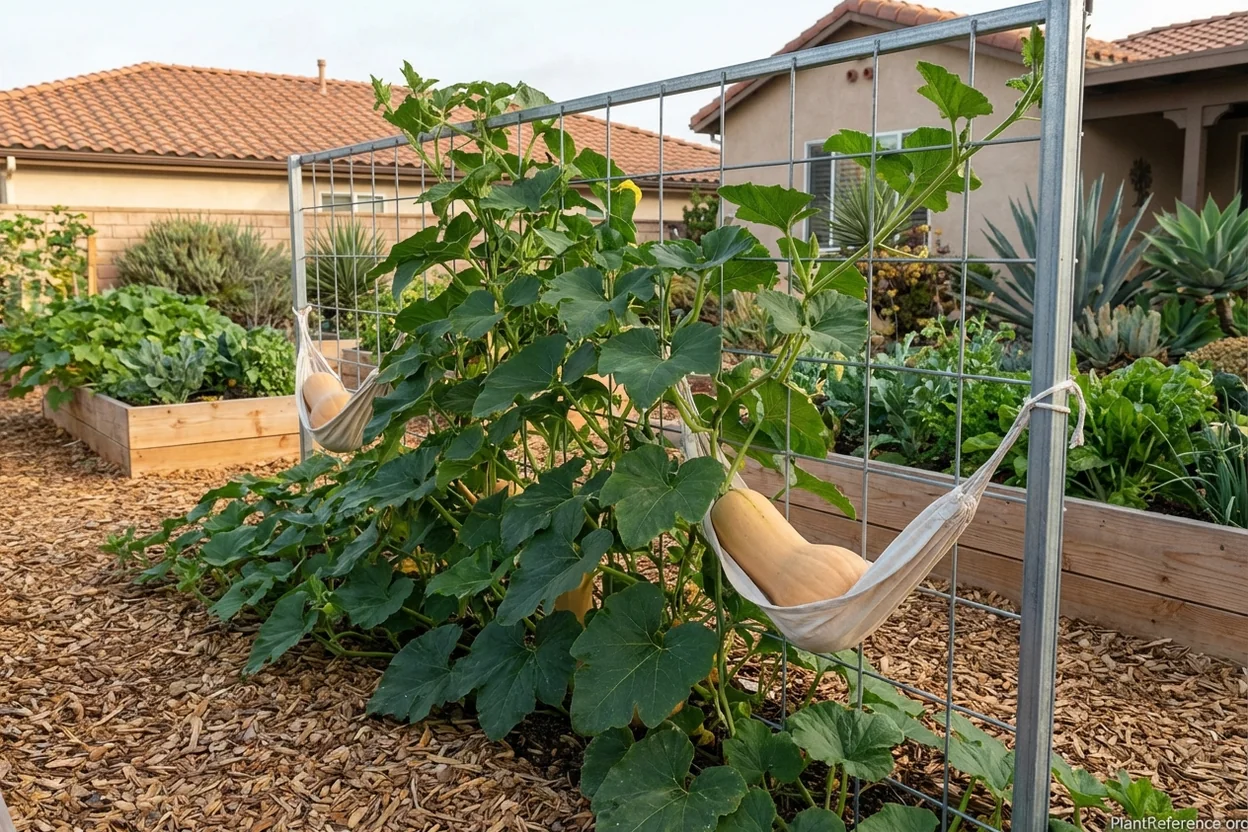
Train vining winter squash varieties up sturdy trellises made from cattle panels or welded wire mesh. Support developing fruits with cloth slings to prevent vine breakage. A single 🌿Cucurbita moschata 'Butternut' plant can produce 8-12 fruits when grown vertically, requiring only 4 square feet (0.37 square meters) of ground space.
Container growing works well for bush varieties like 🌿Cucurbita pepo 'Pattypan' in containers minimum 20 gallons (76 L) capacity. Use quality potting mix and provide consistent drip irrigation, as containers dry out quickly in our warm climate.
Troubleshooting San Diego-Specific Squash Problems
San Diego's unique climate creates specific challenges that differ from traditional squash-growing regions. Understanding these local issues helps prevent problems before they impact your harvest.
Heat Stress During Summer Months
Even heat-tolerant squash varieties can struggle when inland temperatures exceed 95°F (35°C) for multiple consecutive days. Heat stress manifests as blossom drop, where flowers abort before fruit set occurs.
Prevention strategies: Provide afternoon shade using shade cloth rated 30-50% during peak summer months. Position shade structures on the west side of plants to block the most intense sun from 2-6 PM.
Plant summer varieties in locations that receive morning sun but afternoon protection from buildings, fences, or taller plants. East-facing slopes work well for summer plantings.
Maintain consistent soil moisture during heat waves, as drought stress compounds heat stress. Increase watering frequency but avoid overwatering, which can promote root rot.
Powdery Mildew in Coastal Areas
San Diego's coastal marine layer creates humidity conditions ideal for powdery mildew development, especially on squash varieties with dense foliage. The fungus appears as white, powdery spots on leaf surfaces and can quickly spread to cover entire leaves.
Organic management approach: Spray affected plants weekly with a solution of 1 part milk to 10 parts water. The proteins in milk create an alkaline environment hostile to fungal growth. Apply early morning when leaves are dry.
Improve air circulation by spacing plants wider than recommended—36 inches (90 cm) for bush varieties and 60 inches (150 cm) for vining types. Prune lower leaves that touch the soil to reduce humidity around the plant base.
Plant resistant varieties when possible. 🌿Cucurbita moschata 'Butternut' shows better resistance than most 🌿Cucurbita pepo 'Ronde de Nice' varieties due to its evolutionary adaptation to humid tropical conditions.
Soil Salinity from Irrigation Water
San Diego's imported water contains elevated salt levels that can accumulate in soil over time, especially in container gardens. Salt buildup manifests as brown leaf edges and reduced plant vigor.
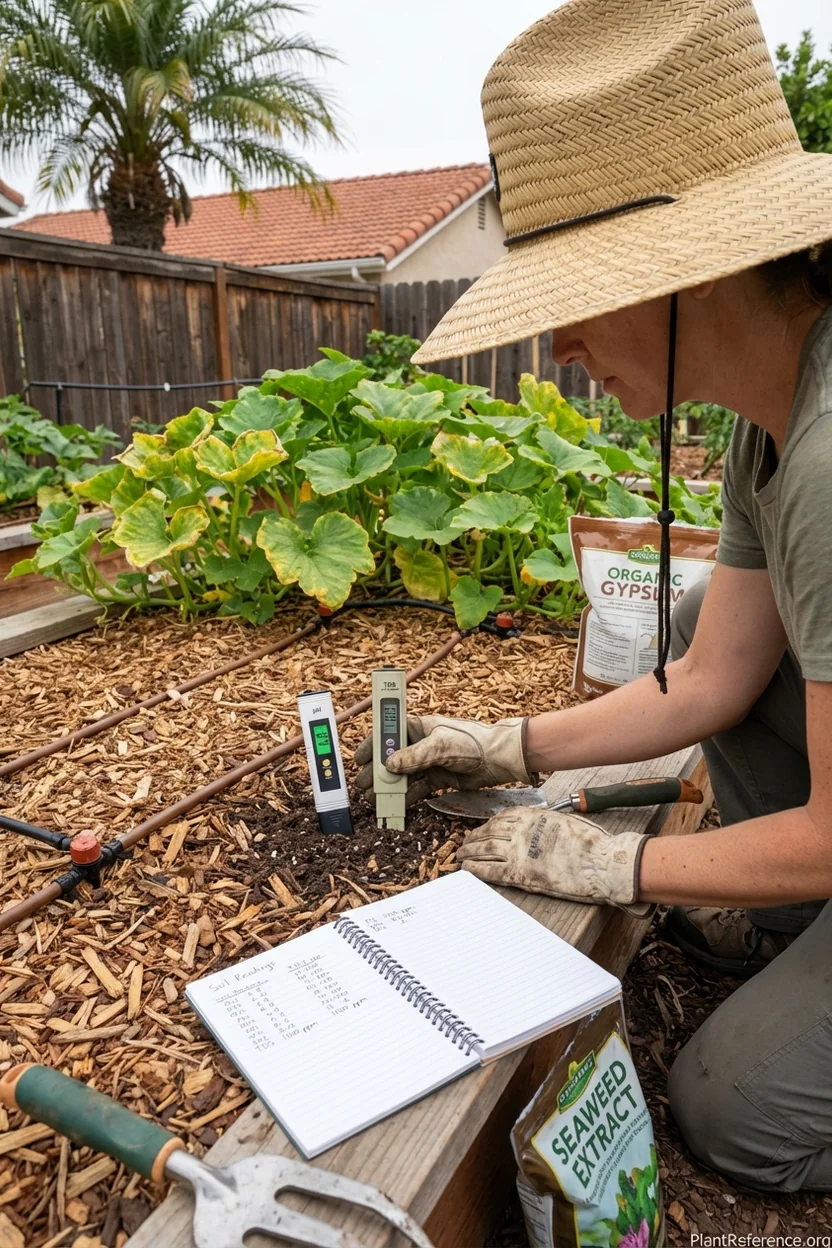
Salt management strategies: Test irrigation water annually for total dissolved solids (TDS). Levels above 1,000 ppm require management strategies. Install a simple TDS meter to monitor water quality.
Flush containers monthly with excess water to leach accumulated salts below the root zone. Apply water until it runs freely from drainage holes, then apply an equal amount to push salts downward.
Add gypsum (calcium sulfate) to garden beds at 2 lbs per 100 square feet (9 kg per 93 square meters) annually. Gypsum improves soil structure and helps flush sodium from clay soils common in inland areas.
Blossom End Rot in Container Plants
Container-grown squash in San Diego frequently develop blossom end rot, where the fruit develops dark, sunken spots at the flower end. This physiological disorder results from calcium deficiency caused by inconsistent watering rather than lack of soil calcium.
Prevention requires consistent moisture: Install drip irrigation timers to maintain steady soil moisture levels. Hand watering often results in cycles of drought and flooding that prevent calcium uptake.
Use larger containers minimum 20 gallons (76 L) for better moisture buffering. Smaller containers dry out too quickly during San Diego's warm, dry climate.
Mulch container surfaces with 2-3 inches (5-8 cm) of organic mulch to reduce evaporation and moderate soil temperature fluctuations that stress root systems.
Harvest & Storage in San Diego's Climate
San Diego's warm, dry climate creates ideal conditions for curing and storing winter squash, while the extended growing season allows for fresh summer squash harvests nearly year-round.
Summer Squash Harvest Management
Summer squash varieties produce continuously once flowering begins, requiring daily to every-other-day harvest during peak season. Consistent harvest stimulates continued flower production and prevents oversized, seedy fruits that drain plant energy.
Harvest 🌿Cucurbita pepo 'Black Beauty' zucchini at 6-8 inches (15-20 cm) length when skin is glossy and tender. Larger fruits develop tough skins and large seeds, becoming suitable only for baking applications.
🌿Cucurbita pepo 'Pattypan' varieties reach peak quality at 2-3 inches (5-8 cm) diameter. Check plants daily during warm weather, as fruits can double in size within 24-48 hours during San Diego's optimal growing conditions.
Storage recommendations for fresh summer squash: Refrigerate unwashed summer squash in perforated plastic bags for 5-7 days maximum. San Diego's low humidity causes rapid moisture loss, so use quickly for best quality.
Freeze grated zucchini in measured portions for year-round baking use. San Diego's abundant summer production makes freezing an excellent preservation method for winter months when production naturally decreases.
Winter Squash Curing and Storage
San Diego's warm, dry fall weather provides perfect conditions for curing winter squash, a critical step that enhances flavor and extends storage life.
Harvest winter squash when vines begin dying back naturally and fruit stems become hard and woody. Test ripeness by pressing fingernails against the skin—fully mature squash resists indentation.
Curing protocol for San Diego conditions: Cure 🌿Cucurbita moschata 'Butternut' and 🌿Cucurbita maxima 'Kabocha' varieties in a warm (80-85°F/27-29°C), well-ventilated area for 10-14 days. San Diego garages work well if ventilated, or use covered patios with good air circulation.
Avoid curing 🌿Cucurbita pepo 'Acorn' varieties, which deteriorate in heat. Store these immediately in cool conditions for best texture and flavor retention.
Long-term storage in San Diego: Store properly cured winter squash in cool (50-55°F/10-13°C), dry locations with good air circulation. San Diego basements or air-conditioned storage rooms work well.
Check stored squash monthly and use any showing soft spots immediately. Properly cured and stored 🌿Cucurbita moschata 'Butternut' can last 4-6 months in San Diego storage conditions.
Recommended storage timeline:
October harvest: Use through February-March
November harvest: Use through April-May
December harvest: Use through May-June
San Diego's mild winters eliminate concerns about freezing damage to stored squash, a significant advantage over cold-winter climates where storage areas may freeze.
Frequently Asked Questions
Reading about plants and recognising them are different skills. These three build the second.
- Daily PlantIdentify the day’s mystery plant from a close-up photograph.
- Keyed OutWork a dichotomous key, lead by lead, to name a hidden specimen.
- Name That PlantName a specimen from botanical clues dealt hardest first.
Free to play, no account needed
Emma runs a small succulent propagation business from her home in San Diego, shipping starter plants and cuttings across the country. She fell into succulents after college when she realized they were the only plants that survived her travel schedule—she was working as a travel nurse at the time. San Diego's mild, dry climate is ideal for outdoor succulent gardens, and Emma's front yard is a living catalog of over 200 varieties. She completed a certificate program in ornamental horticulture and writes about succulent care, propagation techniques, and drought-tolerant garden design. Her writing is calm and reassuring—she knows people feel bad about killing plants, and she wants them to stop worrying so much.