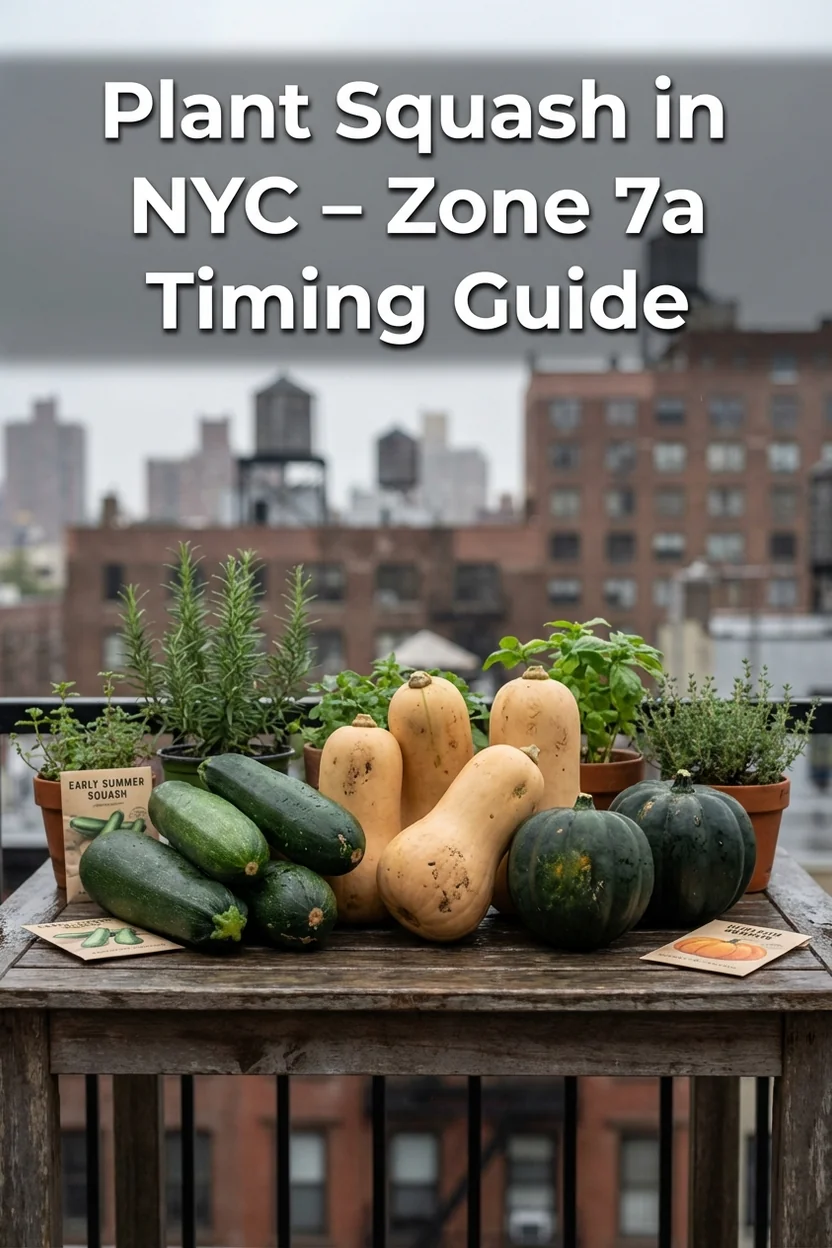
When to Plant Squash in New York: Complete Guide + Best Varieties for Zone 7a
Pets & Toxicity
Recorded toxicity for plants linked in this guide. An unknown status is not a safety assessment.
No linked plant is recorded as toxicDetailsHide
Cucurbita pepo 'Black Beauty' — Toxicity
Non-toxic as an edible cropView Cucurbita pepo 'Black Beauty' plant profileCucurbita pepo 'Yellow Crookneck' — Toxicity
Non-toxic as an edible cropView Cucurbita pepo 'Yellow Crookneck' plant profile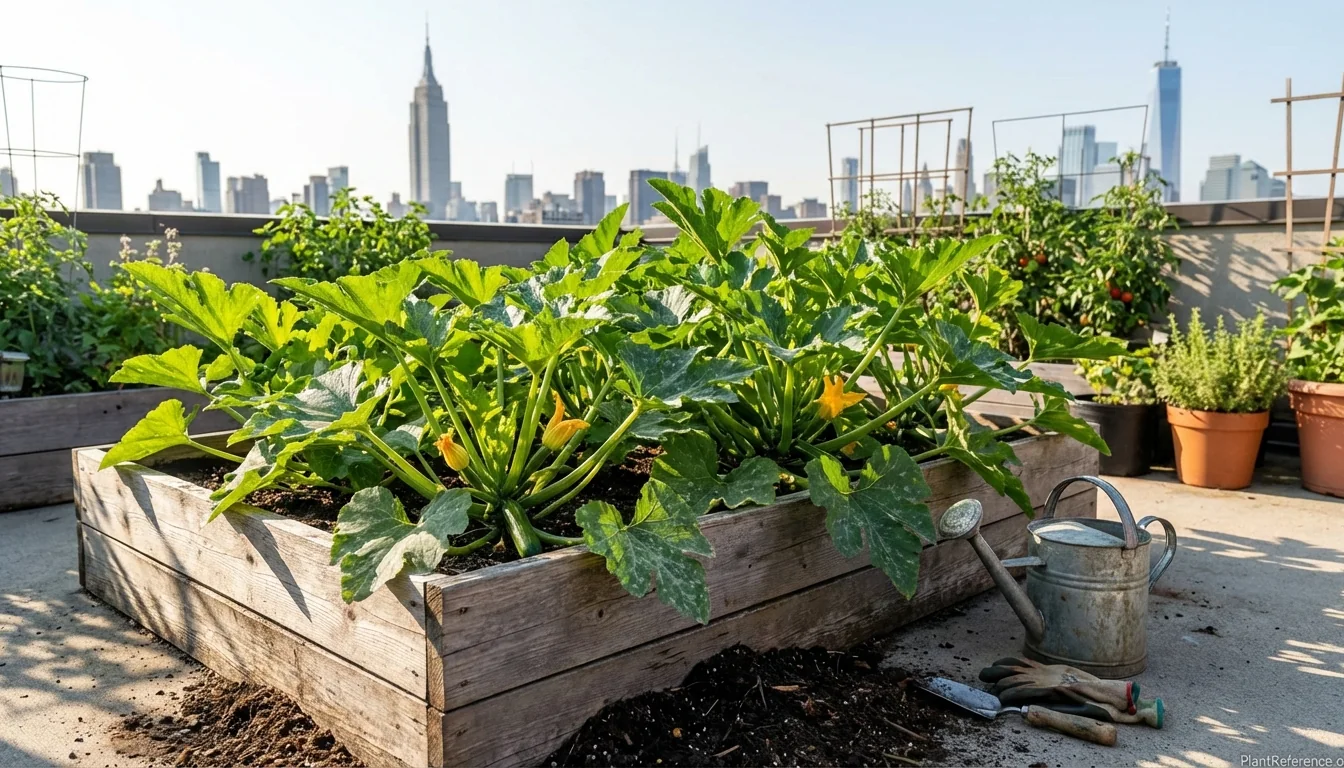
— Image © Plant Reference 2026
When to plant squash in New York depends on understanding Zone 7a's 200-day growing season and working with the city's unique urban growing conditions. I've been growing squash in small spaces for forty years, and New York gardeners have excellent conditions for both summer and winter squash varieties.
New York's Zone 7a climate provides an ideal balance for squash growing. With your last frost around April 14 and first frost October 31, you have a generous 200-day season that supports everything from quick-maturing zucchini to storage butternut squash. The key is timing your plantings correctly and choosing varieties suited to urban growing conditions.
Best Squash Varieties for New York's Zone 7a Climate
New York's 200-day growing season accommodates all major squash types, but variety selection matters for urban spaces and local growing conditions.
Variety | Days to Maturity | Best For | Notes for New York |
|---|---|---|---|
50-55 days | Quick harvest, small spaces | Perfect bush variety for containers and small urban gardens | |
55-60 days | Heat tolerance | Handles NYC summer heat better than dark zucchini varieties | |
50-60 days | Continuous harvest | Compact growth excellent for rooftop and balcony gardens | |
100-110 days | Winter storage | Use full 200-day season, excellent for urban food preservation | |
85-100 days | Fall harvest | Semi-bush habit ideal for limited space urban gardens | |
100-105 days | Edible skin | Sweet potato flavor, no peeling required, great for small kitchens | |
Cucurbita pepo 'Spaghetti' | 95-100 days | Low-carb alternative | Stores well in small NYC apartments, 2-3 months shelf life |
Cucurbita maxima 'Kabocha' | 105-110 days | Premium storage | Japanese pumpkin, excellent for New York's cooler fall weather |
Summer Squash for Urban New York Gardens
Summer squash varieties mature quickly and produce continuously throughout the season, making them perfect for New York's urban gardening conditions.
🌿Cucurbita pepo 'Black Beauty' zucchini is your most reliable choice for New York gardens. This bush variety stays compact at 3-4 feet (90-120 cm) wide, making it manageable for small spaces. In New York's Zone 7a, expect your first harvest 50-55 days after planting, typically by late June if you plant in early May.
🌿Cucurbita pepo 'Yellow Crookneck' handles New York's summer heat cycles better than darker varieties. The light-colored skin reflects heat, and this variety tolerates the temperature fluctuations common in urban heat islands. Harvest when fruits reach 4-6 inches (10-15 cm) for best flavor.
Winter Squash for New York's Long Season
New York's 200-day season supports all winter squash varieties, giving you excellent options for long-term storage and fall cooking.
🌿Cucurbita moschata 'Butternut' is the champion winter squash for New York gardens. This variety needs 100-110 days to fully mature, using your entire growing season. The reward is squash that stores 4-6 months in cool, dry conditions—perfect for NYC apartment storage through winter.
Cucurbita maxima 'Kabocha' thrives in New York's cooler fall weather. This Japanese pumpkin variety actually improves in flavor as temperatures drop in October, making it ideal for your climate. The dense, sweet flesh stores exceptionally well in urban apartments.
Specific Planting Dates for New York Gardeners
New York's Zone 7a climate allows flexible timing for squash planting, but success depends on soil temperature rather than just air temperature.
Indoor Seed Starting Schedule
Start squash seeds indoors 2-3 weeks before your last frost date of April 14:
Indoor Starting Window: March 24 - March 31
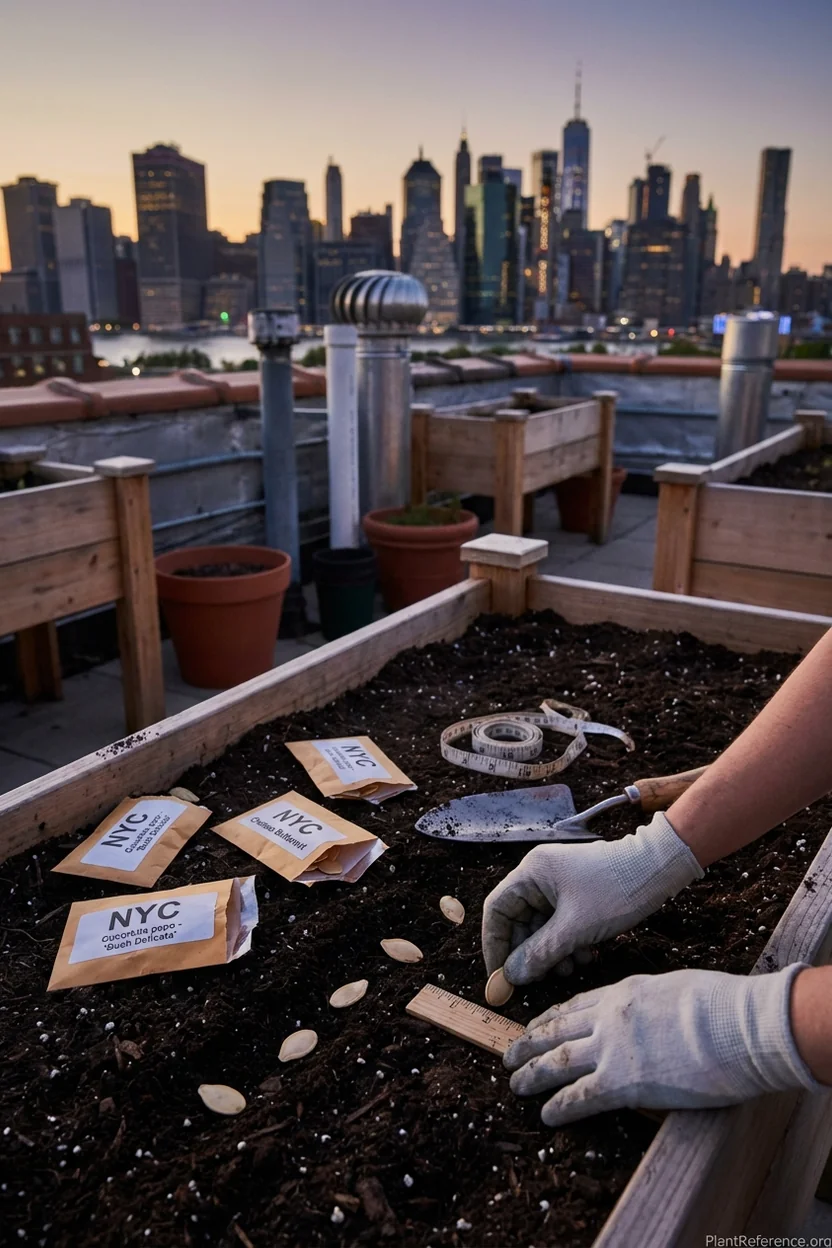
Squash seeds germinate best at soil temperatures of 70-85°F (21-29°C). Use biodegradable peat pots since squash roots are sensitive to transplant shock. Sow seeds 1 inch (2.5 cm) deep in seed starting mix.
Keep soil consistently moist but not waterlogged. Seeds typically germinate within 7-10 days under proper conditions. Grow transplants under lights or in a sunny south-facing window for 2-3 weeks before hardening off.
Direct Seeding Schedule
Direct seeding is often more successful than transplanting because squash develops strong taproots that don't like disturbance.
Direct Sowing Window: May 1 - May 15
Wait until soil temperature reaches 65°F (18°C) consistently. In New York, this typically occurs by early May. Plant seeds 1 inch (2.5 cm) deep and space according to variety:
Bush varieties: 36 inches (90 cm) apart
Semi-bush varieties: 48 inches (120 cm) apart
Vining varieties: 60 inches (150 cm) apart
Succession Planting Strategy
For continuous summer squash harvests, plant new crops every 2-3 weeks through July 1. This schedule ensures fresh production as older plants decline from pest pressure or disease.
Summer Squash Succession Schedule: - First planting: May 1-15 - Second planting: May 20-30 - Third planting: June 15-30 - Final planting: July 1-10
Complete Growing Guide for New York Conditions
Growing squash successfully in New York requires understanding urban microclimates, space limitations, and the long but variable growing season.
Soil Preparation for Urban Gardens
New York's urban soils often need improvement for successful squash production. Whether you're gardening in containers, raised beds, or small ground plots, soil quality determines your harvest.
Squash plants are heavy feeders requiring rich, well-draining soil with pH 6.0-6.8. In New York's often compacted urban soils, work 2-3 inches (5-8 cm) of compost into planting areas before seeding.
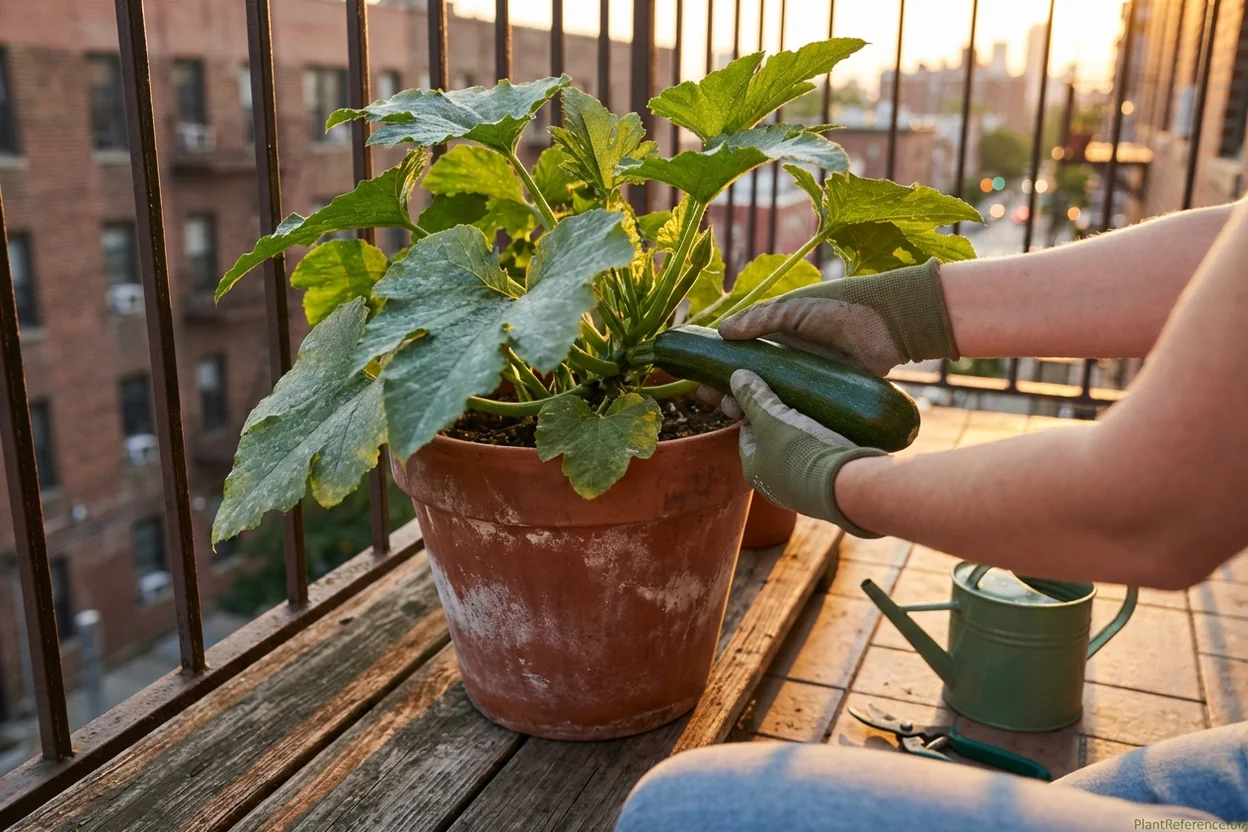
For container growing popular in NYC apartments, use large containers at least 20 gallons (76 L) for bush varieties and 30 gallons (114 L) for vining types. A quality potting mix combined with compost provides the drainage and nutrition squash demands.
Managing New York's Urban Microclimates
Urban heat islands affect squash growing in New York City. Buildings, concrete, and asphalt create temperature variations that can benefit or challenge your plants.
Heat Island Benefits: - Extended growing season (often 2-3 weeks longer than suburban areas) - Faster soil warming in spring - Reduced frost risk in fall
Heat Island Challenges: - Excessive heat stress during summer heat waves - Rapid soil drying requiring frequent watering - Reflected heat from buildings causing leaf scorch
Position plants where they receive morning sun but afternoon shade during peak summer months. East-facing locations work well for New York squash, providing 6-8 hours of sun without the intense afternoon heat.
Spacing and Support Systems
Urban New York gardens require careful space planning. One zucchini plant produces 6-10 pounds (3-5 kg) of squash per season—often more than a family can consume.
Bush Varieties (Zucchini, Pattypan): Space 36 inches (90 cm) apart in all directions. These compact plants spread 3-4 feet (90-120 cm) wide but don't require support systems.
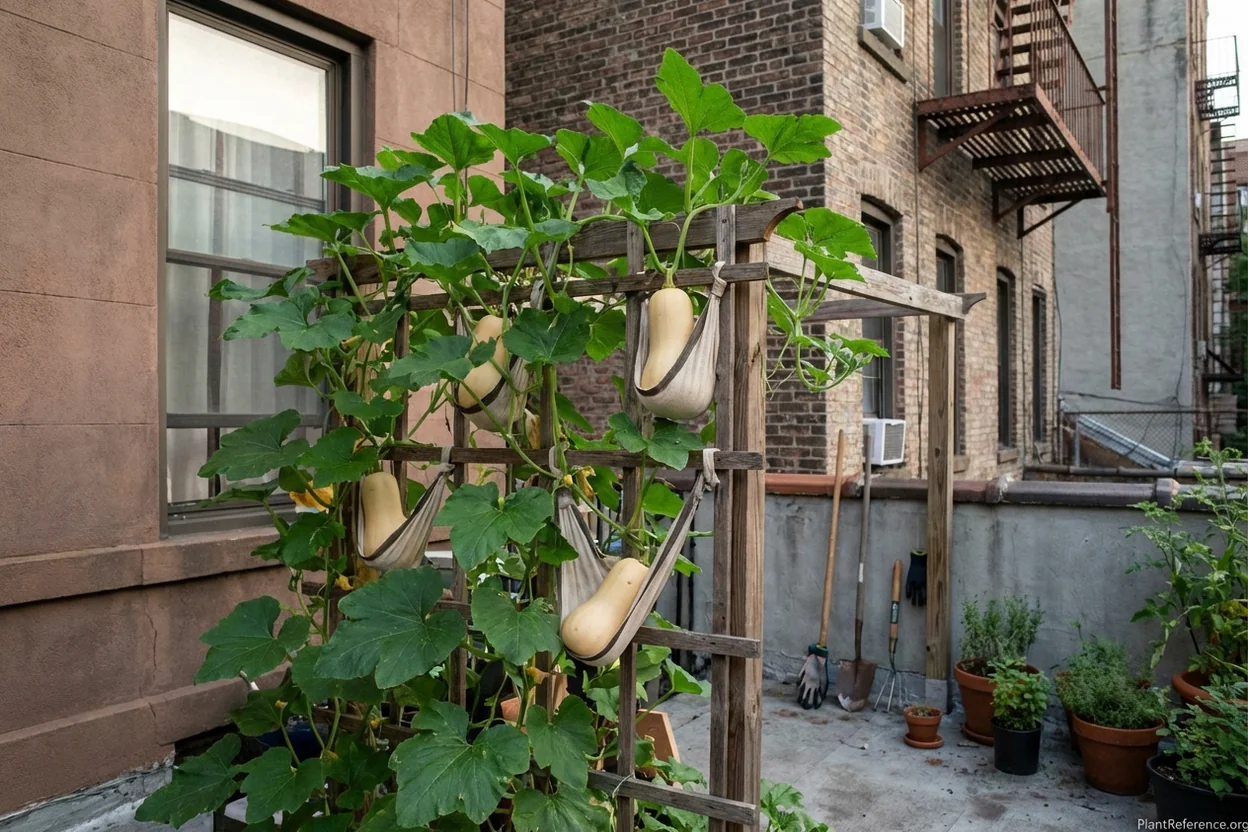
Vining Varieties (Butternut, Spaghetti): These can sprawl 8-12 feet (2.4-3.7 m) if allowed to run. In small New York gardens, train vines vertically using sturdy trellises or let them climb chain-link fences common in urban lots.
Watering and Fertilization Schedule
New York's variable summer rainfall requires flexible watering strategies. During typical summers, provide 1-2 inches (2.5-5 cm) of water weekly through deep, infrequent watering sessions.
Fertilization Timeline: - Pre-plant: Work balanced fertilizer (10-10-10) or compost into soil - 4 weeks after planting: Side-dress summer squash with nitrogen-rich fertilizer - At fruit set: Apply potassium-rich fertilizer for fruit development - Mid-season for summer squash: Continue monthly nitrogen applications - Mid-season for winter squash: STOP nitrogen to promote ripening
Container plants require more frequent fertilization since nutrients leach out with regular watering.
Troubleshooting New York-Specific Squash Problems
New York's urban environment presents unique challenges for squash growing, from pest management to disease pressure in humid conditions.
Squash Vine Borer Management
Squash vine borer is the primary pest threat for New York gardeners, particularly affecting bush varieties popular in urban spaces.
Identification: Look for sawdust-like frass around plant base and sudden wilting despite adequate moisture. Adult moths are active June through July in New York, laying eggs at stem bases.
Prevention Strategies: - Use row covers until plants begin flowering (typically 4-6 weeks after planting) - Plant 🌿Cucurbita moschata 'Butternut' varieties, which have solid stems resistant to borer damage - Wrap stem bases with aluminum foil to prevent egg laying
Treatment: If you find frass, carefully slit the stem lengthwise with a clean knife, remove the white larva, then mound soil over the wound to encourage new root development.
Urban Powdery Mildew Issues
New York's humid summers combined with reduced air circulation in urban gardens creates ideal conditions for powdery mildew.
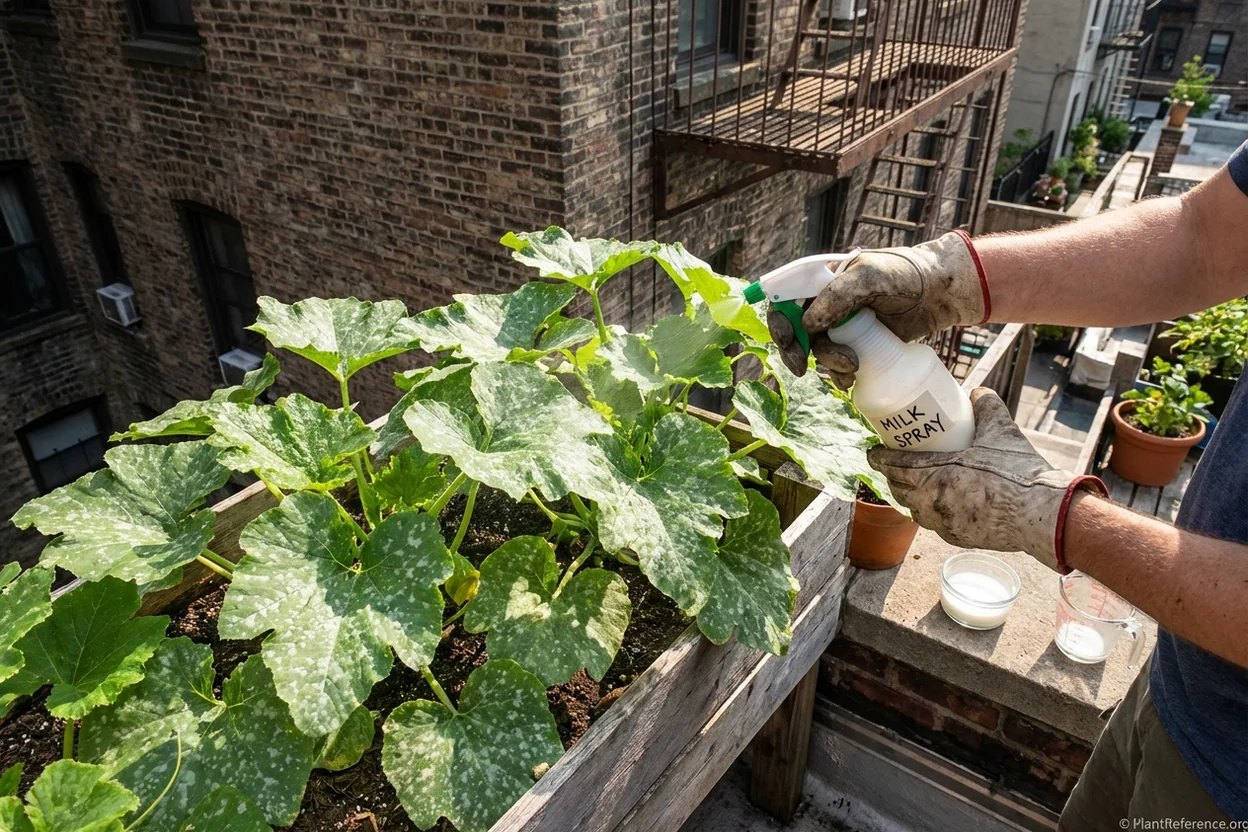
Symptoms: White powdery coating on leaves, typically starting on lower, older foliage and spreading upward. Severely affected leaves turn yellow and die.
Prevention: - Space plants properly for air circulation - Water at soil level, not on leaves - Choose resistant varieties when available - Position plants to receive morning sun for rapid leaf drying
Treatment: Spray affected plants with milk solution (1 part milk to 9 parts water) weekly. Apply early morning to allow leaves to dry before evening.
Pollination Challenges in Urban Areas
Limited pollinator populations in urban New York can result in poor fruit set, especially early in the season.
Hand Pollination Technique: 1. Identify male flowers (straight stem) and female flowers (small squash at base) 2. Remove a fresh male flower early morning (6-10 AM) 3. Strip away petals to expose pollen-laden center 4. Gently brush center against female flower's stigma 5. Repeat daily during peak flowering
This technique is particularly important for winter squash varieties that produce fewer flowers than prolific summer types.
Container Growing Challenges
Many New York gardeners grow squash in containers due to limited ground space. Container plants face unique stresses requiring adjusted care.
Container Size Requirements: - Bush summer squash: 20+ gallon (76+ L) containers - Vining winter squash: 30+ gallon (114+ L) containers - Depth: Minimum 18 inches (45 cm) for proper root development
Special Container Care: - Daily watering during hot weather - Weekly fertilization throughout growing season - Protection from wind on balconies and rooftops - Adequate drainage to prevent root rot
Harvest and Storage in New York's Climate
New York's Zone 7a climate provides excellent opportunities for both fresh summer squash harvests and long-term winter squash storage.
Summer Squash Harvest Timing
Summer squash requires frequent harvesting to maintain production. In New York's conditions, plants can produce for 8-12 weeks with proper care.
Optimal Harvest Size:
Zucchini: 6-8 inches (15-20 cm) long, diameter of silver dollar
Yellow crookneck: 4-6 inches (10-15 cm) long
Pattypan: 2-4 inches (5-10 cm) diameter
Harvest every 2-3 days during peak production (typically July-September in New York). Use a sharp knife to cut stems rather than pulling, which can damage the plant.
Winter Squash Maturity and Curing
Winter squash timing is critical in New York. Harvest too early and storage life suffers; too late and frost damage occurs.
Maturity Indicators:
Stem becomes dry and corky
Skin hardens and cannot be dented with fingernail
Color deepens to variety-specific mature shade
Ground spot (where fruit touches soil) turns cream or orange
New York Harvest Timing: Plan to harvest winter squash by October 15-25, allowing time before first frost around October 31.
Curing Process for Storage: Cure most winter squash varieties in warm conditions (80-85°F/27-29°C) for 10-14 days. In New York apartments, place squash near heating vents or in sunny south-facing windows during early October.
Storage Locations: After curing, store winter squash in cool (50-55°F/10-13°C), dry locations. New York apartments often provide ideal storage in unheated closets, under beds, or in cool basement areas.
Frequently Asked Questions
Reading about plants and recognising them are different skills. These three build the second.
- Daily PlantIdentify the day’s mystery plant from a close-up photograph.
- Keyed OutWork a dichotomous key, lead by lead, to name a hidden specimen.
- Name That PlantName a specimen from botanical clues dealt hardest first.
Free to play, no account needed
Frank retired from the city parks department after 28 years, the last fifteen as a grounds supervisor overseeing park plantings and maintenance crews. He now spends his time volunteering at a local historic garden, maintaining his own half-acre property in the Roxborough neighborhood, and writing about landscape maintenance, seasonal timing, and the practical side of keeping plants healthy through Mid-Atlantic winters and humid summers. Frank knows what works at scale and what's a waste of time—he's planted thousands of trees and shrubs and watched plenty of them fail. His advice tends toward what's proven and durable rather than what's trendy.