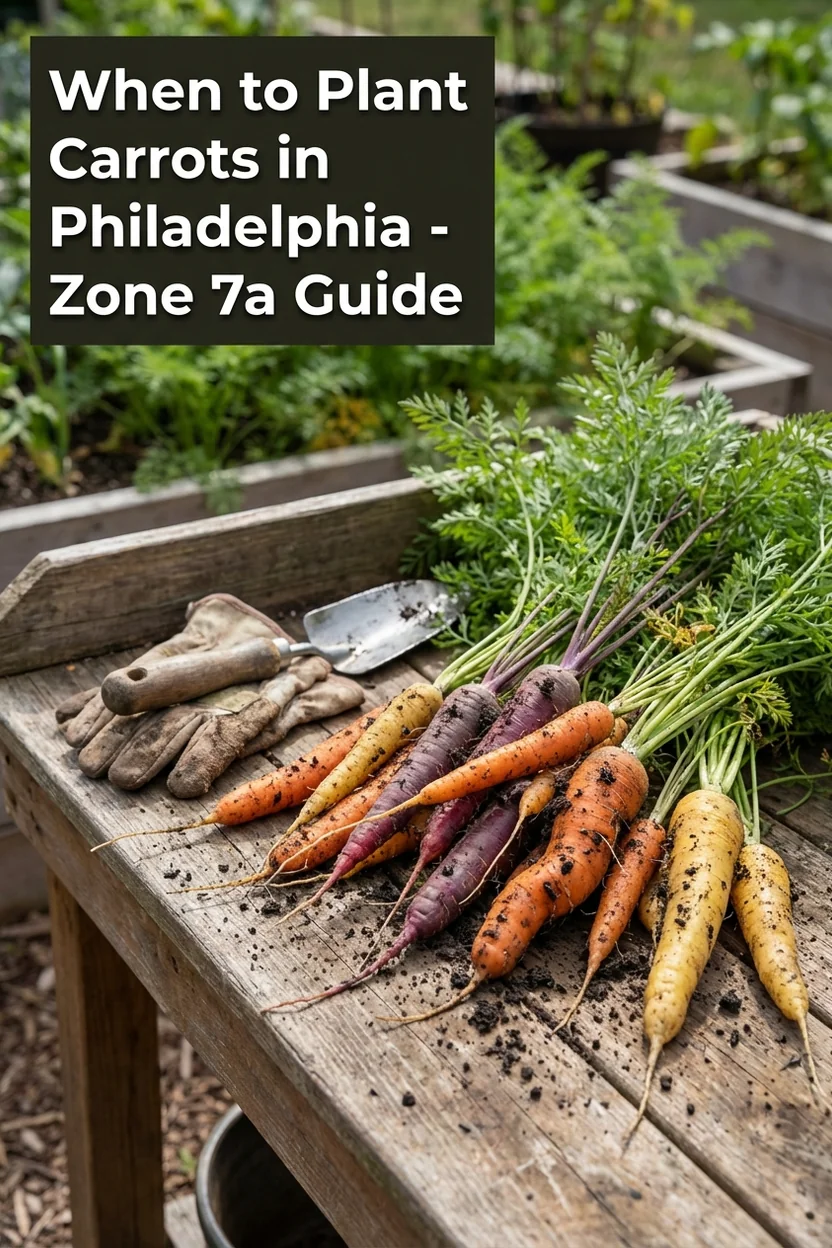
When to Plant Carrots in Philadelphia: Zone 7a Dates + Best Varieties
Pets & Toxicity
Recorded toxicity for plants linked in this guide. An unknown status is not a safety assessment.
No linked plant is recorded as toxicDetailsHide
Daucus carota ssp. sativus 'Nantes' — Toxicity
Non-toxicView Daucus carota ssp. sativus 'Nantes' plant profileDaucus carota ssp. sativus 'Chantenay' — Toxicity
Non-toxicView Daucus carota ssp. sativus 'Chantenay' plant profileDaucus carota ssp. sativus 'Imperator' — Toxicity
Non-toxicView Daucus carota ssp. sativus 'Imperator' plant profileDaucus carota ssp. sativus 'Rainbow' — Toxicity
Non-toxicView Daucus carota ssp. sativus 'Rainbow' plant profileDaucus carota ssp. sativus 'Danvers 126' — Toxicity
Non-toxicView Daucus carota ssp. sativus 'Danvers 126' plant profile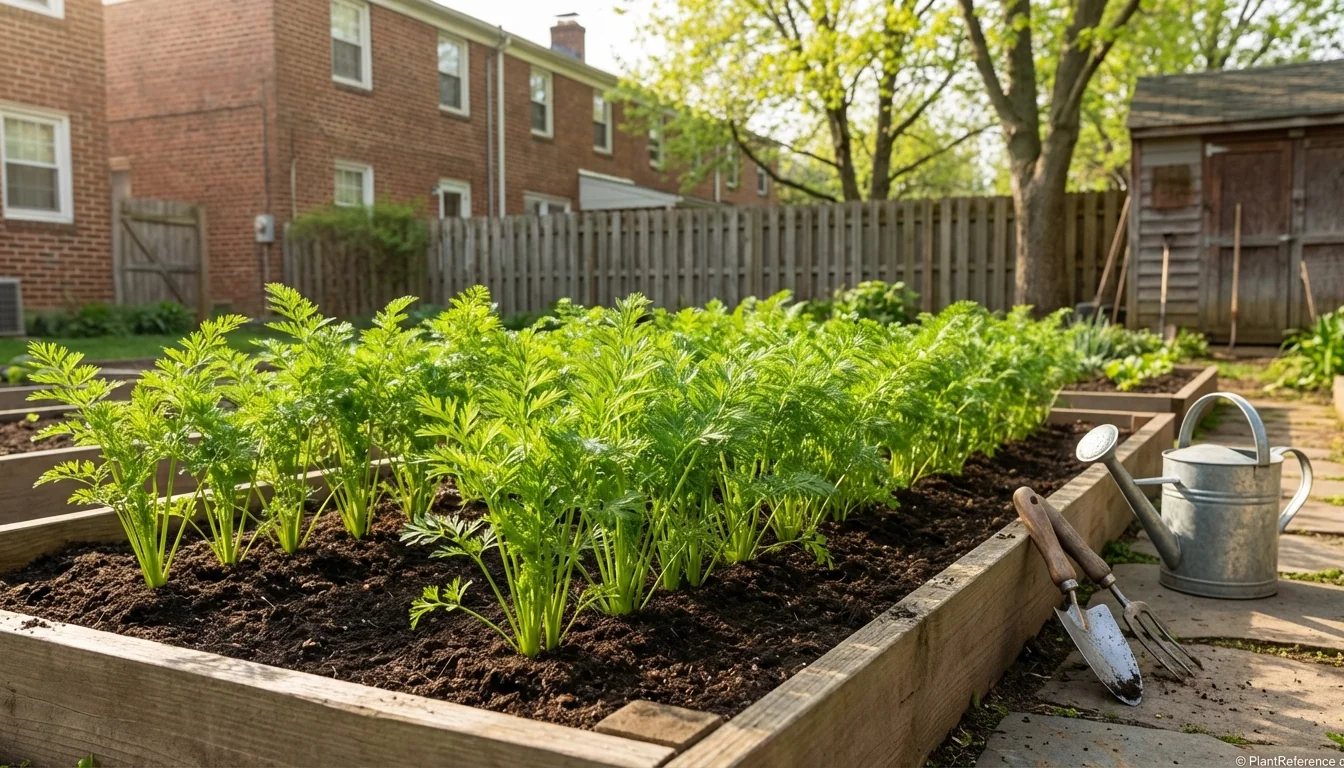
— Image © Plant Reference 2026
Growing carrots in Philadelphia means working with a Zone 7a climate that offers two distinct planting windows and a 209-day frost-free season. The Mid-Atlantic's mix of clay-heavy soils, humid summers, and mild winters creates real opportunity for carrot growers who plan their timing right. I've grown carrots in this region for decades, and the fall crop—sweetened by cold soil temperatures—consistently outperforms anything harvested in June.
Best Carrot Varieties for Philadelphia's Zone 7a Climate
Picking the right variety in Philadelphia starts with understanding your soil. Most of the region sits on heavy clay-loam that's been compacted by a century of development. That rules out the long, slender types unless you're growing in raised beds with imported soil. Match the root shape to your ground conditions, and you'll save yourself a lot of frustration at harvest.
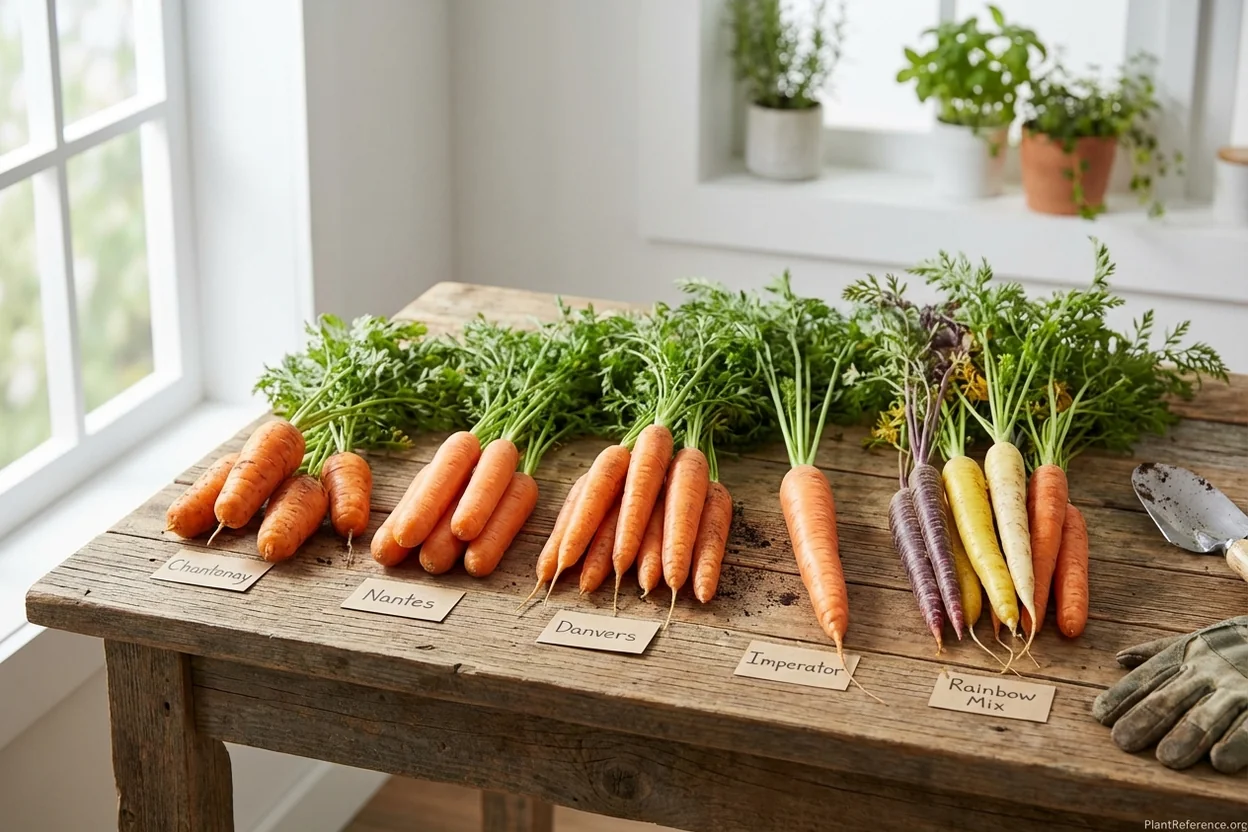
🌿Daucus carota ssp. sativus 'Nantes' (DAW-kus kah-ROH-tah) varieties fall into distinct groups, each bred for specific soil types and uses. For Philadelphia's typical clay-loam, the Danvers and Chantenay types perform best in native ground, while Nantes and Imperator types shine in raised beds and amended soil.
🌿Daucus carota ssp. sativus 'Danvers 126' is the workhorse for Philadelphia gardens. Bred in Massachusetts specifically for heavier soils, its wedge-shaped root forces through clay-loam that would deform other varieties. It matures in 70-80 days, stores well through winter, and handles the variable conditions of Mid-Atlantic growing. If you only plant one carrot, this is the one.
🌿Daucus carota ssp. sativus 'Nantes' delivers the best eating quality—crisp, sweet, and almost coreless. The cylindrical root with its blunt tip requires loose, friable soil, so plan on raised beds or deeply amended ground. At 65-75 days to maturity, it fits well in both spring and fall windows. Daucus carota ssp. sativus 'Bolero' is a Nantes type with added disease resistance, making it my top pick for the fall planting slot where blight pressure from diseases like Alternaria can build. When to Plant Carrots in Boston: Complete Guide + Best Varieties for Zone 6b
🌿Daucus carota ssp. sativus 'Chantenay' grows just 4-5 inches (10-13 cm) long but 2-3 inches (5-8 cm) wide at the shoulder. This stubby shape makes it the best option for shallow, rocky, or heavy clay soils where longer roots fork and twist. Daucus carota ssp. sativus 'Red Core Chantenay' is the standard strain, and it's very sweet when harvested at proper size.
🌿Daucus carota ssp. sativus 'Imperator' is the classic supermarket carrot—long, tapered, 8-11 inches (20-28 cm). It demands deep, sandy, obstruction-free soil to a depth of 12+ inches (30+ cm). In raised beds filled with a loose mix, Daucus carota ssp. sativus 'Sugarsnax 54' produces sweet, snack-worthy roots that kids actually eat.
🌿Daucus carota ssp. sativus 'Rainbow' mixes bring color variety to the garden. These blends often include purple, yellow, white, and orange roots with varying maturity times. The F1 hybrids offer simultaneous harvest, while seed mixes require staggered picking.
Variety | Days to Maturity | Best For | Notes for Philadelphia |
|---|---|---|---|
70-80 days | Storage, heavy soil | Top pick for native Philadelphia clay-loam | |
65-75 days | Fresh eating | Requires raised bed or deeply amended soil | |
65-75 days | Shallow/clay soil | Best for unimproved Philadelphia ground | |
75-85 days | Deep raised beds | Needs 12+ inches loose soil for full length | |
70-75 days | Specialty/variety | Fun mix; maturity varies by color in blends |
Specific Planting Dates for Philadelphia
Philadelphia's April 10 average last frost and November 5 first frost create a 209-day window—one of the longer growing seasons in the Northeast. Carrots are cool-season crops that grow best between 60°F and 70°F (16-21°C), so the real planting strategy here is to avoid the hot middle of summer entirely. That means two distinct crops: spring and fall.
Spring Planting
Start direct sowing as early as late February if the ground is workable and soil temperature reads at least 40°F (4°C). The ideal spring window runs from February 20 through March 31. Seeds germinate slowly in cool soil—expect 14-21 days—but the cooler temperatures produce sweeter roots with better texture.
Fall/Winter Planting
The fall crop is where Philadelphia really has an advantage. Sow from September 1 through September 20. Seeds germinate faster in warm September soil, then the roots bulk up during the cooling days of October and November. Once temperatures drop below 40°F, the roots convert stored starch into sugars, producing carrots that taste noticeably sweeter than anything from the spring harvest.
Spring direct sow: February 20 – March 31
Spring harvest: May 25 – June 30
Fall direct sow: September 1 – September 20
Fall harvest: December 1 – February 28
Last frost date: April 10
First frost date: November 5
Growing season: 209 frost-free days
Succession Sowing
For continuous spring harvest, sow a new row every two weeks from late February through the end of March. This gives you staggered maturity rather than a single overwhelming flush. Skip April and May plantings entirely—those roots will mature during the hottest part of summer, producing tough, bitter carrots. Resume sowing in September for the fall crop.
Complete Growing Guide for Philadelphia
Site Selection and Soil Preparation
Carrots demand loose, well-drained soil free of rocks and debris down to at least 8-12 inches (20-30 cm). In Philadelphia, most backyard soil is clay-loam with embedded construction rubble from decades of development. If you're planting in native ground, 🌿Daucus carota ssp. sativus 'Danvers 126' or 🌿Daucus carota ssp. sativus 'Chantenay' handle that challenge best. For Nantes or Imperator types, Best Soil Mix for Raised Beds: Creating the Perfect Growing Medium Raised beds with a loose growing mix are the practical path forward.
Till or fork the soil when it's dry enough to crumble in your hand—never when it's wet. Working wet clay destroys soil structure and creates hardpan that stops root growth cold. Incorporate 2-3 inches (5-8 cm) of fully composted organic matter into the top 12 inches (30 cm). Do not use fresh manure. Excess nitrogen from uncomposted material causes hairy, forked roots with poor storage quality.
The ideal soil pH for carrots is 6.0-6.8. Philadelphia soils tend to run slightly acidic, so a soil test before planting is worth the effort. Raised Bed Soil pH Problems: Testing, Adjusting, and Maintaining Balance Apply garden lime if pH falls below 6.0.
Sowing Technique
Carrot seeds are tiny and need consistent moisture for 14-21 days to germinate. Sow seeds 1/4 inch (6 mm) deep in rows spaced 12 inches (30 cm) apart. Instead of covering with garden soil (which crusts over in Philadelphia's clay), top the furrow with 1/4 inch (6 mm) of sand, vermiculite, or finished compost. These materials drain freely and won't form a seal that blocks emerging seedlings.
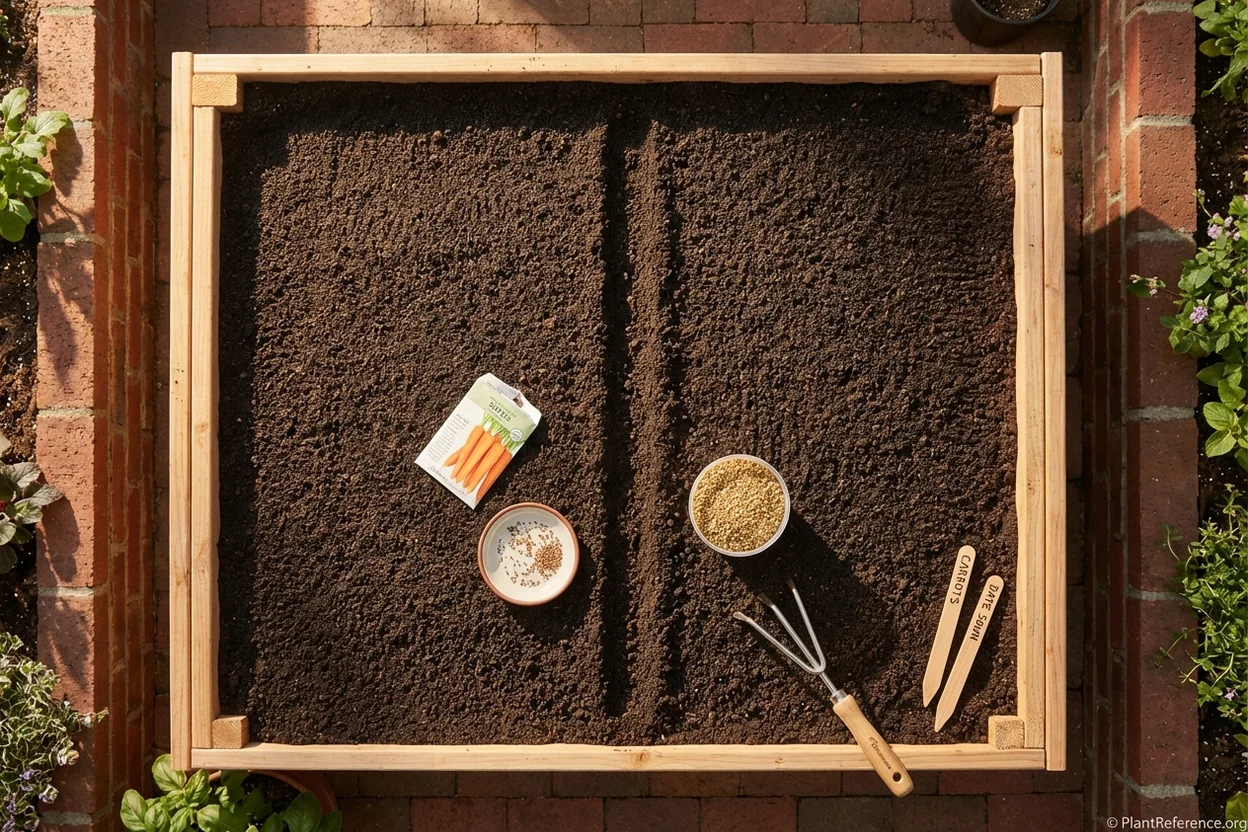
To keep moisture consistent during germination, lay a piece of burlap or a thin board over the seeded row. Check daily starting at day 5—remove the cover the moment you see white seedling loops pushing through the soil. Leaving the board too long produces weak, stretched seedlings that die in sunlight.
Thinning
Thin in two passes. When seedlings reach 1-2 inches (2.5-5 cm) tall, snip extras at the soil line with scissors to 1 inch (2.5 cm) spacing. Don't pull them—yanking disturbs the taproots of the keepers. At 4-5 inches (10-13 cm) tall, thin to final spacing:
🌿Daucus carota ssp. sativus 'Nantes' and 🌿Daucus carota ssp. sativus 'Danvers 126': 2-3 inches (5-8 cm) apart
🌿Daucus carota ssp. sativus 'Imperator': 3-4 inches (8-10 cm) apart
🌿Daucus carota ssp. sativus 'Chantenay': 2 inches (5 cm) apart
The second-pass thinnings are true baby carrots—tender, sweet, and worth eating with the greens still on. Raised Bed Vegetable Garden Layout: Planning for Maximum Production
Watering
Carrots need 1 inch (2.5 cm) of water per week, increasing to 2 inches (5 cm) as roots size up. Consistency matters more than volume. A dry spell followed by heavy rain causes the roots to split longitudinally as cells expand too fast. 5 Best Drip Irrigation Kits for Raised Beds (Tested for Easy Installation) Drip irrigation or soaker hoses deliver water at the soil level without wetting foliage, which helps prevent fungal diseases in Philadelphia's humid conditions.
Mulching and Weed Control
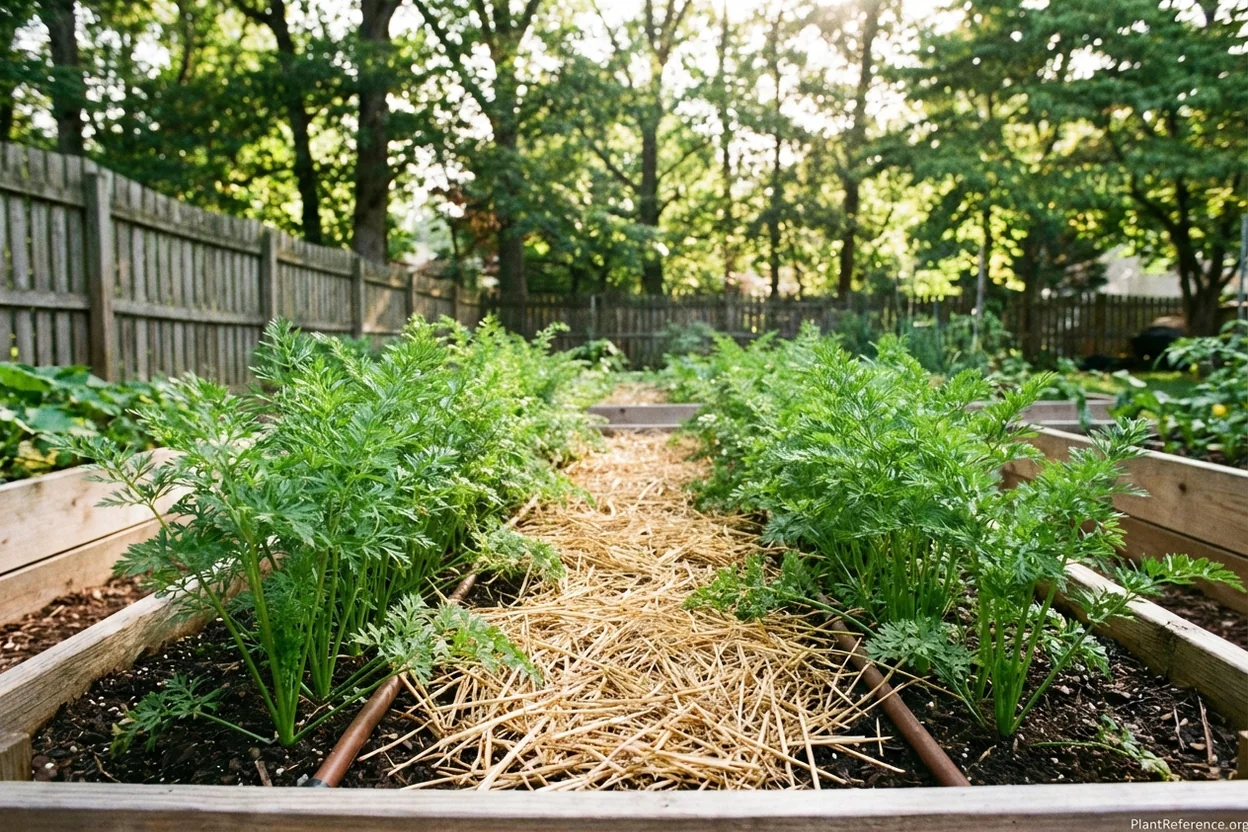
After thinning, mulch between rows with 2-3 inches (5-8 cm) of straw or shredded leaves. This suppresses weeds, holds moisture, and keeps soil temperature stable. Raised Bed Weeds: Prevention Strategies and Control Methods The first 4-6 weeks are critical—carrot seedlings grow slowly and get smothered by weeds fast. Hand-weed close to the row, keeping cultivation shallow (under 1 inch / 2.5 cm deep) to avoid cutting feeder roots.
Fertilizing
Carrots are light feeders that perform poorly with too much nitrogen. If you followed a heavy-feeding crop like tomatoes or brassicas, the residual fertility in the soil is often enough. Otherwise, work in a balanced organic fertilizer (5-5-5 or similar) at planting time. Side-dress with a potassium-rich amendment like greensand or wood ash when tops reach 6 inches (15 cm) tall. Potassium drives sugar production in the root and helps the taproot push through soil.
Troubleshooting Philadelphia-Specific Problems
Aster Yellows
This phytoplasma disease, carried by aster leafhoppers that migrate north from the Gulf Coast each spring, causes yellowing leaves, bushy top growth, and hairy, bitter roots. Once a plant is infected, there's no cure—pull and destroy it. Raised Bed Pest Problems: Identification and Organic Control Methods Row covers installed at planting are the most reliable prevention. Keep the bed and surrounding area free of plantain and wild carrot weeds, which serve as pathogen reservoirs.
Carrot Rust Fly
Not as severe in Philadelphia as in northern zones, but present. The adult fly is attracted to the scent of bruised carrot foliage, so handle plants gently during thinning. Larvae bore into roots and leave rust-colored tunnels. Floating row covers sealed at the edges with soil are the best organic defense. If you notice damage at harvest, rotate next year's carrot bed at least 200 feet (60 m) from this year's location.
Heavy Clay Soil Issues
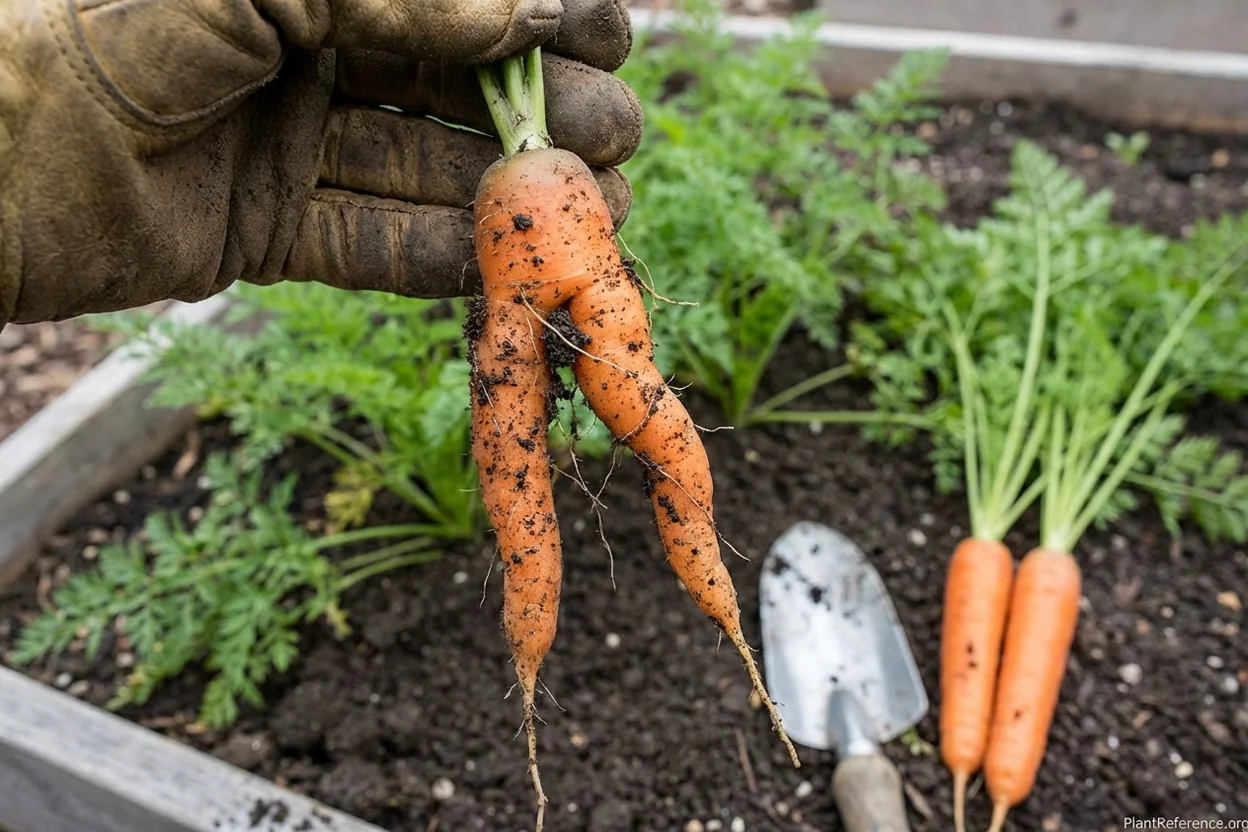
Forking is the number one complaint from Philadelphia gardeners growing carrots in native soil. The root tip hits a compacted layer or stone and splits. Prevention means either deep soil preparation—double digging or broadforking to 12-15 inches (30-38 cm)—or choosing varieties bred for heavy soil. 🌿Daucus carota ssp. sativus 'Chantenay' and 🌿Daucus carota ssp. sativus 'Danvers 126' both handle Philadelphia's clay-loam without the elaborate bed prep that Nantes and Imperator types require.
Green shoulders—where the top of the root turns green from sun exposure—are common in beds that settle over the season. Hill soil over the crowns as roots size up, or add a layer of mulch to block light.
Splitting
Longitudinal cracks appear when dry soil gets a sudden heavy watering or rainstorm. Philadelphia's summer thunderstorms cause this frequently in July plantings—another reason to skip summer sowing entirely. Consistent moisture through drip irrigation and heavy mulch are your best defenses. Raised Bed Irrigation Systems: Watering Solutions for Consistent Growth
Harvest & Storage
When to Harvest
Check root diameter at the soil line. 🌿Daucus carota ssp. sativus 'Nantes' is ready when shoulders are 1-1.5 inches (2.5-4 cm) across. 🌿Daucus carota ssp. sativus 'Chantenay' should come out before exceeding 2 inches (5 cm) in diameter—left too long, the center turns woody and coarse. 🌿Daucus carota ssp. sativus 'Danvers 126' can be left to grow larger without losing quality, making it the best choice for winter storage.
Spring-planted carrots should be harvested by late June before Philadelphia's summer heat degrades quality. Fall-planted carrots can stay in the ground well into winter. Zone 7a's soil rarely freezes deeply enough to damage the crown, so a 3-4 inch (8-10 cm) layer of straw mulch over the bed lets you dig fresh carrots through December, January, and into February. Cold soil below 40°F (4°C) triggers starch-to-sugar conversion, producing noticeably sweeter roots than anything from the spring crop.
Storage
Remove foliage immediately after harvest—the leaves keep pulling moisture from the root. Don't wash carrots until you're ready to use them; residual soil actually slows microbial growth. Store in perforated plastic bags in the refrigerator at 32-38°F (0-3°C) for up to 4-5 months. Keep carrots away from apples and potatoes, which release ethylene gas that turns carrots bitter. Best Raised Bed Vegetables for Beginners: Top 10 Easy-Growing Crops
Frequently Asked Questions
Reading about plants and recognising them are different skills. These three build the second.
- Daily PlantIdentify the day’s mystery plant from a close-up photograph.
- Keyed OutWork a dichotomous key, lead by lead, to name a hidden specimen.
- Name That PlantName a specimen from botanical clues dealt hardest first.
Free to play, no account needed
Frank retired from the city parks department after 28 years, the last fifteen as a grounds supervisor overseeing park plantings and maintenance crews. He now spends his time volunteering at a local historic garden, maintaining his own half-acre property in the Roxborough neighborhood, and writing about landscape maintenance, seasonal timing, and the practical side of keeping plants healthy through Mid-Atlantic winters and humid summers. Frank knows what works at scale and what's a waste of time—he's planted thousands of trees and shrubs and watched plenty of them fail. His advice tends toward what's proven and durable rather than what's trendy.