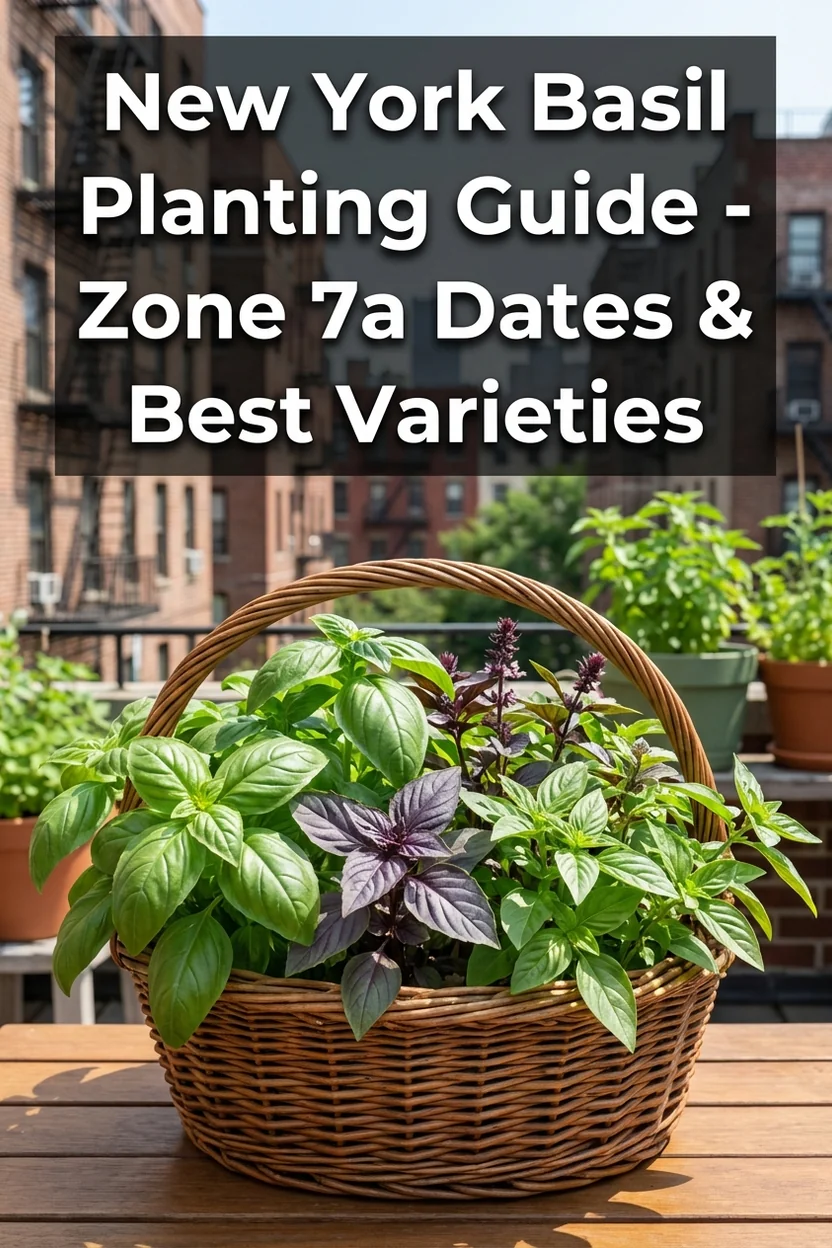
When to Plant Basil in New York: Complete Guide + Best Varieties for Zone 7a
Pets & Toxicity
Recorded toxicity for plants linked in this guide. An unknown status is not a safety assessment.
No linked plant is recorded as toxicDetailsHide
Ocimum basilicum 'Purple Ruffles' — Toxicity
Non-toxicView Ocimum basilicum 'Purple Ruffles' plant profile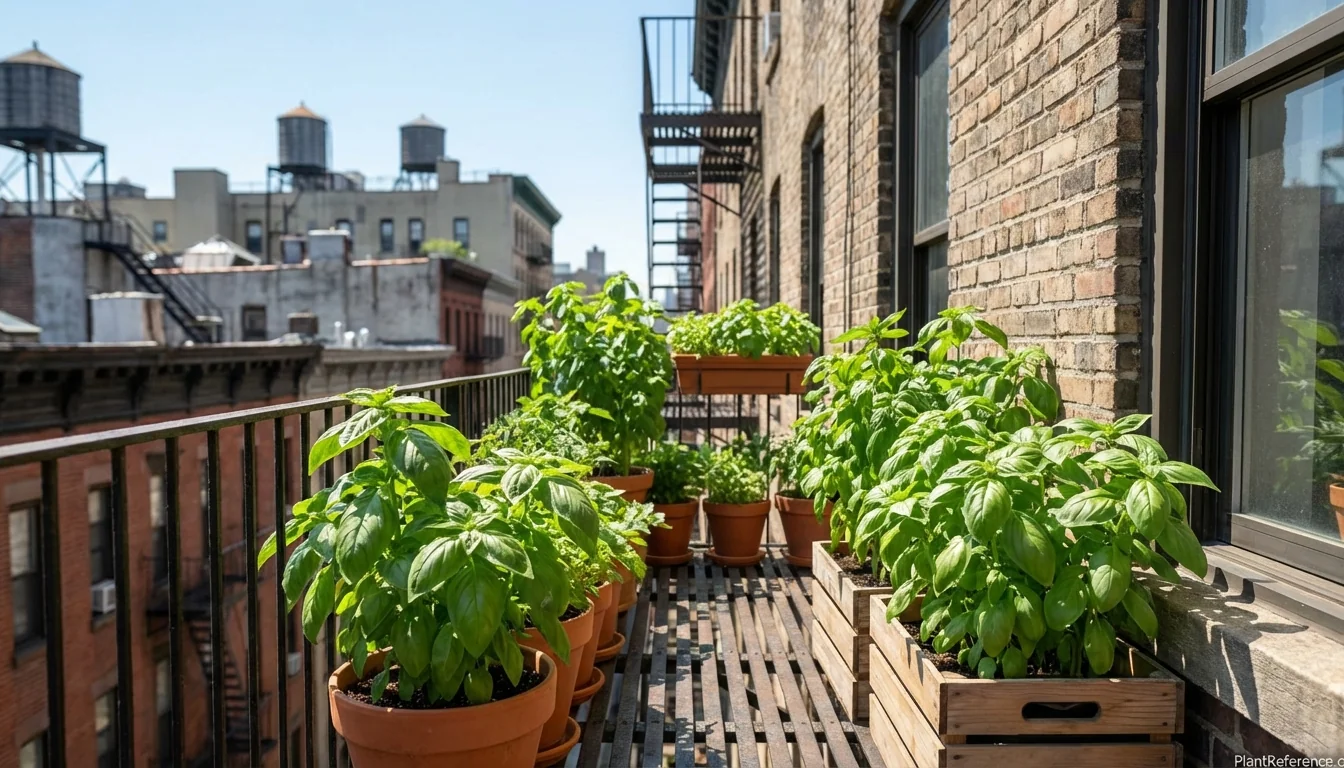
— Image © Plant Reference 2026
My grandmother grew basil on her fire escape in Bensonhurst, and her pesto was better than anything from the Italian delis on 18th Avenue. She didn't have a garden—just three terra cotta pots, a south-facing window, and fifty years of knowing exactly when Brooklyn's nights got warm enough to put basil outside. That knowledge matters more than fancy equipment. New York's 200-day growing season gives basil plenty of time, and the urban heat island effect actually works in your favor—city nighttime temperatures run 5-10°F warmer than suburban areas, which means basil thrives in exactly the conditions that make New York apartments uncomfortable in July. Whether you're growing on a fire escape, a rooftop, a community garden plot, or a backyard in Queens, basil is the most productive herb per square inch you can plant in New York City. When to Plant Tomatoes in New York: Complete Guide + Best Varieties for Zone 7a
Best Basil Varieties for New York's Climate
New York City sits in USDA Zone 7a with an April 15 last frost and November 1 first frost—200 growing days. The urban environment creates microclimates that vary block by block: south-facing walls radiate stored heat, rooftops get full sun with wind exposure, and community gardens in parks have more consistent conditions than street-level plots. Basil variety selection for New York should match your growing space and how you cook.
Variety | Type | Days to Harvest | Cold Tolerance | Best For |
|---|---|---|---|---|
Sweet | 60-70 days | Low (below 50°F damage) | Pesto, Italian cooking, NYC essential | |
Ocimum basilicum var. thyrsiflora | Thai | 60 days | Moderate | Stir-fry, pho, Thai curries |
Lemon | 55 days | Low | Teas, cocktails, fish, salads | |
Purple | 65-70 days | Low | Garnish, vinegars, farmers market appeal | |
Holy (Tulsi) | 60 days | Low-Moderate | Tea, medicinal, wellness |
🌿Ocimum basilicum 'Genovese' is New York basil. This is the variety that every Italian grandmother in Brooklyn, every pesto recipe from the food magazines, and every community garden in the five boroughs centers around. Large, cupped, deeply aromatic leaves with the sweet clove-and-anise flavor that defines real pesto. One plant produces 2-3 cups of leaves per week from June through September. In New York's compact growing spaces, that's an extraordinary return on a 12-inch pot.
Ocimum basilicum var. thyrsiflora (Thai basil) is the second essential variety for New York, where Southeast Asian cuisine is as fundamental to the food culture as Italian. The anise-licorice flavor works in stir-fries, Vietnamese pho, and Thai curries. Thai basil handles New York's July and August heat better than Genovese and bolts later, giving you a longer harvest window. It's also more resistant to Basil Downy Mildew (Peronospora belbahrii), which has become a significant problem in the humid Northeast.
🌿Ocimum × citriodorum (Lemon basil) at 55 days is the fastest to harvest—valuable for rooftop and balcony gardens where the season starts later due to wind exposure. The bright citrus notes work in the cocktails and light summer cooking that New Yorkers gravitate toward in warm weather. It bolts fast in heat, so succession plant every 3 weeks.
🌿Ocimum basilicum 'Purple Ruffles' adds drama to container plantings and makes stunning basil vinegar for gifts. Less productive than Genovese but visually striking in the mixed herb containers that work well on New York stoops and fire escapes.
🌿Ocimum tenuiflorum (Holy Basil/Tulsi) has a growing following in New York's wellness community. Strongly clove-scented leaves make excellent tea. Slightly more cold-tolerant than Genovese—useful for early spring planting in sheltered urban microclimates. When to Plant Peppers in New York: Complete Guide + Best Varieties for Zone 7a
Specific Planting Dates for New York Gardens
New York's April 15 last frost is the hard boundary, but basil needs warmer conditions than that date implies. Soil at 65°F (18°C) and nighttime air above 50°F (10°C) are the real thresholds. In Manhattan and Brooklyn's urban heat island, that's typically early to mid-May. In outer borough gardens with more open exposure, mid-May is safer.
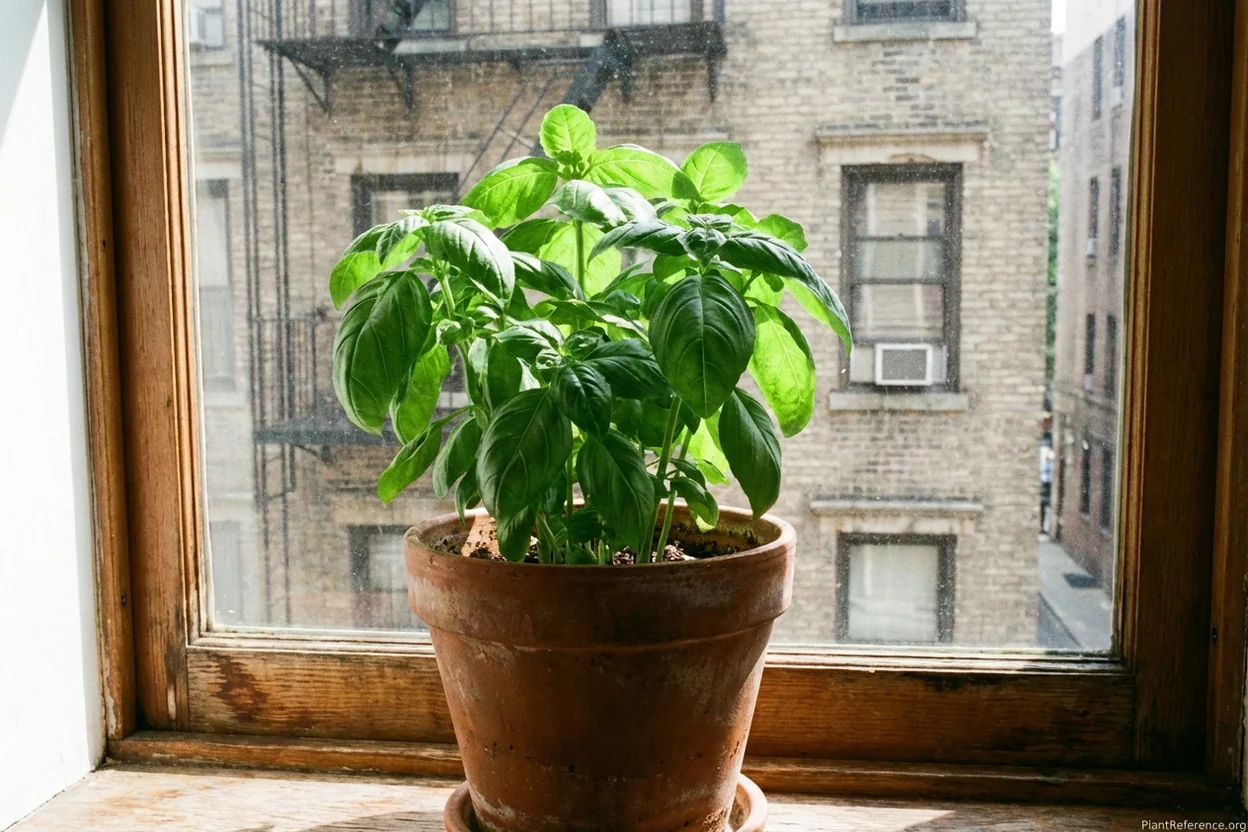
Indoor Seed Starting: March 25-April 1 (4-6 weeks before transplanting). Start at 70-75°F (21-24°C) for 5-7 day germination. Press seeds onto soil surface—basil needs light to germinate. NYC apartments are warm enough year-round; a south-facing window produces good transplants.
Transplant Outdoors: May 1-10. NYC's urban heat island means city gardens warm earlier than suburban areas. Sheltered south-facing walls, rooftops that absorb daytime heat, and enclosed courtyards can be ready by May 1. Exposed community garden plots and rooftops with wind exposure should wait until May 10.
Direct Sow: May 10-June 15. Scatter seeds on warm, prepared soil, press gently, and water. Direct sowing works well in NYC community gardens where soil warms reliably by mid-May.
Succession Plantings: Every 3 weeks from May through mid-July. New York's 200-day season supports 4-5 basil successions. 🌿Ocimum × citriodorum (Lemon basil) needs succession planting most because it bolts fastest. Fresh plantings keep production continuous through the entire growing season.
Final Sowing Deadline: July 15. A 55-day variety sown July 15 matures by early September with nearly two months of harvest before the November 1 frost—New York's long fall is a gift for herb gardeners. Raised Bed Vegetable Garden Layout: Planning for Maximum Production
Complete Growing Guide for New York
Container Growing for Urban Spaces
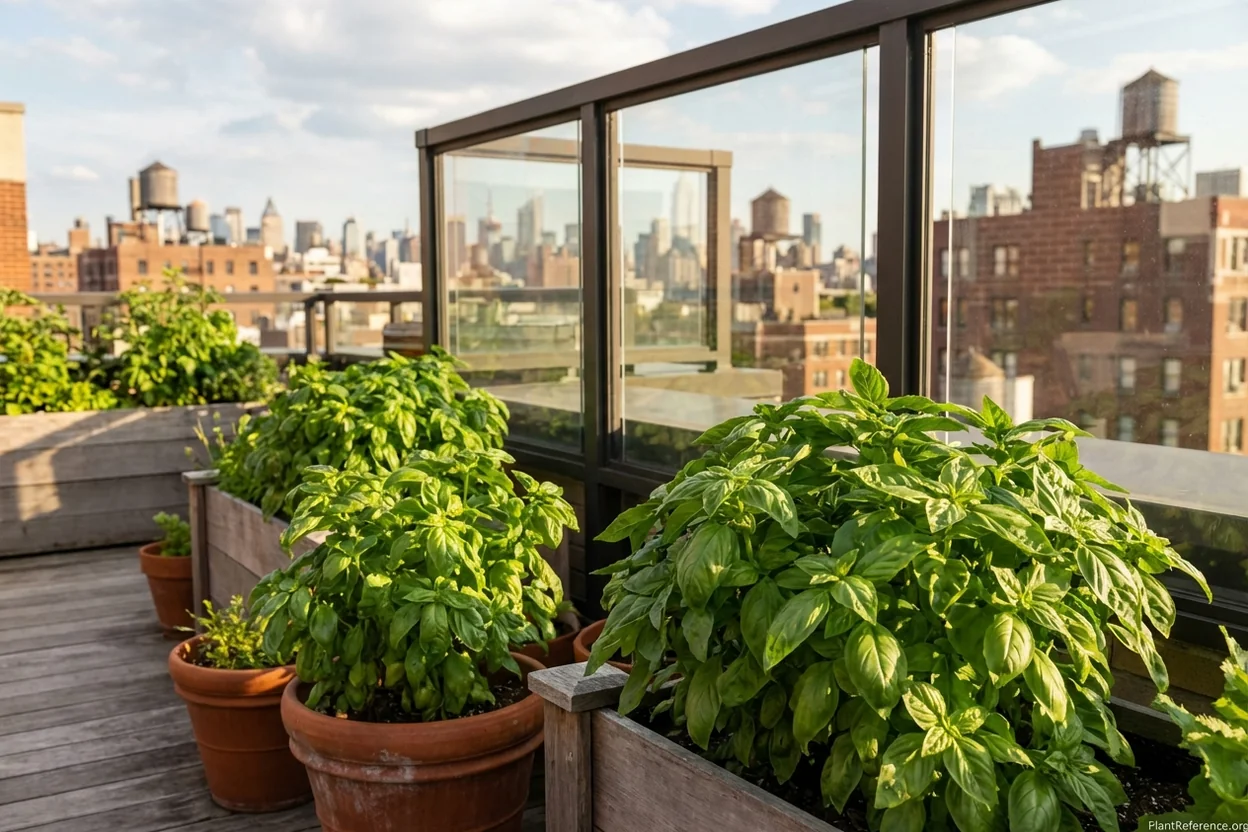
Most New York basil grows in containers—fire escapes, balconies, windowsills, rooftops, and stoops. A 12-inch (30 cm) pot supports one productive Genovese plant. A window box 24 inches (60 cm) long supports 2-3 plants. Five-gallon buckets ($3-5 from hardware stores) work perfectly for budget-conscious NYC gardeners. Use quality potting mix with good drainage—containers on fire escapes and balconies need lighter weight soil than garden beds.
For rooftop gardens, wind is the main challenge. Basil's large, tender leaves desiccate rapidly in rooftop wind. Position plants behind low walls, raised bed edges, or other taller plants that break the wind. Weight containers adequately—a toppled basil pot on a NYC rooftop is a safety hazard, not just a gardening inconvenience. How to Build a Raised Garden Bed: Step-by-Step Construction Guide
Community Garden Growing
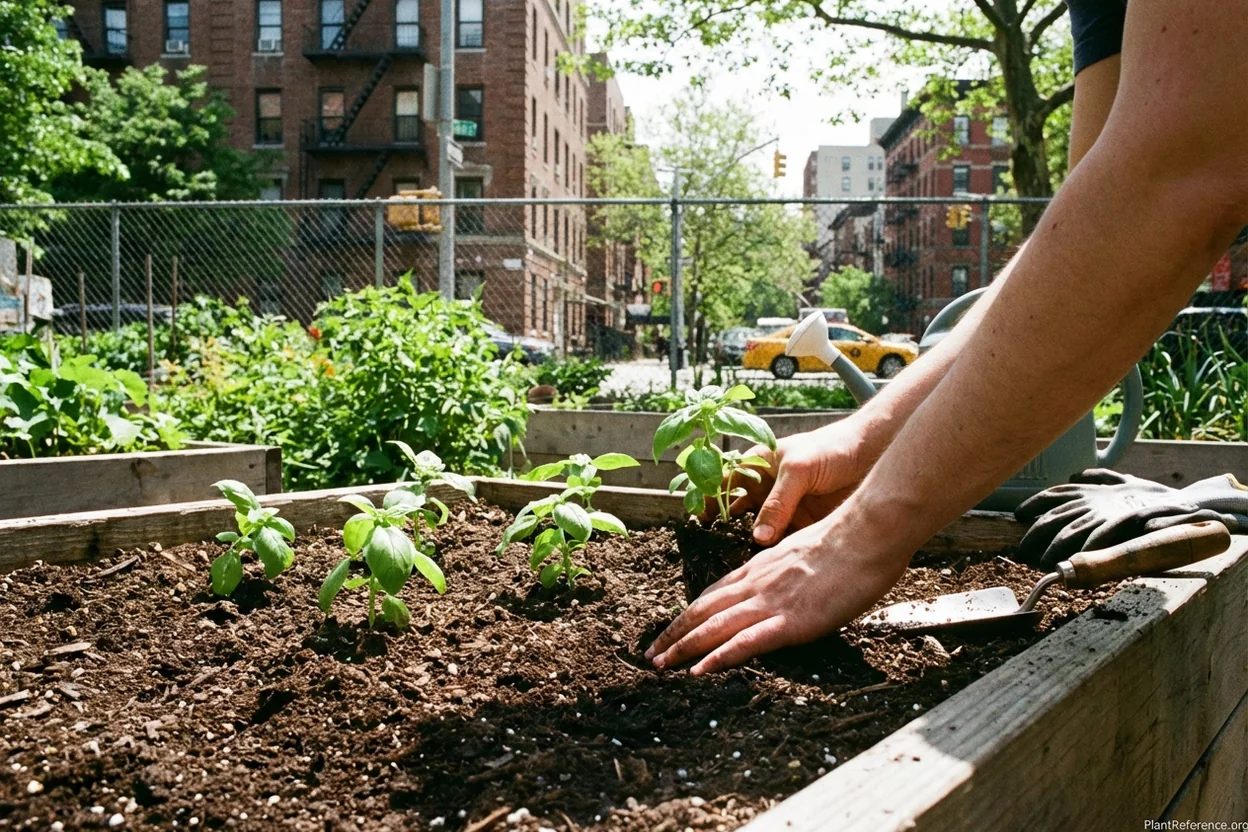
NYC community gardens offer real soil growing space that containers can't match. Basil thrives in community garden beds with well-drained soil at pH 6.0-7.0. Work 2-3 inches (5-8 cm) of compost into the top 8 inches (20 cm). Plant basil between tomatoes—it's the classic Italian garden companion pairing and both crops share similar water and sun needs. Space basil 12 inches (30 cm) apart for airflow, which helps prevent the Downy Mildew that humid New York summers promote.
Sun Requirements
Basil needs 6-8 hours of direct sun. In New York's canyon-like streets, south-facing exposure is essential. Building shadows can reduce available sun by hours depending on your floor level and surrounding structures. Rooftops get maximum sun but maximum wind. Fire escapes facing south get excellent afternoon light. North-facing exposures don't produce enough light for basil—supplement with a basic grow light if your only window faces north. 5 Best Drip Irrigation Kits for Raised Beds (Tested for Easy Installation)
Watering
Basil needs 1 inch (2.5 cm) of water weekly. Container basil in NYC's summer heat may need daily watering—check soil moisture with a finger. Urban containers on dark surfaces (fire escapes, asphalt rooftops) heat up faster than garden beds, increasing water demand. Self-watering containers or water reservoirs help maintain consistent moisture for gardeners who work long hours and can't water at consistent times.
Pinching for Continuous Production
Pinch flower buds as soon as they appear—this is non-negotiable for sustained leaf production. Once basil flowers, leaves shrink and turn bitter. Begin pinching when plants reach 3-4 sets of true leaves by cutting just above a leaf pair. This forces branching and creates the bushy growth that maximizes harvest per plant. In New York's warm July and August, check plants twice weekly. One week of missed pinching can cut production in half. When to Plant Squash in New York: Complete Guide + Best Varieties for Zone 7a
Feeding
Feed every 2-3 weeks with fish emulsion or balanced liquid fertilizer. Container basil especially needs regular feeding because nutrients wash through potting mix faster than garden soil. Avoid heavy nitrogen—it produces lush leaves with diluted flavor. The goal is steady, moderate growth that concentrates essential oils for maximum aroma and taste.
Companion Planting
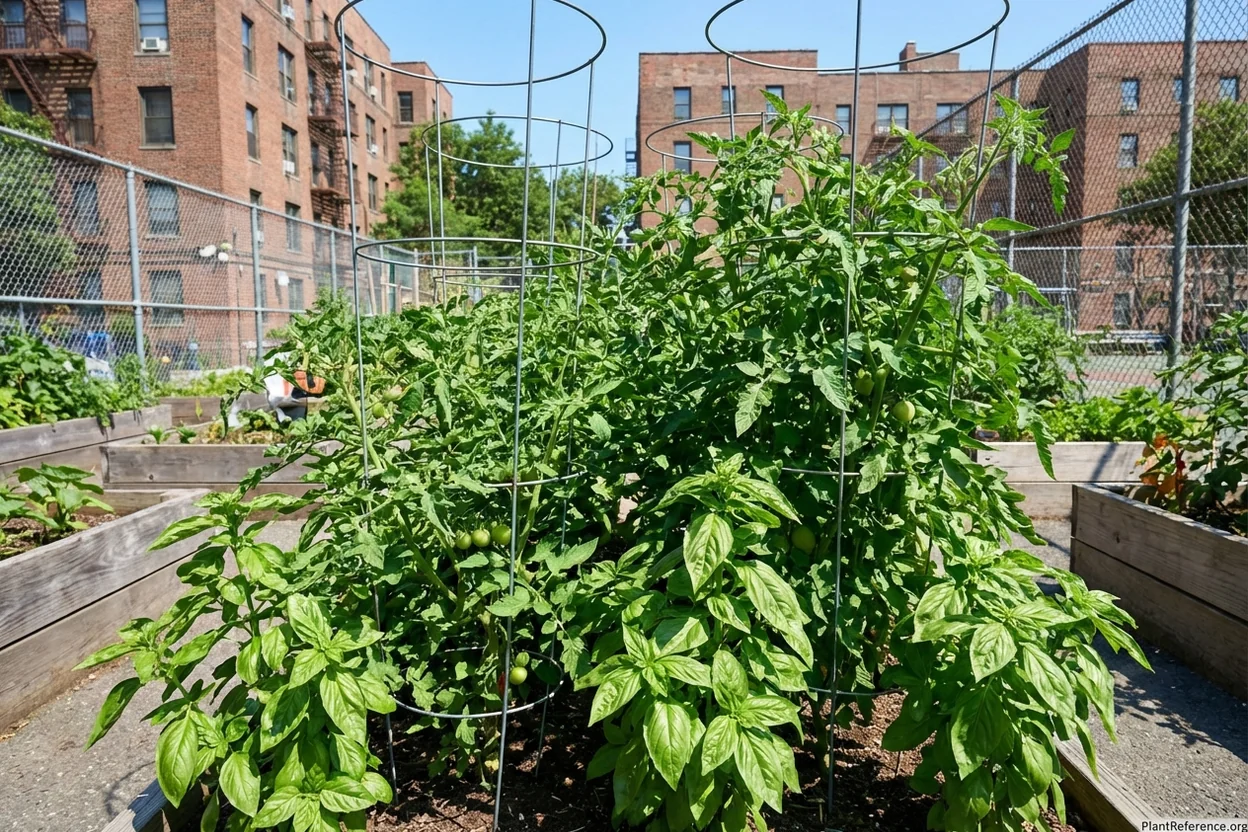
In community gardens and backyard plots, plant basil at the base of tomato cages. The aromatic oils may deter aphids and whiteflies, and the two crops share identical growing requirements. Let a few basil plants bloom late in the season to attract pollinators for neighboring squash and cucumber plants. When to Plant Cucumbers in New York: Zone 7a Dates + Best Varieties
Troubleshooting New York-Specific Problems
Basil Downy Mildew (Peronospora belbahrii)
The most significant basil disease in the humid Northeast. Yellow patches on upper leaf surfaces with gray-purple fuzzy growth underneath spread rapidly during New York's humid summer nights. The disease has been present in the NYC area since its first US detection and spore loads are high in our region. Prevention: space plants for airflow (critical in community gardens where plots are dense), water at the base only, and grow Ocimum basilicum var. thyrsiflora (Thai basil) which shows more resistance than Genovese. Remove infected leaves immediately—don't compost them. Raised Bed Pest Problems: Identification and Organic Control Methods
Cold Damage in Spring
Basil tissue blacks out below 50°F (10°C). New York's spring is unpredictable—a warm week in late April can be followed by nights in the low 40s. Container gardeners have the advantage of bringing plants inside. Community garden growers should keep row covers available through mid-May. Don't rush. A two-week delay in transplanting costs you less production than replacing cold-damaged plants. Raised Bed Too Hot in Summer: Protecting Plants from Heat Stress
Rooftop and Fire Escape Wind Damage
NYC rooftop wind shreds basil's large leaves and accelerates moisture loss. Position plants behind windbreaks—low walls, other containers, shade cloth barriers. Ocimum basilicum var. thyrsiflora (Thai basil) with its smaller, sturdier leaves handles wind better than large-leaved Genovese. Compact varieties bred for containers tolerate exposed positions better than full-sized plants.
Aphids and Whiteflies
Common on NYC basil, especially in enclosed spaces with limited air circulation. Strong water spray from a hose or spray bottle dislodges aphids. Neem oil every 7-10 days provides organic control. Yellow sticky traps monitor whitefly populations. Inspect the undersides of leaves weekly—early detection prevents infestations from establishing. Best Soil Mix for Raised Beds: Creating the Perfect Growing Medium
Harvest & Storage
Harvest by cutting stems just above a leaf pair to promote branching. Take no more than one-third of the plant at a time. During peak NYC summer (July-August), harvest twice weekly to stay ahead of flowering and maintain bushy growth. Morning harvest before 10 AM captures peak essential oil concentration.
A single 🌿Ocimum basilicum 'Genovese' plant produces 2-3 cups of packed leaves weekly during peak season. Four plants on a fire escape supply enough basil for daily cooking and regular pesto batches. New York's long growing season (through October) means you'll still be harvesting fresh basil when the Union Square farmers market switches to fall crops.
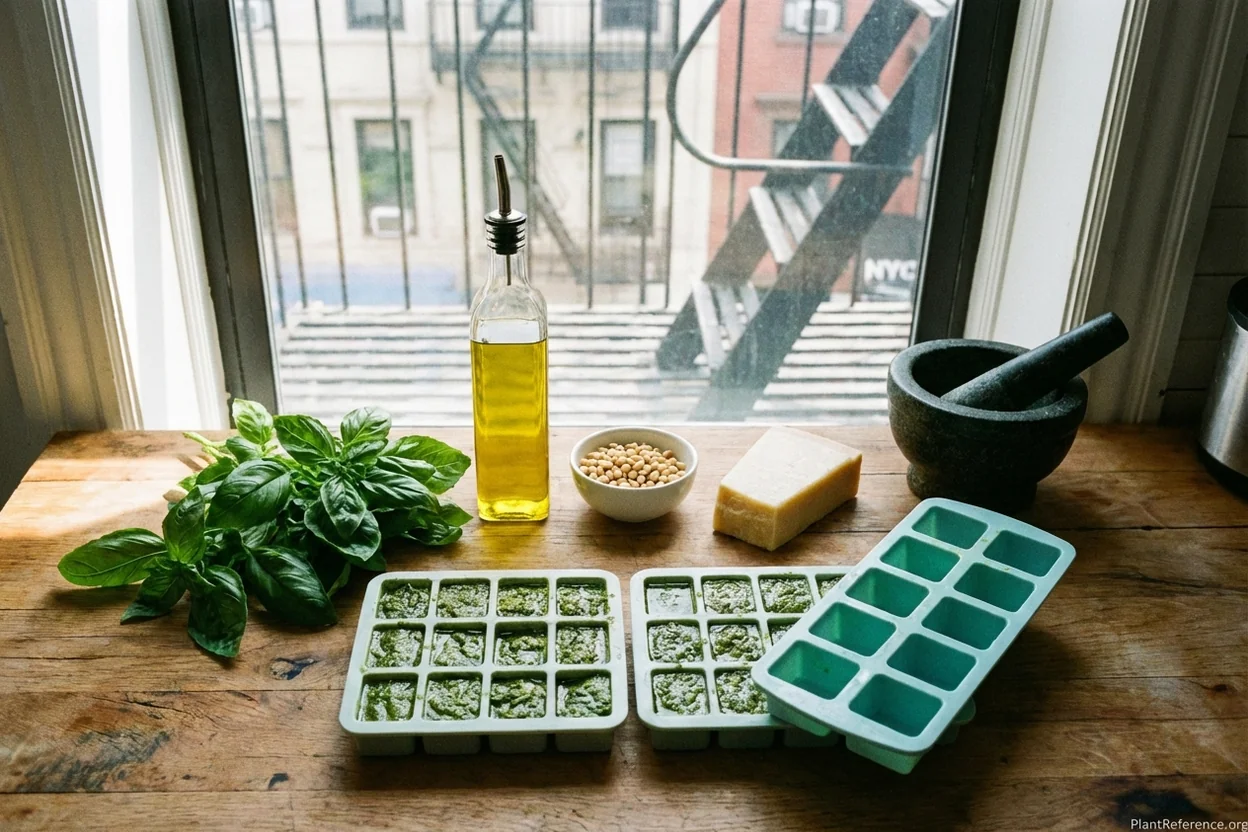
Fresh basil blackens in the refrigerator—store stems in water on the counter for 5-7 days. For winter preservation, blend leaves with olive oil and freeze in ice cube trays. Each cube equals one tablespoon of basil-oil for winter pesto, pasta sauce, and soups. Process your entire harvest before the November 1 frost. In a city where fresh herbs cost $3-4 per package, a season of frozen basil cubes represents real savings through the winter months. Dried basil loses most of its flavor—freezing is the New York method for capturing summer in a cube tray. The Complete Guide to Raised Bed Gardening for Beginners (2025)
Frequently Asked Questions
Reading about plants and recognising them are different skills. These three build the second.
- Daily PlantIdentify the day’s mystery plant from a close-up photograph.
- Keyed OutWork a dichotomous key, lead by lead, to name a hidden specimen.
- Name That PlantName a specimen from botanical clues dealt hardest first.
Free to play, no account needed
Frank retired from the city parks department after 28 years, the last fifteen as a grounds supervisor overseeing park plantings and maintenance crews. He now spends his time volunteering at a local historic garden, maintaining his own half-acre property in the Roxborough neighborhood, and writing about landscape maintenance, seasonal timing, and the practical side of keeping plants healthy through Mid-Atlantic winters and humid summers. Frank knows what works at scale and what's a waste of time—he's planted thousands of trees and shrubs and watched plenty of them fail. His advice tends toward what's proven and durable rather than what's trendy.