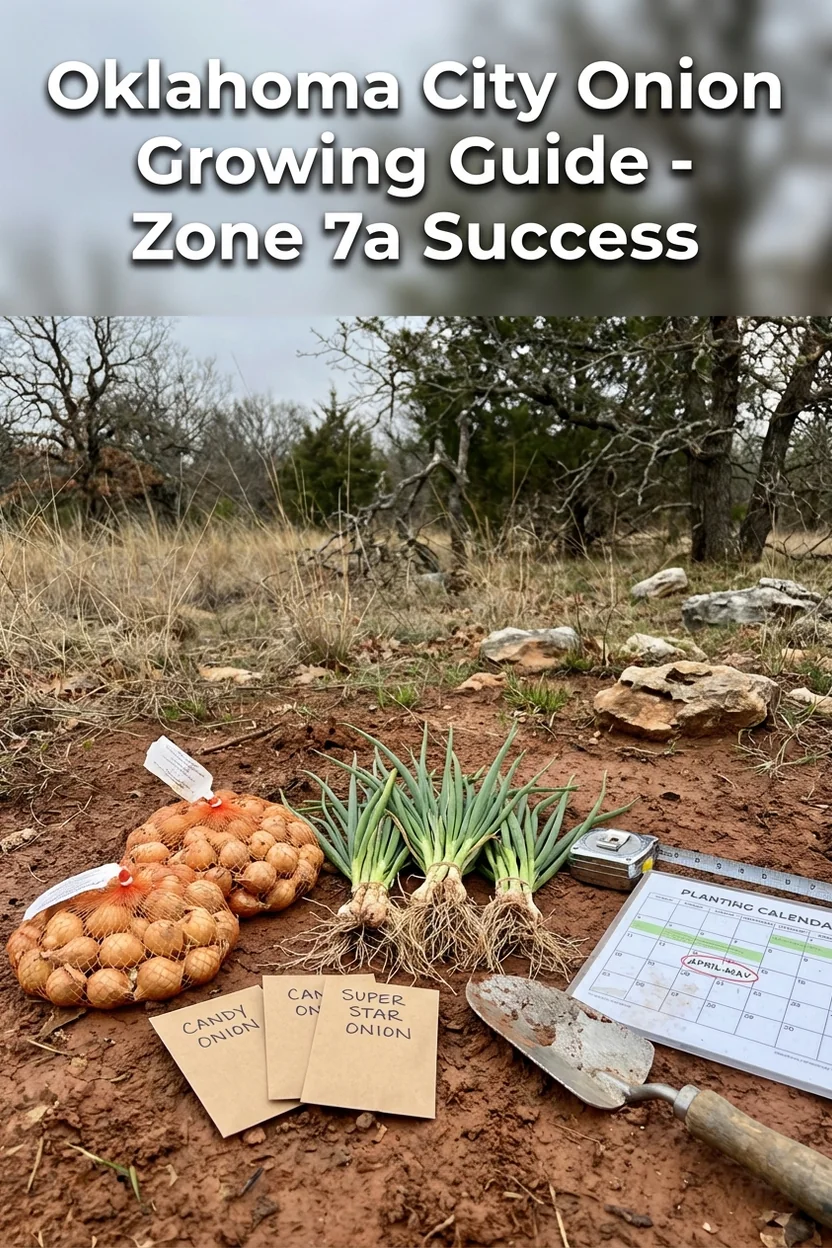
When to Plant Onions in Oklahoma City: Complete Guide + Best Varieties for Zone 7a
Pets & Toxicity
Recorded toxicity for plants linked in this guide. An unknown status is not a safety assessment.
Toxic to pets: evergreen hardy white bunching onion, cabernet red onion, yellow sweet Spanish onion and 9 moreDetailsHide
Allium cepa 'Evergreen Hardy White' — Toxicity Warning
Toxic to cats and dogs if eaten; cats are especially susceptible, and raw, cooked or concentrated plant material can damage red blood cells and cause anaemia.View Allium cepa 'Evergreen Hardy White' plant profileAllium cepa 'Cabernet' — Toxicity Warning
Toxic to cats and dogs if eaten; cats are especially susceptible, and raw, cooked or concentrated plant material can damage red blood cells and cause anaemia.View Allium cepa 'Cabernet' plant profileAllium cepa 'Yellow Sweet Spanish' — Toxicity Warning
Toxic to cats and dogs if eaten; cats are especially susceptible, and raw, cooked or concentrated plant material can damage red blood cells and cause anaemia.View Allium cepa 'Yellow Sweet Spanish' plant profileAllium sativum 'Music' — Toxicity Warning
Toxic to cats and dogs if eaten; cats are especially susceptible, and raw, cooked or concentrated plant material can damage red blood cells and cause anaemia.View Allium sativum 'Music' plant profileAllium fistulosum — Toxicity Warning
Toxic to cats and dogs if eaten; cats are especially susceptible, and raw, cooked or concentrated plant material can damage red blood cells and cause anaemia.View Allium fistulosum plant profileAllium cepa 'Candy' — Toxicity Warning
Toxic to cats and dogs if eaten; cats are especially susceptible, and raw, cooked or concentrated plant material can damage red blood cells and cause anaemia.View Allium cepa 'Candy' plant profileAllium cepa 'Granex' — Toxicity Warning
Toxic to cats and dogs if eaten; cats are especially susceptible, and raw, cooked or concentrated plant material can damage red blood cells and cause anaemia.View Allium cepa 'Granex' plant profileAllium cepa 'Super Star' — Toxicity Warning
Toxic to cats and dogs if eaten; cats are especially susceptible, and raw, cooked or concentrated plant material can damage red blood cells and cause anaemia.View Allium cepa 'Super Star' plant profileAllium cepa 'Red Candy Apple' — Toxicity Warning
Toxic to cats and dogs if eaten; cats are especially susceptible, and raw, cooked or concentrated plant material can damage red blood cells and cause anaemia.View Allium cepa 'Red Candy Apple' plant profileAllium sativum 'German Red' — Toxicity Warning
Toxic to cats and dogs if eaten; cats are especially susceptible, and raw, cooked or concentrated plant material can damage red blood cells and cause anaemia.View Allium sativum 'German Red' plant profileAllium sativum 'California Early' — Toxicity Warning
Toxic to cats and dogs if eaten; cats are especially susceptible, and raw, cooked or concentrated plant material can damage red blood cells and cause anaemia.View Allium sativum 'California Early' plant profileAllium sativum 'Inchelium Red' — Toxicity Warning
Toxic to cats and dogs if eaten; cats are especially susceptible, and raw, cooked or concentrated plant material can damage red blood cells and cause anaemia.View Allium sativum 'Inchelium Red' plant profile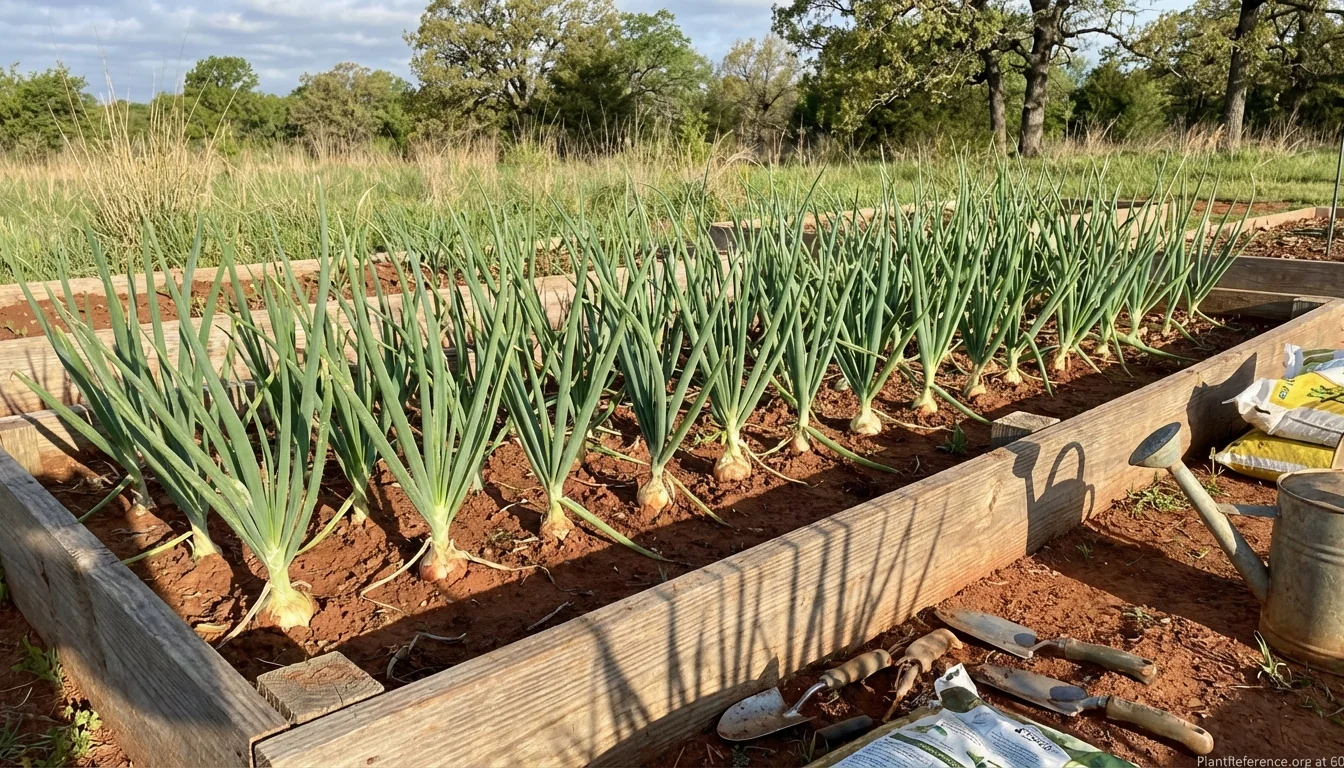
— Image © Plant Reference 2026
Oklahoma City gardeners sit in the sweet spot for onion growing. Located at 35°36'N latitude in Zone 7a, you can successfully grow intermediate-day onions with both spring and fall planting options. After forty years of growing onions across different climates, I'll tell you exactly when to plant onions in Oklahoma City for maximum success.
Best Onion Varieties for Oklahoma City's Climate
Oklahoma City's latitude puts you right in intermediate-day onion territory. These varieties need 12-14 hours of daylight to trigger bulbing, which happens naturally in late May through June. Don't try growing long-day onions here—they won't bulb properly in your latitude.
Why Day Length Matters for Oklahoma City Onions
The onion 🌿Allium cepa 'Tokyo Long White' (AL-ee-um SEE-pah) forms bulbs based on daylight hours, not temperature or plant size. Oklahoma City peaks at about 14.5 hours of daylight on June 21st, making intermediate-day varieties your best choice.
Long-day varieties needing 15+ hours will stay in the green onion stage all season. Short-day varieties will bulb too early when they're still small, giving you marble-sized bulbs instead of the full-size onions you want.
Top Intermediate-Day Varieties for Zone 7a
Variety | Days to Maturity | Best For | Notes for Oklahoma City |
|---|---|---|---|
90-110 days | All-purpose cooking | Perfect for Oklahoma's climate, excellent storage | |
95-115 days | Sweet eating | Good disease resistance for humid Oklahoma summers | |
100-120 days | Fresh eating | Beautiful red color, mild flavor | |
110-125 days | Storage | Best long-term keeper for Oklahoma | |
110-125 days | Large bulbs | Can produce 1+ pound bulbs in rich Oklahoma soil |
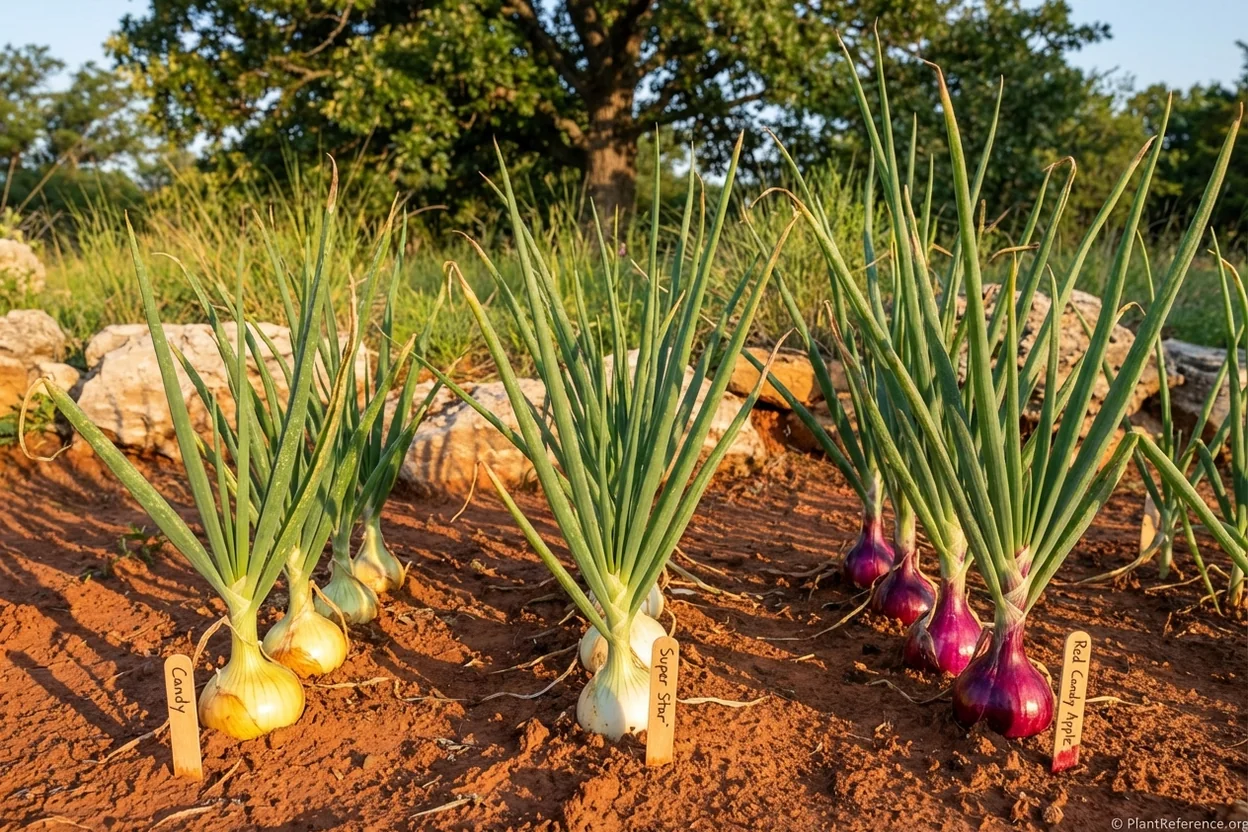
🌿Allium cepa 'Candy' is my top recommendation for Oklahoma City gardeners. This hybrid intermediate-day variety produces large, sweet bulbs that store well through winter. It's forgiving of Oklahoma's variable spring weather and handles the summer heat better than most.
Garlic Varieties for Oklahoma City
Oklahoma City's Zone 7a climate works well for both hardneck and softneck garlic varieties. Plant garlic cloves in October for harvest next July.
Hardneck Garlic: 🌿Allium sativum 'Music' and 🌿Allium sativum 'German Red' handle Oklahoma winters well and produce scapes you can harvest as a bonus crop in late spring.
Softneck Garlic: 🌿Allium sativum 'California Early' and 🌿Allium sativum 'Inchelium Red' offer better storage life and work well for Oklahoma's sometimes mild winters.
Specific Planting Dates for Oklahoma City
Oklahoma City's last frost averages March 31st, with first frost around November 4th. This 218-day growing season gives you flexibility for both spring and fall onion planting.
Spring Planting Schedule (Recommended for Beginners)
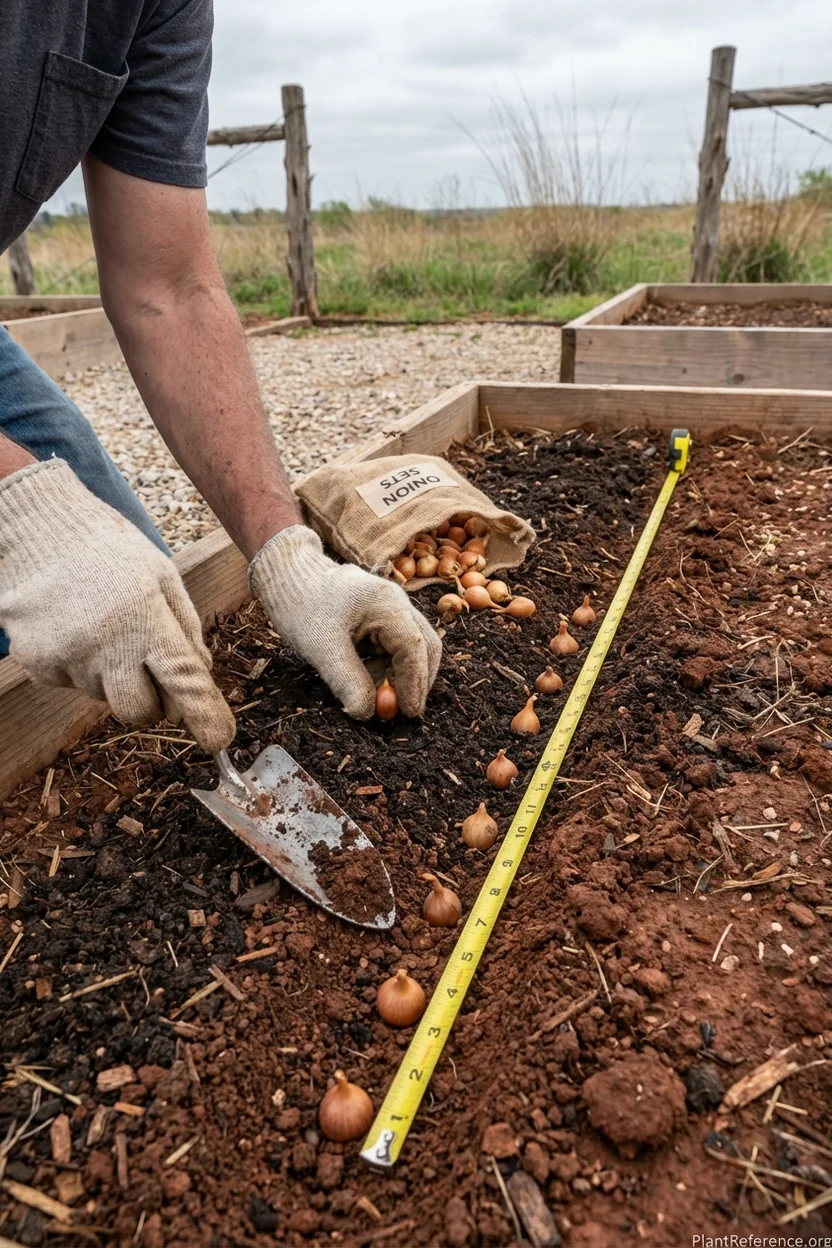
March 1-15: Plant onion sets or transplants. Soil temperature should be 40°F (4°C) or above. Don't worry about light frosts—onions handle temperatures down to 28°F (-2°C) once established.
Why Early March: Onions need 90-120 days of cool growing weather before summer heat arrives. Oklahoma City typically sees consistent 80°F+ temperatures by late May, so early planting gives your onions time to size up.
Sets vs. Transplants: I prefer sets for spring planting in Oklahoma City. They're more cold-tolerant and establish faster in variable March weather. Choose sets smaller than a dime—large sets often bolt prematurely.
Fall Planting Schedule (Advanced Technique)
October 15 - November 15: Plant onion transplants for overwintering. This timing allows 4-6 weeks of root establishment before winter dormancy.
Advantages of Fall Planting:
Earlier harvest (May vs. August)
Less pest pressure
Better bulb size due to longer growing season
Avoids summer heat stress
Varieties for Fall Planting: Stick to proven overwintering types like 🌿Allium cepa 'Candy' or specific overwintering varieties from specialty suppliers. Regular sets don't overwinter reliably in Oklahoma.
Garlic Planting Timeline
October 15 - November 15: Plant garlic cloves 4-6 weeks before hard freeze. In Oklahoma City, this usually means before Thanksgiving.
Depth and Spacing: Plant cloves pointed-end up, 2 inches deep, 6 inches apart. Mulch heavily with 4 inches of straw to regulate soil temperature through Oklahoma's variable winter weather.
Scallion/Bunching Onion Schedule
🌿Allium fistulosum (AL-ee-um fis-too-LOH-sum) grows year-round in Oklahoma City. Plant every 3-4 weeks from March through October for continuous harvest. These don't form bulbs—you harvest the green tops.
Complete Growing Guide for Oklahoma City
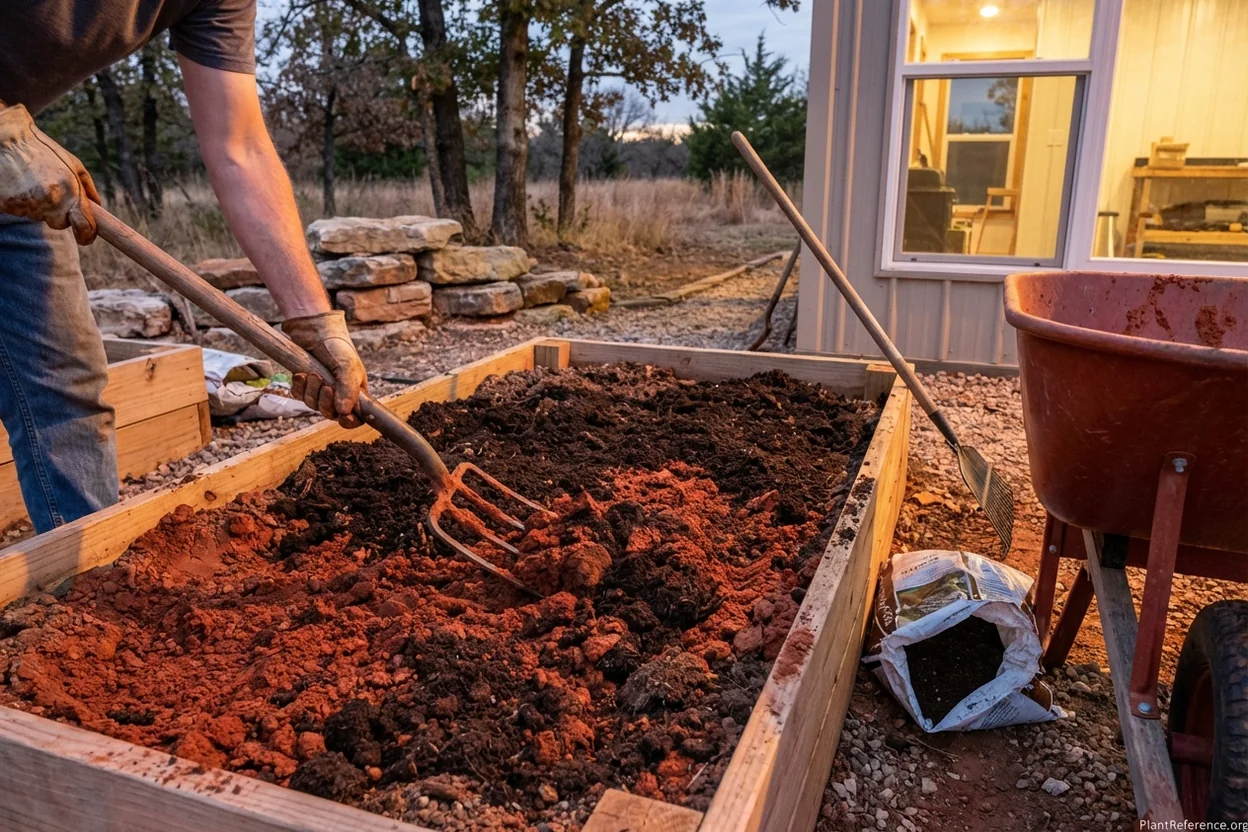
Oklahoma's red clay soil and variable weather require specific techniques for onion success. Here's what works after decades of growing onions in similar clay-based soils.
Soil Preparation for Oklahoma Clay
Oklahoma City's heavy clay soil challenges onion growing, but proper preparation solves most problems. Onions need well-draining soil—waterlogged clay kills them quickly.
Soil Amendment Strategy:
Add 2-3 inches of compost to break up clay structure
Work in coarse sand if drainage remains poor
Consider raised beds for severe clay situations
Target soil pH between 6.0-6.8 (Oklahoma soil often runs alkaline)
Test your soil pH—Oklahoma City soils typically run 7.0-8.0, too alkaline for optimal onion growth. Add sulfur in fall to lower pH gradually, or use acidifying fertilizers like ammonium sulfate.
Fertilizing Strategy for Oklahoma Conditions
Oklahoma City's alkaline soil often locks up phosphorus and micronutrients. Use a balanced approach targeting onion-specific needs.
Pre-Plant Fertilization: Work in 2-3 inches of aged compost plus 2 pounds of balanced fertilizer (10-10-10) per 100 square feet before planting.
Growing Season Feeding: Side-dress with nitrogen fertilizer every 3-4 weeks until mid-June. I use ammonium sulfate (21-0-0) because it acidifies Oklahoma's alkaline soil while feeding.
Critical Timing: Stop all fertilization 6 weeks before expected harvest. Late nitrogen causes thick necks that won't cure properly for storage.
Watering in Oklahoma's Variable Climate
Oklahoma City averages 36 inches of rain annually, but it comes irregularly. Onions need consistent moisture—drought stress stunts bulb development.
Irrigation Schedule:
Spring: 1 inch per week including rainfall
Summer: 1.5 inches per week as temperatures rise
Pre-harvest: Reduce watering as tops begin yellowing
Mulching Strategy: Apply 2-3 inches of straw mulch around plants in late April. This conserves moisture during Oklahoma's hot, dry summers and suppresses weeds that compete with shallow onion roots.
Managing Oklahoma's Weather Challenges
Oklahoma City's weather swings challenge onion growing. Late freezes, hail storms, and intense summer heat all threaten crops.
Late Freeze Protection: Keep row cover handy for unexpected late freezes. Onions handle light frost, but hard freezes below 25°F (-4°C) damage developing bulbs.
Hail Damage Response: If hail shreds leaves, increase watering and apply liquid fertilizer. Onions can recover from significant leaf damage if roots remain healthy.
Heat Stress Management: Ensure adequate mulching and consistent moisture during Oklahoma's 100°F+ summer days. Shade cloth helps in extreme heat waves.
Troubleshooting Oklahoma City-Specific Problems
Living in Oklahoma for decades, I've seen every onion problem possible. Here's how to handle the most common issues in your Zone 7a climate.
Bolting (Premature Flowering)
Oklahoma City's variable spring temperatures trigger bolting in susceptible onions. A warm February followed by cold March confuses plants into thinking they've gone through winter.
Prevention Strategies:
Use small sets (under 3/4 inch diameter)
Plant intermediate-day varieties only
Avoid planting during warm spells if cold weather follows
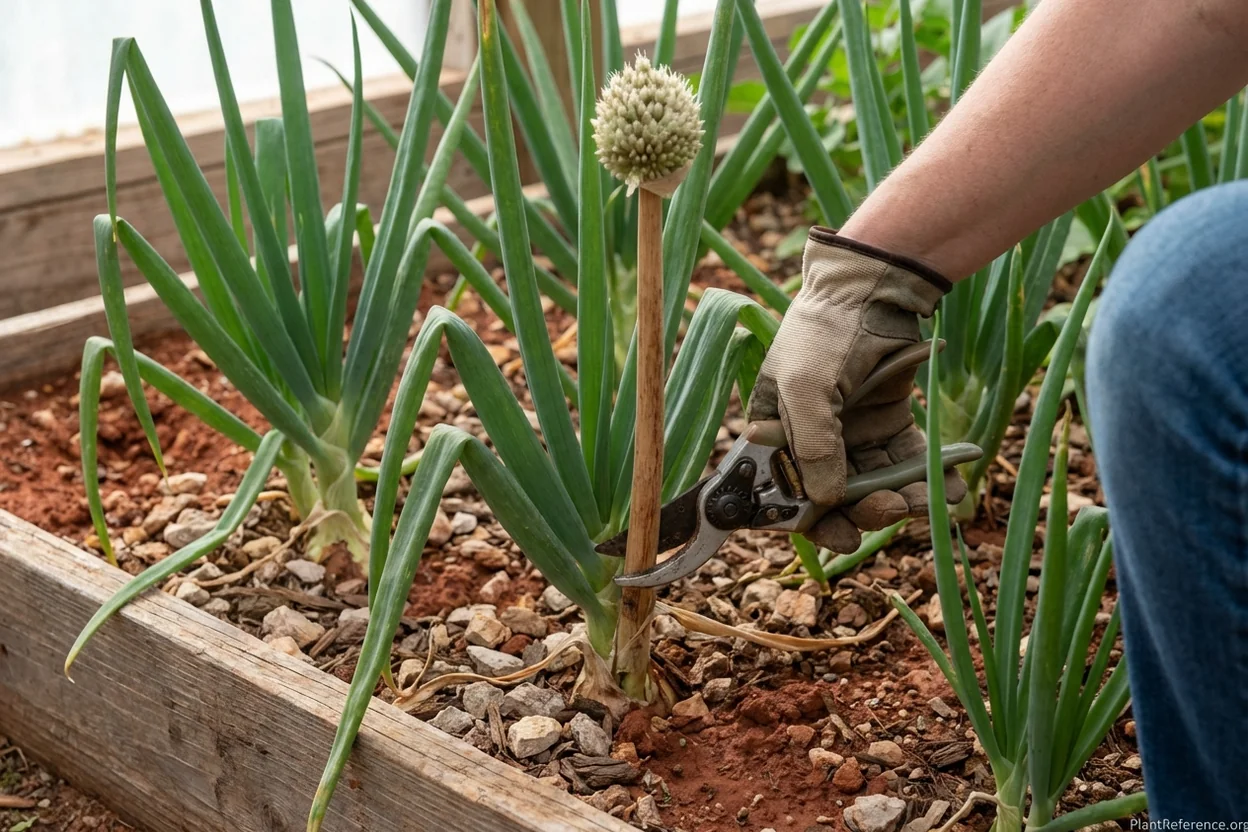
Treatment: Remove flower stalks immediately if bolting occurs. The onion remains edible but won't store well.
Poor Bulb Development
Small, underdeveloped bulbs usually indicate variety problems or timing issues in Oklahoma City's climate.
Common Causes:
Wrong day-length variety (long-day won't bulb at 35°N latitude)
Planted too late (insufficient time before summer heat)
Poor soil drainage in Oklahoma clay
Inadequate fertilization
Solutions: Focus on intermediate-day varieties, plant by mid-March, and improve drainage with raised beds or heavy soil amendment.
Thrips Damage
Oklahoma's hot summers bring thrips Thrips tabaci, tiny insects that rasp onion leaves and reduce bulb size.
Recognition: Silver-streaked leaves with black specks (thrips excrement). Severe infestations stunt growth and delay maturity.
Organic Control: Spray with insecticidal soap weekly during peak summer heat. Blue sticky traps help monitor populations. Overhead watering physically removes thrips.
Disease Issues in Humid Oklahoma Weather
Oklahoma City's humidity creates perfect conditions for onion diseases, especially during wet springs and summers.
Purple Blotch: Purple spots on leaves during humid weather. Improve air circulation and avoid overhead watering.
Downy Mildew: Yellow patches that turn fuzzy gray in high humidity. Plant in full sun and ensure good drainage.
White Rot: Soil-borne fungus that kills plants. Practice 3-4 year rotation and avoid overwatering in clay soil.
Harvest & Storage
Oklahoma City's hot summers mean timing harvest correctly for maximum storage life. I've learned to watch specific signals that indicate readiness.
Harvest Timing Indicators
Spring-Planted Onions: Ready August through September when 50-75% of tops fall over naturally. Don't force the tops down—this damages the neck and reduces storage life.
Fall-Planted Onions: Ready May through June, typically 30-45 days earlier than spring plantings.
Weather Considerations: Harvest before extended rainy periods if possible. Wet conditions during harvest promote rot during curing.
Curing Process for Oklahoma's Climate
Oklahoma City's hot, dry summers provide excellent curing conditions if you protect onions from direct sun.
Curing Steps:
Lift bulbs on a dry day and lay in single layer
Cover with tops from adjacent row to prevent sunscald
Cure 2-4 weeks until necks are tight and papery
Move to covered, ventilated area if rain threatens
Ideal Conditions: 80-90°F with good air circulation. Oklahoma's low humidity helps, but protect from intense sun that can cook bulbs.
Long-Term Storage Guidelines
Storage Varieties: 🌿Allium cepa 'Cabernet' and properly cured 🌿Allium cepa 'Candy' store 6-8 months in Oklahoma's climate.
Storage Conditions: Cool (32-40°F), dry (60-70% humidity), dark location. Many Oklahoma City gardeners use unheated garages or basements successfully.
Storage Methods: Mesh bags, wooden crates, or braided strings work well. Check monthly and remove any showing soft spots.
Garlic Harvest and Curing
Timing: Mid to late July when bottom 6 leaves brown but top 6 remain green.
Curing: Clean off dirt and cure in shaded, ventilated area for 3-4 weeks. Oklahoma's summer heat accelerates curing—watch for papery outer wrappers.
Storage: Properly cured garlic stores 6-8 months (hardneck) to 8-12 months (softneck) in cool, dry conditions.
Frequently Asked Questions
Reading about plants and recognising them are different skills. These three build the second.
- Daily PlantIdentify the day’s mystery plant from a close-up photograph.
- Keyed OutWork a dichotomous key, lead by lead, to name a hidden specimen.
- Name That PlantName a specimen from botanical clues dealt hardest first.
Free to play, no account needed
Robert is a retired meteorologist who turned his lifelong hobby of gardening into a second career writing about weather-climate interactions and their effects on plants. Living in Oklahoma, he's seen it all—ice storms, tornadoes, 110°F heat, and drought, sometimes in the same month. Robert brings a data-driven approach to gardening, tracking weather patterns and correlating them with plant performance in his own large garden. He's particularly knowledgeable about wind-resistant plantings, storm damage recovery, and the challenge of gardening in a climate where extremes are the norm rather than the exception. Robert is a calm, measured writer who presents information without drama.