When to Plant Peppers in Raleigh: Complete Guide + Best Varieties for Zone 7b
Pets & Toxicity
Recorded toxicity for plants linked in this guide. An unknown status is not a safety assessment.
Toxic to pets: Poblano pepperDetailsHide
Capsicum annuum 'California Wonder' — Toxicity
Non-toxicView Capsicum annuum 'California Wonder' plant profileCapsicum annuum 'Poblano' — Toxicity Warning
Toxic to petsView Capsicum annuum 'Poblano' plant profileCapsicum annuum 'Jalapeño' — Toxicity: Not assessed
Capsaicin in fruit causes burning sensations in mouth and on skin. Fruit and handling oils are irritating to eyes and mucous membranes but are not toxic in the usual sense. Gloves are used during harvesting and processing; hands are washed thoroughly before touching face. Small amounts are generally safe for pets but can cause digestive upset.View Capsicum annuum 'Jalapeño' plant profile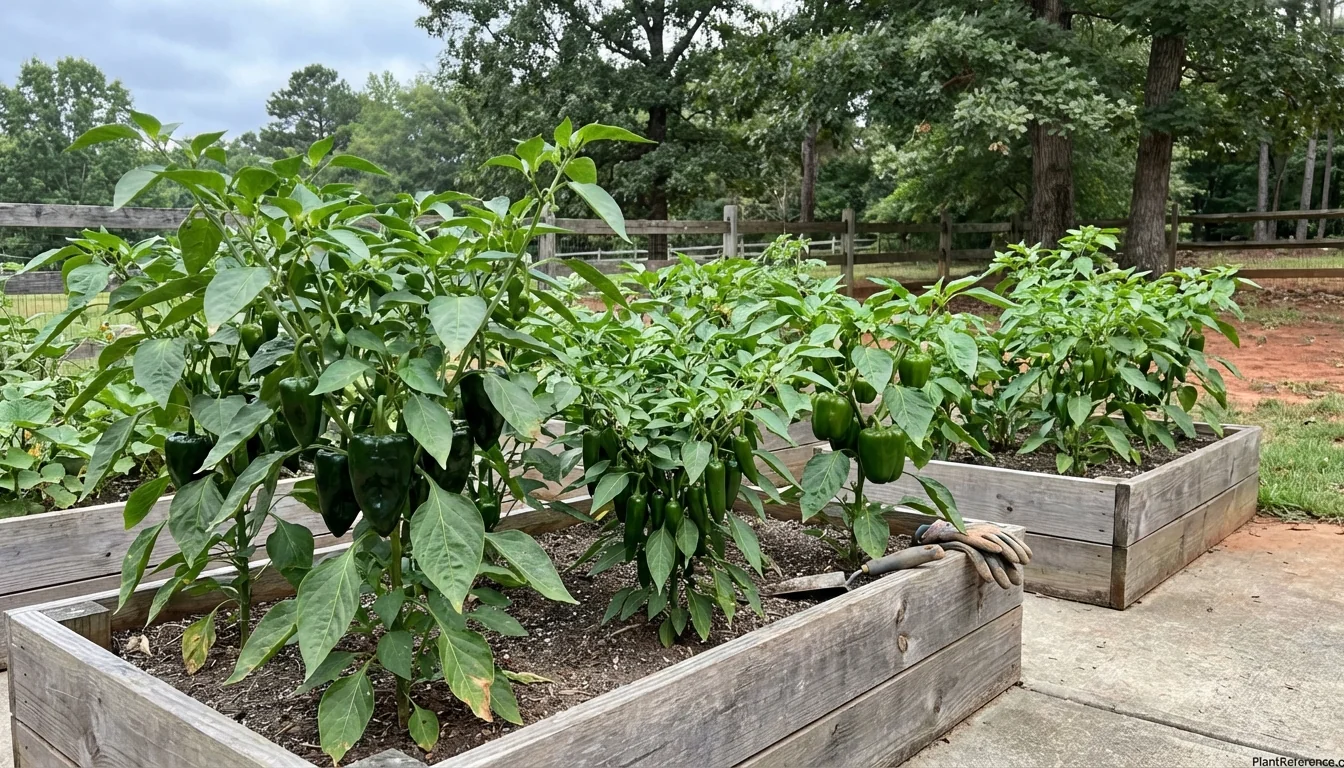
— Image © Plant Reference 2026
Growing peppers in Raleigh offers excellent opportunities for both beginners and experienced gardeners. Zone 7b's long growing season and warm summers create ideal conditions for most pepper varieties, from sweet bells to spicy Habaneros.
I've been growing peppers in North Carolina for over thirty years, and I'll tell you what works in our climate. Raleigh's Zone 7b offers a generous 214-day growing season that lets you grow varieties that struggle up north. The key is understanding our specific timing and working with—not against—our humid summers.
Best Pepper Varieties for Raleigh's Climate
Raleigh's climate combines the best of both worlds: enough heat units for hot peppers and sufficient season length for large-fruited varieties. Here's what thrives in our Zone 7b conditions.
Variety | Days to Maturity | Best For | Notes for Raleigh |
|---|---|---|---|
60-70 days | Quick harvest | Perfect for humid summers, early harvest | |
65-75 days | Pickling | Heat-tolerant, reliable producer | |
65-80 days | Stuffing/roasting | Loves Raleigh heat, needs support | |
70-80 days | Fresh eating | Classic choice for Zone 7b | |
70-80 days | Salsa/pickling | Thrives in humidity, heavy yields | |
70-80 days | Roasting/drying | Excellent for long hot summers | |
Capsicum annuum 'Cayenne Long Red' | 70-85 days | Drying/spice | Heat-lover, perfect for NC climate |
Capsicum chinense 'Habanero Orange' | 90-120 days | Hot sauce | Needs full season, container recommended |
Sweet Peppers for Raleigh Gardens
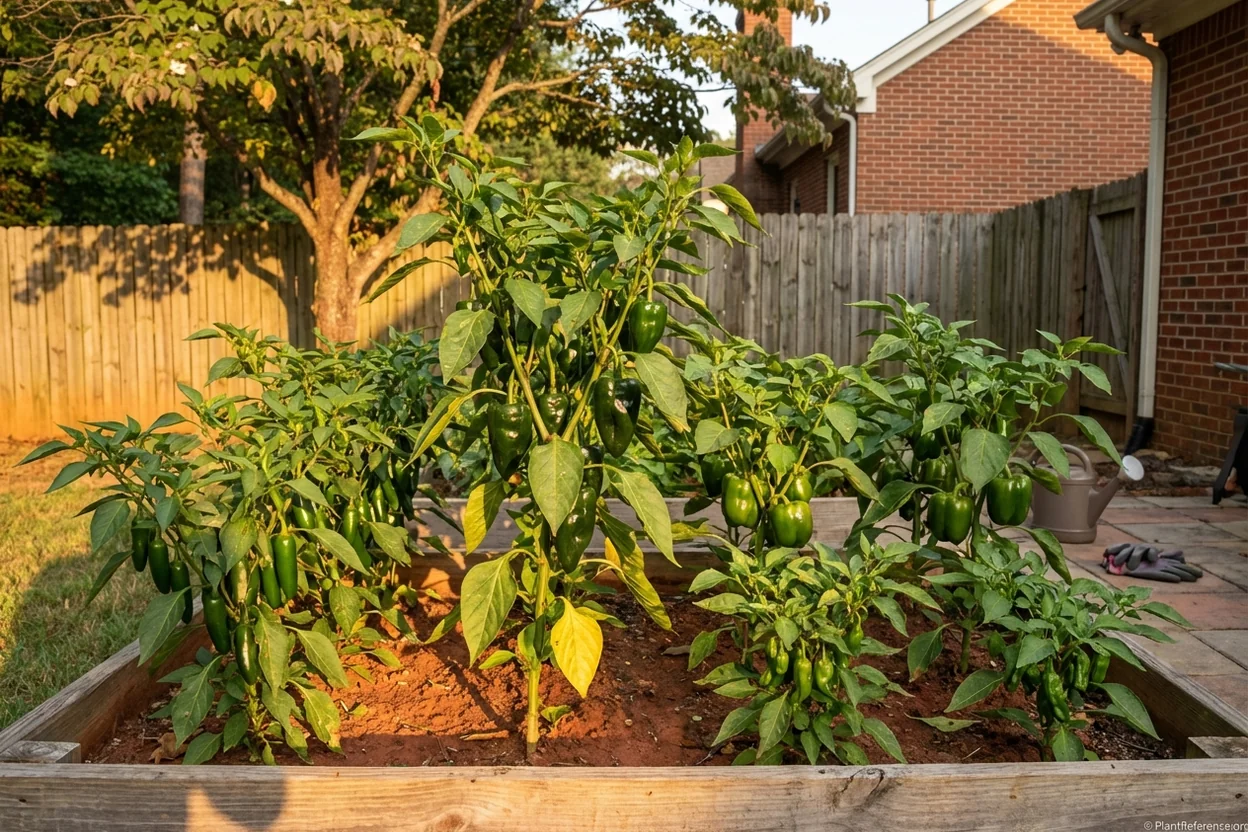
🌿Capsicum annuum 'California Wonder' performs exceptionally in Raleigh's climate. This thick-walled bell pepper loves our warm summers and produces consistently from July through October. The 214-day season gives these 70-80 day varieties plenty of time to produce multiple flushes.
🌿Capsicum annuum 'Sweet Banana' adapts beautifully to North Carolina's heat and humidity. These yellow peppers mature quickly and continue producing even when temperatures hit the upper 80s°F (31°C) that can slow other varieties.
Hot Peppers for Heat Lovers
🌿Capsicum annuum 'Jalapeño' is practically bulletproof in Raleigh. Our warm, humid summers create perfect conditions for heavy yields. I've harvested over fifty peppers from single plants grown in good soil.
🌿Capsicum annuum 'Poblano' thrives in Raleigh's extended heat. These large peppers need the long warm season our Zone 7b provides. Plant them after May 1 and you'll be harvesting from July through first frost.
Capsicum annuum 'Cayenne Long Red' loves North Carolina heat. The thin walls that make cayennes perfect for drying also help them handle humidity better than thick-walled varieties.
Specialty Varieties
🌿Capsicum annuum 'Shishito' gives you the earliest harvest in Raleigh. With only 60-70 days to maturity, you can be picking peppers by early July from May plantings.
Capsicum chinense 'Habanero Orange' pushes the limits in Zone 7b but succeeds with proper care. The 214-day season provides just enough time if you start seeds early and use season extension techniques.
Specific Planting Dates for Raleigh
Working backward from Raleigh's April 4 average last frost date, here are your exact planting windows for pepper success.
Indoor Seed Starting Schedule
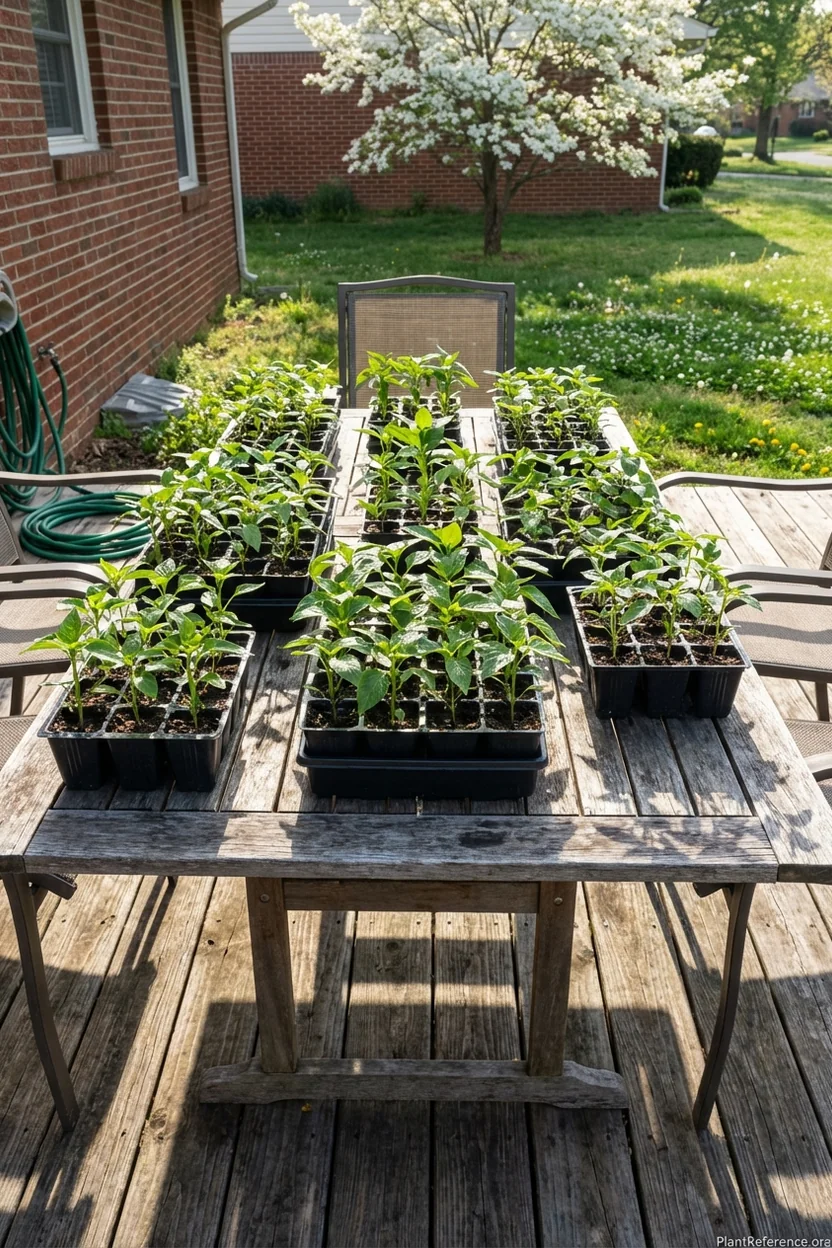
February 7-14: Start Seeds Indoors Begin pepper seeds 8 weeks before transplanting. Use seed starting heat mats to maintain soil temperature at 80-85°F (27-29°C) for optimal germination. Capsicum chinense 'Habanero Orange' needs the full 8 weeks, while 🌿Capsicum annuum 'Shishito' can be started as late as February 21.
Most varieties germinate in 7-14 days with proper heat. Capsicum chinense 'Habanero Orange' may take 14-21 days, so be patient.
Transplant Timing
April 15-May 1: Outdoor Transplanting Window Don't rush this step. Even though Raleigh's last frost averages April 4, soil temperatures need to reach 60°F (15°C) consistently. Cold soil below 55°F (13°C) causes transplant shock and weeks of stunted growth.
I always wait until April 20-25 for my main planting. Those extra two weeks of soil warming make an enormous difference in how quickly plants establish.
Hardening Off Schedule
April 8-15: Hardening Off Period Start hardening off seedlings one week before transplanting. Begin with 2-3 hours of morning sun, gradually increasing to full day exposure over 7-10 days.
Raleigh's spring weather can be unpredictable. Watch for late cold snaps and be ready to protect plants with row covers if temperatures threaten to drop below 50°F (10°C).
Heat-Sensitive Varieties
Capsicum chinense 'Habanero Orange' requires special attention in Raleigh. Even in Zone 7b, start these seeds by February 1 and consider keeping them in containers for the first month outdoors. Black nursery pots warm faster than garden beds.
Complete Growing Guide for Raleigh
Raleigh's climate creates specific opportunities and challenges for pepper cultivation. Our warm, humid summers support excellent growth but require attention to air circulation and disease prevention.
Soil Preparation for North Carolina Clay
Raleigh's infamous red clay needs significant amendment for pepper success. Peppers demand well-draining soil, and our heavy clay holds too much water during summer thunderstorms.
Essential Soil Modifications:
Add 2-3 inches (5-7.5 cm) of compost annually to improve drainage
Mix in coarse sand or perlite—never fine sand which creates concrete
Raise beds 6-8 inches (15-20 cm) above ground level for drainage
Test soil pH: peppers prefer 6.0-6.8 for optimal nutrient uptake
Incorporate aged horse manure if available from local farms
Work these amendments in deeply during March while soil is workable. Wet clay compacts easily, so wait for proper moisture conditions before digging.
Fertilization Strategy for Long Season
Raleigh's 214-day growing season means peppers keep producing until November frost. This extended harvest requires a feeding program that sustains plants through multiple fruiting cycles.
Pre-Planting Fertilization: Apply 2-3 inches (5-7.5 cm) of compost plus balanced organic fertilizer (10-10-10) at 2 pounds per 100 square feet when preparing beds in March.
Growing Season Feeding: Side-dress with compost every 6 weeks starting in June. Once flowering begins, switch to lower-nitrogen fertilizer (5-10-10) to prevent excessive foliage at expense of fruit production.
Spacing and Support Systems
Raleigh's long growing season produces large plants that need adequate room and support.
Optimal Spacing: - Small varieties (🌿Capsicum annuum 'Shishito', 🌿Capsicum annuum 'Sweet Banana'): 18 inches (45 cm) apart - Medium varieties (🌿Capsicum annuum 'Jalapeño', Capsicum annuum 'Cayenne Long Red'): 24 inches (60 cm) apart - Large varieties (🌿Capsicum annuum 'Poblano', 🌿Capsicum annuum 'California Wonder'): 30 inches (75 cm) apart
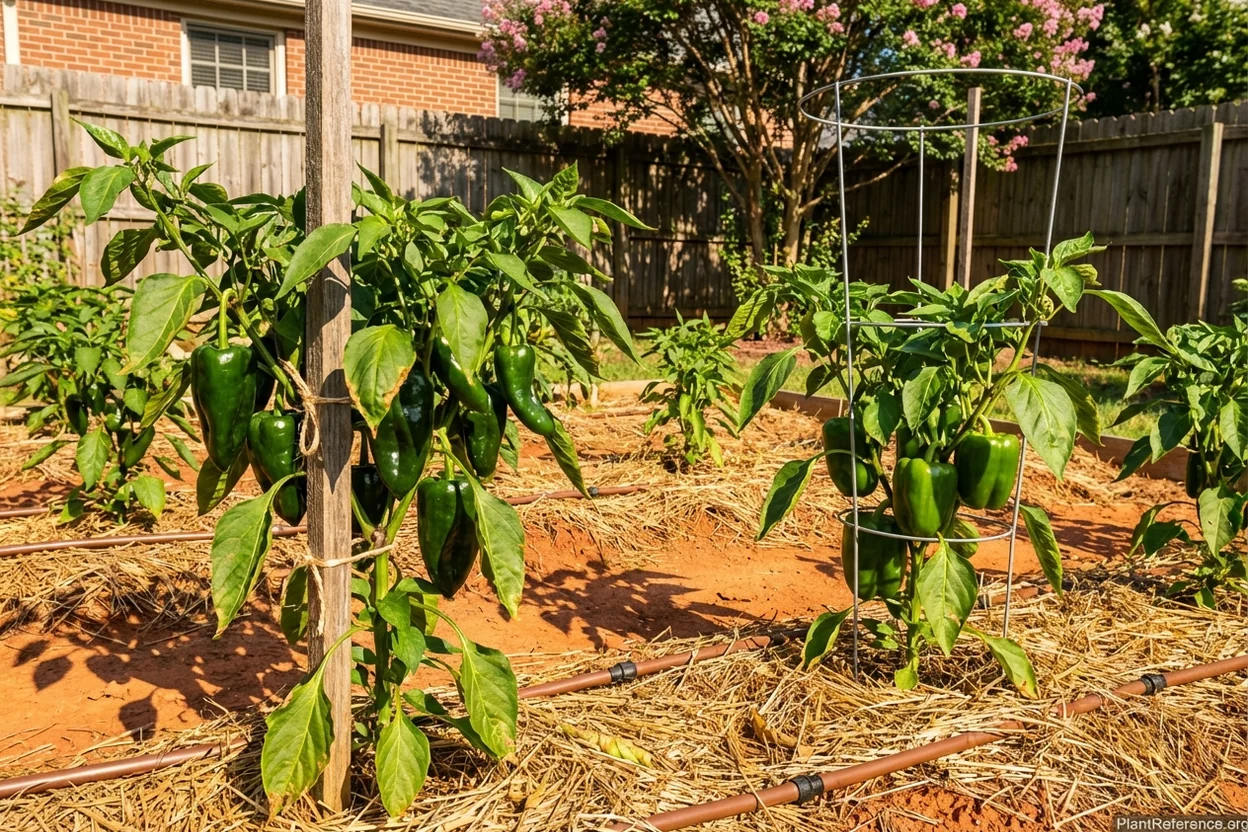
Support Requirements: Install 4-foot (1.2 m) stakes or tomato cages at planting time. 🌿Capsicum annuum 'Poblano' and 🌿Capsicum annuum 'California Wonder' become top-heavy by August and will snap in summer thunderstorms without proper support.
Water Management in Humid Climate
Raleigh receives approximately 45 inches (114 cm) of annual rainfall, but summer distribution is uneven. Peppers need consistent moisture but can't tolerate waterlogged soil.
Irrigation Strategy:
Install drip irrigation or soaker hoses to keep foliage dry
Mulch with 2-3 inches (5-7.5 cm) of straw after soil warms in May
Water deeply twice weekly rather than daily shallow watering
Monitor soil moisture 3-4 inches (7.5-10 cm) deep where roots concentrate
Reduce watering frequency during rainy periods to prevent root rot
During Raleigh's typical July-August hot spells, plants may need daily watering despite humid conditions. The combination of heat and humidity increases transpiration rates significantly.
Troubleshooting Raleigh-Specific Problems
North Carolina's climate creates predictable challenges that experienced growers learn to anticipate and prevent.
Managing Summer Humidity
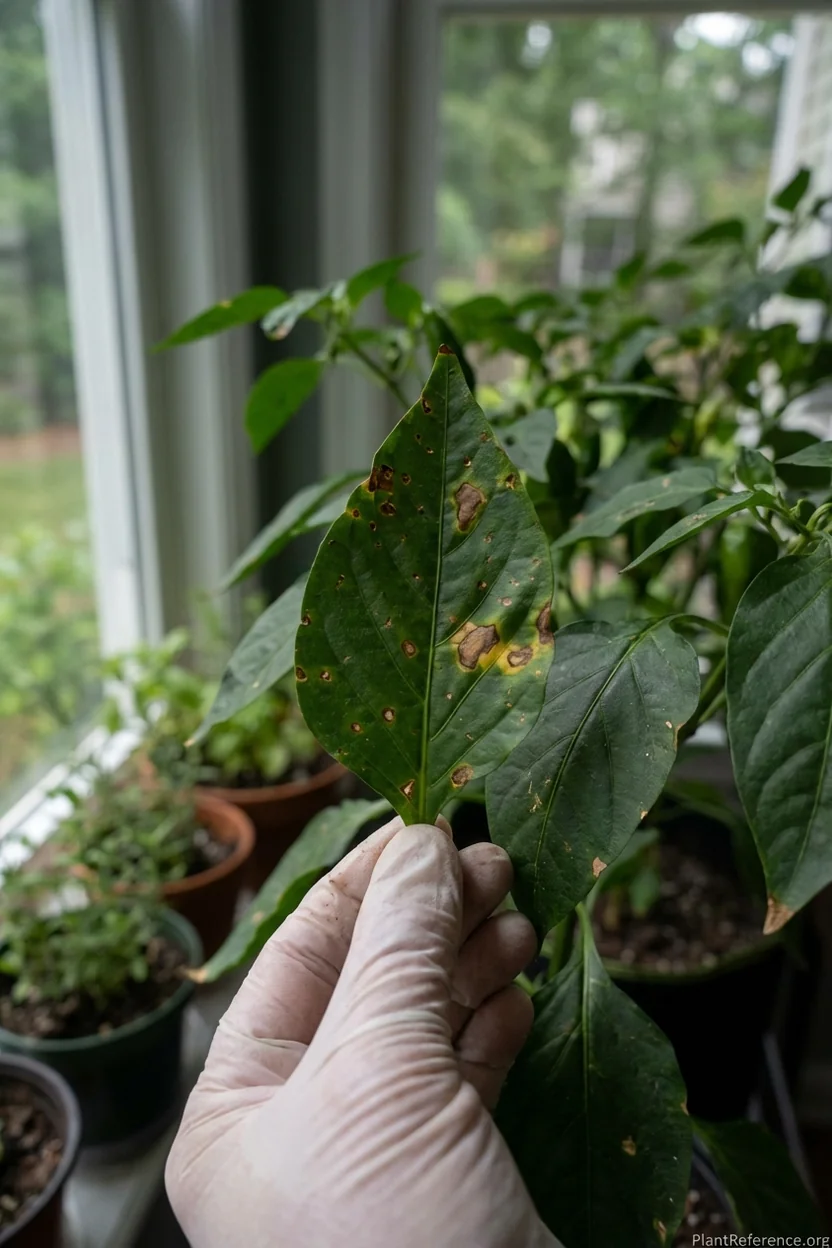
Raleigh's summer humidity levels often exceed 80%, creating perfect conditions for fungal diseases. Bacterial leaf spot and anthracnose can devastate pepper crops if prevention isn't prioritized.
Prevention Strategies:
Space plants wider than package recommendations for air circulation
Remove lower leaves touching soil to prevent splash-back infections
Avoid overhead watering; use drip irrigation or soaker hoses exclusively
Prune interior branches to improve airflow through plant canopy
Apply organic mulch to prevent soil from splashing onto leaves
Early Detection: Check plants weekly for dark spots on leaves or water-soaked lesions on stems. Remove affected plant parts immediately and dispose in trash, not compost.
Heat Stress Management
While peppers love heat, Raleigh's combination of high temperature and humidity can stress plants during July-August heat waves when temperatures exceed 95°F (35°C).
Signs of Heat Stress: - Blossom drop when flowers fall without setting fruit - Sunscald on fruit exposed to direct afternoon sun - Wilting during hottest part of day despite adequate soil moisture
Solutions: Provide afternoon shade during peak summer using 30% shade cloth. Position taller plants to shade shorter ones. Maintain consistent soil moisture but ensure excellent drainage.
Managing Red Clay Drainage
Even amended red clay can create drainage issues during North Carolina's intense summer thunderstorms.
Install French drains or create raised beds 8-10 inches (20-25 cm) high. I've seen too many pepper plants lost to root rot after week-long rainy periods in July.
Late Season Ripening Issues
Raleigh's first frost typically arrives November 4, giving you nearly seven months of growing time. However, large-fruited varieties like 🌿Capsicum annuum 'California Wonder' and 🌿Capsicum annuum 'Poblano' set their final fruit flush in late August.
Ripening Strategies: Stop fertilizing in late August to encourage ripening over new growth. Remove small, newly-set fruits in September to direct energy into existing mature fruits.
For Capsicum chinense 'Habanero Orange', consider growing in large containers that can be moved into a garage during the first light frost. This often provides an additional 2-3 weeks of ripening time.
Harvest & Storage
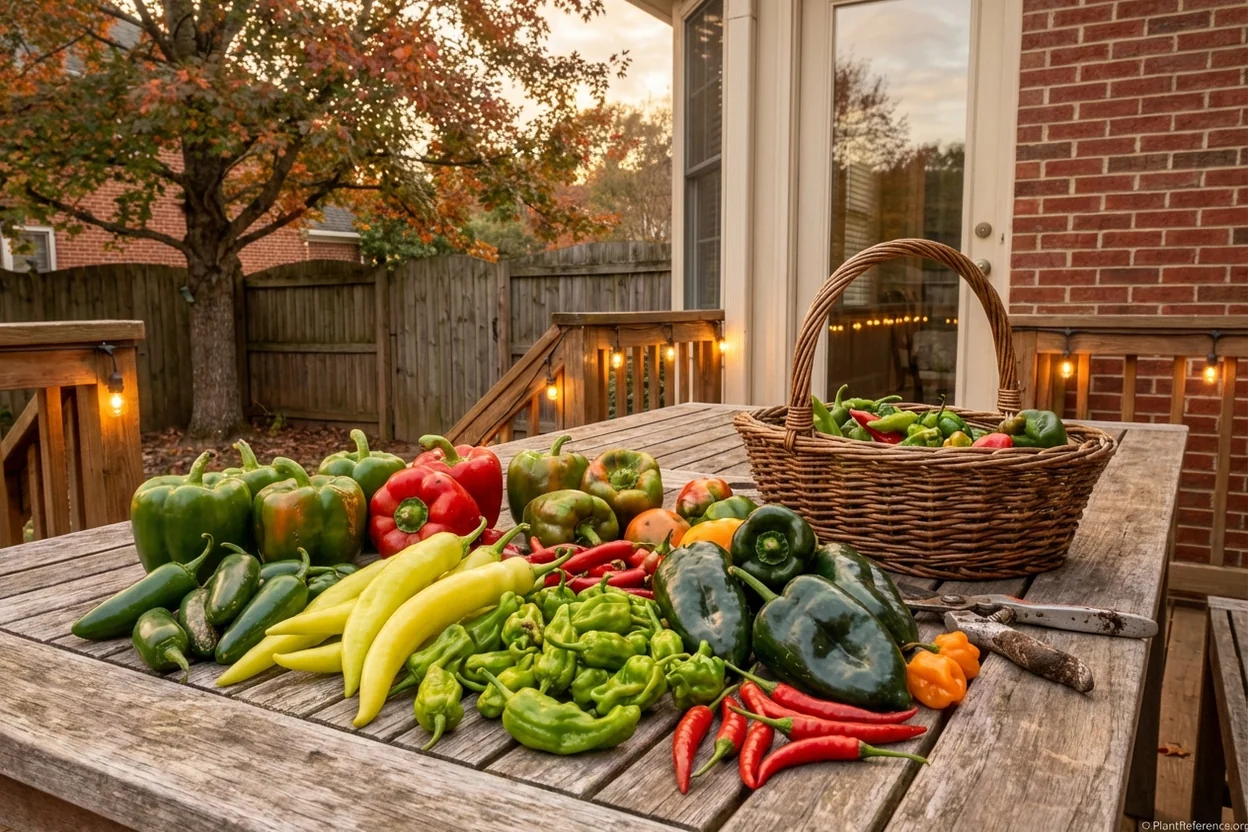
Raleigh's long season provides multiple harvest opportunities from July through November, maximizing your pepper yield and extending fresh eating.
Optimal Harvest Timing
July-August: First major harvest of early varieties like 🌿Capsicum annuum 'Shishito' and 🌿Capsicum annuum 'Sweet Banana'. Pick frequently to encourage continued production.
August-September: Peak harvest for 🌿Capsicum annuum 'Jalapeño', 🌿Capsicum annuum 'California Wonder', and 🌿Capsicum annuum 'Poblano'. Harvest bells when full-size but still green for best flavor and texture.
September-October: Capsicum annuum 'Cayenne Long Red' and 🌿Capsicum annuum 'Anaheim' reach maturity. Allow cayennes to turn red for maximum heat and drying quality.
October-November: Final harvest of Capsicum chinense 'Habanero Orange' and late-season bell peppers. Harvest all remaining fruit before first hard frost.
Storage Methods for Extended Season
With Raleigh's long harvest window, preservation becomes important for managing abundance.
Fresh Storage: Store unwashed peppers in perforated plastic bags in refrigerator crisper drawer. Most varieties keep 1-2 weeks. 🌿Capsicum annuum 'California Wonder' stores longest due to thick walls.
Freezing: 🌿Capsicum annuum 'Poblano' and 🌿Capsicum annuum 'Anaheim' freeze excellently after roasting. Char skins over flame, steam in plastic bag, then peel and freeze flat.
Drying: Capsicum annuum 'Cayenne Long Red' dries naturally on plants in Raleigh's climate if harvest timing avoids wet weather. String peppers and hang in well-ventilated area.
Extending the Season
Raleigh gardeners can often extend pepper harvest 2-3 weeks beyond first frost using protection methods.
Row Covers: Lightweight fabric covers protect against light frosts down to 28°F (-2°C). Install over hoops to prevent direct contact with foliage.
Container Growing: Capsicum chinense 'Habanero Orange' and valuable late-season 🌿Capsicum annuum 'Poblano' can be grown in wheeled containers and moved to protected areas during frost warnings.
I've harvested fresh 🌿Capsicum annuum 'Jalapeño' into December some years using this method. The investment in containers pays for itself with the extended harvest window.
Frequently Asked Questions
Reading about plants and recognising them are different skills. These three build the second.
- Daily PlantIdentify the day’s mystery plant from a close-up photograph.
- Keyed OutWork a dichotomous key, lead by lead, to name a hidden specimen.
- Name That PlantName a specimen from botanical clues dealt hardest first.
Free to play, no account needed
Rachel is a garden writer and photographer based in Raleigh who covers the Piedmont region of North Carolina. She has a journalism background and got into gardening after buying her first house and realizing she had no idea what any of the plants in her yard were. That curiosity led to a Master Gardener certification and eventually a garden writing career. Rachel is especially interested in native plants of the Southeast, seasonal color, and the challenge of gardening in red clay soil. Her photography background means she pays attention to how gardens look through the seasons—she thinks about visual composition as much as plant health. She writes clearly and directly, without the breathless enthusiasm that makes a lot of garden writing hard to trust.