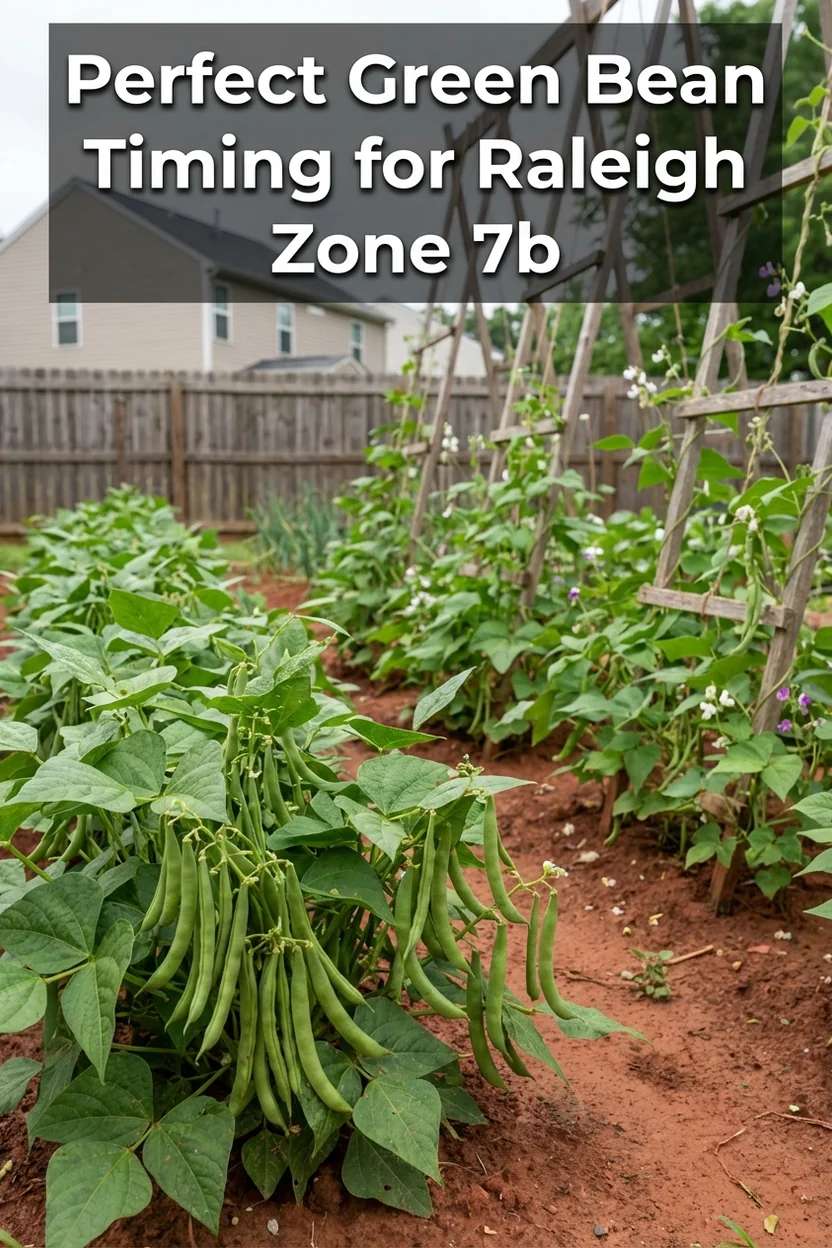
When to Plant Green Beans in Raleigh: Complete Guide + Best Varieties for Zone 7b
Pets & Toxicity
Recorded toxicity for plants linked in this guide. An unknown status is not a safety assessment.
No linked plant is recorded as toxicDetailsHide
Phaseolus vulgaris 'Blue Lake' — Toxicity
Non-toxic when cooked. Raw pods carry lectins (phytohemagglutinin) that cause digestive upset on raw consumption — pods are cooked before eatingView Phaseolus vulgaris 'Blue Lake' plant profilePhaseolus vulgaris 'Kentucky Wonder' — Toxicity
Non-toxicView Phaseolus vulgaris 'Kentucky Wonder' plant profilePhaseolus vulgaris 'Purple Queen' — Toxicity
Non-toxicView Phaseolus vulgaris 'Purple Queen' plant profilePhaseolus vulgaris 'Dragon Tongue' — Toxicity
Non-toxicView Phaseolus vulgaris 'Dragon Tongue' plant profile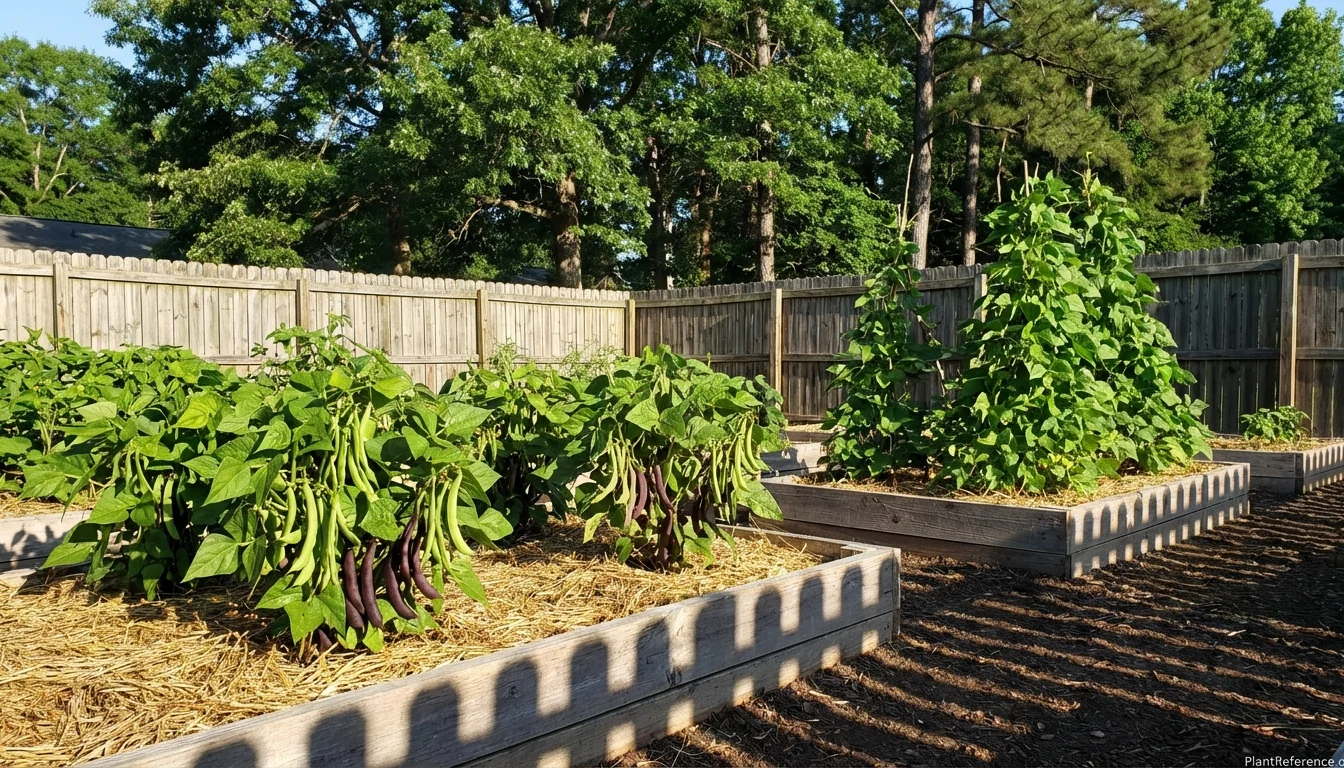
— Image © Plant Reference 2026
Growing green beans in Raleigh means working with North Carolina's humid summers and excellent 214-day growing season. I've been gardening here for thirty years, and beans are one of our most reliable crops when you time them right.
Best Green Bean Varieties for Raleigh's Climate
Raleigh's Zone 7b climate with its April 5 last frost and November 5 first frost gives us excellent bean-growing conditions. The key is choosing varieties that handle our humid summers and utilizing both spring and fall windows.
The common bean 🌿Phaseolus vulgaris 'Blue Lake' (fay-see-OH-lus vul-GAR-iss) thrives in our North Carolina climate when planted at the right time. Here's what works best in Raleigh's conditions:
Variety | Days to Maturity | Best For | Notes for Raleigh |
|---|---|---|---|
50-55 days | Quick spring harvest | Perfect for Zone 7b short spring window | |
53-60 days | Processing/freezing | Romano type, heat tolerant | |
55-60 days | Easy harvesting | Purple pods visible in foliage | |
55-65 days | Fresh eating | Best quality for table use | |
55-60 days | Specialty markets | Striking yellow with purple streaks | |
60-70 days | Long harvest | Pole variety for vertical growing |
Bush Varieties: The Workhorses
For Raleigh gardens, bush beans are your foundation crop. 🌿Phaseolus vulgaris 'Provider' is my go-to for the earliest planting—it germinates in cooler soil better than other varieties and matures fast at 50 days. That means you can plant April 12 and harvest by June 1, well before our summer heat peaks.
🌿Phaseolus vulgaris 'Roma II' handles Raleigh's humidity better than most. The broad Romano-type pods don't hold moisture like round beans, reducing disease pressure. Plant spacing at 4 inches works fine here if you ensure good air circulation.
Pole Varieties: Vertical Efficiency
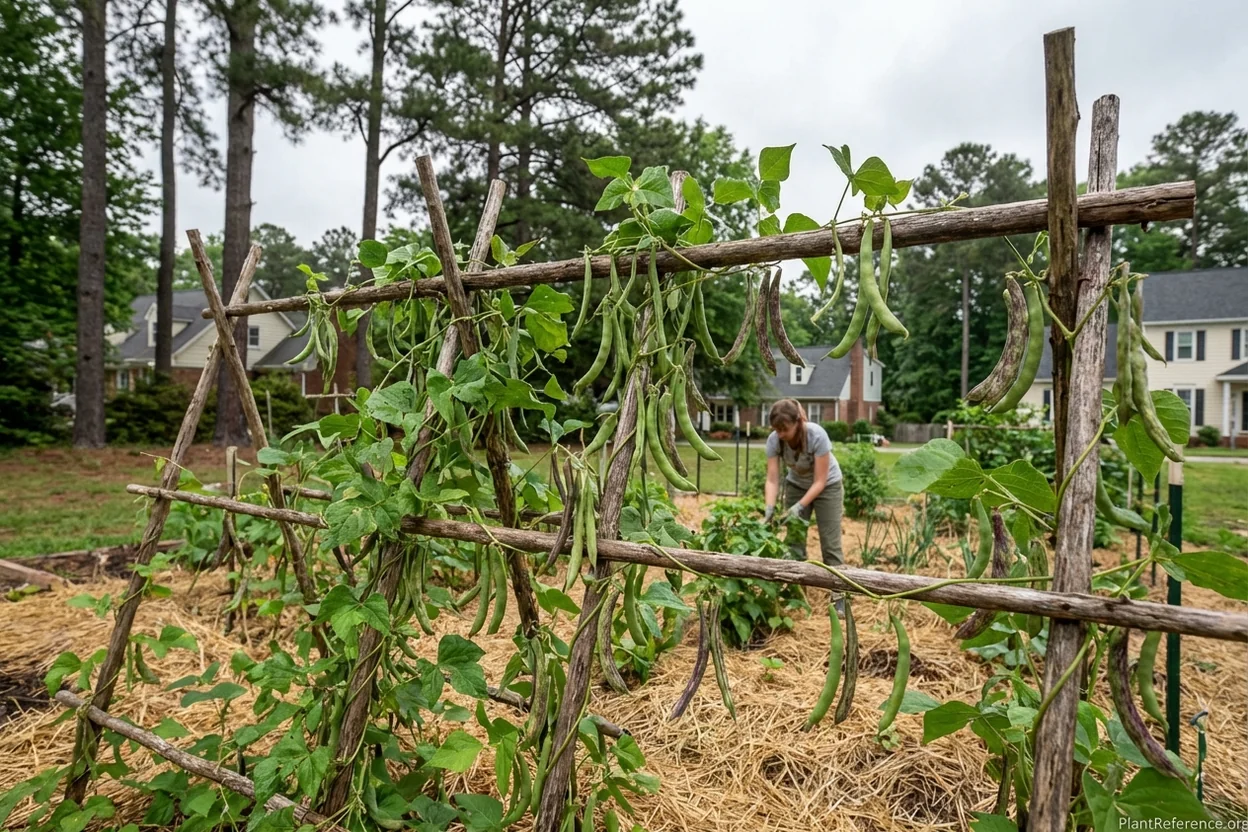
🌿Phaseolus vulgaris 'Kentucky Wonder' is the pole bean that built Southern gardens. In Raleigh, plant it April 20-25 for harvest starting in late June. The 60-70 day maturity means steady picking through August when properly managed.
The advantage in our climate is the extended harvest—one planting of pole beans produces for 6-8 weeks versus bush beans that give you everything in two weeks. For small Raleigh gardens, this efficiency matters.
Specific Planting Dates for Raleigh
Raleigh's Zone 7b classification with last frost April 5 and first frost November 5 gives us a 214-day growing season. Here's how to maximize it:
Spring Planting Schedule
First Spring Planting: April 12-15 - Soil temperature: 60°F minimum (check with soil thermometer) - Varieties: 🌿Phaseolus vulgaris 'Provider', 🌿Phaseolus vulgaris 'Roma II' - Harvest: June 1-15
Second Spring Succession: May 1-5 - All varieties suitable - Peak growing conditions - Harvest: June 20-July 5
Third Spring Succession: May 20-25 - Last spring planting before summer heat - Focus on heat-tolerant varieties - Harvest: July 10-25
Summer Strategy
June through August is challenging for beans in Raleigh. Temperatures above 90°F cause blossom drop, and our humidity creates disease pressure. I skip summer plantings and focus on succession harvesting from spring sowings.
Fall Planting Window
Fall Planting: August 15-25 - Count back 60-70 days from November 5 first frost - Excellent growing conditions as heat breaks - All varieties work well - Harvest: October 15-November 5
Complete Growing Guide for Raleigh
Soil Preparation for North Carolina Clay
Raleigh's red clay soil needs modification for successful bean growing. Beans require drainage, and our heavy clay holds too much water.
Two weeks before planting:
Work 2-3 inches of compost into the top 8 inches of soil
Add coarse sand if drainage is poor (not fine sand)
Test pH—beans prefer 6.0-7.0, and our clay tends toward acidic
Apply lime if pH is below 6.0
Planting day preparation:
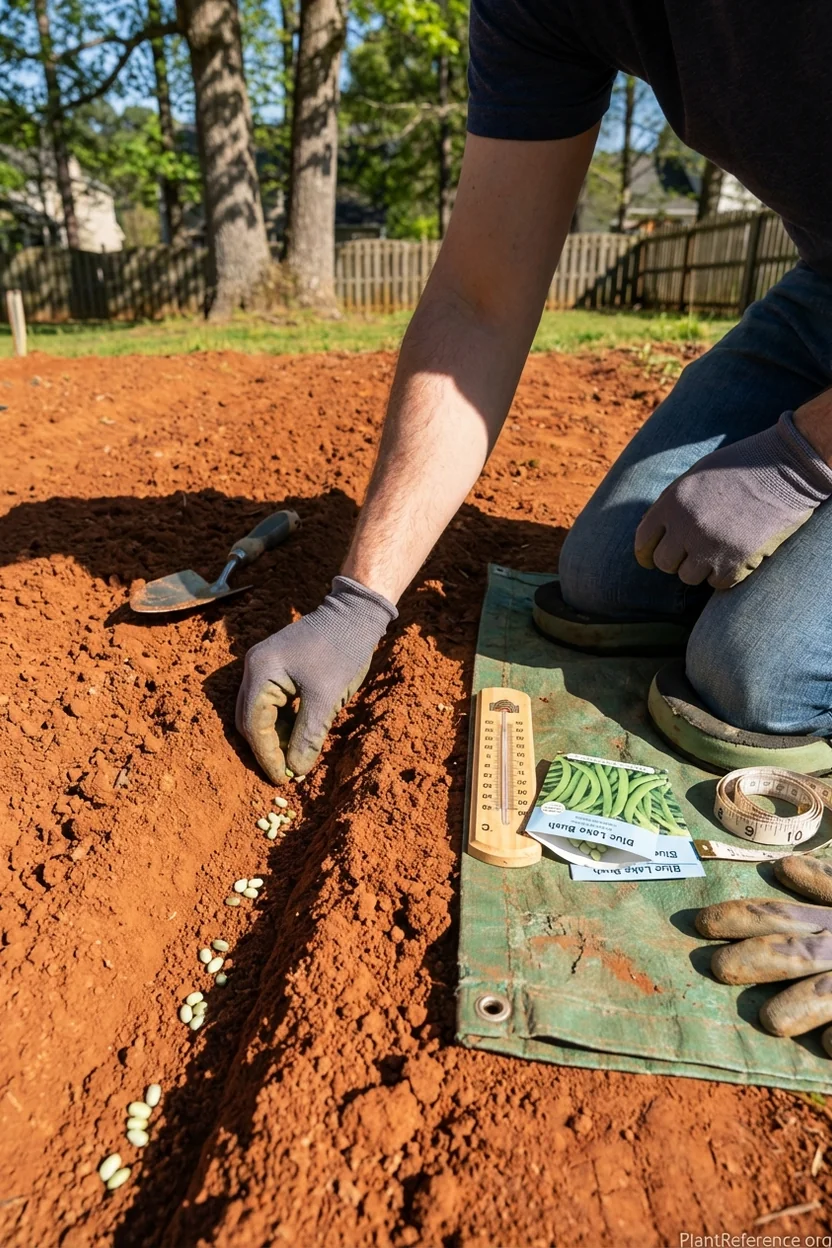
Ensure soil temperature reaches 60°F at 2-inch depth
Soil should crumble in your hand, not form sticky clumps
Create raised rows if drainage remains poor
Install trellises for pole varieties before planting
Spacing and Planting Depth
Bush varieties: 4-inch spacing, 1-inch deep in our clay soil Pole varieties: 6-inch spacing, 1-inch deep
The wider spacing for poles accounts for their larger root systems and reduces competition. In Raleigh's humidity, good air circulation prevents fungal problems.
Watering Strategy for Humid Climate
Raleigh's summer humidity creates unique watering challenges. We get enough rainfall most years, but distribution is uneven.
Establishment phase (first 3 weeks): Keep soil consistently moist but not waterlogged. Our clay soil can stay wet too long, causing seed rot.
Growing phase: Water deeply once weekly if rainfall is less than 1 inch. Morning watering allows foliage to dry before evening, reducing disease risk.
Flowering phase (most critical): Maintain consistent moisture. Water stress during flowering causes blossom drop—a common problem during our hot, dry spells in July.
Fertilizing in North Carolina Soil
Our red clay soil is often rich in nutrients but low in organic matter. Beans fix their own nitrogen, so avoid high-nitrogen fertilizers.
At planting: Apply balanced fertilizer like 10-10-10 at half strength Mid-season boost: Side-dress with compost or low-nitrogen fertilizer when plants begin flowering Fall planting: Reduce fertilizer—cooler weather slows nutrient uptake
Succession Planting for Continuous Harvest
Raleigh's long season allows excellent succession planting:
Bush beans: Plant every 2-3 weeks from April 12 through May 25 Pole beans: Two plantings maximum—April 20 and August 15
This schedule provides continuous harvest from June through early July, then again from October through first frost.
Troubleshooting Raleigh-Specific Problems
Heat Stress and Blossom Drop
Raleigh's summer temperatures often exceed 90°F, causing bean flowers to abort. This is our biggest growing challenge.
Symptoms: Flowers form but fall off before pods develop Solution: Plant early enough to harvest before peak heat, or wait for fall planting Prevention: Maintain consistent soil moisture and use mulch to cool soil
Fungal Diseases in Humid Conditions
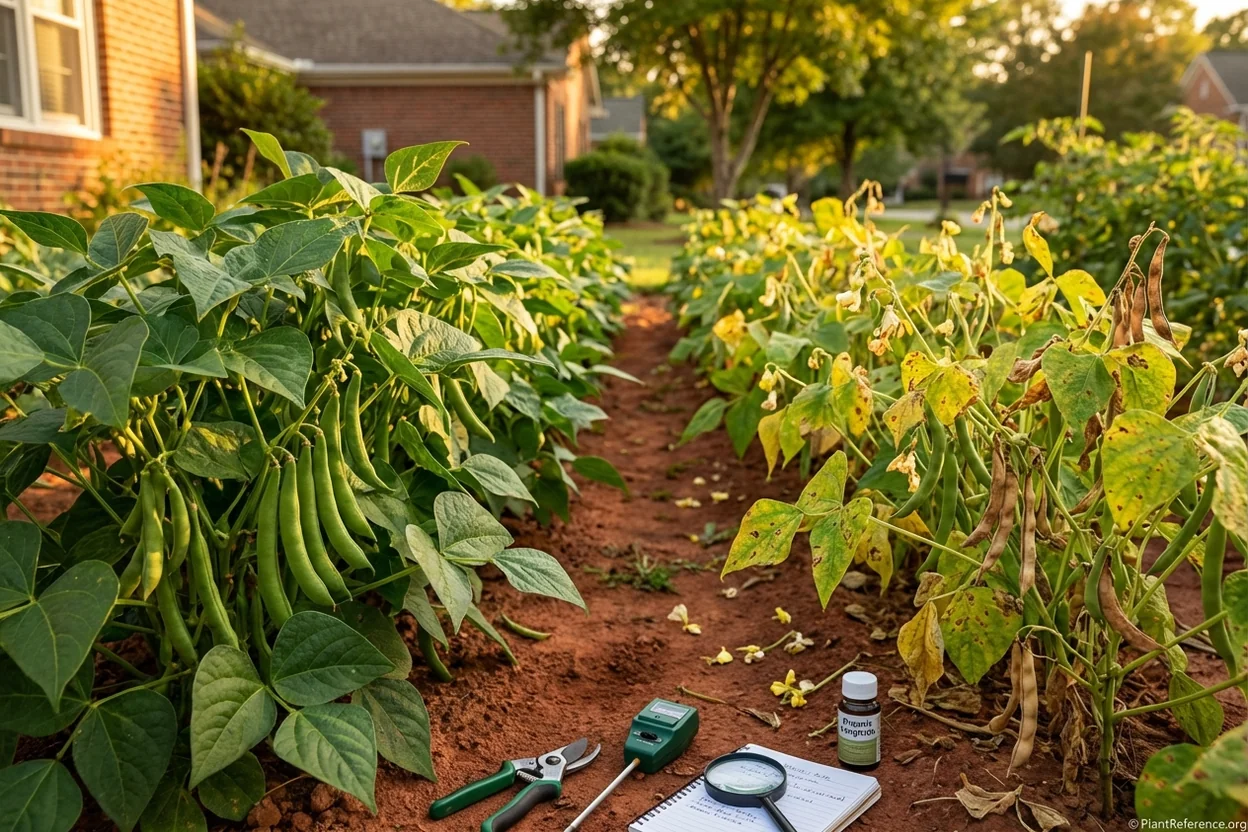
Our humid summers create ideal conditions for white mold, anthracnose, and bacterial blight.
White mold: Fluffy white growth on stems at soil level - Improve air circulation with proper spacing - Avoid overhead watering - Remove infected plants immediately
Anthracnose: Dark, sunken spots on pods - Plant resistant varieties like 🌿Phaseolus vulgaris 'Roma II' - Avoid working in wet gardens - Practice 3-year crop rotation
Mexican Bean Beetle Pressure
This copper-colored beetle with black spots is our primary bean pest in North Carolina.
Identification: Adults are ¼ inch long, larvae are yellow with spines Damage: Skeletonize leaves, reducing plant vigor and pod production Control: Hand-pick egg masses on leaf undersides, apply Bacillus thuringiensis for larvae
Clay Soil Drainage Issues
Raleigh's red clay can create waterlogged conditions after heavy rains.
Symptoms: Seeds don't germinate, or seedlings develop root rot Solution: Plant in raised beds or mounded rows Long-term fix: Continue adding organic matter annually to improve soil structure
Harvest & Storage
Determining Harvest Time
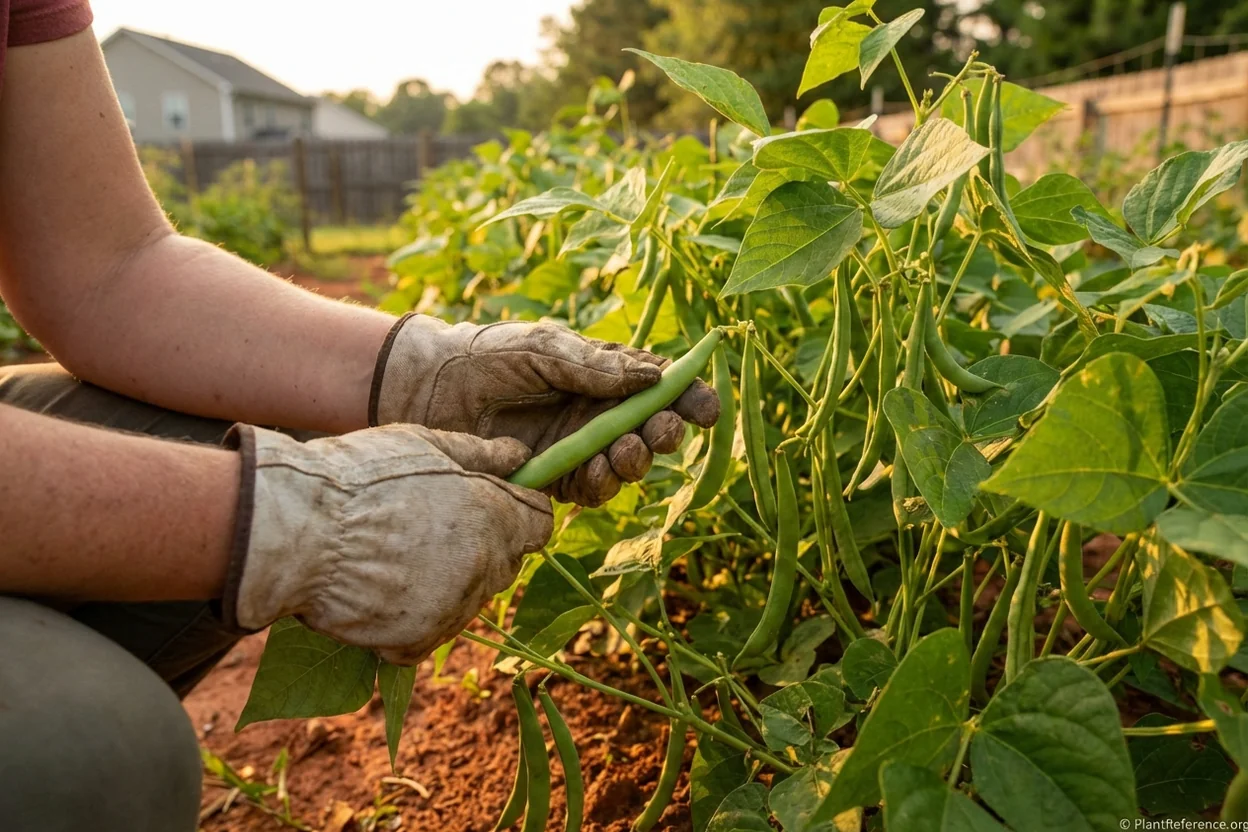
Snap beans: Pick when pods are firm and crisp, seeds barely visible Fresh shell beans: Harvest when pods are plump but still green Dry beans: Wait until pods turn brown and rattle when shaken
In Raleigh's humid climate, check plants every other day during peak harvest. Pods can go from perfect to overripe quickly in our summer heat.
Peak Harvest Schedule
Provider: June 1-15, October 15-30
Roma II: June 5-20, October 20-November 5
Kentucky Wonder: June 25-August 15 (spring), October 15-November 5 (fall)
Storage and Preservation
Fresh beans store 7-10 days refrigerated in perforated plastic bags. For long-term storage:
Blanching for freezing: Boil 3 minutes, ice water bath, then freeze Canning: Use pressure canner only—green beans are low-acid vegetables Drying: Southern traditions include "leather britches"—beans dried on the string
→ Ball FreshTECH Automatic Home Canning System ($179-199) - Complete pressure canning system for preserving green beans
Electric pressure canning system specifically designed for low-acid vegetables like green beans. Features automatic pressure and temperature control, eliminating guesswork in safe preservation. Large 20-quart capacity handles substantial harvests. Built-in timer and pressure monitoring ensure food safety standards. Includes rack system for proper jar placement and steam venting. Perfect for preserving Raleigh's successive bean harvests through North Carolina's long growing season. Digital controls simplify the canning process for beginners while maintaining professional results.
Product link unavailable
Frequently Asked Questions
Reading about plants and recognising them are different skills. These three build the second.
- Daily PlantIdentify the day’s mystery plant from a close-up photograph.
- Keyed OutWork a dichotomous key, lead by lead, to name a hidden specimen.
- Name That PlantName a specimen from botanical clues dealt hardest first.
Free to play, no account needed
Aisha manages a small tropical nursery on the east side of Houston, specializing in plants that can handle the Gulf Coast's humidity, heat, and unpredictable flooding. She studied horticulture in college and worked at a wholesale grower before opening her own operation. Growing up, her parents kept a kitchen garden with okra, bitter gourd, and curry leaf plants—a tradition she's continued. Houston's subtropical climate lets her grow things most of the country can't, but it also means dealing with fungal issues, standing water, and summers where it's too hot for even tomatoes. Aisha writes about tropical and subtropical plant care, humidity management, and working with heavy clay soils.