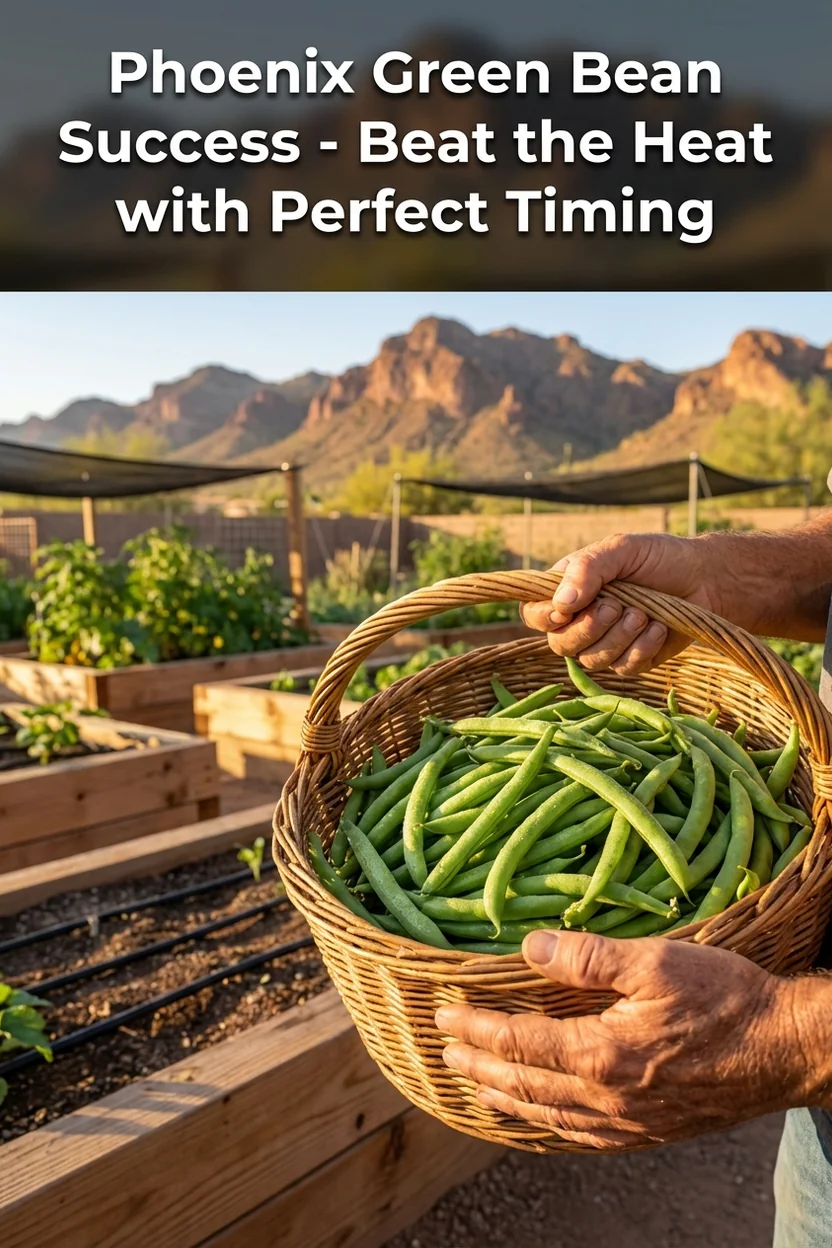
When to Plant Green Beans in Phoenix: Complete Guide + Best Varieties for Zone 9b
Pets & Toxicity
Recorded toxicity for plants linked in this guide. An unknown status is not a safety assessment.
No linked plant is recorded as toxic (3 linked plants checked)DetailsHide
Phaseolus vulgaris 'Blue Lake' — Toxicity
Non-toxic when cooked. Raw pods carry lectins (phytohemagglutinin) that cause digestive upset on raw consumption — pods are cooked before eatingView Phaseolus vulgaris 'Blue Lake' plant profilePhaseolus vulgaris 'Kentucky Wonder' — Toxicity
Non-toxicView Phaseolus vulgaris 'Kentucky Wonder' plant profile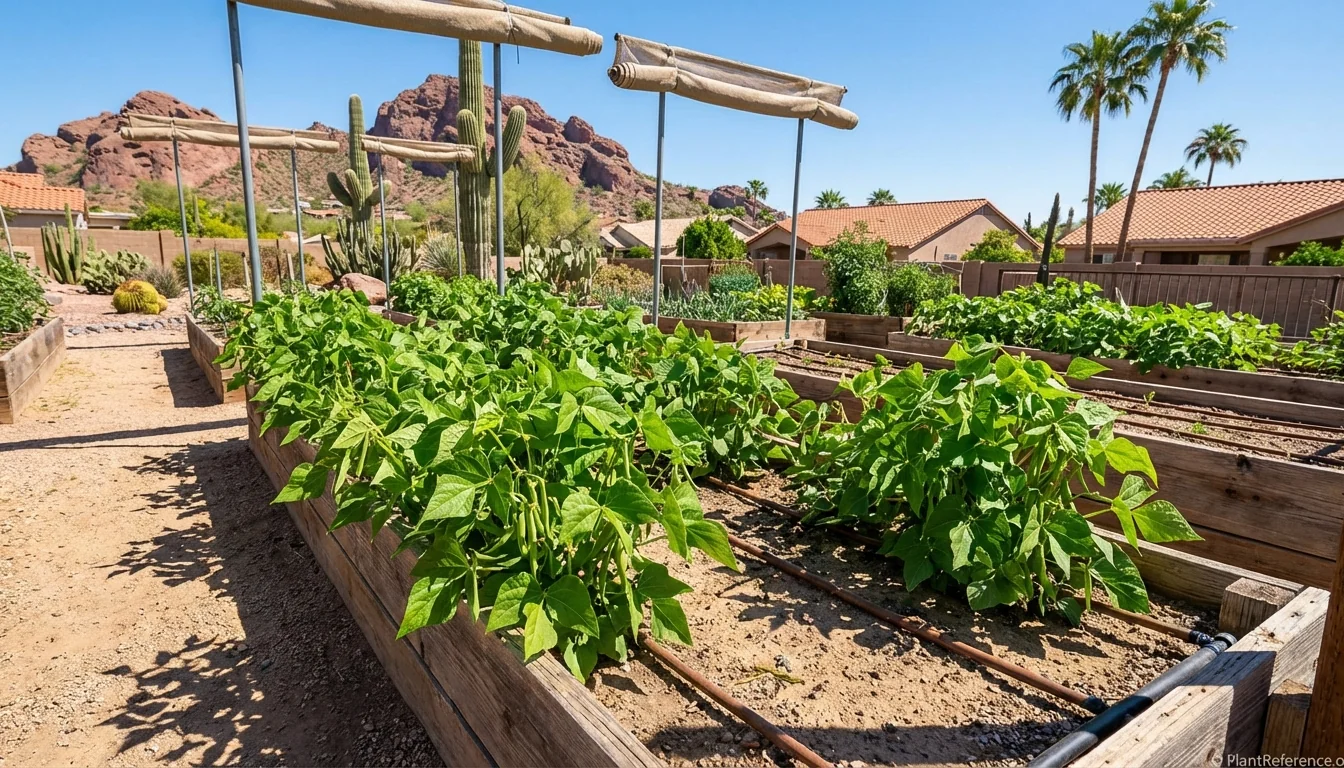
— Image © Plant Reference 2026
Growing green beans in Phoenix requires working with the desert, not against it. After forty years of desert gardening, I'll tell you straight: when to plant green beans in Phoenix is more critical than anywhere else I've grown them. Plant at the wrong time, and the desert heat will cook your flowers before they ever become pods.
Phoenix sits in Zone 9b with a 289-day growing season from February 14 to November 30, but don't let that fool you—green beans can't handle our summer furnace. We get two distinct planting windows: spring and fall. Miss these windows, and you'll watch your plants wither no matter how much you water them.
The key is understanding that green beans are heat-sensitive when flowering. Once temperatures hit 95°F (35°C) consistently, the flowers abort and you get all leaves, no beans. That's why we plant early in spring to harvest before the heat, then plant again in fall when temperatures drop back down.
Best Green Bean Varieties for Phoenix's Zone 9b Climate
Not all green bean varieties handle Phoenix heat equally. I've tested dozens over the years, and these six consistently produce before our summer inferno hits:
Variety | Days to Maturity | Best For | Notes for Phoenix |
|---|---|---|---|
50-55 days | Quick spring harvest | Fastest maturity beats heat | |
53-60 days | Processing, flat pods | Heat-tolerant Romano type | |
55-60 days | Easy harvest visibility | Purple pods show heat stress early | |
55-65 days | Fresh eating | Reliable in both seasons | |
55-60 days | Gourmet markets | Beautiful but heat-sensitive | |
60-70 days | Fall planting only | Pole variety for long fall season |
Provider takes the crown in Phoenix. At 50-55 days, it's the fastest to harvest, meaning you can plant it March 15 and harvest by May 1—well before the real heat hits. I've grown this variety for twenty years here and it never disappoints.
Roma II works beautifully for preservation. The flat Romano pods freeze better than round varieties, and at 53-60 days, it still matures fast enough for our spring window. Plus, the broad leaves provide some self-shading.
Kentucky Wonder is fall-only here. That 60-70 day maturity window is too long for spring planting, but perfect for fall when you plant September 1 and harvest through November and December.
Specific Planting Dates for Phoenix
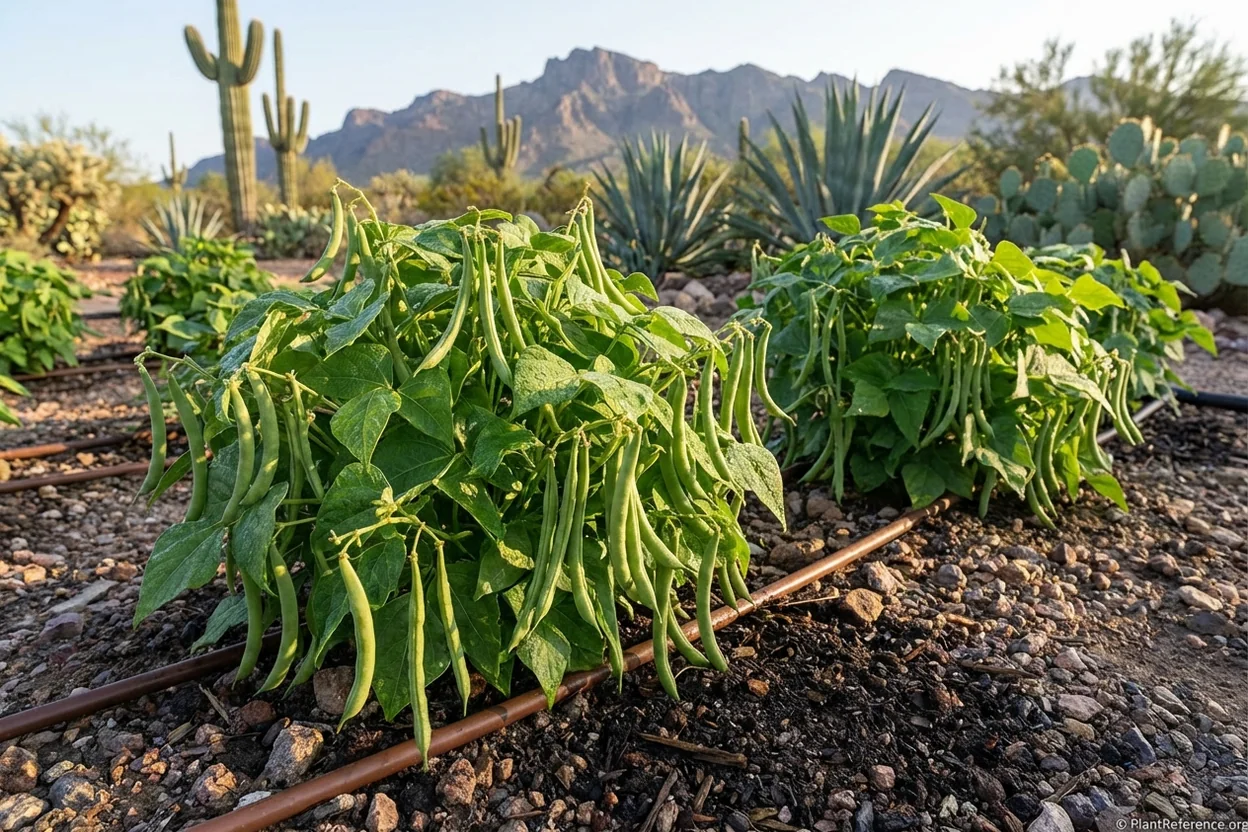
Phoenix's extreme summer heat creates two distinct planting seasons. Here are the exact dates that work:
Spring Planting Window: March 1 - April 15
Earliest safe planting: March 1 (soil temperature reaches 60°F/15°C)
Optimal planting: March 15-30 (soil warm, maximum growing time before heat)
Last chance planting: April 15 (60-day varieties only)
After April 15, even fast varieties like Provider won't mature before heat stress kicks in.
Fall Planting Window: September 1 - October 1
Early fall: September 1-15 (best for longer varieties like Kentucky Wonder)
Main fall planting: September 15-30 (ideal soil and air temperatures)
Late fall: October 1 (bush varieties only, shorter harvest window)
Why these dates work:
Spring planting gives you 60-75 days before consistent 95°F+ temperatures arrive in mid-May.
Fall planting provides 60-90 days of moderate temperatures before our first frost around November 30.
I track soil temperature religiously—green beans won't germinate well below 60°F (15°C), and our desert soil reaches this by early March. Air temperature is equally important: once we hit 95°F+ consistently, flower production stops.
Complete Growing Guide for Phoenix
Soil Preparation
Phoenix caliche and desert soil won't grow beans without major amendment. I add 4 inches of compost to every bed, every season. The organic matter helps hold moisture and keeps roots cool—both critical in our climate.
Soil temperature requirements:
Minimum for germination: 60°F (15°C)
Optimal: 70-75°F (21-24°C)
Dangerous: Above 85°F (29°C) at root level
pH management: Our desert soil runs alkaline (7.5-8.5), but beans prefer 6.0-7.0. I add sulfur in fall to slowly lower pH over winter.
Irrigation Strategy
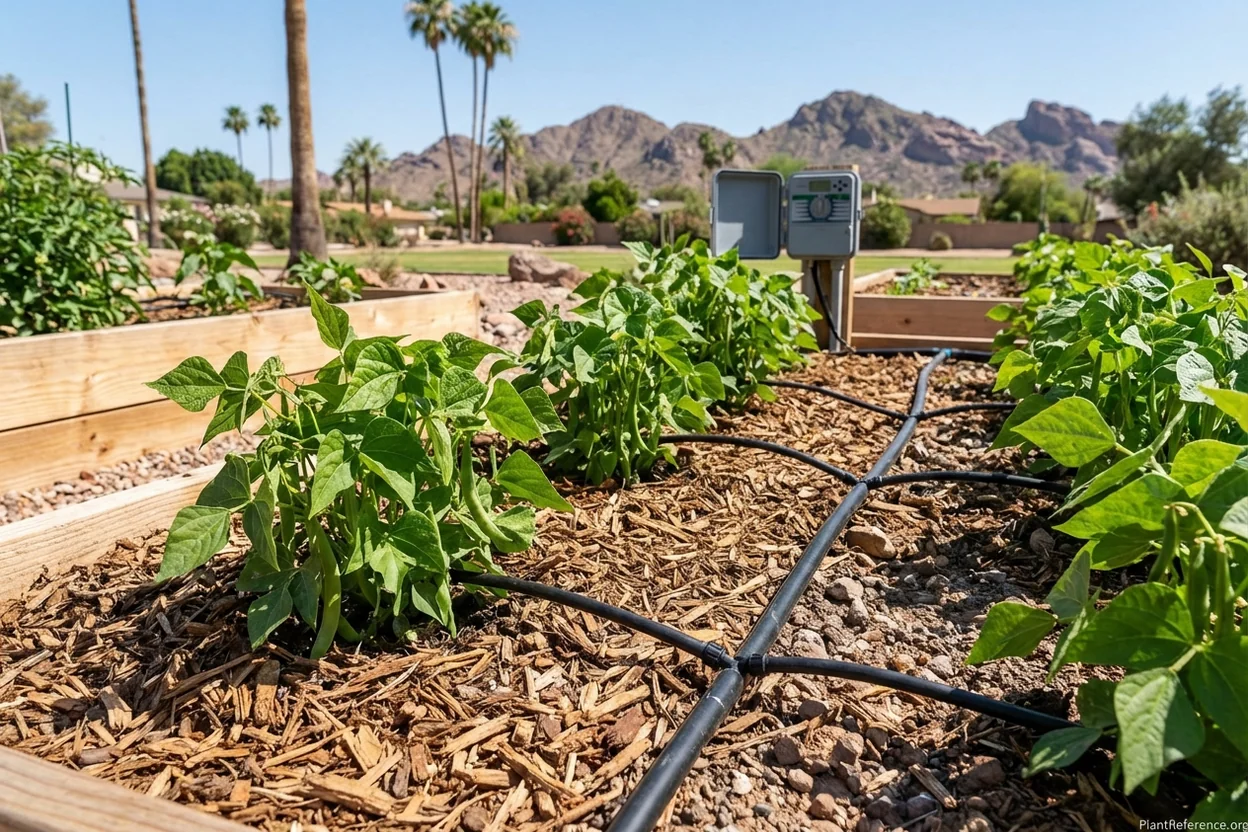
Forget overhead sprinklers—you'll waste water and promote fungal problems. Drip irrigation is non-negotiable in Phoenix.
Watering schedule:
Germination: Daily light irrigation for 7-10 days
Vegetative growth: Every other day, 1 inch per week
Flowering/pod set: Daily irrigation, 1.5 inches per week
Summer months: If attempting summer growing, twice daily misting
Planting Technique
Plant beans 1 inch deep in heavy soil, 1.5 inches in sandy desert soil. Space bush varieties 4 inches apart, pole varieties 6 inches. I plant in single rows 18 inches apart for good air circulation.
Seed inoculation is critical in our low-organic desert soils. Coat seeds with rhizobia bacteria inoculant just before planting—this helps beans fix nitrogen and reduces fertilizer needs.
Season Extension Techniques
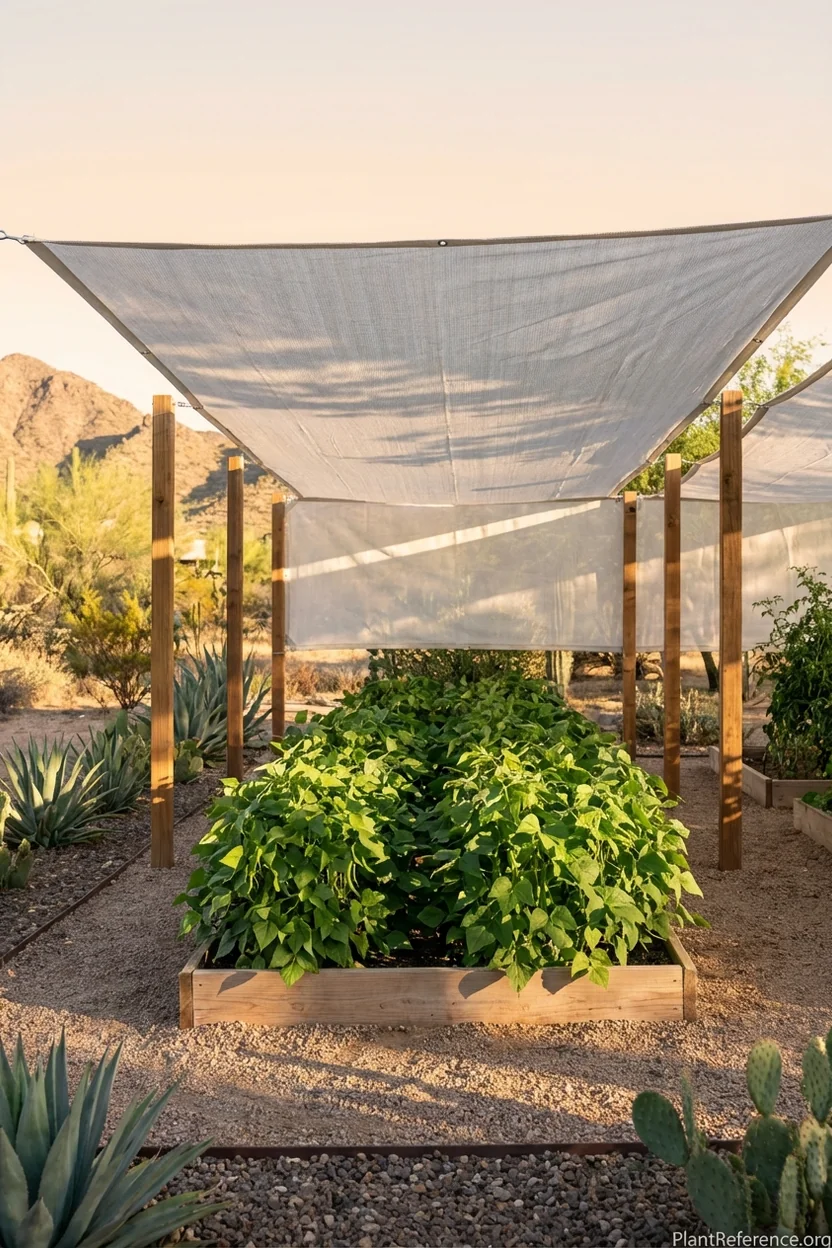
Spring season extension: Use row covers for early plantings if late frost threatens. Our last frost is typically February 14, but cold snaps can happen through early March.
Summer survival (advanced only): If you must grow through summer, use 50% shade cloth and evaporative cooling. Expect poor results—I only recommend this for experienced growers.
Fall advantage: Fall crops often outperform spring crops because plants mature during cooling temperatures instead of heating ones.
Succession Planting Strategy
Spring succession: Plant Provider every 2 weeks from March 1-April 1. This gives you continuous harvest from May through early June.
Fall succession: Plant every 2-3 weeks from September 1-October 1, using faster varieties for later plantings.
Variety timing:
March 1: Kentucky Wonder (pole, longest season)
March 15: Blue Lake or Roma II
March 30: Provider (fastest)
April 15: Provider only (last chance)
Troubleshooting Phoenix-Specific Problems
Heat Stress Symptoms
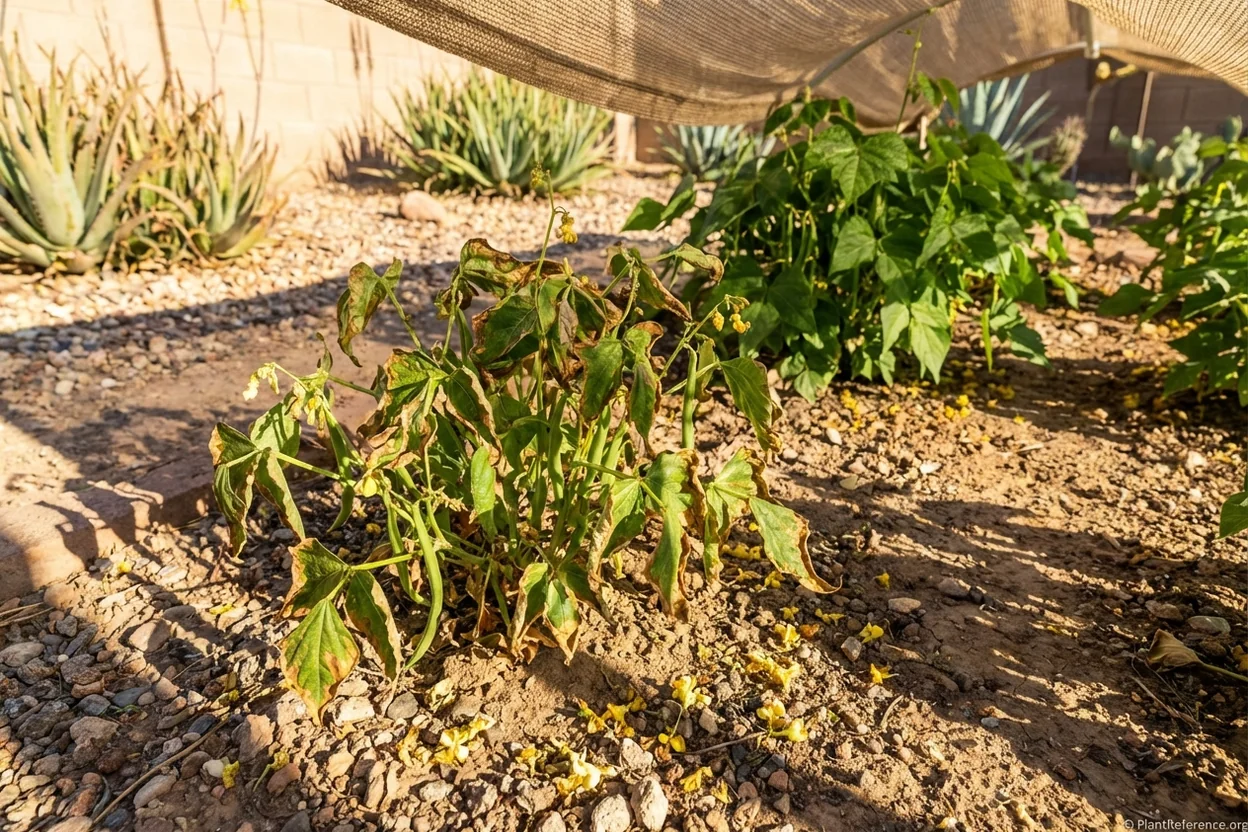
Flower drop: Temperatures above 95°F (35°C) cause flower abortion. You'll see flowers form but drop without setting pods.
Solution: Plant earlier or later to avoid peak heat. No amount of water fixes heat sterility.
Leaf scorch: Brown, crispy leaf edges despite adequate water.
Solution: Afternoon shade or earlier planting. This is different from water stress—the leaf edges look burned.
Stunted growth: Plants stay small despite good care.
Solution: Usually indicates planting too late in spring or soil temperature stress.
Water-Related Issues
Blossom end rot on pods: Usually indicates inconsistent watering, not calcium deficiency.
Solution: Maintain steady soil moisture with drip irrigation and mulch.
Yellowing leaves: Can indicate overwatering (root rot) or underwatering (stress response).
Solution: Check soil moisture 2 inches deep. Should be moist but not soggy.
Desert-Specific Pests
Spider mites: Common in hot, dry conditions. Look for fine webbing and stippled leaves.
Solution: Increase humidity around plants with more frequent irrigation. Predatory mites work well.
Thrips: Tiny insects that cause silvered leaf appearance.
Solution: Reflective mulch and beneficial insects. Thrips hate overhead irrigation but we avoid this for other reasons.
Soil and Environmental Issues
Caliche layer: Hard-packed desert soil prevents root development.
Solution: Break up caliche with pickax or auger. Raised beds bypass this problem.
Salt buildup: White crusty deposits on soil surface.
Solution: Deep watering to flush salts, improve drainage, add organic matter.
Alkaline soil: Stunted growth and yellowing despite adequate nutrients.
Solution: Add sulfur to lower pH, use acidifying fertilizers like ammonium sulfate.
Harvest & Storage
Harvest Timing
Harvest beans when pods snap crisply—usually 3-4 inches long for bush varieties, slightly larger for pole types. In Phoenix heat, check daily once harvest starts because pods can go from perfect to overripe in 2-3 days.
Morning harvest is essential in Phoenix. Pick before 8 AM when pods are crisp and full of moisture. Afternoon-picked beans are tough and lose quality quickly.
Harvest frequency: Pick every other day minimum during peak production. Leaving mature pods on the plant signals it to stop flowering.
Storage Methods
Fresh storage: Refrigerate immediately in perforated plastic bags. Use within 3-4 days maximum—Phoenix heat reduces storage life.
Freezing: Blanch in boiling water for 3 minutes, ice water bath, then freeze in portions. Roma II freezes especially well.
Preservation timing: In Phoenix's extreme heat, preserve beans the same day you harvest. The heat breaks down sugars and toughens fibers rapidly.
Frequently Asked Questions
Three daily games
Can you name a plant on sight?
Saturday’s specimenSolanum lycopersicum 'Yellow Pear'Reading about plants and recognising them are different skills. These three build the second.
- Daily PlantIdentify the day’s mystery plant from a close-up photograph.
- Keyed OutWork a dichotomous key, lead by lead, to name a hidden specimen.
- Name That PlantName a specimen from botanical clues dealt hardest first.
Free to play, no account needed
Dot grew up on a small farm in rural Virginia and has maintained a vegetable garden for decades. After retiring from teaching elementary school, she became a Master Gardener volunteer and spends her time mentoring new gardeners at community garden plots in Richmond. She's especially knowledgeable about heirloom varieties, seed saving, and traditional growing methods passed down from her grandmother. Dot's no-nonsense advice comes from extensive trial and error—she's seen every tomato disease, pest problem, and weather disaster imaginable. Her biggest pet peeve is gardeners who overcomplicate simple tasks. "Plants want to grow," she often says. "Your job is to not get in their way."