When to Plant Squash in Phoenix: Complete Guide + Best Varieties
Pets & Toxicity
Recorded toxicity for plants linked in this guide. An unknown status is not a safety assessment.
No linked plant is recorded as toxicDetailsHide
Cucurbita pepo 'Black Beauty' — Toxicity
Non-toxic as an edible cropView Cucurbita pepo 'Black Beauty' plant profileCucurbita pepo 'Yellow Crookneck' — Toxicity
Non-toxic as an edible cropView Cucurbita pepo 'Yellow Crookneck' plant profile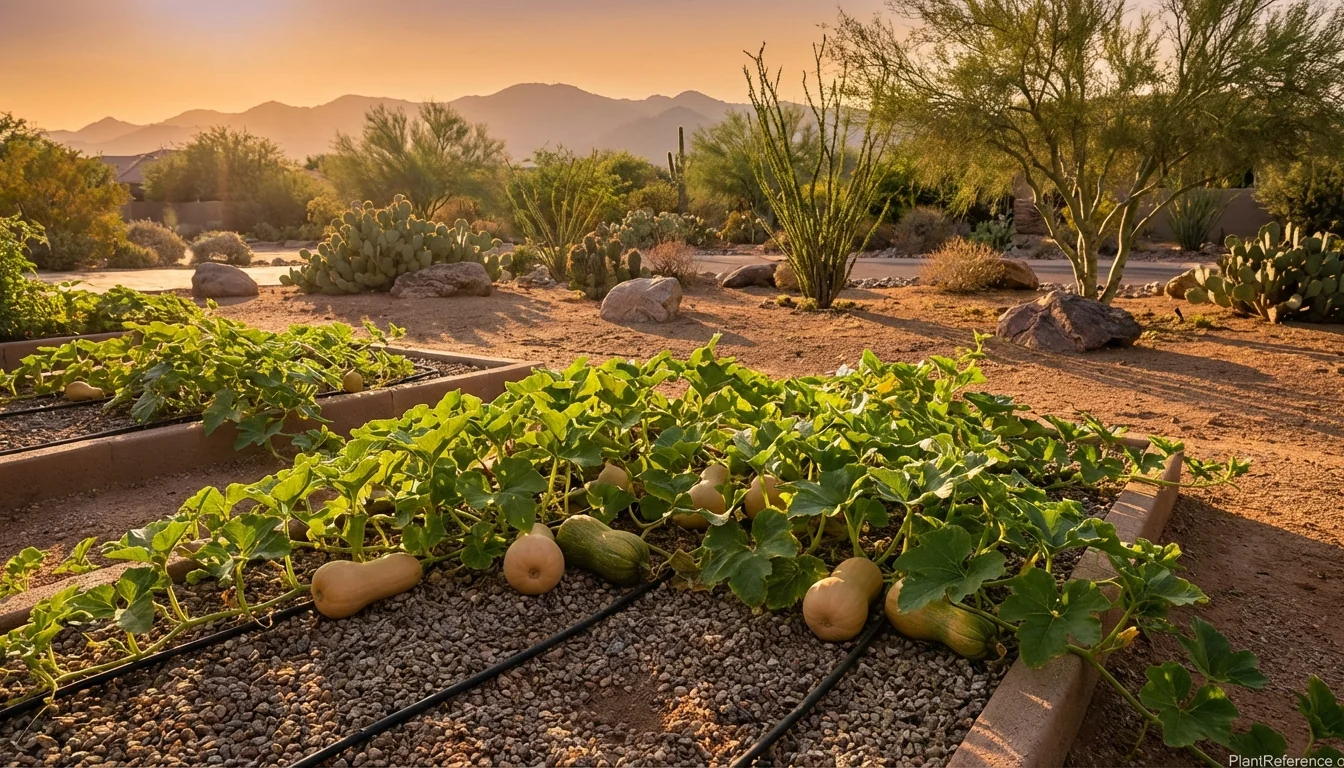
— Image © Plant Reference 2026
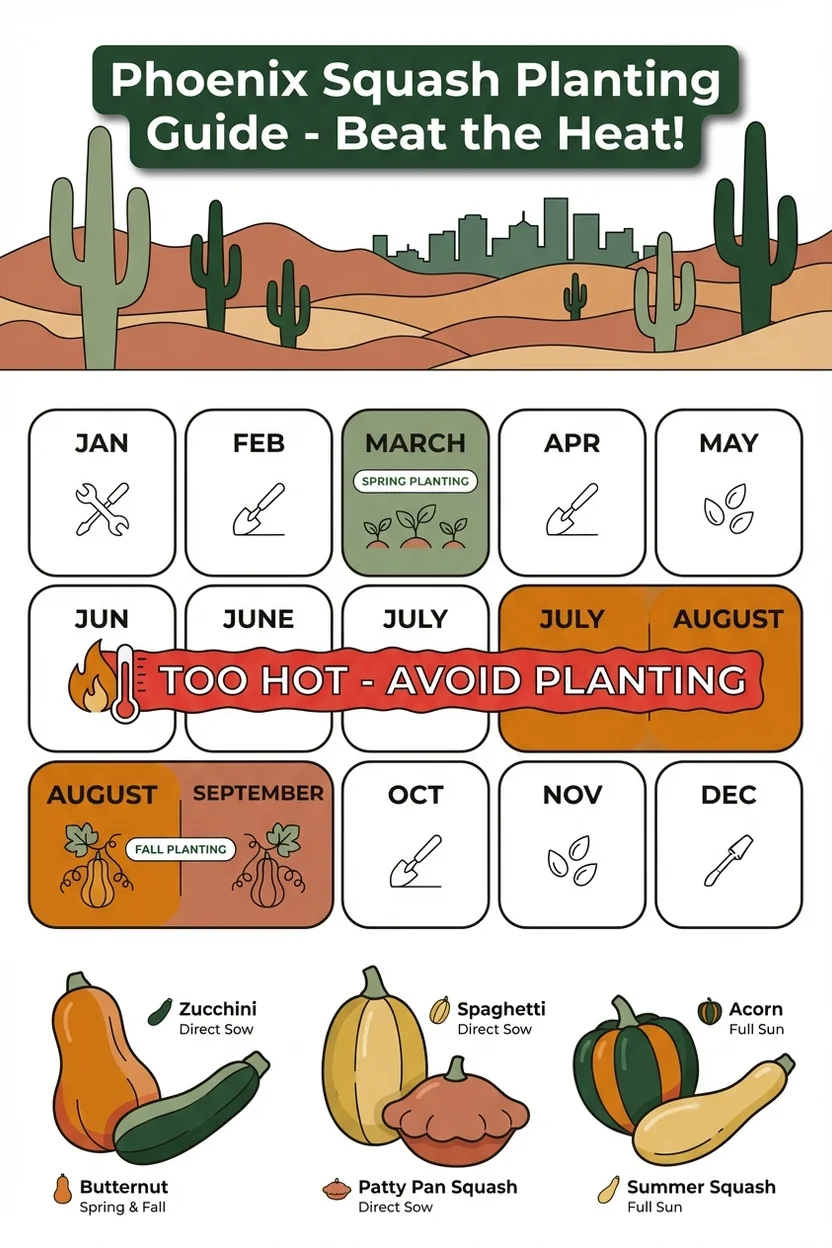
Phoenix's desert climate presents unique challenges for growing squash, with summer temperatures exceeding 115°F making traditional gardening challenging. Follow the crop-specific local planting windows.
Best Squash Varieties for Phoenix's Desert Climate
Phoenix's extreme desert heat and intense sun require careful variety selection prioritizing heat tolerance and rapid maturity.
Summer squash varieties excel in Phoenix due to their rapid 45-60 day maturity, allowing early harvest before extreme heat arrives. 🌿Cucurbita pepo 'Black Beauty' zucchini performs well in spring plantings.
🌿Cucurbita pepo 'Pattypan' includes bush types for container growing in Phoenix's limited garden spaces. Containers allow placement in morning sun areas that receive afternoon shade protection during late spring heat buildup.
🌿Cucurbita pepo 'Yellow Crookneck' can be planted in early March for spring harvest.
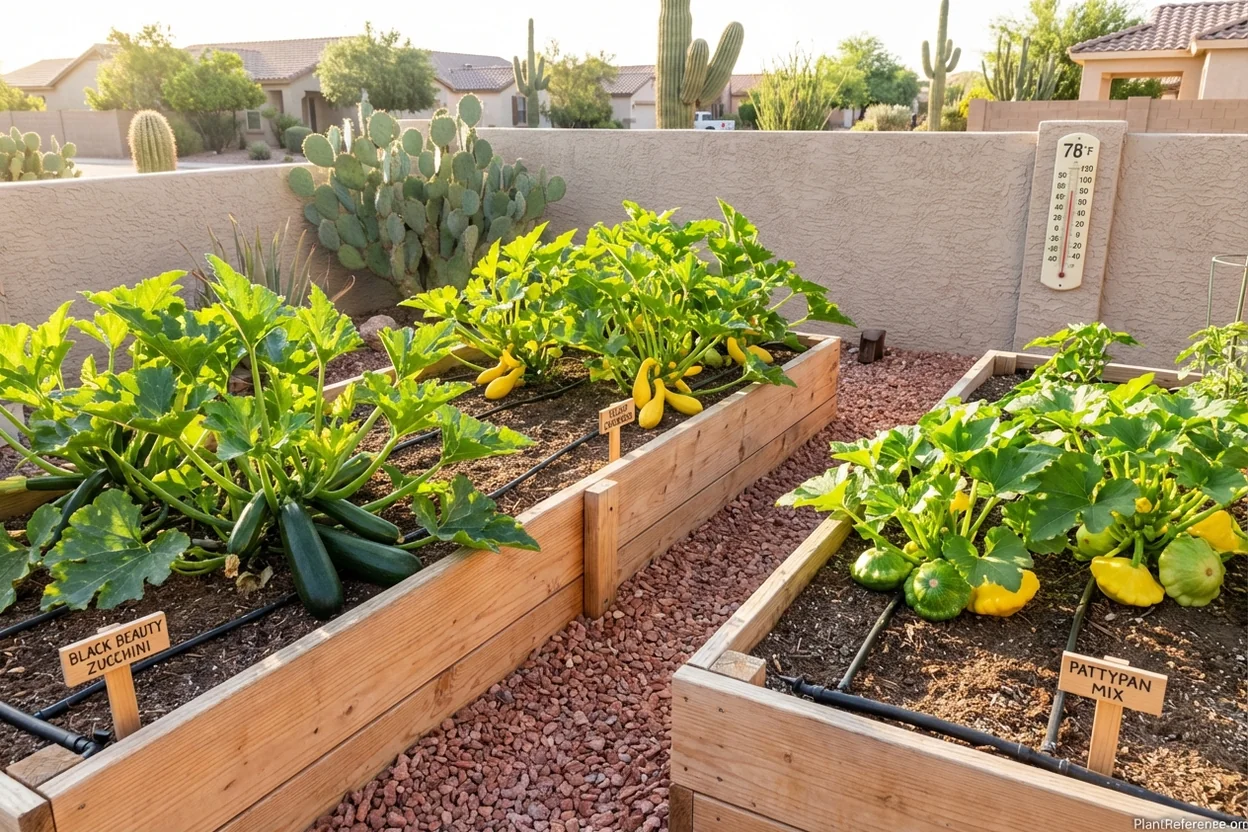
Winter squash varieties present greater challenges in Phoenix, requiring enough time to mature before frost. 🌿Cucurbita moschata 'Butternut' is a storage squash. Sow March or July to early August.
🌿Cucurbita pepo 'Delicata' is a short-season winter squash at 80-100 days, needing sowing within the winter-squash window. Its thin, edible skin eliminates peeling in hot kitchens.
🌿Cucurbita pepo 'Acorn' varieties may benefit from temporary shade during hot-weather establishment.
Variety | Days to Maturity | Best Season | Heat Tolerance | Notes for Phoenix |
|---|---|---|---|---|
45-55 days | Spring | Varies | Excellent early producer, plant March 1-15 | |
50-60 days | Spring/Fall | Varies | Bush types good for containers | |
50-60 days | Spring | Varies | Reliable performer, harvest while productive | |
85-100 days | Spring/Summer | Varies | Plant March or July to early August | |
80-100 days | Spring/Summer | Varies | Short-season winter squash; avoid late sowing | |
88-100 days | Spring/Summer | Varies | May need temporary shade |
Grow 🌿Cucurbita maxima 'Kabocha' varieties as warm-season crops within the winter-squash sowing windows.
Specific Planting Dates for Phoenix Squash Success
Phoenix's unique desert climate demands precise timing to work within narrow temperature windows.
Spring Squash Planting (mid-February - early April)
Start summer squash seeds indoors February 15-22 for transplanting March 1-8. Indoor starting protects seedlings from occasional late cold snaps while establishing strong root systems. Direct sowing outdoors works mid-February to early April when soil temperatures exceed 65°F consistently.
Plant summer squash mid-February to early April. Later plantings may encounter rising temperatures that stress plants before fruit development completes. 🌿Cucurbita pepo 'Black Beauty' planted March 1 can begin harvest by mid-April in favorable weather.
Planting for Fall Harvest (July - early September)
Fall timing proves more critical than spring due to the need for mature harvest before local frost. Sow winter squash in July to early August.
Direct sowing summer squash works August 15-September 1, with shade protection as needed and frequent irrigation until seedlings establish. Plant 🌿Cucurbita moschata 'Butternut' in March or July to early August for harvest before local frost.
Summer Heat Management
Sow winter squash July to early August. Use this period for soil preparation and seed ordering for fall planting.
Succession Planting Strategy
Phoenix's split seasons allow two summer-squash crops and succession planting. Plant spring crop March 1, harvest through May. Plant fall crop August 15, harvest through November. This strategy maximizes production within temperature constraints.
For extended summer squash harvest, plant early varieties March 1 and heat-tolerant varieties March 15. The two-week offset extends harvest from mid-April through early June in favorable years.
Complete Growing Guide for Phoenix Desert Conditions
Soil Preparation for Desert Heat
Phoenix's soils vary; assess drainage before organic matter incorporation.
Use raised beds where needed for improved drainage.
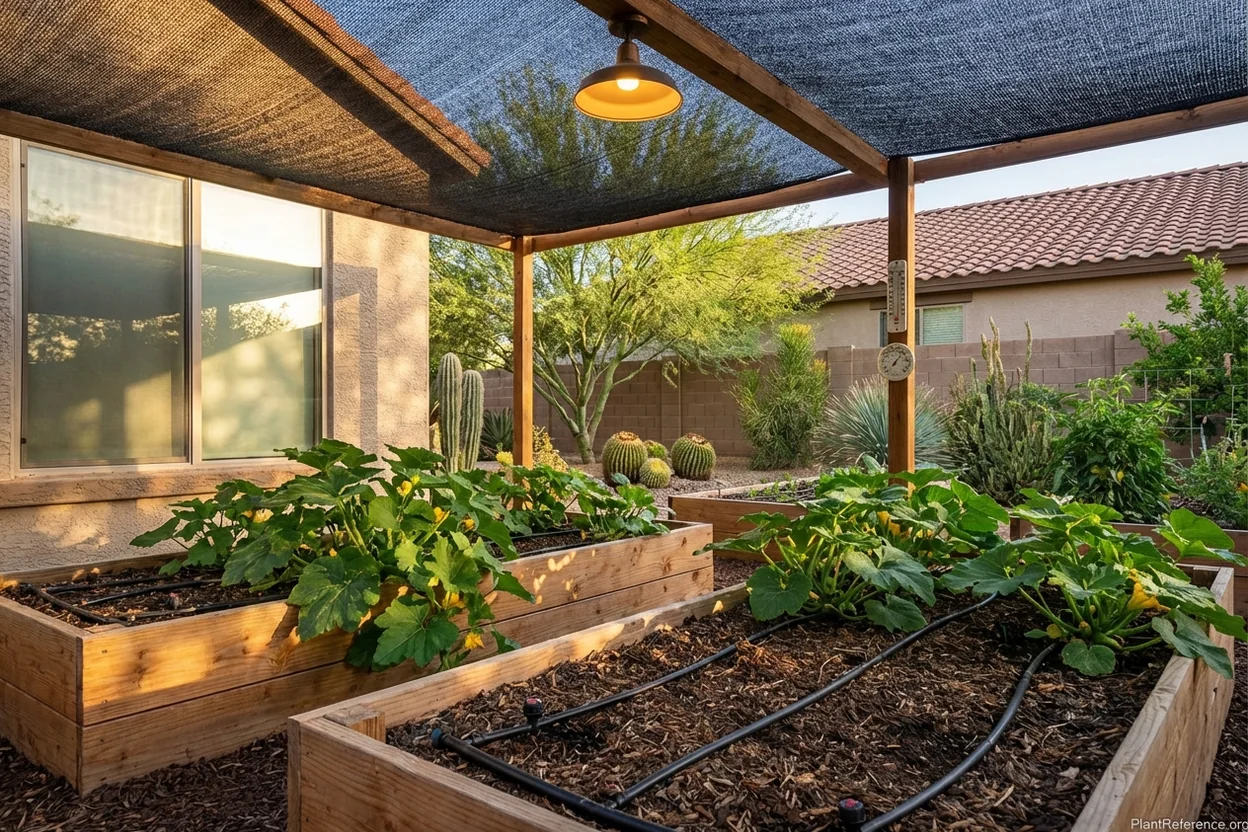
Install drip irrigation before planting for efficient root-zone watering. Position emitters to wet the growing root area, providing slow, deep watering that penetrates amended soil zones.
Managing Extreme Heat Exposure
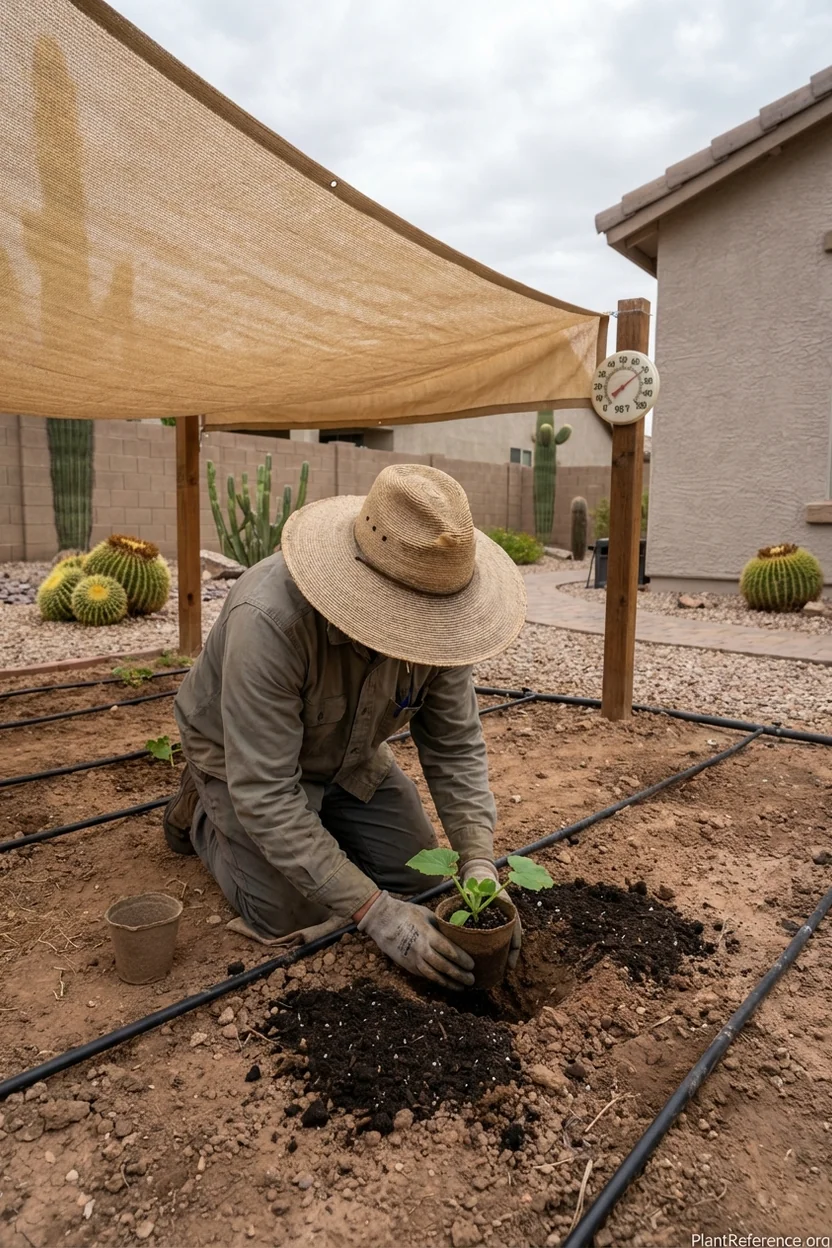
Shade cloth can help Phoenix squash success, especially during fall establishment. Install 30-50% shade cloth over growing areas, creating filtered light conditions that reduce heat stress while allowing adequate photosynthesis.
Position squash beds on the east side of larger plants or structures, providing morning sun exposure while offering afternoon shade protection. Desert winds require sturdy shade structure anchoring.
Apply 4-6 inch organic mulch layers around plants, keeping mulch 3 inches from stems.
Water Management in Arid Conditions
Phoenix receives only about 7.2 inches annual rainfall at Sky Harbor (1991-2020 normal), requiring intensive irrigation management for squash production. Deep, infrequent watering encourages deep root development while conserving water in desert conditions.
Water according to root-zone moisture, not a fixed schedule or gallon allowance. Winter squash needs consistent moisture through September-October development.
Monitor soil moisture 6-8 inches deep using moisture meters, as surface drying occurs rapidly in desert heat while root zones may remain adequately moist.
Pollination Management in Heat
Phoenix's extreme temperatures disrupt normal pollination processes and can reduce fruit set. Hand pollination may help when pollen transfer is inadequate.
Collect pollen from male flowers early in the morning while both male and female flowers are open. Transfer immediately to female flowers before heat desiccates reproductive structures.
Encourage native squash bee populations by providing squash flowers and undisturbed ground. They forage around sunrise.
Troubleshooting Phoenix-Specific Squash Problems
Heat Stress and Flower Abortion
Phoenix gardeners commonly experience flower drop during hot weather; male flowers drop naturally.
Prevention: Plant early enough for flower development during cooler periods (March-April, September-October). Use shade cloth to reduce direct solar exposure around plants.
Treatment: Heat-stressed plants may recover with suitable irrigation and temporary shade.
Sunscald on Developing Fruits
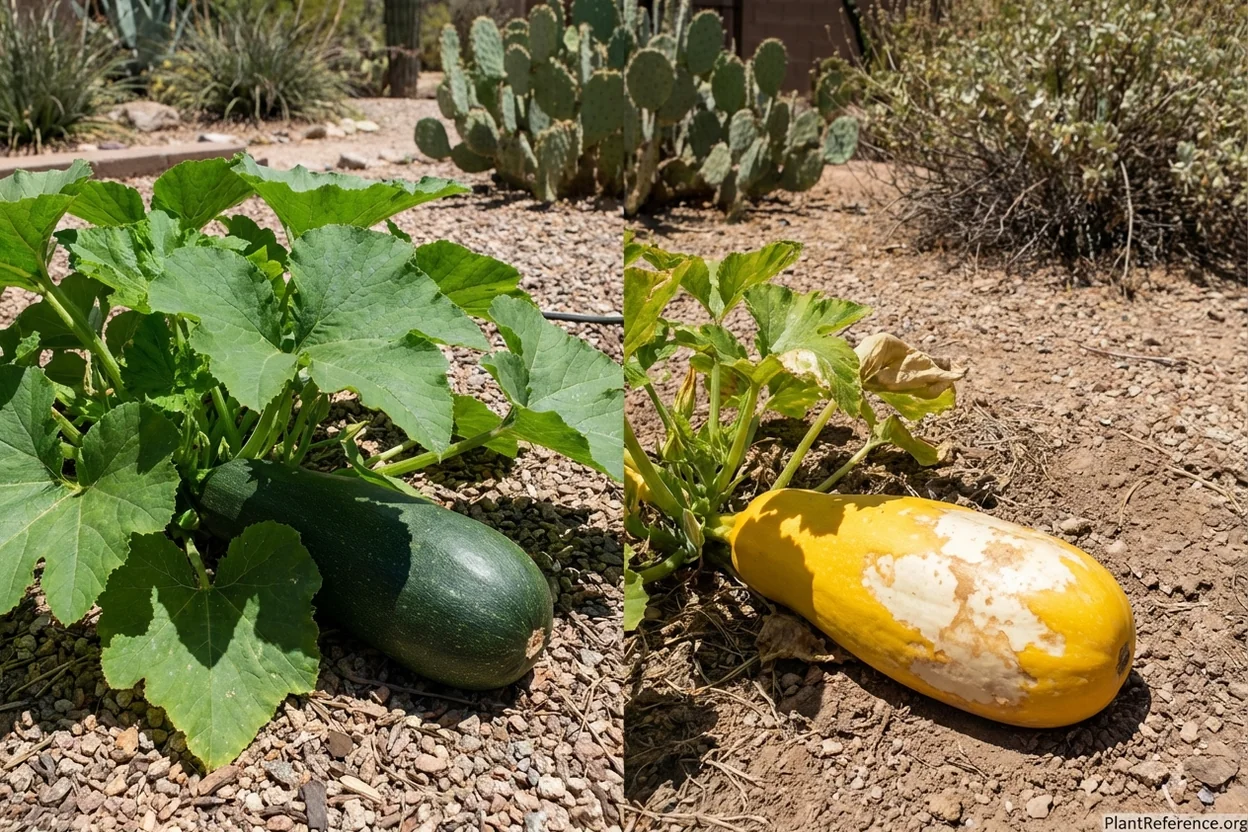
Desert sun intensity causes severe sunscald on exposed squash fruits, creating white, necrotic patches that invite secondary rot organisms.
Prevention: Maintain dense foliage cover through adequate irrigation and nutrition. Position developing fruits under leaves when possible.
Treatment: Cover exposed fruits with light-colored cloth or construct temporary shade structures. Harvest summer squash tender, but winter squash fully mature for storage.
Desert Pest Pressure
Phoenix's mild winters allow some pests to survive between crops, requiring vigilant management.
Irrigation-Related Problems
Harvest & Storage in Arizona's Desert Climate
Spring Harvest Timing
Begin harvesting summer squash varieties when fruits reach tender, immature stage typically occurring 45-55 days from planting. In Phoenix, March 1 plantings can produce first harvest by mid-April.
Harvest 🌿Cucurbita pepo 'Black Beauty' zucchini at 6-8 inches length when skin remains glossy and easily punctured by fingernail. Daily harvest may be necessary during peak production periods in April-May.
Continue summer squash harvest while plants remain productive.
Fall Harvest Management
Harvest mature winter squash before local frost; frosts damage unprotected fruits.
🌿Cucurbita moschata 'Butternut' sown in March or July to early August matures according to variety and weather, indicated by stem drying and skin hardening that resists fingernail puncture. Harvest during dry weather for best storage potential.
Cut stems 1-2 inches from fruit using sharp pruning shears. Clean harvested winter squash gently, removing soil particles that could promote rot during storage.
Desert Storage Strategies
Cure winter squash except acorn types. Store cured winter squash in unheated garages or storage rooms where temperatures remain 50-55°F.
Store at 50-70% humidity; storage life varies by cultivar.
Check stored squash monthly, removing any showing soft spots or stem rot. Use sound, mechanically damaged squash promptly; discard soft-rotted or moldy squash.
Frequently Asked Questions
Reading about plants and recognising them are different skills. These three build the second.
- Daily PlantIdentify the day’s mystery plant from a close-up photograph.
- Keyed OutWork a dichotomous key, lead by lead, to name a hidden specimen.
- Name That PlantName a specimen from botanical clues dealt hardest first.
Free to play, no account needed
Alejandro is a landscape designer in Phoenix who focuses on low-water, desert-adapted plantings. He grew up in Tucson surrounded by Sonoran Desert plants and got frustrated watching neighbors install water-hungry lawns in a city that gets eight inches of rain a year. After earning his landscape architecture degree, he started designing residential gardens using native and desert-adapted species. Alejandro's approach is practical—he works with the climate rather than against it, using microclimates, shade structures, and efficient irrigation to create gardens that look good without draining the aquifer. He's a regular speaker at local xeriscaping workshops.