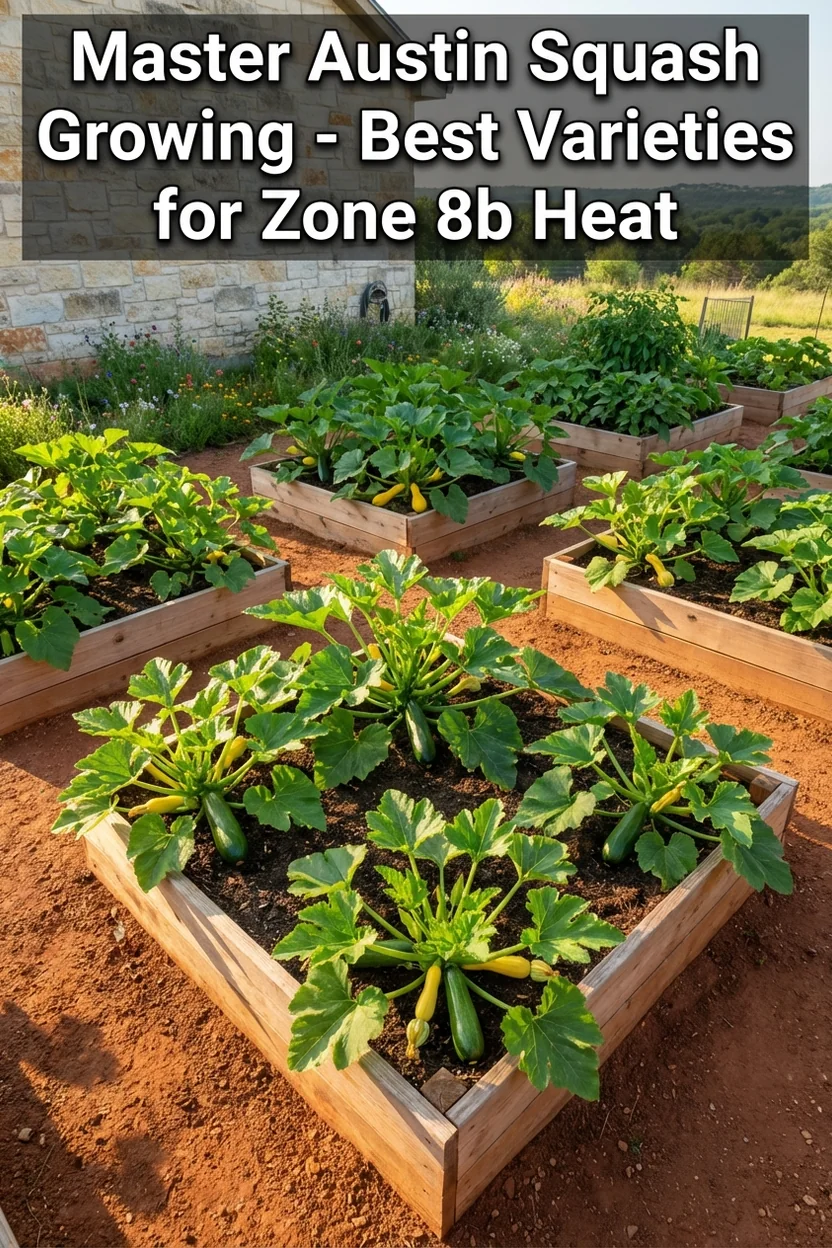
When to Plant Squash in Austin: Complete Guide + Best Varieties for Zone 8b
Pets & Toxicity
Recorded toxicity for plants linked in this guide. An unknown status is not a safety assessment.
No linked plant is recorded as toxicDetailsHide
Cucurbita pepo 'Black Beauty' — Toxicity
Non-toxic as an edible cropView Cucurbita pepo 'Black Beauty' plant profileCucurbita pepo 'Yellow Crookneck' — Toxicity
Non-toxic as an edible cropView Cucurbita pepo 'Yellow Crookneck' plant profile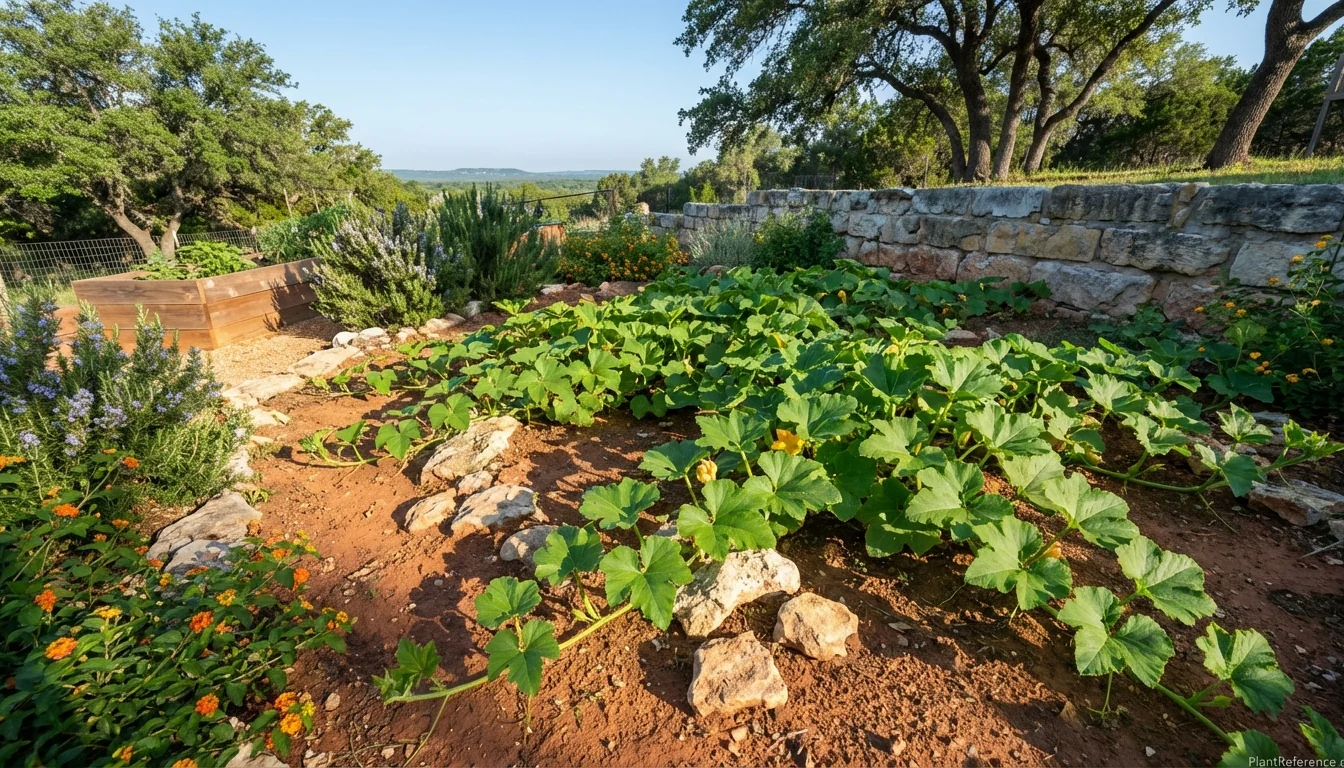
— Image © Plant Reference 2026
Austin gardeners hit the jackpot for squash growing. With Zone 8b's long 274-day season and our March 1 to November 30 frost-free window, you can grow every type of squash successfully—if you time it right and pick varieties that handle Texas heat.
I've been growing squash in Austin for over a decade, and the key to success here isn't avoiding the heat—it's working with it. Our long season lets us do something most gardeners can't: grow two full crops of summer squash (spring and fall) plus have enough time for the big storage winter squash that need 100+ days to mature.
Best Squash Varieties for Austin's Zone 8b Climate
Austin's climate demands varieties that can handle heat spikes, high humidity, and our intense summer sun. Not all squash varieties thrive here, so selection matters more than in milder climates.
Heat-Tolerant Summer Squash (50-60 days)
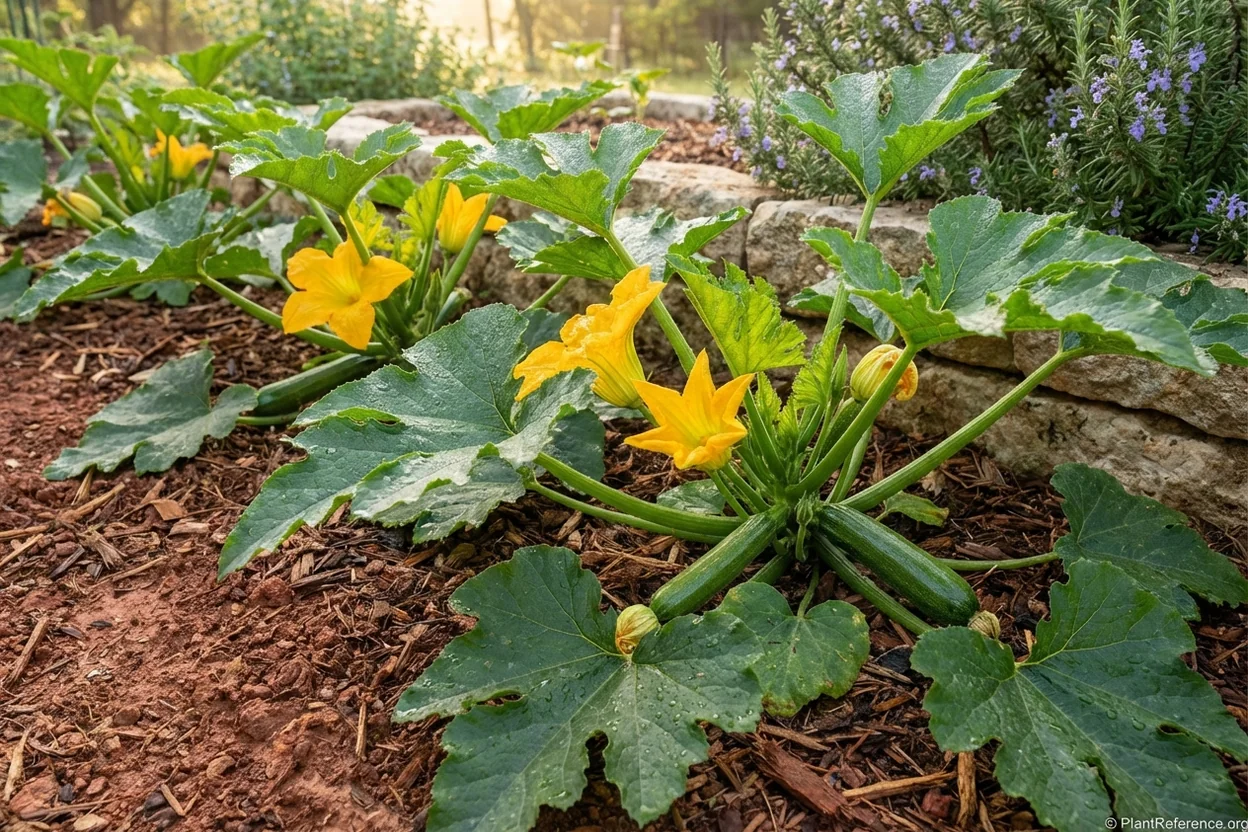
🌿Cucurbita pepo 'Black Beauty' (ZOO-kee-nee PEE-poh) remains the standard zucchini for good reason. It produces heavily in Austin's spring heat and recovers better than other varieties from squash vine borer damage. The dark green color hides minor heat stress better than light varieties.
🌿Cucurbita pepo 'Yellow Crookneck' handles our intense sun exceptionally well. The yellow color reflects heat, and the warty skin texture provides more surface area for cooling. I've had better luck with crookneck in July heat than with smooth-skinned varieties.
🌿Cucurbita pepo 'Pattypan' works well for Austin gardens because you harvest it small (2-3 inches) before heat stress affects fruit quality. The compact bush habit concentrates production early in the season.
Long-Season Winter Squash (85-110 days)
🌿Cucurbita moschata 'Butternut' is the champion of Austin winter squash. As a moschata species, it evolved in hot climates and actually prefers our conditions. The solid stems resist squash vine borers, and the long vines handle summer heat better than other winter types.
🌿Cucurbita pepo 'Delicata' produces excellent yields in Austin when started early. The cream-colored skin with green stripes stays cooler than dark varieties, and the thin edible skin means no peeling—a bonus for hot-weather processing.
🌿Cucurbita pepo 'Spaghetti' thrives in our long season but needs consistent water to develop the characteristic stringy flesh. Drought stress creates solid, non-string flesh that defeats the purpose.
🌿Cucurbita pepo 'Acorn' works well in Austin but avoid the dark green varieties in favor of cream or golden types that reflect heat better.
🌿Cucurbita maxima 'Kabocha' is challenging here. While our season is long enough, the intense summer heat stresses maxima species. Plant early and provide afternoon shade for best results.
Variety | Species | Days to Maturity | Heat Tolerance | Best For Austin |
|---|---|---|---|---|
C. pepo | 50-55 days | Excellent | Spring/fall crops | |
C. pepo | 55-60 days | Excellent | Hot weather production | |
C. pepo | 50-60 days | Very Good | Early harvest strategy | |
C. moschata | 100-110 days | Outstanding | Storage variety champion | |
C. pepo | 90-100 days | Very Good | No-peel convenience | |
C. pepo | 95-100 days | Good | Consistent water needed | |
C. pepo | 85-95 days | Good | Choose light colors | |
C. maxima | 105-110 days | Fair | Provide afternoon shade |
Specific Planting Dates for Austin Gardeners
Austin's Zone 8b allows for strategic timing that maximizes production while avoiding the worst heat and pest pressure.
Spring Planting (Primary Season)
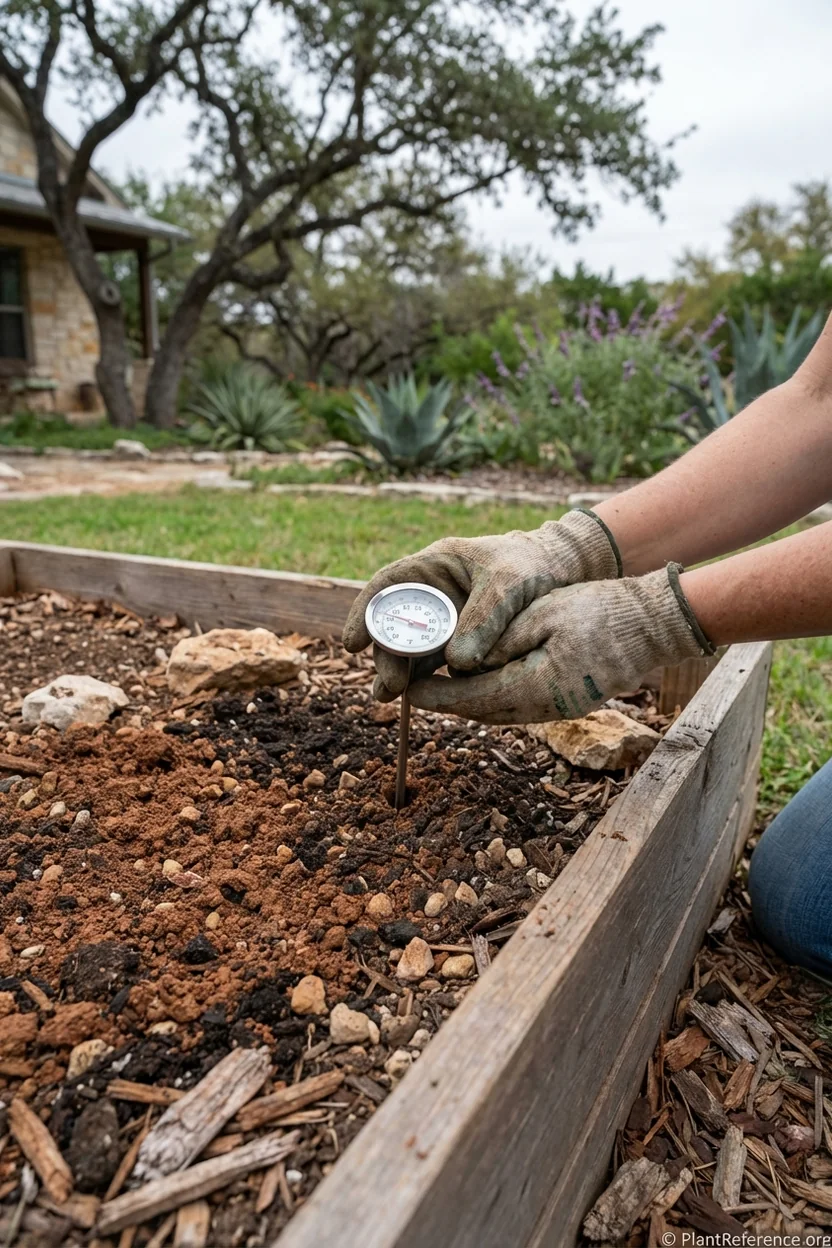
Winter Squash: March 15-April 1 Start your long-season storage varieties first. With 240+ days until first frost (November 30), even 110-day varieties have plenty of time. Soil temperature hits the critical 60°F minimum by mid-March in most Austin gardens.
Summer Squash: April 1-15 Wait until soil warms to 65°F consistently. Planting too early in cool soil invites fungal problems and slow growth that never recovers. By April 1, you're looking at 60+ warm days before summer heat becomes limiting.
Summer Strategy (Heat Management)
June-August presents challenges for squash in Austin. Temperatures above 95°F cause pollen sterility, and above 100°F (common in July-August) can shut down production entirely.
Succession Summer Squash: Plant again July 15-August 1 for fall production. This timing allows plants to establish in heat but start heavy production as temperatures moderate in September.
Fall Opportunities
Austin's extended fall (often warm until Thanksgiving) creates unique opportunities:
Late Summer Squash: August plantings produce through October-November
Winter Squash Maturation: March plantings cure in October's ideal conditions
Specific Date Calculations
Using Austin's March 1 average last frost:
Indoor seed starting: February 15-March 1 (for early transplants)
Soil preparation: March 1-15 (add compost, warm beds)
Winter squash direct sowing: March 15-April 1
Summer squash direct sowing: April 1-15
Second summer crop: July 15-August 1
Final harvest: November 15-30 (before first frost)
Complete Growing Guide for Austin Conditions
Growing squash successfully in Austin requires understanding our specific challenges: intense summer heat, high humidity promoting disease, and relentless pest pressure from our mild winters that don't kill overwintering insects.
Soil Preparation for Austin Gardens
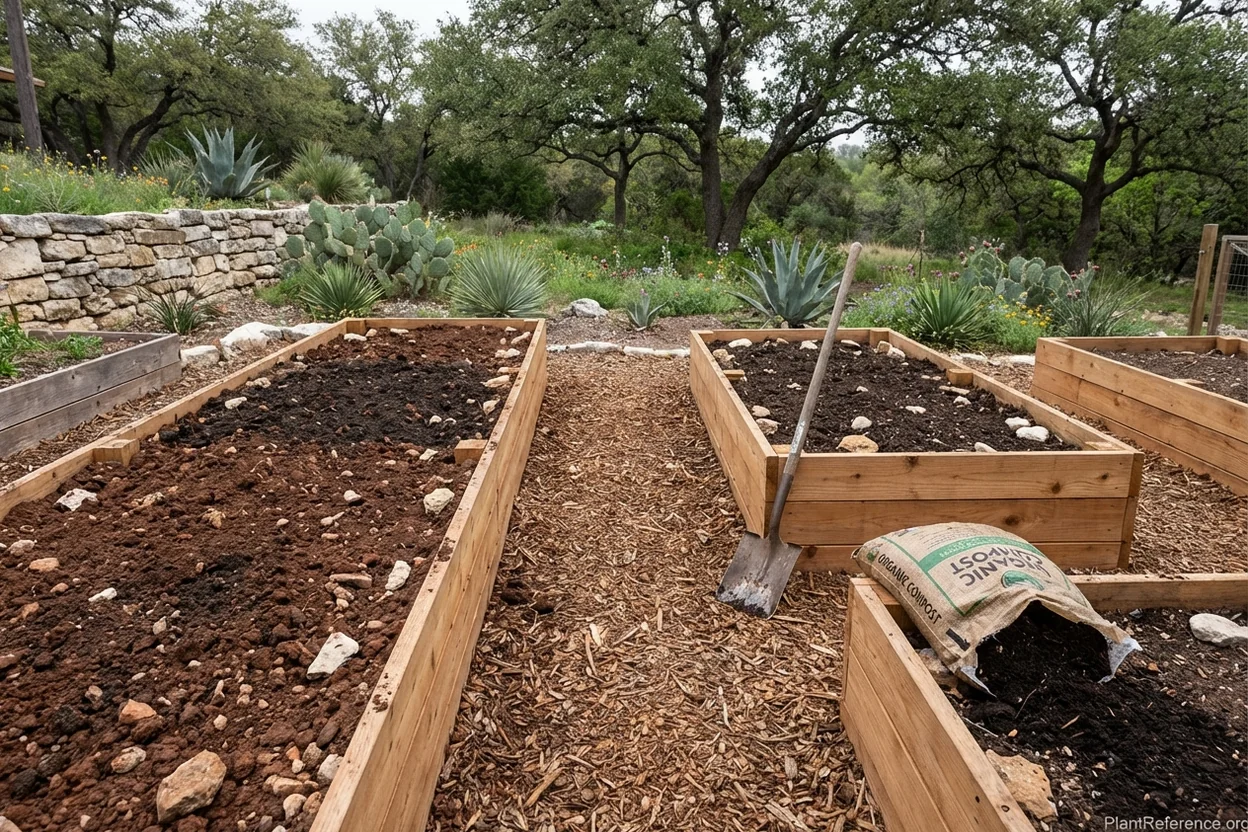
Austin's clay-based soils (often red clay mixed with limestone) drain poorly and heat up slowly in spring. Most Austin gardens need significant amendment.
Drainage is Critical: Build raised beds or mound planting areas 6-8 inches high. Squash roots rot in Austin's heavy clay during our occasional spring deluges.
Organic Matter Addition: Work in 2-3 inches of compost before planting. This improves drainage, adds nutrients, and helps clay soil warm faster in spring.
pH Management: Austin soils tend to be alkaline (pH 7.5-8.0) due to limestone bedrock. Squash prefers 6.0-7.0, so work in sulfur or use acidic compost (pine bark mulch compost works well).
Spacing and Layout Strategy
Austin's humidity requires extra space between plants for air circulation—critical for preventing powdery mildew and bacterial diseases.
Summer Squash (Bush Types): 4-5 feet apart (wider than northern recommendations)
Winter Squash (Vining): 6-8 feet apart with room for 10-12 foot vine runs
Orientation: Plant rows north-south so morning sun dries dew quickly, reducing disease pressure.
Companion Planting: Interplant with herbs that repel squash bugs: nasturtiums, marigolds, or catnip around the perimeter.
Water Management in Austin Climate
Austin averages 34 inches of rainfall annually, but it comes irregularly. Summer drought is common, followed by sudden deluges.
Drip Irrigation Essential: Overhead watering in our humidity promotes fungal diseases. Install drip lines or soaker hoses before planting.
Mulching Strategy: Apply 3-4 inches of organic mulch (shredded cedar works well) around plants. This conserves moisture during drought and prevents soil-borne diseases from splashing onto leaves.
Summer Water Needs: Squash needs 1-2 inches per week. During July-August heat, this may increase to 2-3 inches as plants work to cool themselves through transpiration.
Managing Austin's Growing Season Challenges
Spring: Cool, wet periods can delay planting and promote damping-off disease
Early Summer: Rapid transition to heat requires consistent watering
Mid-Summer: Extreme heat (100°F+) may shut down production temporarily
Fall: Extended warm period allows second crops and excellent storage curing
Troubleshooting Austin-Specific Squash Problems
Austin's climate and location create specific challenges you won't find in northern growing guides.
Squash Vine Borer (Peak Problem: June-July)
This clear-wing moth devastates Austin squash gardens. Adults lay eggs at stem bases in late June through July. Larvae bore into stems, blocking water transport and causing sudden wilt.
Prevention Strategy:
Plant early (March-April) to get production before peak egg-laying
Use row covers through May, remove when flowering begins
Plant resistant 🌿Cucurbita moschata 'Waltham Butternut' varieties (Butternut) that have solid stems
Treatment: When you find "frass" (sawdust-like droppings) at stem base, slit the stem lengthwise with a sterile knife, remove the white larva, and mound moist soil over the wound to encourage root development.
Squash Bug Pressure (Worse in Hot, Dry Years)
These shield-shaped brown bugs suck plant juices and inject toxins that cause yellow vine disease. Austin's mild winters allow large populations to survive and multiply.
Early Detection:
Check undersides of leaves weekly for copper-colored egg masses
Remove and destroy immediately
Physical Control:
Hand-pick adults in early morning when they're sluggish
Place boards near plants—bugs hide underneath at night for easy morning collection
Organic Sprays:
Neem oil or insecticidal soap, applied early morning or evening to avoid leaf burn in hot sun
Powdery Mildew (Common in Late Summer)
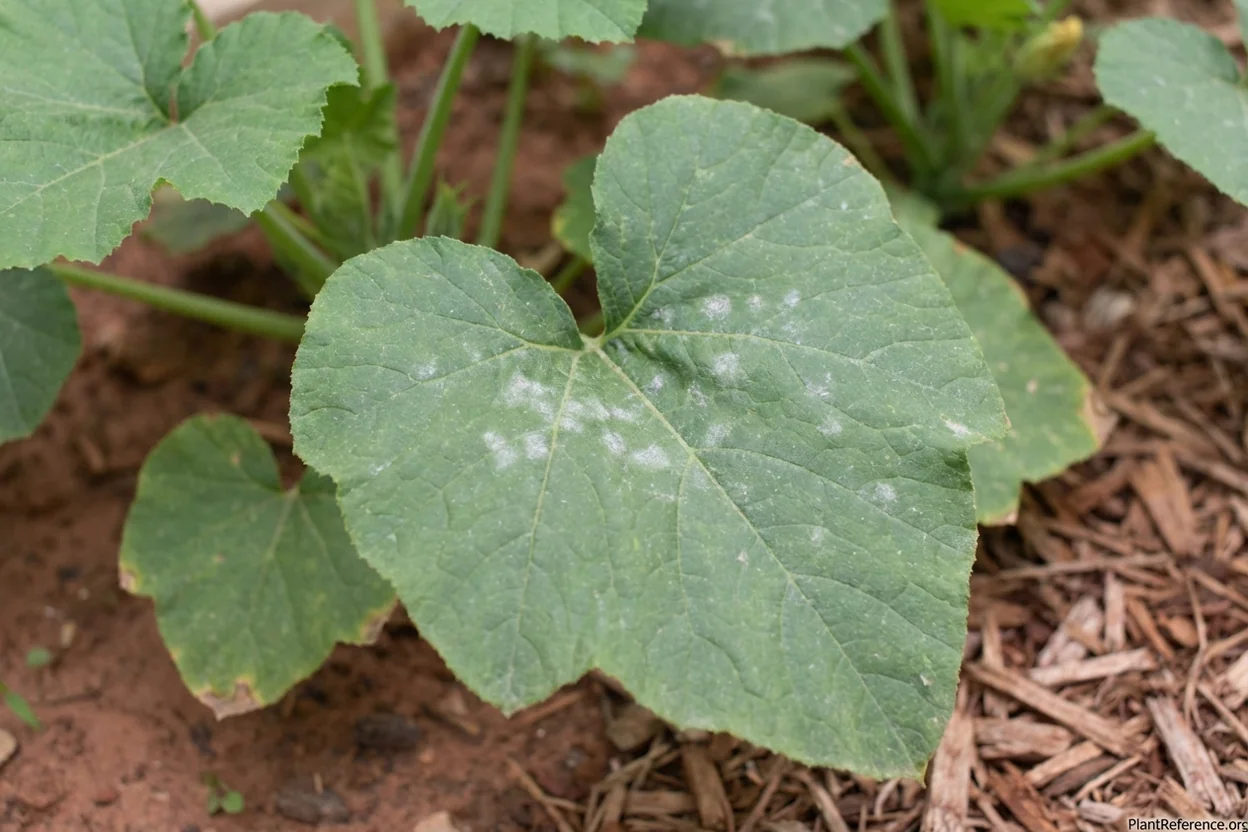
Austin's combination of heat and humidity creates perfect conditions for this fungal disease. White powdery coating appears on leaves, eventually causing yellowing and death.
Prevention:
Space plants wide for air circulation
Water at soil level, never overhead
Plant in full sun locations
Choose resistant varieties when available
Treatment:
Spray weekly with 1 part milk to 10 parts water solution
Remove affected leaves immediately
Apply neem oil in early morning or evening
Heat Stress Symptoms
When temperatures exceed 95°F for consecutive days, squash plants show stress:
Blossom drop (flowers fall off before setting fruit)
Pollen sterility (no fruit development despite flowers)
Leaf wilting despite adequate water
Stunted fruit development
Management: Provide 30-50% shade cloth during extreme heat waves, increase watering frequency, and harvest existing fruit to reduce plant stress.
Bacterial Wilt (Cucumber Beetle Vectored)
Striped cucumber beetles carry bacterial wilt that blocks water transport in plant stems. Once infected, plants cannot be saved.
Prevention: Control cucumber beetles with row covers early in season, yellow sticky traps, and kaolin clay sprays that make leaves unappealing to beetles.
Harvest & Storage in Central Texas
Austin's climate provides excellent opportunities for both fresh eating and long-term storage, but timing and technique matter.
Summer Squash Harvest
Harvest summer varieties when young and tender—skin should puncture easily with a fingernail.
🌿Cucurbita pepo 'Black Beauty': 6-8 inches long
🌿Cucurbita pepo 'Yellow Crookneck': 4-6 inches, before skin becomes warty and tough
🌿Cucurbita pepo 'Pattypan': 2-3 inches diameter for best texture
Daily Picking: In Austin heat, fruit can go from perfect to oversize in 24-48 hours. Check plants daily during peak production.
Storage: Summer squash keeps 1-2 weeks in refrigerator. Austin's heat makes counter storage impractical—refrigerate immediately after harvest.
Winter Squash Harvest and Curing
Wait until vines naturally die back and stems become corky—usually October in Austin. Skin should be hard enough that you cannot puncture it with a fingernail.
Austin Curing Advantage: Our warm October weather (75-85°F) provides ideal natural curing conditions. Place harvested squash in sunny, protected area for 10-14 days.
Post-Cure Storage: Move to cool, dry location (50-55°F ideal). Many Austin gardeners use garage storage or spare bedrooms. Properly cured winter squash stores 3-6 months.
Storage Varieties by Longevity:
🌿Cucurbita moschata 'Butternut': 4-6 months (best keeper)
🌿Cucurbita pepo 'Spaghetti': 2-3 months
🌿Cucurbita pepo 'Delicata': 2-3 months (thin skin limits storage)
🌿Cucurbita pepo 'Acorn': 6-8 weeks (don't cure, store immediately)
Austin's extended growing season and favorable curing weather make us ideal for winter squash storage varieties that provide fresh eating through winter and early spring.
Frequently Asked Questions
Reading about plants and recognising them are different skills. These three build the second.
- Daily PlantIdentify the day’s mystery plant from a close-up photograph.
- Keyed OutWork a dichotomous key, lead by lead, to name a hidden specimen.
- Name That PlantName a specimen from botanical clues dealt hardest first.
Free to play, no account needed
Carlos grew up helping his abuelos tend their backyard garden in San Antonio, Texas, but didn't get serious about growing his own food until he bought his first house in Austin. He works as an HVAC technician during the day and gardens in the early mornings and evenings. Carlos specializes in heat-tolerant vegetables and container growing—essential skills for Texas summers and his south-facing driveway that gets intense sun. He's learned through plenty of failures (multiple dead fig trees, countless bolted lettuce crops) and now helps neighbors troubleshoot their own gardens. His YouTube channel documenting his container tomato experiments has a small but dedicated following. Carlos is passionate about growing food on a budget, often sourcing free containers and building his own compost.