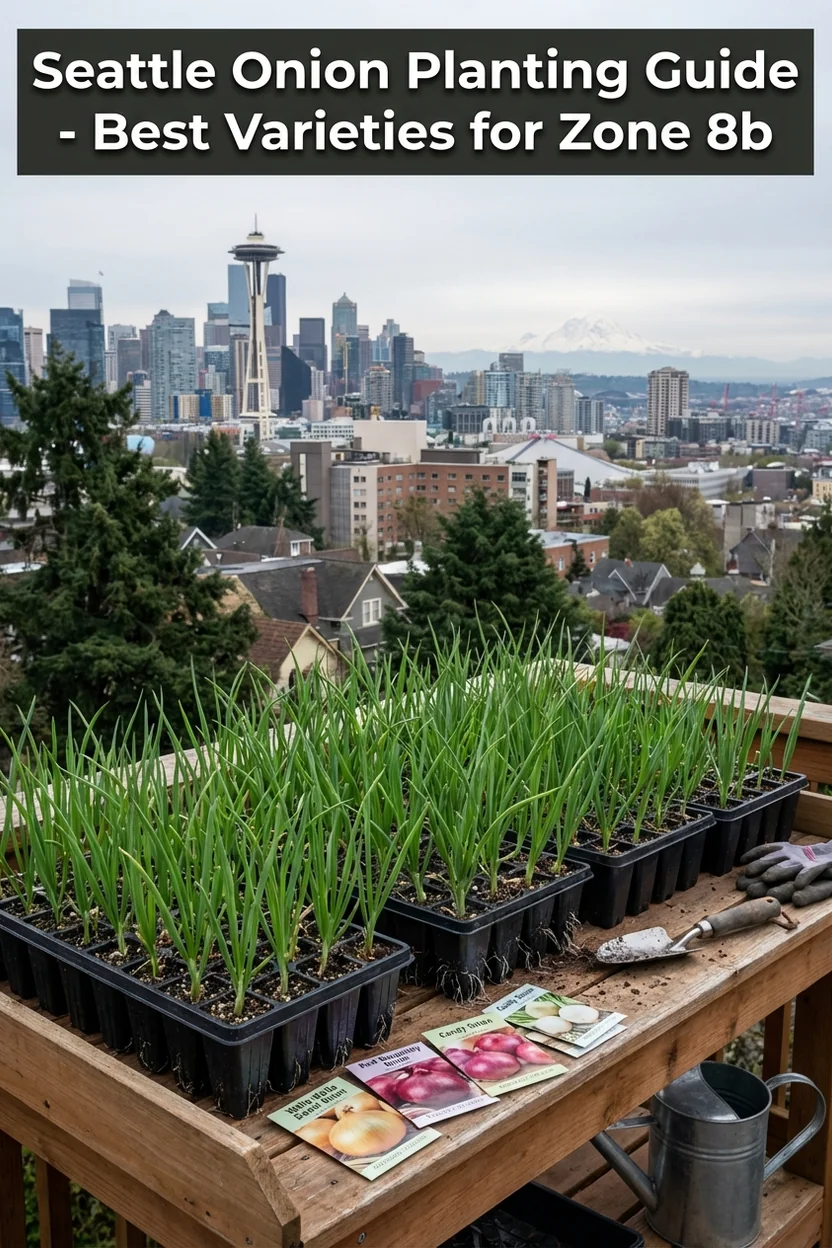
When to Plant Onions in Seattle: Complete Guide + Best Varieties for Zone 8b
Pets & Toxicity
Recorded toxicity for plants linked in this guide. An unknown status is not a safety assessment.
Toxic to pets: red wing storage onion, yellow sweet Spanish onion, copra onion and 4 moreDetailsHide
Allium cepa 'Red Wing' — Toxicity Warning
Toxic to cats and dogs if eaten; cats are especially susceptible, and raw, cooked or concentrated plant material can damage red blood cells and cause anaemia.View Allium cepa 'Red Wing' plant profileAllium cepa 'Yellow Sweet Spanish' — Toxicity Warning
Toxic to cats and dogs if eaten; cats are especially susceptible, and raw, cooked or concentrated plant material can damage red blood cells and cause anaemia.View Allium cepa 'Yellow Sweet Spanish' plant profileAllium cepa 'Copra' — Toxicity Warning
Toxic to cats and dogs if eaten; cats are especially susceptible, and raw, cooked or concentrated plant material can damage red blood cells and cause anaemia.View Allium cepa 'Copra' plant profileAllium cepa 'Granex' — Toxicity Warning
Toxic to cats and dogs if eaten; cats are especially susceptible, and raw, cooked or concentrated plant material can damage red blood cells and cause anaemia.View Allium cepa 'Granex' plant profileAllium sativum 'Music' — Toxicity Warning
Toxic to cats and dogs if eaten; cats are especially susceptible, and raw, cooked or concentrated plant material can damage red blood cells and cause anaemia.View Allium sativum 'Music' plant profileAllium sativum 'California Early' — Toxicity Warning
Toxic to cats and dogs if eaten; cats are especially susceptible, and raw, cooked or concentrated plant material can damage red blood cells and cause anaemia.View Allium sativum 'California Early' plant profileAllium cepa 'Walla Walla' — Toxicity Warning
Toxic to cats and dogs if eaten; cats are especially susceptible, and raw, cooked or concentrated plant material can damage red blood cells and cause anaemia.View Allium cepa 'Walla Walla' plant profile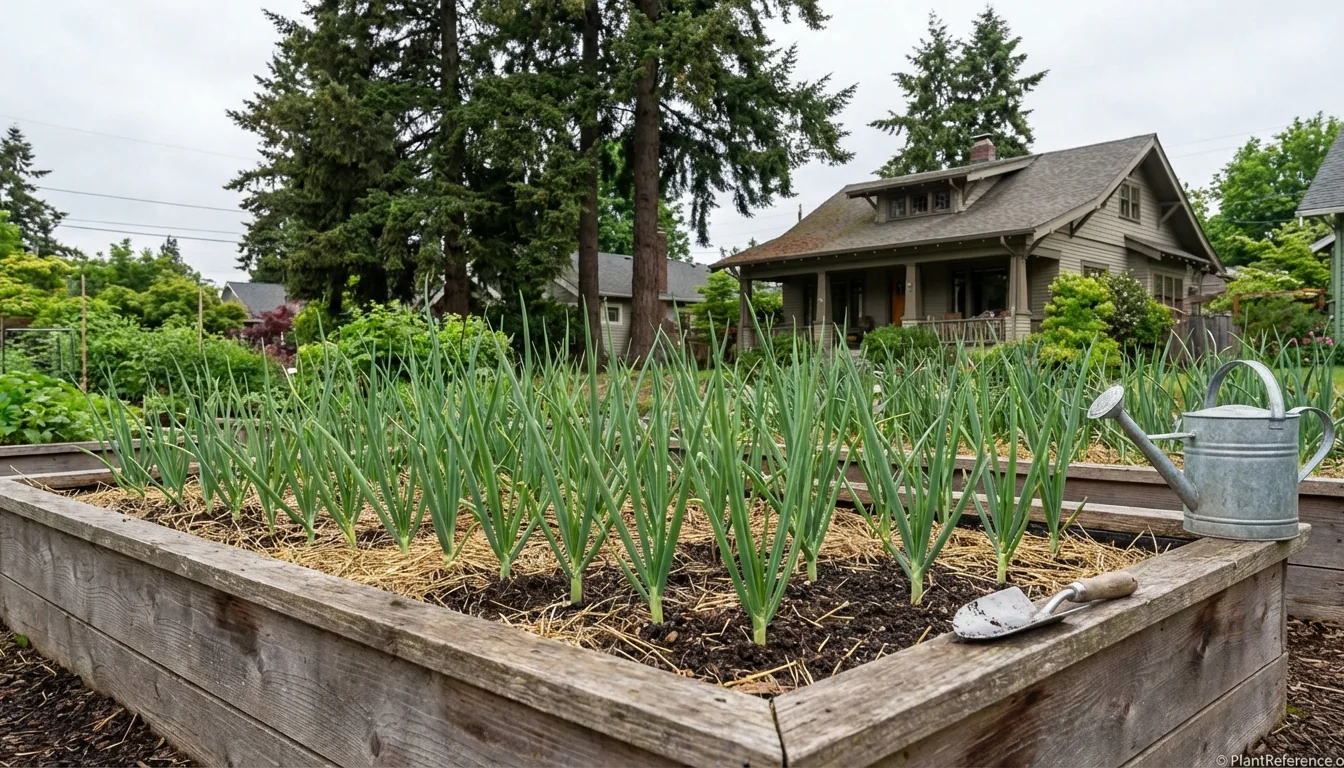
— Image © Plant Reference 2026
Seattle gardeners enjoy a unique advantage when growing onions - the Pacific Northwest's mild Zone 8b climate allows both traditional spring planting and strategic fall planting for earlier harvests. With last frost around March 14 and first frost not until November 14, you have a generous 245-day growing season perfect for developing large, flavorful storage onions.
Best Onion Varieties for Seattle's Zone 8b Climate
Seattle's latitude (47.6°N) and temperate maritime climate create ideal conditions for long-day onions, which require 14-16 hours of daylight to trigger bulbing. The Pacific Northwest's cool, moist springs and warm summers perfectly match these varieties' needs.
Variety | Days to Maturity | Best For | Notes for Seattle |
|---|---|---|---|
110-125 days | Sweet eating fresh | Local Pacific Northwest variety, excellent for fall planting | |
105-120 days | Long-term storage | Stores 8-10 months, perfect for Seattle's damp climate | |
110-120 days | Large bulbs | Produces jumbo onions in Seattle's long season | |
104 days | Storage champion | Best storage variety, handles Pacific Northwest humidity | |
95 days | Versatile hybrid | Intermediate-day, works for both spring and fall planting |
Walla Walla Sweet: The Pacific Northwest Classic
🌿Allium cepa 'Walla Walla' represents the gold standard for Seattle onion growing. Originally brought from Italy to nearby Walla Walla, Washington, this variety has adapted perfectly to the Pacific Northwest climate over generations.
This sweet onion variety thrives in Seattle's cool, moist springs, building substantial leaf growth before the long June days trigger bulbing. Fall-planted 🌿Allium cepa 'Walla Walla' produces spectacular results, overwintering successfully and creating massive 1-pound bulbs by early June.
The variety's high water content makes it incredibly sweet but limits storage to 1-2 months. Plan to eat fresh, can, or dehydrate your Walla Walla harvest by late summer.
Red Wing: Storage Solution for Wet Winters
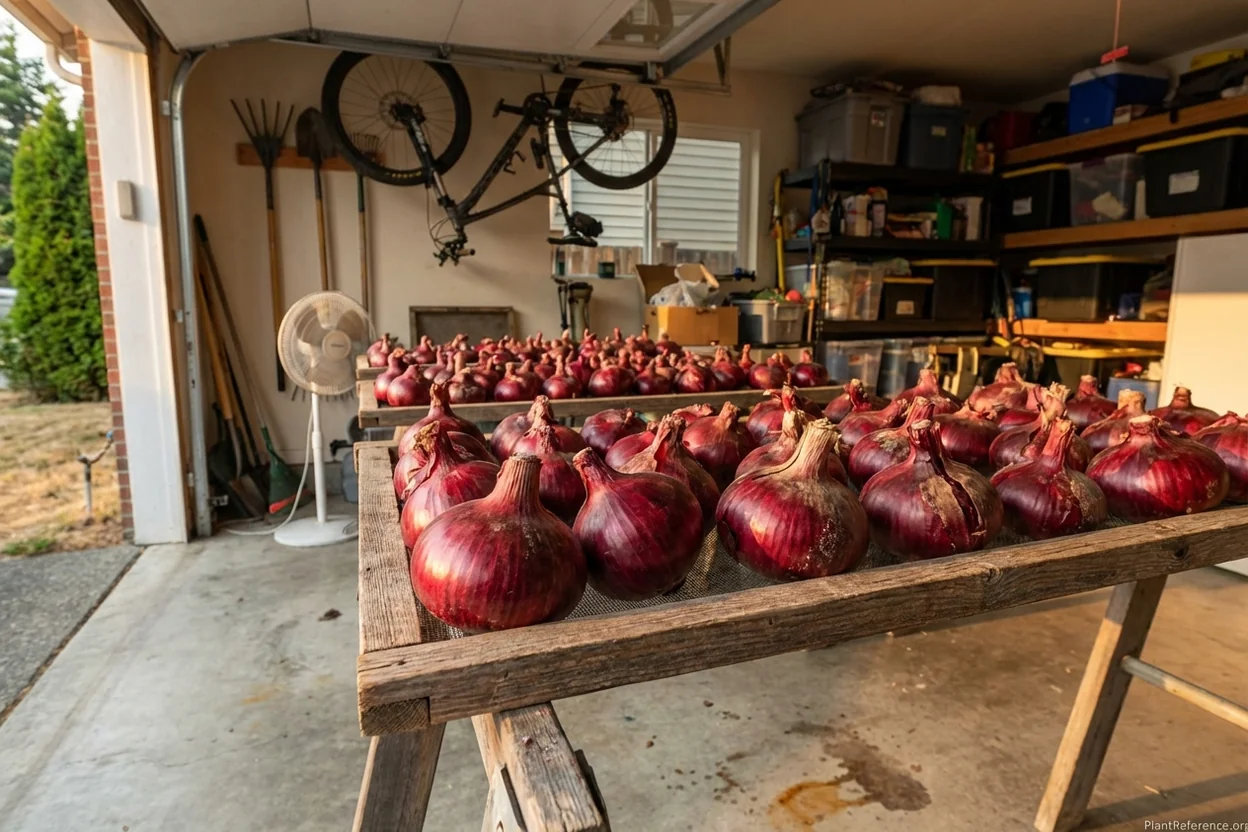
🌿Allium cepa 'Red Wing' solves Seattle's biggest onion challenge - keeping bulbs through the wet Pacific Northwest winter. This red storage variety's thick, papery skins and low moisture content resist the fungal problems that plague other onions in humid storage conditions.
Plant 🌿Allium cepa 'Red Wing' in spring for August harvest, then cure thoroughly in Seattle's dry summer heat. Properly cured bulbs store 8-10 months in unheated garages or basements, providing fresh onions until the following summer's harvest.
Yellow Sweet Spanish: Jumbo Producer
Seattle's long growing season allows 🌿Allium cepa 'Yellow Sweet Spanish' to reach its full potential, regularly producing colossal 1.5-pound bulbs. This variety appreciates the consistent moisture of Seattle springs and the warm, dry summers for final bulb expansion.
The key to success with 🌿Allium cepa 'Yellow Sweet Spanish' lies in early planting - get transplants in the ground by mid-March to maximize leaf development before summer's long days trigger bulbing.
Specific Planting Dates for Seattle
Seattle's unique position offers two distinct planting windows that other climates cannot match. Understanding which method works best for your goals determines your onion success.
Spring Planting Schedule (Traditional Method)
March 1-April 15: Prime Spring Window
Spring planting follows the traditional onion growing model, establishing plants as soil warms and extending growth through Seattle's long summer days.
Indoor Seed Starting:January 15-February 15
Start long-day onion seeds indoors 8-10 weeks before transplant date
Maintain soil temperature 65-70°F (18-21°C) for germination
Transplant size seedlings have pencil-thick stems by late February
Direct Transplant:March 1-April 15
Plant when soil temperature reaches 50°F (10°C) consistently
March 1 planting: Harvest August 15-September 1
April 15 planting: Harvest September 15-October 1
Set Planting:March 15-May 1
Plant onion sets when soil workable but still cool
Choose sets smaller than dime size to prevent bolting
Later set planting acceptable due to Seattle's long season
Fall Planting Schedule (Overwintering Method)
September 15-October 15: Advanced Strategy
Fall planting capitalizes on Seattle's mild Zone 8b winters, producing earlier and often larger harvests. This method requires more skill but offers significant advantages.
September 15-30: Optimal Window
Plant transplants 6-8 weeks before first hard frost
Allows establishment before winter dormancy
Harvest: May 15-June 15 (following year)
October 1-15: Extended Window
Still viable but provides less establishment time
Requires heavier mulch protection
Harvest: June 1-30 (following year)
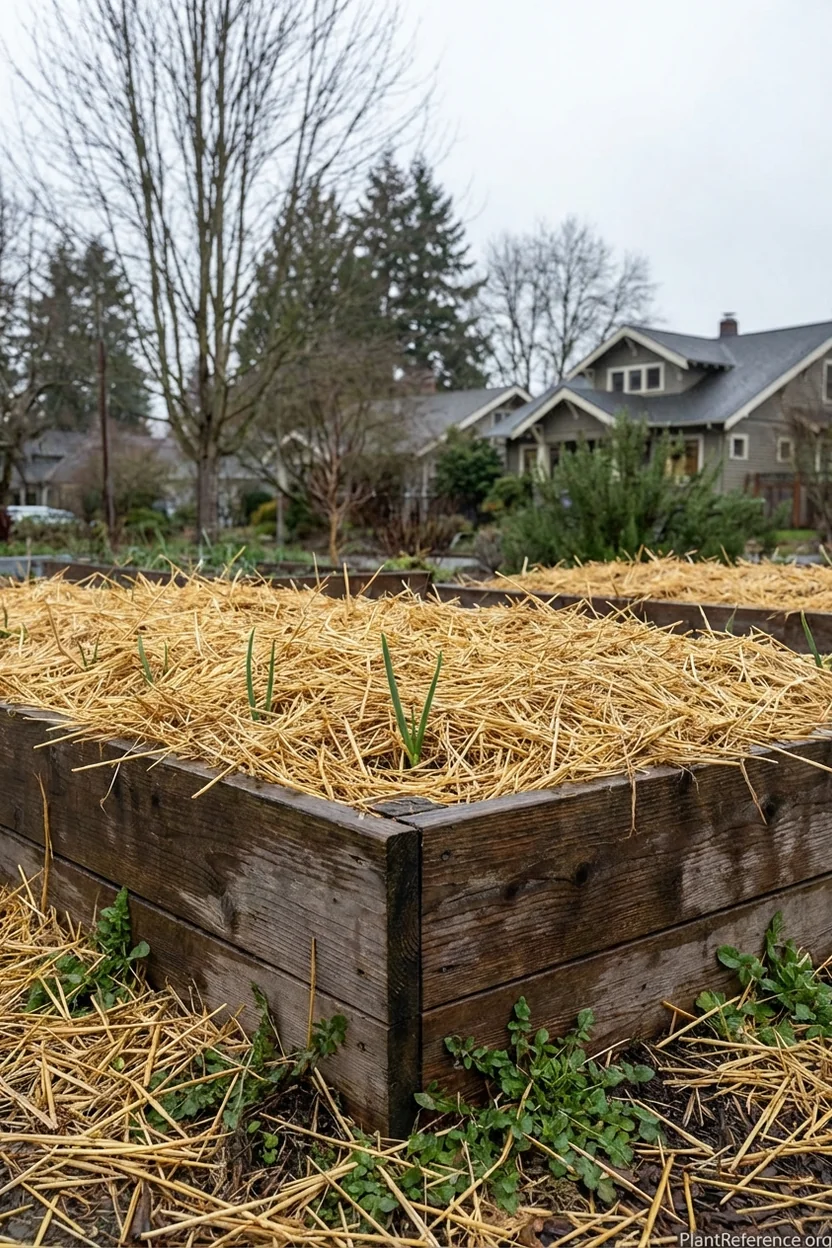
Fall-planted onions develop extensive root systems through Seattle's mild winter, then explode into growth as daylight increases in March. The result: bulbs 25-50% larger than spring-planted equivalents.
Garlic Planting Timeline
October 1-November 15: Hardneck and Softneck Garlic
Seattle's Zone 8b climate accommodates both garlic types, though each requires different timing strategies.
**Hardneck Garlic (🌿Allium sativum 'Music'):**October 1-31
Plant 4-6 weeks before ground freezes (rarely happens in Seattle)
Harvest: July 1-15 (following year)
Produces scapes for additional harvest in May
**Softneck Garlic (🌿Allium sativum 'California Early'):**October 15-November 15
More flexible timing due to lower chill requirement
Harvest: June 15-July 15 (following year)
Better storage life (8-10 months vs 4-6 for hardneck)
Complete Growing Guide for Seattle
Success with Seattle onions depends on working with the Pacific Northwest's unique climate patterns rather than fighting them.
Soil Preparation for Pacific Northwest Conditions
Seattle's naturally acidic soils (typically pH 5.5-6.2) require amendment for optimal onion production. The region's high rainfall and organic matter create nitrogen-rich but often phosphorus-deficient conditions.
pH Adjustment:Target 6.0-6.8 for best nutrient availability
Add lime in fall: 5-10 pounds per 1,000 square feet
Retest soil annually; Seattle's rain leaches lime quickly
Wood ash from fireplaces provides potassium and raises pH
Drainage Improvement:Essential for wet climate success
Build raised beds 8-12 inches high for winter drainage
Add coarse sand and compost in 2:1 ratio
Install French drains for chronically wet areas
Organic Matter:Seattle soils benefit from additional structure
Work in 3-4 inches compost annually
Coffee grounds (abundant locally) lower pH and add nitrogen
Aged horse manure excellent for structure and fertility
Test soil pH each spring; aim for 6.0-6.8
Build raised beds for drainage in Seattle's wet winters
Add lime annually to counteract acid rain effects
Mix compost with native soil in 1:1 ratio for new beds
Source coffee grounds from local roasters for soil amendment
Fertilization Strategy for Long-Season Growth
Seattle's extended 245-day growing season requires a staged nutrition approach that supports both spring establishment and summer bulb development.
Pre-Plant Application (February for spring, August for fall):Apply balanced organic fertilizer at 5-10-10 ratio
Bone meal: 2 pounds per 100 square feet (slow-release phosphorus)
Kelp meal: 1 pound per 100 square feet (trace minerals from Puget Sound proximity)
Compost: 2-3 inches worked into top 6 inches
Growing Season Feeding: - Weeks 1-8: High nitrogen for leaf development - Fish emulsion every 2 weeks at half strength - Blood meal side-dressed monthly: 1 pound per 100 feet of row - Weeks 8-12: Balanced feeding for establishment - Switch to 10-10-10 organic blend - Reduce frequency to monthly applications - Weeks 12-harvest: Potassium emphasis for bulb quality - Stop nitrogen completely when bulbing begins - Wood ash or granite dust for potassium boost
Planting Techniques for Pacific Northwest Success
Set Planting Method: Plant sets pointed end up, 1 inch deep, 4 inches apart. In Seattle's cool spring soil, sets establish faster than transplants but offer limited variety selection.
Choose sets smaller than a dime - larger sets bolt in Seattle's variable spring temperatures. Plant in late March when soil temperature consistently reaches 50°F (10°C).
Transplant Method: Trim roots to 2 inches and tops to 4 inches before planting. Set transplants at same depth they grew in containers, firming soil gently around roots.
Transplants offer the best variety selection and perform excellently in both spring and fall planting windows. They handle Seattle's cool, wet springs better than direct-seeded plants.
Direct Seeding (Advanced): Sow seeds 1/2 inch deep in rows 12 inches apart. Thin to 4-inch spacing when seedlings reach pencil thickness.
Direct seeding works best for Seattle's fall planting window, when soil stays warm longer and spring germination issues don't apply.
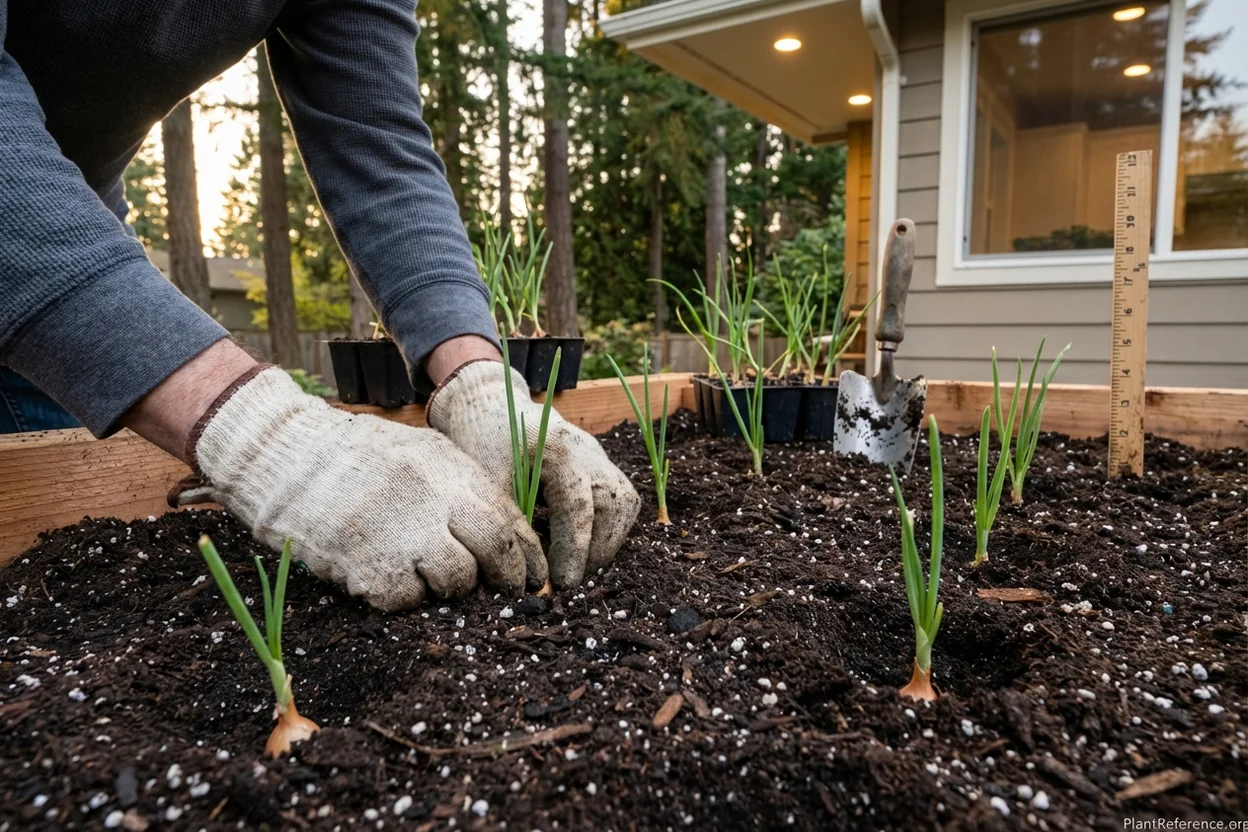
Watering Strategy for Seattle's Climate
Seattle's natural rainfall pattern aligns well with onion needs, but strategic supplemental watering maximizes production.
Spring Establishment (March-May):
Natural rainfall typically adequate (Seattle averages 3.5 inches monthly)
Supplement only during dry periods exceeding 7 days
Water deeply but infrequently to encourage deep rooting
Summer Growth (June-August):
Seattle's dry summers require consistent irrigation
Apply 1-1.5 inches weekly through drip irrigation or soaker hoses
Reduce watering as tops begin yellowing in late July
Fall/Winter (September-February):
Rely entirely on natural rainfall for established plants
Ensure drainage prevents waterlogging in wet months
Cover fall-planted onions if winter becomes exceptionally dry
Pest Management in the Pacific Northwest
Seattle's mild, humid climate favors certain onion pests while deterring others common in harsher climates.
Onion Root Maggot:Primary spring threat -
Adults emerge as soil warms in March-April
Lay eggs at base of plants; larvae tunnel into bulbs
Control: Row covers immediately after planting - Timing: Remove covers by late May when adult flight period ends
Thrips:Summer problem in dry periods -
Tiny insects cause silvery streaking on leaves
Peak populations during Seattle's warm, dry July-August
Control: Overhead watering washes off thrips - Monitoring: Check leaf bases weekly during summer
Slugs:Constant Pacific Northwest challenge -
Damage young plants and create entry points for rot
Active year-round in Seattle's moist climate
Control: Diatomaceous earth around bed perimeters - Trapping: Beer traps placed between rows
Troubleshooting Seattle-Specific Problems
Problem | Symptoms | Likely Cause | Quick Fix |
|---|---|---|---|
Small bulbs despite healthy tops | Vigorous green growth but minimal bulbing | Incorrect variety (intermediate-day) or late planting | Use true long-day varieties, plant by April 15 |
Premature bulbing (small bulbs) | Bulbs form early while plants still small | Spring temperature stress or large sets | Use row covers, maintain soil moisture, choose smaller sets |
Onion rot in storage | Soft spots, mold, or sprouts appearing | Insufficient curing or high humidity storage | Cure indoors with fans for 2-4 weeks, store at 32-40°F below 70% humidity |
Sprouting during winter storage | Green shoots emerging from stored bulbs | Storage area too warm or bulbs stored immature | Use unheated garage/basement (32-40°F), ensure complete curing before storage |
Fall-planted onions don't survive winter | Plants disappear or severely damaged after freeze | Insufficient establishment before dormancy | Plant by October 1, use larger transplants, apply 4-inch mulch layer |
Spring growth too rapid, causing bolting | Flower stalks form prematurely on fall-planted onions | Inadequate cold exposure during winter | Allow natural winter chill, don't over-protect with covers, remove mulch gradually in spring |
Bulbing Problems in Long-Day Varieties
Problem: Small bulbs despite healthy tops Cause: Usually incorrect variety for latitude or planting date Seattle Solution:Stick to varieties requiring 14+ hours daylight
Verify variety is true long-day type
Avoid intermediate-day onions like
🌿Allium cepa 'Candy' for main crop - Plant by April 15 to maximize pre-bulbing growth period
Problem: Premature bulbing (small bulbs) Cause: Stress from temperature fluctuations Seattle Solution:Use row covers during cool spring nights
Maintain consistent soil moisture through spring
Avoid large onion sets (over dime size)
Choose transplants over sets for more reliable results
Storage Issues in Humid Climate
Problem: Onions rot quickly in storage Cause: Insufficient curing in Seattle's humid conditions Seattle Solution:Extended indoor curing process
Cure indoors rather than outdoors due to frequent rain
Use fans to maintain air circulation during 2-4 week cure
Monitor humidity levels; maintain below 70% during curing
Store only completely cured onions with papery necks
Problem: Sprouting during winter storage Cause: Storage area too warm Seattle Solution:Utilize Seattle's cool temperatures
Store in unheated garages or basements (32-40°F ideal)
Avoid heated areas during mild Seattle winters
Check stored onions monthly; remove any showing sprouting
Fall Planting Challenges
Problem: Fall-planted onions don't survive winter Cause: Insufficient establishment before dormancy Seattle Solution:Plant by October 1 for best establishment
Choose larger transplants (pencil-thick stems minimum)
Apply 4-inch mulch layer after first frost
Select hardiest varieties like
Problem: Spring growth too rapid causing bolting Cause: Inadequate cold exposure triggering reproductive cycle Seattle Solution:Allow natural winter chill
Don't protect excessively with covers
Remove mulch gradually as spring growth begins
Plant hardneck garlic which requires vernalization
Harvest & Storage
Seattle's dry summers provide ideal curing conditions, while the region's cool winters offer excellent storage opportunities for properly prepared onions.
Harvest Timing for Maximum Storage
Spring-Planted Onions: August 15-September 15 Monitor for natural top falling (lodging) when 50-75% of tops yellow and bend over naturally. In Seattle's climate, this typically occurs in late August for spring-planted long-day varieties.
Never force tops down early - this stops carbohydrate transfer to bulbs and creates wounds that invite storage rot. Seattle's extended fall weather allows patient waiting for natural maturity.
Fall-Planted Onions: May 15-June 30 These mature 6-8 weeks earlier than spring-planted equivalents, providing fresh onions during Seattle's late spring abundance gap. Harvest when tops begin yellowing but before summer heat stress.
Curing Process for Pacific Northwest Conditions
Seattle's frequent summer rain showers require modified curing techniques compared to drier climates.
Field Curing (Weather Permitting):
Leave harvested onions on soil surface 24-48 hours if rain not forecast
Cover bulbs with neighboring tops to prevent sunscald
Move indoors immediately if rain threatens
Indoor Curing (Recommended):
Bring onions into garage, barn, or covered area immediately after harvest
Lay in single layers on screens, shallow boxes, or clean tarps
Position fans for constant air circulation
Maintain temperature 75-85°F (24-29°C) for optimal curing
Curing Duration:2-4 weeks depending on size and moisture content
Small bulbs: 2 weeks minimum
Large storage onions: 3-4 weeks
Complete when necks feel completely dry and papery when pinched
Storage Methods for Seattle's Climate
Short-Term Storage (1-3 months):
Walla Walla and other sweet onions
Store in refrigerator or cool basement
Use mesh bags for air circulation
Check weekly; remove any showing soft spots
Long-Term Storage (8-12 months): - Storage varieties like 🌿Allium cepa 'Red Wing' and 🌿Allium cepa 'Copra' - Maintain 32-40°F (0-4°C) with 65-70% humidity - Seattle's unheated garages provide ideal conditions - Avoid areas that freeze during occasional cold snaps
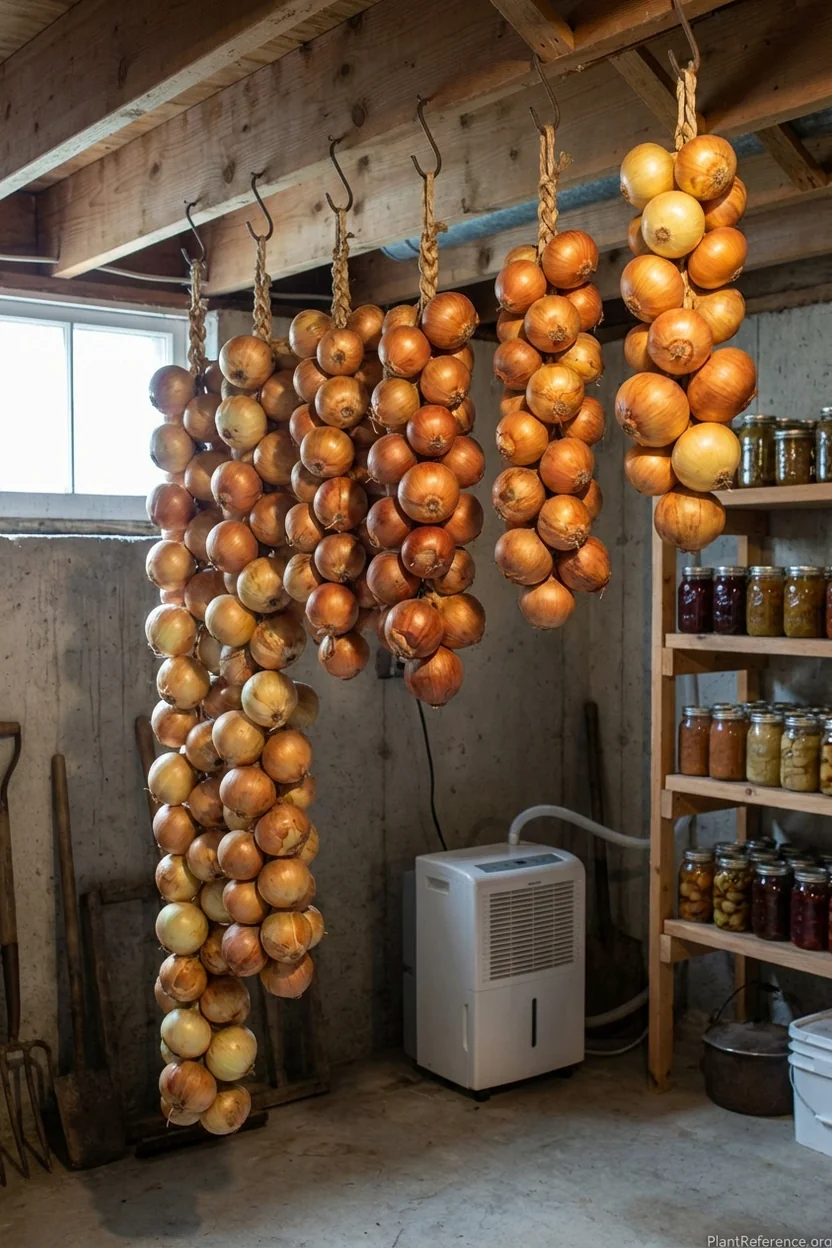
Braiding Storage:
Traditional method works excellently in Seattle's stable winter temperatures
Braid while tops still flexible after curing
Hang in basement or garage away from heating systems
Provides easy access while maintaining good storage conditions
Properly stored onions from Seattle gardens can last until the following summer's harvest, providing year-round homegrown onions in the Pacific Northwest's ideal climate.
Frequently Asked Questions
Reading about plants and recognising them are different skills. These three build the second.
- Daily PlantIdentify the day’s mystery plant from a close-up photograph.
- Keyed OutWork a dichotomous key, lead by lead, to name a hidden specimen.
- Name That PlantName a specimen from botanical clues dealt hardest first.
Free to play, no account needed
Mike's been designing residential landscapes in the Seattle area, with a particular focus on Pacific Northwest natives and sustainable practices. He's a Washington State Master Gardener and worked in construction before landscaping, which gives him a practical edge when it comes to building raised beds and hardscaping projects. He runs a small side business propagating and selling unusual perennials at farmers markets on weekends. His property serves as a testing ground for low-maintenance, wildlife-friendly garden designs. Mike's philosophy: if it requires weekly maintenance, it's not sustainable.