When to Plant Onions in Salt Lake City: Complete Guide + Best Varieties for Zone 7a
Pets & Toxicity
Recorded toxicity for plants linked in this guide. An unknown status is not a safety assessment.
Toxic to pets: yellow sweet Spanish onion, music hardneck garlic, red wing storage onion and 3 moreDetailsHide
Allium cepa 'Yellow Sweet Spanish' — Toxicity Warning
Toxic to cats and dogs if eaten; cats are especially susceptible, and raw, cooked or concentrated plant material can damage red blood cells and cause anaemia.View Allium cepa 'Yellow Sweet Spanish' plant profileAllium sativum 'Music' — Toxicity Warning
Toxic to cats and dogs if eaten; cats are especially susceptible, and raw, cooked or concentrated plant material can damage red blood cells and cause anaemia.View Allium sativum 'Music' plant profileAllium cepa 'Red Wing' — Toxicity Warning
Toxic to cats and dogs if eaten; cats are especially susceptible, and raw, cooked or concentrated plant material can damage red blood cells and cause anaemia.View Allium cepa 'Red Wing' plant profileAllium cepa 'Candy' — Toxicity Warning
Toxic to cats and dogs if eaten; cats are especially susceptible, and raw, cooked or concentrated plant material can damage red blood cells and cause anaemia.View Allium cepa 'Candy' plant profileAllium cepa 'Walla Walla' — Toxicity Warning
Toxic to cats and dogs if eaten; cats are especially susceptible, and raw, cooked or concentrated plant material can damage red blood cells and cause anaemia.View Allium cepa 'Walla Walla' plant profileAllium cepa 'Granex' — Toxicity Warning
Toxic to cats and dogs if eaten; cats are especially susceptible, and raw, cooked or concentrated plant material can damage red blood cells and cause anaemia.View Allium cepa 'Granex' plant profile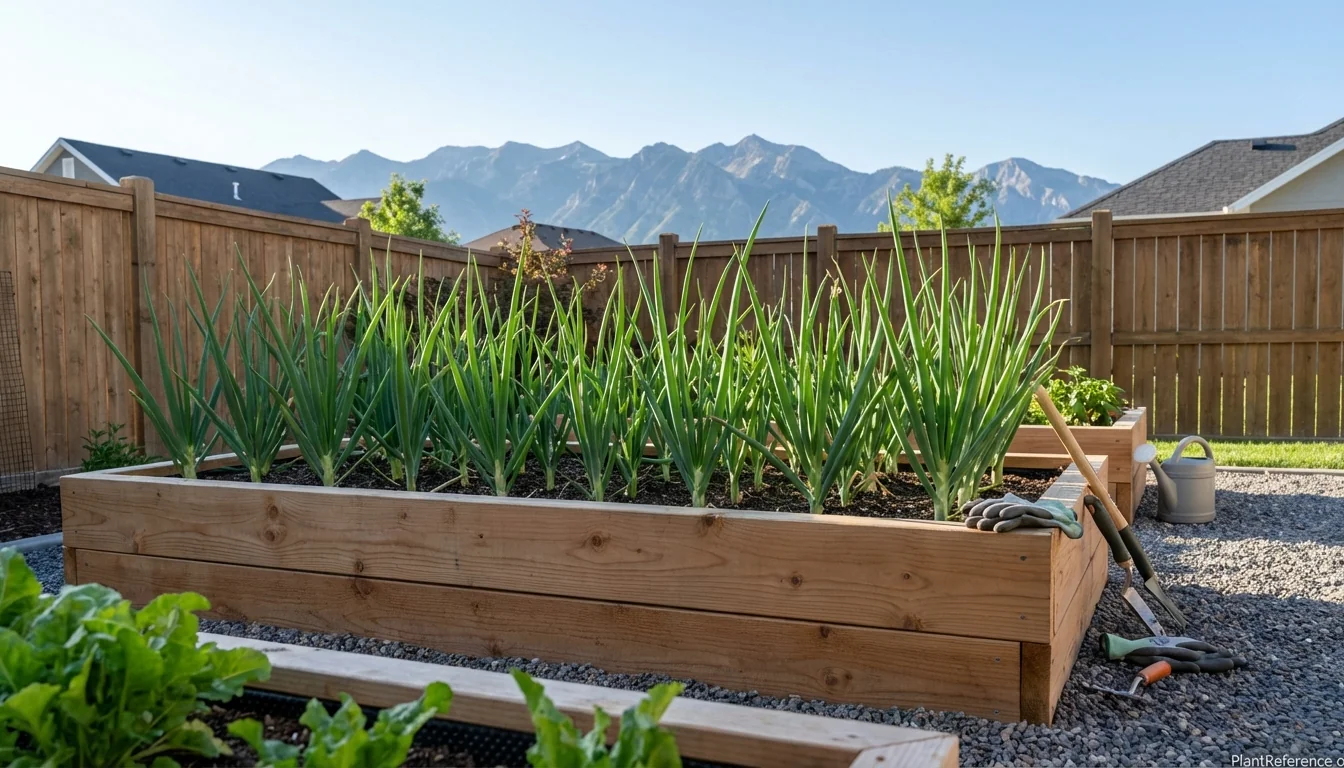
— Image © Plant Reference 2026
Growing onions in Salt Lake City requires understanding our unique Zone 7a mountain valley climate and selecting varieties that handle temperature swings, high altitude, and our specific day-length conditions. After forty years of gardening in intermountain valleys, I've learned exactly which onions thrive here and when to plant them for maximum success.
Best Onion Varieties for Salt Lake City's Climate
Salt Lake City sits at the transition point between intermediate-day and long-day onion requirements. At 40.7°N latitude, our summer solstice provides about 15 hours of daylight—perfect for intermediate to long-day varieties. The key is selecting varieties that handle our temperature extremes and high altitude conditions.
Understanding Day-Length Requirements for Salt Lake City
Onions form bulbs based on daylight hours, not temperature. In Salt Lake City, we need varieties triggered by 12-15 hours of daylight. Plant the wrong type, and you'll get all tops with tiny bulbs or premature bolting.
Intermediate-Day Onions (12-14 hours): Best choice for reliability in Salt Lake City's variable spring weather. These varieties adapt well to our temperature swings and altitude.
Long-Day Onions (14-16 hours): Work well here but need careful timing. Plant too late and they may not reach full size before our first frost on October 14.
Variety | Days to Maturity | Best For | Notes for Salt Lake City |
|---|---|---|---|
110-120 days | Large bulbs | Perfect for Utah's climate, handles altitude well | |
110-125 days | Sweet eating | Can overwinter in protected areas | |
105-120 days | Long storage | Best red storage onion for Zone 7a | |
100-110 days | Reliable harvest | Day-neutral variety, most dependable |
Top Performing Varieties for Salt Lake City
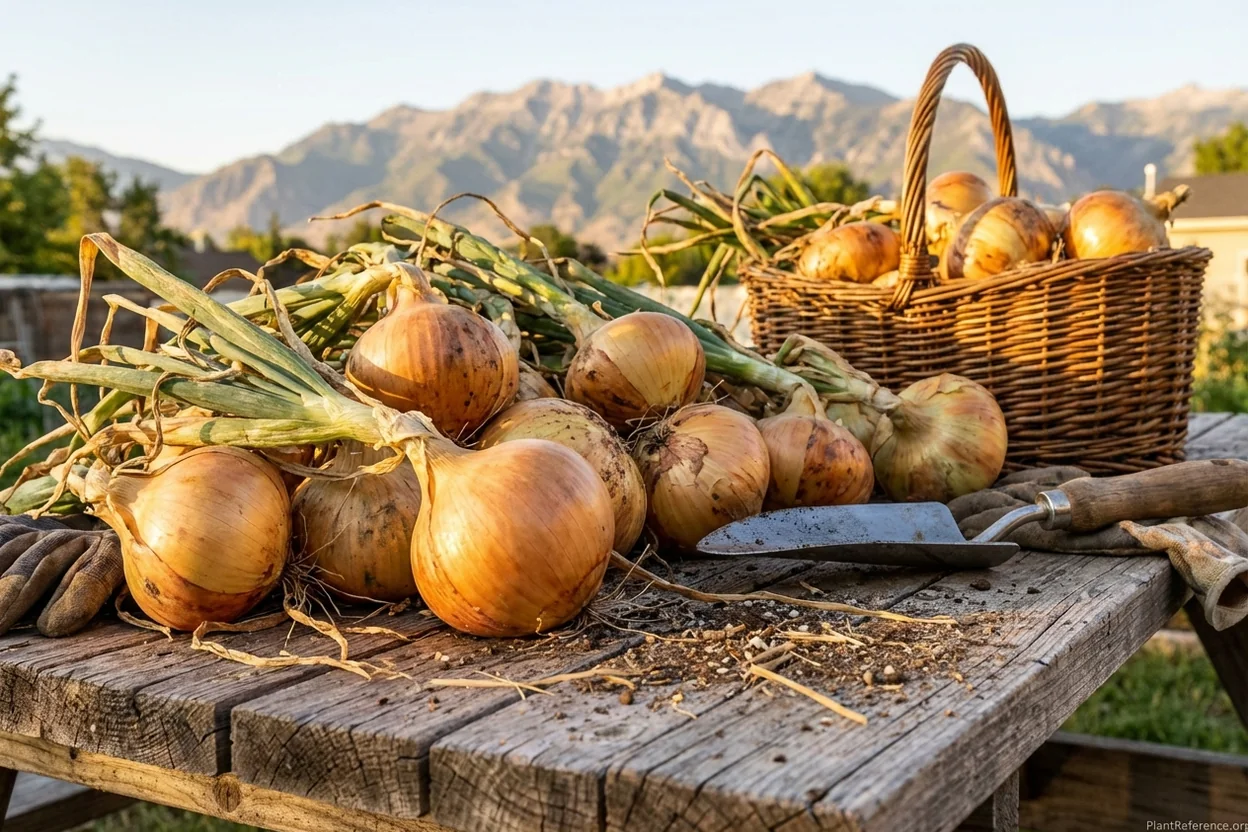
🌿Allium cepa 'Yellow Sweet Spanish' remains my top recommendation for Salt Lake City gardeners. This intermediate to long-day variety handles our altitude beautifully and produces jumbo bulbs weighing over one pound when grown properly. It stores moderately well—about four months—making it perfect for fall and winter use.
🌿Allium cepa 'Candy' offers the most reliability for beginning onion growers. This day-neutral hybrid adapts to various conditions and rarely fails to bulb. While bulbs stay medium-sized, the consistent performance makes it worth growing.
🌿Allium cepa 'Walla Walla' grows exceptionally well in Salt Lake City's climate. The sweet, mild flavor develops beautifully in our cool nights and warm days. These don't store long—use within six weeks of harvest—but they're perfect for immediate eating.
Garlic Varieties for Salt Lake City
🌿Allium sativum 'Music' thrives in our Zone 7a climate. This hardneck variety requires our cold winters for proper clove development and produces large, flavorful bulbs with 4-6 jumbo cloves. Plant cloves October 15-November 1 for July harvest.
Softneck Garlic 'California Early')' works as a softneck alternative, though hardnecks perform better in our mountain climate. Choose this variety only if you want to braid garlic or need longer storage life.
Specific Planting Dates for Salt Lake City
Salt Lake City's last frost averages April 24, with our first fall frost arriving October 14. This gives us 173 growing days—sufficient for most onion varieties if we time plantings correctly.
Spring Onion Planting Schedule
April 10-17: Optimal planting window for onion sets and transplants. Soil temperature reaches 45-50°F consistently, and severe freezes become unlikely.
April 18-24: Acceptable planting window. Later plantings still work but reduce bulb size potential as plants have less vegetative growth time before day-length triggers bulbing.
May 1-7: Emergency planting window for quick-maturing varieties like 🌿Allium cepa 'Candy' only. Avoid slow varieties like 🌿Allium cepa 'Walla Walla' after April 24.
Calculating Your Specific Planting Date
Start with our average last frost date (April 24) and work backward. Onions tolerate light frost, so plant 2-3 weeks before this date. Check soil temperature—it should reach 40°F at 2-inch depth for successful planting.
For spring 2026 in Salt Lake City, target April 12-19 as your prime planting window. Adjust based on actual weather conditions, but don't wait too long—every week delay reduces final bulb size.
Fall Garlic Planting Schedule
October 15-November 1: Plant garlic cloves 4-6 weeks before soil freezes hard. This timing allows root establishment without significant top growth that could be damaged by winter weather.
November 2-15: Late planting window. Cover with extra mulch (6 inches of straw) to compensate for less root development time.
Complete Growing Guide for Salt Lake City
Soil Preparation for Mountain Valley Conditions
Salt Lake City's alkaline clay soil (typical pH 7.2-7.8) needs significant amendment for successful onion growing. Our heavy clay holds too much moisture and restricts bulb expansion.
Soil Amendment Protocol:
Add 4-6 inches of compost or aged manure to planting beds each spring. This improves drainage while adding organic matter that buffers our alkaline pH. Work amendments to 8-inch depth—onion roots stay shallow but need loose soil for proper bulb development.
Raised Bed Advantage: Consider raised beds if your soil has drainage issues. The 8-10 inch elevation improves drainage significantly and warms soil faster in our short spring season.
pH Management: Test soil pH every two years. If above 7.5, add sulfur at 1 pound per 100 square feet to gradually lower pH toward the optimal 6.0-6.8 range.
Planting Techniques
Sets vs. Transplants: In Salt Lake City's variable spring weather, sets prove more reliable than transplants. Sets handle temperature swings better and establish faster in our cool soils.
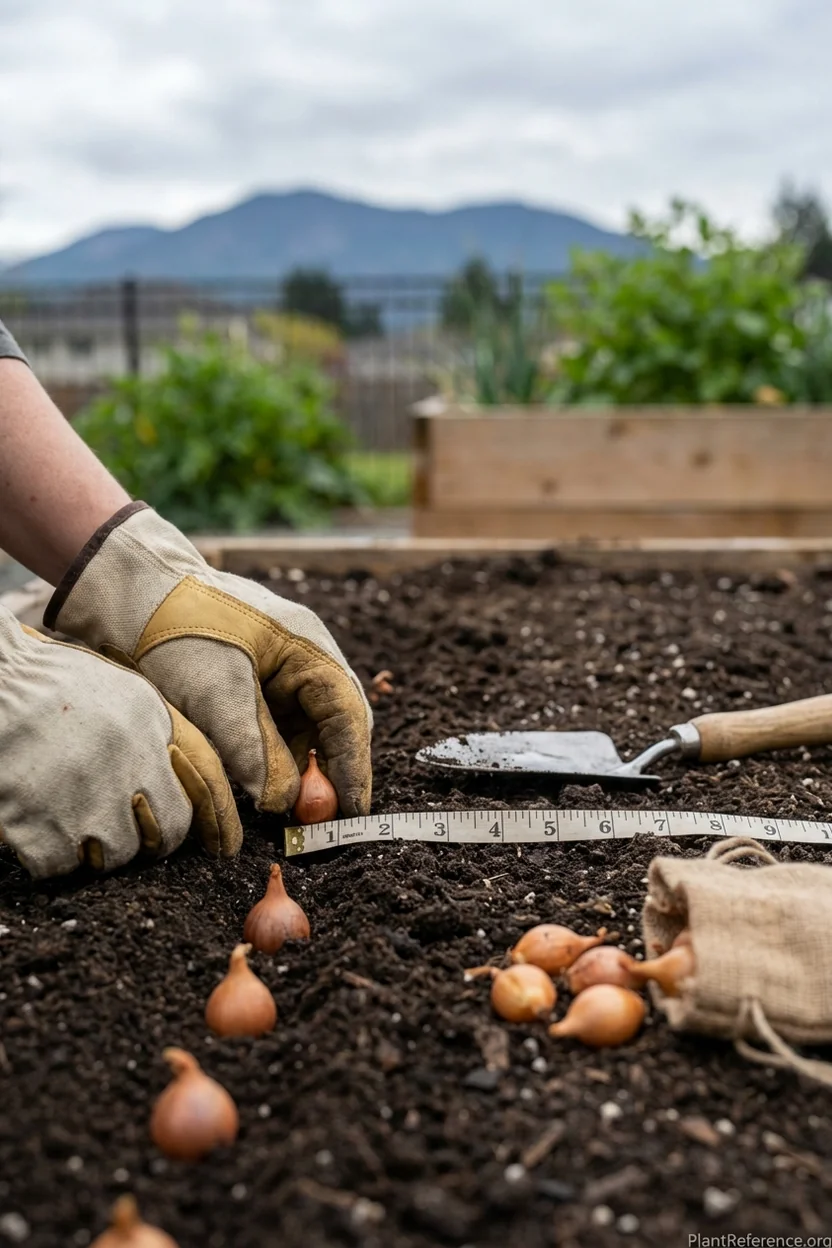
Planting Depth: Plant onion sets 1 inch deep with pointed end up. Deeper planting delays emergence; shallower planting risks freeze damage to developing bulbs.
Spacing: Space bulb onions 4 inches apart in rows 8-12 inches apart. Closer spacing reduces individual bulb size but increases total yield per square foot.
Watering Strategy for High Altitude
Our low humidity and frequent winds increase water needs compared to sea-level growing. Onions need consistent moisture but never soggy conditions.
Early Season: Water deeply once weekly, providing 1-1.5 inches (25-38 mm) including rainfall. Check soil moisture at 3-inch (7.6 cm) depth—it should be moist but not muddy.
Bulbing Stage (mid-June onward): Reduce watering frequency but maintain deep soaking. Soil should dry slightly between waterings to prevent bulb rot.
Pre-Harvest: Stop watering completely when tops begin yellowing naturally (usually late July). This encourages proper curing and prevents thick necks that won't store.
Fertilization Schedule
Onions are heavy feeders requiring steady nutrition through their long growing season. Our alkaline soils often lock up phosphorus and micronutrients.
Pre-Plant: Work 2-3 inches of compost into beds plus balanced fertilizer (10-10-10) at 2 pounds per 100 square feet.
Monthly Feeding: Side-dress with nitrogen fertilizer (21-0-0 ammonium sulfate preferred for alkaline soils) at 1 tablespoon per plant monthly through June.
Stop Fertilizing: Discontinue all fertilizer when day length reaches 14-15 hours (around June 15 in Salt Lake City). Late nitrogen causes thick necks and poor storage.
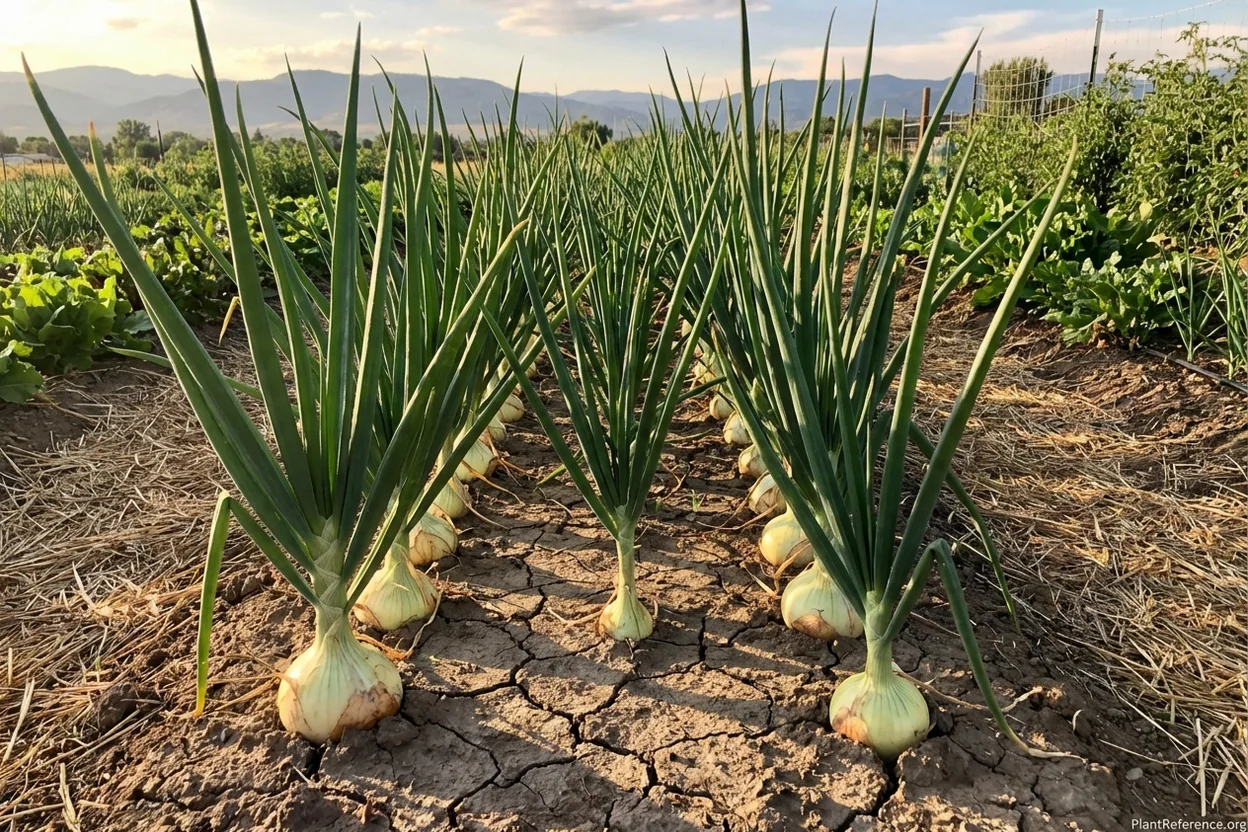
Managing Temperature Extremes
Salt Lake City's spring temperature swings stress onion plants. Late freezes and sudden heat waves both affect bulb development.
Frost Protection: Use row covers when temperatures drop below 28°F (-2°C) after planting. Onions survive light frost but benefit from protection during severe cold snaps.
Heat Stress Prevention: Maintain consistent soil moisture during hot spells. Mulch between rows to keep soil cool and reduce water evaporation.
Troubleshooting Salt Lake City-Specific Problems
Bolting (Premature Flowering)
Symptoms: Hard flower stalk emerges through center of plant, stopping bulb development.
Causes in Salt Lake City: Temperature stress from late spring freezes, using large onion sets (bigger than dime), planting short-day varieties that can't handle our day length.
Solutions: Choose sets smaller than dime size, stick to intermediate-day varieties, provide frost protection during severe cold snaps.
Small Bulb Development
Symptoms: Plants grow healthy tops but form only small bulbs despite adequate growing time.
Causes: Wrong day-length type for our latitude (most common), late planting, poor soil drainage, over-fertilization late in season.
Solutions: Verify variety matches our 12-15 hour day-length requirement, plant by April 24 at latest, improve soil drainage with compost additions.
Thick Necks That Won't Cure
Symptoms: Onion necks remain thick and soft instead of drying down properly.
Causes: Excessive nitrogen late in season, overwatering near harvest, harvesting too early.
Solutions: Stop fertilizing after June 15, reduce watering when tops begin yellowing, wait for natural top fall-over before harvesting.
Poor Storage Life
Symptoms: Onions rot or sprout within weeks of harvest despite proper curing.
Causes: Harvesting during hot, humid weather, inadequate curing, storing in too-warm conditions.
Solutions: Harvest during dry weather, cure in well-ventilated area for 2-4 weeks, store at 32-40°F (0-4°C) with 60-70% humidity.
Harvest & Storage
Timing the Harvest
In Salt Lake City, onions typically mature late July through August, depending on planting date and variety. Harvest when 50-75% of tops fall over naturally—this indicates sugar transfer from leaves to bulbs is complete.
Don't bend tops over manually—this creates wounds that invite rot. Let plants decide when they're ready.
Weather Considerations: Harvest during dry weather if possible. Our afternoon thunderstorms can complicate curing, so check forecasts and plan accordingly.
Curing Process for Mountain Valley Conditions
Salt Lake City's low humidity (often 10-20%) speeds curing compared to humid climates. This works in our favor—onions cure faster but need protection from direct sun.
Field Curing: Leave pulled onions on soil surface for 24-48 hours during dry weather. Cover bulbs with tops from adjacent plants to prevent sunscald.
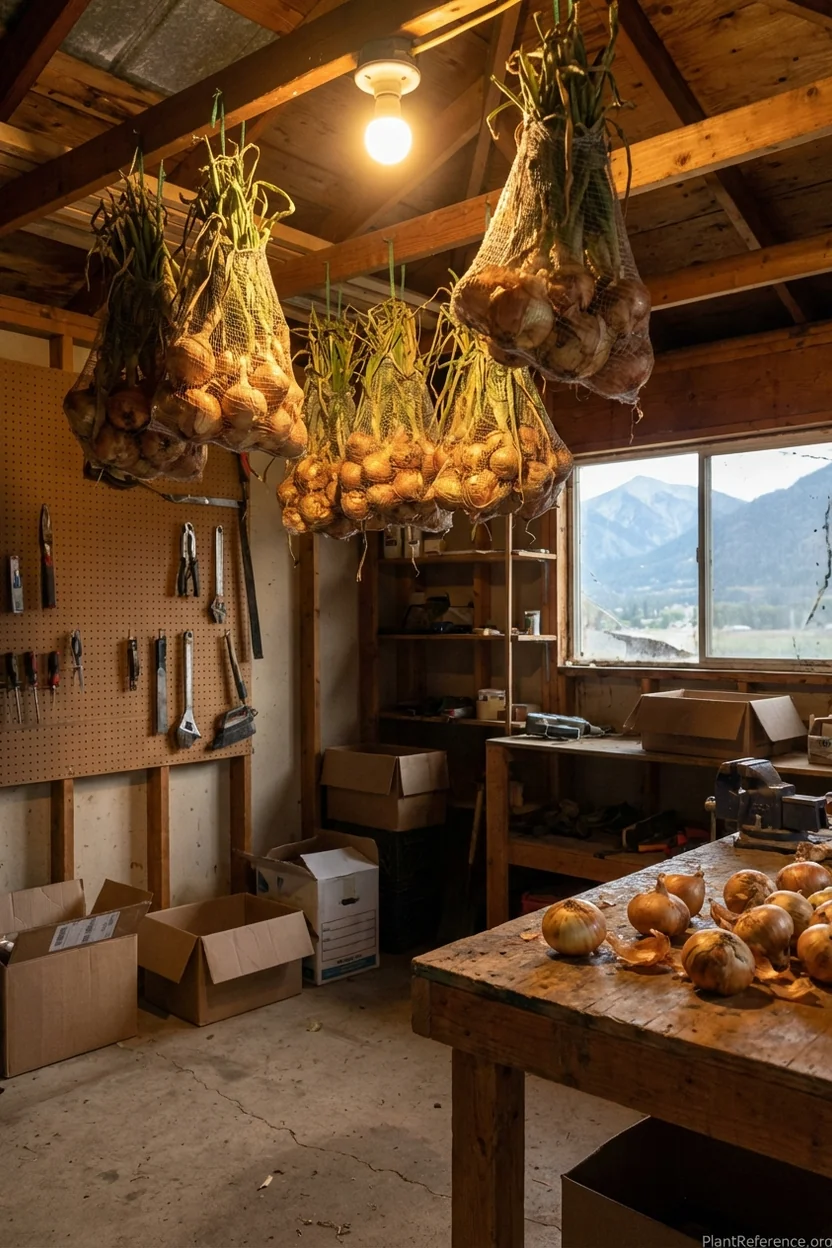
Garage Curing: Move to garage or covered area after initial field cure. Spread in single layers on screens or hang in mesh bags. Our dry mountain air typically cures onions in 2-3 weeks instead of the usual 3-4 weeks.
Testing for Cure: Onions are fully cured when outer skins are papery and neck tissue feels dry and tight when pinched. If moisture is felt in neck tissue, continue curing.
Storage Guidelines
Optimal Conditions: Store cured onions at 32-40°F (0-4°C) with 60-70% humidity. Unheated garages work well in Salt Lake City if temperatures stay above freezing.
Storage Duration by Variety: - 🌿Allium cepa 'Red Wing': 8-10 months - 🌿Allium cepa 'Yellow Sweet Spanish': 4-6 months - 🌿Allium cepa 'Candy': 3-4 months - 🌿Allium cepa 'Walla Walla': 1-2 months maximum
Avoid Common Mistakes: Don't store onions with potatoes (causes sprouting), don't store in plastic bags (traps moisture), don't store damaged onions (spreads rot).
Frequently Asked Questions
Reading about plants and recognising them are different skills. These three build the second.
- Daily PlantIdentify the day’s mystery plant from a close-up photograph.
- Keyed OutWork a dichotomous key, lead by lead, to name a hidden specimen.
- Name That PlantName a specimen from botanical clues dealt hardest first.
Free to play, no account needed
Yuki is a landscape designer in Salt Lake City who specializes in water-wise gardens that work with Utah's dry climate and alkaline soil. She moved to Utah from Portland, Oregon—a rude awakening for someone used to gardening in rich, acidic soil with reliable rainfall. That transition taught her to rethink everything she knew about plant selection and garden design. Yuki now focuses on intermountain-adapted plantings that combine ornamental grasses, drought-tolerant perennials, and carefully chosen shrubs for year-round interest. She works with homeowners looking to reduce water use without giving up on having an attractive garden. Yuki writes with the clarity of someone who had to learn a new climate from scratch.