When to Plant Onions in Kansas City: Complete Guide + Best Varieties for Zone 6a
Pets & Toxicity
Recorded toxicity for plants linked in this guide. An unknown status is not a safety assessment.
Toxic to pets: Granex onion, red wing storage onion, yellow sweet Spanish onion and 4 moreDetailsHide
Allium cepa 'Granex' — Toxicity Warning
Toxic to cats and dogs if eaten; cats are especially susceptible, and raw, cooked or concentrated plant material can damage red blood cells and cause anaemia.View Allium cepa 'Granex' plant profileAllium cepa 'Red Wing' — Toxicity Warning
Toxic to cats and dogs if eaten; cats are especially susceptible, and raw, cooked or concentrated plant material can damage red blood cells and cause anaemia.View Allium cepa 'Red Wing' plant profileAllium cepa 'Yellow Sweet Spanish' — Toxicity Warning
Toxic to cats and dogs if eaten; cats are especially susceptible, and raw, cooked or concentrated plant material can damage red blood cells and cause anaemia.View Allium cepa 'Yellow Sweet Spanish' plant profileAllium sativum 'Music' — Toxicity Warning
Toxic to cats and dogs if eaten; cats are especially susceptible, and raw, cooked or concentrated plant material can damage red blood cells and cause anaemia.View Allium sativum 'Music' plant profileAllium sativum 'California Early' — Toxicity Warning
Toxic to cats and dogs if eaten; cats are especially susceptible, and raw, cooked or concentrated plant material can damage red blood cells and cause anaemia.View Allium sativum 'California Early' plant profileAllium fistulosum — Toxicity Warning
Toxic to cats and dogs if eaten; cats are especially susceptible, and raw, cooked or concentrated plant material can damage red blood cells and cause anaemia.View Allium fistulosum plant profileAllium cepa 'Walla Walla' — Toxicity Warning
Toxic to cats and dogs if eaten; cats are especially susceptible, and raw, cooked or concentrated plant material can damage red blood cells and cause anaemia.View Allium cepa 'Walla Walla' plant profile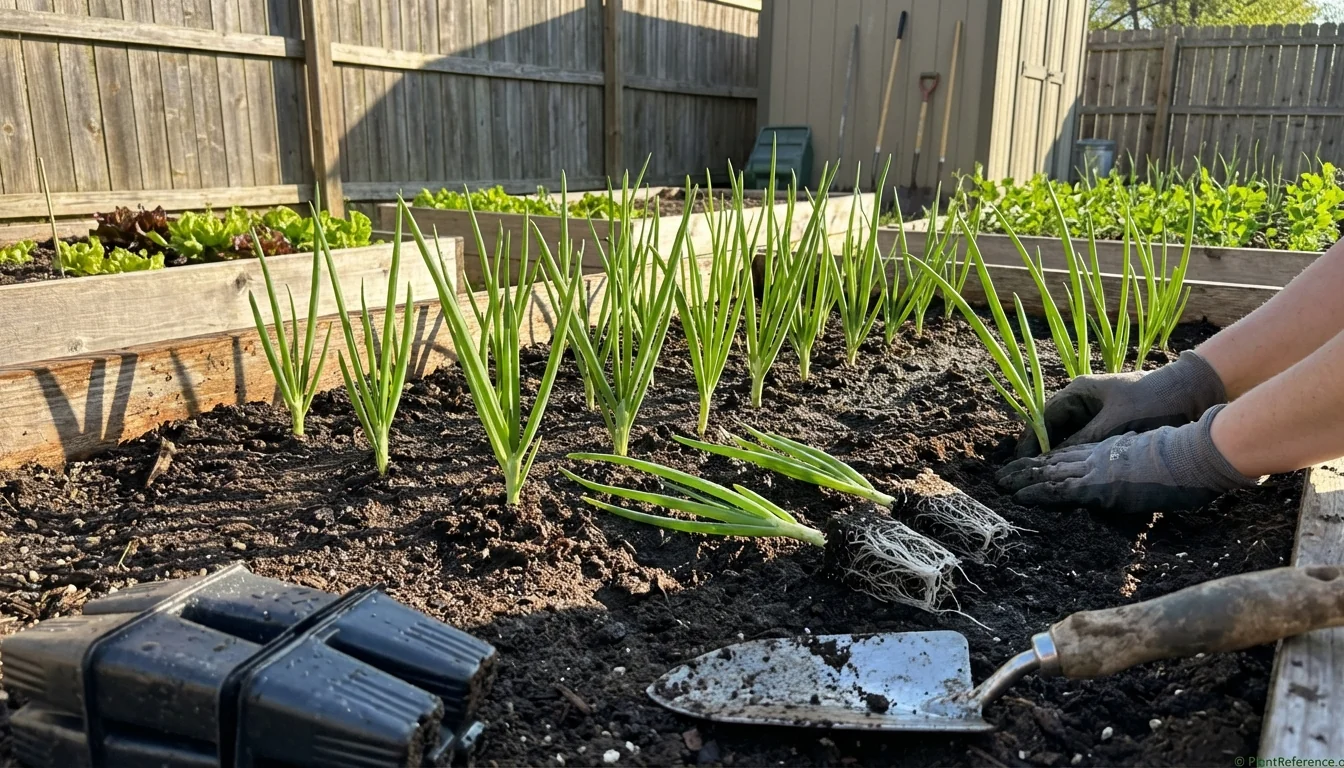
— Image © Plant Reference 2026
Kansas City gardeners sit in one of the best positions in the country for growing onions—right at the sweet spot where both northern storage varieties and southern sweet onions can thrive. Located at 39°N latitude in USDA Zone 6a, Kansas City's 193-day growing season allows for both spring and fall planting strategies that maximize your onion harvest throughout the year.
Best Onion Varieties for Kansas City's Zone 6a Climate
Kansas City's latitude puts you right in the transition zone where intermediate-day onions perform best. These varieties need 12-14 hours of daylight to trigger bulbing, which Kansas City reaches perfectly in late June. I've been growing onions here for over thirty years, and these varieties consistently deliver excellent results.
The key to success in Kansas City is understanding that we can grow both spring-planted storage onions and fall-planted overwintering onions. This dual-season approach gives you fresh onions from May through the following spring when properly planned.
Variety | Days to Maturity | Best For | Notes for Kansas City |
|---|---|---|---|
110-120 days | All-purpose growing | Perfect for Kansas City - reliable intermediate-day hybrid | |
105-120 days | Long-term storage | Excellent keeper, stores 8-10 months when cured properly | |
110-120 days | Large bulbs | Adaptable variety, produces jumbo onions in Kansas City | |
110-125 days | Sweet eating | Plant in fall for early June harvest, mild flavor | |
240-270 days | Hardneck garlic | Plant October 15, harvest July, excellent storage | |
240-270 days | Softneck garlic | More heat tolerant, stores longer, good for braiding |
Intermediate-Day Champions
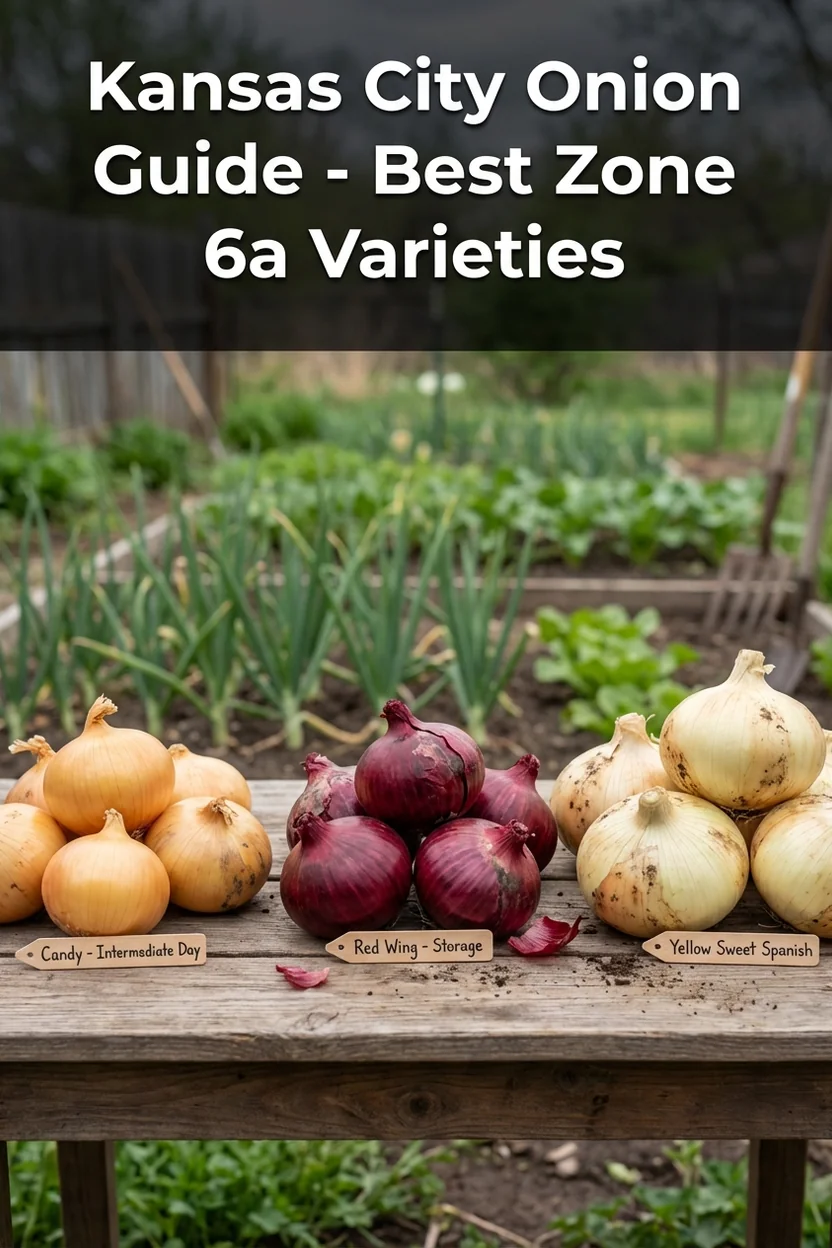
🌿Allium cepa 'Candy' is my top recommendation for Kansas City gardeners. This hybrid was specifically developed for areas like ours—it produces large, sweet bulbs reliably and tolerates our variable spring weather better than most varieties. Plant sets in mid-March, and you'll harvest beautiful 3-4 inch (8-10 cm) bulbs by early August.
🌿Allium cepa 'Red Wing' is the storage champion for Kansas City. These deep red onions develop thick, protective skin that keeps them fresh for 8-10 months when properly cured. I plant these every spring and still have onions from the previous harvest when the new crop comes in.
Fall Planting Options
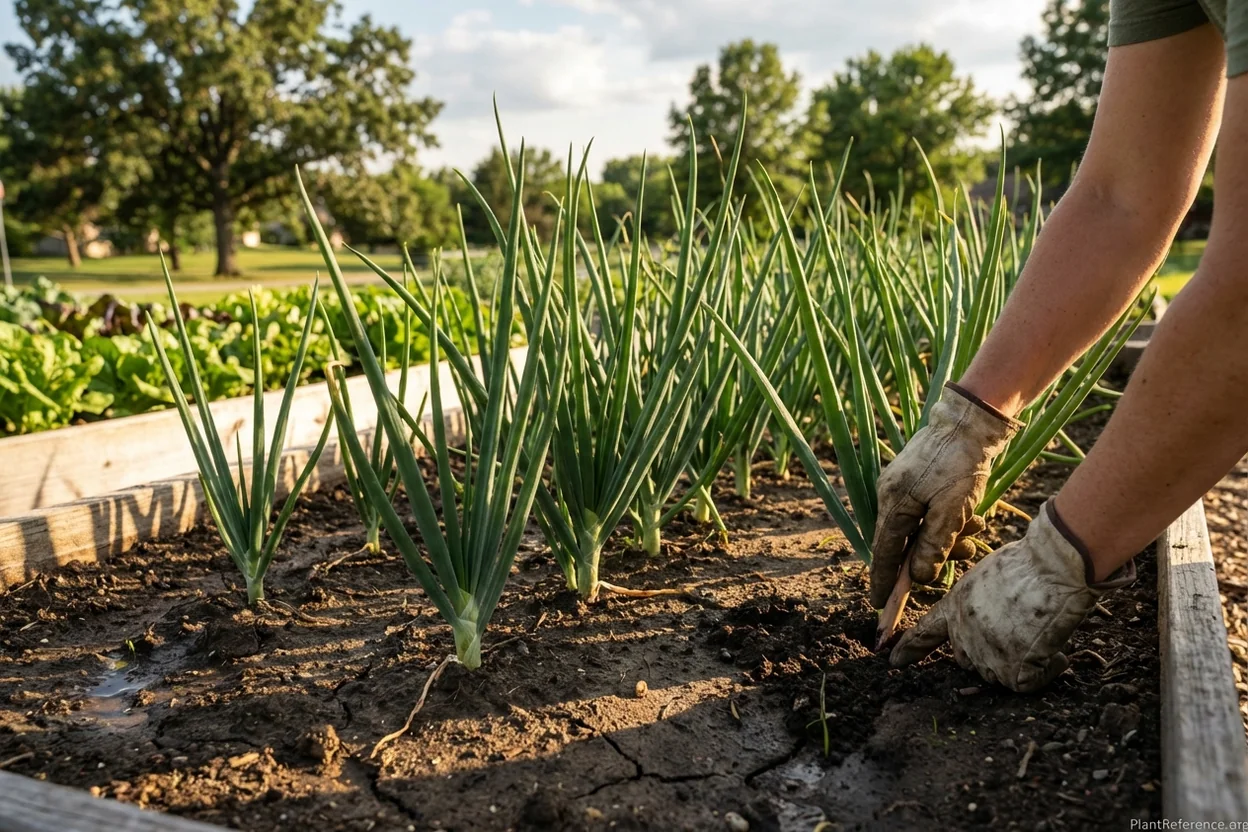
Kansas City's Zone 6a climate allows for successful fall planting of overwintering onions. 🌿Allium cepa 'Walla Walla' planted in September will overwinter under mulch and provide sweet, mild onions for harvest in early June—two months ahead of spring-planted varieties.
The trick with fall planting in Kansas City is timing. Plant too early (before September 15), and the plants grow too large before winter, making them susceptible to freeze damage. Plant too late (after October 15), and they won't establish adequate root systems before the ground freezes.
Specific Planting Dates for Kansas City
Kansas City's last frost averages April 14, giving us specific planting windows that maximize onion success. I calculate all my planting dates from this frost date, adjusting for each method.
Spring Planting Schedule
Onion Sets (March 15 - April 1): Plant sets 2-4 weeks before the last frost. Kansas City's soil is usually workable by mid-March, and onions can handle light frosts down to 28°F (-2°C). Choose sets smaller than a dime—larger sets tend to bolt (go to seed) instead of forming bulbs.
Transplants (March 20 - April 15): Purchase bare-root transplants or grow your own indoors starting January 15. Transplants give you better variety selection than sets and produce more uniform bulbs.
Direct Seeding (March 1 - March 20): Only recommended for experienced gardeners willing to start seeds indoors. Start seeds January 1 indoors, transplant out March 20-April 15.
Fall Planting Schedule
Overwintering Onions (September 15 - October 1): Plant transplants only—seeds and sets don't work for fall planting in Kansas City. Varieties like 🌿Allium cepa 'Walla Walla' establish roots in fall, survive winter under mulch, and bulb rapidly in spring for June harvest.
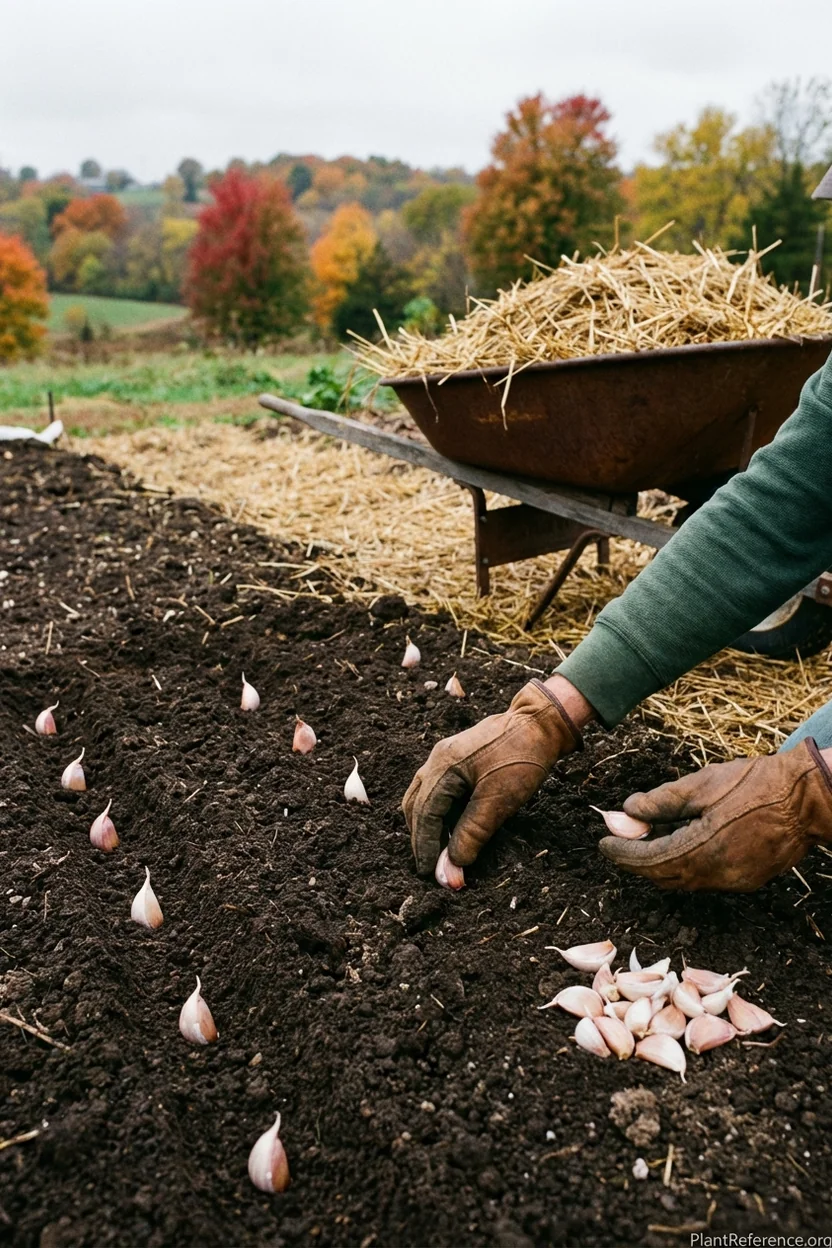
Garlic Planting (October 10 - October 25): Plant garlic cloves 4-6 weeks before the ground freezes hard. This timing allows root establishment without excessive top growth that could be damaged by winter weather.
Succession Planting for Scallions
Plant **Allium fistulosum** (bunching onions) every 2-3 weeks from March through September for continuous harvest of green onions. These don't form bulbs but provide fresh scallions throughout the growing season.
Complete Growing Guide for Kansas City
Kansas City's clay-heavy soil and variable spring weather require specific techniques for onion success. After decades of growing here, I've learned these soils need significant amendment, and timing irrigation around our unpredictable spring rains is crucial.
Soil Preparation for Kansas City Clay
Kansas City's heavy clay soil holds water too long for onions, which need well-draining conditions to prevent rot. Work in 2-3 inches (5-8 cm) of compost or aged manure plus coarse sand to improve drainage. Raised beds work exceptionally well here—even 6 inches (15 cm) of height dramatically improves drainage.
Test your soil pH in late winter. Kansas City soils tend to run alkaline (pH 7.0-8.0), but onions prefer slightly acidic conditions (pH 6.0-6.8). Add sulfur in fall to lower pH if needed—it takes months to take effect.
Planting Techniques
Set Placement: Push onion sets into soil so the top is just at soil level. Planting too deep delays emergence; too shallow allows birds to pull them out.
Transplant Depth: Plant transplants 1 inch (2.5 cm) deep with roots straight down. Trim roots to 2 inches (5 cm) and tops to 4 inches (10 cm) to reduce transplant shock.
Spacing: Space all onions 4 inches (10 cm) apart in rows 12 inches (30 cm) apart. Closer spacing produces smaller bulbs but higher total yield.
Kansas City Watering Strategy
Kansas City's spring weather alternates between soaking rains and dry spells. Onions need consistent moisture—1 inch (2.5 cm) per week—but hate standing water. Install drip irrigation or soaker hoses to provide steady moisture without wetting foliage, which encourages disease.
Monitor soil moisture 2 inches (5 cm) deep. In our clay soil, this means checking daily during dry spells and potentially going a week between waterings after heavy rains.
Fertilizing for Kansas City Conditions
Kansas City's clay soil often locks up nutrients, making them unavailable to plants. Apply a balanced fertilizer (10-10-10) at planting, then side-dress with nitrogen every 3-4 weeks until mid-June. Stop nitrogen applications once day length triggers bulbing—continued nitrogen creates thick necks that won't cure properly.
I use compost tea every two weeks during the growing season. Kansas City's hot summers stress onions, and the organic matter helps maintain soil moisture and provides slow-release nutrients.
Managing Kansas City's Variable Weather
Kansas City's weather swings from late freezes to sudden heat waves. Protect newly planted onions from late frosts with row covers—onions handle light frost but temperatures below 25°F (-4°C) can damage growing points.
During heat waves (temperatures above 90°F/32°C), provide afternoon shade with shade cloth. Onions slow growth in extreme heat, and consistent moisture becomes even more critical.
Troubleshooting Kansas City-Specific Problems
After thirty years of growing onions in Kansas City, I've encountered every problem our climate can throw at these plants. Here are the most common issues and my proven solutions.
Problem | Symptoms | Likely Cause | Quick Fix |
|---|---|---|---|
Heavy clay soil | Small bulbs, rot at soil line, poor emergence | Poor drainage in clay | Build raised beds 6-8 inches high with 1/3 compost, 1/3 soil, 1/3 coarse sand |
Spring weather stress | Stunted growth, yellowing foliage after planting | Late cold snaps and sudden heat swings | Use row covers during cold spells, shade cloth above 85°F |
Bolting issues | Flower stalks in May-June, hard woody centers | Large sets, wrong variety, late spring cold | Use small sets or transplants, intermediate-day varieties only, remove stalks |
Thrips damage | Silvery streaking on leaves, worst in hot dry periods | Microscopic thrips feeding on foliage | Spray insecticidal soap or introduce predatory mites |
Onion maggots | Wilting plants, root damage in early spring | Adult flies laying eggs at plant base | Rotate plantings, use row covers immediately after planting |
Fungal disease | Purple blotch or downy mildew on foliage | Humid summers and overhead watering | Ensure good air circulation, avoid wetting foliage, remove debris |
Heavy Clay Soil Problems
Symptom: Small bulbs, rot at soil line, poor emergence of sets Cause: Kansas City's clay soil drains poorly and compacts easily Solution: Build raised beds 6-8 inches (15-20 cm) high with amended soil. Mix 1/3 compost, 1/3 existing soil, 1/3 coarse sand. Never work clay soil when wet—wait until it crumbles in your hand rather than forming a ball.
Spring Weather Stress
Symptom: Stunted growth after planting, yellowing foliage Cause: Kansas City's erratic spring weather with late cold snaps and sudden heat Solution: Use row covers during cold spells, provide shade cloth when temperatures exceed 85°F (29°C). Plant in multiple successions 2 weeks apart to spread risk.
Bolting Issues
Symptom: Flower stalks appearing in May-June, hard woody centers in bulbs Cause: Large onion sets (bigger than a dime), wrong day-length variety for latitude, late spring cold exposure Solution: Choose intermediate-day varieties appropriate for 39°N latitude. Use small sets or transplants. Remove flower stalks immediately if they appear, though bulb quality will be reduced.
Kansas City Pest Management
Thrips: These microscopic insects cause silvery streaking on leaves. They're worse during hot, dry periods common in Kansas City summers. Spray with insecticidal soap or introduce predatory mites.
Onion Maggots: The adult flies lay eggs at the base of plants in early spring. Rotate plantings, use row covers immediately after planting, and remove all onion debris in fall.
Disease Prevention
Kansas City's humid summers create ideal conditions for fungal diseases. Ensure good air circulation by proper spacing, avoid overhead watering, and clean up all plant debris in fall. Purple blotch and downy mildew are our most common issues—both prevented by keeping foliage dry.
Harvest and Storage
Kansas City's climate allows for excellent onion storage when you time harvest and curing correctly. I've stored Red Wing onions from August harvest through the following June using these techniques.
Harvest Timing
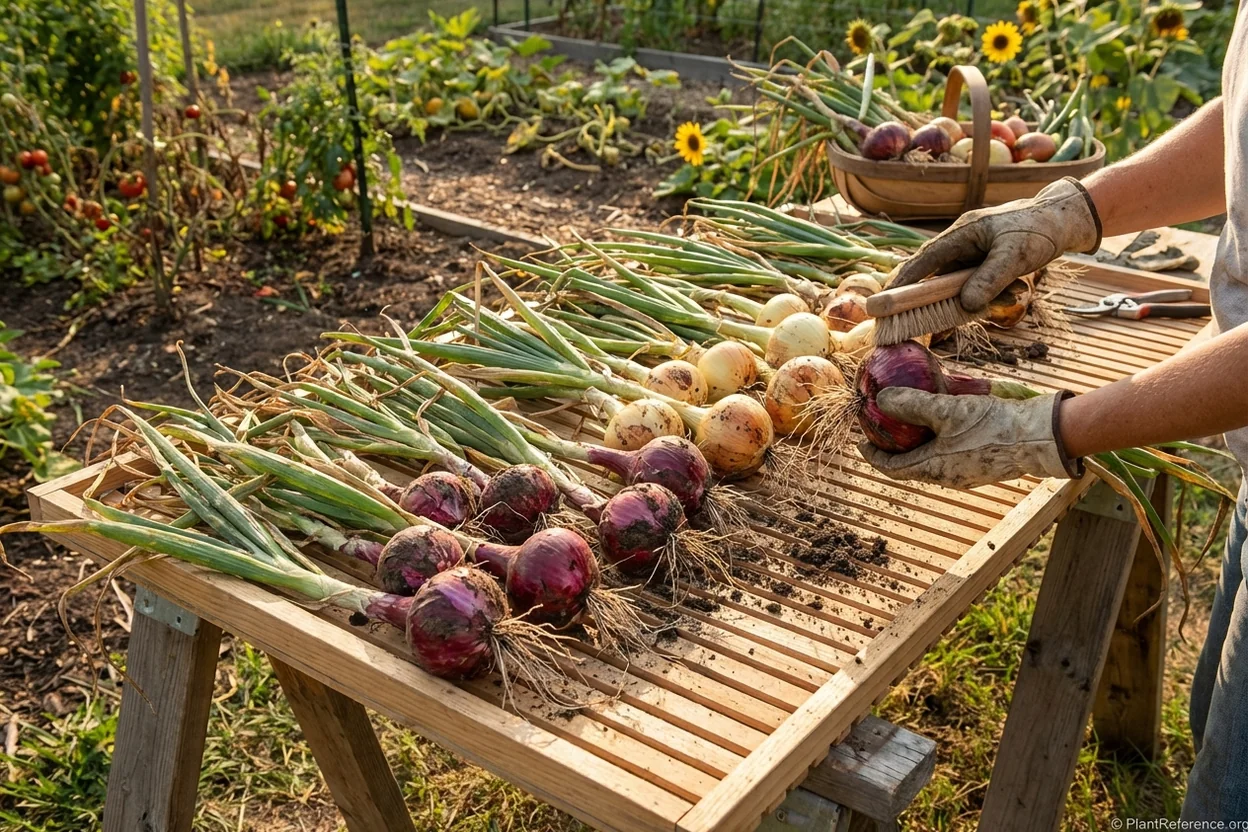
Harvest when 50-75% of the tops have fallen over naturally. This usually occurs in late July through August for spring-planted onions, and early June for fall-planted varieties. Don't force tops over—this stops the flow of nutrients to the bulb and creates a wound that invites rot.
Pull onions on a dry day and lay them in the sun for 24 hours if weather permits. Kansas City's August humidity often prevents field curing, so move them to a covered, ventilated area immediately.
Curing Process for Kansas City Climate
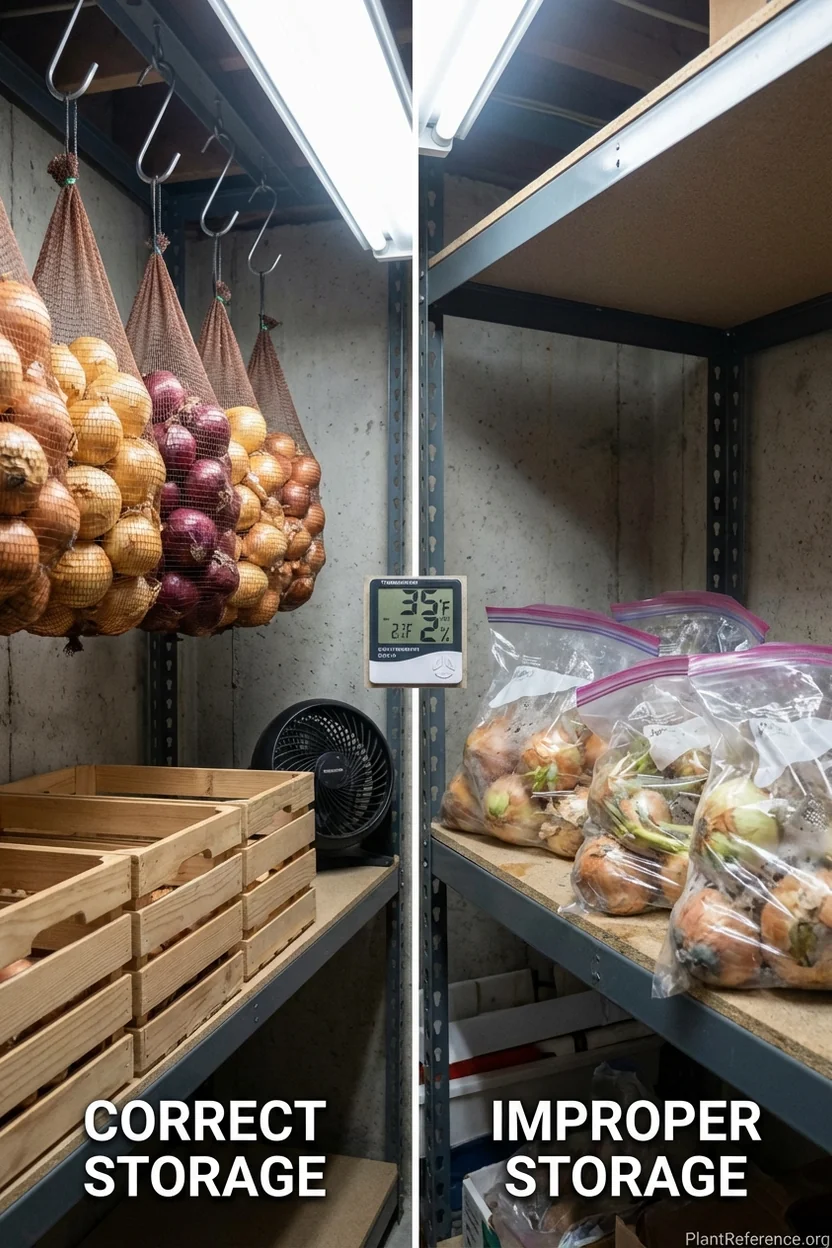
Kansas City's high humidity requires indoor curing in a location with good air circulation. I use my garage with a fan running—temperatures of 80-85°F (27-29°C) with low humidity cure onions in 2-3 weeks.
Spread onions in single layers on screens or hang in mesh bags. Don't remove tops until curing is complete—the green tops need to dry down and seal the neck. Properly cured onions have papery outer skins and tight, dry necks.
Long-Term Storage
Store cured onions in a cool (32-40°F/0-4°C), dry location with good air circulation. My unheated garage works perfectly for Kansas City's winter storage. Check stored onions monthly and remove any showing signs of sprouting or soft spots.
🌿Allium cepa 'Red Wing' stores 8-10 months under these conditions. Sweet varieties like 🌿Allium cepa 'Walla Walla' should be used within 2-3 months—their high water content makes them poor keepers despite excellent fresh eating quality.
Garlic Harvest and Storage
Harvest garlic in mid-July when lower leaves turn brown but 5-6 green leaves remain. Cure in a warm, dry, ventilated location for 3-4 weeks. Properly cured 🌿Allium sativum 'Music' stores 6-8 months, while 🌿Allium sativum 'California Early' keeps 9-12 months and works well for braiding.
Frequently Asked Questions
Reading about plants and recognising them are different skills. These three build the second.
- Daily PlantIdentify the day’s mystery plant from a close-up photograph.
- Keyed OutWork a dichotomous key, lead by lead, to name a hidden specimen.
- Name That PlantName a specimen from botanical clues dealt hardest first.
Free to play, no account needed
Bill is a third-generation nurseryman who runs a small family garden center on the outskirts of Kansas City. His grandfather started the business in the 1960s, and Bill took over after working as an ag teacher for a decade. He knows the plants that work in the Kansas City area better than anyone—he's grown most of them himself and watched customers succeed or fail with the rest. Bill specializes in trees and shrubs for the Midwest, perennial borders that handle the region's hot summers and cold winters, and helping customers make sensible choices rather than impulse buys. He writes the way he talks to customers: patient, knowledgeable, and honest about what's worth the money and what isn't.