1 / 8
Vegetables
Allium cepa 'Walla Walla'
Walla Walla Sweet Onion
AmaryllidaceaeAsia
At a Glance
Typevegetable
Habitupright
Foliagedeciduous
Height18-24 inches
Width4-6 inches
Maturity1 years
Growing Zones
USDA Hardiness Zones
4a - 9bZone 4a
Zone 4b
Zone 5a
Zone 5b
Zone 6a
Zone 6b
Zone 7a
Zone 7b
Zone 8a
Zone 8b
Zone 9a
Zone 9b
These zones indicate the coldest temperatures this plant can typically survive.
Frost Tolerancehardy
Key Features
Attracts Pollinators
Deer Resistant
Container Friendly
Maintenancemoderate
Overview
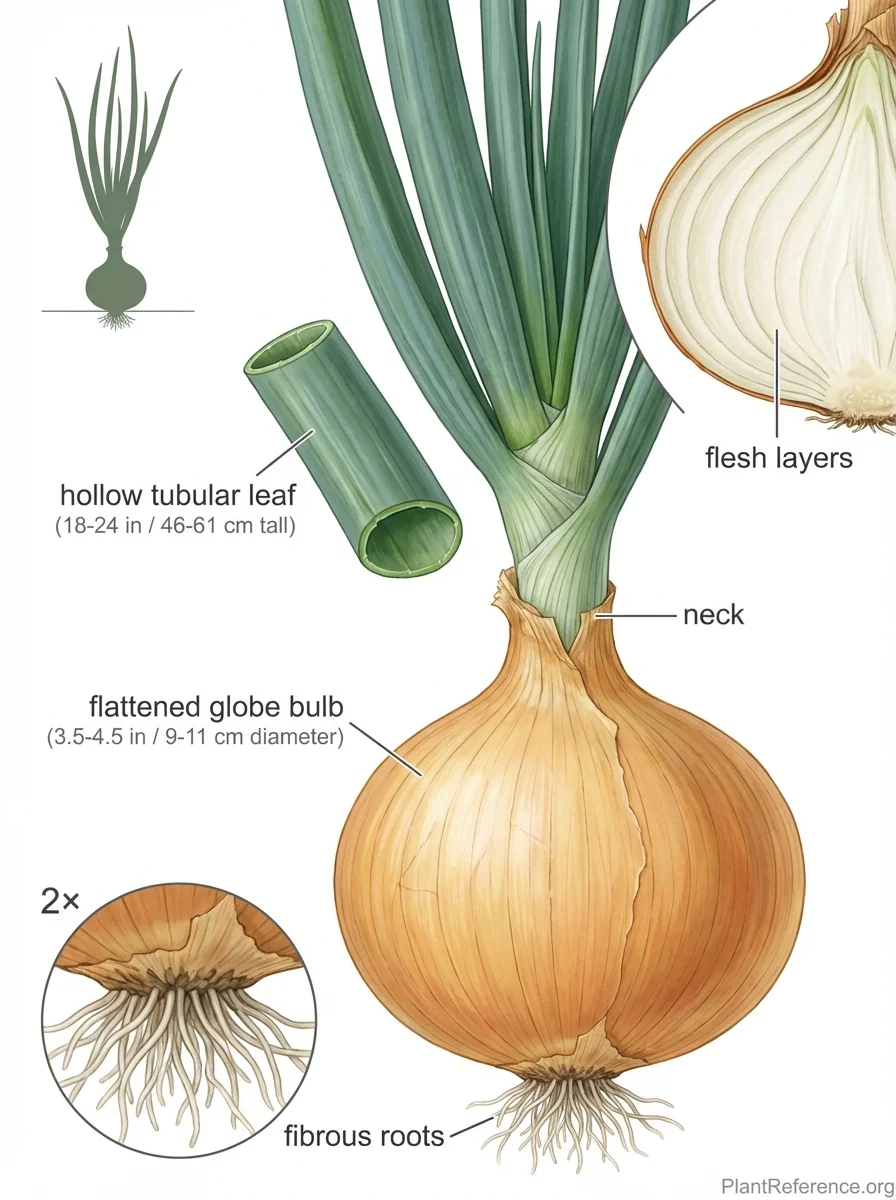
Allium cepa 'Walla Walla' is a premium sweet onion cultivar renowned for producing exceptionally large, flattened globe-shaped bulbs measuring 3.5-4.5 inches in diameter at maturity. This biennial vegetable, typically cultivated as an annual crop, develops distinctive golden-tan to light brown papery outer skins that are notably thinner and looser than standard storage onion varieties. The bulbs contain thick, succulent white flesh arranged in characteristic concentric layers, highly prized for their remarkably mild, sweet flavor profile resulting from reduced sulfur compound levels and elevated sugar content of 5-6% compared to the typical 3-4% found in storage onions.
The plant produces distinctive hollow, tubular blue-green foliage that emerges upright from the bulb crown, reaching 18-24 inches in height with circular cross-sections revealing visible hollow centers when cut. A key identifying characteristic is the notably thick neck measuring 0.75-1 inch in diameter where the leaves attach to the bulb, significantly broader than most storage onion varieties. This thick neck contributes to the cultivar's shorter storage life but enhances its superior fresh eating quality and tender texture.
Native Range
Allium cepa as a species originated through ancient cultivation in the mountainous regions of Central Asia, particularly in areas of modern-day Iran, Pakistan, and Afghanistan, where it was first domesticated over 5,000 years ago from uncertain wild ancestors. The specific 'Walla Walla' cultivar was developed in the early 1900s through careful selective breeding in the Walla Walla Valley of Washington State, where Italian immigrants introduced sweet onion varieties that were methodically adapted to the unique cool, moist growing conditions and mineral-rich volcanic soils characteristic of the Pacific Northwest region.Suggested Uses
Allium cepa 'Walla Walla' excels in dedicated vegetable gardens planted in organized rows with proper spacing for maximum bulb development, or arranged in raised beds for improved drainage and soil management. This cultivar serves as an excellent companion plant when interplanted with carrots, beets, lettuce, tomatoes, and brassicas, as the natural onion compounds help deter certain insect pests while efficiently utilizing garden space with crops that have different maturation schedules. The sweet, mild flavor makes it particularly valuable for fresh eating applications including salads, sandwiches, grilling, and light sautéing where the delicate taste is desired over pungent storage varieties. Consider succession plantings in longer growing season areas to extend harvest periods, though note that this variety has limited storage capability compared to traditional storage onions and should be used fresh within 2-3 months of harvest for best quality.How to Identify
Appearance
Size & Dimensions
Height1'6" - 2'
Width/Spread4" - 6"
Reaches mature size in approximately 1 years
Colors
Flower Colors
white
green
Foliage Colors
blue
green
Fall Foliage Colors
yellow
Bloom Information
Bloom Period
J
F
M
A
M
J
J
A
S
O
N
D
SpringSummer
Detailed Descriptions
Flower Description
White to greenish-white flowers arranged in spherical umbelsFoliage Description
Blue-green hollow tubular leaves that naturally yellow at maturityGrowing Conditions
Sun Requirements
Full Sun
Requires at least 6 hours of direct sunlight daily
• Full Sun: 6+ hours of direct sunlight
• Partial Shade: 3-6 hours of direct sunlight
• Full Shade: Less than 3 hours of direct sunlight
Soil Requirements
pH Range6.0 - 7.0(Neutral)
357912
Soil Types
loam
Drainage
well drained
Water & Climate
Water Needs
moderate to high
Frost Tolerance
hardy
Time to Maturity
110-125 days from transplanting
Care & Maintenance
Care Guide
Allium cepa 'Walla Walla' requires full sun exposure with at least 6 hours of direct sunlight daily and well-drained, fertile soil with a pH between 6.0-7.0 to prevent bulb rot and ensure optimal development. Start seeds indoors 10-12 weeks before the last spring frost, typically in late January to early February in zones 6-8, or purchase quality transplants from reputable suppliers. Transplant seedlings outdoors when they reach 6-8 inches tall with pencil-thin stems, usually 4-6 weeks before the last expected frost. Plant in rows spaced 12 inches apart with 4-6 inches between individual plants - closer spacing yields smaller bulbs while wider spacing up to 6 inches produces larger bulbs but reduces total yield. Maintain consistent soil moisture throughout the growing season by providing 1-1.5 inches of water weekly through irrigation or rainfall, reducing watering frequency as harvest approaches when tops begin yellowing naturally. Apply balanced fertilizer at planting and side-dress with nitrogen-rich fertilizer monthly during active growth, stopping fertilization 4-6 weeks before expected harvest to promote proper bulb maturation and skin development.Pruning
Allium cepa 'Walla Walla' requires minimal pruning during normal growth, but specific timing is crucial for optimal bulb development. Never cut back green foliage while actively growing, as leaves continuously photosynthesize and transfer energy to the developing bulb throughout the season. If flower stalks emerge in spring, immediately cut them at the base upon first appearance to redirect all plant energy toward bulb formation - allowing flowering significantly reduces bulb size and quality. Harvest when 50-75% of the tops have naturally fallen over and yellowed, typically occurring 110-125 days after transplanting in late June to mid-July. After harvest, trim tops to 1-2 inches above the bulb neck using clean, sharp tools - longer tops invite neck rot during curing, while cutting too short may damage the bulb and create pathogen entry points that compromise storage quality.Pruning Schedule
J
F
M
A
M
J
J
A
S
O
N
D
springsummer
Maintenance Level
moderateContainer Growing
✓ Suitable for container growing
⚠️ Toxicity Warning
Allium cepa 'Walla Walla' contains sulfur compounds including thiosulfates that are toxic to dogs and cats if ingested, potentially causing gastrointestinal upset, vomiting, diarrhea, and anemia (specifically Heinz body anemia) from damage to red blood cells. All parts of the plant including bulbs, leaves, and flowers should be kept away from pets and livestock. The plant is completely safe for human consumption both raw and cooked, providing beneficial compounds and nutrients. Handle with care during harvesting and food preparation as the natural sulfur compounds can cause temporary eye irritation and mild skin irritation in sensitive individuals, though these effects are milder than with high-sulfur storage onion varieties.Planting Guide
Planting Methods & Timing
Planting Method
transplant
Indoor Start
10 weeks before last frost
Direct Sow Timing
late summer to early fall for overwintering in mild climates
Days to Maturity
110–125 days
Plant Spacing
4 inches
Companion Planting
Good Companions
carrots
beets
lettuce
tomatoes
peppers
cabbage
Avoid Planting With
peas
beans
sage
asparagus