When to Plant Carrots in Charlotte: Zone 7b Dates + Best Varieties
Pets & Toxicity
Recorded toxicity for plants linked in this guide. An unknown status is not a safety assessment.
No linked plant is recorded as toxicDetailsHide
Daucus carota ssp. sativus 'Rainbow' — Toxicity
Non-toxicView Daucus carota ssp. sativus 'Rainbow' plant profileDaucus carota ssp. sativus 'Chantenay' — Toxicity
Non-toxicView Daucus carota ssp. sativus 'Chantenay' plant profileDaucus carota ssp. sativus 'Imperator' — Toxicity
Non-toxicView Daucus carota ssp. sativus 'Imperator' plant profileDaucus carota ssp. sativus 'Nantes' — Toxicity
Non-toxicView Daucus carota ssp. sativus 'Nantes' plant profileDaucus carota ssp. sativus 'Danvers 126' — Toxicity
Non-toxicView Daucus carota ssp. sativus 'Danvers 126' plant profile
— Image © Plant Reference 2026
Carrots deserve more consideration in Charlotte gardens than they typically get. Most people treat them as an afterthought—something to tuck into a corner—but a well-planned carrot bed adds structure and seasonal rhythm to your garden in ways few other vegetables can. The feathery foliage provides fine texture against broader-leaved plants, and the harvest itself brings a sense of completion that connects you to the growing calendar. Charlotte's moderate Piedmont climate supports two solid planting windows, and the main challenge is one every gardener here already knows: the red clay that defines this region.
Best Carrot Varieties for Charlotte's Zone 7b Climate
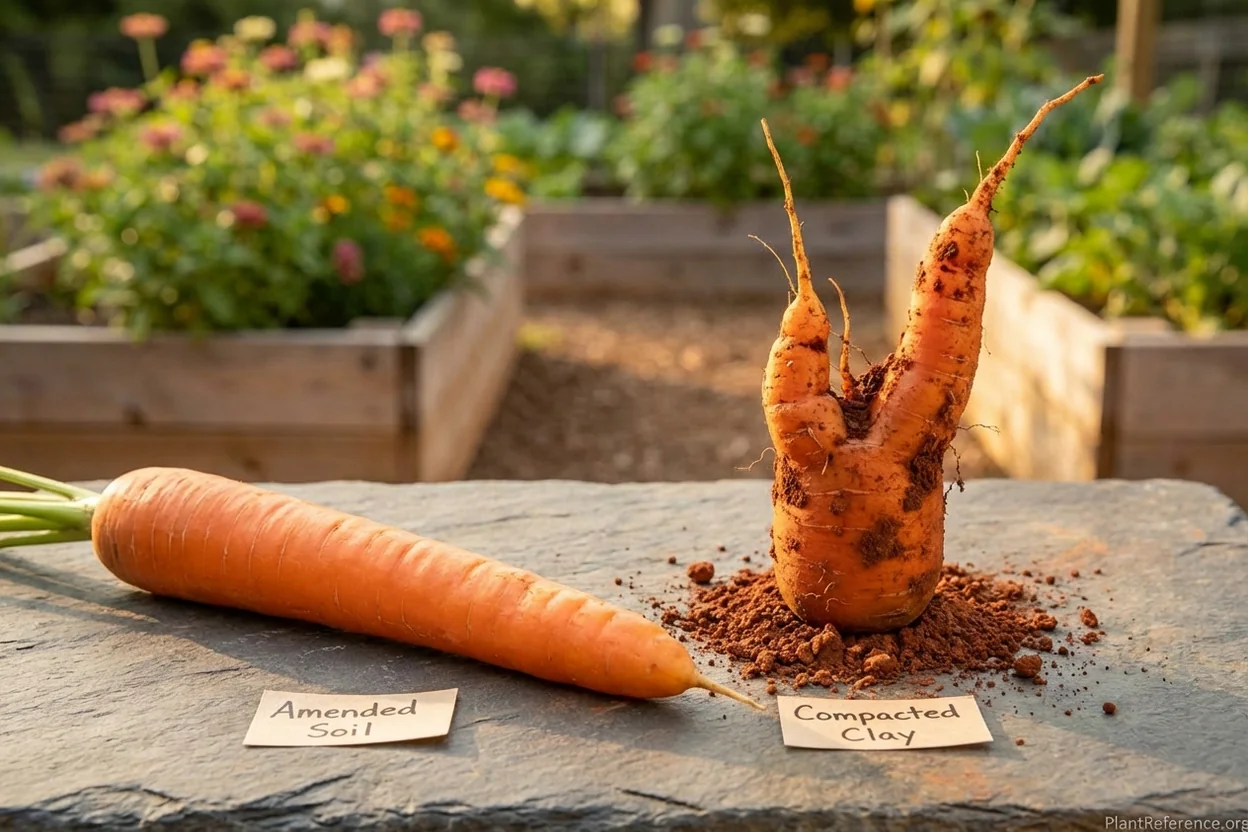
Charlotte's Piedmont red clay is dense, acidic (pH 5.5-6.5), and compacts into a hard surface after heavy rain. It holds moisture and nutrients well, but physically resists root penetration below the amended topsoil layer. Choosing the right variety means understanding what depth of workable soil you can realistically provide.
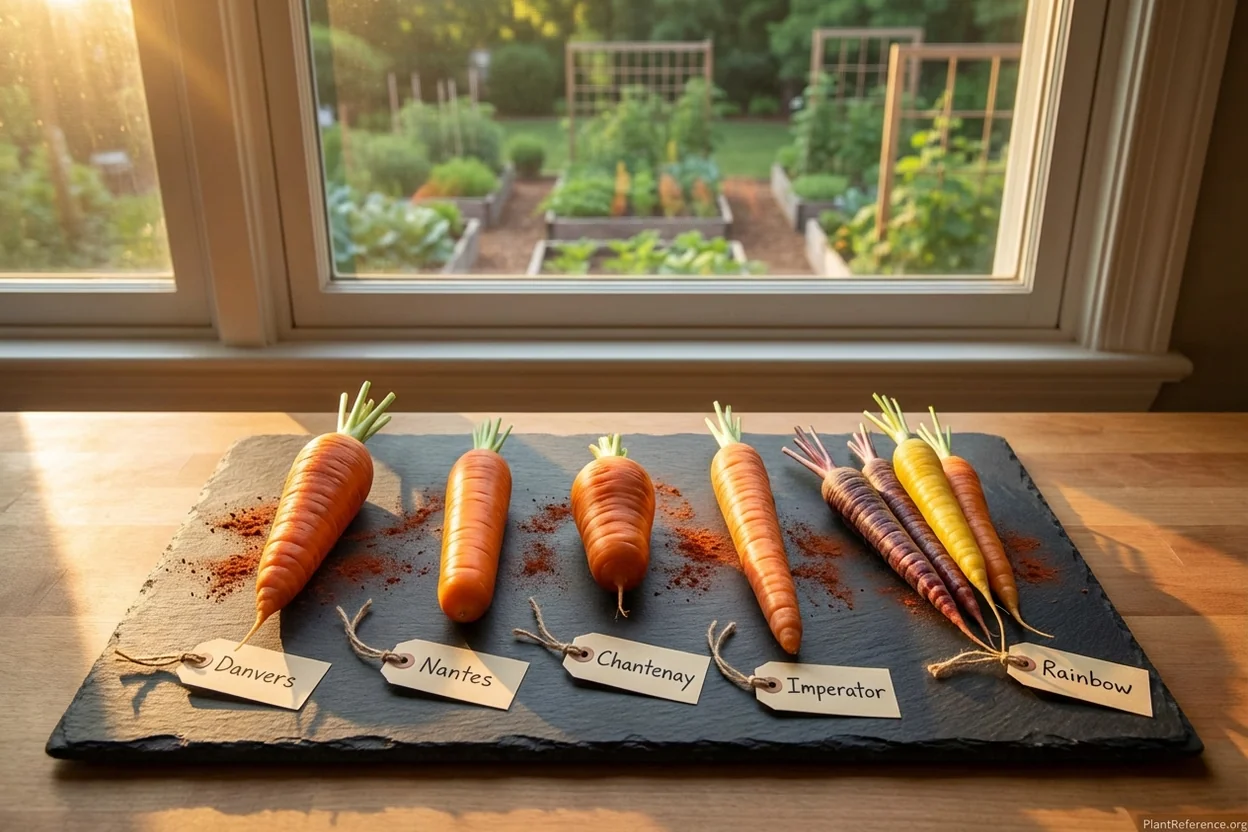
🌿Daucus carota ssp. sativus 'Danvers 126' (DAW-kus kuh-ROH-tuh) performs most reliably in Charlotte's native clay. The conical root tapers gradually, distributing mechanical force across a broader surface than cylindrical varieties. At 70-80 days to maturity, 🌿Daucus carota ssp. sativus 'Danvers 126' completes growth comfortably in both spring and fall windows. The firm flesh stores for months—a practical advantage when you want to extend your fall harvest through winter.
🌿Daucus carota ssp. sativus 'Nantes' is the variety I recommend for anyone who has taken the time to build proper soil. The cylindrical root produces the sweetest, most refined eating quality of any carrot—nearly coreless with a satisfying snap. 🌿Daucus carota ssp. sativus 'Nantes' demands loose, friable ground, so it belongs in amended beds or raised beds where you control the soil profile. The cultivar 'Bolero' adds disease resistance that matters during Charlotte's humid shoulder seasons.
🌿Daucus carota ssp. sativus 'Chantenay' is the pragmatic choice for newer gardens. At 4-5 inches (10-13 cm) long with stout shoulders, 🌿Daucus carota ssp. sativus 'Chantenay' stays within the amended topsoil and avoids the clay subsoil entirely. It works in containers and the shallow raised beds common in Charlotte's newer suburban developments where construction has compacted the native soil. Harvest before 2 inches (5 cm) diameter to prevent woody core.
🌿Daucus carota ssp. sativus 'Imperator' produces the long, tapered grocery store carrot and requires at least 12 inches (30 cm) of loose soil. In Charlotte, that means purpose-built raised beds. The cultivar 'Sugarsnax 54' combines length with high sugar content for exceptional eating quality.
🌿Daucus carota ssp. sativus 'Rainbow' adds visual interest with white, yellow, orange, and coral roots from one hybrid packet. The color variation brings unexpected beauty to the harvest and to the plate—something I always appreciate. At 70-75 days, it fits both windows in amended Charlotte beds.
Variety | Days to Maturity | Best For | Notes for Charlotte |
|---|---|---|---|
70-80 days | Native clay and storage | Top pick for Piedmont red clay; conical root handles dense soil | |
65-75 days | Prepared beds and fresh eating | Best flavor in amended soil; 'Bolero' for humidity disease resistance | |
65-75 days | New gardens and containers | Short roots avoid compacted subsoil in newer Charlotte developments | |
75-85 days | Deep raised beds only | Needs 12+ inches loose soil; not for native Charlotte clay | |
70-75 days | Visual interest and nutrition | Multiple colors add beauty to harvest; moderate depth requirements |
Specific Planting Dates for Charlotte
Charlotte averages an April 5 last frost and November 5 first frost, providing 214 frost-free days. The Piedmont's moderate temperatures create two productive carrot windows separated by a manageable summer gap.
Spring Planting
Begin sowing in early March, about four weeks before the April 5 last frost. Carrots tolerate light frost, so early planting is safe. Continue succession sowings every two to three weeks through mid-April. The spring window in Charlotte is generous—you have until mid-June before sustained soil heat degrades root quality. That gives you roughly 90 days from the first sowing, enough time for even slower-maturing varieties to finish.
Fall Planting
Fall produces Charlotte's finest carrots. Start sowing in late August while warm soil still supports fast germination (5-7 days), and continue through late September. Roots develop during October and November as temperatures decline steadily. The cooling soil triggers starch-to-sugar conversion that produces the sweetest, most complex flavor of the year. Charlotte's November 5 first frost enhances rather than ends the harvest.
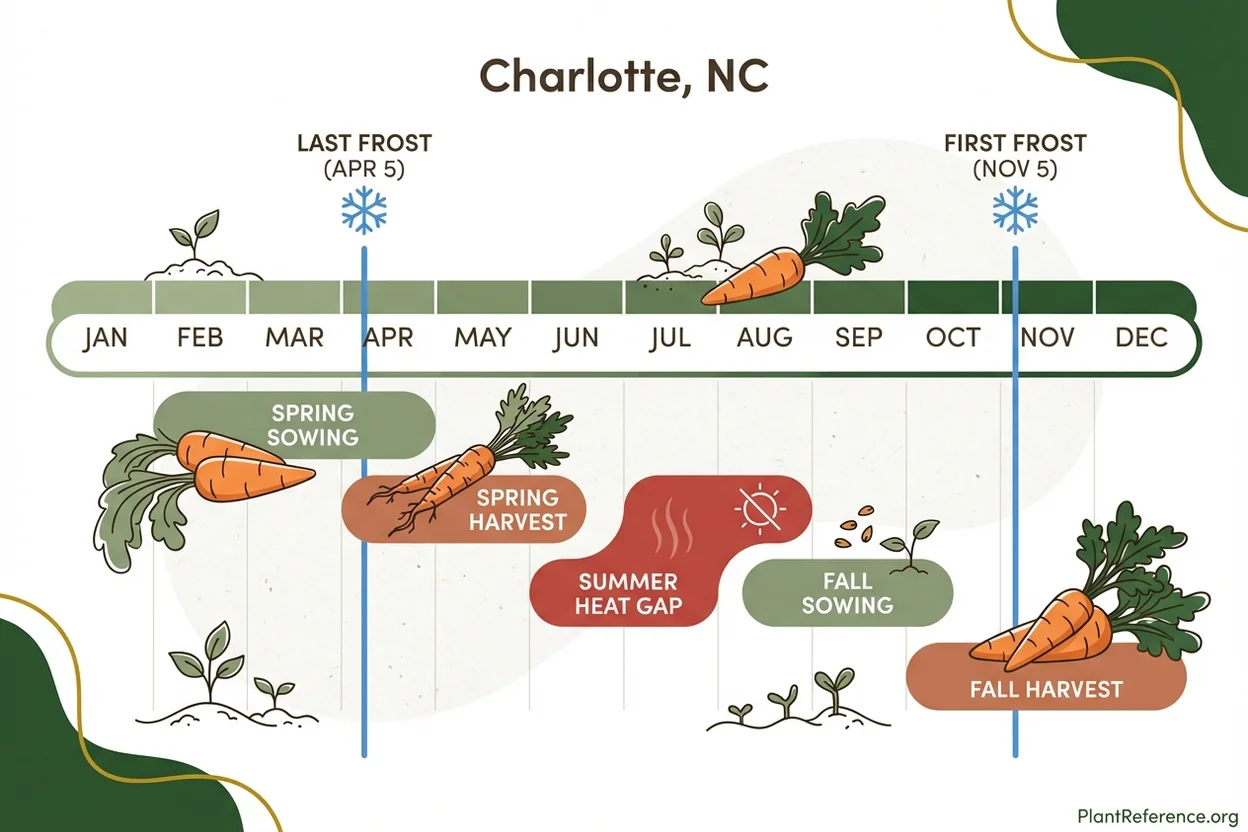
Spring sowing window: March 1 - April 15
Spring harvest: May through mid-June (before sustained heat)
Summer heat gap: Late June through mid-August
Fall sowing window: August 25 - September 25
Fall harvest: November through January (with mulch protection)
Best flavor: Fall harvest after cooling soil triggers sugar conversion
Complete Growing Guide for Charlotte
Soil Preparation
Charlotte's Piedmont clay presents the same challenge that defines gardening across this entire region: dense, acidic soil that resists root penetration. But it also holds moisture and minerals far better than sandy ground. The approach is to improve the structure while keeping what already works.
Charlotte's rapid growth has added a wrinkle—many newer neighborhoods sit on clay that was compacted by heavy construction equipment. This machine-compacted soil is significantly worse than undisturbed native clay. If your garden is on a lot built in the last 20 years, expect to invest more effort in soil preparation.
For in-ground beds, work the top 10-12 inches (25-30 cm) with a garden fork when moisture allows crumbling. Incorporate 3-4 inches (8-10 cm) of finished compost and 1-2 inches (2.5-5 cm) of coarse sand. Test pH through the NC Cooperative Extension—Charlotte clay typically runs 5.5-6.5, and carrots prefer 6.0-6.8. Add lime gradually if needed. Best Soil Mix for Raised Beds: Creating the Perfect Growing Medium
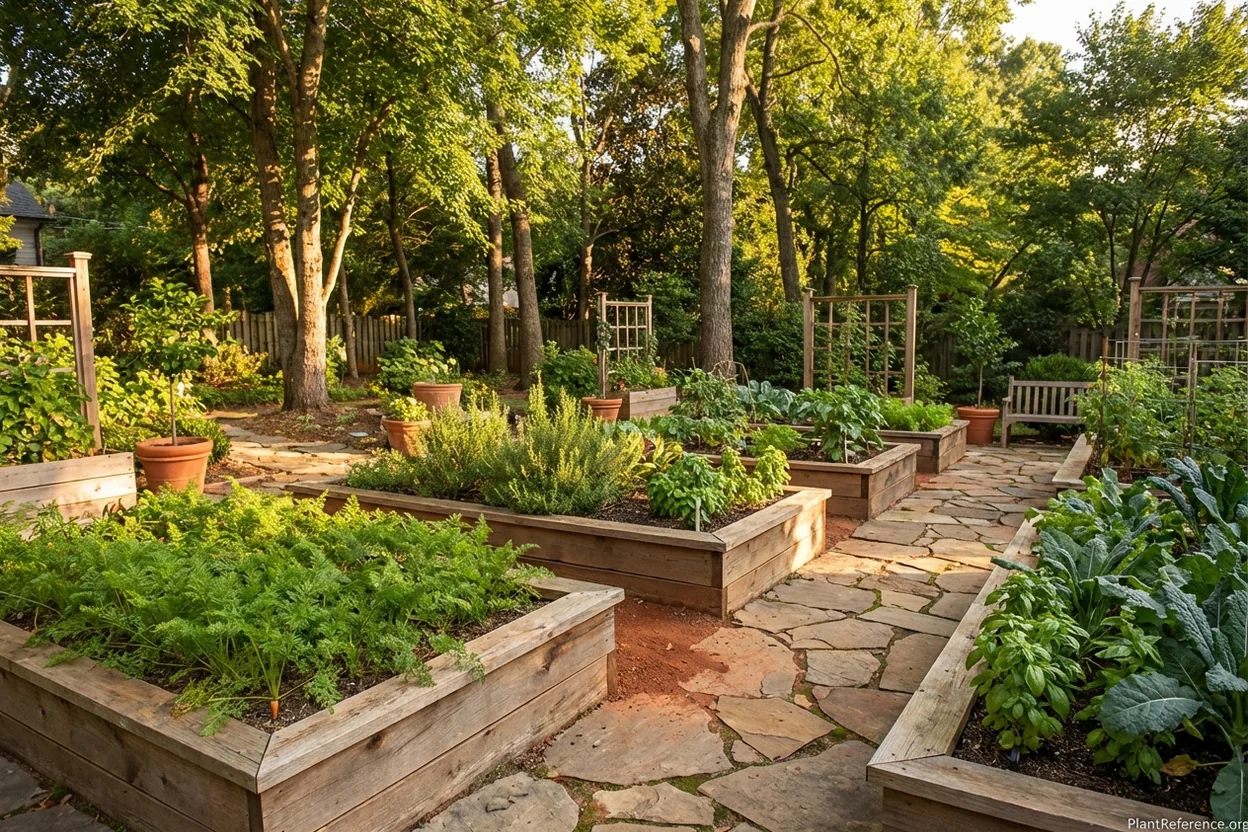
For raised beds—and this is what I recommend for Charlotte gardens—build to at least 12 inches (30 cm) deep with 60% topsoil, 30% compost, and 10% coarse sand or perlite. Choose materials that complement your garden's visual structure. Cedar weathers to a silver-gray that suits most garden styles, while stone-faced beds add formality. How to Build a Raised Garden Bed: Step-by-Step Construction Guide
Seeding
Sow seeds 1/4 inch (0.6 cm) deep in rows 12 inches (30 cm) apart. Cover with vermiculite or fine compost rather than native clay. Piedmont soil crusts hard after Charlotte's spring thunderstorms, and carrot seedlings lack the mechanical strength to break through. This crusting issue is the primary cause of poor germination stands across the region. Best Soil for Raised Beds: 6 Commercial Mixes Tested and Compared
Spring sowings germinate in 14-21 days in cool soil. Lay burlap over the row to maintain surface moisture. Check daily from day 5 and remove the cover at the first sign of emergence. Fall sowings germinate in 5-7 days in warm August-September soil. Keep the surface consistently moist with light daily watering until seedlings establish.
Thinning
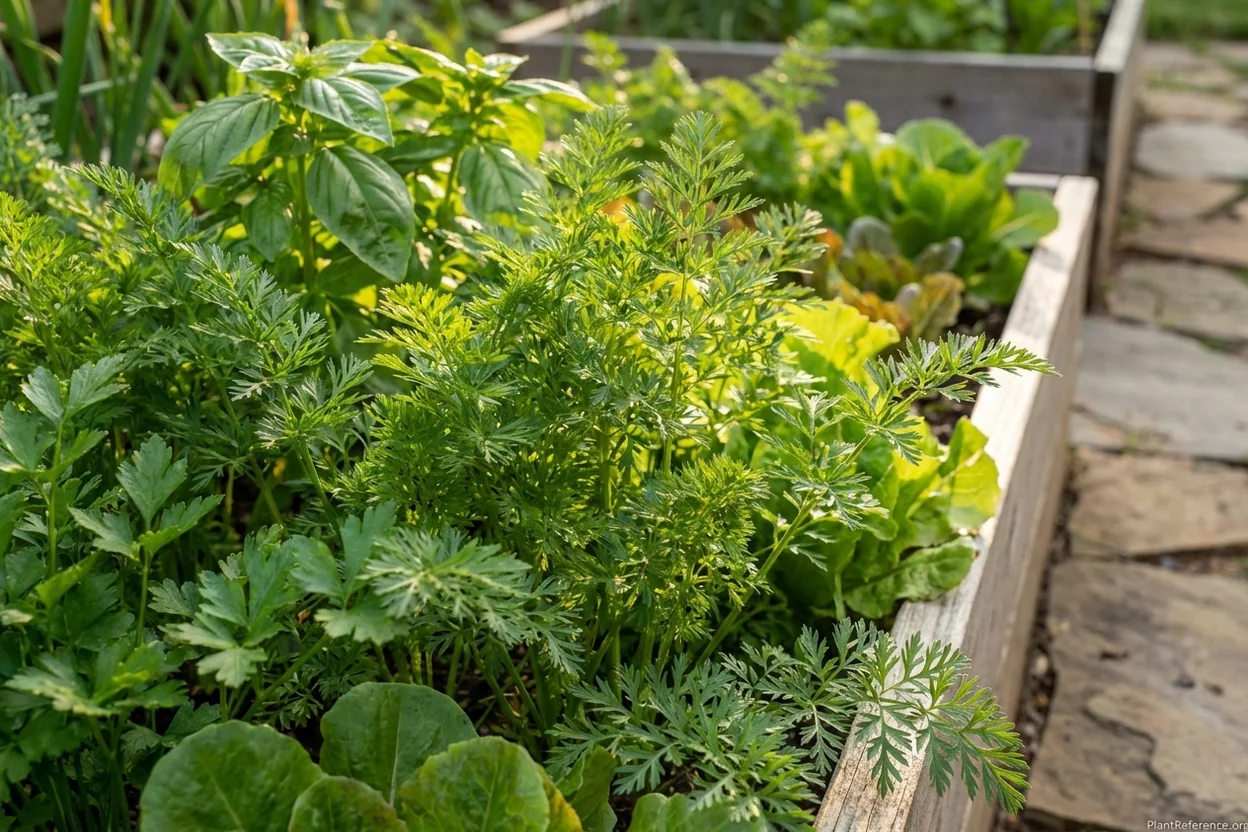
Thin in two stages: first to 1 inch (2.5 cm) when seedlings reach 2 inches (5 cm), then to 2-3 inches (5-8 cm) at 4-5 inches (10-13 cm). Cut at the soil line with scissors—pulling in clay soil disturbs neighboring roots. Consistent thinning produces uniform roots that are as satisfying to look at as they are to eat. Raised Bed Vegetable Garden Layout: Planning for Maximum Production
Watering
Carrots need 1 inch (2.5 cm) of water weekly during early growth, increasing to 1.5-2 inches (4-5 cm) during root development. Charlotte averages about 43 inches of rainfall annually, but delivery is erratic—intense summer thunderstorms can dump 2 inches in an hour followed by extended dry spells.
Drip irrigation provides the consistency carrots require. Run lines alongside rows and deliver slow, steady moisture that prevents the splitting caused by uneven watering. Clay soil retains moisture longer than sand, so check at 2-inch depth before irrigating to avoid waterlogging. Raised Bed Irrigation Systems: Watering Solutions for Consistent Growth
Mulching
Apply 2-3 inches (5-8 cm) of straw or shredded leaves after seedlings establish. In spring, mulch moderates soil temperature as Charlotte warms through May. In fall, mulch insulates beds past the November 5 frost, extending harvest into December and January. Charlotte's abundant hardwood trees provide free shredded leaf mulch—pass leaves through a mower to prevent matting. When to Plant Kale in Charlotte: Complete Guide + Best Varieties for Zone 7b
Troubleshooting Charlotte-Specific Problems
Summer Heat Gap
Charlotte's summer pushes soil temperatures above 75°F (24°C) from late June through mid-August, triggering bitter terpenoid compounds in carrot roots. The gap runs approximately 6-8 weeks—shorter than cities farther south. Harvest spring carrots by mid-June and start fall sowings by late August. Charlotte's urban heat island effect can extend the gap by a week or two in downtown and heavily paved neighborhoods compared to suburban areas with more tree canopy. When to Plant Peppers in Charlotte: Complete Guide + Best Varieties for Zone 7b
Construction-Compacted Soil
Charlotte's building boom has left many residential lots with severely compacted clay that is harder than undisturbed native soil. Construction equipment compresses the soil structure and destroys the biological activity that creates natural pore space. If your garden sits on a recently developed lot, raised beds filled with imported soil are the most practical solution. Attempting to amend construction-compacted clay to carrot depth requires mechanical intervention—a broadfork at minimum, potentially a rented tiller for the initial breaking. Raised Bed Weeds: Prevention Strategies and Control Methods
Leaf Blight in Humid Conditions
Charlotte's humidity promotes Alternaria and Cercospora leaf blight on carrot foliage during warm, wet shoulder seasons. Infected leaves develop brown lesions that reduce photosynthesis and slow root development. Space rows 12 inches (30 cm) apart for airflow, irrigate at the soil surface, and remove infected foliage promptly. The Nantes cultivar 'Bolero' offers above-average resistance to both blights. When to Plant Tomatoes in Charlotte: Complete Guide + Best Varieties for Zone 7b
Japanese Beetles on Foliage
Japanese beetles occasionally feed on carrot foliage during their June-July flight period, creating skeletonized leaves. Individual plants tolerate moderate damage without significant impact on root development, but heavy infestations warrant hand-picking or neem oil application. The timing coincides with the end of the spring carrot season, so fall crops typically avoid beetle pressure entirely. When to Plant Squash in Charlotte: Complete Guide + Best Varieties for Zone 7b
Harvest & Storage
Spring carrots reach harvest size when shoulders measure 3/4-1 inch (2-2.5 cm) in diameter, typically 65-85 days after sowing. Charlotte's moderate spring allows harvest through mid-June before heat degrades quality. Loosen soil alongside the row with a garden fork before pulling—Piedmont clay grips roots firmly, and direct pulling snaps off tips. When to Plant Green Beans in Charlotte: Complete Guide + Best Varieties for Zone 7b
Fall carrots are the season's reward. Roots that develop through October and November reach peak sweetness as cooling soil converts starch to sugar. Charlotte's first frost around November 5 improves flavor rather than ending the season. Apply 3-4 inches (8-10 cm) of straw mulch after the first frost and continue harvesting through December and into January. Most Charlotte winters stay mild enough that mulched roots survive without additional protection.
For long-term storage, remove foliage immediately—the leaves draw moisture from the root. Store unwashed carrots in perforated plastic bags at 32-38°F (0-3°C). 🌿Daucus carota ssp. sativus 'Danvers 126' and the Nantes cultivar 'Bolero' store for four to five months, bridging the gap between the fall harvest and the next spring sowing. When to Plant Onions in Charlotte: Complete Guide + Best Varieties for Zone 7b
Frequently Asked Questions
Reading about plants and recognising them are different skills. These three build the second.
- Daily PlantIdentify the day’s mystery plant from a close-up photograph.
- Keyed OutWork a dichotomous key, lead by lead, to name a hidden specimen.
- Name That PlantName a specimen from botanical clues dealt hardest first.
Free to play, no account needed
Sophie is a garden designer in Charlotte who came to the U.S. from France about a decade ago. Her design sensibility blends the structured formality of French garden traditions with the looser, more naturalistic style that works well in the Southeast. She has a degree in landscape architecture and worked at several design firms in Charlotte before going independent. She specializes in year-round garden structure, mixed borders, and creating outdoor spaces that feel intentional without being rigid. Sophie writes about garden design principles, plant combinations, and creating visual interest across seasons—always grounded in what actually grows well in the Piedmont.