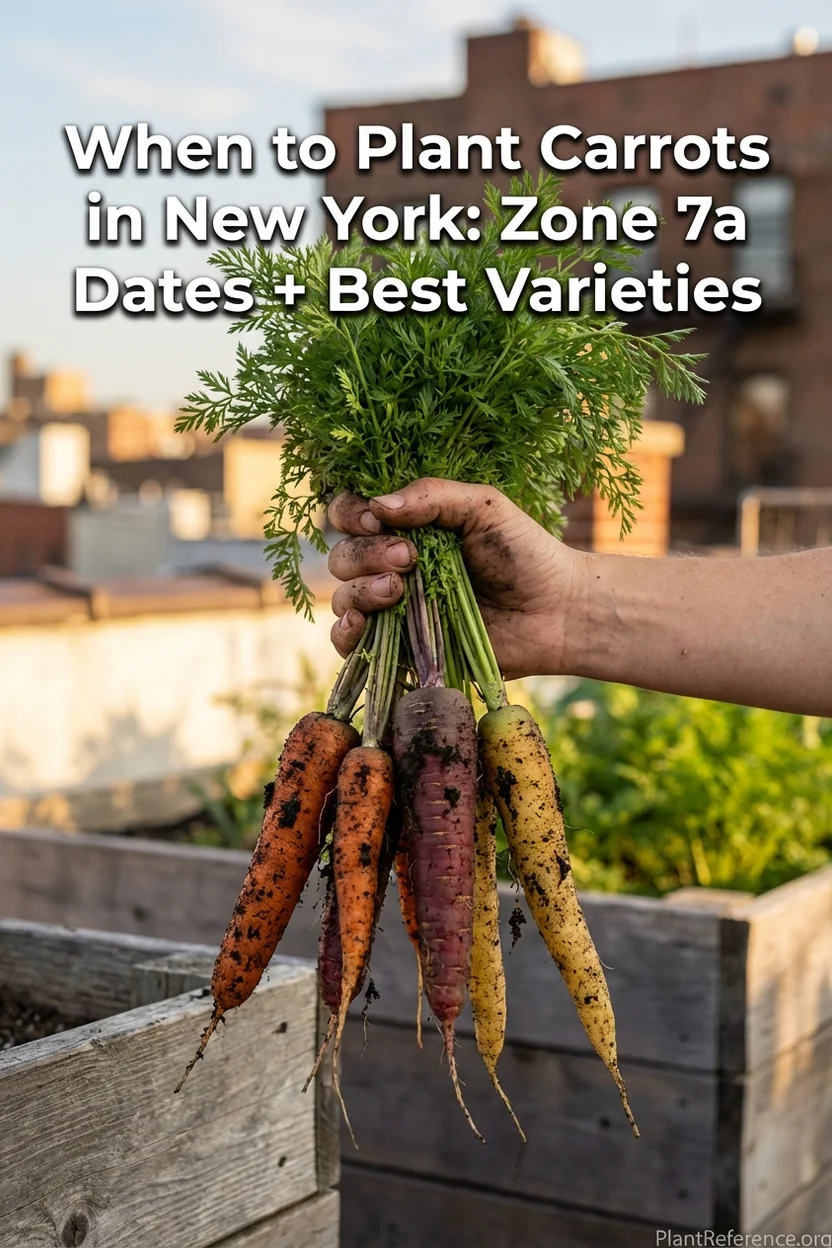
When to Plant Carrots in New York: Zone 7a Dates + Best Varieties
Pets & Toxicity
Recorded toxicity for plants linked in this guide. An unknown status is not a safety assessment.
No linked plant is recorded as toxicDetailsHide
Daucus carota ssp. sativus 'Nantes' — Toxicity
Non-toxicView Daucus carota ssp. sativus 'Nantes' plant profileDaucus carota ssp. sativus 'Chantenay' — Toxicity
Non-toxicView Daucus carota ssp. sativus 'Chantenay' plant profileDaucus carota ssp. sativus 'Imperator' — Toxicity
Non-toxicView Daucus carota ssp. sativus 'Imperator' plant profileDaucus carota ssp. sativus 'Rainbow' — Toxicity
Non-toxicView Daucus carota ssp. sativus 'Rainbow' plant profileDaucus carota ssp. sativus 'Danvers 126' — Toxicity
Non-toxicView Daucus carota ssp. sativus 'Danvers 126' plant profile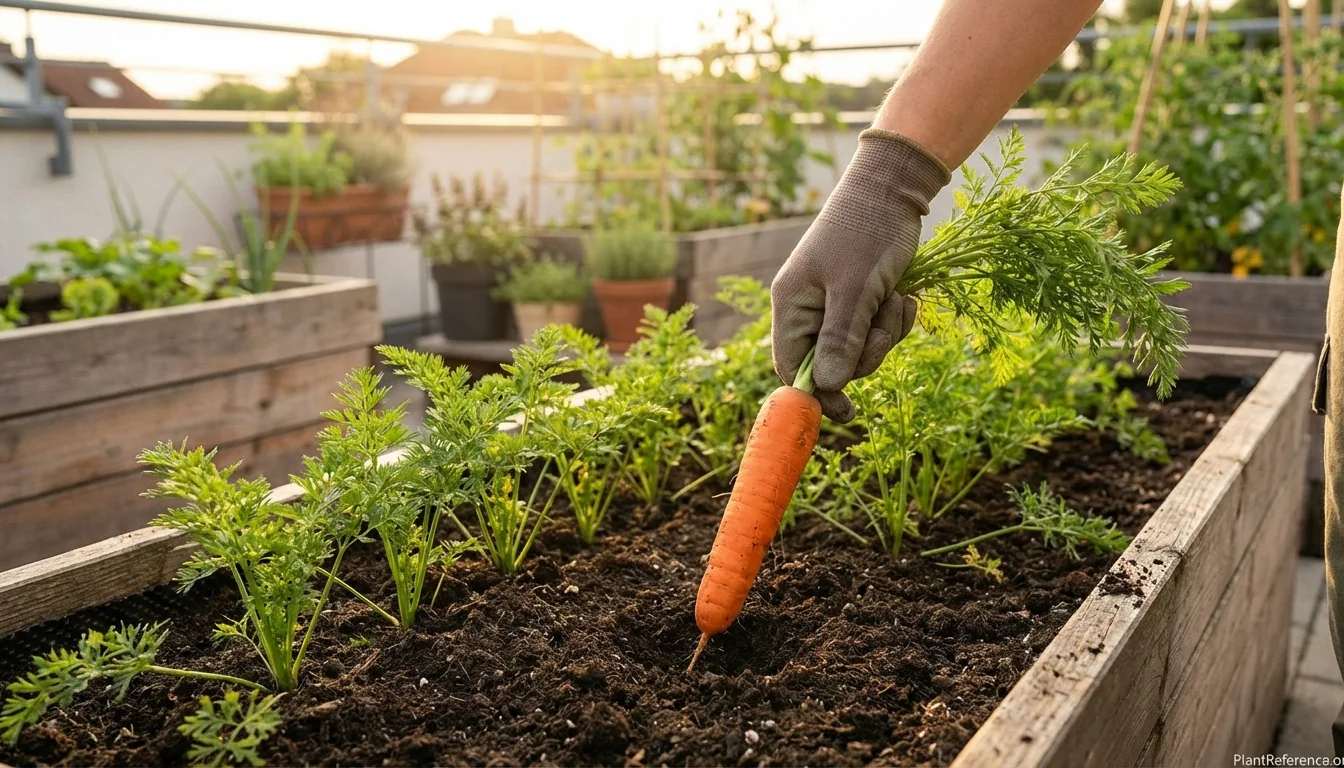
— Image © Plant Reference 2026
If you want to grow carrots in New York, timing is the whole game. I spent nearly three decades managing plantings across public parks and community gardens in the city, and the crops that did best year after year were the ones that went in on schedule — no exceptions. Carrots reward patience and punish guesswork, so here is exactly when to plant carrots in New York and how to get straight, sweet roots out of whatever space you have.
Best Carrot Varieties for New York's Zone 7a Climate
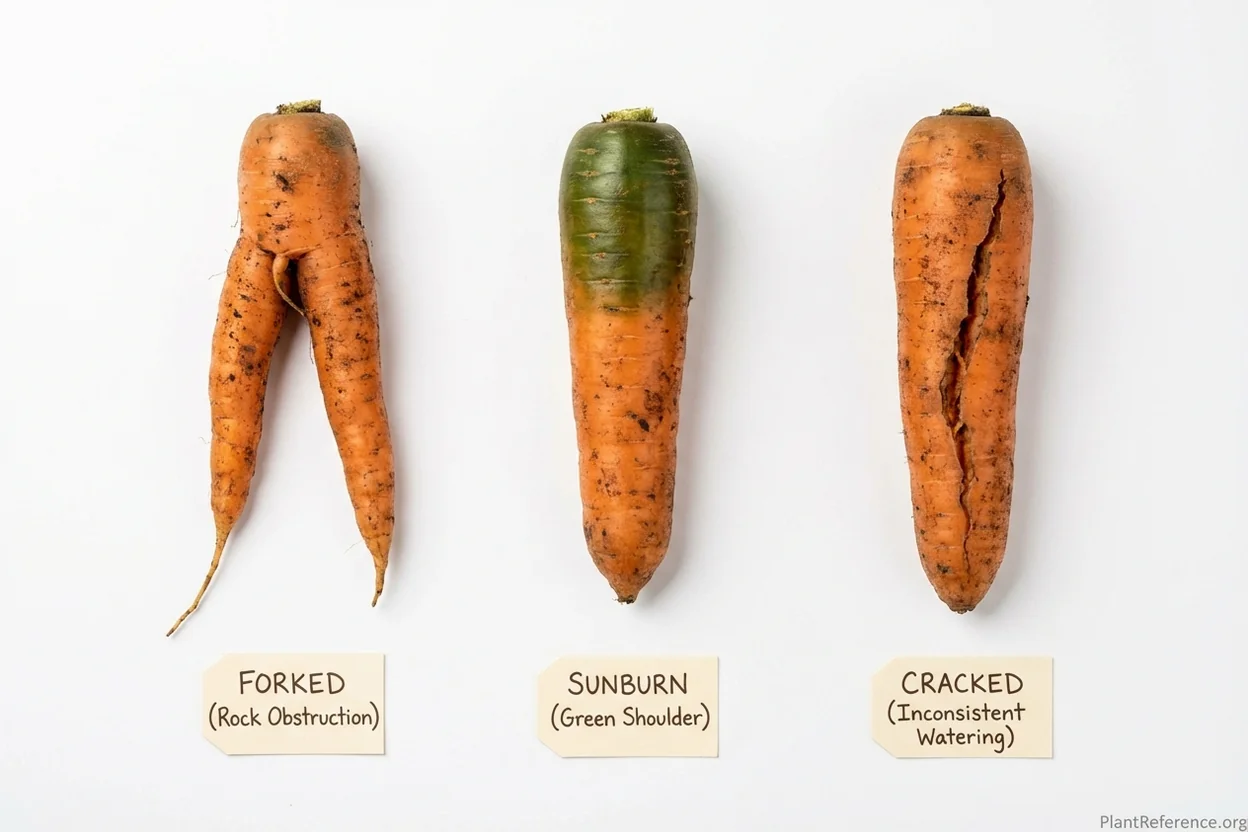
The first thing you need to decide is which type of carrot fits your soil. 🌿Daucus carota ssp. sativus 'Nantes' (daw-kus kah-ROH-tah) comes in several distinct shapes, and picking the wrong one for your setup is the fastest way to end up with twisted, forked roots that look like they have been wrestling underground.
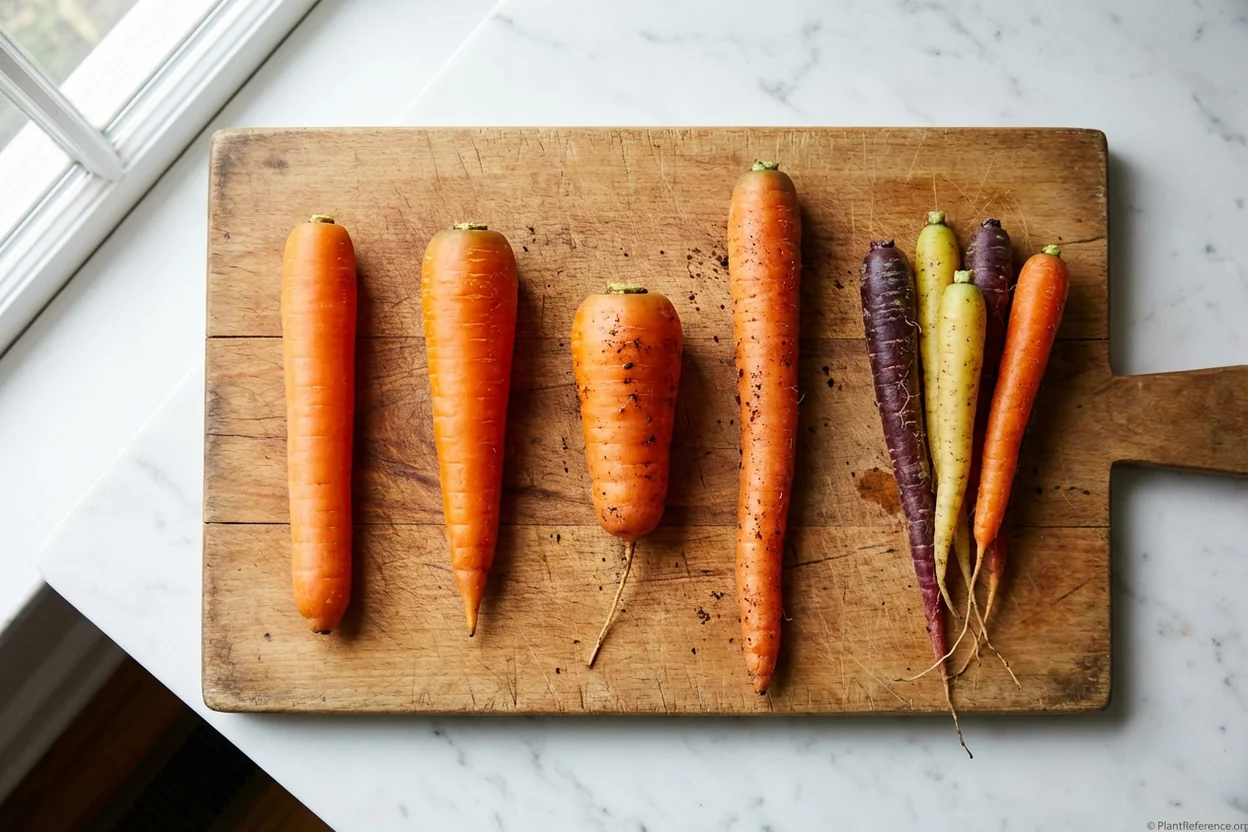
For most New York gardeners — especially those working with raised beds, containers, or community garden plots — 🌿Daucus carota ssp. sativus 'Nantes' is the best starting point. These cylindrical, blunt-tipped roots grow 6-7 inches (15-18 cm) long and do not need deep, obstruction-free soil to develop properly. They mature in 65-75 days, which gives you plenty of room to fit a crop into either your spring or fall window. Daucus carota ssp. sativus 'Scarlet Nantes' is the standard, and Daucus carota ssp. sativus 'Bolero' offers strong disease resistance if you plan on a fall storage crop.
If your soil runs heavy — and in many parts of the boroughs, it does — Daucus carota ssp. sativus 'Danvers' types handle clay-loam conditions that would deform a Nantes. The conical, pointed shape works like a wedge, shouldering heavy soil aside as it grows. 🌿Daucus carota ssp. sativus 'Danvers 126' has been the reliable standard since it was bred in Massachusetts for exactly these conditions. Expect 70-80 days to maturity and roots around 6-8 inches (15-20 cm) long.
For shallow containers or rocky ground, 🌿Daucus carota ssp. sativus 'Chantenay' grows only 4-5 inches (10-13 cm) long but packs dense, sweet flesh into a stout frame. Daucus carota ssp. sativus 'Red Core Chantenay' is the go-to. These need just 65-75 days and tolerate poor soil better than any other type.
If you have deep raised beds with at least 12 inches (30 cm) of loose, sandy soil, 🌿Daucus carota ssp. sativus 'Imperator' produces those long, slender supermarket-style roots at 8-11 inches (20-28 cm). Daucus carota ssp. sativus 'Sugarsnax 54' is exceptionally sweet. But I will be honest — most New York garden soil cannot support Imperators without serious preparation.
For something different at the farmers market or dinner table, 🌿Daucus carota ssp. sativus 'Rainbow' mixes give you purple, yellow, white, and orange roots from one planting. They mature in 70-75 days with varied pigment profiles that actually provide different nutritional benefits.
Variety | Days to Maturity | Best For | Notes for New York |
|---|---|---|---|
65-75 days | Fresh eating, raised beds | Top pick for urban gardens and containers | |
70-80 days | Heavy soil, storage | Handles NYC clay-loam without forking | |
65-75 days | Shallow beds, containers | Only 4-5 inches deep — perfect for window boxes | |
75-85 days | Deep raised beds | Needs 12+ inches loose soil — not for compacted ground | |
70-75 days | Gourmet, variety | Mixed colors with different phytochemical profiles |
Specific Planting Dates for New York
New York sits in USDA Zone 7a with a last spring frost around April 15 and a first fall frost near November 1. That gives you a 200-day growing season — more than enough for multiple carrot crops.
Carrots are cool-season crops. They grow best when temperatures stay between 60-70°F (15-21°C). Once nights consistently sit above 70°F, root development slows and the flavor turns bitter from terpene buildup. So your goal is to time the bulking phase — the last 30-40 days before harvest — to fall during cool weather.
Spring crop: Sow seeds directly outdoors from late February through late March, as soon as the soil is workable and the ground temperature hits at least 40°F (4°C). The seeds germinate slowly in cool soil — expect 14-21 days. Your spring carrots will be ready to pull by late May through June, before the real summer heat sets in.
Fall and winter crop: This is where New York gardeners have a real advantage. Sow again in September. The seeds germinate quickly in warm soil, and then the roots bulk up during the cooling days of October and November. With minimal mulch — just 3-4 inches (8-10 cm) of straw — you can harvest right through December, January, and even February. The cold actually makes them sweeter by converting starch to sugar.
Succession planting: Drop a new row every two weeks from late February through mid-March for staggered spring harvests. In fall, sow in early and mid-September for the same effect.
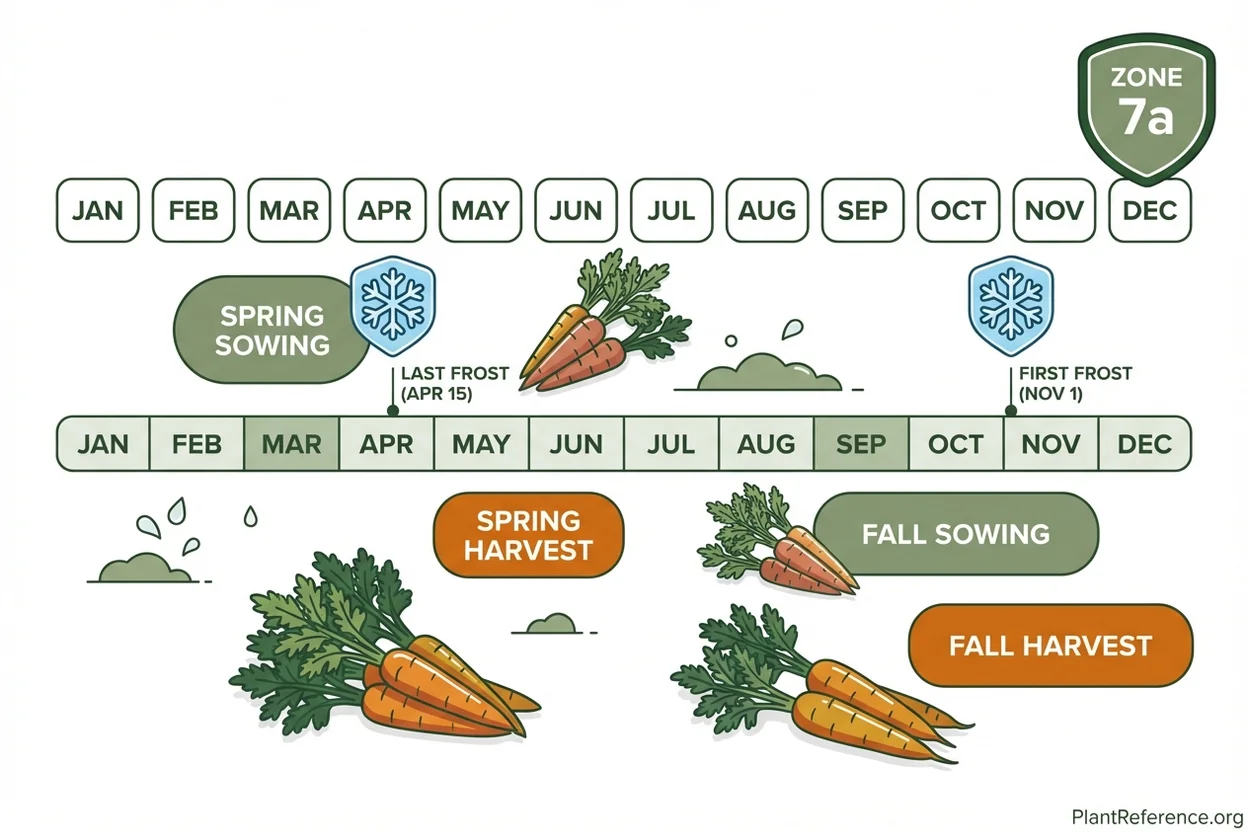
Direct sow spring crop: Late February through late March
Expected spring harvest: Late May through June
Direct sow fall crop: Early to mid-September
Expected fall harvest: December through February
Succession sowing: Every 2 weeks within each window
Season ends: November 1 (first frost), but carrots survive with mulch
Complete Growing Guide for New York
Site Prep and Soil
Carrots need loose, deep, stone-free soil. Every rock, clod, or compacted layer between the surface and 12 inches (30 cm) down is a potential fork in your carrot.
If you are working with in-ground beds, double-dig or broadfork to at least 12 inches (30 cm). Remove stones larger than 1 inch (2.5 cm). For most New York gardens, I recommend 7 Best Raised Garden Bed Kits for Beginners (2025 Reviews) filled with topsoil, compost, and coarse sand in a 50-30-20 blend. See Best Soil Mix for Raised Beds: Creating the Perfect Growing Medium for details.
Do not add fresh manure — it causes hairy, forked roots. If you composted last fall, that is fine. Otherwise, work in a balanced granular fertilizer low in nitrogen. Carrots are potassium-hungry, so a 5-10-10 formula at planting is solid.
Test your soil pH. Carrots prefer 6.0-6.8. If you are below that, lime the bed a few weeks before planting. See Raised Bed Soil pH Problems: Testing, Adjusting, and Maintaining Balance for how to dial this in.
Sowing and Germination
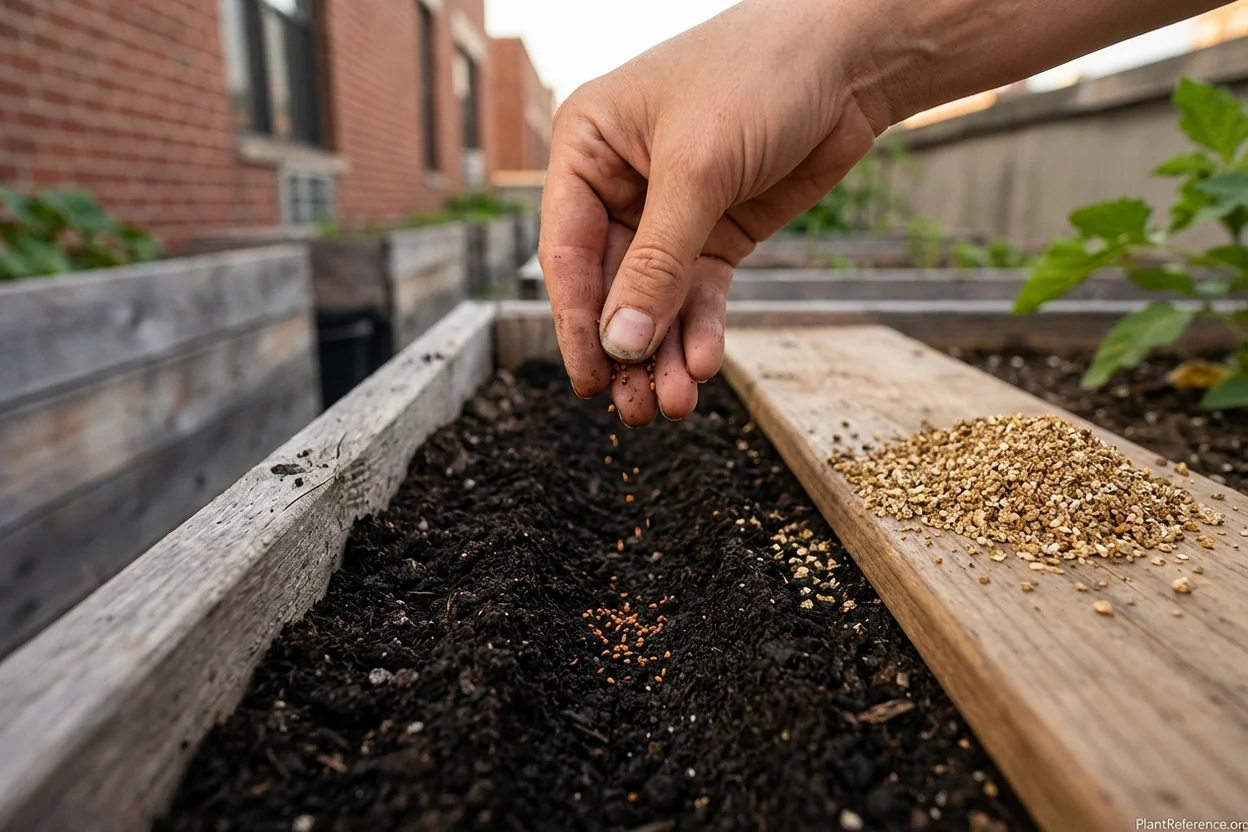
Carrot seeds are tiny and slow. This is where most people fail. The seeds need continuous moisture for 14-21 days to germinate. If the soil surface dries out even once after the seed swells with water, that embryo is dead.
Sow seeds 1/4 inch (0.6 cm) deep in rows spaced 12 inches (30 cm) apart. Instead of covering with garden soil, top the furrow with a thin layer of vermiculite or fine sand — this prevents the soil crusting that traps weak carrot seedlings underground.
An old trick that still works: mix a few radish seeds in with your carrot seeds. The radishes punch through the surface in 3-5 days, breaking the crust for the slower carrots. You pull the radishes before they crowd anything.
Water gently with a fine spray daily until germination. A piece of burlap laid over the row holds surface moisture and can stay on until you see seedlings pushing against it.
Thinning
This is the step nobody wants to do, and it is the step that makes or breaks your harvest. Unthinned carrots produce twisted, pencil-thin roots with no culinary value.
Thin in two passes. When seedlings reach 1-2 inches (2.5-5 cm) tall, snip extras at the soil line with small scissors to leave plants 1 inch (2.5 cm) apart. Do not pull them — yanking disturbs the taproots of the keepers. When the tops reach 4-5 inches (10-13 cm), thin again to final spacing: 2-3 inches (5-8 cm) for 🌿Daucus carota ssp. sativus 'Nantes' and 🌿Daucus carota ssp. sativus 'Danvers 126', 3-4 inches (8-10 cm) for 🌿Daucus carota ssp. sativus 'Imperator', and 2 inches (5 cm) for 🌿Daucus carota ssp. sativus 'Chantenay'. The second-pass thinnings are true baby carrots — use them.
Watering and Mulch
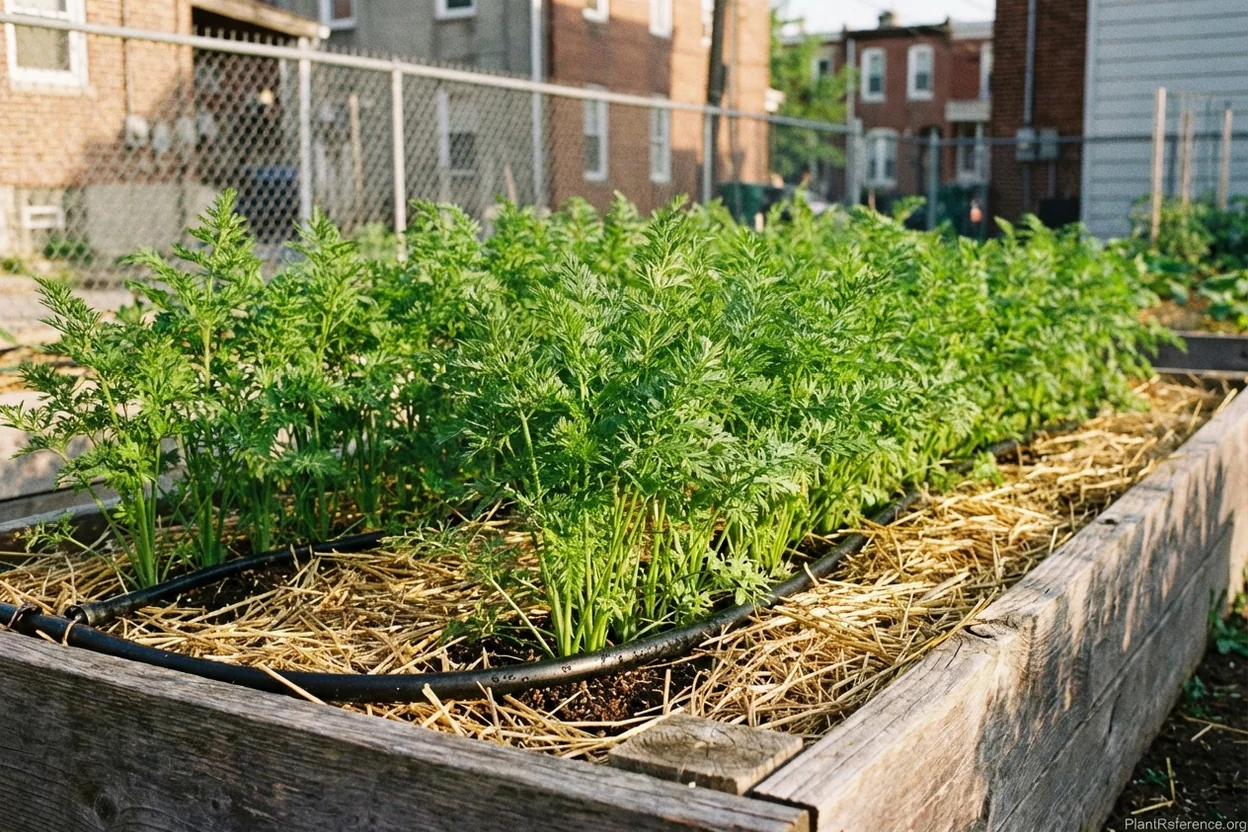
Carrots need 1 inch (2.5 cm) of water per week, increasing to 2 inches (5 cm) as roots size up. The critical rule is consistency. A dry spell followed by heavy watering causes the root cells to expand too fast, splitting the carrot lengthwise.
Use drip irrigation or soaker hoses. Overhead watering wets the foliage and invites blight. Once plants are established, mulch with 2-3 inches (5-8 cm) of straw or shredded leaves to regulate soil moisture and temperature. See Raised Bed Irrigation Systems: Watering Solutions for Consistent Growth for setup options, and 5 Best Drip Irrigation Kits for Raised Beds (Tested for Easy Installation) for product recommendations.
Fertilizing
Go easy on nitrogen. Excess nitrogen makes carrots fork, grow hairy side roots, and produce beautiful tops with disappointing roots underneath. A light side-dressing of compost tea or dilute fish emulsion once, about four weeks after germination, is enough. Potassium is what carrots actually need — it drives sugar production and helps the root push through soil. A sprinkle of wood ash or greensand along the rows at the four-week mark delivers potassium without the nitrogen spike.
Troubleshooting New York-Specific Problems
Carrot Rust Fly
The carrot rust fly lays eggs at the crown of your plants, and the larvae tunnel into the root leaving rust-colored channels. In New York, you will see two generations — adults emerge around May and again in August. The single best defense is floating row cover installed immediately after sowing. Seal the edges with soil and leave it on until harvest. See Raised Bed Pest Problems: Identification and Organic Control Methods for broader strategies.
Aster Yellows
This disease is carried by leafhoppers that blow up from the Gulf Coast on spring winds. Infected carrots develop yellowed, bushy tops and hairy, bitter roots. There is no cure — pull and destroy affected plants immediately. Row covers block the leafhoppers, and keeping your beds clear of dandelion and wild carrot removes reservoir hosts. When to Plant Kale in New York: Complete Guide + Best Varieties for Zone 7a covers similar leafhopper management.
Green Shoulders
When the tops of your carrots poke above the soil line and turn green, that is chlorophyll production from sun exposure. It is not harmful but it tastes bitter. Hill soil up over the crowns as they size up, or add another inch of mulch around the base.
Splitting
Cracks along the root mean inconsistent watering — typically a dry spell followed by heavy rain or irrigation. Mulch heavily and water on a regular schedule to prevent this. For more on managing water, check Too Much Water in Raised Beds: Signs and Solutions for Overwatering.
Summer Heat Damage
New York summers push above 85°F (29°C) regularly from July through August. Do not try to grow carrots through this window. The roots go bitter and fibrous. Plan your spring harvest to finish by late June, and do not sow your fall crop until September when soil temperatures begin dropping.
Harvest & Storage
Pull spring carrots when the shoulders reach about 1-1.5 inches (2.5-4 cm) in diameter for 🌿Daucus carota ssp. sativus 'Nantes' types, or when they hit the days-to-maturity listed on the seed packet. Loosen the soil alongside the row with a garden fork before pulling — yanking carrots straight up from firm soil snaps them off.
Fall carrots are the real prize. Leave them in the ground through several hard frosts. Temperatures below 40°F (4°C) trigger a starch-to-sugar conversion that makes fall carrots noticeably sweeter than anything you pull in June. Cover the bed with 3-4 inches (8-10 cm) of straw mulch after the first frost, and you can dig carrots all winter. In New York's Zone 7a, the soil rarely freezes deep enough to damage the roots.
For storage, cut the greens off immediately — the leaves keep transpiring and pull moisture out of the root. Do not wash until you are ready to eat. Store unwashed carrots in perforated plastic bags in the refrigerator at 32-38°F (0-3°C), and they will keep for months. If you have a root cellar, pack them in damp sand at the same temperature. One important note: never store carrots near apples, pears, or potatoes. Those crops release ethylene gas that turns carrots bitter. For raised bed planning, Raised Bed Vegetable Garden Layout: Planning for Maximum Production covers how to rotate your carrot beds for next year.
Frequently Asked Questions
Reading about plants and recognising them are different skills. These three build the second.
- Daily PlantIdentify the day’s mystery plant from a close-up photograph.
- Keyed OutWork a dichotomous key, lead by lead, to name a hidden specimen.
- Name That PlantName a specimen from botanical clues dealt hardest first.
Free to play, no account needed
Frank retired from the city parks department after 28 years, the last fifteen as a grounds supervisor overseeing park plantings and maintenance crews. He now spends his time volunteering at a local historic garden, maintaining his own half-acre property in the Roxborough neighborhood, and writing about landscape maintenance, seasonal timing, and the practical side of keeping plants healthy through Mid-Atlantic winters and humid summers. Frank knows what works at scale and what's a waste of time—he's planted thousands of trees and shrubs and watched plenty of them fail. His advice tends toward what's proven and durable rather than what's trendy.