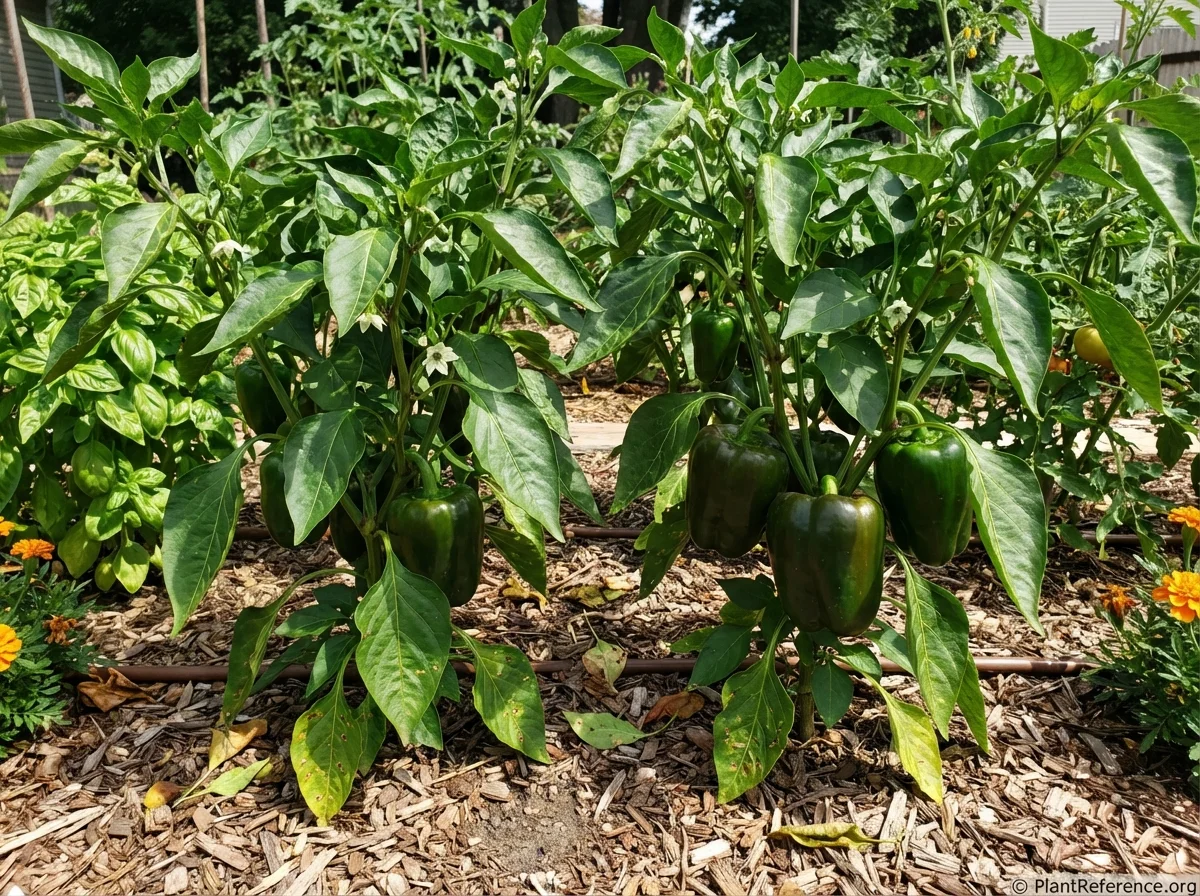
Capsicum annuum 'California Wonder', California Wonder Bell Pepper
1 / 2
Annuals

Capsicum annuum 'California Wonder'

California Wonder Bell Pepper

SolanaceaeCentral America

At a Glance

Typeannual
Habitupright, bushy
Foliagedeciduous
Height20-24 inches
Width16-20 inches

Growing Zones

USDA Hardiness Zones

3a - 11b
Zone 3a
Zone 3b
Zone 4a
Zone 4b
Zone 5a
Zone 5b
Zone 6a
Zone 6b
Zone 7a
Zone 7b
Zone 8a
Zone 8b
Zone 9a
Zone 9b
Zone 10a
Zone 10b
Zone 11a
Zone 11b
These zones indicate the coldest temperatures this plant can typically survive.
Frost Tolerancetender

Key Features

Attracts Pollinators
Attracts Butterflies
Deer Resistant
Container Friendly
Maintenancemoderate

Overview

Capsicum annuum 'California Wonder' is a renowned heirloom bell pepper cultivar that has been a garden favorite since the 1920s, prized for its exceptional reliability and superior fruit quality. This robust annual vegetable produces sturdy, upright plants that typically reach 20-24 inches in height with a well-branched, bushy growth habit. The plants feature thick, dark green oval leaves that provide excellent coverage for the developing fruits, while the strong stems support heavy fruit loads without requiring extensive staking. The hallmark of Capsicum annuum 'California Wonder' is its outstanding bell peppers, which are among the thickest-walled varieties available. The fruits emerge as small, blocky peppers that mature into large, four-lobed bells measuring 3-4 inches across and up to 4.5 inches long. These peppers are distinguished by their exceptionally thick flesh, sweet flavor, and crisp texture that makes them ideal for both fresh eating and cooking applications. The fruits begin as a glossy deep green and can be harvested at this stage for a mild, fresh flavor, or left to ripen to a brilliant red color, developing an even sweeter taste and higher vitamin C content as they mature.

Native Range

Capsicum annuum is native to Central and South America, with wild populations naturally occurring throughout Mexico, Guatemala, Bolivia, and northern regions of South America. The species originated in tropical and subtropical highland areas where it grew as a perennial shrub in its native habitat before being domesticated and bred into the annual varieties we know today.

Suggested Uses

vegetable gardens, raised beds, container growing, greenhouse production, culinary gardens, kitchen gardens

How to Identify

Capsicum annuum 'California Wonder' can be readily identified by its compact, bushy growth habit reaching 20-24 inches tall with sturdy, upright stems and dark green, oval-shaped leaves. The most distinctive identifying feature is the large, blocky bell peppers that are notably heavier than they appear due to their exceptionally thick walls. Unlike hot pepper varieties, these fruits have a distinctly sweet, mild flavor with absolutely no heat. The peppers display the classic four-lobed bell shape with broad shoulders and a squared bottom, starting as glossy deep green and ripening to bright red when fully mature. Small white star-shaped flowers appear in mid-summer, typically measuring about half an inch across.

Appearance

Size & Dimensions

Height1'6" - 2'
Width/Spread1'3" - 1'6"

Colors

Flower Colors

white

Foliage Colors

green

Bloom Information

Bloom Period

J
F
M
A
M
J
J
A
S
O
N
D
Summer
mid to late summer

Detailed Descriptions

Flower Description

white

Foliage Description

dark green

Growing Conditions

Sun Requirements

Full Sun
• Full Sun: 6+ hours of direct sunlight
• Partial Shade: 3-6 hours of direct sunlight
• Full Shade: Less than 3 hours of direct sunlight

Soil Requirements

pH Range6.0 - 6.8(Neutral)
357912
Soil Types
loam
Drainage
well drained

Water & Climate

Water Needs

moderate, consistent moisture

Frost Tolerance

tender

Time to Maturity

10-12 weeks from transplant

Care & Maintenance

Care Guide

Capsicum annuum 'California Wonder' thrives with consistent care and warm growing conditions throughout the season. Plant in well-draining, fertile soil enriched with compost or well-aged manure, ensuring soil temperature reaches at least 60°F before transplanting outdoors. Maintain consistent soil moisture throughout the growing season by watering deeply 1-2 times per week, providing approximately 1-1.5 inches of water weekly. Apply a balanced fertilizer such as 10-10-10 at planting time, then switch to a lower-nitrogen, higher-phosphorus fertilizer once flowering begins to promote fruit development over excessive foliage growth. Mulch around plants with 2-3 inches of organic material to retain soil moisture, suppress weeds, and maintain consistent soil temperature. In cooler climates, consider using black plastic mulch or row covers early in the season to accelerate soil warming and extend the growing season.

Pruning

Capsicum annuum 'California Wonder' benefits from selective pruning and support to maximize fruit production and plant health. Pinch off the first few flowers and any small fruits that develop during the first 4-6 weeks after transplanting to encourage stronger root and stem development. Remove suckers that develop in the joints between main stems and branches to focus the plant's energy on primary fruit-bearing stems. Install stakes or tomato cages when plants reach 12-15 inches tall to provide support for heavy fruit loads. Remove lower leaves that touch the ground to improve air circulation and reduce the risk of soil-borne diseases. Late in the growing season, pinch growing tips and remove any new flower clusters to redirect energy into ripening existing fruits before frost.

Pruning Schedule

summerfall

Maintenance Level

moderate

Container Growing

✓ Suitable for container growing

Minimum container size: 5 gallons

⚠️ Toxicity Warning

Capsicum annuum 'California Wonder' fruits are completely safe for human consumption and are commonly eaten both raw and cooked in a wide variety of culinary applications. The leaves and stems should not be consumed as they contain alkaloids that may cause mild digestive upset. The plant is generally safe around pets, though consumption of large quantities of pepper fruits may cause mild stomach irritation in sensitive dogs and cats due to their natural capsaicinoid content, even though this variety is considered sweet and non-hot.

Planting Guide

Planting Methods & Timing

Planting Method

transplant

Indoor Start

8 weeks before last frost

Direct Sow Timing

not recommended - requires warm soil and long growing season

Days to Maturity

70–80 days

Plant Spacing

18 inches
Companion Planting

Good Companions

tomatoes
basil
oregano
parsley
marigolds
nasturtiums
carrots
onions
eggplant
cilantro

Avoid Planting With

fennel
kohlrabi
brassicas
beans
pole beans
Capsicum annuum 'California Wonder' (California Wonder Bell Pepper) - Identification & Care Guide | PlantRef