When to Plant Peppers in Charlotte: Complete Guide + Best Varieties for Zone 7b
Pets & Toxicity
Recorded toxicity for plants linked in this guide. An unknown status is not a safety assessment.
Toxic to pets: Poblano pepperDetailsHide
Capsicum chinense 'Habanero' — Toxicity: Not assessed
Fruit contains capsaicin at 100,000–350,000 Scoville Heat Units — strong enough to cause severe burning on skin, eyes, and mucous membranes through simple contact with cut fruit or the hand that held it. Nitrile gloves are used during handling and food preparation; face and eye contact is avoided. The fruit is irritating rather than toxic in the usual sense, but the heat level can cause significant discomfort and real injury if mishandled. The plant is kept out of reach of children and pets.View Capsicum chinense 'Habanero' plant profileCapsicum annuum 'California Wonder' — Toxicity
Non-toxicView Capsicum annuum 'California Wonder' plant profileCapsicum annuum 'Poblano' — Toxicity Warning
Toxic to petsView Capsicum annuum 'Poblano' plant profileCapsicum annuum 'Jalapeño' — Toxicity: Not assessed
Capsaicin in fruit causes burning sensations in mouth and on skin. Fruit and handling oils are irritating to eyes and mucous membranes but are not toxic in the usual sense. Gloves are used during harvesting and processing; hands are washed thoroughly before touching face. Small amounts are generally safe for pets but can cause digestive upset.View Capsicum annuum 'Jalapeño' plant profile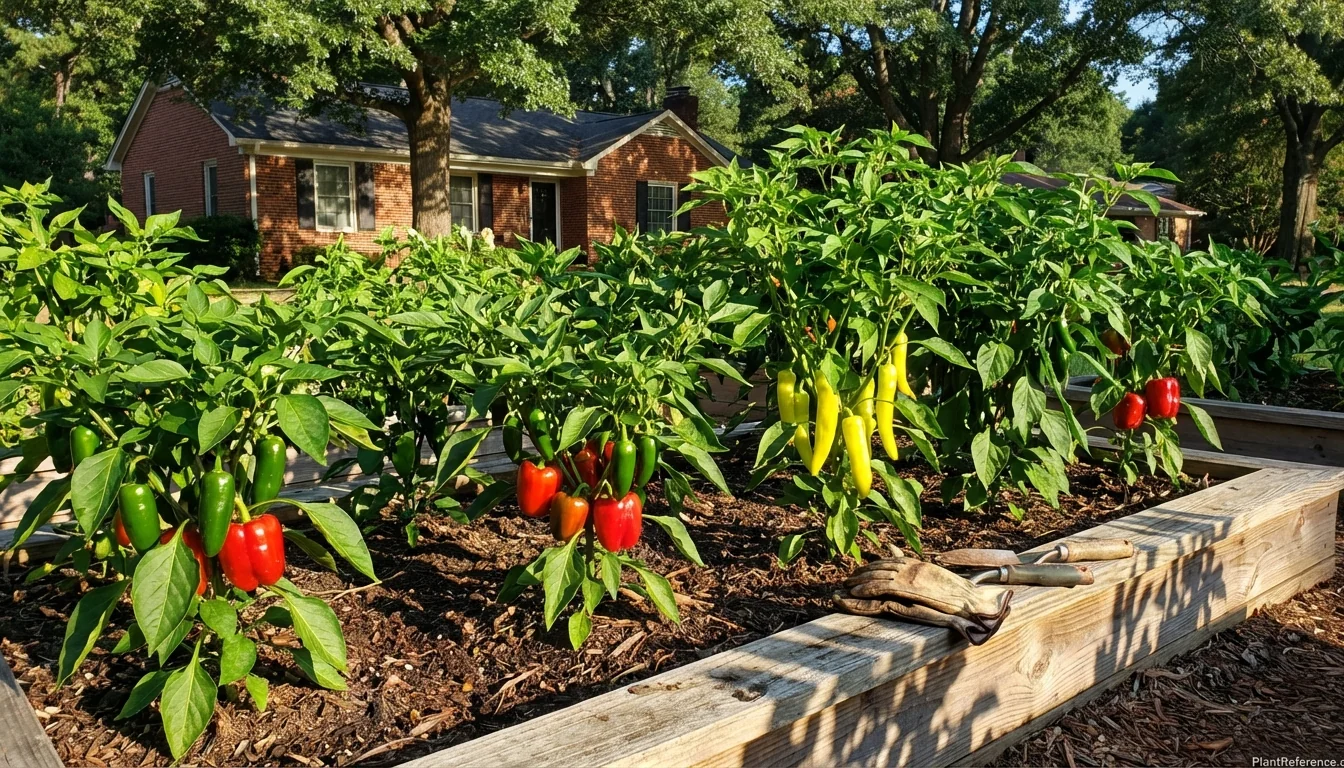
— Image © Plant Reference 2026
I've been growing peppers in the Carolinas for forty years, and I'll tell you what works: timing is everything, variety selection matters, and Charlotte's Zone 7b gives you advantages many northern gardeners would envy. With our April 4 average last frost and 214-day growing season, you can successfully grow everything from sweet bells to fiery habaneros—if you know when to start.
Best Pepper Varieties for Charlotte's Zone 7b Climate
Charlotte's Zone 7b climate is pepper paradise. Our long, warm summers with average highs in the 80s°F (27-32°C) and mild nights provide ideal conditions for both 🌿Capsicum annuum 'Hungarian Wax' and 🌿Capsicum chinense 'Habanero' species. Unlike gardeners in Zone 4 who race against early frost, Charlotte growers can focus on maximizing yield and heat development.
The key to success in Charlotte is understanding our seasonal patterns. Late summer humidity can trigger fungal diseases, while occasional spring cold snaps can stunt growth. I select varieties that ripen before peak humidity hits in August and can recover from minor temperature setbacks.
Variety | Days to Maturity | Best For | Notes for Charlotte |
|---|---|---|---|
60-70 days | Quick harvest | Perfect for Zone 7b short season starts | |
65-75 days | Pickling/fresh | Excellent humidity tolerance | |
65-80 days | Cooking/roasting | Thrives in Charlotte heat | |
70-80 days | Fresh/stuffing | Classic choice for Zone 7b | |
70-80 days | Salsa/pickling | Heat increases in Charlotte summer | |
70-80 days | Roasting | Excellent for North Carolina climate | |
70-85 days | Drying/spice | Produces heavily in Charlotte | |
90-120 days | Hot sauce | Needs full season but achievable |
Top Recommendations for Charlotte Success
🌿Capsicum annuum 'California Wonder' remains my go-to bell pepper after decades of testing. This variety handles Charlotte's variable spring weather better than modern hybrids, recovering quickly from cool nights that drop into the 50s°F (10°C). The thick walls develop excellent sweetness in our hot summers, and plants typically yield 8-12 large fruits per plant.
🌿Capsicum annuum 'Jalapeño' performs exceptionally in Charlotte's climate. Our summer heat stress actually increases capsaicin production, creating spicier fruits than the same varieties grown in cooler regions. I've harvested over 40 peppers from single plants grown in good soil.
For heat lovers, 🌿Capsicum chinense 'Habanero' is entirely feasible in Charlotte. While challenging in Zone 5, our 214-day season provides ample time for these slow-maturing peppers to reach full heat potential. Start seeds early and provide afternoon shade during July's peak heat.
Specific Planting Dates for Charlotte
Charlotte's planting schedule revolves around our April 4 average last frost date. However, peppers need soil temperatures consistently above 60°F (15°C) for proper root development—typically two weeks after air temperatures warm up.
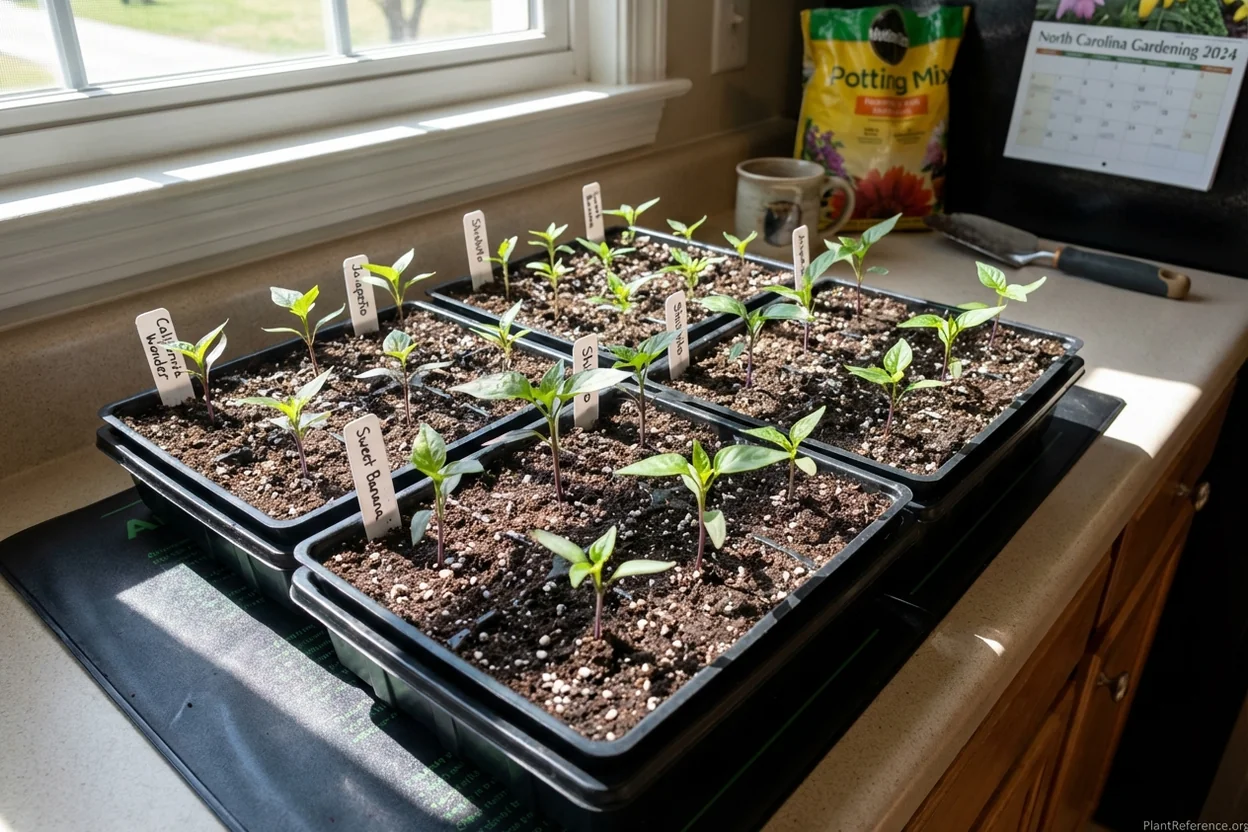
Indoor Seed Starting: February 10-20
Start seeds 8-10 weeks before transplanting. I sow most varieties February 10-15, with heat-loving habaneros started February 10 for maximum growing time. Seeds need soil temperatures of 80-85°F (27-29°C) for reliable germination.
Use a heat mat under seed trays—Charlotte homes are often cool in February, and pepper seeds will rot in soil below 70°F (21°C). Without bottom heat, germination drops from 90% to less than 50%.
Hardening Off: April 10-17
Begin hardening off when nighttime temperatures stay above 50°F (10°C). Charlotte's spring can be unpredictable—I've seen snow as late as March 25—so watch forecasts closely. Move seedlings outside for 2-3 hours initially, gradually increasing exposure over 7 days.
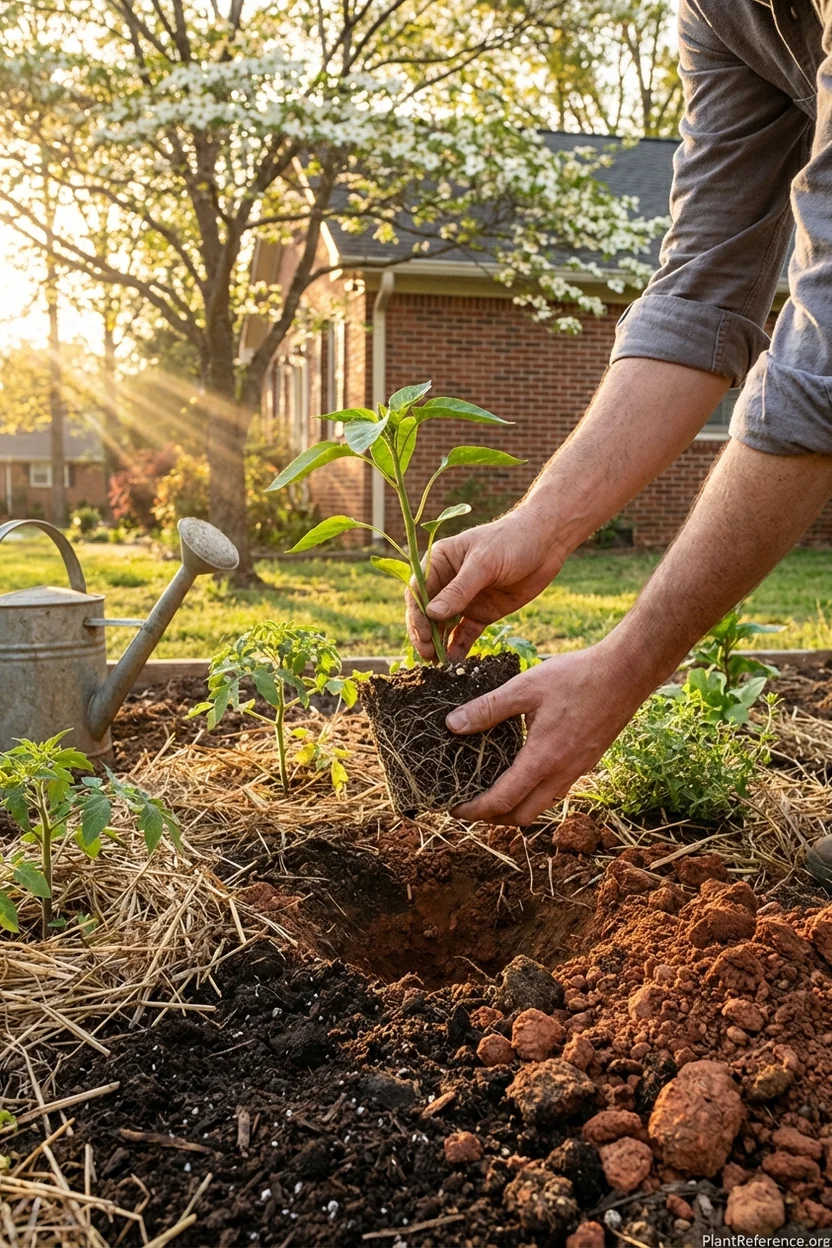
Transplant Outdoors: April 18-25
This timing allows soil to warm adequately while avoiding most late frost risk. I check soil temperature with a thermometer at 6 AM—if it's consistently 60°F (15°C) or higher for three consecutive days, it's safe to plant.
Charlotte's clay soil retains cold longer than sandy soils. If your thermometer reads below 60°F, wait another week. Pepper plants stunted by cold soil take 4-6 weeks to recover, negating any advantage from early planting.
Complete Growing Guide for Charlotte
Soil Preparation for Charlotte's Clay
Charlotte sits on the Carolina clay belt—our heavy red clay presents both challenges and opportunities for pepper production. Clay retains nutrients excellently but drains poorly and warms slowly in spring.
Amend clay soil with 2-3 inches of compost or aged manure worked into the top 8 inches. This improves drainage while maintaining the nutrient retention that makes clay valuable. I add coarse sand (not fine sand, which creates concrete-like conditions) at a rate of one part sand to three parts clay-compost mixture.
Raised beds work exceptionally well in Charlotte. Even 6 inches of elevation improves drainage and allows soil to warm 7-10 days earlier than ground level. I build beds 4 feet wide for easy access and fill them with one-third existing clay soil, one-third compost, and one-third coarse sand.
Planting Layout and Spacing
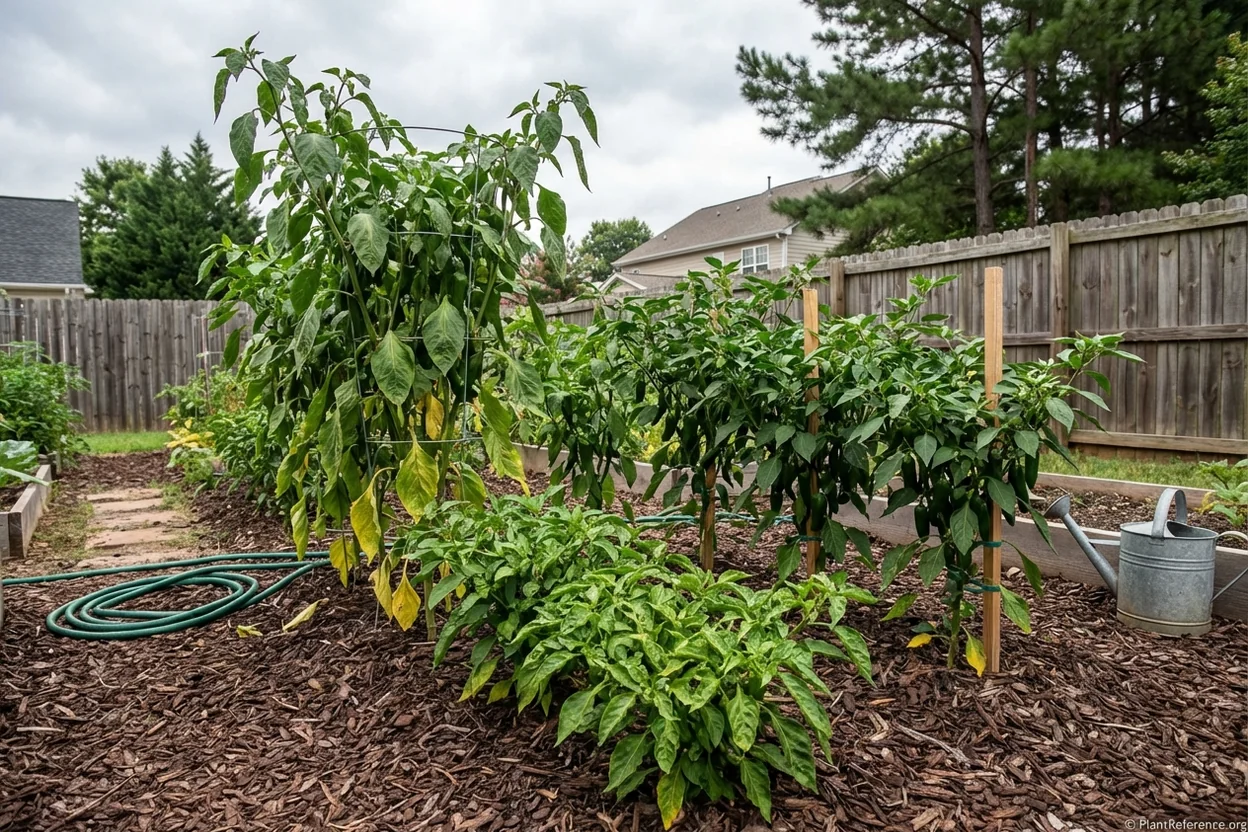
Charlotte's humid summers demand excellent air circulation to prevent fungal diseases. I space pepper plants 24-30 inches apart rather than the 18-inch spacing common in arid climates. This wider spacing allows morning dew to dry quickly, reducing bacterial leaf spot and anthracnose pressure.
Plant in rows running east-west to maximize sun exposure. In Charlotte's latitude (35°N), this orientation provides even light distribution throughout the growing season. I avoid north-south rows which can create shading issues as plants mature.
Watering Strategy for Charlotte Climate
Charlotte receives 43 inches of annual rainfall, but summer distribution is irregular. June and July often bring 4-5 inches per month, while August can be dry despite high humidity.
Install drip irrigation or soaker hoses at planting time. Overhead watering in Charlotte's humid climate promotes foliar diseases. I run drip lines on 7-day timers, providing 1 inch of water weekly during dry periods.
Mulch heavily with 3-4 inches of organic material—shredded leaves, straw, or pine needles work well. Mulch moderates soil temperature during July heat waves and maintains consistent moisture levels that prevent blossom end rot.
Managing Charlotte's Heat and Humidity
July and August test pepper plants' limits. Afternoon temperatures regularly reach 90-95°F (32-35°C) with 70-80% humidity. This combination stresses plants and creates ideal conditions for pest and disease problems.
I provide afternoon shade for sensitive varieties like 🌿Capsicum annuum 'California Wonder' using 30% shade cloth from 2-6 PM during peak summer. Heat-tolerant varieties like 🌿Capsicum annuum 'Cayenne' and 🌿Capsicum annuum 'Jalapeño' handle full sun exposure well.
Proper nutrition becomes critical during heat stress. I side-dress plants with compost in early July and apply balanced fertilizer (10-10-10) monthly through August. Heat-stressed plants need extra potassium to maintain cell structure—wood ash provides potassium while raising pH in our naturally acidic clay soils.
Troubleshooting Charlotte-Specific Problems
Charlotte's climate creates predictable challenges that I've learned to anticipate and manage over four decades of growing.
Late Spring Cold Snaps
Charlotte experiences temperature swings in April and early May. A warm week followed by three nights in the 40s°F can stunt pepper growth for weeks. I keep row covers handy through May 15—light frost protection fabric raises air temperature 4-6°F around plants.
Wall-o-Water or similar protection works excellently for Charlotte conditions. These water-filled tubes moderate temperature swings while protecting individual plants from wind damage during spring storms.
Summer Fungal Pressure
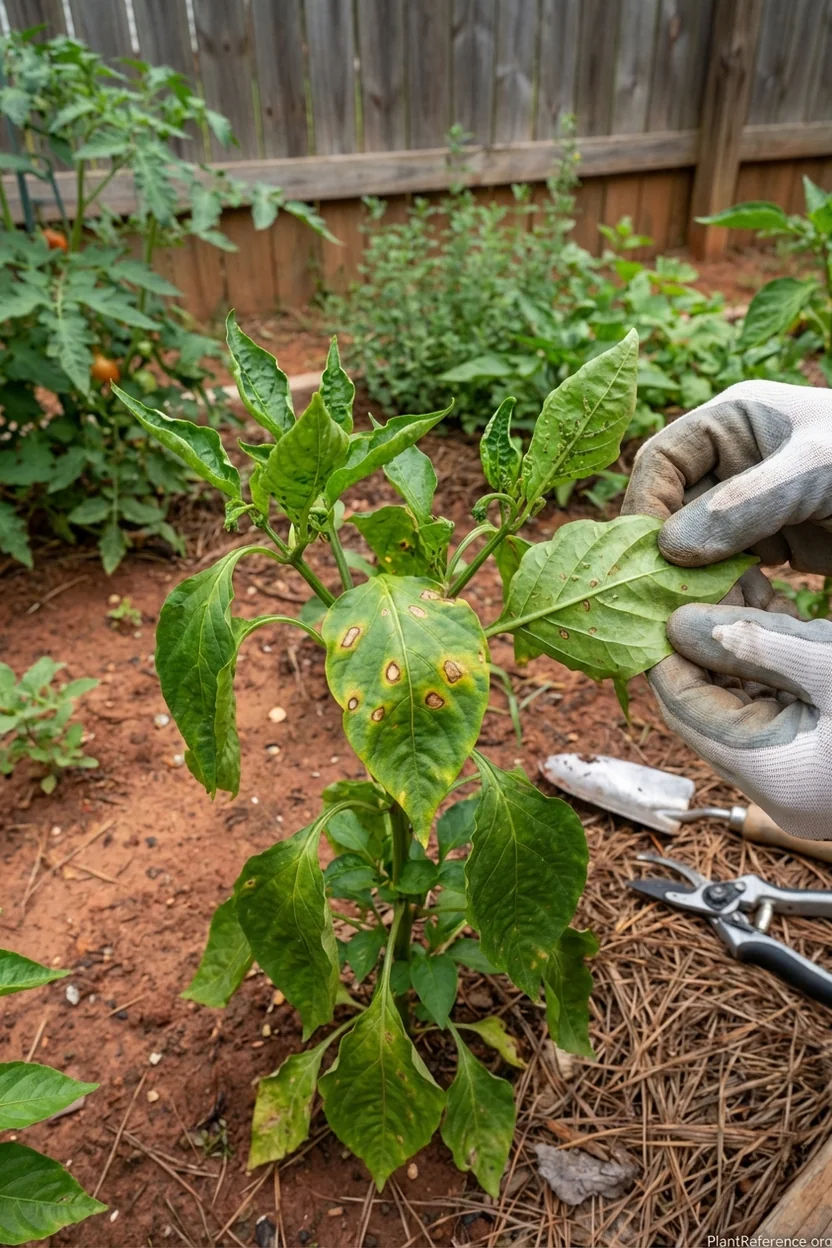
High humidity plus warm temperatures create perfect conditions for bacterial leaf spot and anthracnose. These diseases appear as brown spots on leaves and fruit, eventually causing defoliation and crop loss.
Prevention starts with variety selection—🌿Capsicum annuum 'Sweet Banana' shows excellent disease resistance in Charlotte conditions. Provide adequate spacing, use drip irrigation, and apply copper-based fungicides preventatively in June before disease pressure peaks.
I inspect plants weekly during humid weather, removing any spotted leaves immediately. Infected plant material goes in the trash, never the compost pile, to prevent disease recurrence.
Pest Management
Charlotte's mild winters allow pest populations to overwinter, creating early-season pressure. Aphids appear in April, often carrying viral diseases that can destroy entire crops.
Use reflective aluminum mulch around pepper plants in May to confuse aphids. The reflected light disrupts their navigation, reducing colonization by 60-70%. Remove the reflective mulch in June once plants are established and beneficial insects have built up populations.
Harvest & Storage
Charlotte's long growing season allows multiple harvests from most pepper varieties. 🌿Capsicum annuum 'Shishito' begins producing in late June, while 🌿Capsicum chinense 'Habanero' reaches peak production in September.
Harvest Timing
Pick sweet peppers like 🌿Capsicum annuum 'California Wonder' when they reach full size but remain green for maximum yield. Each plant produces 8-15 fruits over the season if harvested consistently. Allow 2-3 fruits per plant to ripen to red for color variety and seed saving.
Hot peppers develop maximum heat when fully ripe. 🌿Capsicum annuum 'Jalapeño' shows "corking" (brown striations on the skin) when at peak heat and flavor. 🌿Capsicum annuum 'Cayenne' should be harvested red and immediately dried for winter use.
Extending the Season
Charlotte's first frost typically occurs November 4, but peppers can survive light frosts with protection. I cover plants with frost blankets when temperatures drop to 35°F (2°C), often gaining 2-3 additional weeks of harvest.
For winter storage, harvest all peppers before hard frost. Green peppers store 2-3 weeks refrigerated, while ripe peppers can be dried, frozen, or preserved in oil for year-round use.
Frequently Asked Questions
Reading about plants and recognising them are different skills. These three build the second.
- Daily PlantIdentify the day’s mystery plant from a close-up photograph.
- Keyed OutWork a dichotomous key, lead by lead, to name a hidden specimen.
- Name That PlantName a specimen from botanical clues dealt hardest first.
Free to play, no account needed
Sophie is a garden designer in Charlotte who came to the U.S. from France about a decade ago. Her design sensibility blends the structured formality of French garden traditions with the looser, more naturalistic style that works well in the Southeast. She has a degree in landscape architecture and worked at several design firms in Charlotte before going independent. She specializes in year-round garden structure, mixed borders, and creating outdoor spaces that feel intentional without being rigid. Sophie writes about garden design principles, plant combinations, and creating visual interest across seasons—always grounded in what actually grows well in the Piedmont.