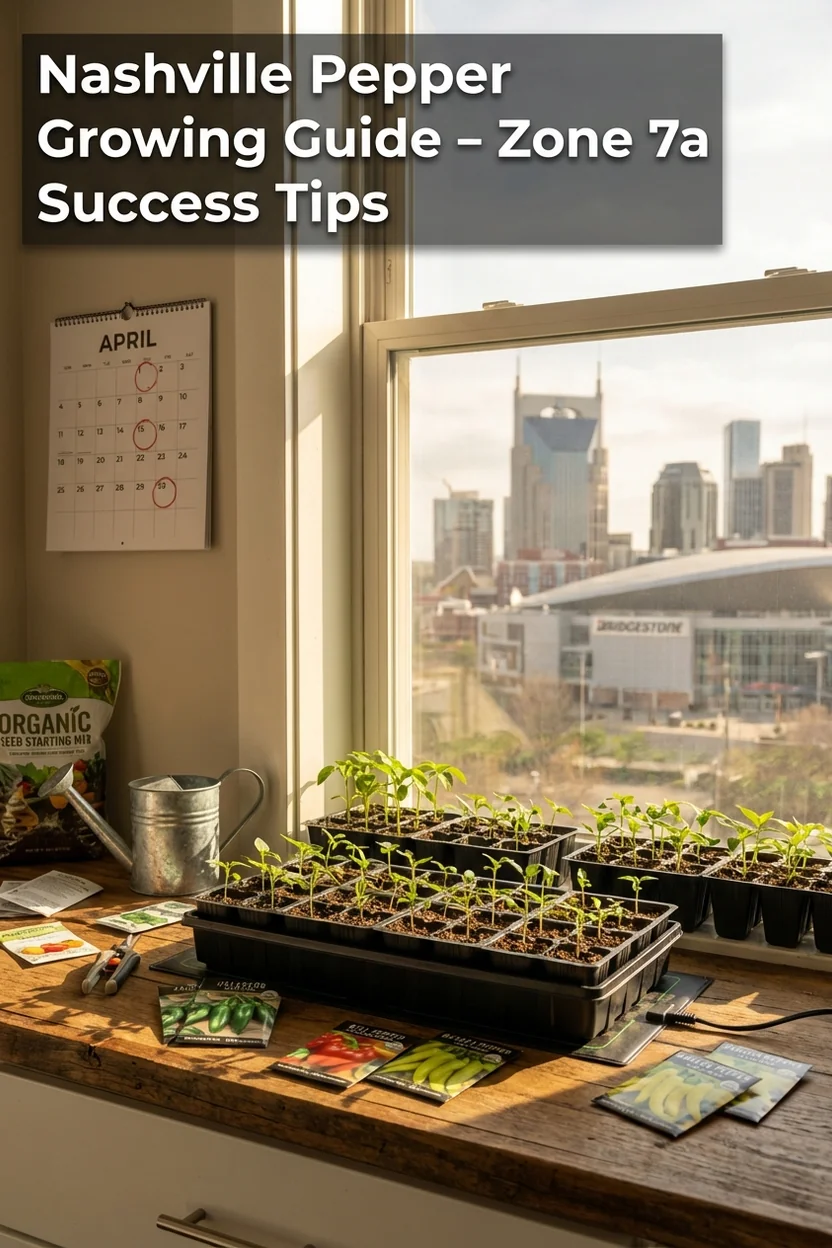
When to Plant Peppers in Nashville: Complete Guide + Best Varieties for Zone 7a
Pets & Toxicity
Recorded toxicity for plants linked in this guide. An unknown status is not a safety assessment.
Toxic to pets: Poblano pepperDetailsHide
Capsicum annuum 'California Wonder' — Toxicity
Non-toxicView Capsicum annuum 'California Wonder' plant profileCapsicum chinense 'Habanero' — Toxicity: Not assessed
Fruit contains capsaicin at 100,000–350,000 Scoville Heat Units — strong enough to cause severe burning on skin, eyes, and mucous membranes through simple contact with cut fruit or the hand that held it. Nitrile gloves are used during handling and food preparation; face and eye contact is avoided. The fruit is irritating rather than toxic in the usual sense, but the heat level can cause significant discomfort and real injury if mishandled. The plant is kept out of reach of children and pets.View Capsicum chinense 'Habanero' plant profileCapsicum annuum 'Poblano' — Toxicity Warning
Toxic to petsView Capsicum annuum 'Poblano' plant profileCapsicum annuum 'Jalapeño' — Toxicity: Not assessed
Capsaicin in fruit causes burning sensations in mouth and on skin. Fruit and handling oils are irritating to eyes and mucous membranes but are not toxic in the usual sense. Gloves are used during harvesting and processing; hands are washed thoroughly before touching face. Small amounts are generally safe for pets but can cause digestive upset.View Capsicum annuum 'Jalapeño' plant profile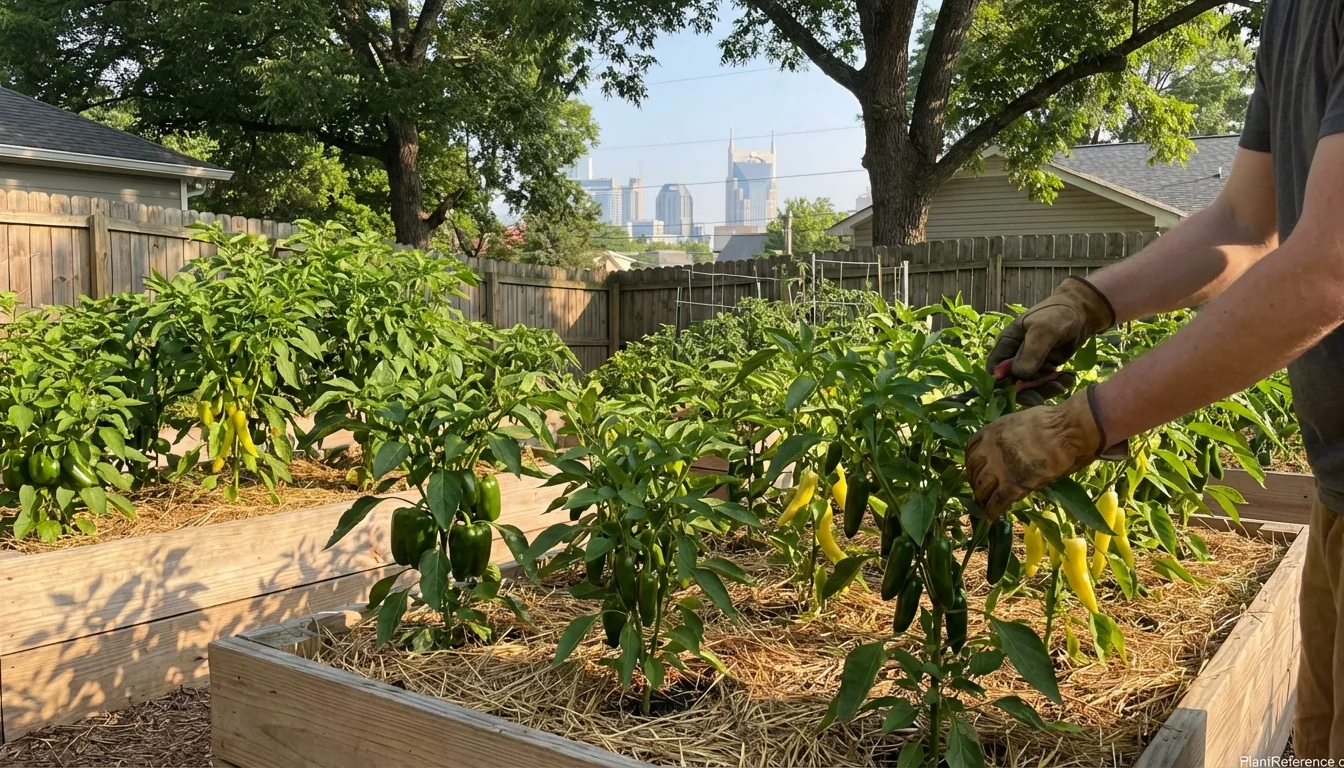
— Image © Plant Reference 2026
Nashville's Zone 7a climate offers pepper growers a generous 203-day growing season, making it one of the most reliable regions in Tennessee for successful pepper cultivation. With the last frost typically occurring around April 9 and the first fall frost not arriving until October 29, you have ample time to grow everything from quick-season varieties to heat-loving tropical types that need extended warm weather.
I've been growing peppers in Tennessee for over thirty years, and I can tell you that Nashville's climate is nearly perfect for pepper production. The key is understanding that peppers are heat-lovers that won't tolerate cold soil. Even though our average last frost is April 9, the soil often stays too cool for several more weeks. Patience in spring leads to abundant harvests through fall.
Best Pepper Varieties for Nashville's Zone 7a Climate
Nashville's moderate Zone 7a conditions support virtually every pepper variety, from quick-season types perfect for beginners to long-season hot peppers that need extended heat. Here's what performs best in Middle Tennessee:
Variety | Days to Maturity | Best For | Notes for Nashville |
|---|---|---|---|
60-70 days | Quick harvest, stir-frying | Excellent choice for Nashville's reliable season | |
65-75 days | Fresh eating, pickling | Thrives in Nashville heat, productive through fall | |
65-80 days | Roasting, stuffing | Perfect match for Zone 7a growing window | |
70-80 days | Fresh eating, stuffing | Classic bell pepper, very reliable in Nashville | |
70-80 days | Salsa, pickling | Produces heavily in Nashville's long season | |
70-80 days | Roasting, mild salsas | Handles Nashville summer heat well | |
70-85 days | Drying, hot sauce | Excellent for Nashville's dry-down period | |
90-120 days | Hot sauce, extreme heat | Needs full Nashville season, container growing recommended |
The varieties listed above represent a spectrum from mild to extremely hot, with different maturation times that work well in Nashville's climate. The short-season varieties like 🌿Capsicum annuum 'Shishito' are perfect if you want early harvests or are concerned about our occasional early fall frost. Medium-season varieties like 🌿Capsicum annuum 'Jalapeño' and 🌿Capsicum annuum 'California Wonder' hit the sweet spot for Nashville growing, giving you plenty of time for both plant establishment and fruit ripening.
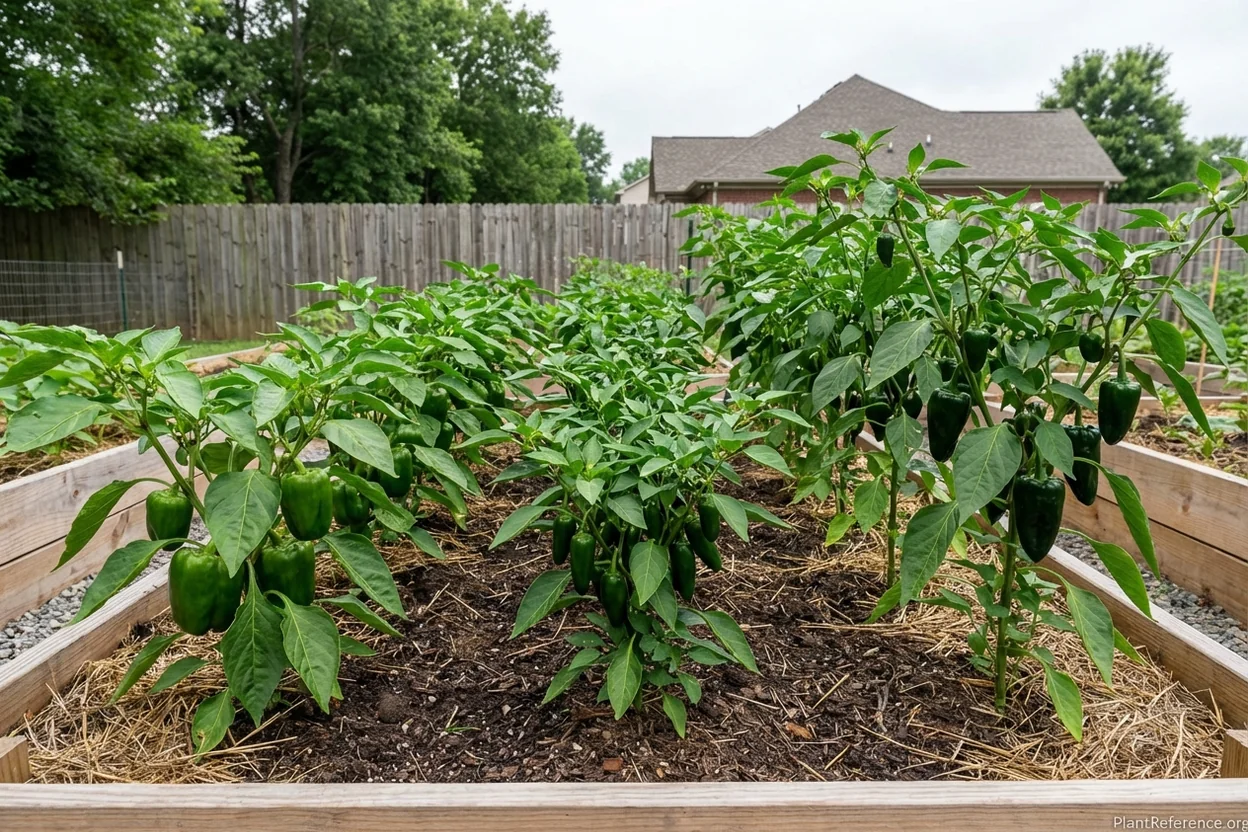
For Nashville gardeners, I particularly recommend starting with 🌿Capsicum annuum 'Sweet Banana' and 🌿Capsicum annuum 'Jalapeño' varieties. These are incredibly reliable in our Zone 7a conditions, producing heavily throughout the long season. 🌿Capsicum annuum 'Sweet Banana' peppers are especially productive and handle our summer heat beautifully, often continuing to produce right up until the first frost in late October.
🌿Capsicum chinense 'Habanero' varieties require special attention in Nashville. While our 203-day season is technically long enough, these tropical peppers need consistent warmth. I've had the best success growing them in large containers that can be moved to the warmest spots in the garden or even brought into a garage during unexpected cool snaps in early fall.
Specific Planting Dates for Nashville
Nashville's Zone 7a location gives us specific timing windows that maximize pepper success. Here's the precise schedule I follow after decades of growing peppers in Middle Tennessee:
Indoor Seed Starting: February 20 Start pepper seeds indoors 8 weeks before transplanting. For Nashville's recommended transplant date of April 16, this means starting seeds around February 20. Use a heat mat to maintain soil temperature at 80-85°F (27-29°C) for optimal germination.
Seedling Care Period: February 20 - April 10 During this 7-week period, seedlings develop their first true leaves and build strong root systems. Keep them in a warm, bright location with temperatures consistently above 65°F (18°C). Begin hardening off during the first week of April when Nashville's daytime temperatures regularly reach the 60s°F.
Transplant Window: April 16-23 Wait until soil temperatures reach at least 60°F (16°C) and nighttime air temperatures stay consistently above 50°F (10°C). This typically occurs 1-2 weeks after Nashville's average last frost date of April 9. Soil temperature is more important than air temperature for peppers.
Critical Growth Period: April - June This establishment period determines your entire season's success. Peppers that get stressed by cold during establishment never fully recover their productivity. Protect transplants with row covers or cloches if nighttime temperatures drop below 55°F (13°C).
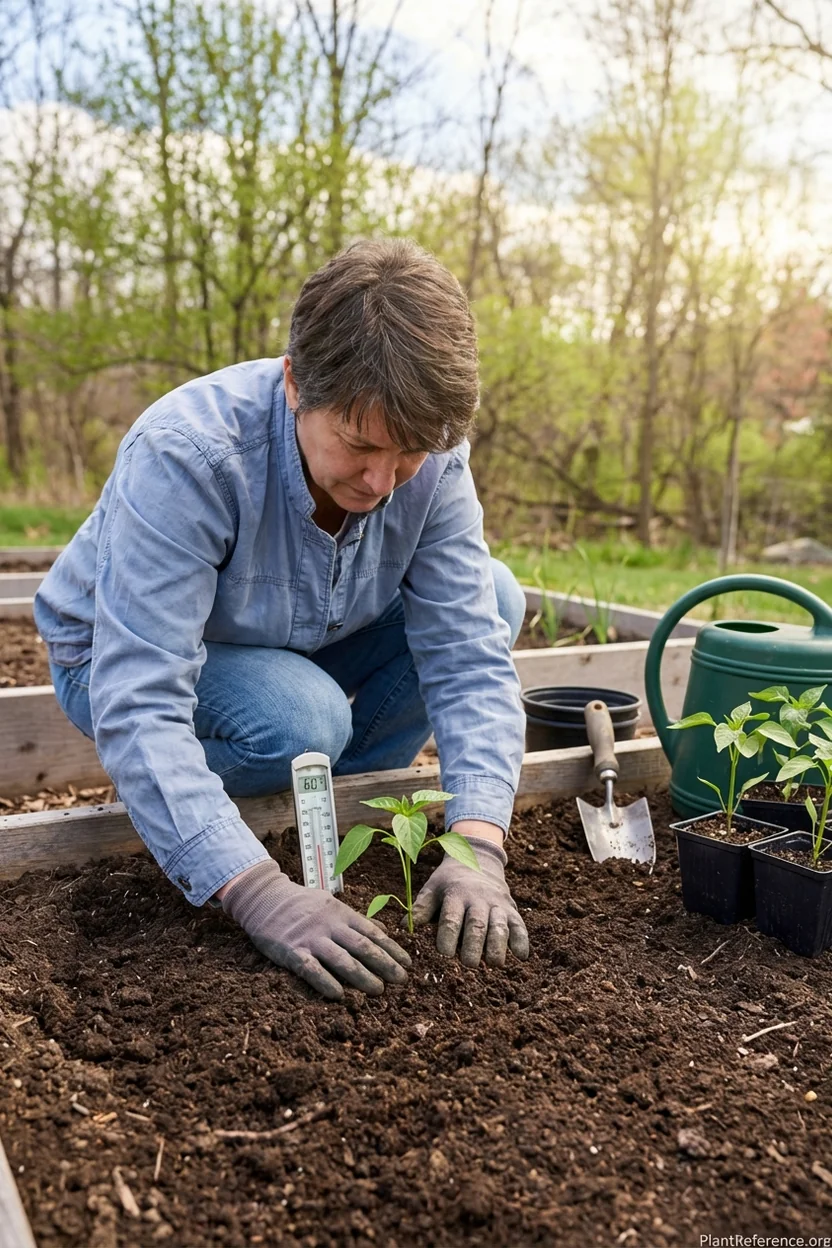
First Harvest: Mid-July (Short Season) to August (Long Season) 🌿Capsicum annuum 'Shishito' and other quick varieties begin producing by mid-July, about 60-70 days after transplanting. Bell peppers and jalapeños typically start producing in early August. Plan your succession plantings accordingly if you want continuous harvests.
Peak Production: August - September Nashville's hot, humid summers are perfect for pepper production. This is when you'll get your heaviest harvests from all varieties. Stay on top of harvesting to keep plants productive.
Season Extension: October With Nashville's first frost typically not arriving until October 29, you have excellent opportunities for late-season production. Cover plants during occasional cool nights in early October to extend harvesting into late fall.
Complete Growing Guide for Nashville
Success with peppers in Nashville requires understanding both our advantages and challenges. Our long, hot summers are perfect for pepper production, but our occasionally humid conditions require good air circulation and disease prevention.
Soil Preparation for Nashville Conditions Nashville's clay-heavy soils require amendment for proper drainage. Peppers cannot tolerate waterlogged conditions, which is especially important during our spring rainy season and summer thunderstorms.
Work 2-3 inches of compost or aged manure into your planting beds in March, before transplanting. This improves drainage while adding organic matter that feeds beneficial soil microbes. If you're dealing with heavy clay, consider creating raised beds 6-8 inches tall to ensure proper drainage.
Nashville soils tend to be slightly alkaline. Peppers prefer a pH between 6.0-6.8. If your soil pH is above 7.0 (common in Nashville), work in sulfur or peat moss to lower it gradually. A soil test from the Davidson County Extension Office will give you exact pH and nutrient recommendations.
Water Management Through Nashville's Variable Weather Nashville receives about 47 inches of rainfall annually, but it's unevenly distributed. We often get heavy spring rains followed by drier periods in July and August, then more rain in fall.
Install drip irrigation or soaker hoses to provide consistent moisture without wetting foliage
Mulch heavily with 3-4 inches of straw or shredded leaves to retain soil moisture
Water deeply 1-2 times per week rather than frequent shallow watering
During dry spells, provide 1-1.5 inches of water weekly including rainfall
Avoid overhead watering during humid periods to prevent fungal diseases
The key is consistency. Peppers that experience drought stress followed by heavy watering often develop blossom end rot or cracking. Monitor soil moisture at root depth (4-6 inches) rather than just surface moisture.
Fertilizing Strategy for Nashville's Long Season With a 203-day growing season, Nashville peppers need sustained nutrition throughout the season. I use a three-part fertilizing approach:
At transplanting, mix a balanced organic fertilizer (10-10-10) into the planting hole. This provides gentle, slow-release nutrition as roots establish.
Four weeks after transplanting (mid-May), side-dress plants with compost or aged manure. This provides the nitrogen boost needed for vigorous vegetative growth during Nashville's warming weather.
When first fruits begin forming (typically early July), switch to a lower-nitrogen fertilizer (5-10-10) to promote fruiting rather than excessive leaf growth. Repeat this application every 4-6 weeks through September.
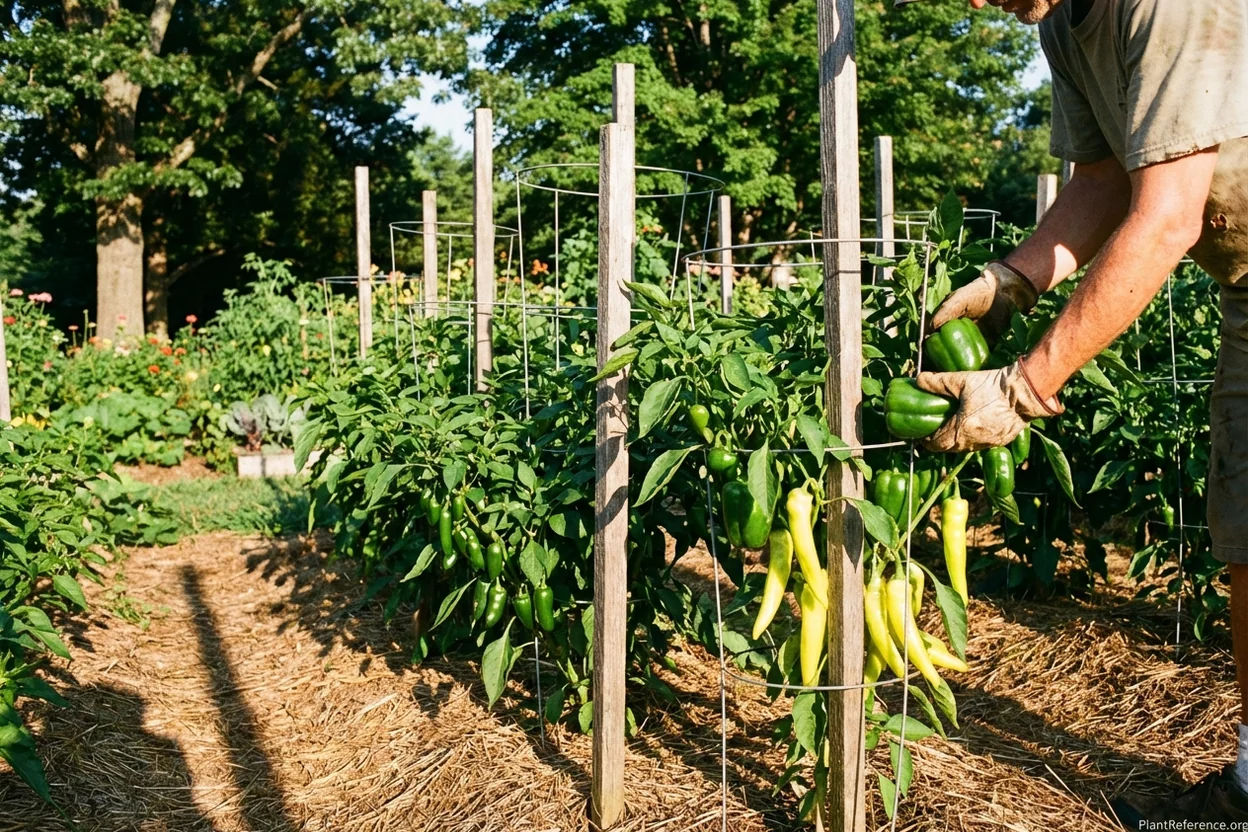
Supporting Plants Through Nashville's Weather Extremes Nashville weather can be variable, from spring thunderstorms to summer heat waves to early fall cold snaps. Proper plant support prevents losses during severe weather.
Stake or cage all pepper plants at transplanting time, before they need it. Nashville's summer thunderstorms can knock over heavily fruited plants overnight. Use 6-foot stakes for tall varieties like 🌿Capsicum annuum 'Anaheim' and sturdy tomato cages for bushier types like 🌿Capsicum annuum 'Jalapeño'.
During heat waves (temperatures above 90°F), provide afternoon shade with shade cloth or by positioning plants on the east side of taller crops. Nashville's summer sun is intense, and peppers can suffer sunscald on exposed fruits.
Disease Prevention in Nashville's Humid Climate Nashville's humidity, especially during summer, creates ideal conditions for fungal and bacterial diseases. Prevention is much easier than treatment.
Space plants properly for air circulation - at least 18-24 inches apart for most varieties. This allows morning dew and rain to dry quickly from foliage.
Avoid overhead watering, which keeps leaves wet and promotes disease. If you must water overhead, do it early morning so plants dry quickly.
Remove any diseased plant material immediately. Don't compost diseased pepper plants - dispose of them in regular trash to prevent spreading pathogens.
Troubleshooting Nashville-Specific Problems
Growing peppers in Nashville presents some unique challenges related to our Zone 7a climate, soil conditions, and weather patterns. Here are the most common problems I see and how to solve them:
Problem: Slow Growth After Transplanting This is Nashville's most common pepper problem. Even when air temperatures warm up in April, our clay soils stay cool longer than sandy soils. Peppers planted in cold soil (below 60°F) will "sulk" - sitting there doing nothing for weeks.
Solution: Wait until soil temperature consistently reaches 60°F before transplanting. Use black plastic mulch laid down 2-3 weeks early to warm soil faster. Consider raised beds which warm up quicker than ground-level clay.
Problem: Blossom Drop During Hot Weather Nashville's July and August heat waves (95°F+ with high humidity) stress pepper plants. When nighttime temperatures stay above 75°F for several nights, flowers drop before setting fruit.
Solution: Provide afternoon shade during the hottest part of summer. Position plants to get morning sun but protection from 2-6 PM heat. Maintain consistent soil moisture - drought stress makes heat stress worse.
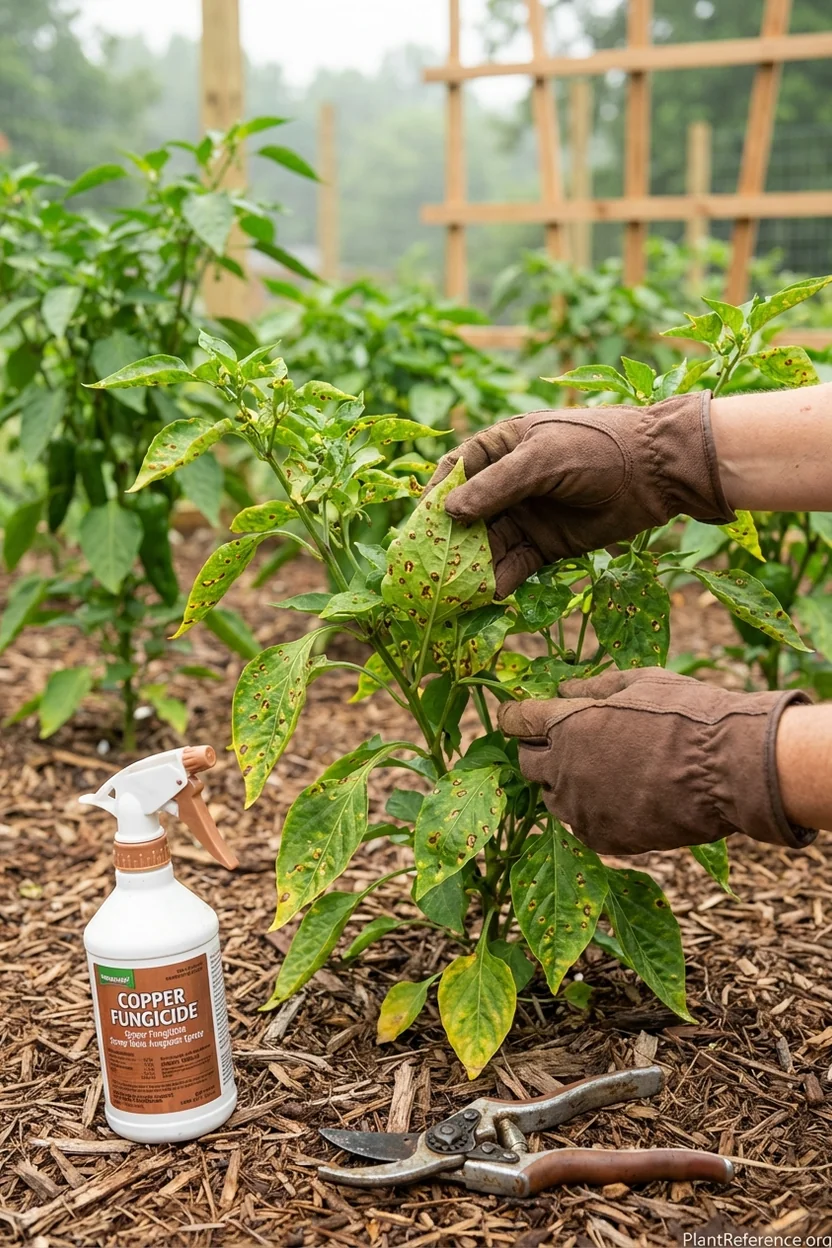
Problem: Bacterial Spot on Leaves Nashville's combination of heat and humidity creates perfect conditions for bacterial diseases. You'll see small dark spots with yellow halos on leaves, which eventually turn the whole leaf yellow.
Solution: Improve air circulation by proper spacing and pruning lower branches. Use drip irrigation instead of overhead watering. Remove affected leaves immediately. Apply copper-based fungicide preventively during humid periods.
Problem: Sunscald on Fruits Nashville's intense summer sun can bleach and damage pepper fruits, especially large bell peppers. You'll see white, papery patches on the sun-facing side of fruits.
Solution: Maintain dense foliage to shade fruits naturally. Avoid excessive pruning. Use row covers or shade cloth during the hottest part of summer (July-August). Plant taller crops like tomatoes on the west side to provide afternoon shade.
Problem: Poor Fruit Set in Early Season Cool, wet springs are common in Nashville. When nighttime temperatures stay below 60°F in May, pepper flowers won't set fruit properly even if they don't drop.
Solution: Use row covers or cold frames to maintain warmer nighttime temperatures around plants. Be patient - once temperatures stabilize above 60°F at night, fruit set will improve dramatically.
Problem: Cracking During Heavy Rains Nashville's summer thunderstorms can dump 2-3 inches of rain quickly. This rapid water uptake causes ripe or nearly-ripe peppers to crack.
Solution: Harvest peppers slightly underripe during periods of heavy rain forecast. Maintain consistent soil moisture with mulch and drip irrigation so plants don't absorb too much water too quickly during storms.
Harvest & Storage
Nashville's long growing season provides multiple harvest opportunities from mid-July through late October. Understanding when and how to harvest each variety maximizes both yield and quality.
Timing Your Harvest for Maximum Production Most peppers can be harvested at either the green (immature) or colored (ripe) stage. In Nashville's long season, you have the luxury of letting some peppers fully ripen while harvesting others green to keep plants productive.
For continuous production, harvest 🌿Capsicum annuum 'Jalapeño' and 🌿Capsicum annuum 'Sweet Banana' peppers when they reach full size but are still green. This keeps the plant producing new flowers and fruits rather than putting energy into ripening existing ones.
Allow some peppers to fully ripen to their mature color - red, orange, or yellow. Ripe peppers have more complex flavors and higher vitamin content, plus you can save seeds from fully mature fruits for next year's garden.
🌿Capsicum chinense 'Habanero' peppers must be allowed to ripen to their full color (orange or red) to develop their characteristic heat and flavor. In Nashville, start checking habaneros in late August and harvest through October.
Storage Methods for Nashville's Long Harvest Season With Nashville's extended season, you'll likely have more peppers than you can use fresh. Here are the best preservation methods:
Fresh Storage: Most peppers keep 1-2 weeks in the refrigerator. 🌿Capsicum annuum 'California Wonder' bell peppers store longest, while thin-walled varieties like 🌿Capsicum annuum 'Shishito' should be used within a few days.
Freezing: Wash, remove stems and seeds, then freeze in bags. Frozen peppers work great for cooking but lose their crisp texture. This works especially well for 🌿Capsicum annuum 'Poblano' peppers destined for stuffing or roasting.
Drying: Thin-walled hot peppers like 🌿Capsicum annuum 'Cayenne' dry beautifully in Nashville's late-season weather. String them up in a well-ventilated area or use a dehydrator.
Making Nashville-Style Hot Sauce Nashville's pepper season coincides perfectly with tomato season, making it ideal for fresh hot sauce production. Combine your homegrown 🌿Capsicum annuum 'Jalapeño' or 🌿Capsicum chinense 'Habanero' peppers with fresh tomatoes, onions, and garlic for a sauce that captures the essence of Tennessee summer.
Frequently Asked Questions
Reading about plants and recognising them are different skills. These three build the second.
- Daily PlantIdentify the day’s mystery plant from a close-up photograph.
- Keyed OutWork a dichotomous key, lead by lead, to name a hidden specimen.
- Name That PlantName a specimen from botanical clues dealt hardest first.
Free to play, no account needed
Marcus manages the grounds at a historic property in Memphis and runs a side business doing residential garden design. He grew up helping his grandfather maintain a large vegetable garden in the Mississippi Delta and carried that knowledge into formal training—he has a degree in landscape technology. Memphis sits in a sweet spot for growing: long warm seasons, decent rainfall, and mild enough winters that many marginally hardy plants survive. Marcus writes about Southern gardening traditions, ornamental garden design, and dealing with the humidity and heavy rainfall that define the Mid-South climate.