When to Plant Peppers in Milwaukee: Complete Guide + Best Varieties for Zone 5b
Pets & Toxicity
Recorded toxicity for plants linked in this guide. An unknown status is not a safety assessment.
Toxic to pets: Poblano pepperDetailsHide
Capsicum annuum 'California Wonder' — Toxicity
Non-toxicView Capsicum annuum 'California Wonder' plant profileCapsicum chinense 'Habanero' — Toxicity: Not assessed
Fruit contains capsaicin at 100,000–350,000 Scoville Heat Units — strong enough to cause severe burning on skin, eyes, and mucous membranes through simple contact with cut fruit or the hand that held it. Nitrile gloves are used during handling and food preparation; face and eye contact is avoided. The fruit is irritating rather than toxic in the usual sense, but the heat level can cause significant discomfort and real injury if mishandled. The plant is kept out of reach of children and pets.View Capsicum chinense 'Habanero' plant profileCapsicum annuum 'Poblano' — Toxicity Warning
Toxic to petsView Capsicum annuum 'Poblano' plant profile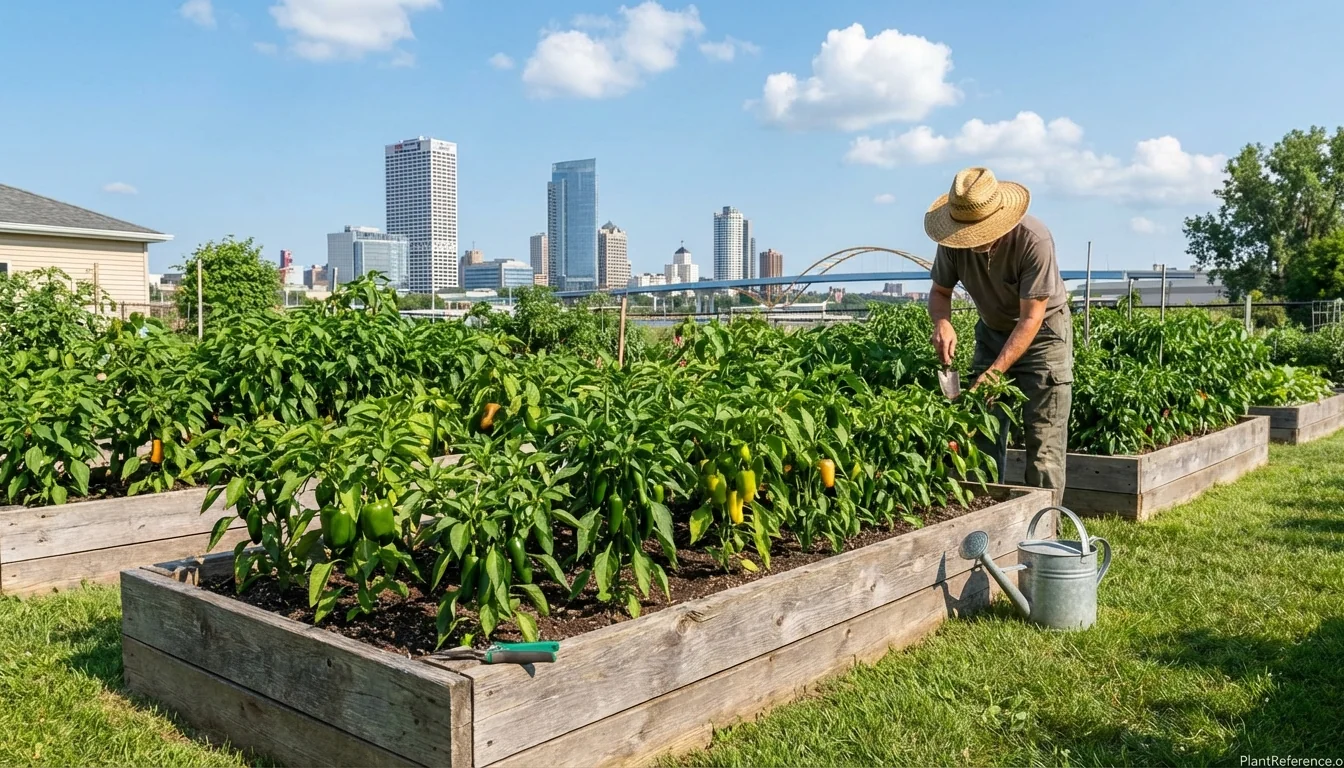
— Image © Plant Reference 2026
Growing peppers successfully in Milwaukee requires working within Zone 5b's challenging constraints—a short 139-day growing season and soil that's often too cool for heat-loving peppers. I've been gardening in Wisconsin for forty years, and I'll tell you what works: focus on fast-maturing varieties, start early indoors, and use every heat-accumulation trick available.
Best Pepper Varieties for Milwaukee's Zone 5b Climate
Milwaukee's climate demands careful variety selection. With only 139 frost-free days, you need peppers that mature quickly and tolerate cooler nights. I've tested dozens of varieties here, and these perform reliably year after year.
The key is understanding that not all peppers are created equal. Most bell peppers need 70-80 days to mature, which cuts it close in our climate. Hot peppers like Habaneros requiring 90-120 days are nearly impossible without greenhouse protection.
Here's my proven variety list for Milwaukee, organized by reliability:
Most Reliable (60-75 days):
Variety | Days to Maturity | Best For | Notes for Milwaukee |
|---|---|---|---|
60-70 days | Quick harvest | Extremely reliable, handles cool nights | |
65-75 days | Fresh eating | Yellow color shows ripeness clearly | |
65-75 days | Salsa making | Compact plants, heavy production | |
Capsicum annuum 'Cubanelle' | 65-75 days | Cooking | Sweet Italian frying pepper |
Good Options (75-85 days): 🌿Capsicum annuum 'California Wonder' bell peppers can succeed but need warm microclimates. 🌿Capsicum annuum 'Poblano' works in good years but may not ripen fully in cool summers. 🌿Capsicum annuum 'Cayenne' produces well but individual peppers may not reach full size.
Avoid Unless You Have Season Extension: 🌿Capsicum chinense 'Habanero' varieties simply don't have enough heat units in Milwaukee. Even 🌿Capsicum annuum 'Anaheim' peppers struggle to reach full size before frost.
The sweet banana pepper deserves special mention. Its yellow color makes it easy to know when it's ready—no guessing about ripeness like with green peppers that might stay green forever in a cool summer.
Specific Planting Dates for Milwaukee
Milwaukee's last frost averages May 14, but soil temperature matters more than air temperature for peppers. Even if the air warms up, cold soil will stunt pepper growth for weeks.
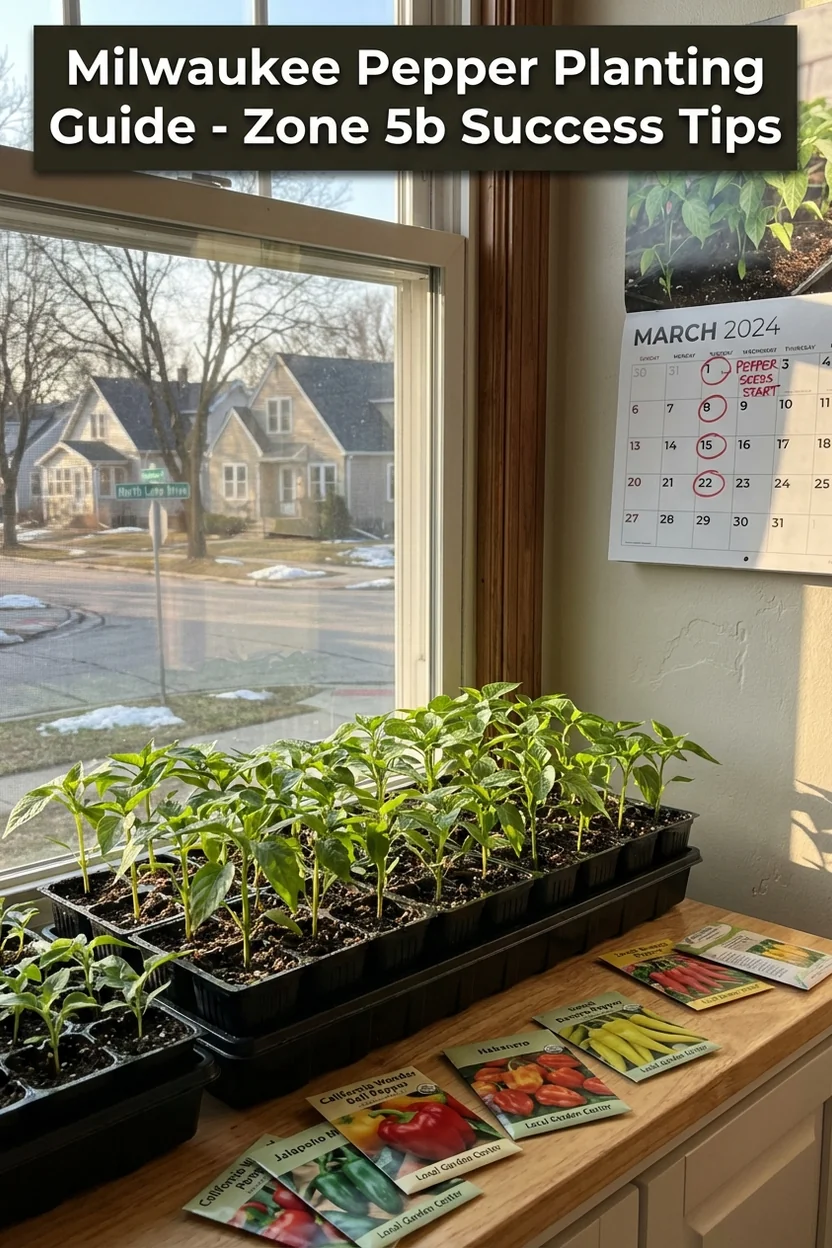
Indoor Seed Starting: March 10-17 Start seeds 8-10 weeks before transplant date. Use heat mats to maintain 80-85°F soil temperature—this is crucial for good germination. Without bottom heat, germination can take 3-4 weeks instead of 7-10 days.
Hardening Off: May 1-10 Begin hardening off seedlings when nighttime temperatures consistently stay above 45°F. Milwaukee's spring weather can be tricky—we might get 70°F days followed by 35°F nights. Only put seedlings outside during the day initially.
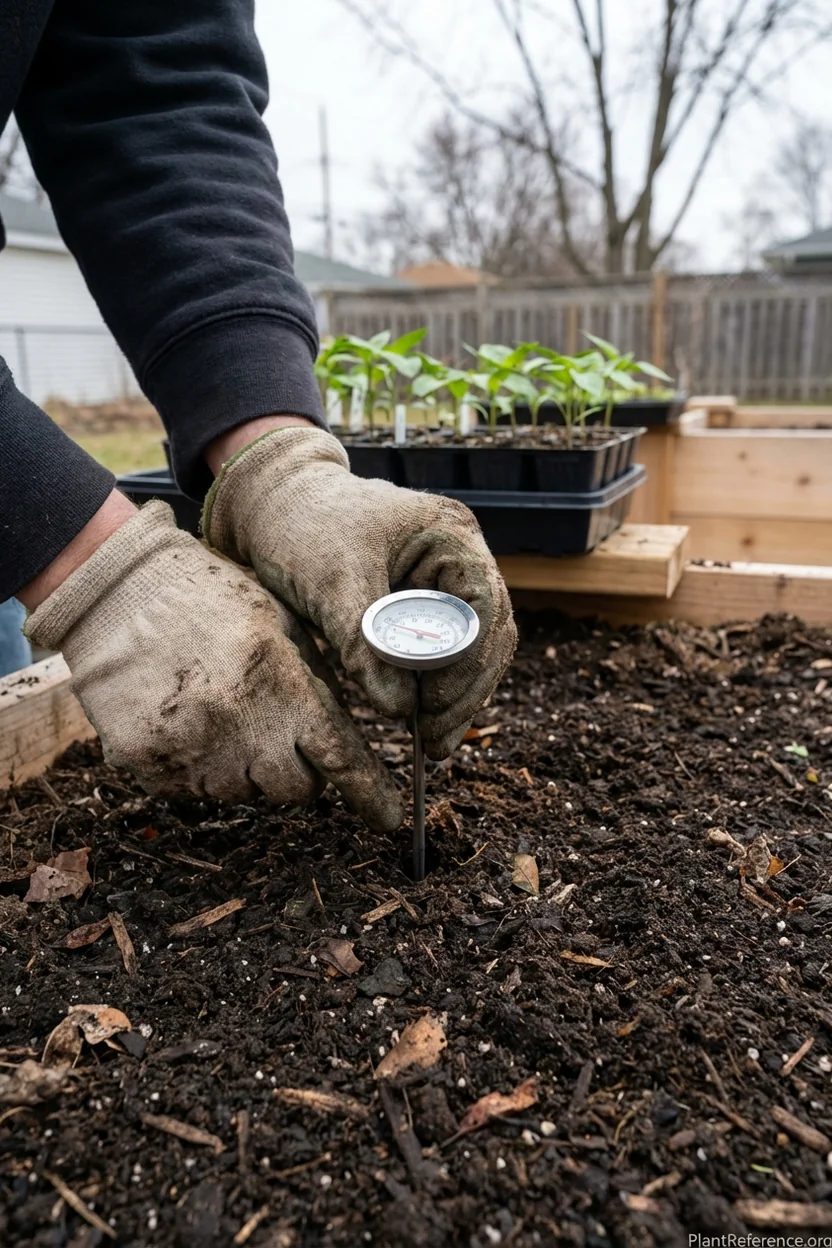
Transplant Date: May 15-22 Don't rush this. Wait until soil temperature reaches 60°F at 4-inch depth. Check this with a soil thermometer for three consecutive days. Planting in cold soil causes "transplant shock"—plants turn purple and stop growing.
Harvest Timeline:
Early varieties (Shishito): Begin harvest July 15-20
Mid-season varieties (Jalapeño): Begin harvest July 25-August 5
Late varieties (Bell peppers): Begin harvest August 10-15
Final harvest: September 25-30 before first frost
Season Extension Options: For gardeners wanting to push the season, row covers can add 2-3 weeks in fall. Wall O' Water protectors can allow planting 7-10 days earlier in spring.
Complete Growing Guide for Milwaukee
Successfully growing peppers in Milwaukee requires maximizing every bit of available heat. I've learned these techniques through decades of Wisconsin gardening.
Site Selection and Preparation
Choose the warmest spot in your yard—typically a south-facing location protected from north winds. Near a south-facing wall is ideal because the structure radiates stored heat at night.
Milwaukee's clay-heavy soil needs amendment. Work in 2-3 inches of compost and coarse sand to improve drainage. Waterlogged soil in spring delays soil warming by weeks.
Heat Accumulation Strategies
Black plastic mulch is essential in Milwaukee. Lay it over prepared beds 2-3 weeks before planting to raise soil temperature 8-10°F. This artificial boost mimics a warmer climate zone.
Clear plastic heats soil even more but requires weed control underneath
Red plastic mulch may increase yields but is expensive
Organic mulches like straw keep soil cool—only use after soil warms
Transplanting Technique
Plant through slits in the plastic mulch. Dig holes slightly larger than root balls and backfill with compost-amended soil. Water transplants with lukewarm water—cold water shocks warm-loving roots.
Space plants 18-24 inches apart. Closer spacing in our short season actually works better than wide spacing recommended for longer growing areas. Plants support each other against wind and create beneficial microclimates.
Milwaukee-Specific Watering
Our frequent spring rains can cause problems. Peppers need consistent moisture but not waterlogged conditions. In heavy clay soil, this means:
Install drainage improvements (raised beds work well)
Water deeply but less frequently once established
Avoid overhead watering which promotes disease in humid conditions
Use soaker hoses or drip irrigation when possible
During dry spells, maintain consistent soil moisture. Irregular watering causes blossom end rot, where the bottom of peppers develops dark, sunken spots.
Fertilization Program
Milwaukee soil often tests high in phosphorus but may lack nitrogen and potassium. Start with a soil test from the UW Extension.
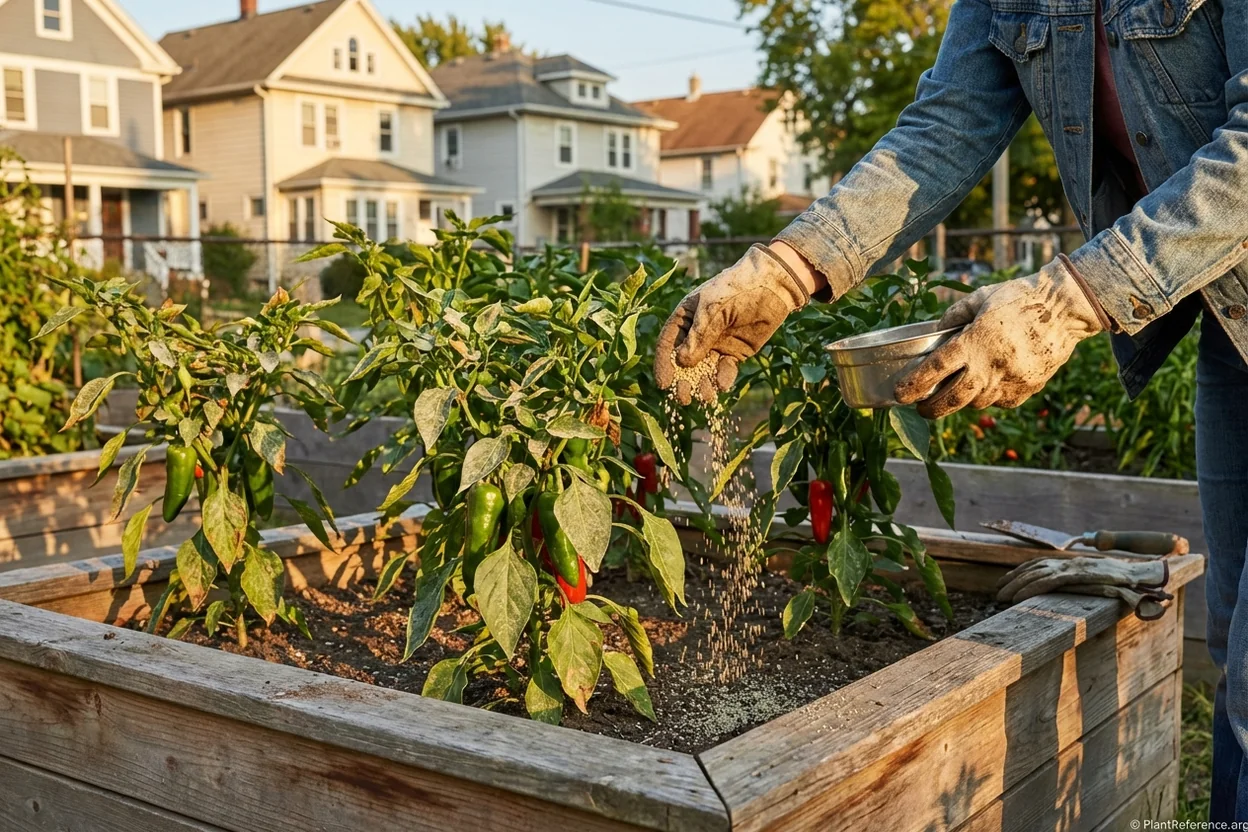
Feed peppers every 3-4 weeks with balanced fertilizer. Avoid high-nitrogen fertilizers after mid-July—they promote leafy growth at the expense of fruit ripening before frost.
Support Systems
Even compact pepper varieties need support in Milwaukee's climate. Our summer thunderstorms can topple heavy-laden plants. Install cages or stakes at planting time—driving stakes later damages roots.
Use 4-foot tall cages for bell peppers, 3-foot for most others. Tomato cages work fine but choose sturdy ones. Cheap wire cages collapse under the weight of a productive pepper plant.
Troubleshooting Milwaukee-Specific Problems
Milwaukee's climate presents unique challenges that I've learned to anticipate and manage over the years.
Cool Weather Stunting
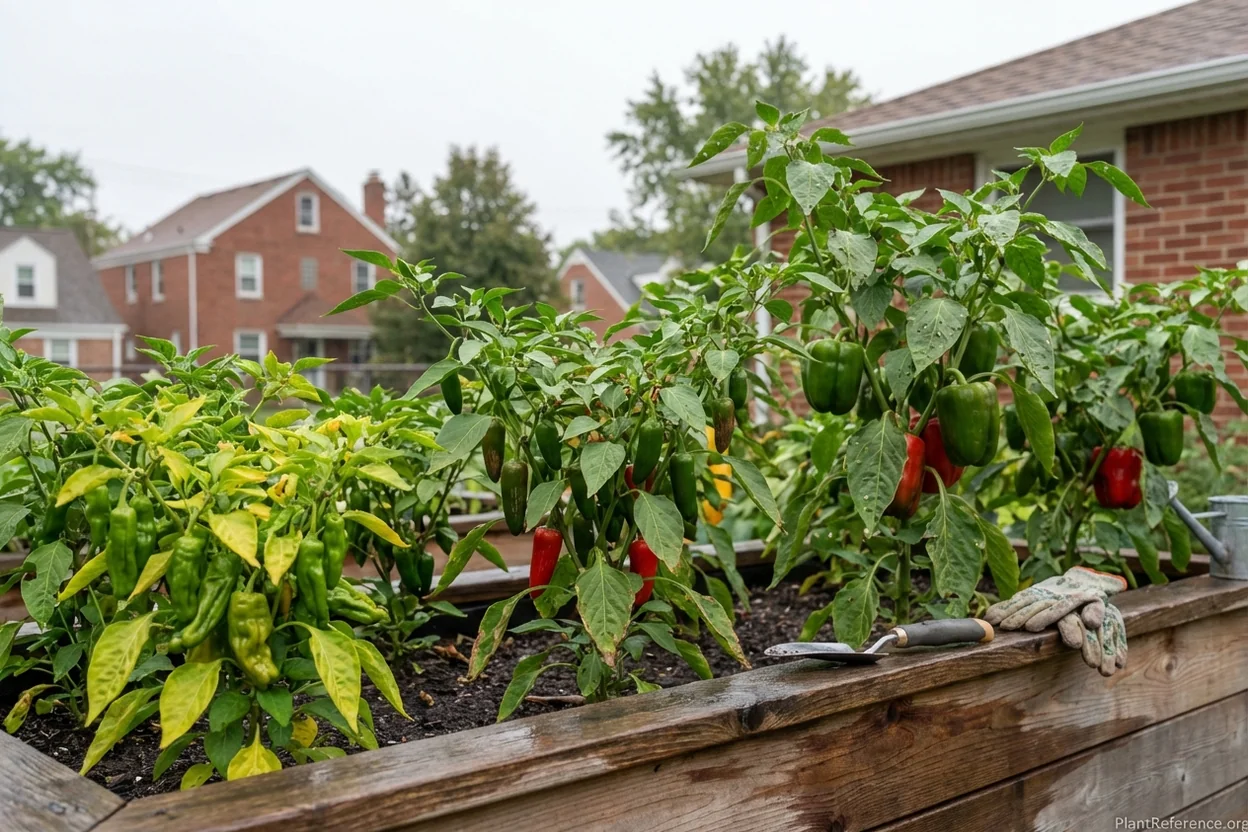
Purple leaves and slow growth indicate cold stress. This happens when night temperatures drop below 55°F or soil stays cold.
The fix is patience and protection. Row covers during cool spells help maintain plant warmth. Don't try to force growth with fertilizer—cold-stressed plants can't utilize nutrients properly.
Blossom Drop
Flowers forming but dropping off usually means temperature stress. Night temperatures above 75°F or below 55°F cause this. Milwaukee's variable spring weather is often the culprit.
There's no immediate fix once blossoms drop, but new flowers will set when conditions improve. Maintain consistent watering and wait for stable weather.
Slow Ripening
Green peppers that won't turn color need more heat and time. This is common in cool summers or when growing long-season varieties.
Remove excess foliage to direct energy to fruit ripening
Harvest largest green peppers to allow others to mature
Consider red plastic mulch which can speed ripening
Focus on varieties that ripen well in cool conditions
Pest Issues
Cutworms can be devastating to young transplants. These soil-dwelling caterpillars cut stems at ground level. Prevent this with cardboard collars around each transplant—a 4-inch collar works well.
Aphids cluster on growing tips and spread viral diseases. Control them with insecticidal soap spray applied in early morning. Avoid spraying in heat of day to prevent leaf burn.
Late Blight Risk
Milwaukee's humid summers can trigger late blight, especially during cool, wet periods. This fungal disease causes brown spots on leaves and fruit rot.
Prevention is key: provide good air circulation, avoid overhead watering, and remove affected plant parts immediately. Copper fungicides can help if applied early.
Harvest & Storage
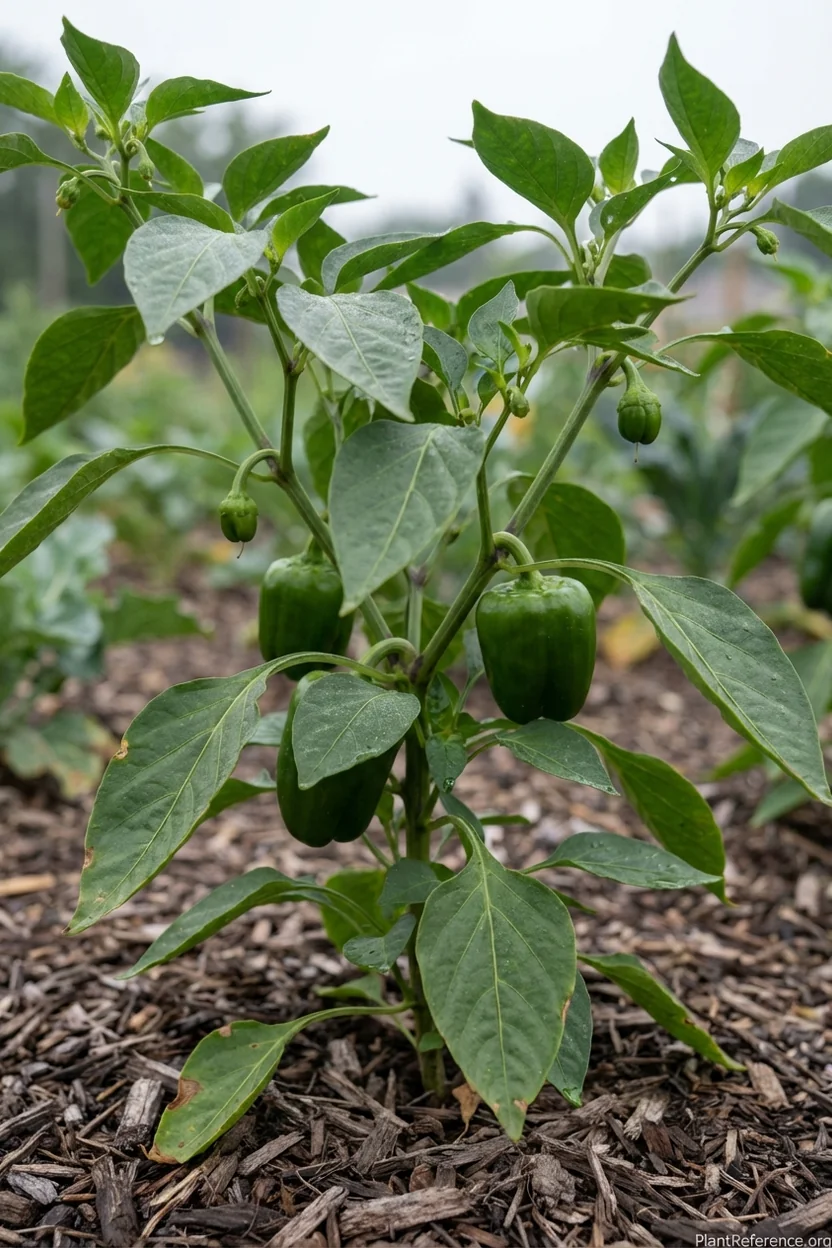
Milwaukee's first frost typically arrives September 30, so plan harvest timing accordingly. I always watch the 10-day forecast starting in mid-September.
Harvest Techniques
Cut peppers with clean scissors or pruning shears—don't pull them off. Pulling can damage branches and reduce continued production. Regular harvesting encourages more fruit set.
Harvest green peppers anytime after they reach full size. Red, orange, or yellow peppers need additional time to develop color and sweetness but won't survive frost.
End-of-Season Strategy
When frost threatens, harvest all peppers regardless of ripeness. Green peppers store well in refrigerator crisper drawers for 2-3 weeks. Partially colored peppers may continue ripening if kept at room temperature.
Hot peppers can be strung up and air-dried in a warm, dry location. Sweet peppers are best used fresh, frozen, or roasted and preserved.
Storage Methods
Fresh peppers keep longest at 45-50°F with high humidity. Most home refrigerators work well. Store in perforated plastic bags to maintain humidity while allowing air circulation.
For long-term storage, freeze peppers whole or chopped. They lose crispness when thawed but work fine for cooking. Roast and freeze bell peppers for outstanding flavor in winter soups and stews.
Frequently Asked Questions
Reading about plants and recognising them are different skills. These three build the second.
- Daily PlantIdentify the day’s mystery plant from a close-up photograph.
- Keyed OutWork a dichotomous key, lead by lead, to name a hidden specimen.
- Name That PlantName a specimen from botanical clues dealt hardest first.
Free to play, no account needed
Pat has been gardening in Milwaukee for over thirty years, through every kind of Wisconsin weather. She worked as a school librarian and started gardening seriously when her kids were small—she wanted them to know where food came from. Now retired, she's a certified Master Gardener and runs the plant sale at her local garden club every spring. She specializes in cold-hardy perennials, native wildflower meadows, and the art of getting a vegetable garden producing in Wisconsin's short but intense growing season. Pat is practical and patient—she's seen enough Wisconsin winters to know that gardening here is a long game, and she writes with the steady confidence of someone who's been doing this a long time.