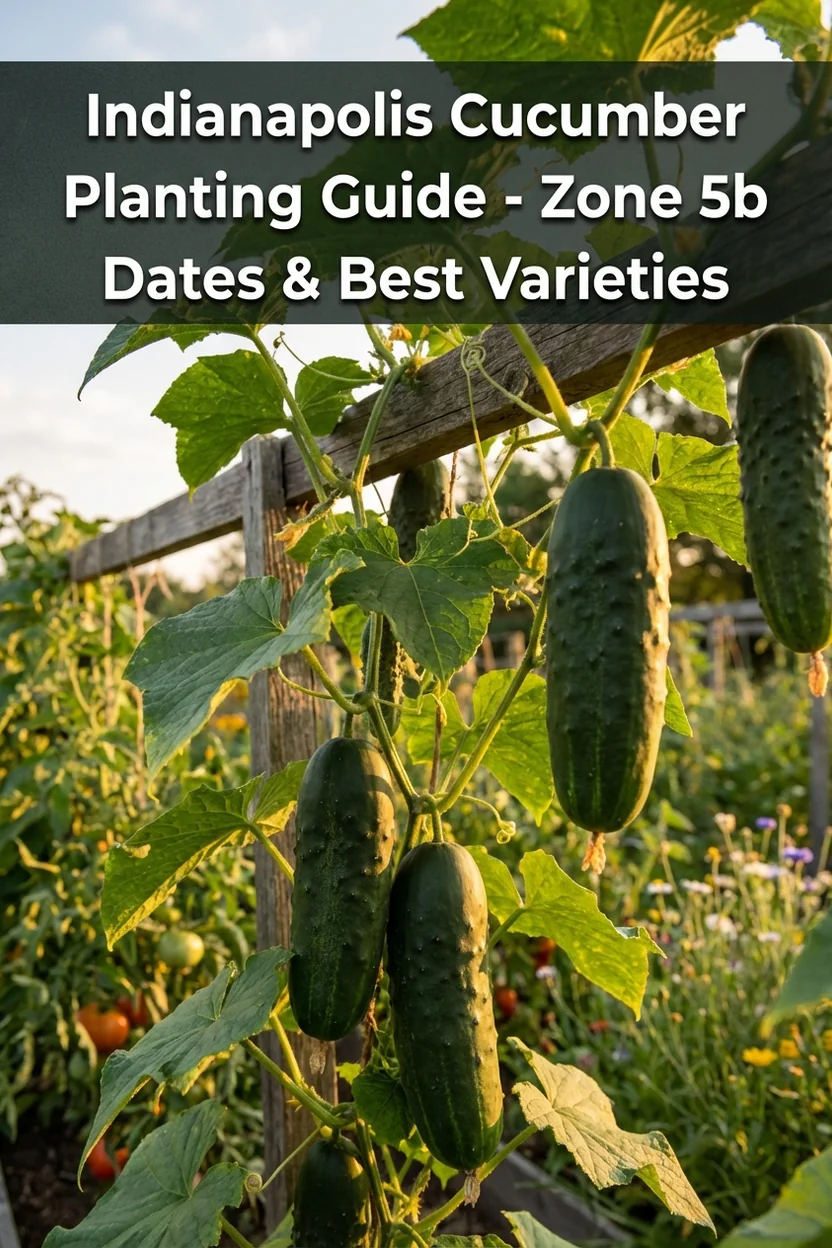
When to Plant Cucumbers in Indianapolis: Complete Guide + Best Varieties for Zone 5b
Pets & Toxicity
Recorded toxicity for plants linked in this guide. An unknown status is not a safety assessment.
No linked plant is recorded as toxicDetailsHide
Cucumis sativus 'Marketmore 76' — Toxicity
Non-toxicView Cucumis sativus 'Marketmore 76' plant profileCucumis sativus 'Straight Eight' — Toxicity
Non-toxicView Cucumis sativus 'Straight Eight' plant profileCucumis sativus 'Boston Pickling' — Toxicity
Non-toxicView Cucumis sativus 'Boston Pickling' plant profile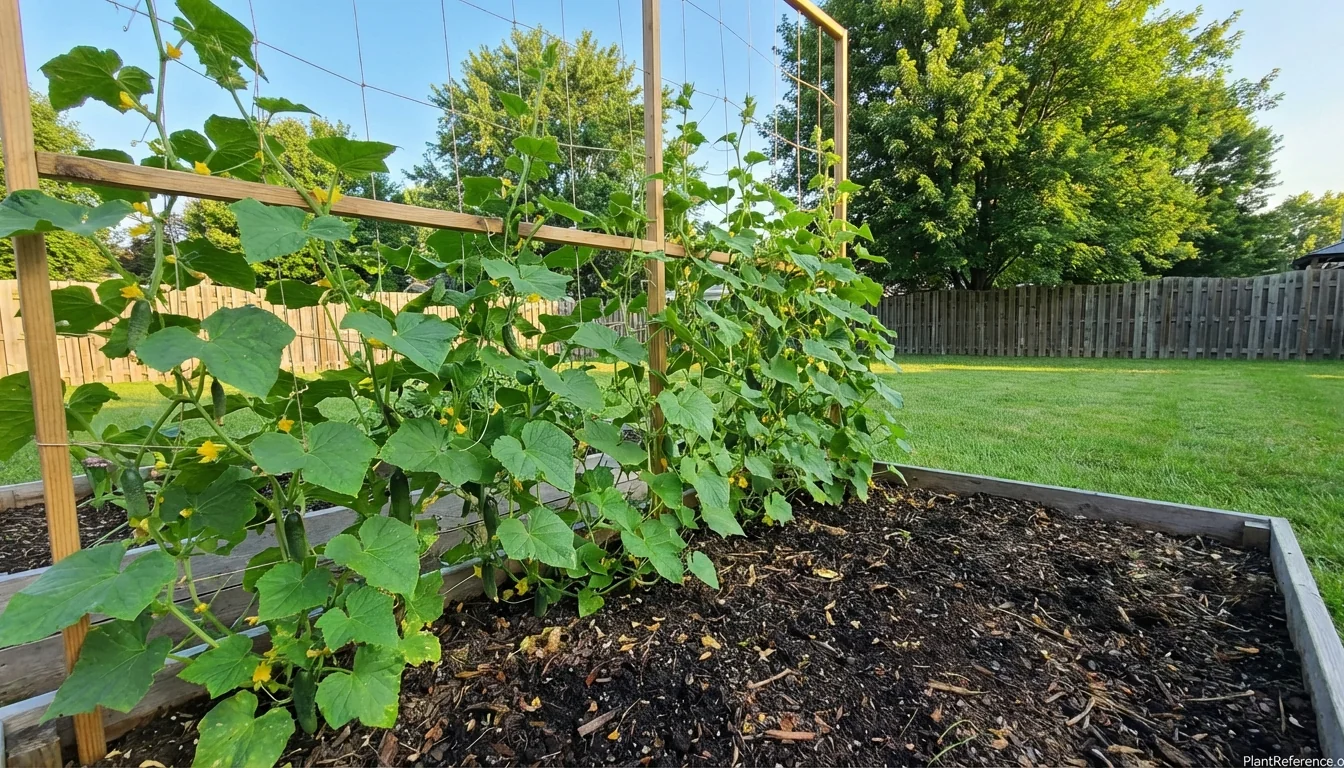
— Image © Plant Reference 2026
Most cucumber problems in Indianapolis start underground. I see it constantly in my soil science work—gardeners amending the surface, ignoring what's happening at root depth, and wondering why their cucumbers fail. Indianapolis sits on some of the heaviest clay in the Midwest, and cucumbers need well-drained soil to thrive. Get the soil right first and the growing part becomes straightforward. Our 158-day season is moderate—shorter than Kansas City but longer than Milwaukee—and our hot, humid summers provide exactly the conditions cucumbers want, as long as drainage keeps roots healthy and disease management keeps foliage productive. When to Plant Tomatoes in Indianapolis: Complete Guide + Best Varieties for Zone 5b
Best Cucumber Varieties for Indianapolis' Climate
Indianapolis sits in USDA Zone 5b with a last frost around May 5 and first frost near October 10, giving you 158 growing days. That's enough for most varieties with room for succession planting, but choosing the right varieties for our specific conditions—heavy clay soils, humid summers, and significant Downy Mildew (Pseudoperonospora cubensis) pressure—makes the difference between a productive season and a disappointing one.
Variety | Type | Days to Harvest | Disease Resistance | Best For |
|---|---|---|---|---|
Slicing | 65 days | High (Scab, CMV, moderate DM/PM) | Best overall for Indy humidity | |
Pickling | 55 days | Low-Moderate | Fast harvest, succession, pickling | |
🌿Cucumis sativus 'Persian' (Beit Alpha) | Specialty | 55 days | Moderate (PM) | Containers, compact spaces |
Slicing | 63 days | Low (CMV tolerance only) | Early season before disease builds | |
Specialty | 65 days | Moderate (Rust, drought tolerant) | Novelty, drier garden spots | |
🌿Cucumis sativus 'Marketmore 76' (succession) | Slicing | 65 days | High | Mid-summer replanting |
🌿Cucumis sativus 'Marketmore 76' is my default recommendation for Indianapolis. The disease resistance package—Scab, Cucumber Mosaic Virus, intermediate Downy and Powdery Mildew—is critical for our humid summers. Without resistance, you'll watch vines collapse in August just when production should peak. The "stay-green" gene maintains fruit quality during our July heat waves, producing consistent 8-inch (20 cm) dark green slicers. It's also tolerant of the slightly alkaline soil conditions common in central Indiana.
🌿Cucumis sativus 'Boston Pickling' at 55 days gives Indianapolis gardeners fast results and excellent succession potential. Transplants set out in mid-May produce fruit by early July, and a late June succession matures into September's cooling nights for superior pickling quality. I always recommend growing at least a few of these alongside slicers.
🌿Cucumis sativus 'Persian' types work well in containers and raised beds where soil drainage is controlled. The compact vines produce heavily without needing extensive trellising, and the parthenocarpic trait means fruit sets without pollinators—useful during cool, cloudy Indiana springs when bee activity is low.
🌿Cucumis sativus 'Straight Eight' produces early but don't count on it past mid-August in Indianapolis. Research consistently shows this heirloom succumbing to Downy Mildew in humid conditions and producing bitter fruit under heat stress. Use it for the first harvest, then rely on 🌿Cucumis sativus 'Marketmore 76' for the long haul. When to Plant Peppers in Indianapolis: Complete Guide + Best Varieties for Zone 5b
Specific Planting Dates for Indianapolis Gardens
Indianapolis' May 5 average last frost and October 10 first frost create a 158-day window. That's workable for cucumbers but doesn't leave much margin for late starts or early falls. Transplants gain you critical weeks at the front end, and soil temperature—not air temperature—determines when planting actually succeeds.
Indoor Seed Starting: April 7-14 (3-4 weeks before last frost). Start in biodegradable pots on a heat mat at 75°F (24°C). Cucumber seeds germinate in 3-7 days at this temperature. Without supplemental heat, April houses in Indianapolis are cool enough to stretch germination to 10-14 days—time you'll wish you had later.
Transplant Outdoors: May 12-20 (one week after last frost, soil at 60°F/16°C). Harden off seedlings for 5-7 days before planting out. Indianapolis weather in early May is unpredictable—I've seen frost as late as May 12. Keep row covers available through mid-May for insurance.
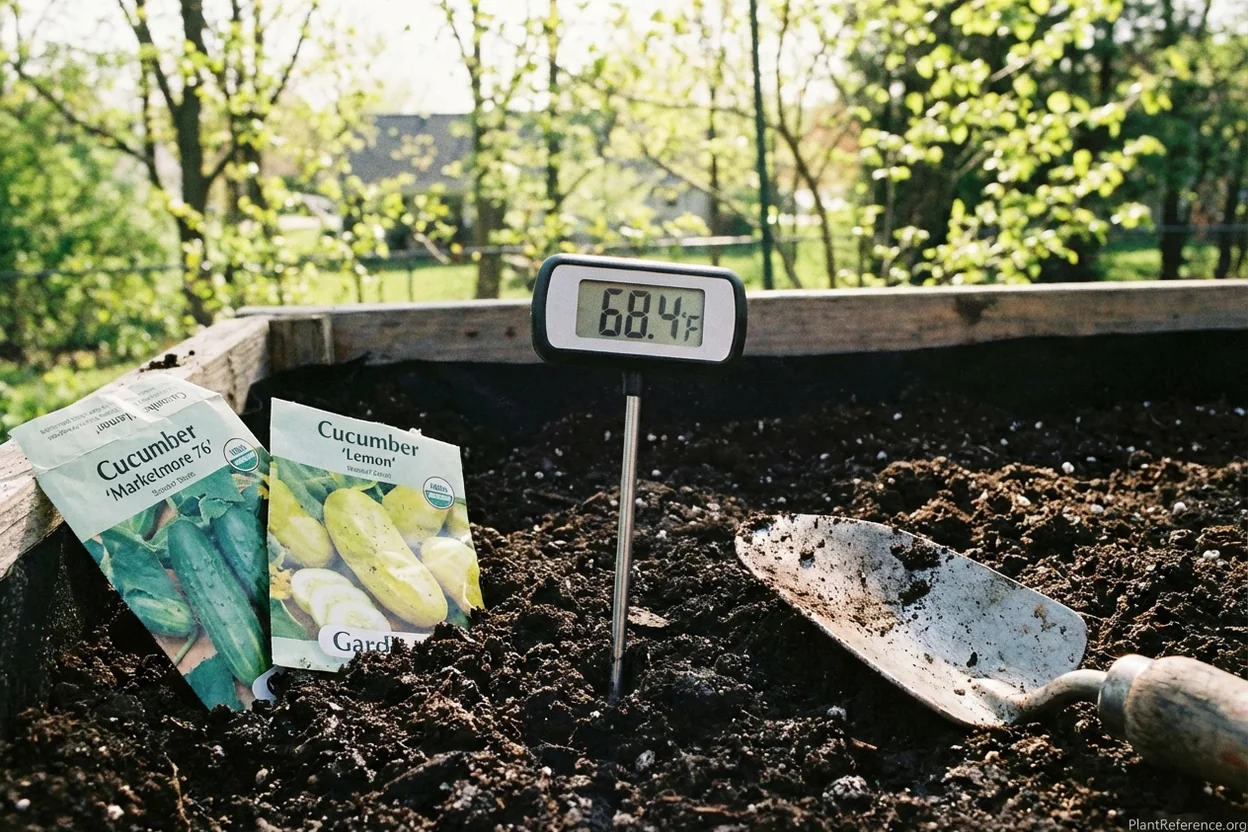
Direct Sow (first planting): May 10-25. Check soil temperature at 4 inches (10 cm) deep with a thermometer—don't guess. Indianapolis' clay soils hold cold longer than sandy soils in other regions. South-facing raised beds with well-amended soil hit 60°F (16°C) up to two weeks before heavy clay in-ground plots. That soil temperature gap is why I push raised beds so strongly for central Indiana cucumbers.
Succession Plantings: Every 3 weeks from first sowing through late June. Indianapolis' season supports 2-3 succession plantings. The first transplant and one or two follow-up sowings provide continuous harvest from late June through September.
Final Sowing Deadline: June 25. Quick-maturing 🌿Cucumis sativus 'Boston Pickling' (55 days) and 🌿Cucumis sativus 'Persian' (55 days) from a June 25 sowing mature around August 19 with seven weeks of harvest before frost. Sixty-five-day varieties need to go in by June 15 to mature comfortably. Raised Bed Vegetable Garden Layout: Planning for Maximum Production
Complete Growing Guide for Indianapolis
Soil Preparation (The Most Important Step)
This is where most Indianapolis gardeners get cucumbers wrong. Before you think about varieties or planting dates, get a soil test. Purdue Extension charges under $15 and tells you exactly what your soil has and what it needs. Central Indiana soils are predominantly heavy clay with pH that tends toward neutral to slightly alkaline (6.8-7.5). Cucumbers prefer 6.0-6.8, so sulfur amendments may be necessary if your pH runs high.
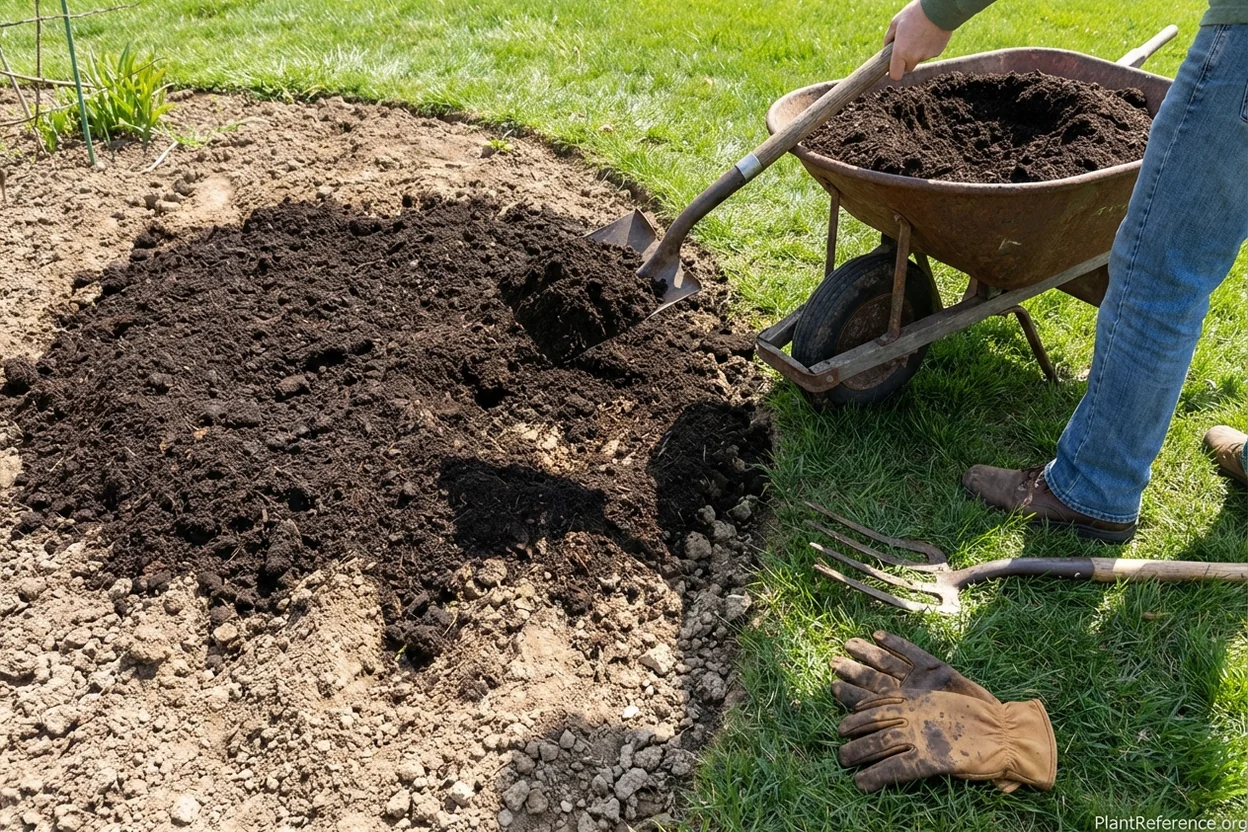
The clay issue is serious for cucumbers. 🌿Cucumis sativus 'Straight Eight' develops shallow, spreading root systems that suffocate in waterlogged conditions. Work 4-6 inches (10-15 cm) of compost into the top 12 inches (30 cm) to improve drainage and structure. This isn't a one-time fix—Indianapolis clay re-compacts annually, so add compost every season. Gypsum applications (40 pounds per 1,000 square feet) help break up clay structure over time without changing pH, which is a useful complement to organic amendments. Raised beds filled with 60% topsoil, 30% compost, and 10% perlite bypass the drainage problem entirely and are my strongest recommendation for anyone growing cucumbers in central Indiana. How to Build a Raised Garden Bed: Step-by-Step Construction Guide
Mulching Strategy
Mulch 2-3 inches (5-8 cm) after transplanting. For the first planting, black plastic mulch warms soil faster—critical when you're racing to hit 60°F in cold Indiana clay. Switch to organic mulch (straw or shredded leaves) for summer plantings when soil is already warm. Organic mulch feeds the soil biology as it decomposes, gradually improving the clay structure that makes gardening in central Indiana challenging. I've seen plots go from solid clay to workable soil in three to four years of consistent mulching and composting.
Trellising
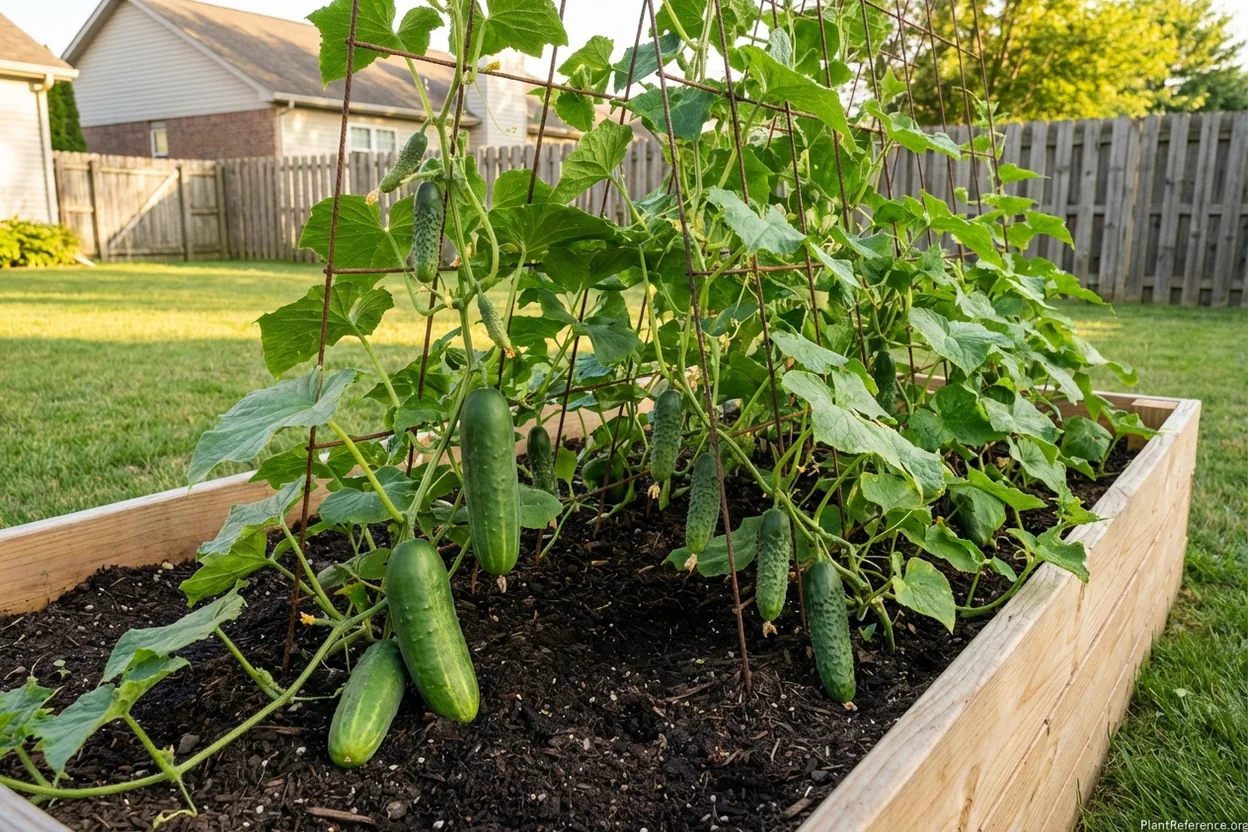
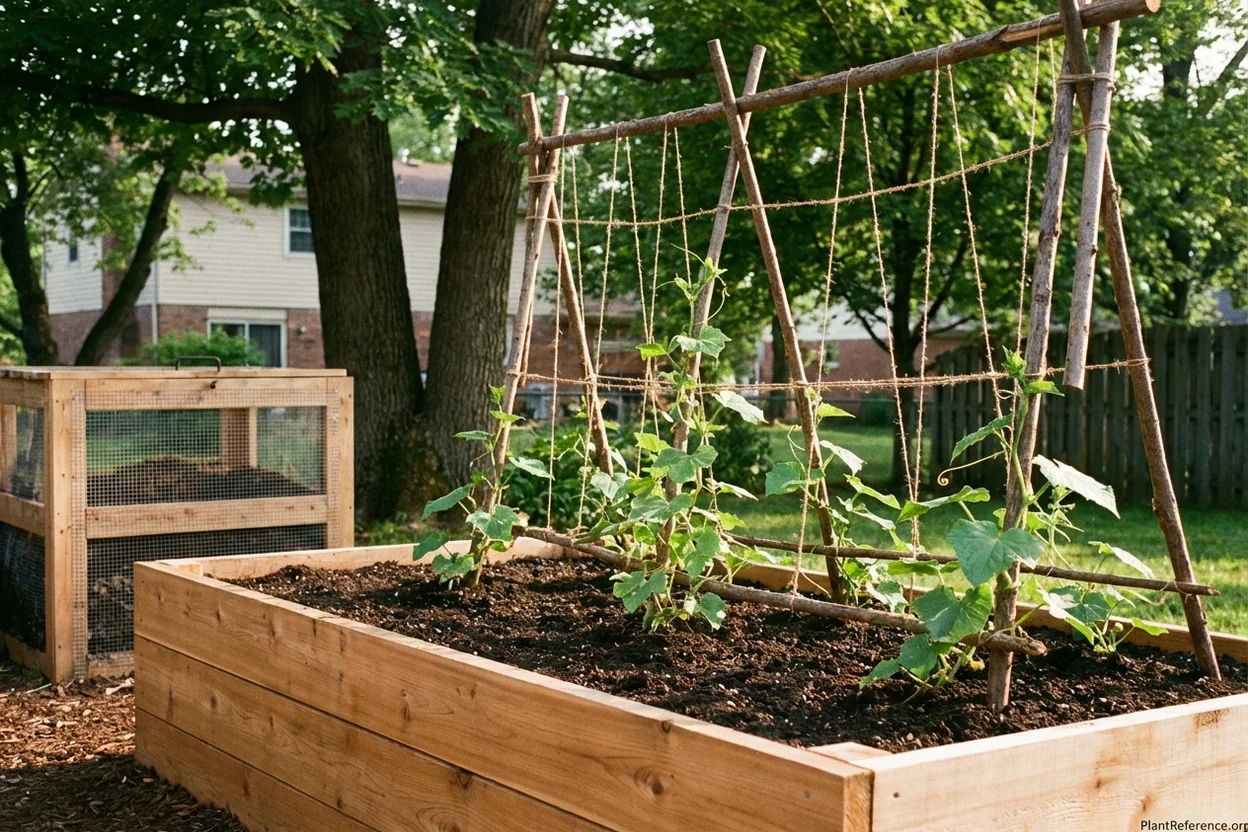
Vertical growing is essential for disease management in Indianapolis. Our summer humidity from June through September drives Downy and Powdery Mildew aggressively, and air circulation around foliage is the most effective cultural control. Build a 6-foot (1.8 m) trellis using A-frame lumber, cattle panels, or string systems. Trellised cucumbers produce cleaner fruit, use less ground space, and are far easier to inspect for the early signs of disease that let you intervene before it's too late. Even bush-type varieties benefit from some vertical support to keep fruit off wet soil in our humid climate. 5 Best Drip Irrigation Kits for Raised Beds (Tested for Easy Installation)
Watering and Feeding
Cucumbers need 1 to 1.5 inches (2.5-4 cm) of water weekly, delivered consistently. Drip irrigation at the soil line keeps foliage dry—critical for disease prevention—and provides the steady moisture cucumbers demand. Indianapolis rainfall is sporadic in summer, and clay soils alternate between waterlogged after storms and brick-hard during dry spells. Drip on a timer eliminates both extremes.
Feed when flowering begins and again at first fruit set. If your soil test shows adequate phosphorus and potassium (common in Indiana's fertile prairie soils), a nitrogen side-dressing is often all that's needed. Compost tea provides a balanced, gentle feed that also supports the soil microbiome—something I always advocate for long-term garden health over synthetic fertilizers alone. Avoid heavy nitrogen once fruit starts forming; excess nitrogen at that stage pushes vine growth at the expense of cucumber production and can delay maturity by a week or more.
Pollination
🌿Cucumis sativus 'Marketmore 76' and 🌿Cucumis sativus 'Straight Eight' need pollinators for fruit set. Indianapolis generally supports healthy pollinator populations, especially in neighborhoods near green spaces and established gardens. Male flowers appear first—don't worry when you see blooms without fruit for the first week. If fruit isn't setting after two weeks of female flowers opening, hand-pollinate with a small brush in the morning. 🌿Cucumis sativus 'Persian' types set fruit without pollinators, making them a reliable choice during cool, overcast Indiana springs when bee activity drops. When to Plant Squash in Indianapolis: Complete Guide + Best Varieties for Zone 5b
Troubleshooting Indianapolis-Specific Problems
Clay Soil Drainage
The most common cucumber failure in Indianapolis isn't disease or pests—it's root suffocation in waterlogged clay after heavy rain. Symptoms mimic drought: wilting, yellowing, poor fruit set. But the cause is drowning roots, not dry ones. Before adding water to a wilting plant, check the soil at 4 inches (10 cm). If it's saturated, the problem is drainage. Raised beds, deep composting, and avoiding low spots in the yard are the long-term solutions. Best Soil Mix for Raised Beds: Creating the Perfect Growing Medium
Downy Mildew
Downy Mildew arrives in Indianapolis by late July to August as spores migrate from southern states. Angular yellow spots on upper leaf surfaces that darken to brown mark the infection. Prevention: 🌿Cucumis sativus 'Marketmore 76' for resistance, vertical trellising, drip irrigation, and removing infected leaves immediately. Succession planting provides healthy replacement vines when disease crashes the first planting. Raised Bed Pest Problems: Identification and Organic Control Methods
Cucumber Beetles
Striped and spotted cucumber beetles emerge in mid-to-late May in Indianapolis—perfectly timed to attack your fresh transplants. Row covers provide the best early protection. Remove at flowering for pollinator access. Trap cropping with Blue Hubbard squash concentrates beetles away from cucumbers. Kaolin clay spray deters feeding on exposed plants.
Late Spring Cold Snaps
Indianapolis averages a May 5 last frost but cold snaps through mid-May are common. Keep floating row covers ready for overnight protection. Cold-stunted cucumbers recover slowly—a two-week setback in a 158-day season is proportionally significant. When in doubt, wait a few extra days rather than gambling on an early warm spell. Raised Bed Too Hot in Summer: Protecting Plants from Heat Stress
Harvest & Storage
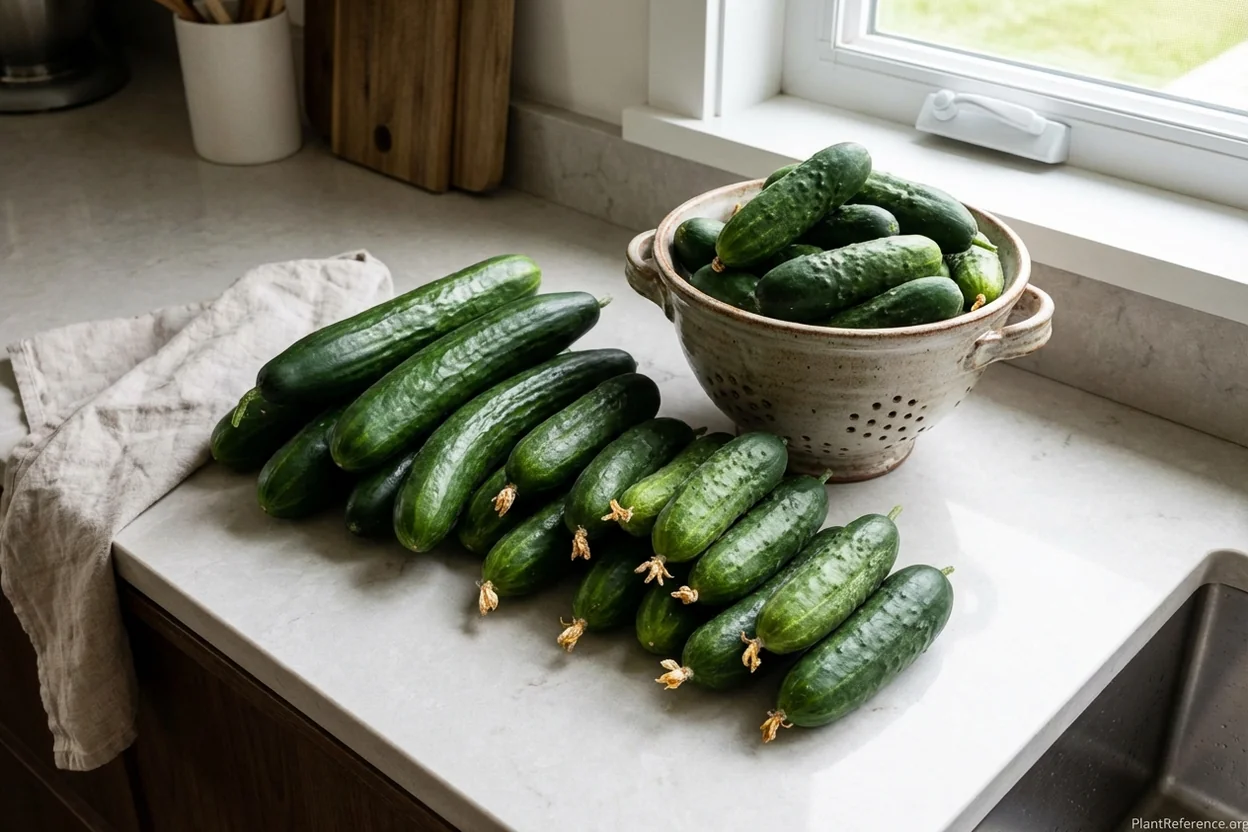
Harvest slicing cucumbers at 6-8 inches (15-20 cm) and pickling types at 2-4 inches (5-10 cm). Check vines daily during peak production—Indianapolis' hot, humid July and August drive rapid fruit development and cucumbers grow from perfect to oversized in 48 hours. Overripe fruit tells the plant to stop producing, so harvest everything consistently. In a 158-day season, every productive day matters.
Cut fruit with pruners rather than pulling to avoid damaging vines. Harvest in the morning when fruit is firmest and coolest. A healthy 🌿Cucumis sativus 'Marketmore 76' plant produces 10-15 slicing cucumbers over the season; 🌿Cucumis sativus 'Boston Pickling' yields 15-20 smaller fruits with consistent picking.
Fresh cucumbers store 7-10 days refrigerated in a towel inside a loose bag. Process 🌿Cucumis sativus 'Boston Pickling' within 24 hours for the crispest pickles. Refrigerator pickles require no canning equipment—just vinegar, salt, garlic, and dill. September harvests from June succession plantings produce the crunchiest pickles of the year thanks to Indiana's cooling autumn nights. The Complete Guide to Raised Bed Gardening for Beginners (2025)
Frequently Asked Questions
Reading about plants and recognising them are different skills. These three build the second.
- Daily PlantIdentify the day’s mystery plant from a close-up photograph.
- Keyed OutWork a dichotomous key, lead by lead, to name a hidden specimen.
- Name That PlantName a specimen from botanical clues dealt hardest first.
Free to play, no account needed
Priya is a soil scientist at an agricultural extension office who gardens on a quarter-acre suburban lot in Indianapolis. Her professional work focuses on soil health and nutrient management, which gives her a perspective most gardening writers don't have—she thinks about what's happening underground before worrying about what's happening above it. Priya maintains a large pollinator garden, grows herbs and vegetables, and is slowly converting her conventional lawn to a mix of native grasses and low-growing groundcovers. She writes about soil health, composting, fertilizer use, and building the kind of foundation that makes plants thrive without constant intervention.