When to Plant Kale in Indianapolis: Complete Guide + Best Varieties for Zone 5b
Pets & Toxicity
Recorded toxicity for plants linked in this guide. An unknown status is not a safety assessment.
No linked plant is recorded as toxicDetailsHide
Brassica oleracea 'Red Russian' — Toxicity
Non-toxicView Brassica oleracea 'Red Russian' plant profileBrassica oleracea var. sabellica 'Vates' — Toxicity
Non-toxicView Brassica oleracea var. sabellica 'Vates' plant profile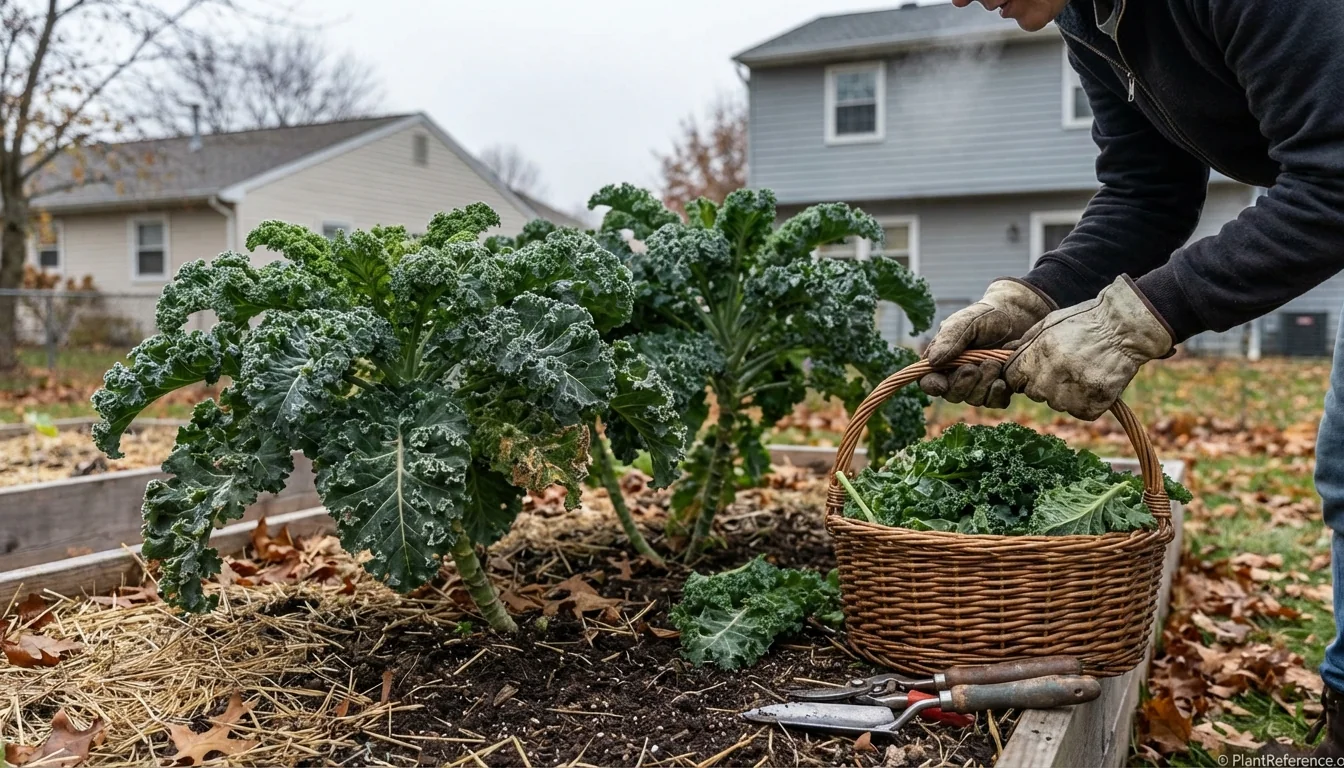
— Image © Plant Reference 2026
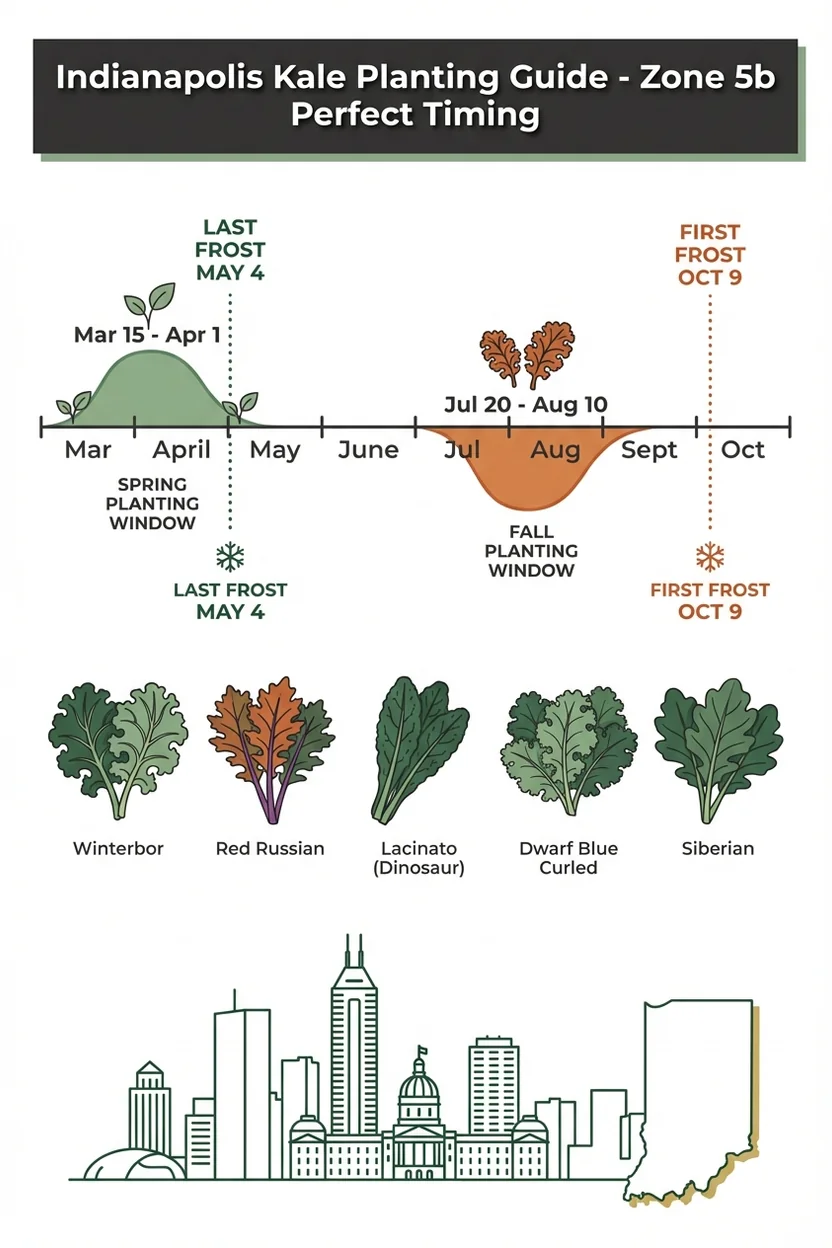
Indianapolis gardeners have discovered what I've known for forty years: kale is one of the most reliable vegetables you can grow in Indiana's Zone 5b climate. With our last frost typically hitting around May 4 and first frost arriving October 9, you've got a perfect 158-day growing season that's ideal for this cold-loving brassica.
The secret to growing exceptional kale in Indianapolis isn't complicated—it's all about timing your plantings to take advantage of our cool springs and falls while avoiding the summer heat that makes kale bitter and tough. I've been growing kale here since the 1980s, and I'll tell you exactly when and how to plant for the best results.
Best Kale Varieties for Indianapolis's Zone 5b Climate
Indianapolis's Zone 5b climate with its moderate summers and cold winters is near-perfect for kale. Our 158-day growing season gives you plenty of time for two distinct crops—spring and fall—with the fall crop being significantly better in both flavor and quality.
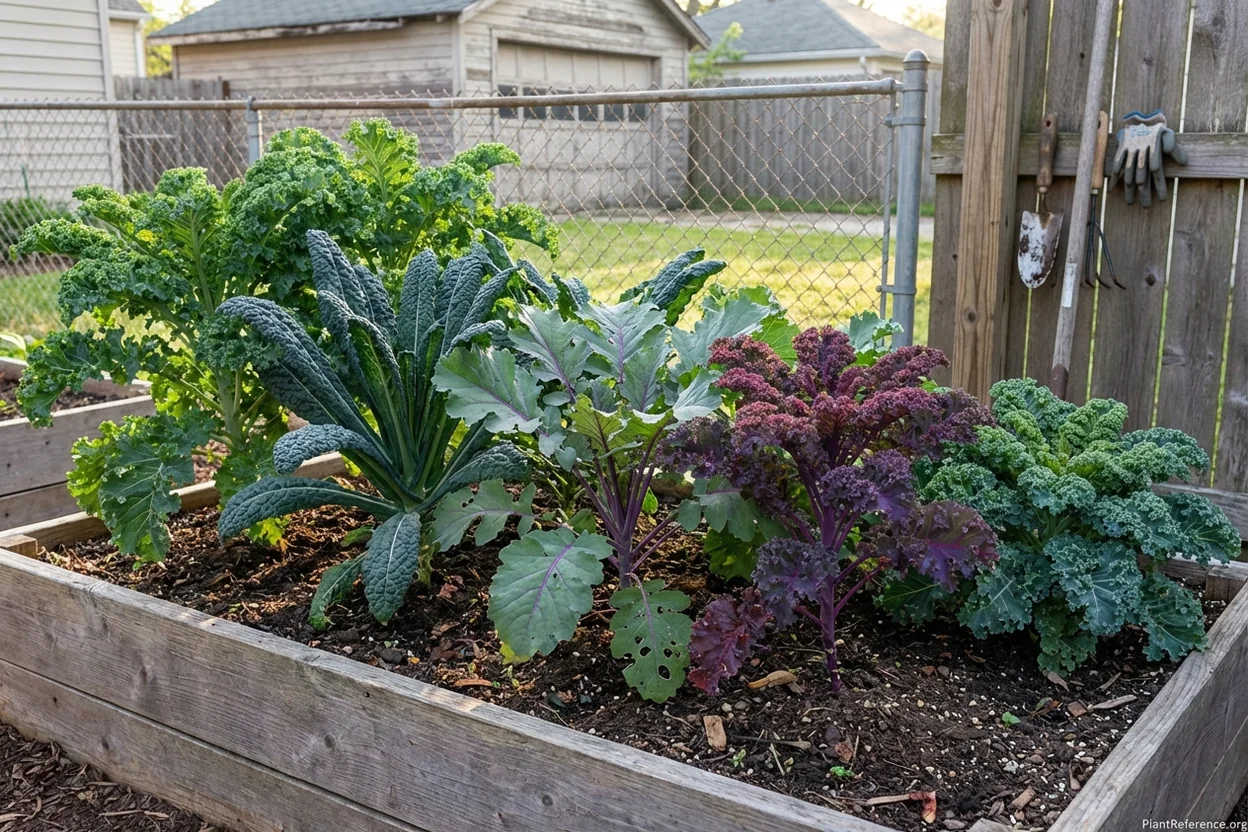
Here are the five varieties that perform exceptionally well in Indianapolis conditions:
Variety | Days to Maturity | Best For | Notes for Indianapolis |
|---|---|---|---|
60-75 days | Winter harvest | Survives Indianapolis winters with protection, sweetest after frost | |
60-75 days | Year-round use | Heat tolerant for spring planting, handles humidity well | |
50-60 days | Quick harvest | Fastest maturity, perfect for spring before summer heat | |
60-75 days | Fall color | Stunning purple color intensifies in cold, very cold hardy | |
55-65 days | Small spaces | Compact size ideal for Indianapolis urban gardens |
🌿Brassica oleracea 'Winterbor' is my top recommendation for Indianapolis gardeners serious about fall and winter harvest. This F1 hybrid has exceptional cold tolerance and can survive our typical winter lows of 5-10°F with row cover protection. The deeply curled leaves become incredibly sweet after our October frost.
🌿Brassica oleracea 'Red Russian' excels for spring plantings because it matures in just 50-60 days, giving you a harvest before Indianapolis's summer heat triggers bolting. The flat, tender leaves are perfect for salads and smoothies.
🌿Brassica oleracea 'Lacinato', also called dinosaur kale, handles Indianapolis's variable spring weather better than most varieties. Its thick, savoyed leaves resist both late cold snaps and early heat waves.
Climate Considerations for Indianapolis
Indianapolis sits right in the sweet spot for kale production. Our Zone 5b designation means we get enough winter chill to vernalize plants properly, but not so much cold that unprotected plants die. The key challenges are:
Spring volatility: Indianapolis weather can swing 40 degrees in 24 hours during April and May. Use row covers for spring plantings to moderate these temperature swings.
Summer heat: Sustained temperatures above 80°F from June through August make kale bitter and cause bolting. Plan your plantings to avoid this window.
Fall excellence: September through November provides ideal kale-growing conditions with gradually cooling temperatures that trigger the natural sweetening process.
Specific Planting Dates for Indianapolis
Getting your timing right is crucial for kale success in Indianapolis. I've refined these dates over decades of growing here.
Fall Planting (Recommended)
Direct sow outdoors: July 20 - August 10
This timing gives plants 8-10 weeks to reach full size before our October 9 first frost. Fall-planted kale is superior because:
Better flavor: The gradual cooling and eventual frost converts starches to sugars, making leaves dramatically sweeter.
Fewer pests: Cabbage worms and aphids are less active in fall compared to spring.
Extended harvest: With protection, you can harvest through December and sometimes into January.
Calculation for fall planting:
Target harvest size by October 9 (first frost)
Most varieties need 60-75 days to mature
Plant by August 10 at the latest (75 days before October 9)
Earlier planting (July 20) gives larger plants and better frost tolerance
Spring Planting (Secondary Option)
Indoor seed starting: February 15 - March 1
Transplant outdoors: March 15 - April 1
Direct sow outdoors: March 20 - April 5
Spring planting works in Indianapolis but requires more attention. Start transplants indoors 6-8 weeks before our May 4 last frost date. This timing lets you harvest from mid-May through June before summer heat arrives.
Why transplants work better for spring: Indianapolis soil in March is often too cold and wet for direct seeding. Starting indoors gives you stronger plants that can handle our unpredictable spring weather.
Succession Planting Strategy
For continuous harvest, plant small amounts every 2-3 weeks:
Fall succession:
First planting: July 20 (largest harvest)
Second planting: August 1
Third planting: August 15 (baby greens harvest)
Spring succession:
First planting: March 15 (transplants)
Second planting: March 30 (transplants or direct sow)
Final planting: April 15 (direct sow only)
Complete Growing Guide for Indianapolis
Soil Preparation
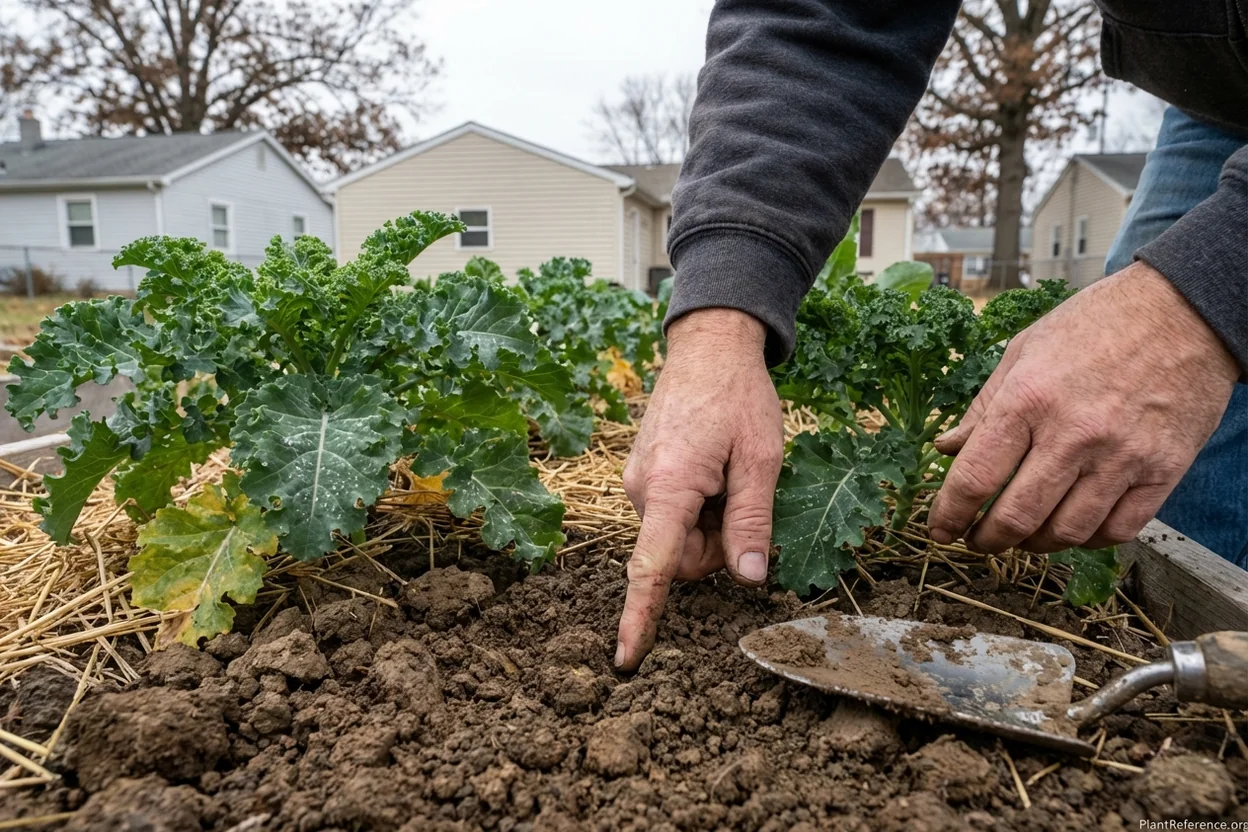
Indianapolis clay soil presents challenges for kale, but it's manageable with proper preparation. Kale needs well-draining soil with pH 6.0-7.5.
Dealing with Indianapolis clay: Our heavy clay soil holds too much water in spring and becomes concrete-hard when dry. Improve drainage by:
Adding 2-3 inches of compost annually
Creating raised beds 6-8 inches high
Working in coarse sand (not fine sand which makes clay worse)
Avoiding working wet soil which creates brick-like clods
pH management: Indianapolis soil tends toward neutral to slightly alkaline (pH 7.0-7.5), which is perfect for kale. If your soil tests acidic, add lime in fall for spring planting.
Fertility requirements: Kale is a heavy nitrogen feeder. Work in:
2-3 inches of compost or well-aged manure
Balanced organic fertilizer (5-5-5) at planting
Side-dress with blood meal or fish emulsion 4 weeks after planting
Planting Techniques
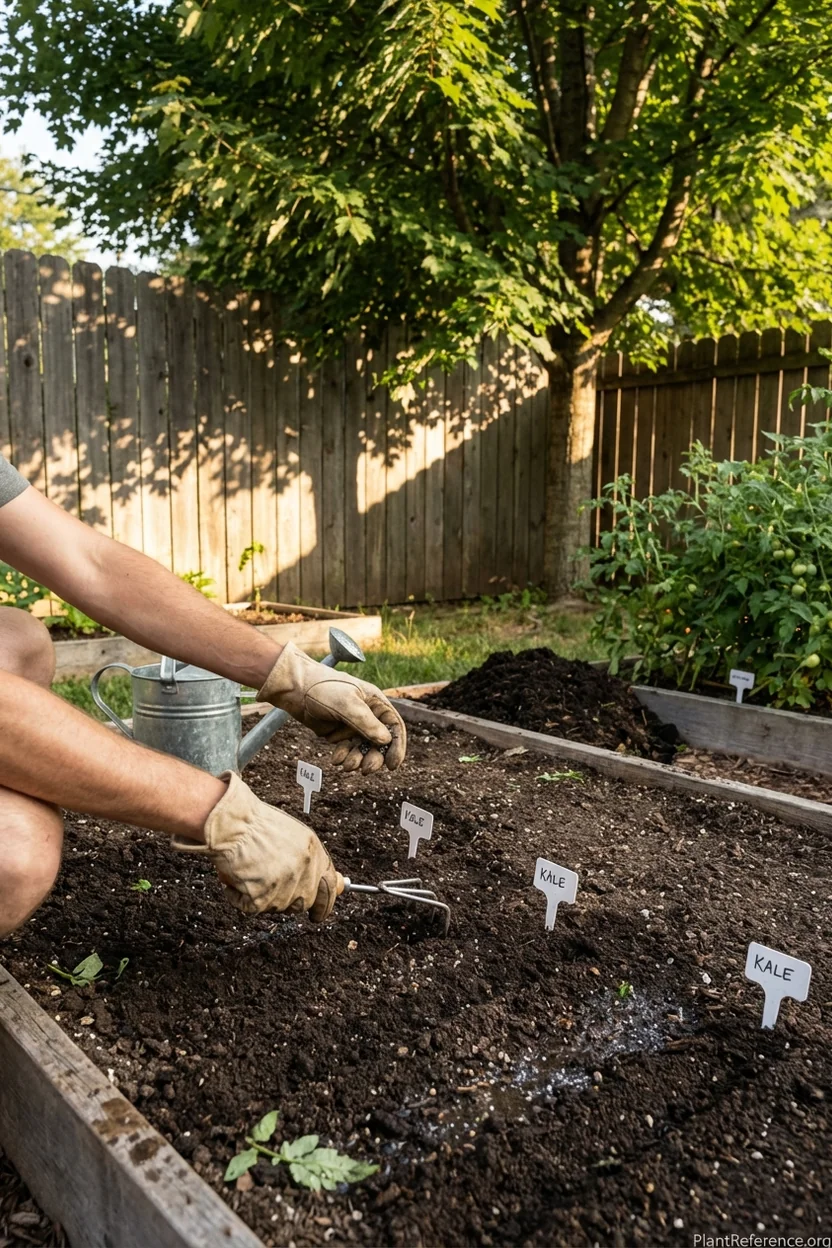
Direct seeding depth: Plant seeds ¼ inch deep in Indianapolis's clay-rich soil. Deeper planting in our heavy soil often leads to poor germination.
Spacing: Space plants 12 inches apart in rows 18 inches apart. Indianapolis's humid summers can promote disease, so good air circulation is essential.
Transplant timing: For spring planting, harden off transplants gradually over 5-7 days. Indianapolis spring weather can be harsh on tender indoor-grown seedlings.
Watering Management
Indianapolis receives about 40 inches of rainfall annually, but distribution is uneven. Kale needs consistent moisture—about 1 inch per week.
Spring watering: Our clay soil stays wet longer in spring. Check soil moisture before watering and ensure good drainage to prevent root rot.
Summer watering (if growing kale): Deep, infrequent watering is essential during Indianapolis's hot, humid summers. Water early morning to reduce disease pressure.
Fall watering: Reduce watering as temperatures drop and rainfall typically increases in September and October.
Season-Specific Care
Spring care: Watch for late frost warnings and protect plants with row covers. Indianapolis can get surprise freezes into early May that will damage tender spring seedlings.
Summer care (fall plantings only): Young fall seedlings planted in July-August need protection from heat stress. Use shade cloth during extreme heat waves above 90°F.
Fall care: This is when Indianapolis kale truly shines. Reduce nitrogen fertilization after September 1 to help plants harden off for winter.
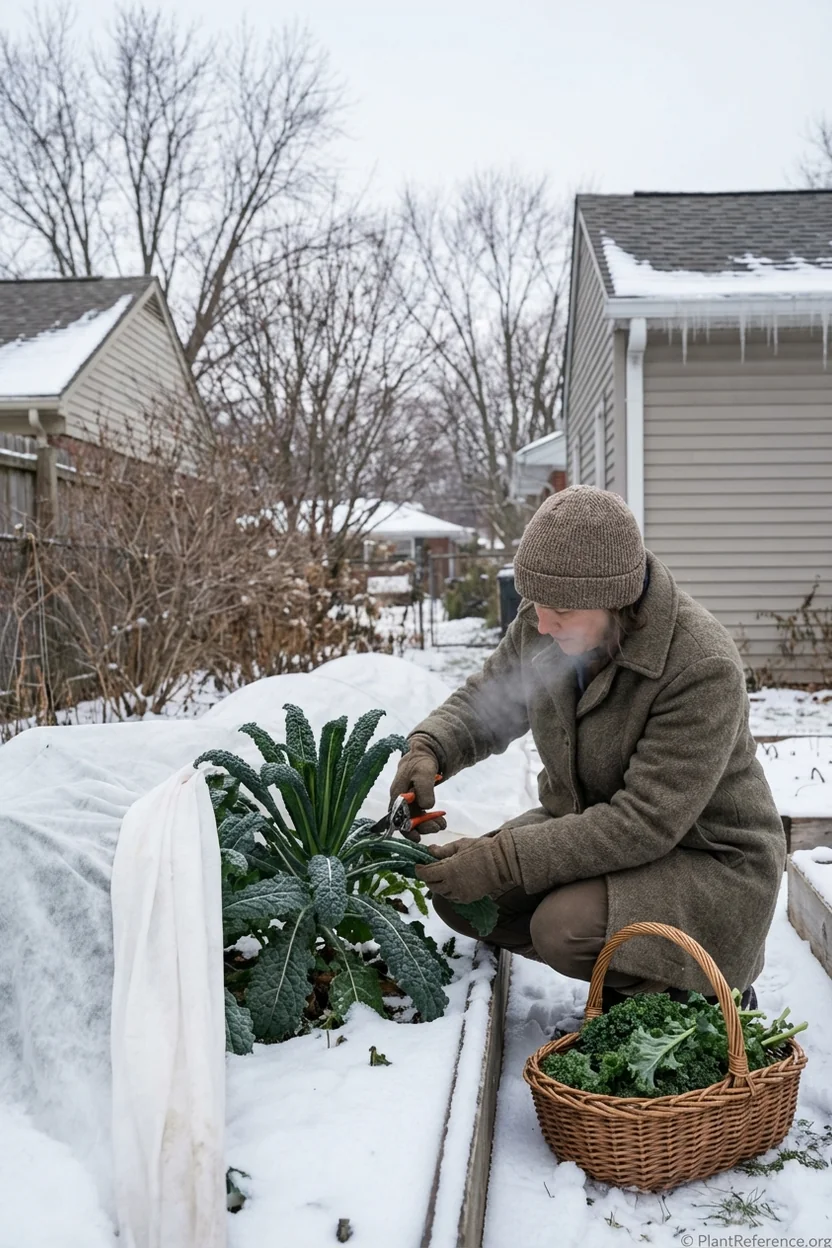
Winter care: 🌿Brassica oleracea 'Winterbor' and 🌿Brassica oleracea 'Redbor' can survive Indianapolis winters under row covers or cold frames. Mulch heavily around plants and provide wind protection.
Troubleshooting Indianapolis-Specific Problems
Weather-Related Issues
| Problem | Symptoms | Likely Cause | Quick Fix | |---------|----------|--------------|-----------| | Spring plantings bolt prematurely in May | Flower buds appear, leaves become tough | Indianapolis's rapid spring warming triggers flowering | Choose bolt-resistant varieties like 🌿Brassica oleracea 'Red Russian', focus on fall plantings | | Summer heat stress on fall seedlings | Wilting despite moist soil, poor growth | July-August heat waves stress newly planted seedlings | Plant in partial shade, use shade cloth (30-50%), ensure consistent moisture | | Winter survival challenges | Plant death during coldest periods | Indianapolis Zone 5b winters test cold tolerance limits | Use 🌿Brassica oleracea 'Winterbor', provide wind protection, mulch heavily, use row covers |
Pest Management
Indianapolis's humid climate creates ideal conditions for several kale pests:
Cabbage worms: Green caterpillars that chew large holes in leaves
-
Peak season: May-June and August-September
-
Identification: Green caterpillars up to 1 inch long with yellow stripes
-
Control: Hand removal, Bt spray (Bacillus thuringiensis), row covers
Aphids: Cluster on undersides of leaves, cause curling
-
Peak season: April-May on spring crops
-
Identification: Small green or gray insects in colonies
-
Control: Strong water spray, insecticidal soap, encourage beneficial insects
Flea beetles: Create small holes giving "shot hole" appearance
-
Peak season: Early spring on young plants
-
Identification: Tiny black beetles that jump when disturbed
-
Control: Row covers, diatomaceous earth, delay planting until after peak season
Disease Issues
Indianapolis's humidity can promote fungal diseases:
Black rot: V-shaped yellow lesions pointing toward leaf center
-
Prevention: Avoid overhead watering, ensure good air circulation, rotate crops
-
Control: Remove affected plants, improve drainage
Clubroot: Plants wilt during day, recover at night, roots become swollen
-
Prevention: Test soil pH and raise to 7.0-7.5 if needed, improve drainage
-
Control: No cure—prevention is essential
Harvest & Storage
Indianapolis's climate provides two distinct kale harvest seasons, each with different characteristics and uses.
Fall Harvest (Primary Season)
First harvest: Begin harvesting outer leaves when plants reach 8-10 inches tall, typically 6-8 weeks after planting (early to mid-September).
Peak harvest: After first frost (around October 9) when leaves become notably sweeter. This is when Indianapolis kale reaches its flavor peak.
Extended harvest: Continue harvesting through November and into December with row cover protection. Some varieties can provide harvest until January in mild winters.
Harvesting technique: Cut outer leaves 2 inches from the base, leaving the center growing point intact. Never harvest more than one-third of the plant at once.
Spring Harvest
Harvest window: Mid-May through June before summer heat causes bolting and bitterness.
Quality notes: Spring kale lacks the sweetness of fall crops but provides excellent early season greens.
Storage Methods
Fresh storage: Store unwashed kale in perforated plastic bags in refrigerator for up to one week. Indianapolis-grown fall kale stores longer due to higher sugar content.
Freezing: Blanch leaves for 2 minutes, shock in ice water, drain thoroughly, and freeze in portions. Frozen kale works excellently in soups and smoothies.
Dehydration: Make kale chips using a dehydrator or low oven. Indianapolis's fall kale makes the sweetest chips.
Root cellar storage: In Indianapolis, an unheated garage or basement can store harvested kale for several weeks when temperatures stay between 32-40°F.
Frequently Asked Questions
Reading about plants and recognising them are different skills. These three build the second.
- Daily PlantIdentify the day’s mystery plant from a close-up photograph.
- Keyed OutWork a dichotomous key, lead by lead, to name a hidden specimen.
- Name That PlantName a specimen from botanical clues dealt hardest first.
Free to play, no account needed
Priya is a soil scientist at an agricultural extension office who gardens on a quarter-acre suburban lot in Indianapolis. Her professional work focuses on soil health and nutrient management, which gives her a perspective most gardening writers don't have—she thinks about what's happening underground before worrying about what's happening above it. Priya maintains a large pollinator garden, grows herbs and vegetables, and is slowly converting her conventional lawn to a mix of native grasses and low-growing groundcovers. She writes about soil health, composting, fertilizer use, and building the kind of foundation that makes plants thrive without constant intervention.