1 / 6
Vegetables
Brassica oleracea 'Vates'
Vates Kale
BrassicaceaeMediterranean
At a Glance
Typeannual
Habitcompact rosette
Foliagedeciduous
Height12-16 inches
Width12-15 inches
Growing Zones
USDA Hardiness Zones
2a - 10bZone 2a
Zone 2b
Zone 3a
Zone 3b
Zone 4a
Zone 4b
Zone 5a
Zone 5b
Zone 6a
Zone 6b
Zone 7a
Zone 7b
Zone 8a
Zone 8b
Zone 9a
Zone 9b
Zone 10a
Zone 10b
These zones indicate the coldest temperatures this plant can typically survive.
Frost Tolerancehardy
Key Features
Deer Resistant
Container Friendly
Maintenancemoderate
Overview
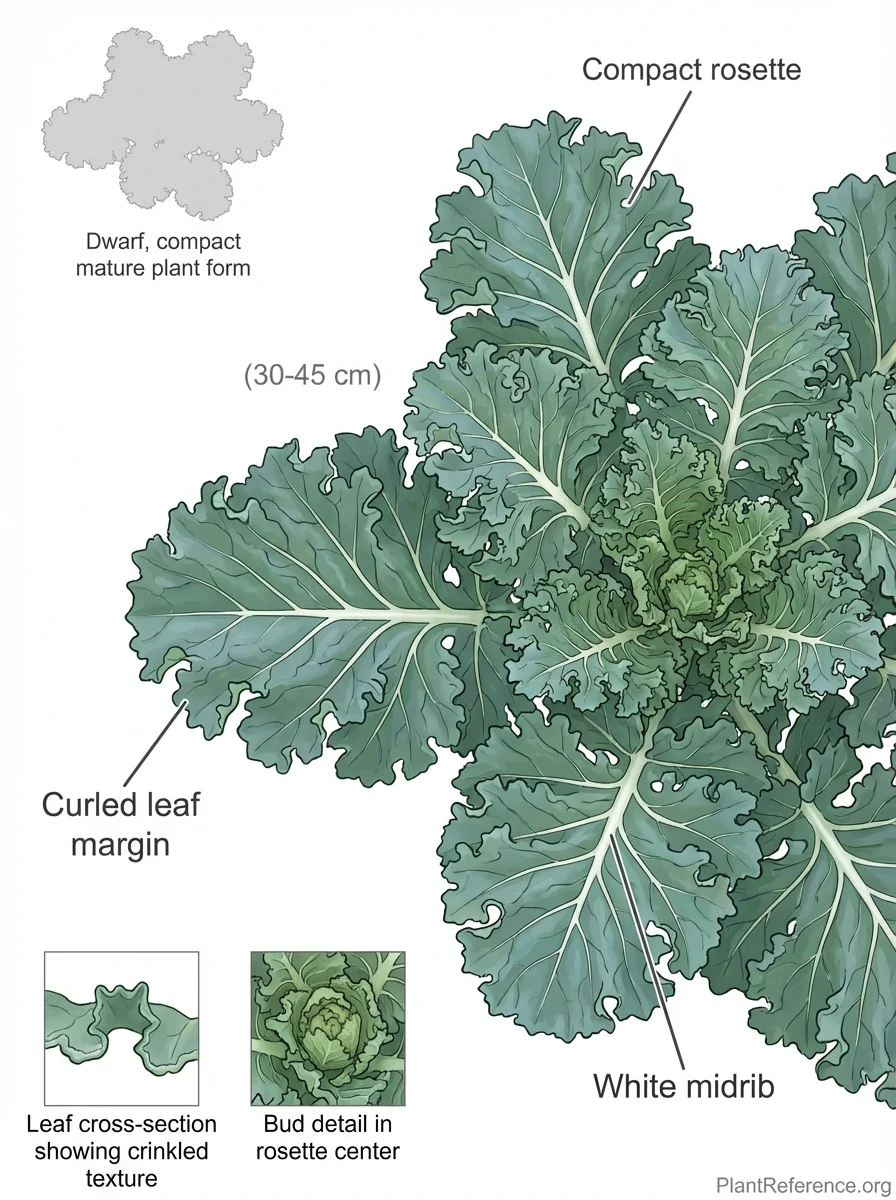
Brassica oleracea 'Vates' is a remarkably compact kale cultivar that has earned recognition for its distinctive dwarf growth habit and exceptional cold hardiness. This hardy leafy green forms tight, dense rosettes that typically remain under 16 inches in both height and spread, making it perfectly suited for small gardens, container cultivation, and intensive growing systems. The plant produces an abundance of deeply curled, blue-green leaves with thick, fleshy texture and prominent white midribs that create striking visual contrast against the heavily savoyed foliage.
The leaves of Brassica oleracea 'Vates' display a uniquely ornamental quality with their intensely ruffled margins and deeply cut edges that curl tightly, creating an almost frilly appearance. Each leaf emerges from the central crown in a symmetrical rosette pattern, with the blue-green coloration becoming more pronounced and developing purple undertones when exposed to cool autumn and winter temperatures. Unlike taller kale varieties that can become leggy or bolt prematurely in warm weather, Brassica oleracea 'Vates' maintains its compact, uniform appearance throughout the growing season while continuously producing tender, flavorful leaves that become notably sweeter and more succulent after frost exposure.
Native Range
Brassica oleracea originates from the coastal regions of the Mediterranean basin and western Europe, where wild forms can still be found growing naturally on rocky cliffs and maritime environments from Spain and Portugal through France and extending to the British Isles. The species has been cultivated for over 2,000 years, with ancient civilizations developing various forms through selective breeding. The 'Vates' cultivar specifically was developed in the United States during the mid-20th century through dedicated breeding programs aimed at creating a more compact, cold-hardy variety suitable for modern small-space gardening and commercial production.Suggested Uses
Brassica oleracea 'Vates' excels in small-space vegetable gardens, raised beds, and container growing due to its compact size, high productivity, and attractive appearance. The densely ruffled foliage makes it suitable for ornamental edible landscapes, functioning beautifully as a border plant in mixed gardens or as a colorful accent in flower beds. This cultivar is ideal for succession planting every 2-3 weeks to ensure continuous harvests throughout the growing season, and performs exceptionally well in intensive growing systems, urban gardening applications, and hydroponic setups. The tender, nutrient-dense leaves are perfect for fresh salads, green smoothies, hearty soups, stir-fries, and traditional cooked preparations, while the compact plants are excellent for extending the growing season in cold frames, hoop houses, or unheated greenhouses during winter months.How to Identify
Appearance
Size & Dimensions
Height1' - 1'4"
Width/Spread1' - 1'3"
Colors
Flower Colors
yellow
Foliage Colors
blue
green
purple
Fall Foliage Colors
purple
Bloom Information
Bloom Period
J
F
M
A
M
J
J
A
S
O
N
D
SpringSummer
Detailed Descriptions
Flower Description
Bright yellowFoliage Description
Blue-green with prominent white midribs, developing purple undertones in cool weatherGrowing Conditions
Sun Requirements
Full Sun
Partial Shade
• Full Sun: 6+ hours of direct sunlight
• Partial Shade: 3-6 hours of direct sunlight
• Full Shade: Less than 3 hours of direct sunlight
Soil Requirements
pH Range6.0 - 7.0(Neutral)
357912
Soil Types
loam
Drainage
well drained
Water & Climate
Water Needs
moderate, requiring consistent moisture
Frost Tolerance
hardy
Time to Maturity
55-65 days
Care & Maintenance
Care Guide
Brassica oleracea 'Vates' thrives in fertile, well-draining soil that has been amended with plenty of organic matter and compost, requiring consistent moisture throughout the growing season to produce the most tender and flavorful leaves. Water regularly to maintain even soil moisture, as drought stress can cause leaves to become bitter and develop a tough, unpalatable texture. Apply a balanced fertilizer every 3-4 weeks or side-dress with compost monthly to support continuous leaf production and maintain vigorous growth. This exceptionally cold-hardy cultivar performs optimally in cool temperatures between 60-70°F and can withstand freezing temperatures down to 20°F, making it excellent for fall and winter harvests when most other vegetables fail. In hot summer climates, provide afternoon shade and increase watering frequency to prevent premature bolting, and maintain a 2-3 inch layer of organic mulch around plants to retain soil moisture, regulate soil temperature, and suppress weeds.Pruning
Brassica oleracea 'Vates' benefits from regular harvesting using the cut-and-come-again method rather than traditional pruning techniques. Begin harvesting outer leaves when they reach 4-6 inches in length, cutting them cleanly at the base with sharp scissors or a knife while carefully preserving the central growing point to ensure continued production. This harvesting approach encourages the development of new tender leaves throughout the growing season and can extend productivity for several months. Remove any yellowing, damaged, or pest-affected leaves promptly to maintain plant health, improve air circulation, and prevent disease issues. If flower stalks begin to emerge, pinch them off immediately to keep leaves tender and prevent the plant from going to seed, though in cold climates you may choose to allow some plants to overwinter and flower for seed collection the following spring.Maintenance Level
moderateContainer Growing
✓ Suitable for container growing
Minimum container size: 3 gallons
⚠️ Toxicity Warning
Brassica oleracea 'Vates' is completely safe and highly nutritious for human consumption, being rich in vitamins A, C, and K, along with essential minerals like calcium, iron, and powerful antioxidants including beta-carotene and lutein. Like other brassica vegetables, it contains natural compounds called goitrogens that may interfere with thyroid function if consumed in extremely large quantities, particularly when raw, but normal culinary use poses no health risks for most people. The plant is generally safe around pets, though large quantities may cause mild digestive upset in dogs and cats due to the high fiber content. All parts of the plant are edible when properly prepared, with no toxic compounds present, making it an excellent choice for households with children and pets.Planting Guide
Planting Methods & Timing
Planting Method
direct sow
Indoor Start
4 weeks before last frost
Direct Sow Timing
early spring through late summer
Days to Maturity
55–65 days
Plant Spacing
12 inches
Companion Planting
Good Companions
carrots
onions
beets
radishes
herbs
lettuce
Avoid Planting With
tomatoes
peppers
strawberries
pole beans