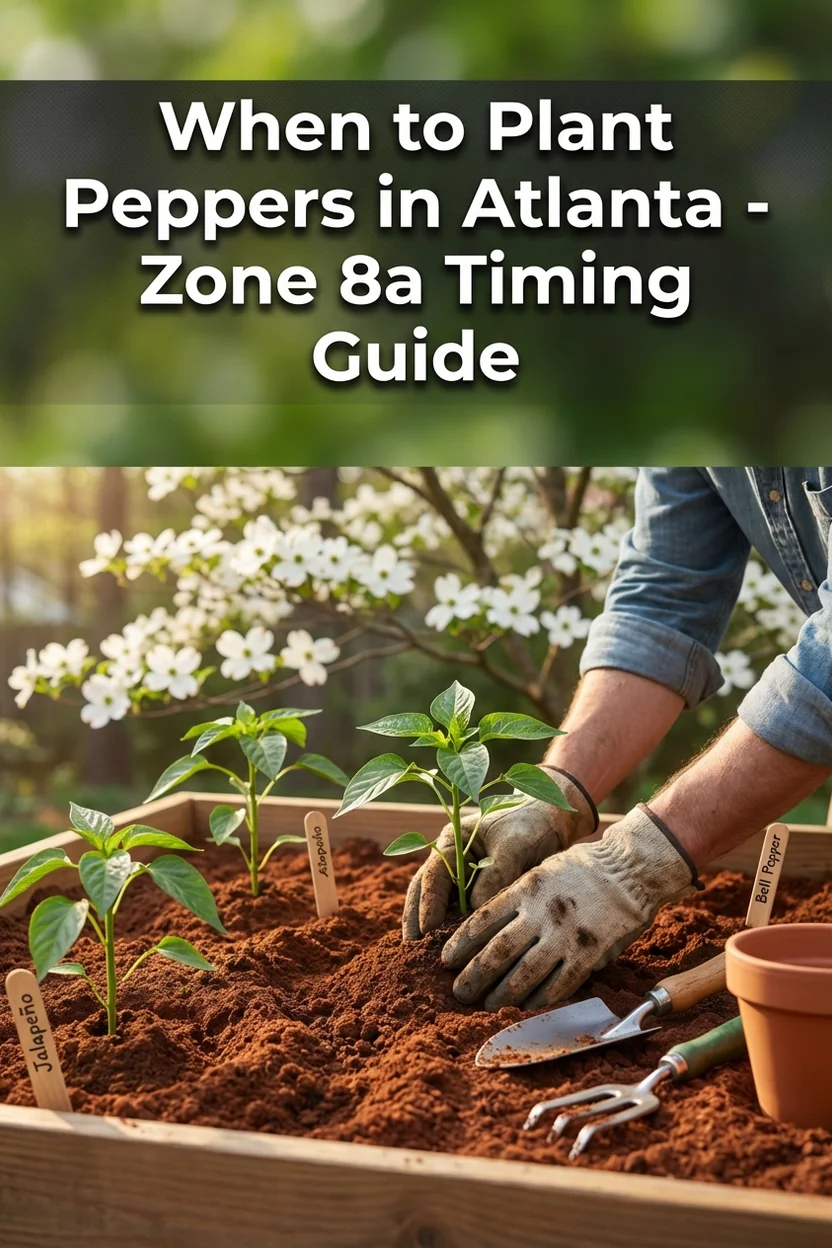
When to Plant Peppers in Atlanta: Complete Guide + Best Varieties for Zone 8a
Pets & Toxicity
Recorded toxicity for plants linked in this guide. An unknown status is not a safety assessment.
No linked plant is recorded as toxic (2 linked plants checked)DetailsHide
Capsicum annuum 'California Wonder' — Toxicity
Non-toxicView Capsicum annuum 'California Wonder' plant profile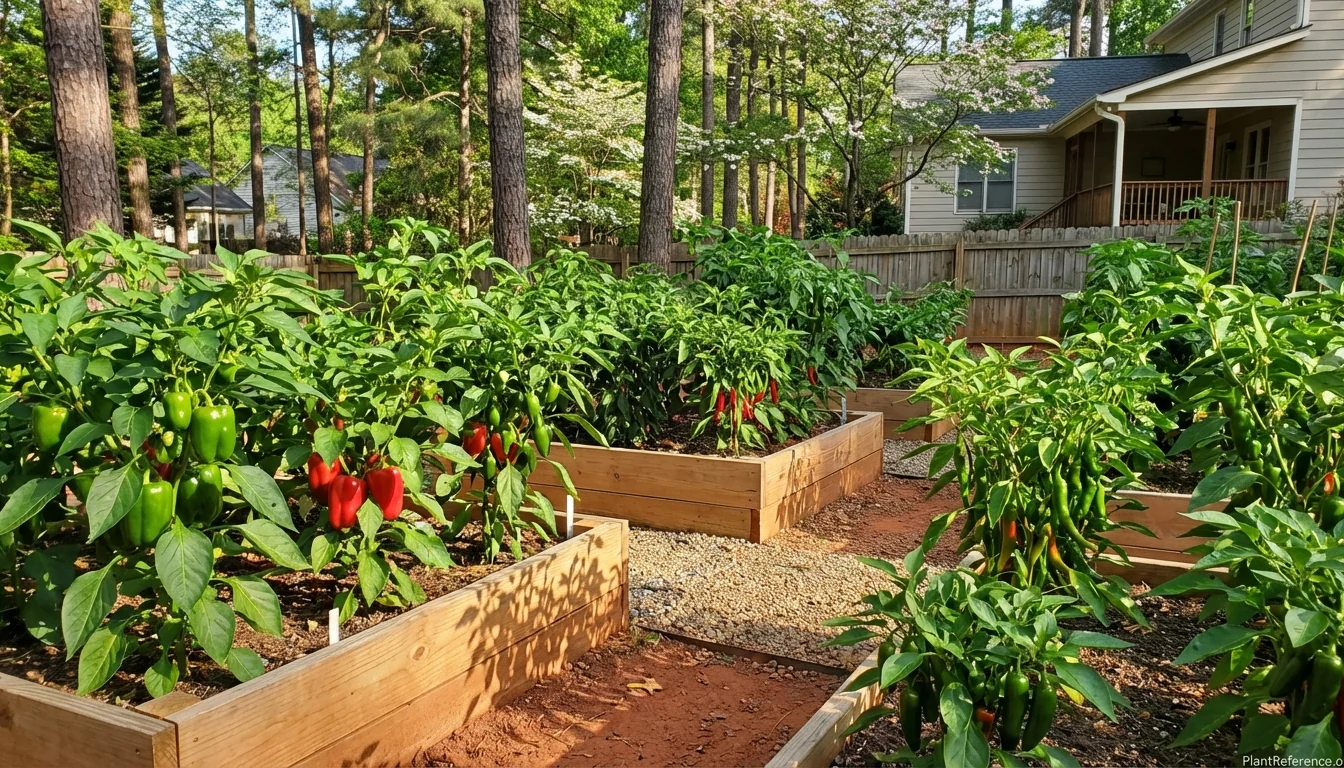
— Image © Plant Reference 2026
Atlanta gardeners have hit the jackpot when it comes to growing peppers. With Zone 8a's generous 230-day frost-free window and warm, humid summers, you can successfully grow everything from sweet bell peppers to fiery habaneros. I've been gardening in Georgia for over thirty years, and peppers are one of my most reliable crops.
Best Pepper Varieties for Atlanta's Zone 8a Climate
Atlanta's long growing season and warm summers make it ideal for pepper cultivation. However, the high humidity requires selecting varieties with good disease resistance. Here are the varieties I've found most successful in Georgia gardens:
Variety | Days to Maturity | Best For | Notes for Atlanta |
|---|---|---|---|
70-80 days | Fresh eating, stuffing | Excellent disease resistance for humid conditions | |
60-70 days | Grilling, appetizers | Early harvest beats summer disease pressure | |
65-75 days | Pickling, fresh use | Reliable producer in Georgia heat | |
70-80 days | Salsa, canning | Thick walls resist cracking in humidity | |
Capsicum annuum 'Poblano' | 65-80 days | Roasting, chiles rellenos | Thrives in Atlanta's heat and humidity |
Capsicum annuum 'Cayenne Long Red' | 70-85 days | Drying, hot sauce | Thin walls dry well in humid climate |
Capsicum annuum 'Anaheim' | 70-80 days | Roasting, mild salsas | Good choice for hot, humid summers |
Capsicum chinense 'Habanero Orange' | 90-120 days | Hot sauces, extreme heat | Long season variety perfect for Zone 8a |
The key to success in Atlanta is choosing varieties that can handle our humid summers without developing fungal diseases. 🌿Capsicum annuum 'California Wonder' has been my go-to bell pepper for decades because it rarely develops bacterial leaf spot, which is common here.
For hot pepper lovers, Atlanta's extended growing season is perfect for Capsicum chinense 'Habanero Orange'. These superhot peppers need 90-120 days to reach maturity, and our frost-free period from March 24 to November 9 gives them plenty of time to ripen fully.
Heat-Tolerant Varieties for Georgia Summers
Atlanta's summer temperatures regularly reach 85-90°F, which can stress pepper plants. I've found these varieties handle our heat exceptionally well:
🌿Capsicum annuum 'Sweet Banana' produces consistently even when temperatures soar above 90°F
Capsicum annuum 'Cayenne Long Red' actually increases heat production during hot spells
🌿Capsicum annuum 'Jalapeño' maintains steady fruit set throughout summer heat waves
Capsicum chinense 'Habanero Orange' thrives in temperatures that stress other varieties
Specific Planting Dates for Atlanta Gardeners
Getting your timing right is crucial for pepper success in Atlanta. Here's my proven schedule based on thirty years of Georgia gardening:
Indoor Seed Starting Timeline
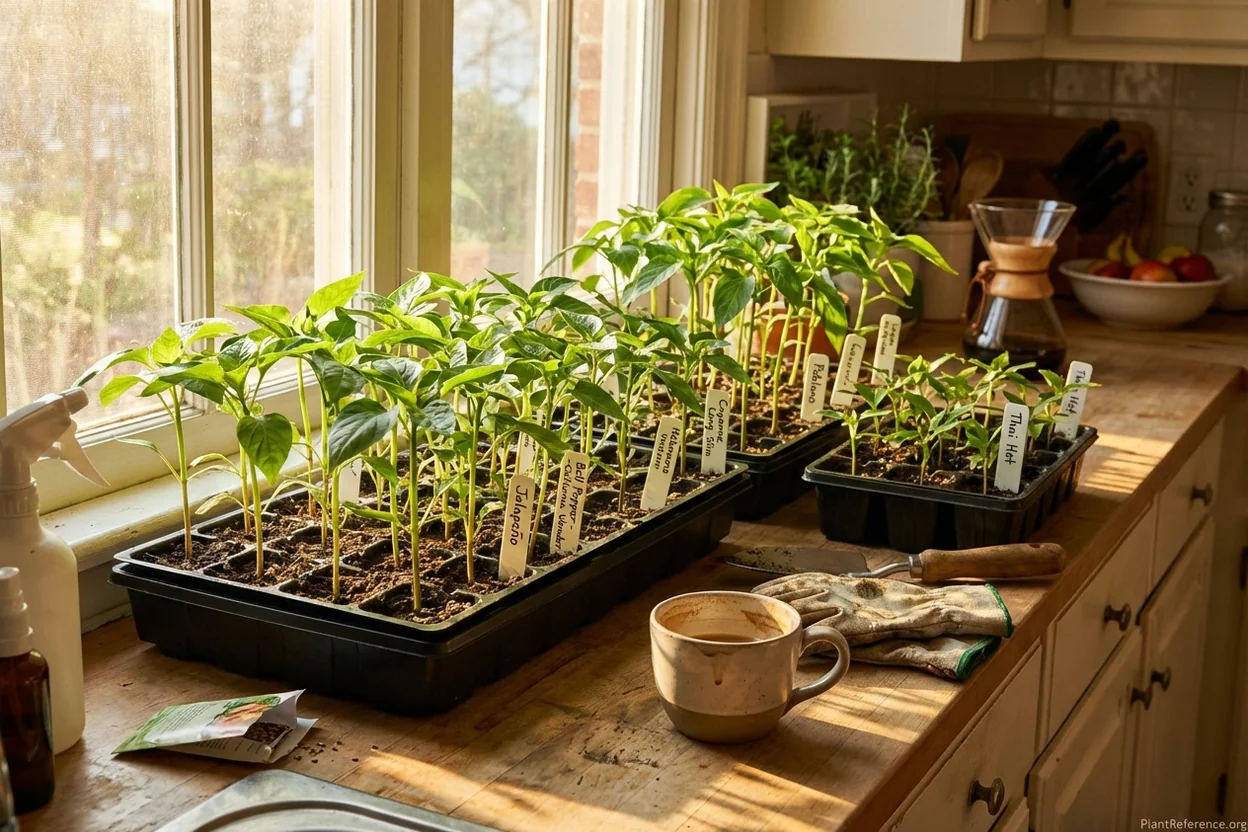
February 15-March 1: Start seeds indoors 6-8 weeks before transplanting. This timing ensures your seedlings are ready when soil conditions are perfect.
I start my pepper seeds on President's Day weekend (around February 15) every year. Use a heat mat to maintain soil temperature at 75-80°F for quick germination. Pepper seeds are slow to sprout without warmth—I've waited three weeks for cold seeds to germinate.
March 15-April 1: Begin hardening off process. Move seedlings outdoors for a few hours daily when temperatures are above 60°F.
Transplanting Schedule
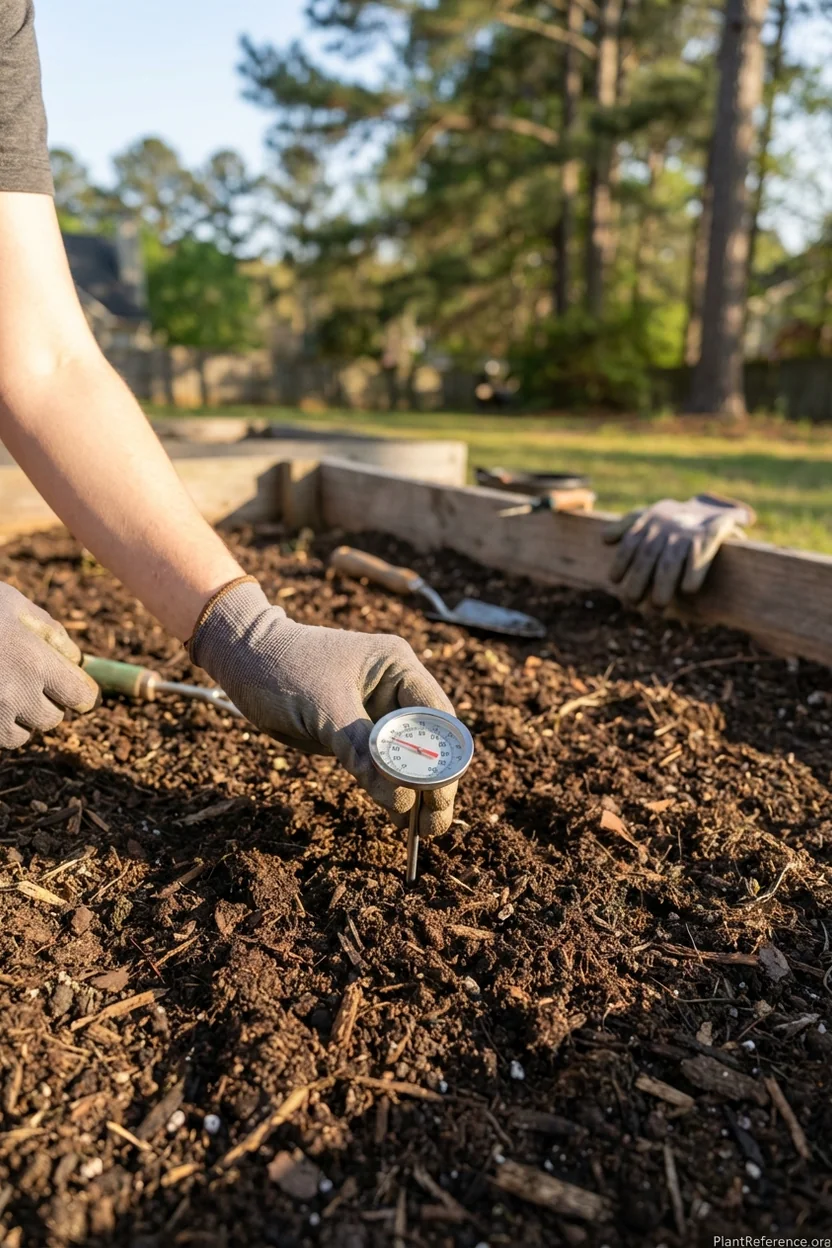
April 15-May 1: Transplant into garden when soil temperature reaches 60°F consistently. This is typically 2-3 weeks after Atlanta's last frost date of March 24.
Don't rush this step. I've seen too many gardeners plant too early and watch their peppers sit there doing nothing for weeks. Cold soil below 60°F causes pepper plants to "sulk"—they'll stop growing and may never recover their vigor.
Soil Temperature Check: Use a soil thermometer to verify 60°F at 4-inch depth for three consecutive days before transplanting.
Critical Dates Summary
February 15: Start hot pepper varieties (Capsicum chinense 'Habanero Orange') indoors
March 1: Start sweet and medium-hot varieties indoors
March 24: Atlanta's average last frost date
April 15: Earliest safe transplant date when soil warms to 60°F
May 1: Latest recommended transplant date for full season growth
July 1: Begin harvesting early varieties like 🌿Capsicum annuum 'Shishito'
November 9: First frost ends outdoor growing season
Complete Growing Guide for Atlanta's Climate
Atlanta's hot, humid climate presents both opportunities and challenges for pepper growers. Here's how to maximize your success:
Soil Preparation
Georgia's red clay soil needs significant improvement for pepper success. I add 3-4 inches of compost and coarse sand to create raised beds 8-10 inches high. This improves drainage—critical in our humid climate where waterlogged roots lead to disease.
pH Requirements: Peppers prefer slightly acidic soil (6.0-6.8 pH). Georgia soil tends to be naturally acidic, so test before adding amendments. Most Atlanta gardens need lime added in fall.
Planting Spacing and Layout
In Atlanta's humid climate, proper spacing prevents disease:
Space plants 18-24 inches apart for maximum air circulation
Create rows 3 feet apart to allow easy access and air movement
Plant in raised beds or mounded rows to improve drainage
Orient rows north-south for even sun exposure
Watering Strategy for Humid Climate
Atlanta receives about 50 inches of annual rainfall, but summer distribution is uneven. Here's my watering approach:
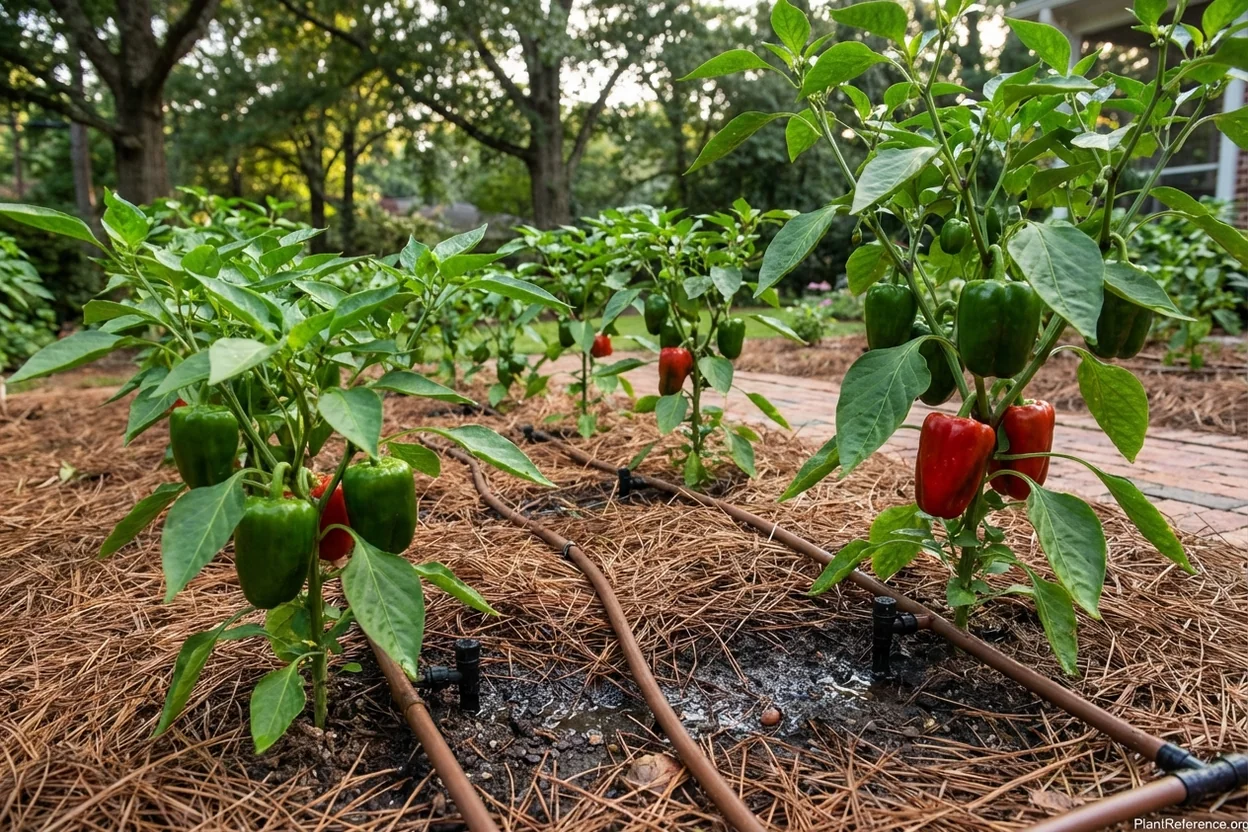
Drip Irrigation: Essential for keeping foliage dry. Overhead watering in humid conditions invites bacterial leaf spot and other diseases.
Mulching: Apply 3-4 inches of organic mulch around plants but keep it 2 inches from stems. I use pine straw or shredded hardwood—both readily available in Atlanta.
Deep, Infrequent Watering: Water thoroughly once or twice weekly rather than daily light watering. This encourages deep root development.
Managing Atlanta's Summer Heat
When temperatures exceed 90°F for consecutive days, peppers need protection:
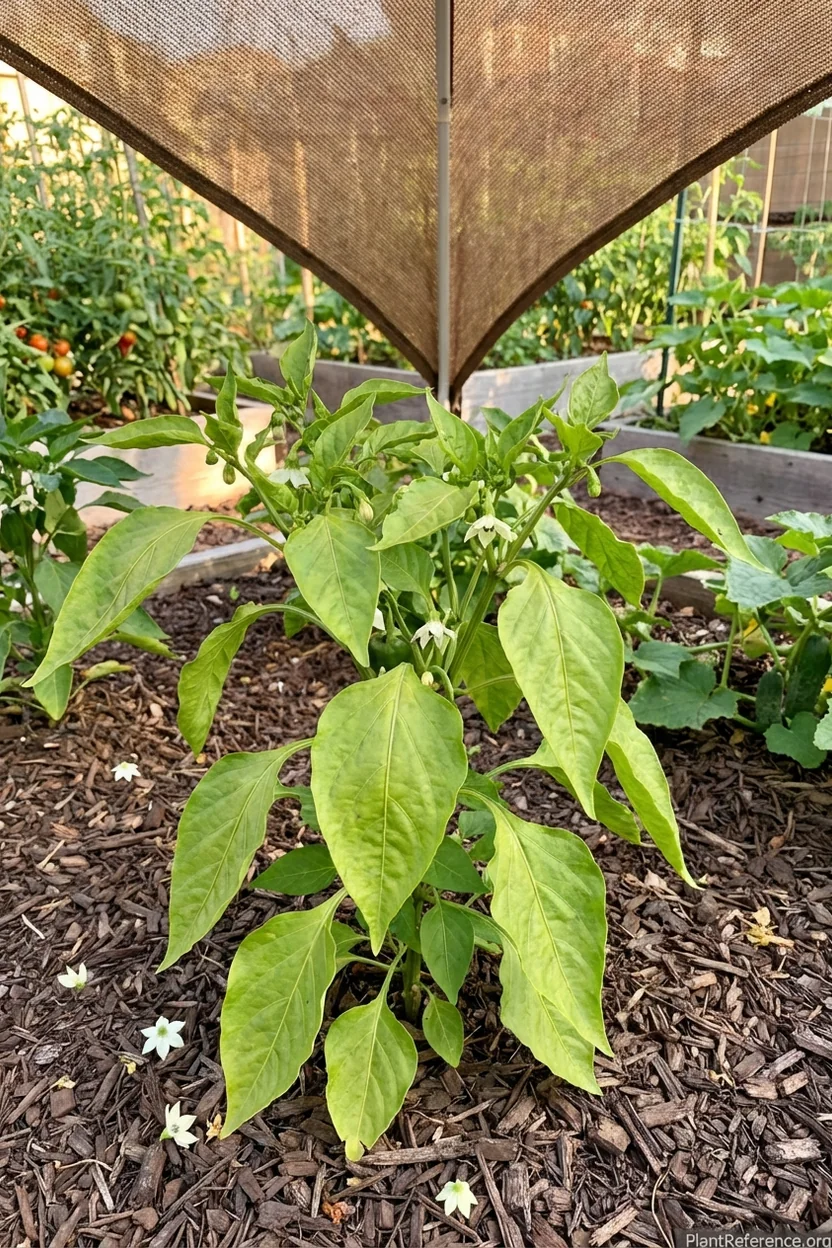
Shade Cloth: Install 30% shade cloth during heat waves (typically July-August). Remove it when temperatures moderate.
Adequate Moisture: Never let peppers become water-stressed during hot periods. Stress during flowering causes blossom drop.
Morning Harvest: Pick peppers in early morning when they're fully hydrated and firm.
Fertilization Schedule
Atlanta's long growing season requires sustained nutrition:
At Planting: Work compost and balanced organic fertilizer (10-10-10) into planting area
6 Weeks After Transplant: Side-dress with compost or balanced fertilizer when first flowers appear
Mid-July: Apply phosphorus-rich fertilizer to support fruit development
Late August: Final feeding for fall pepper production
Support Systems
Many pepper varieties need support in Atlanta's summer thunderstorms:
Caging: Use sturdy tomato cages for bell peppers and poblanos. These heavy-fruited varieties will break without support.
Staking: Tie tall varieties like Capsicum annuum 'Anaheim' to 5-foot stakes using soft ties.
Troubleshooting Atlanta-Specific Growing Problems
Growing peppers in Georgia's climate comes with unique challenges. Here are the issues I encounter most often and my solutions:
High Humidity Diseases
Bacterial Leaf Spot: Shows as dark spots with yellow halos on leaves. This is Atlanta's biggest pepper problem.
Prevention: Plant in well-spaced rows, use drip irrigation, and choose resistant varieties like 🌿Capsicum annuum 'California Wonder'.
Treatment: Remove affected leaves immediately. Apply copper-based fungicide in early morning when humidity is lowest.
Southern Blight: White fungal growth at soil line, causing plant collapse.
Prevention: Avoid planting where tomatoes or peppers grew the previous year. Maintain good drainage and air circulation.
Treatment: Remove affected plants immediately and dispose in trash, not compost.
Heat Stress Symptoms
Blossom Drop: Flowers fall off without setting fruit during heat waves above 90°F.
Solution: Provide afternoon shade and maintain consistent moisture. Plants typically resume fruit set when temperatures moderate.
Sunscald: White or yellow patches on fruits exposed to intense sun.
Prevention: Maintain adequate foliage cover. Don't over-prune plants during summer months.
Pest Management
Aphids: Common in Atlanta's warm climate, especially on new growth.
Control: Spray off with water in early morning. Beneficial insects like ladybugs provide excellent control if you avoid broad-spectrum pesticides.
Tomato Hornworms: Large green caterpillars that can defoliate plants quickly.
Control: Hand-pick when found. Look for dark droppings on leaves as early warning signs.
Pepper Weevils: Small beetles that damage developing fruits.
Prevention: Remove all fallen fruits promptly. Clean up garden debris where adults overwinter.
Nutritional Problems
Blossom End Rot: Dark, sunken spots on fruit bottoms caused by calcium deficiency.
Causes: Usually irregular watering, not lack of calcium in soil.
Prevention: Maintain consistent soil moisture with mulch and regular watering.
Slow Growth: Stunted plants with purple leaf tinge indicate phosphorus deficiency.
Treatment: Apply bone meal or rock phosphate around plants. Ensure soil isn't waterlogged, which prevents nutrient uptake.
Harvest and Storage Tips for Georgia Peppers
Atlanta's extended growing season allows for multiple harvests from summer through fall. Here's how to maximize your pepper bounty:
When to Harvest
Sweet Peppers: Harvest when fruits reach full size but are still firm. 🌿Capsicum annuum 'California Wonder' can be picked green or allowed to ripen to red for sweeter flavor.
Hot Peppers: Most varieties are hottest when fully ripe. 🌿Capsicum annuum 'Jalapeño' develops characteristic "corking" (brown striations) when mature.
Continuous Harvest: Pick peppers regularly to encourage continued production. Plants that hold mature fruit stop flowering.
Storage Methods
Fresh Storage: Keep peppers in refrigerator crisper drawer for 1-2 weeks. Don't wash until ready to use.
Freezing: Wash, core, and freeze whole for cooking use. Frozen peppers become soft but retain flavor.
Drying: Capsicum annuum 'Cayenne Long Red' dries beautifully on strings hung in airy location. Atlanta's humidity makes oven-drying more reliable than air-drying for thick-walled varieties.
Pickling: Sweet and hot peppers pickle excellently. Use within one year for best quality.
End-of-Season Tips
Before Atlanta's first frost (typically November 9), harvest all remaining peppers regardless of maturity. Green peppers will keep longer in storage than fully ripe ones.
Consider bringing potted pepper plants indoors for winter. Capsicum chinense 'Habanero Orange' plants can survive indoors and resume production the following season.
Frequently Asked Questions
Three daily games
Can you name a plant on sight?
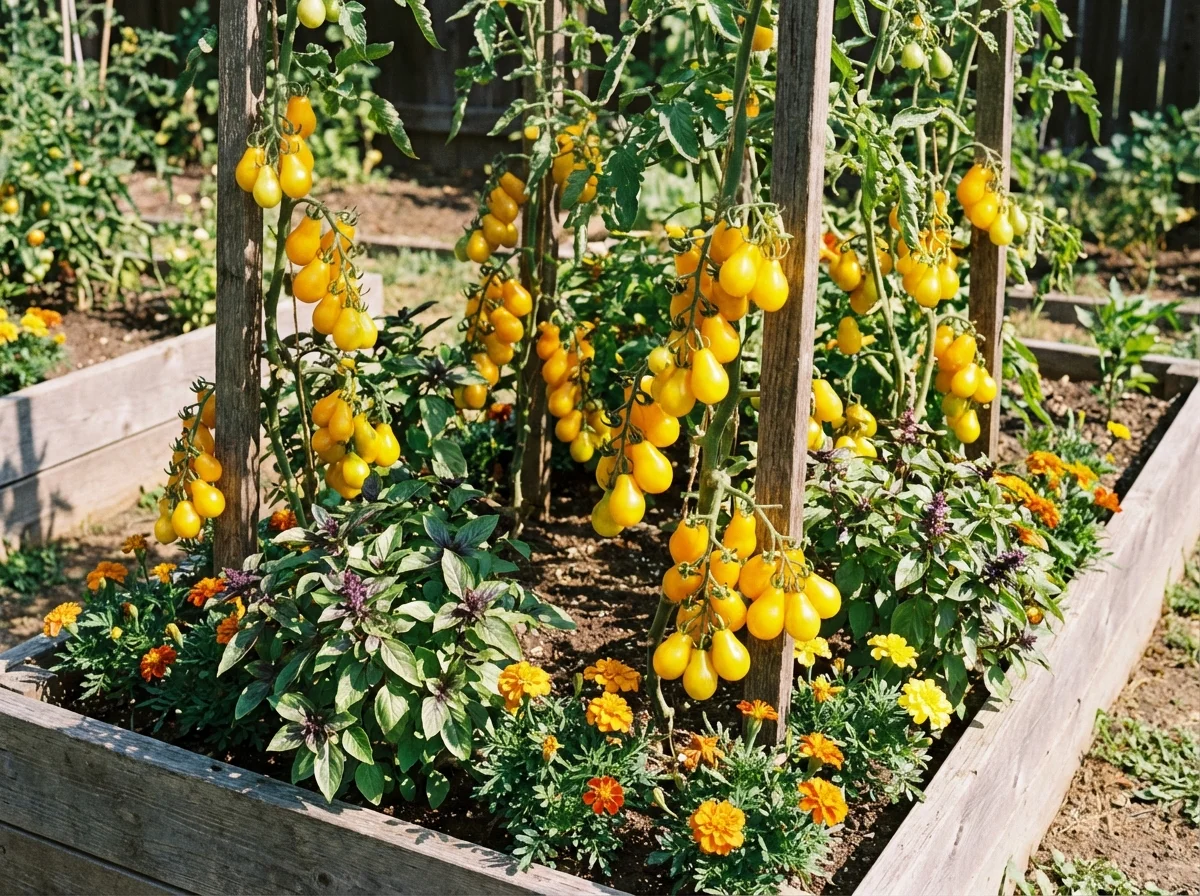
Saturday’s specimenSolanum lycopersicum 'Yellow Pear'Reading about plants and recognising them are different skills. These three build the second.
- Daily PlantIdentify the day’s mystery plant from a close-up photograph.
- Keyed OutWork a dichotomous key, lead by lead, to name a hidden specimen.
- Name That PlantName a specimen from botanical clues dealt hardest first.
Free to play, no account needed
Grace is a community garden organizer in Atlanta who manages three neighborhood garden plots across the city. She came to gardening through food justice work—she saw how many Atlanta neighborhoods lacked access to fresh produce and decided to do something about it. Grace has a background in public health and brings that lens to everything she writes about food growing, soil safety in urban settings, and making gardens work for the communities they serve. She grows a wide range of vegetables, with a focus on crops that produce heavily in Atlanta's long growing season. Grace is practical and community-minded—she thinks about gardens as shared spaces, not just personal projects.