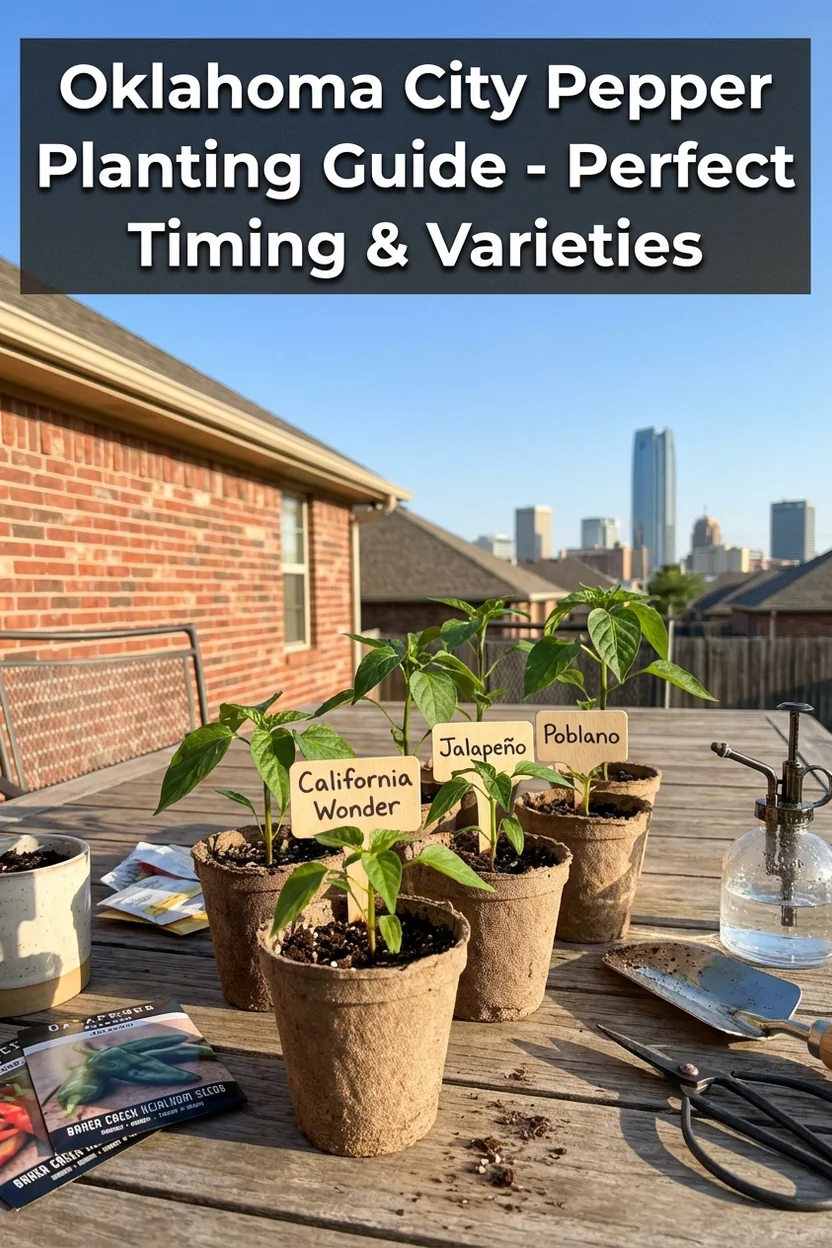
When to Plant Peppers in Oklahoma City: Complete Guide + Best Varieties for Zone 7a
Pets & Toxicity
Recorded toxicity for plants linked in this guide. An unknown status is not a safety assessment.
Toxic to pets: Poblano pepperDetailsHide
Capsicum annuum 'California Wonder' — Toxicity
Non-toxicView Capsicum annuum 'California Wonder' plant profileCapsicum chinense 'Habanero' — Toxicity: Not assessed
Fruit contains capsaicin at 100,000–350,000 Scoville Heat Units — strong enough to cause severe burning on skin, eyes, and mucous membranes through simple contact with cut fruit or the hand that held it. Nitrile gloves are used during handling and food preparation; face and eye contact is avoided. The fruit is irritating rather than toxic in the usual sense, but the heat level can cause significant discomfort and real injury if mishandled. The plant is kept out of reach of children and pets.View Capsicum chinense 'Habanero' plant profileCapsicum annuum 'Jalapeño' — Toxicity: Not assessed
Capsaicin in fruit causes burning sensations in mouth and on skin. Fruit and handling oils are irritating to eyes and mucous membranes but are not toxic in the usual sense. Gloves are used during harvesting and processing; hands are washed thoroughly before touching face. Small amounts are generally safe for pets but can cause digestive upset.View Capsicum annuum 'Jalapeño' plant profileCapsicum annuum 'Poblano' — Toxicity Warning
Toxic to petsView Capsicum annuum 'Poblano' plant profile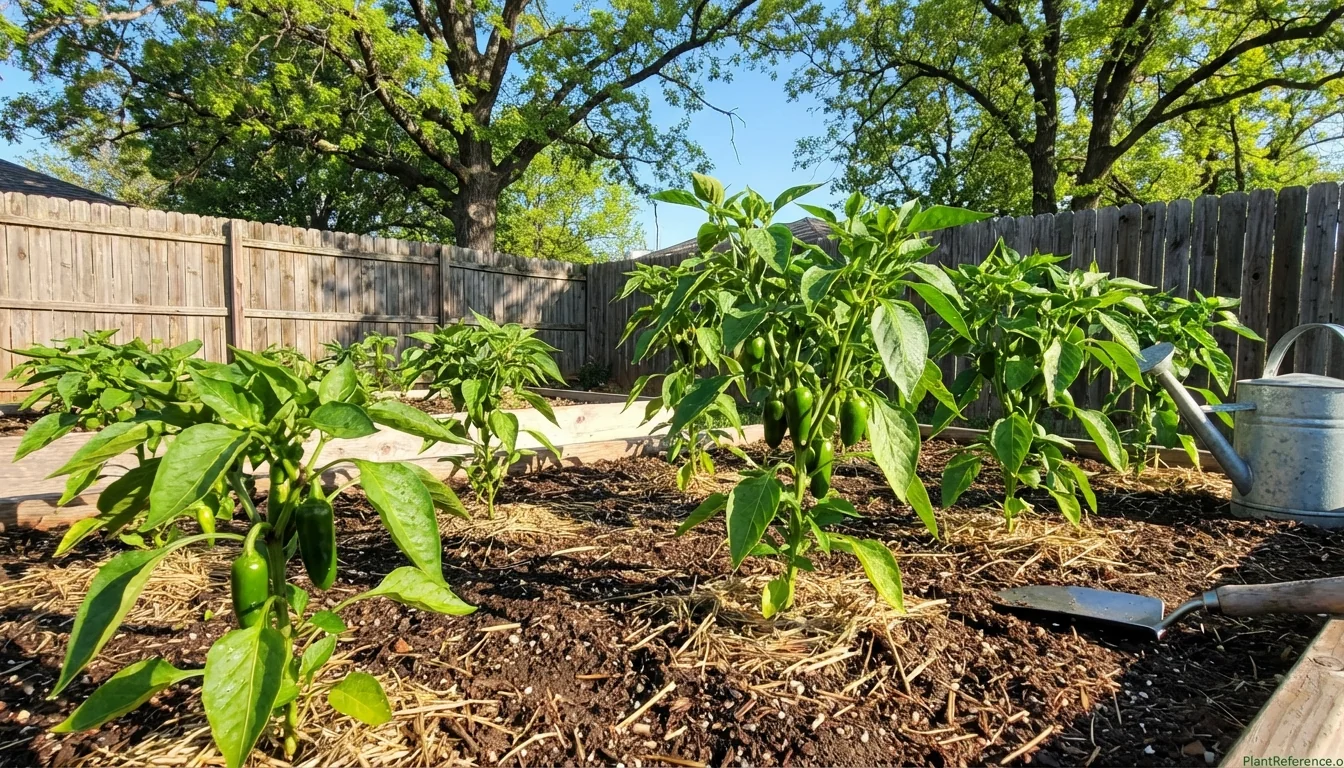
— Image © Plant Reference 2026
Oklahoma City gardeners enjoy one of the best climates in the country for growing peppers. With 218 frost-free days and abundant sunshine, our Zone 7a conditions support everything from sweet bells to fiery habaneros. The key to success lies in timing your planting correctly and choosing varieties suited to Oklahoma's unique climate challenges.
Best Pepper Varieties for Oklahoma City's Climate
Oklahoma City's continental climate with hot summers and moderate winters creates ideal conditions for pepper production. Our long growing season allows even slow-maturing varieties to reach full potential, while the intense summer heat actually improves flavor development in hot peppers.
The key is selecting varieties that can handle Oklahoma's weather extremes—sudden spring cold snaps, intense July heat exceeding 100°F, and occasional late-season droughts. After forty years of growing peppers here, I've learned which varieties thrive and which struggle.
Variety | Days to Maturity | Best For | Notes for Oklahoma City |
|---|---|---|---|
60-70 days | Quick harvest | Perfect for beating summer heat, harvest before July | |
65-75 days | Pickling/fresh | Heat tolerant, productive through summer | |
70-80 days | Fresh eating | Needs afternoon shade in July/August | |
70-80 days | Salsa/pickling | Thrives in Oklahoma heat, very reliable | |
75-85 days | Cooking/drying | Excellent for our climate, heavy producer | |
75-85 days | Roasting | Heat tolerant, perfect for southwestern cuisine | |
80-90 days | Drying/spice | Hot summers intensify heat, exceptional quality | |
90-120 days | Hot sauce | Long season variety, needs early start |
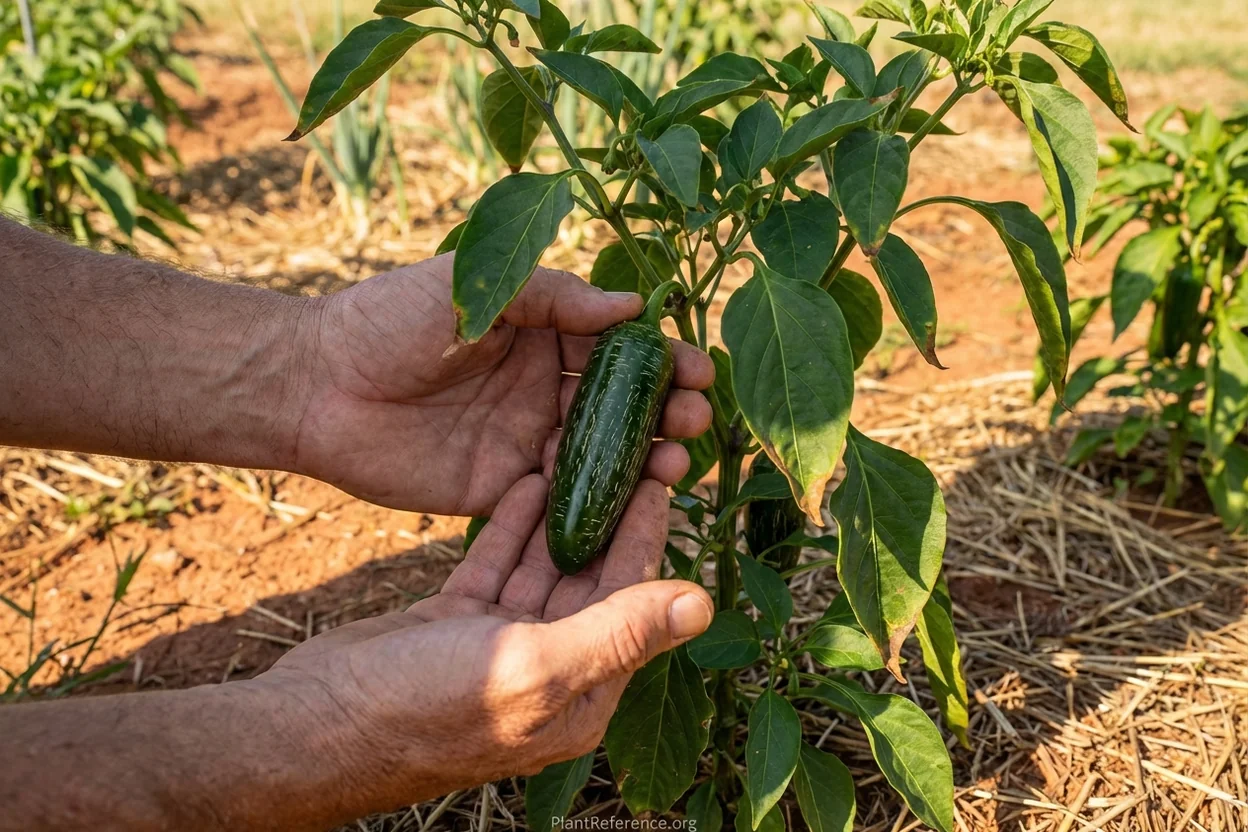
Early Season Champions (60-75 days): 🌿Capsicum annuum 'Shishito' and 🌿Capsicum annuum 'Sweet Banana' are my top picks for new Oklahoma gardeners. They mature before our intense July heat and provide early harvests when you're eager for fresh peppers. Shishito particularly excels here—the plants stay compact and productive even in our challenging summer conditions.
Heat-Loving Workhorses (70-85 days): 🌿Capsicum annuum 'Jalapeño', 🌿Capsicum annuum 'Poblano', and 🌿Capsicum annuum 'Anaheim' are perfectly suited to Oklahoma City's climate. The intense summer heat actually improves their flavor development. I've grown jalapeños that were noticeably hotter and more flavorful than the same varieties grown in cooler climates.
Long Season Specialists (85+ days): 🌿Capsicum annuum 'Cayenne' and 🌿Capsicum chinense 'Habanero' require our full growing season but reward patient gardeners with exceptional yields. The Habanero, in particular, benefits from Oklahoma's long, hot summers—something impossible to achieve in shorter northern seasons.
Specific Planting Dates for Oklahoma City
Oklahoma City's Zone 7a climate provides specific timing advantages. Our average last frost date of April 1 allows earlier planting than most of the Midwest, while our November 5 first frost gives us extended harvest time.
Seed Starting Schedule:
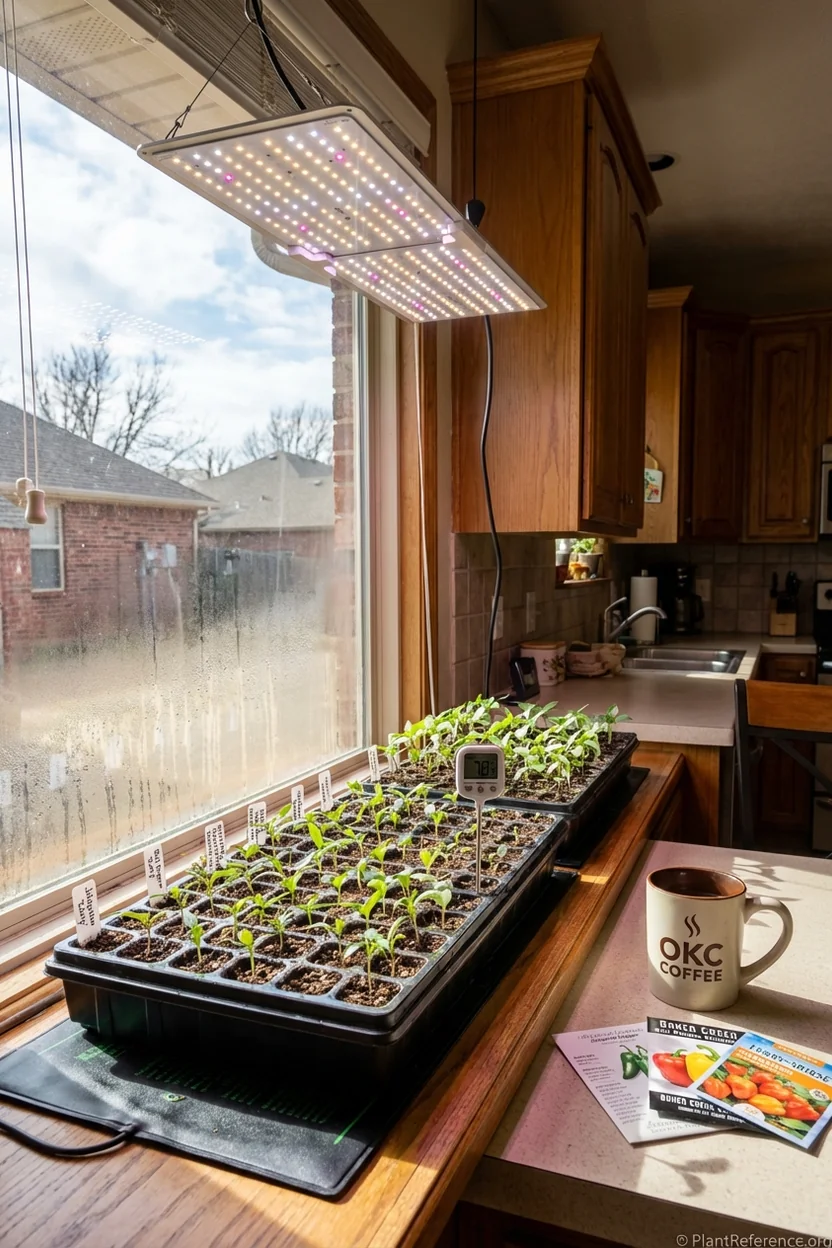
February 15-22: Start all pepper seeds indoors
March 15-22: Begin hardening off process
April 1: Average last frost date (soil still too cold for planting)
April 15-22: Transplant outdoors when soil reaches 60°F consistently
Critical Temperature Monitoring: Don't rush outdoor planting just because the air temperature warms up. Pepper roots need soil temperatures of at least 60°F to avoid transplant shock. Use a soil thermometer inserted 4 inches deep—if it reads below 60°F at 8 AM for three consecutive days, wait longer.
Oklahoma-Specific Timing Considerations:
Late winter/early spring weather in Oklahoma City can be unpredictable. I've seen 75°F days in February followed by 25°F nights—don't let warm spells tempt you to plant early. Stick to the schedule.
Succession Planting Strategy: For continuous harvest, start a second round of fast-maturing varieties like 🌿Capsicum annuum 'Shishito' in late March for transplanting in early May. This provides fresh peppers when the first planting starts declining in August heat.
Fall Planting Opportunity: Oklahoma City's long growing season allows for fall pepper planting. Start seeds in late June for August transplanting. Fall-grown peppers often have superior flavor as they mature in cooler September and October temperatures.
Complete Growing Guide for Oklahoma City
Successfully growing peppers in Oklahoma City requires understanding our unique growing conditions—intense summer heat, variable spring weather, periodic drought, and the distinctive red clay soil that defines our region.
Soil Preparation for Oklahoma Clay: Oklahoma's red clay soil presents both advantages and challenges. The high nutrient content supports vigorous growth, but poor drainage can kill pepper plants. I always amend our native clay with one-third compost by volume and add coarse sand or perlite to improve drainage.
Container Growing Alternative: If you're dealing with heavy clay or poor drainage, consider growing in 20-gallon containers. The black plastic absorbs heat, creating warmer root zones that peppers love, and you have complete control over soil quality.
Watering Strategy for Oklahoma Climate: Our hot, dry summers require consistent moisture management. Peppers need 1-2 inches of water weekly, but Oklahoma's intense evaporation means you'll need to water more frequently than gardeners in cooler climates.
Water deeply 2-3 times per week rather than daily shallow watering
Apply 3-4 inch thick mulch layer to retain soil moisture
Install drip irrigation or soaker hoses for consistent delivery
Monitor soil moisture 4 inches deep—if dry, it's time to water
Managing Oklahoma's Summer Heat: July and August temperatures routinely exceed 100°F in Oklahoma City. While peppers are heat-loving plants, extreme temperatures can stress them and reduce fruit set.
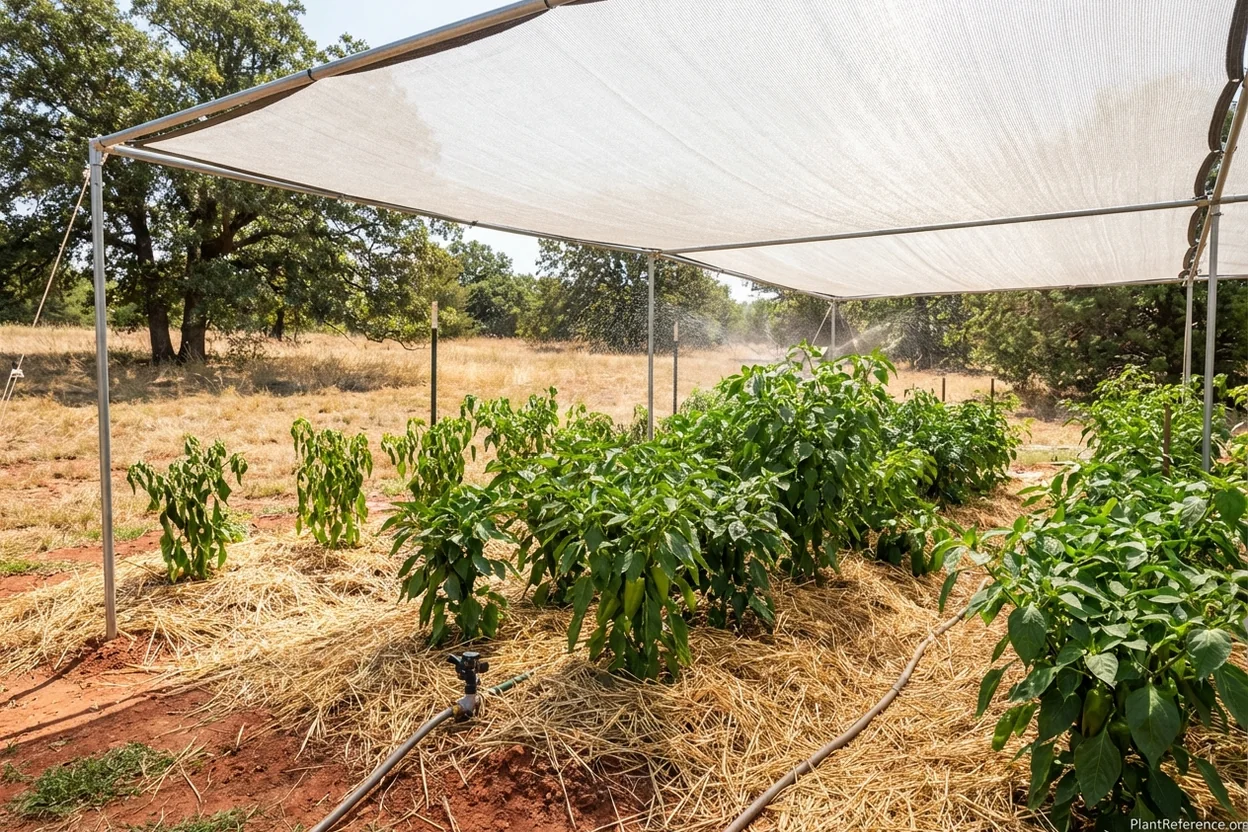
Heat Management Techniques:
Install 30% shade cloth when temperatures exceed 100°F for multiple days
Position peppers where they receive morning sun but afternoon shade
Use reflective mulch to reduce soil temperature
Plant taller crops like sunflowers or corn on the west side for natural shading
Fertilization for Oklahoma Conditions: Oklahoma's alkaline soil (typically pH 7.0-8.0) can limit nutrient availability. Peppers prefer slightly acidic conditions (pH 6.0-6.8), so soil amendments are often necessary.
Pre-Planting Soil Amendment: Work 2-3 inches of compost into the top 8 inches of soil along with granulated sulfur if your soil pH tests above 7.5. The sulfur will gradually lower pH over the growing season.
Growing Season Nutrition: Apply balanced fertilizer (10-10-10) at planting, then switch to higher phosphorus formula once flowering begins. I use a 5-10-10 fertilizer every 3-4 weeks during the growing season.
Wind Protection: Oklahoma's constant wind can stress pepper plants and increase water loss. Install temporary windbreaks using tomato cages wrapped with landscape fabric for the first month after transplanting.
Troubleshooting Oklahoma City-Specific Problems
Growing peppers in Oklahoma City presents unique challenges that gardeners in other regions don't face. Here's how to identify and solve the most common problems.
Late Spring Frost Damage: Even after April 1, surprise frosts can occur. If frost is predicted after transplanting, cover plants with buckets, blankets, or frost cloth. Peppers can survive brief temperature drops to 35°F if protected.
Heat Stress and Blossom Drop: When July temperatures exceed 95°F for several consecutive days, pepper flowers often drop without setting fruit. This is normal—the plants will resume production when temperatures moderate in late August.
Provide afternoon shade during extreme heat
Maintain consistent soil moisture to reduce plant stress
Apply foliar fertilizer in early morning when temperatures are cool
Be patient—fruit set will resume when conditions improve
Spider Mite Infestations: Oklahoma's hot, dry summers create ideal conditions for spider mites. These tiny pests cause stippling on leaves and fine webbing on plant stems.
Control Strategy: Increase humidity around plants with morning water spraying. Introduce beneficial insects like ladybugs. For severe infestations, use insecticidal soap applied in early morning or evening.
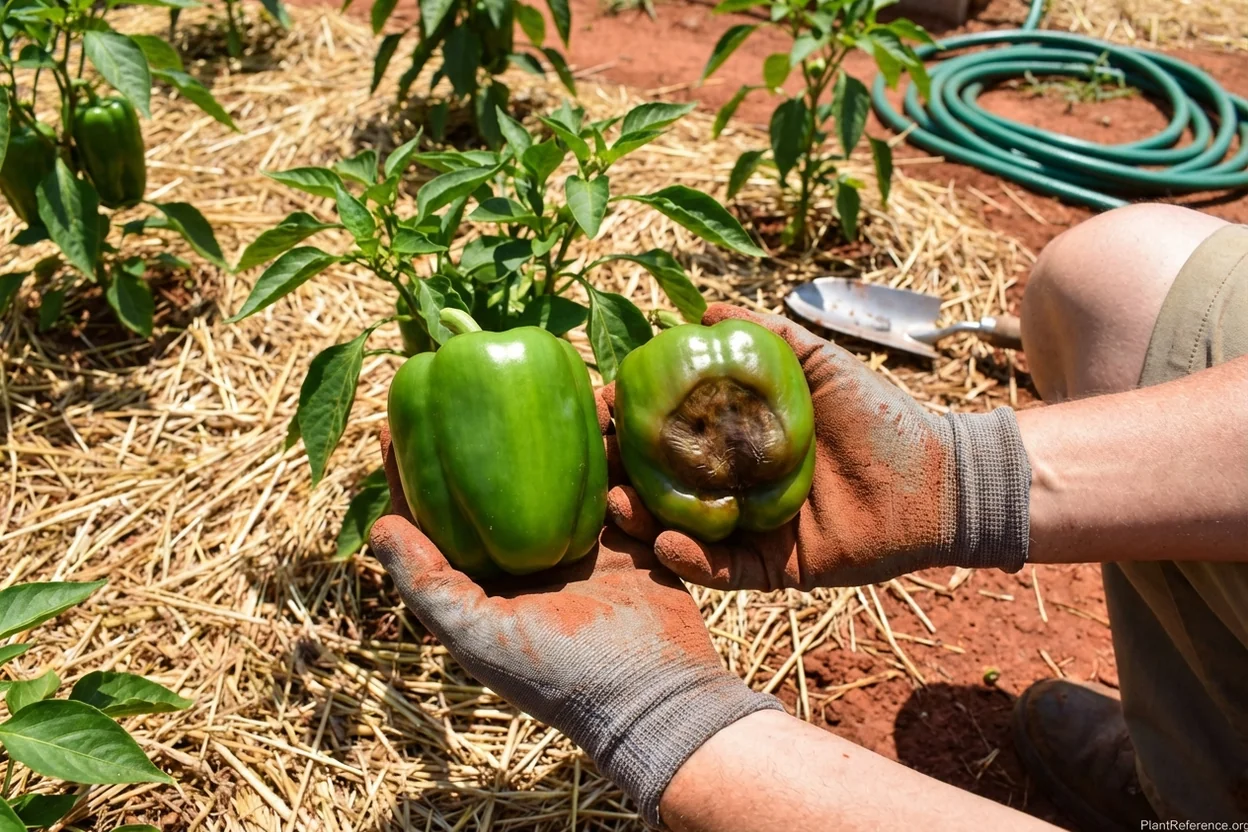
Blossom End Rot in Clay Soil: Oklahoma's clay soil can contribute to calcium availability problems, leading to blossom end rot—dark, sunken areas on the bottom of peppers.
Prevention Methods:
Maintain consistent soil moisture (difficult in our clay soil)
Avoid cultivation that damages roots
Apply calcium sulfate (gypsum) to improve clay soil structure
Mulch heavily to buffer soil moisture fluctuations
Cutworm Damage: These nocturnal caterpillars can sever pepper stems at soil level. They're particularly problematic in Oklahoma due to our mild winters that don't kill overwintering larvae.
Protection Strategy: Place cardboard collars around transplants at planting time. The collars should extend 2 inches into the soil and 3 inches above ground level.
Harvest & Storage
Oklahoma City's long growing season provides extended harvest opportunities from July through November. Proper timing and techniques ensure maximum yield and quality.
Harvest Timing by Variety:
Sweet peppers: Harvest when full-sized but still green for crisp texture, or wait for color change for sweeter flavor
Hot peppers: Allow full color development for maximum heat and best flavor
Specialty peppers: 🌿Capsicum annuum 'Shishito' taste best when harvested green and young
Oklahoma-Specific Storage Considerations: Our humid summers require immediate processing of harvested peppers. Don't leave them in the sun after picking—they'll develop sun scald quickly in our intense heat.
Preservation Methods for Oklahoma Gardeners: Oklahoma's abundance makes preservation essential. Hot peppers dry well in our low-humidity conditions—simply string them and hang in a well-ventilated area. Sweet peppers freeze well after blanching or can be pickled for year-round use.
Frequently Asked Questions
Reading about plants and recognising them are different skills. These three build the second.
- Daily PlantIdentify the day’s mystery plant from a close-up photograph.
- Keyed OutWork a dichotomous key, lead by lead, to name a hidden specimen.
- Name That PlantName a specimen from botanical clues dealt hardest first.
Free to play, no account needed
Aisha manages a small tropical nursery on the east side of Houston, specializing in plants that can handle the Gulf Coast's humidity, heat, and unpredictable flooding. She studied horticulture in college and worked at a wholesale grower before opening her own operation. Growing up, her parents kept a kitchen garden with okra, bitter gourd, and curry leaf plants—a tradition she's continued. Houston's subtropical climate lets her grow things most of the country can't, but it also means dealing with fungal issues, standing water, and summers where it's too hot for even tomatoes. Aisha writes about tropical and subtropical plant care, humidity management, and working with heavy clay soils.