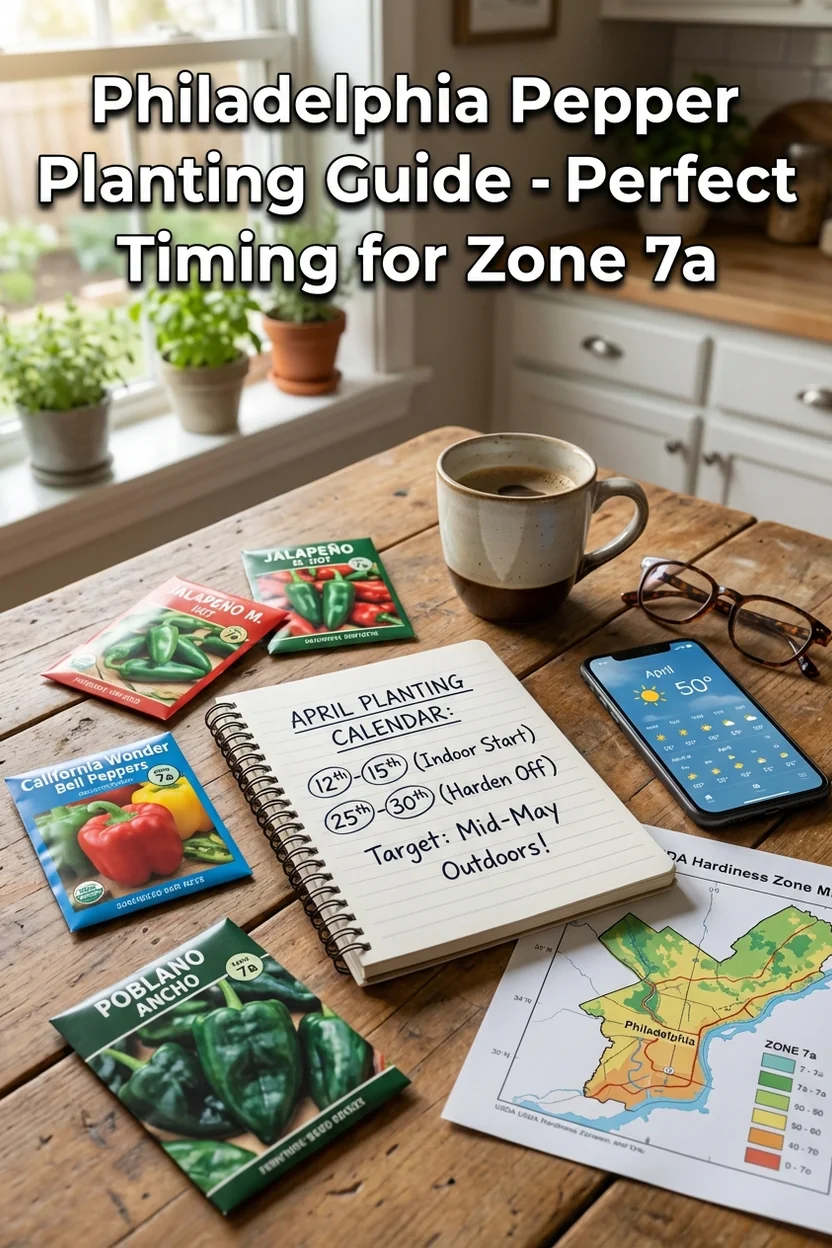
When to Plant Peppers in Philadelphia: Complete Guide + Best Varieties for Zone 7a
Pets & Toxicity
Recorded toxicity for plants linked in this guide. An unknown status is not a safety assessment.
Toxic to pets: Poblano pepperDetailsHide
Capsicum chinense 'Habanero' — Toxicity: Not assessed
Fruit contains capsaicin at 100,000–350,000 Scoville Heat Units — strong enough to cause severe burning on skin, eyes, and mucous membranes through simple contact with cut fruit or the hand that held it. Nitrile gloves are used during handling and food preparation; face and eye contact is avoided. The fruit is irritating rather than toxic in the usual sense, but the heat level can cause significant discomfort and real injury if mishandled. The plant is kept out of reach of children and pets.View Capsicum chinense 'Habanero' plant profileCapsicum annuum 'California Wonder' — Toxicity
Non-toxicView Capsicum annuum 'California Wonder' plant profileCapsicum annuum 'Poblano' — Toxicity Warning
Toxic to petsView Capsicum annuum 'Poblano' plant profileCapsicum annuum 'Jalapeño' — Toxicity: Not assessed
Capsaicin in fruit causes burning sensations in mouth and on skin. Fruit and handling oils are irritating to eyes and mucous membranes but are not toxic in the usual sense. Gloves are used during harvesting and processing; hands are washed thoroughly before touching face. Small amounts are generally safe for pets but can cause digestive upset.View Capsicum annuum 'Jalapeño' plant profile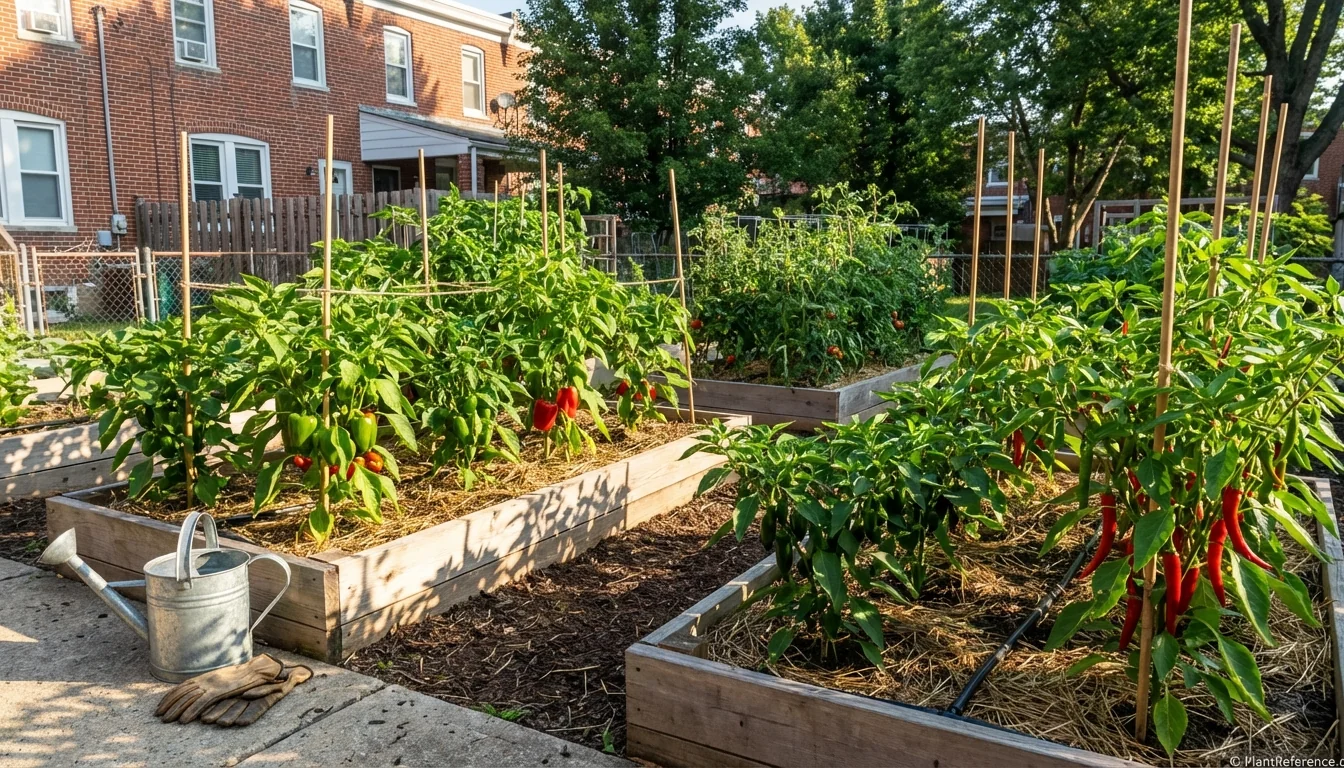
— Image © Plant Reference 2026
Philadelphia gardeners have hit the jackpot with Zone 7a's extended 209-day growing season—plenty of time to grow exceptional peppers from mild bells to fiery habaneros. The key to success lies in timing your plantings around Philadelphia's April 9 average last frost date and maximizing the warm months before November 4's first frost.
Best Pepper Varieties for Philadelphia's Climate
Philadelphia's Zone 7a climate offers the perfect balance—warm enough for long-season varieties like 🌿Capsicum chinense 'Habanero' habaneros, yet reliable enough for consistent production of 🌿Capsicum annuum 'Hungarian Wax' standards. I've been growing peppers in southeastern Pennsylvania for forty years, and these eight varieties consistently deliver exceptional harvests.
Variety | Days to Maturity | Best For | Notes for Philadelphia |
|---|---|---|---|
60-70 days | Quick harvest | Perfect for short attention spans; harvest begins July | |
65-75 days | Pickling/fresh | Yellow color adds garden interest; reliable producer | |
65-80 days | Cooking/drying | Thick walls perfect for stuffing; harvest by mid-August | |
70-80 days | Fresh/stuffed | Classic bell pepper; needs staking in Philly summers | |
70-80 days | Salsa/pickling | Develops "corking" in Philadelphia's humid summers | |
70-80 days | Roasting | Long pods excellent for Philadelphia's roasting traditions | |
70-85 days | Drying/spice | Thin walls dry perfectly in August heat | |
90-120 days | Hot sauce | Needs early start but thrives in Philadelphia summers |
Why These Varieties Excel in Zone 7a
Philadelphia's climate provides sufficient Growing Degree Days (GDD) for even demanding varieties. The 🌿Capsicum annuum 'Shishito' and 🌿Capsicum annuum 'Sweet Banana' varieties capitalize on the long season by producing continuously from July through October. Meanwhile, heat-lovers like 🌿Capsicum chinense 'Habanero' accumulate enough thermal units during Philadelphia's warm summers to reach full maturity by October.
The mid-Atlantic humidity can stress some varieties, but these selections show excellent disease resistance. 🌿Capsicum annuum 'Jalapeño' actually benefits from Philadelphia's summer humidity, developing the characteristic cork-like striations that indicate peak flavor.
Specific Planting Dates for Philadelphia
Philadelphia's Zone 7a designation comes with specific thermal requirements that dictate precise timing. Here's your complete planting calendar based on the April 9 average last frost date.
Indoor Seed Starting: February 21-28
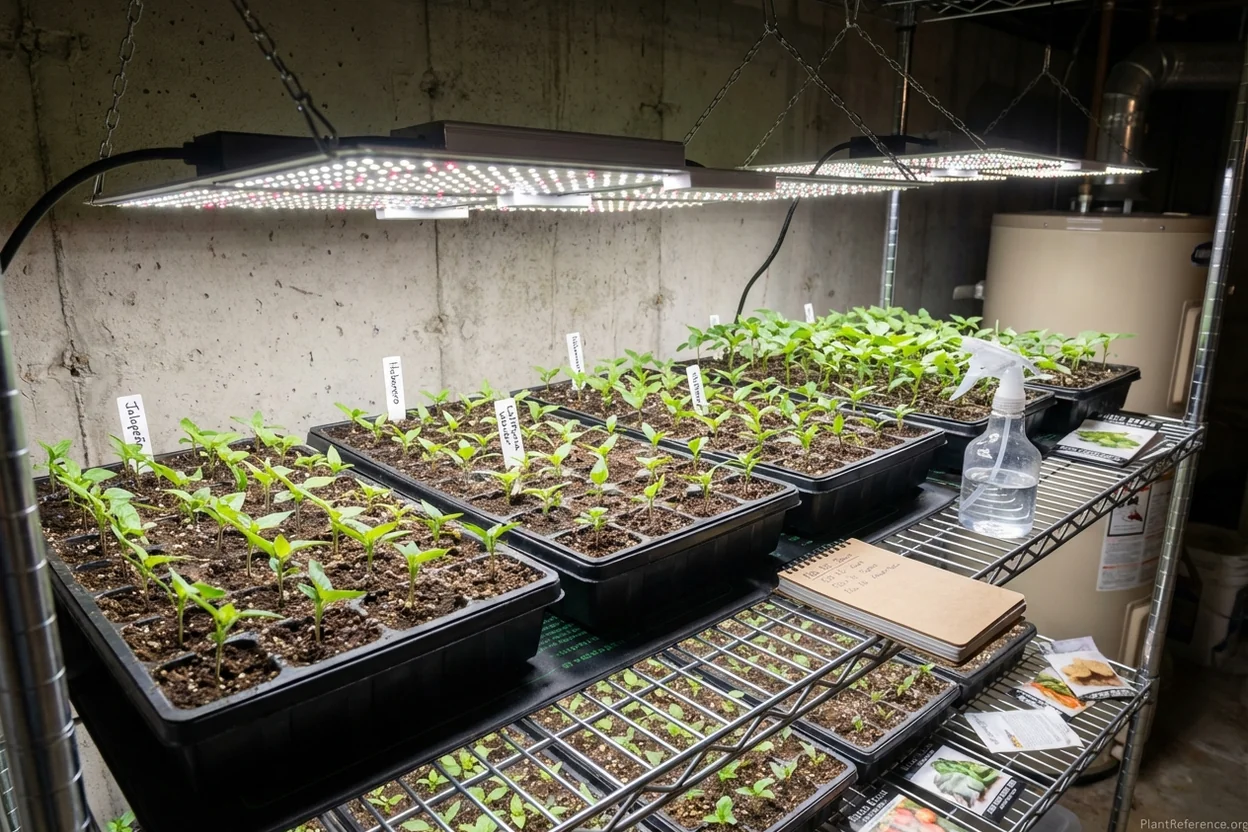
Start all pepper seeds indoors during the last week of February. Philadelphia's variable spring weather makes outdoor direct seeding unreliable—even in good years, soil temperatures don't stabilize above 60°F (16°C) until late April.
Seed Starting Protocol for Philadelphia:
Maintain soil temperature at 80-85°F (27-29°C) using heat mats
Use grow lights 14-16 hours daily (Philadelphia's February daylight insufficient)
Plant 🌿Capsicum chinense 'Habanero' seeds first—they need 21+ days to germinate
Plant all 🌿Capsicum annuum 'Hungarian Wax' varieties 2-3 days later for synchronized development
Keep soil consistently moist but not waterlogged
Hardening Off: April 16-22
Philadelphia's spring weather can shift from 70°F (21°C) days to 40°F (4°C) nights within 48 hours. Gradual acclimatization prevents transplant shock.
Start hardening off one week before transplant date. Move seedlings outside during warm afternoons (above 60°F), bringing them in when temperatures drop below 55°F (13°C). Philadelphia's urban heat island effect means city gardens stay 3-5°F warmer than suburbs—adjust timing accordingly.
Transplant Outdoors: April 23-30
Wait until soil temperatures consistently reach 60°F (16°C) at 4-inch depth. Philadelphia's clay-heavy soils warm slowly; use a soil thermometer to verify conditions. Transplant during the last week of April for optimal establishment.
Pre-Transplant Soil Preparation:
Philadelphia's heavy clay soils benefit from amendments added 2-3 weeks before planting. Work in 2-3 inches (5-7 cm) of compost to improve drainage—waterlogged soils kill pepper roots faster than cold weather.
Complete Growing Guide for Philadelphia
Soil Requirements for Zone 7a
Philadelphia sits on heavy clay soils that require modification for successful pepper production. The region's 44 inches (112 cm) annual rainfall creates drainage challenges that kill more pepper plants than cold weather.
Soil Amendments for Philadelphia Gardens:
Add 2-3 inches (5-7 cm) coarse compost annually
Incorporate perlite or coarse sand to improve drainage in clay areas
Raise beds 6-8 inches (15-20 cm) above grade for better water management
Test soil pH—Philadelphia soils tend alkaline; peppers prefer 6.0-6.8
Apply granular fertilizer (10-10-10) at 2 pounds per 100 square feet
Watering Strategy for Humid Climates
Philadelphia's summer humidity creates fungal disease pressure unknown in arid regions. Water management becomes critical—plants need consistent moisture without creating conditions for bacterial spot or anthracnose.
Philadelphia Watering Protocol:
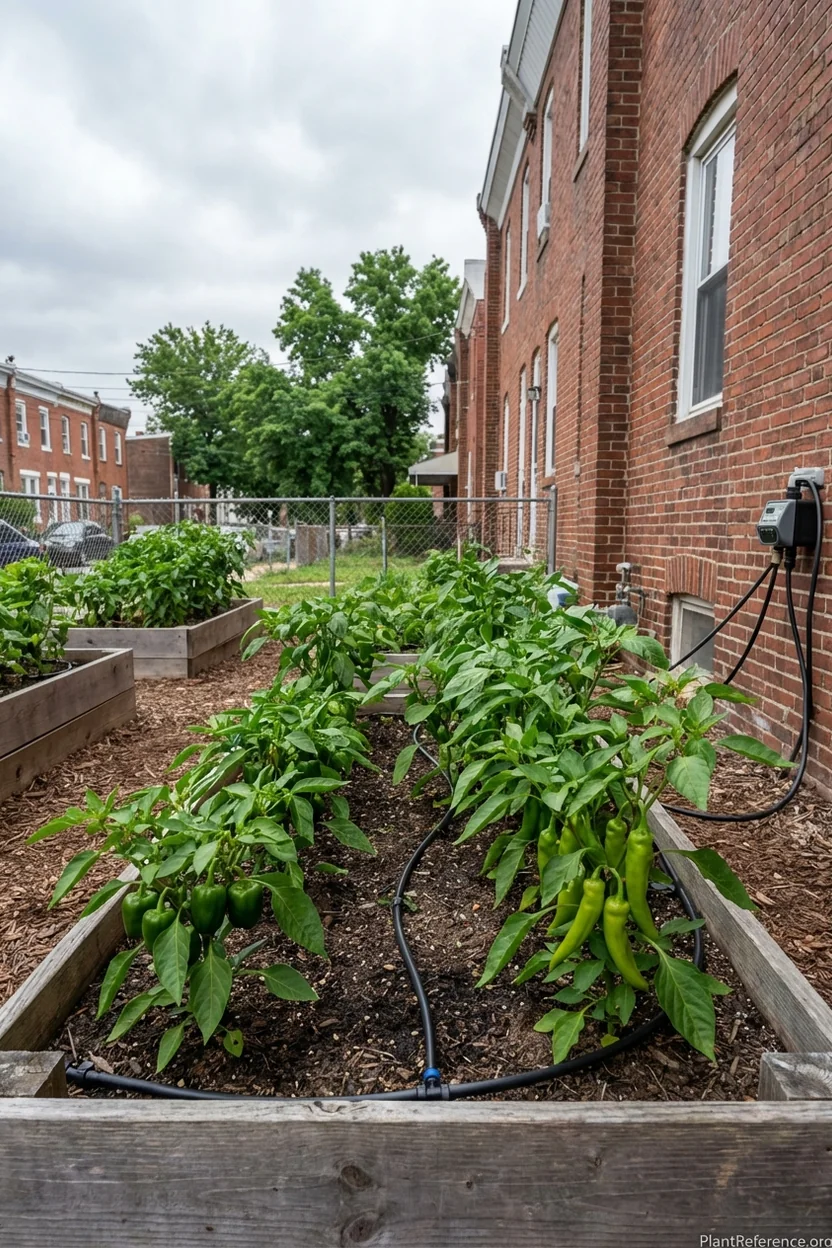
Water deeply at soil level using drip irrigation or soaker hoses. Avoid overhead watering during humid summer months (July-August) when disease pressure peaks. Philadelphia's clay soils hold moisture longer than sandy soils—water when top 2 inches (5 cm) feel dry to touch.
Support Systems for Pennsylvania Weather
Philadelphia's summer thunderstorms arrive with little warning, bringing 50+ mph (80+ km/h) winds that snap unsupported pepper plants. Install support systems at transplant time—retrofitting damages root systems.
Use 6-foot (1.8 m) wooden stakes or tomato cages for indeterminate varieties like 🌿Capsicum annuum 'Cayenne' and 🌿Capsicum chinense 'Habanero'. Bell peppers and 🌿Capsicum annuum 'Poblano' varieties require sturdy support due to heavy fruit loads—a mature 🌿Capsicum annuum 'California Wonder' plant can carry 15+ large peppers simultaneously.
Managing Philadelphia's Growing Season
Philadelphia's 209-day growing season allows for succession plantings of quick-maturing varieties. Plant 🌿Capsicum annuum 'Shishito' every 3 weeks from late April through July for continuous harvest. The extended season also permits overwintering techniques for preserving valuable 🌿Capsicum chinense 'Habanero' genetics.
Seasonal Management Calendar:
Late April: Primary transplant period
Mid-May: Second succession planting of fast varieties
June: Begin weekly harvest of early varieties
July: Peak harvest period begins
August: Continue harvest, start preparing overwintering candidates
September: Late-season varieties reach peak production
October: Final harvest before November 4 first frost
Troubleshooting Philadelphia-Specific Problems
Philadelphia's unique climate creates specific challenges unknown to gardeners in other regions. Heavy clay soils, high humidity, and variable spring weather demand targeted solutions.
Problem: Slow Spring Growth and Purple Leaves
Philadelphia's clay soils stay cold longer than sandy soils. Even when air temperatures reach 70°F (21°C), soil temperatures may remain below 60°F (16°C) at root level. Cold soil prevents nutrient uptake, causing purple discoloration of leaves.
Solution: Use black plastic mulch or clear plastic row covers to warm soil faster. Install supports for row covers at transplant time. Remove covers when daytime temperatures consistently exceed 75°F (24°C) to prevent overheating.
Problem: Blossom End Rot on Large Varieties
Philadelphia's clay soils create uneven moisture conditions—saturated during spring rains, then drought-stressed during summer heat waves. This moisture fluctuation interrupts calcium transport, causing dark, sunken lesions on pepper bottoms.
Solution: Maintain consistent soil moisture using drip irrigation or soaker hoses. Apply 2-3 inches (5-7 cm) organic mulch around plants after soil warms. Never cultivate deeply near pepper plants—root pruning worsens calcium uptake problems.
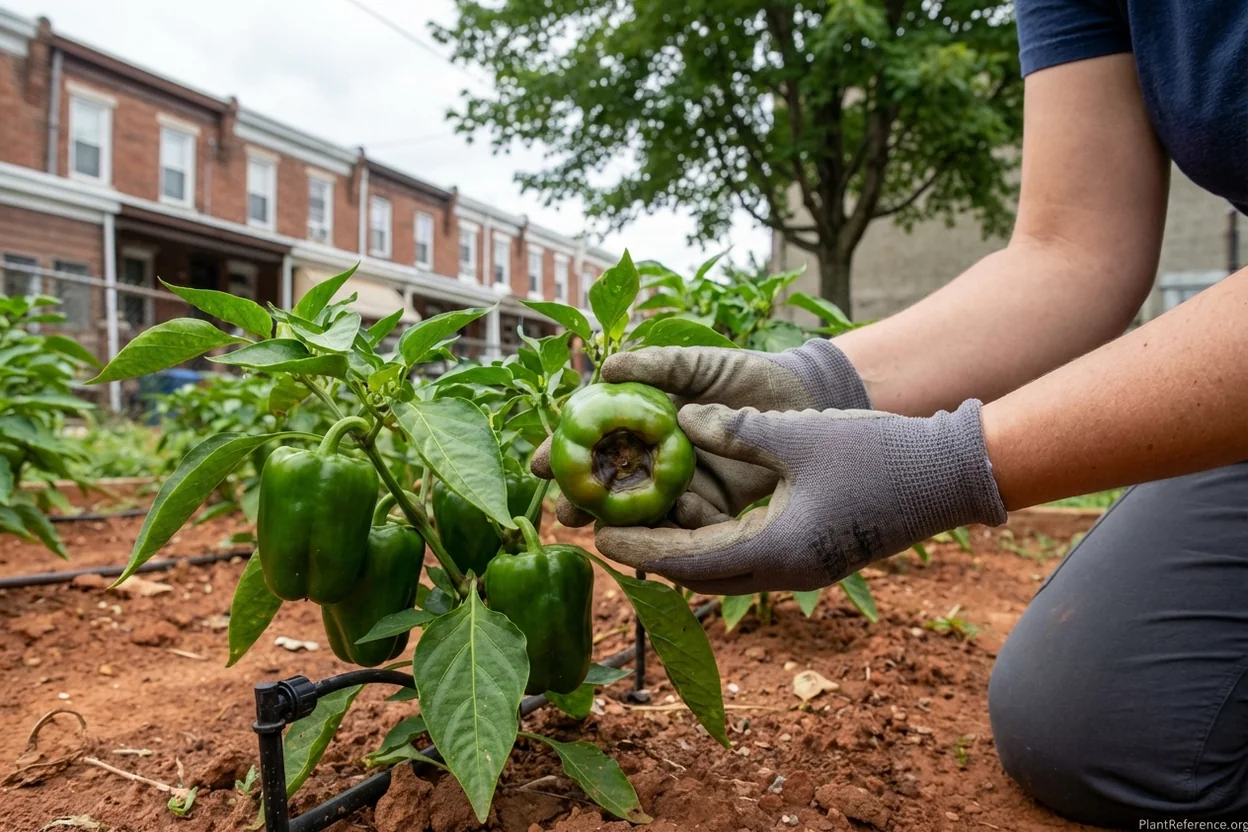
Problem: Bacterial Spot During Humid Summers
Philadelphia's July-August humidity creates perfect conditions for bacterial leaf spot—dark lesions with yellow halos that spread rapidly during warm, wet weather.
Solution: Space plants wider than normal recommendations (24-30 inches vs. 18 inches) to improve air circulation. Water only at soil level, never on foliage. Apply copper-based fungicide preventatively when humidity exceeds 70% for consecutive days.
Problem: Late Season Ripening Delays
Philadelphia's autumn arrives gradually—September often brings cool nights (50-55°F) that slow ripening without triggering plant shutdown. Peppers may reach full size but remain green.
Solution: Remove lower leaves in September to direct energy toward fruit ripening. Use clear plastic row covers during cool nights to maintain soil temperature. Harvest large green peppers before October 15—they'll ripen indoors if kept at room temperature.
Harvest & Storage
Philadelphia's extended growing season provides multiple harvest opportunities from July through early November. Proper timing and storage techniques maximize your investment in these heat-loving plants.
Harvest Timing by Variety
Early Varieties (July Start): 🌿Capsicum annuum 'Shishito' and 🌿Capsicum annuum 'Sweet Banana' begin producing in mid-July. Harvest every 3-4 days to encourage continued production. These varieties continue producing until first frost if regularly picked.
Mid-Season Varieties (August Peak): 🌿Capsicum annuum 'Jalapeño', 🌿Capsicum annuum 'California Wonder', and 🌿Capsicum annuum 'Poblano' reach peak production in August. Harvest bells when fully sized but still glossy green, or wait for color change to red/yellow. Jalapeños develop cork-like striations when perfectly ripe.
Late Varieties (September-October): 🌿Capsicum chinense 'Habanero' and late 🌿Capsicum annuum 'Cayenne' require Philadelphia's full growing season. Don't expect habanero harvest before September 1, but the wait rewards you with intensely flavored, properly ripened fruit.
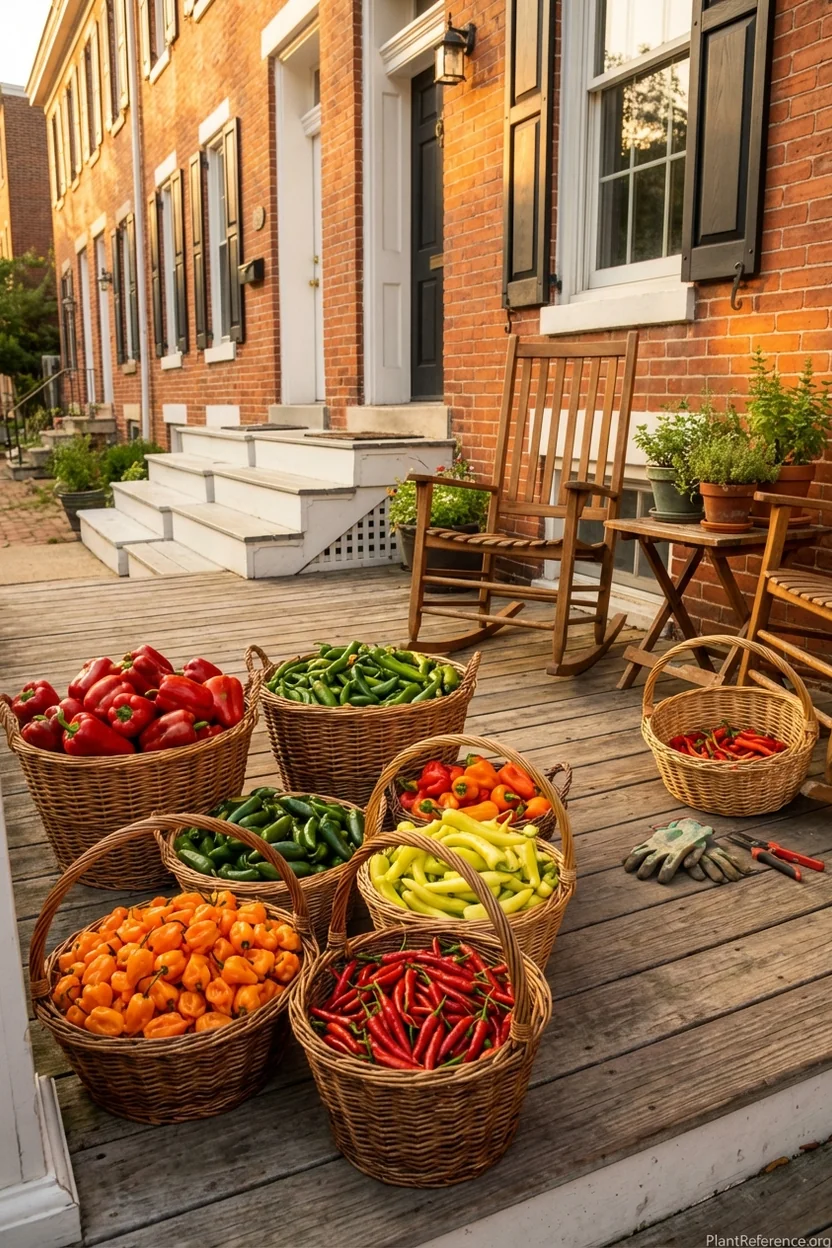
Storage Methods for Zone 7a Climate
Philadelphia's humid climate requires different storage approaches than arid regions. High humidity causes rapid deterioration of thin-walled varieties but benefits thick-walled types during curing.
Fresh Storage: Refrigerate thick-walled varieties like 🌿Capsicum annuum 'California Wonder' and 🌿Capsicum annuum 'Poblano' for up to 3 weeks. Store in perforated plastic bags to maintain humidity while preventing condensation buildup.
Drying Methods: Philadelphia's September humidity makes outdoor air-drying difficult. Use dehydrators or low-temperature oven drying (170°F/77°C) for 🌿Capsicum annuum 'Cayenne' and thin-walled varieties. String-drying works only in well-ventilated, heated indoor spaces.
Freezing Techniques: Freeze thick-walled varieties whole after blanching 2-3 minutes in boiling water. Hot varieties freeze well without blanching—the capsaicin provides natural preservation. Frozen peppers work perfectly for cooked dishes but lose crisp texture for fresh eating.
Frequently Asked Questions
Reading about plants and recognising them are different skills. These three build the second.
- Daily PlantIdentify the day’s mystery plant from a close-up photograph.
- Keyed OutWork a dichotomous key, lead by lead, to name a hidden specimen.
- Name That PlantName a specimen from botanical clues dealt hardest first.
Free to play, no account needed
Frank retired from the city parks department after 28 years, the last fifteen as a grounds supervisor overseeing park plantings and maintenance crews. He now spends his time volunteering at a local historic garden, maintaining his own half-acre property in the Roxborough neighborhood, and writing about landscape maintenance, seasonal timing, and the practical side of keeping plants healthy through Mid-Atlantic winters and humid summers. Frank knows what works at scale and what's a waste of time—he's planted thousands of trees and shrubs and watched plenty of them fail. His advice tends toward what's proven and durable rather than what's trendy.