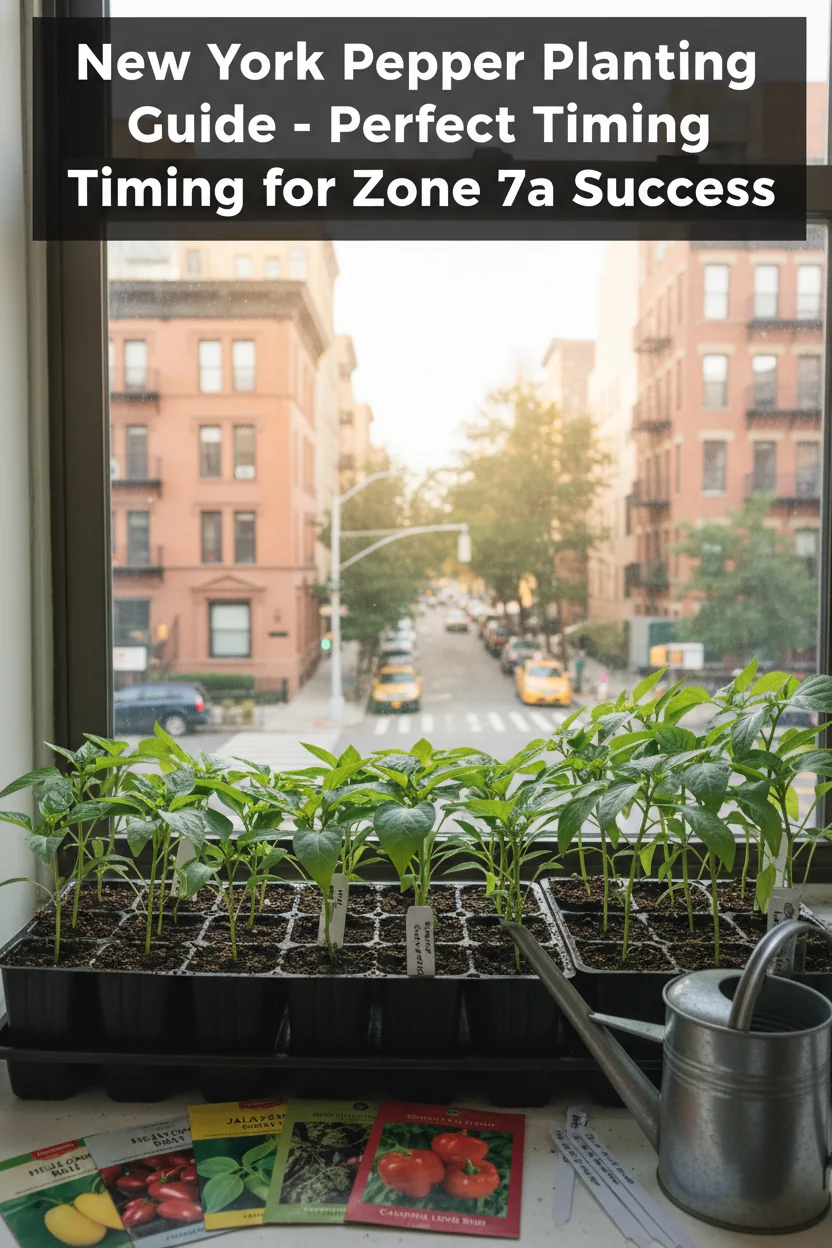
When to Plant Peppers in New York: Complete Guide + Best Varieties for Zone 7a
Pets & Toxicity
Recorded toxicity for plants linked in this guide. An unknown status is not a safety assessment.
Toxic to pets: Poblano pepperDetailsHide
Capsicum annuum 'California Wonder' — Toxicity
Non-toxicView Capsicum annuum 'California Wonder' plant profileCapsicum annuum 'Poblano' — Toxicity Warning
Toxic to petsView Capsicum annuum 'Poblano' plant profile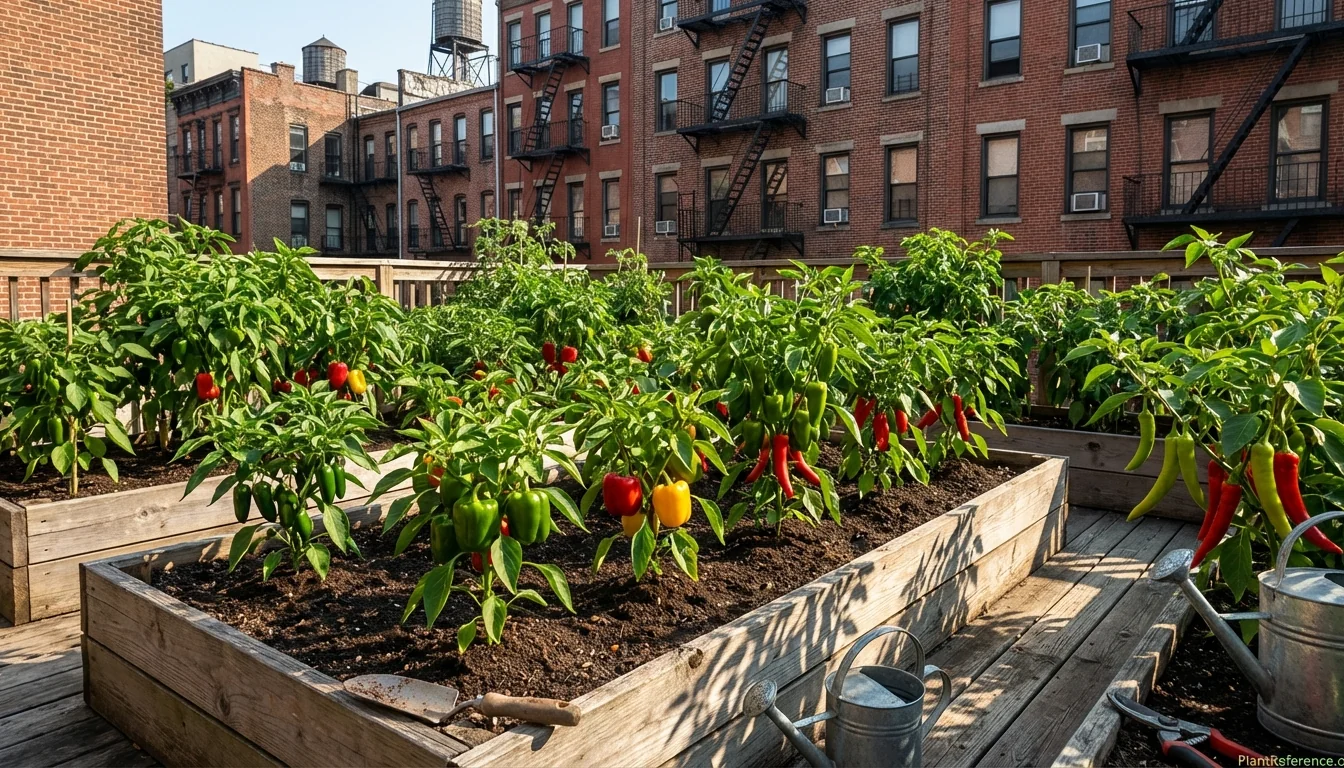
— Image © Plant Reference 2026
Growing peppers successfully in New York requires understanding Zone 7a's unique climate advantages and challenges. With 200 frost-free days from April 14 to October 31, New York gardeners have an excellent window for pepper production—longer than many northern states but requiring strategic variety selection and timing.
New York's Zone 7a climate offers pepper growers a sweet spot for cultivation. The 200-day growing season provides ample time for most pepper varieties to reach full maturity, while the moderate summer temperatures rarely create the extreme heat stress that southern growers face. However, success depends on proper timing, variety selection, and understanding the specific microclimates within the state.
From the Hudson Valley's moderate temperatures to Long Island's maritime influence, New York presents diverse growing conditions within Zone 7a. Urban gardeners in New York City benefit from the heat island effect, which can extend the growing season by 1-2 weeks compared to rural areas. Meanwhile, upstate regions may experience slightly cooler nights that benefit pepper fruit set during summer heat waves.
Best Pepper Varieties for New York's Zone 7a Climate
New York's 200-day growing season accommodates both quick-maturing and longer-season pepper varieties. The key is matching variety characteristics with your specific goals and microclimate conditions.
Variety | Days to Maturity | Heat Level (SHU) | Best For New York | Growing Notes |
|---|---|---|---|---|
65-75 days | 2,500-8,000 | Reliable producer | Excellent for beginners, heat tolerant | |
65-72 days | 0-500 | Cool weather tolerance | Thrives in NYC's variable spring | |
70-80 days | 0 | Large bell peppers | Needs consistent water for size | |
60-70 days | 50-200 | Quick harvest | Perfect for short-season areas | |
65-80 days | 1,000-2,000 | Cooking versatility | Requires staking for heavy fruit | |
Capsicum annuum 'Cayenne Long Red' | 70-85 days | 30,000-50,000 | Drying and spice | Excellent keeper, disease resistant |
70-80 days | 500-2,500 | Roasting pepper | Good for preservation | |
Capsicum chinense 'Habanero Orange' | 90-120 days | 100,000-350,000 | Heat lovers only | Requires warm microclimate or containers |
Early-Season Champions for Zone 7a
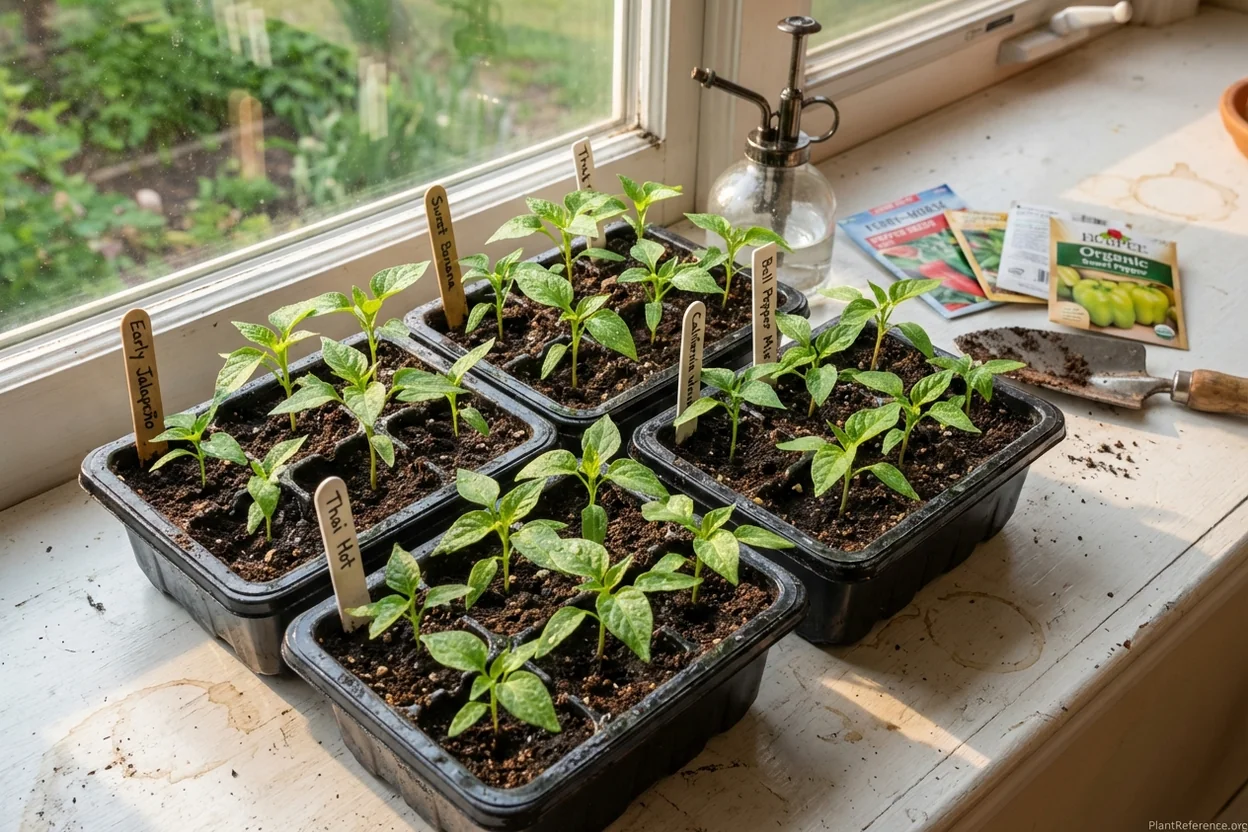
🌿Capsicum annuum 'Early Jalapeño' proves itself as the most reliable pepper for New York gardens. Maturing in just 65-75 days from transplant, this variety provides consistent yields even in cooler summers. The compact plants rarely exceed 24 inches (60 cm) but produce heavily, with individual plants yielding 25-35 peppers throughout the season.
🌿Capsicum annuum 'Sweet Banana' offers New York gardeners exceptional cold tolerance among sweet peppers. This variety continues producing even when night temperatures drop into the mid-50s°F (12-13°C), making it invaluable for extending harvest into October. The pale yellow fruits transition through orange to red if left on the plant, providing visual interest and varied flavor profiles.
🌿Capsicum annuum 'Shishito' represents the ultimate quick-harvest pepper for New York conditions. Beginning harvest at just 60 days from transplant, these thin-walled peppers can be picked continuously through the season. Their exceptional productivity makes them ideal for urban gardeners with limited space—a single plant can yield over 100 peppers.
Heat Lovers for Warm Microclimates
Capsicum chinense 'Habanero Orange' challenges Zone 7a growers but rewards those who provide optimal conditions. This tropical species requires 90-120 days to maturity and benefits significantly from container culture in New York. Black plastic pots placed on concrete patios or against south-facing walls can accumulate enough heat units for successful fruit development.
Urban New York gardeners often discover their rooftop gardens or heat-absorbing balconies create Zone 8 microclimates perfect for Capsicum chinense 'Habanero Orange' cultivation. The key is monitoring soil temperature—habaneros cease growth when root zone temperatures drop below 65°F (18°C).
Processing Peppers for Preservation
Capsicum annuum 'Cayenne Long Red' and 🌿Capsicum annuum 'Anaheim' excel in New York's climate for preservation purposes. The thin walls of cayenne peppers facilitate rapid drying, either on the plant during dry autumn weather or indoors with proper air circulation. 🌿Capsicum annuum 'Anaheim' peppers reach ideal roasting size in New York's long season, developing the thick walls necessary for proper charring and peeling.
Specific Planting Dates for New York Gardeners
Precise timing separates successful pepper harvests from disappointing yields in Zone 7a. New York's average last frost date of April 14 provides the foundation for all planting calculations, but soil temperature proves equally critical.
Indoor Seed Starting Schedule
February 15-22: Optimal Seed Starting Window
Start all pepper varieties during this week for transplant-ready seedlings by May 1. 🌿Capsicum annuum 'California Wonder' varieties typically germinate in 7-14 days at soil temperatures of 80-85°F (27-29°C). Capsicum chinense 'Habanero Orange' requires 14-21 days for germination and benefits from consistent bottom heat throughout the germination period.
Use seed starting heat mats to maintain optimal soil temperature. New York's February temperatures rarely provide adequate warmth for reliable germination without supplemental heat. A heating mat set to 82°F (28°C) ensures rapid, uniform emergence.
March 1-8: Last Chance for Full-Season Varieties
Late-starting gardeners can still achieve success with quick-maturing varieties like 🌿Capsicum annuum 'Shishito' and 🌿Capsicum annuum 'Sweet Banana'. However, long-season varieties like Capsicum chinense 'Habanero Orange' started after March 1 may not reach full maturity before the October 31 first frost.
March 15-April 1: Final Window for Short-Season Varieties
Emergency plantings of 🌿Capsicum annuum 'Early Jalapeño' and 🌿Capsicum annuum 'Shishito' started during this period can still produce worthwhile harvests, though total yields will be reduced compared to properly timed starts.
Hardening Off Protocol
April 20-30: Critical Acclimatization Period
Begin hardening off pepper seedlings when nighttime temperatures consistently stay above 50°F (10°C). New York's variable spring weather requires flexible hardening schedules—be prepared to bring seedlings indoors during unexpected cold snaps.
Start with 2 hours of filtered sunlight on day one, increasing exposure by 1-2 hours daily. Direct wind exposure should be introduced gradually, as pepper seedlings are particularly susceptible to wind damage during the transition period.
Transplant Timing
May 1-8: Prime Transplant Window
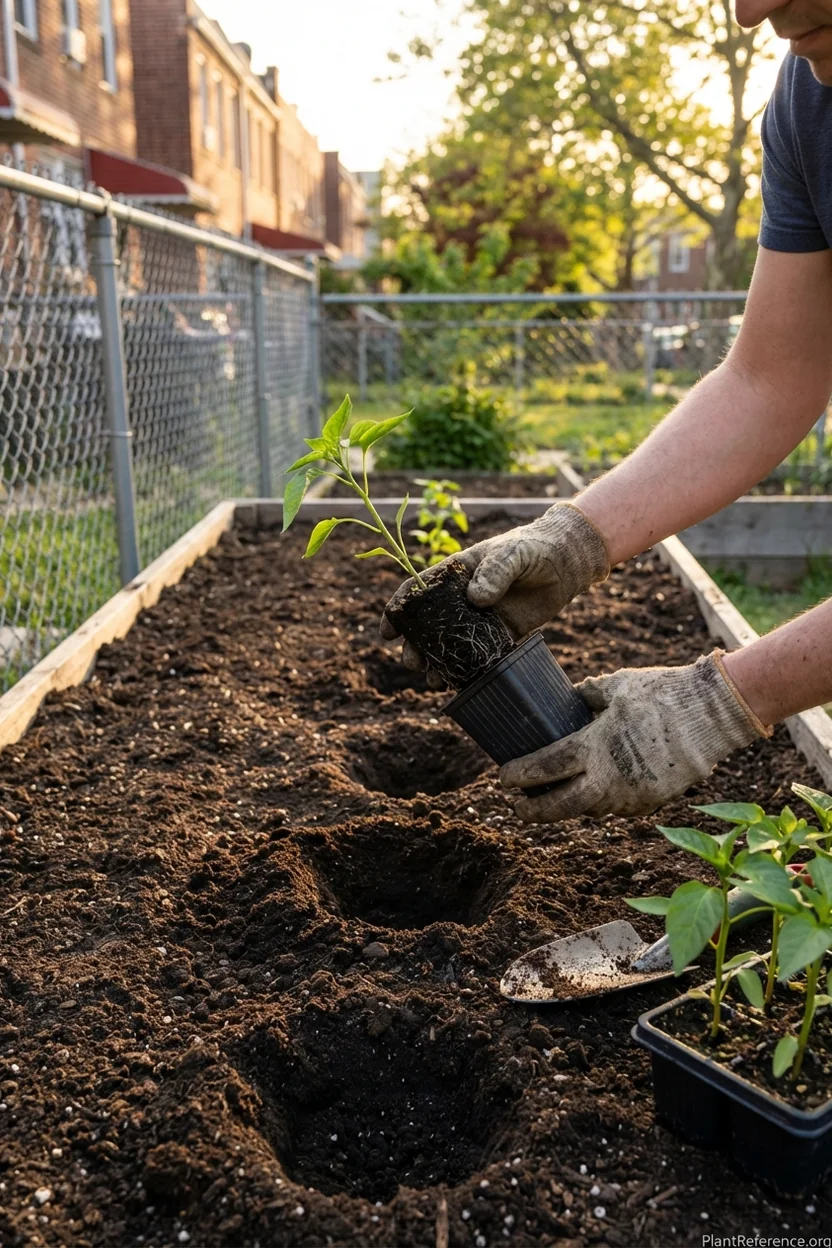
Transplant peppers outdoors when both air and soil temperatures remain consistently above 55°F (13°C). In New York, this typically occurs during the first week of May, though urban heat islands may allow transplanting 3-5 days earlier.
Soil temperature is critical—cold soil below 55°F (13°C) causes transplant shock and stunted growth that can delay harvest by several weeks. Use a soil thermometer to verify conditions before transplanting.
May 15: Safety Transplant Date
Conservative gardeners who prioritize plant survival over maximum season length should transplant by May 15. This timing ensures adequate soil warming while providing the full growing season needed for long-maturity varieties.
Complete Growing Guide for New York Conditions
Success with peppers in Zone 7a requires understanding both the advantages and challenges of New York's climate. The 200-day growing season provides excellent opportunities, but variable spring weather and occasional summer heat waves demand adaptive management strategies.
Soil Preparation for Zone 7a Success
New York's diverse soil types—from Long Island's sandy soils to upstate clay—require different preparation approaches. Regardless of native soil type, peppers demand well-draining conditions with consistent moisture retention.
Clay Soil Modification
New York's clay soils benefit from aggressive organic matter incorporation. Add 3-4 inches (8-10 cm) of compost or aged manure to planting areas, working it in to 8-inch (20 cm) depth. Clay soils warm slowly in spring, so consider raised beds or mounded planting areas to accelerate soil warming.
Sandy Soil Enhancement
Long Island and coastal areas often feature sandy soils that drain rapidly but lack moisture retention. Incorporate 2-3 inches (5-8 cm) of compost annually to improve water-holding capacity. Sandy soils warm quickly, allowing earlier transplanting but requiring more frequent irrigation during dry periods.
Microclimate Management
New York's varied topography creates numerous microclimates that affect pepper success. Understanding and utilizing these variations can extend your growing season and improve yields.
Urban Heat Islands
New York City and other urban areas typically experience temperatures 2-5°F (1-3°C) warmer than surrounding rural areas. This heat island effect provides urban gardeners significant advantages for heat-loving varieties like Capsicum chinense 'Habanero Orange'.
Position pepper containers or beds near concrete surfaces, brick walls, or asphalt areas that absorb and radiate heat during cool nights. These thermal masses can prevent frost damage and extend the harvest season into November in protected urban locations.
Coastal Moderation
Long Island and other coastal areas benefit from maritime influence that moderates temperature extremes. While spring warming may be delayed by 1-2 weeks compared to inland areas, the extended autumn often allows harvest well into November.
Coastal gardeners should prioritize wind protection, as salt-laden winds can damage pepper foliage and fruit. Windbreaks of burlap or snow fencing provide effective protection without creating excessive shade.
Water Management Through the Season
Consistent soil moisture proves critical for pepper success in New York's variable climate. Irregular watering leads to blossom end rot in large-fruited varieties like 🌿Capsicum annuum 'California Wonder' and 🌿Capsicum annuum 'Poblano'.
Spring Establishment Phase
Newly transplanted peppers require careful water management during establishment. Overwatering in cool May soil can promote root rot, while underwatering stunts growth that may not recover until July.
Water deeply but less frequently, allowing soil to approach dryness between waterings. Check soil moisture by inserting your finger 2 inches (5 cm) deep—water when dry at this depth.
Summer Production Phase
July through September demands consistent soil moisture as plants reach peak production. New York's summer rainfall averages 3-4 inches (8-10 cm) monthly, often adequate for pepper needs but irregular in timing.
Implement drip irrigation or soaker hoses to maintain consistent soil moisture without wetting foliage. Wet leaves promote bacterial leaf spot and other foliar diseases common in New York's humid summers.
Late Season Ripening
September and October focus shifts to maximizing fruit ripening rather than new fruit set. Reduce watering frequency to concentrate sugars and accelerate color development in maturing fruits.
Fertilization Strategy for Zone 7a
New York's long growing season allows for strategic fertilization programs that support both plant development and fruit production. Avoid high-nitrogen fertilizers after mid-July to prevent excessive vegetative growth at the expense of fruit development.
Pre-Plant Soil Preparation
Test soil pH annually—peppers prefer slightly acidic to neutral conditions (pH 6.0-6.8). New York's naturally acidic soils often require lime application to achieve optimal pH levels.
Incorporate balanced organic matter like compost or aged manure at 2-3 inches (5-8 cm) depth before transplanting. This provides slow-release nutrients throughout the growing season while improving soil structure.
Mid-Season Feeding
Apply balanced fertilizer (10-10-10) at transplant time, then switch to lower-nitrogen formulations (5-10-10) after first fruit set begins in June. This supports continued flowering and fruit development without excessive leaf production.
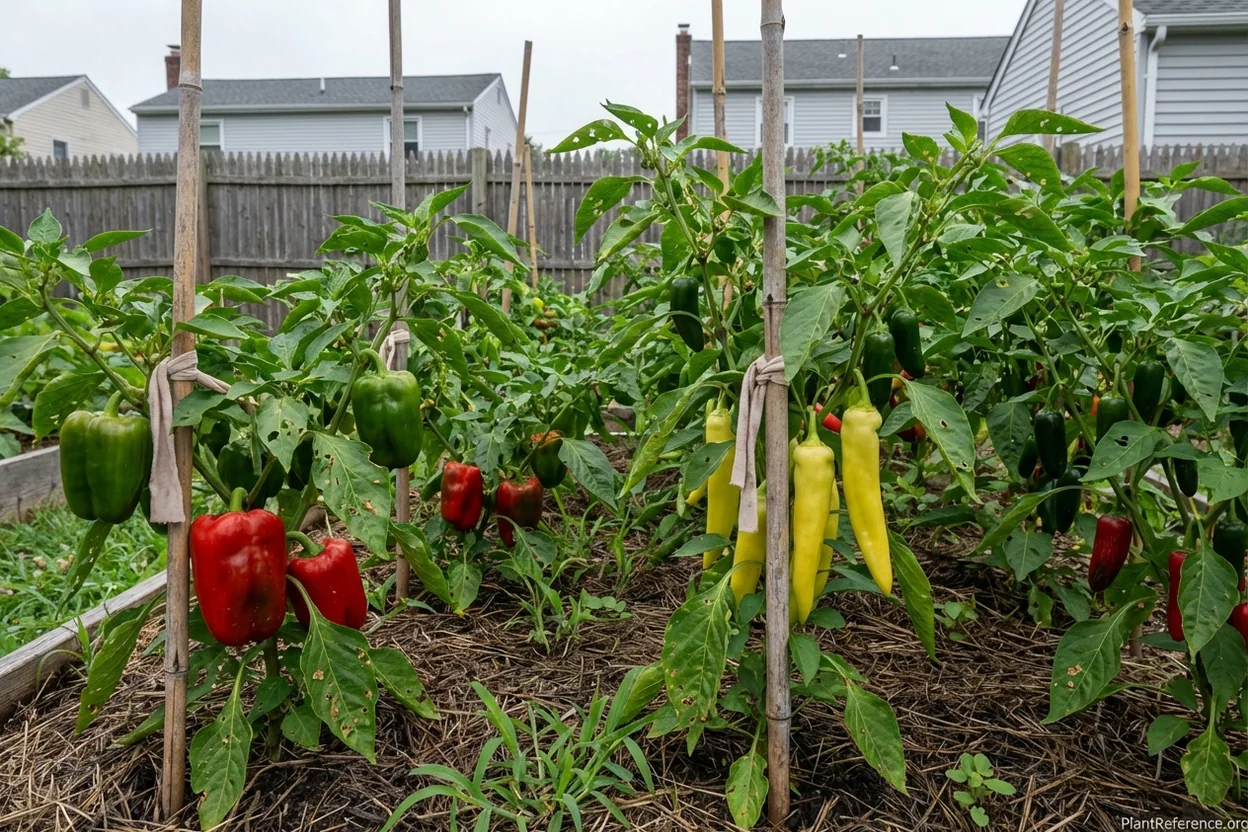
Support Systems and Plant Training
New York's summer thunderstorms and occasional high winds require robust support systems for pepper plants. Even compact varieties benefit from early staking to prevent root damage from rocking in loose soil.
Staking Strategies
Install 4-foot (120 cm) stakes at transplant time to avoid root damage later in the season. Use bamboo, metal, or wooden stakes driven 8-10 inches (20-25 cm) deep for stability during storms.
Tie plants loosely with soft materials like strips of old t-shirts or purpose-made plant ties. Avoid wire or string that can cut into stems as plants grow.
Caging vs. Staking
Large-fruited varieties like 🌿Capsicum annuum 'California Wonder' and 🌿Capsicum annuum 'Poblano' benefit from tomato cages rather than simple stakes. The multiple support points prevent branch breakage when heavy fruits develop.
Choose cages at least 18 inches (45 cm) in diameter to accommodate full plant spread. Smaller cages restrict growth and make harvesting difficult.
Troubleshooting New York-Specific Pepper Problems
Zone 7a's climate presents unique challenges that require targeted solutions. Understanding these common problems and their prevention helps ensure successful harvests year after year.
Problem | Symptoms | Likely Cause | Quick Fix |
|---|---|---|---|
Cool Spring Stunting | Purple-tinged leaves, minimal growth 2-3 weeks after transplanting, yellowing of lower leaves | Peppers transplanted too early or into cold soil remain stunted despite improving weather | Wait for soil temperatures to reach 55°F (13°C) before transplanting. Use black plastic mulch or cloches to warm soil artificially. Once stunting occurs, patience is required—plants typically recover in 2-4 weeks but total season production may be reduced |
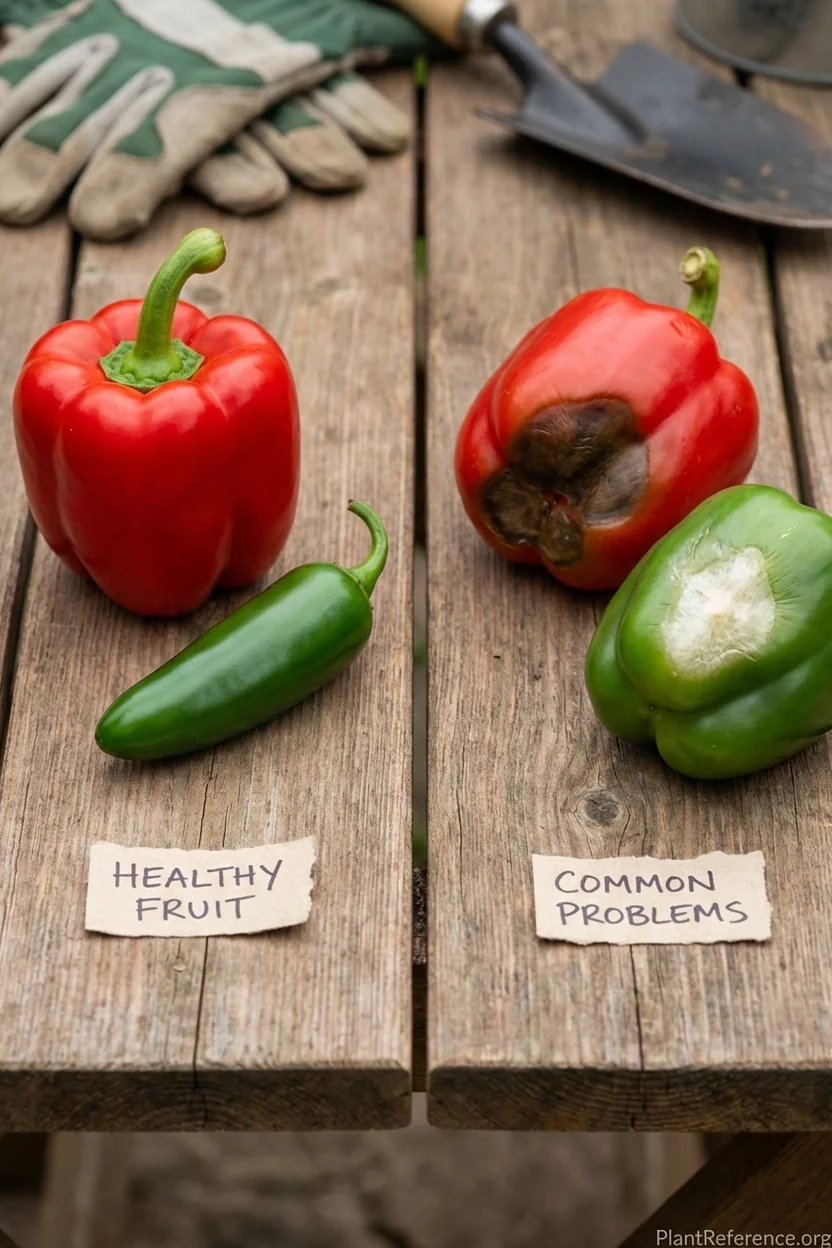
Blossom End Rot in Large Varieties | Dark, sunken spots on the bottom of developing fruits, typically appearing when fruits are half-grown | Calcium deficiency caused by irregular water uptake, not soil calcium deficiency | Maintain consistent soil moisture through drip irrigation or deep weekly watering. Apply 2-3 inches of organic mulch to stabilize soil moisture. Avoid cultivating deeply near plants to prevent root damage |
Late Blight in Humid Conditions | Dark brown spots on leaves with fuzzy white growth on undersides, rapid spreading during humid weather | Fungal disease affecting peppers during humid summer periods common in New York | Space plants adequately for air circulation (18-24 inches apart). Water at soil level rather than overhead sprinkler irrigation. Remove affected leaves immediately. Apply copper-based fungicides preventatively |
Pepper Maggot Damage | Small holes in pepper fruits with white maggots inside causing fruit rot | Regional pest specific to northeastern United States, including New York | Remove all fallen fruits immediately to break pest lifecycle. Yellow sticky traps help monitor adult fly populations. Harvest fruits slightly underripe if infestation is severe |
Sunscald During Heat Waves | White, papery patches on fruit shoulders facing south or west, typically on peppers with sparse foliage | Sudden exposure to intense sunlight during New York heat waves damages exposed fruits | Maintain adequate foliage through proper fertilization and watering. Avoid excessive pruning that exposes fruits to direct sunlight |
Cool Spring Stunting
Problem: Peppers transplanted too early or into cold soil remain stunted despite improving weather.
Symptoms: Purple-tinged leaves, minimal growth 2-3 weeks after transplanting, yellowing of lower leaves.
Solution: Wait for soil temperatures to reach 55°F (13°C) before transplanting. Use black plastic mulch or cloches to warm soil artificially. Once stunting occurs, patience is required—plants typically recover in 2-4 weeks but total season production may be reduced.
Blossom End Rot in Large Varieties
Problem: Dark, sunken spots on the bottom of developing 🌿Capsicum annuum 'California Wonder' and 🌿Capsicum annuum 'Poblano' fruits.
Symptoms: Circular, dark brown to black lesions on blossom end of fruits, typically appearing when fruits are half-grown.
Cause: Calcium deficiency caused by irregular water uptake, not soil calcium deficiency.
Solution: Maintain consistent soil moisture through drip irrigation or deep weekly watering. Apply 2-3 inches (5-8 cm) of organic mulch to stabilize soil moisture. Avoid cultivating deeply near plants to prevent root damage that impairs water uptake.
Late Blight in Humid Conditions
Problem: Fungal disease affecting peppers during humid summer periods common in New York.
Symptoms: Dark brown spots on leaves with fuzzy white growth on undersides, rapid spreading during humid weather.
Prevention: Space plants adequately for air circulation (18-24 inches/45-60 cm apart). Water at soil level rather than overhead sprinkler irrigation. Remove affected leaves immediately and dispose in trash, not compost.
Treatment: Apply copper-based fungicides preventatively during humid periods. Organic options include Bordeaux mixture or copper sulfate solutions.
Pepper Maggot Damage
Problem: Regional pest specific to northeastern United States, including New York.
Symptoms: Small holes in pepper fruits with white maggots inside causing fruit rot.
Lifecycle: Adult flies lay eggs in developing fruits during June and July. Larvae develop inside fruits, causing them to rot and drop.
Control: Remove all fallen fruits immediately to break pest lifecycle. Yellow sticky traps help monitor adult fly populations. Harvest fruits slightly underripe if infestation is severe—they will continue ripening indoors.
Sunscald During Heat Waves
Problem: Sudden exposure to intense sunlight during New York heat waves damages exposed fruits.
Symptoms: White, papery patches on fruit shoulders facing south or west, typically on peppers with sparse foliage cover.
Prevention: Maintain adequate foliage through proper fertilization and watering. Avoid excessive pruning that exposes fruits to direct sunlight.
Treatment: Affected fruits are still edible if damage is minor—simply cut away affected areas. Severe sunscald renders fruits inedible.
Harvest and Storage in Zone 7a
New York's extended growing season allows for strategic harvest timing that maximizes both yield and quality. Understanding pepper maturity indicators and proper storage techniques ensures the best use of your harvest.
Determining Optimal Harvest Timing
Green vs. Colored Harvest
Most peppers can be harvested green or allowed to ripen to their mature color. Green harvest extends productivity as plants continue setting new flowers, while colored harvest provides maximum flavor and nutritional content.
🌿Capsicum annuum 'Early Jalapeño' develops characteristic corking (brown striations on skin) when reaching peak heat and flavor. 🌿Capsicum annuum 'Sweet Banana' transitions from pale yellow through orange to red, with sweetness increasing at each stage.
Climate Considerations for Harvest
New York's October 31 average first frost date allows most varieties to reach full maturity if planted on schedule. However, September harvest of remaining green fruits provides insurance against early frost while ensuring continued ripening indoors.
Large-fruited varieties like 🌿Capsicum annuum 'California Wonder' require 3-4 weeks to develop full size plus additional time for color change. Plan harvest timing accordingly, especially for plants started late in the season.
Storage and Preservation Methods
Fresh Storage
Freshly harvested peppers store best at 45-50°F (7-10°C) with high humidity. Most home refrigerators are too cold and dry for optimal pepper storage, causing skin wrinkling and flavor loss.
Perforated plastic bags in refrigerator crisper drawers provide adequate conditions for 1-2 week storage. Avoid washing peppers until use, as excess moisture promotes decay.
Freezing Techniques
New York gardeners often experience glut harvests in September requiring bulk preservation. Peppers freeze excellently when properly prepared, maintaining flavor and nutritional value for 8-12 months.
Wash, remove stems and seeds, then cut into desired sizes. Blanch sweet varieties for 2-3 minutes in boiling water, then immediately transfer to ice water. Hot peppers can be frozen without blanching. Pack in freezer bags, removing as much air as possible.
Drying Methods
Capsicum annuum 'Cayenne Long Red' and other hot varieties dry successfully in New York's low-humidity autumn weather. String peppers by their stems and hang in well-ventilated areas out of direct sunlight.
Alternatively, use dehydrators set to 135°F (57°C) for 8-12 hours until peppers are completely dry and brittle. Properly dried peppers store for 2-3 years in airtight containers.
Frequently Asked Questions
Reading about plants and recognising them are different skills. These three build the second.
- Daily PlantIdentify the day’s mystery plant from a close-up photograph.
- Keyed OutWork a dichotomous key, lead by lead, to name a hidden specimen.
- Name That PlantName a specimen from botanical clues dealt hardest first.
Free to play, no account needed
Frank retired from the city parks department after 28 years, the last fifteen as a grounds supervisor overseeing park plantings and maintenance crews. He now spends his time volunteering at a local historic garden, maintaining his own half-acre property in the Roxborough neighborhood, and writing about landscape maintenance, seasonal timing, and the practical side of keeping plants healthy through Mid-Atlantic winters and humid summers. Frank knows what works at scale and what's a waste of time—he's planted thousands of trees and shrubs and watched plenty of them fail. His advice tends toward what's proven and durable rather than what's trendy.