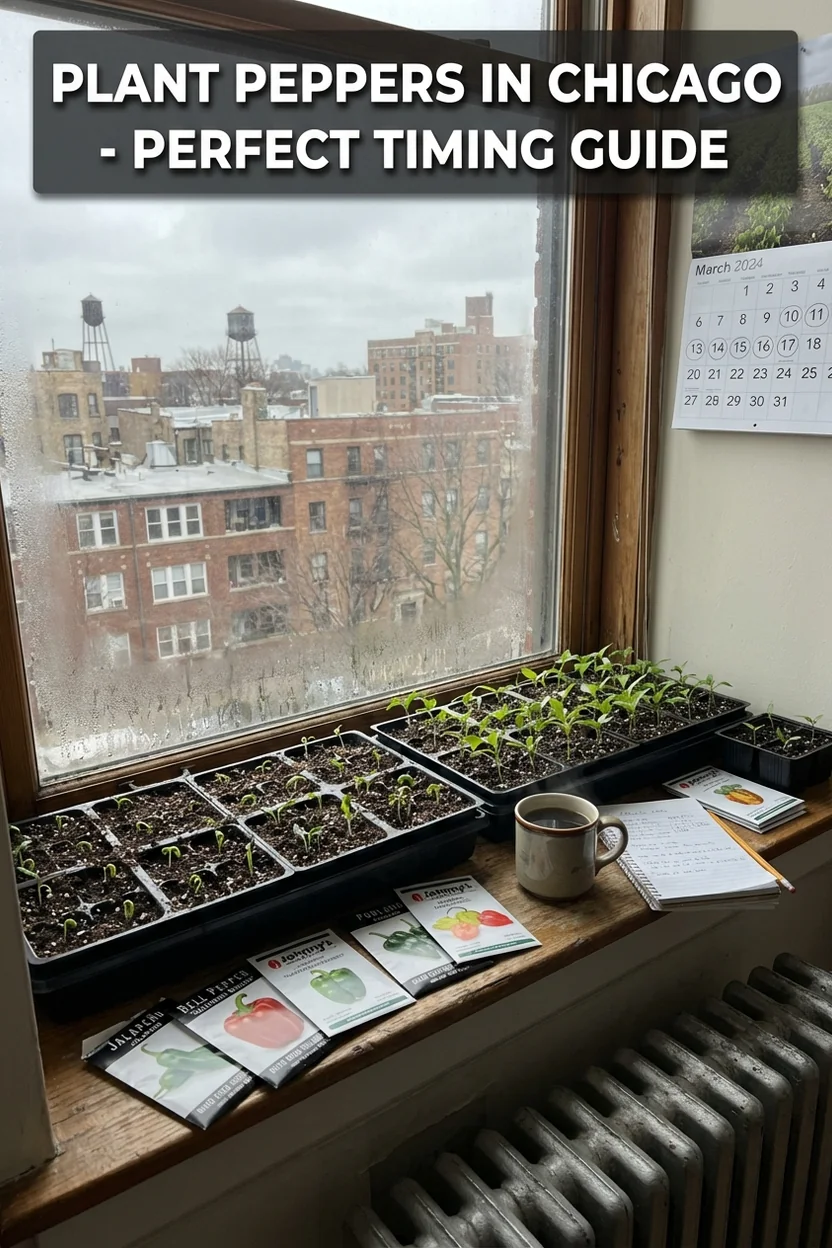
When to Plant Peppers in Chicago: Complete Guide + Best Varieties for Zone 6a
Pets & Toxicity
Recorded toxicity for plants linked in this guide. An unknown status is not a safety assessment.
Toxic to pets: Poblano pepperDetailsHide
Capsicum annuum 'California Wonder' — Toxicity
Non-toxicView Capsicum annuum 'California Wonder' plant profileCapsicum chinense 'Habanero' — Toxicity: Not assessed
Fruit contains capsaicin at 100,000–350,000 Scoville Heat Units — strong enough to cause severe burning on skin, eyes, and mucous membranes through simple contact with cut fruit or the hand that held it. Nitrile gloves are used during handling and food preparation; face and eye contact is avoided. The fruit is irritating rather than toxic in the usual sense, but the heat level can cause significant discomfort and real injury if mishandled. The plant is kept out of reach of children and pets.View Capsicum chinense 'Habanero' plant profileCapsicum annuum 'Poblano' — Toxicity Warning
Toxic to petsView Capsicum annuum 'Poblano' plant profile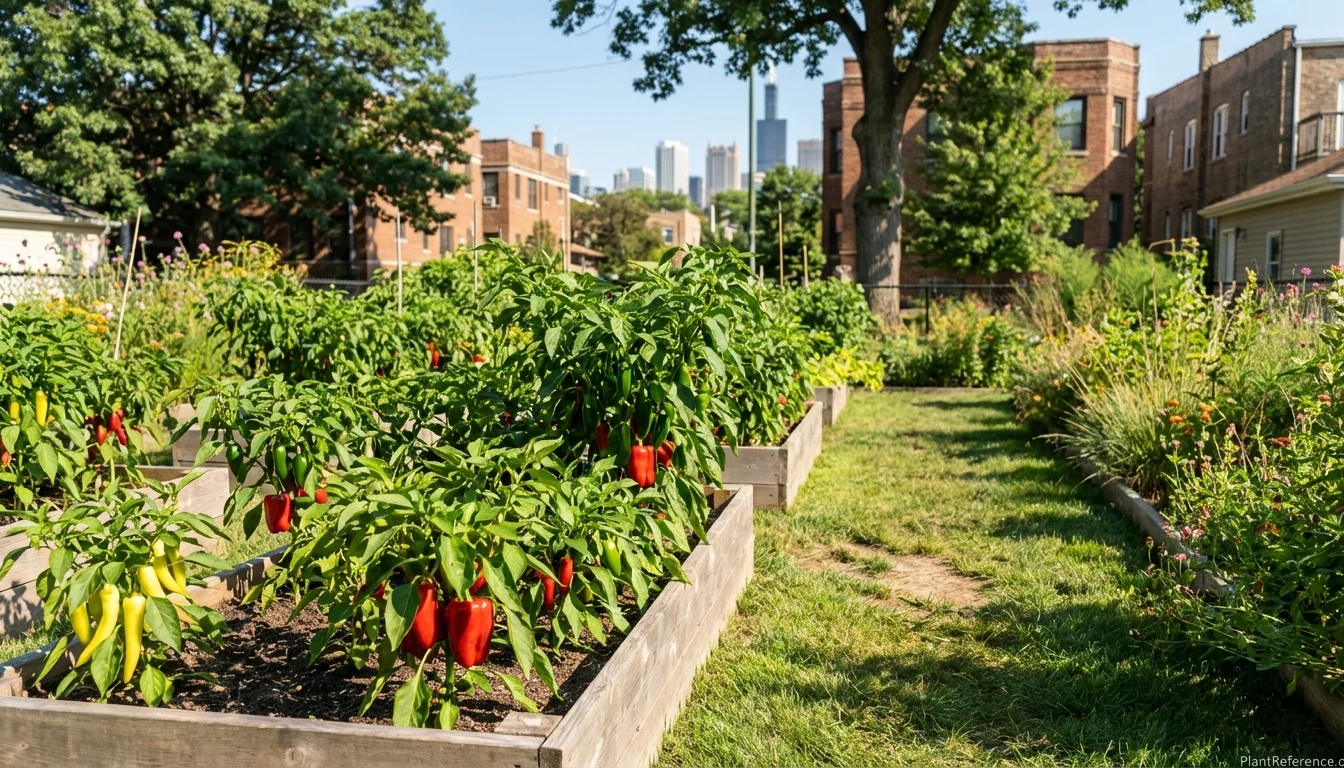
— Image © Plant Reference 2026
Growing peppers in Chicago isn't just possible—it's downright rewarding when you know what you're doing. After forty years of gardening in the Midwest, I'll tell you that Chicago's Zone 6a climate is actually ideal for pepper production, with a solid 158-day growing season from May 10 to October 15. The key is understanding which varieties thrive in our climate and getting your timing right.
Best Pepper Varieties for Chicago's Zone 6a Climate
Chicago gardeners have excellent options, but success comes from matching varieties to our specific growing conditions. I've tested dozens of pepper varieties over the years, and these eight consistently deliver in our climate.
Our Zone 6a environment provides enough heat units for most pepper varieties, but the key is selecting those that mature before our October 15 first frost. The varieties below are ranked by reliability in Chicago's climate.
Variety | Days to Maturity | Best For | Notes for Chicago |
|---|---|---|---|
60-70 days | Quick harvest | Perfect for Zone 6a short season, harvest before red stage | |
65-75 days | Pickling/fresh | Very reliable in cooler summers, excellent producer | |
70-80 days | Salsa/pickling | Choose early varieties, harvest green for best yields | |
70-80 days | Fresh/stuffed | Needs warm microclimate, plant against south wall | |
75-85 days | Roasting/drying | Requires full season, mulch heavily for heat retention | |
75-85 days | Roasting | Long fruits need staking, harvest green if frost threatens | |
80-90 days | Drying/spice | Thin walls dry quickly, excellent for Chicago's humidity | |
90-120 days | Hot sauce | Grow in containers for best results, may need season extension |
Most Reliable Varieties for Chicago
🌿Capsicum annuum 'Shishito' tops my list for Chicago gardens. These Japanese peppers mature in just 60-70 days, ensuring harvest before any early frost. The plants stay compact at 18-24 inches, making them perfect for container growing on patios or in small garden spaces. Harvest them green when they're 3-4 inches long for the best flavor and texture.
🌿Capsicum annuum 'Sweet Banana' comes in second for reliability. These yellow peppers turn red if left to fully ripen, but I recommend harvesting most while yellow. The plants produce continuously throughout the season, and the peppers store well for winter pickling projects.
🌿Capsicum annuum 'Early Jalapeño' varieties like 'Early Jalapeño' or 'Jalapeño M' mature faster than standard types. In Chicago, harvest most jalapeños green rather than waiting for the red ripe stage—you'll get higher yields and beat the frost.
Heat-Loving Varieties That Need Extra Care
🌿Capsicum chinense 'Habanero' can succeed in Chicago but requires special handling. I grow mine in large black containers to maximize soil warmth. Start seeds extra early (March 1) and plan to bring containers into a garage during any late September cold snaps.
🌿Capsicum annuum 'Poblano' and 🌿Capsicum annuum 'Anaheim' need the full growing season to mature properly. Plant them in the warmest part of your garden—against a south-facing wall is ideal. The thermal mass from brick or stone helps extend the growing season by several weeks.
Specific Planting Dates for Chicago
Chicago's last frost date of May 10 drives our pepper planting schedule, but the real key is soil temperature. Peppers won't grow in cold soil, so rushing transplant dates often backfires.
Indoor Seed Starting Schedule
March 15-22: Start seeds indoors for main crop varieties. Use a heating mat to maintain soil temperature at 80-85°F for fastest germination. 🌿Capsicum chinense 'Habanero' should be started March 1-8 for the extra growing time needed.
Seed Starting Setup: I use standard seed starting mix in 4-inch pots. Pepper seeds need consistent moisture but not waterlogged conditions. Cover with plastic wrap until germination, then remove immediately to prevent damping off.
April 15-May 1: Begin hardening off process. Start with 2-3 hours outdoors in shade, gradually increasing time and sun exposure over 7-10 days. Chicago's spring weather can be unpredictable, so watch forecasts carefully.
Transplant Schedule
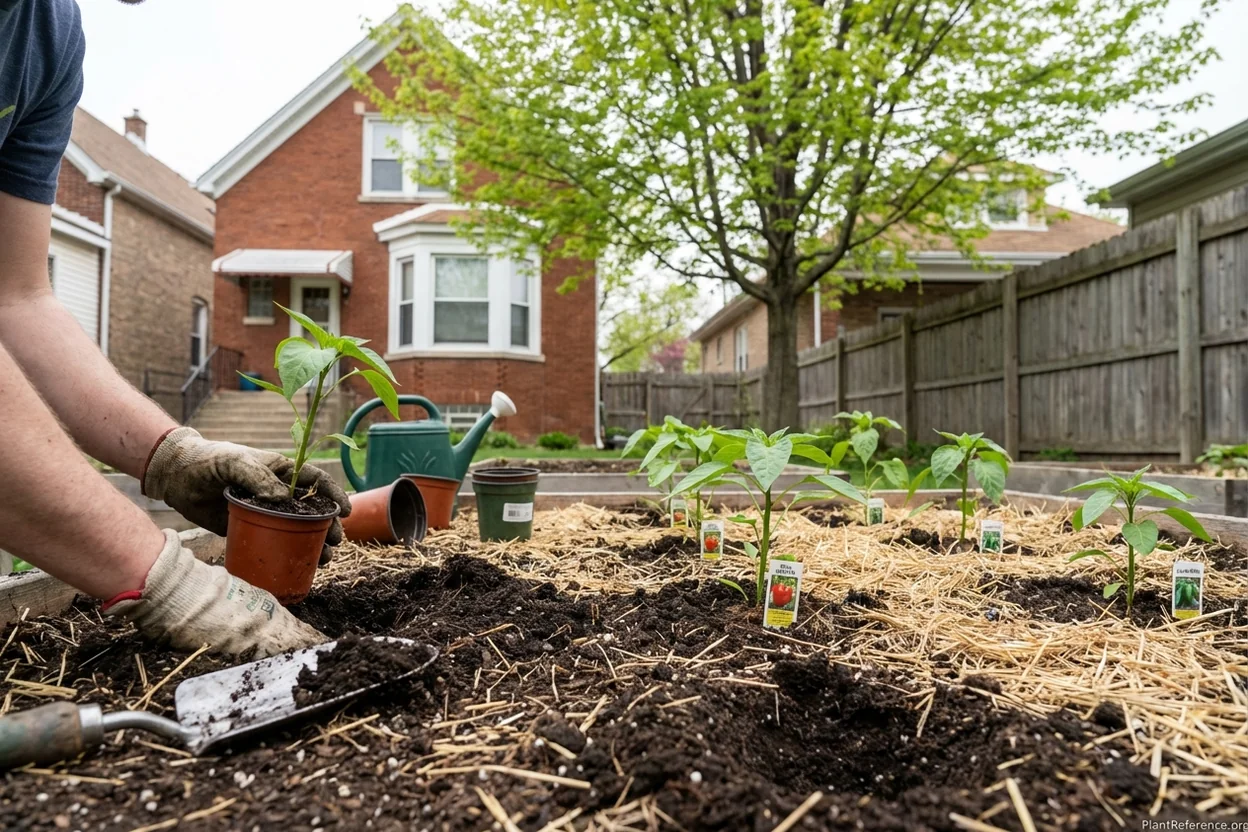
May 10-20: Transplant hardy varieties like 🌿Capsicum annuum 'Shishito' and 🌿Capsicum annuum 'Sweet Banana' after soil temperature reaches 60°F (16°C). Use a soil thermometer to verify—this matters more than air temperature.
May 20-30: Transplant heat-loving varieties like 🌿Capsicum annuum 'California Wonder' and 🌿Capsicum chinense 'Habanero' when soil consistently stays above 65°F (18°C) and nighttime temperatures remain above 55°F (13°C).
Direct Seeding (Not Recommended)
While possible, direct seeding peppers in Chicago rarely produces good results. Our soil doesn't warm sufficiently until late May, leaving insufficient time for seed germination and growth before fall frost.
Complete Growing Guide for Chicago
Success with peppers in Chicago comes from understanding our unique climate challenges and working with them, not against them.
Soil Preparation
Chicago's heavy clay soils need amendment before pepper planting. I add 2-3 inches of compost and work it into the top 8-10 inches of soil. Good drainage is critical—peppers hate "wet feet" and Chicago's spring rains can waterlog heavy soils.
Soil Testing: Most Chicago soils are slightly alkaline (pH 7.0-7.5), which peppers tolerate well. If your pH exceeds 7.5, add sulfur in fall to gradually lower it.
Raised Beds: Consider raised beds if you have heavy clay or drainage issues. Even 6-8 inches of elevation improves drainage significantly and allows soil to warm faster in spring.
Site Selection
Choose the warmest, sunniest location available. In Chicago, this typically means south-facing exposure with at least 6-8 hours of direct sunlight. Avoid low-lying areas where cold air settles—these frost pockets can damage plants during cool spring nights.
Wind Protection: Chicago's notorious winds can damage pepper plants, especially when loaded with fruit. Plant near fences or buildings for natural windbreaks, or install temporary screens during the establishment period.
Planting Technique
Space plants 18-24 inches apart in rows 24-30 inches apart. This spacing provides good air circulation while maximizing production in limited garden space.
Transplant Depth: Plant transplants at the same depth they were growing in containers. Unlike tomatoes, peppers don't benefit from deep planting and may develop stem rot if buried too deeply.
Initial Protection: Use wall-of-water devices or clear plastic milk jugs with bottoms removed to protect newly transplanted peppers from Chicago's cool May nights. Remove once nighttime temperatures consistently stay above 60°F (16°C).
Watering Strategy
Chicago receives an average of 38 inches of rainfall annually, but distribution is uneven. July and August often bring dry periods when supplemental irrigation becomes critical.
Deep, Infrequent Watering: Water deeply 1-2 times per week rather than light daily watering. This encourages deep root development and improves drought tolerance.
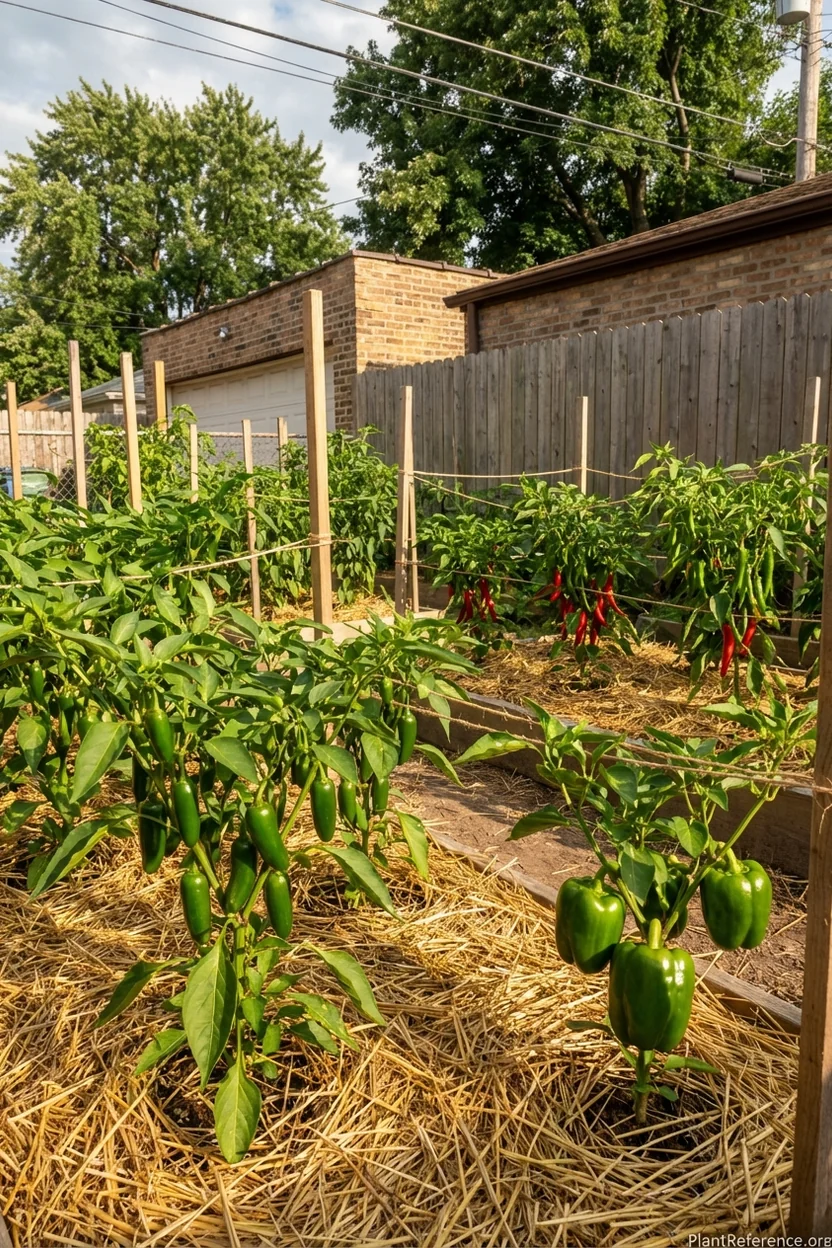
Mulching: Apply 2-3 inches of organic mulch (straw, grass clippings, or shredded leaves) around plants once soil warms in June. This conserves moisture and moderates soil temperature fluctuations.
Fertilization Program
Start with a balanced fertilizer (10-10-10) at planting time. Once flowering begins, switch to a low-nitrogen fertilizer to promote fruit development over excessive vegetative growth.
Organic Approach: I prefer compost side-dressed around plants monthly, supplemented with fish emulsion every 2-3 weeks during peak growing season (July-August).
Calcium Supplementation: Chicago's alkaline soils usually contain adequate calcium, but blossom end rot can still occur during periods of irregular watering. Maintain consistent soil moisture rather than adding more calcium.
Troubleshooting Chicago-Specific Problems
Living in Chicago's Zone 6a presents unique challenges that I've learned to manage over four decades of gardening.
Cool Spring Delays
Problem: Late cold snaps can set back transplants for weeks, causing stunted growth and delayed harvest.
Solution: Always have row cover material ready through the end of May. Protect plants when temperatures drop below 50°F (10°C), even if frost isn't predicted. Cold temperatures below this threshold cause peppers to "sulk" and stop growing.
Variable Summer Weather
Problem: Chicago summers can swing from cool and wet to hot and humid, stressing plants and affecting fruit set.
Cool Period Management: During cool spells (below 60°F nights), fruit set stops. There's nothing to do but wait—don't over-fertilize trying to "push" growth during these periods.
Heat Wave Management: When temperatures exceed 90°F (32°C) for several days, provide afternoon shade using shade cloth or temporary screens. Maintain consistent soil moisture to prevent stress.
Humid Conditions and Disease
Chicago's humidity creates ideal conditions for fungal diseases like bacterial spot and anthracnose.
Prevention Strategy: Space plants adequately for air circulation. Water at soil level using soaker hoses or drip irrigation to keep foliage dry. Remove lower leaves that touch the ground.
Early Detection: Check plants weekly for brown spots on leaves or fruit. Remove affected plant parts immediately and dispose in trash (not compost pile).
Wind Damage
Chicago's wind can break branches or entire plants, especially when heavy with fruit.
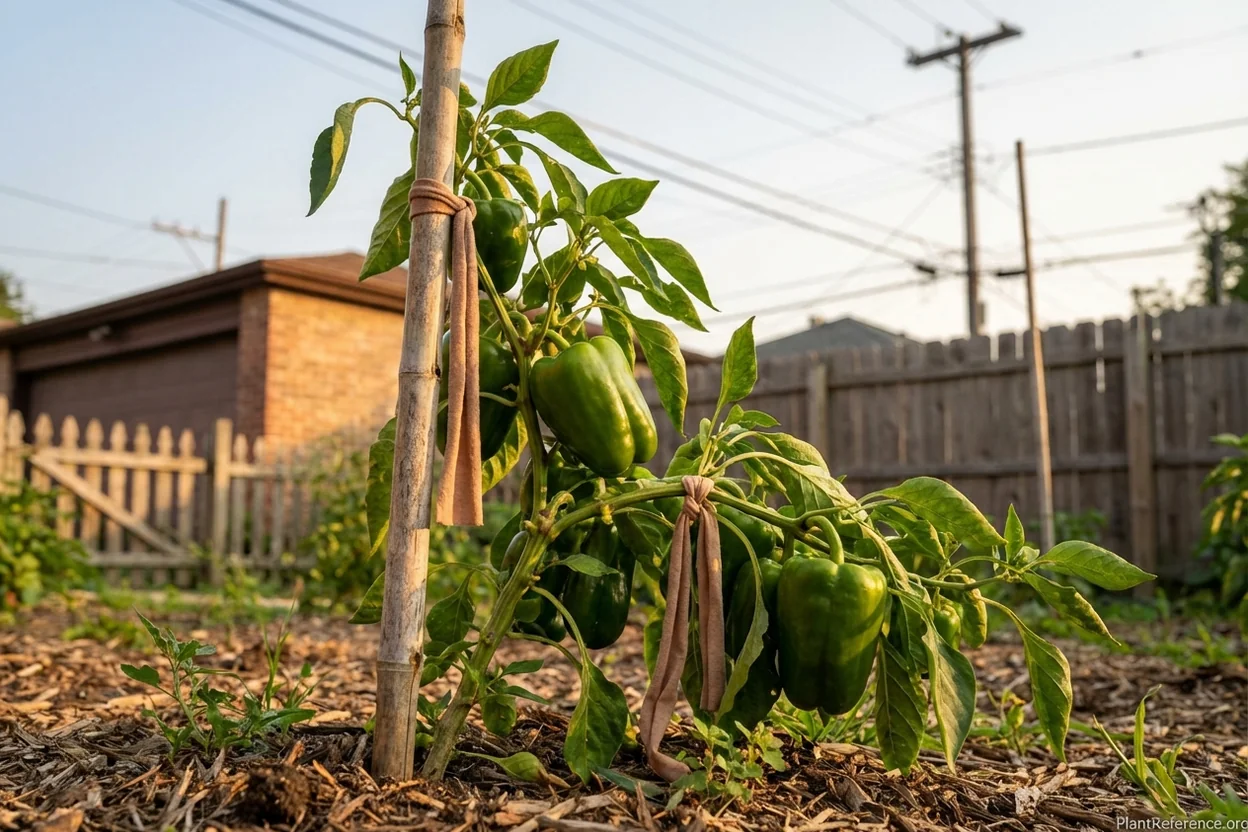
Staking Strategy: Install stakes at planting time to avoid root damage later. Use 4-foot bamboo or metal stakes for most varieties, 6-foot stakes for 🌿Capsicum annuum 'Poblano' and 🌿Capsicum annuum 'Anaheim'.
Tying Method: Use soft ties (cloth strips or foam-coated wire) that won't cut into stems. Tie in figure-8 pattern to allow for stem movement while providing support.
Early Frost Threats
September can bring occasional frost warnings that threaten late-ripening peppers.
Protection Methods: Cover plants with blankets or tarps when frost is predicted. Often these are isolated events followed by weeks of warm weather. Harvest all mature green peppers before hard frost (28°F or below) as they'll ripen indoors.
Poor Fruit Set
Hot periods in July-August can cause flower drop and reduced fruit set.
Natural Response: This is normal pepper behavior during extreme heat. Plants often resume heavy fruit set in late August when temperatures moderate. Maintain consistent watering and avoid high-nitrogen fertilizers during this period.
Harvest & Storage
Knowing when and how to harvest peppers maximizes both yield and quality from your Chicago garden.
Harvest Timing
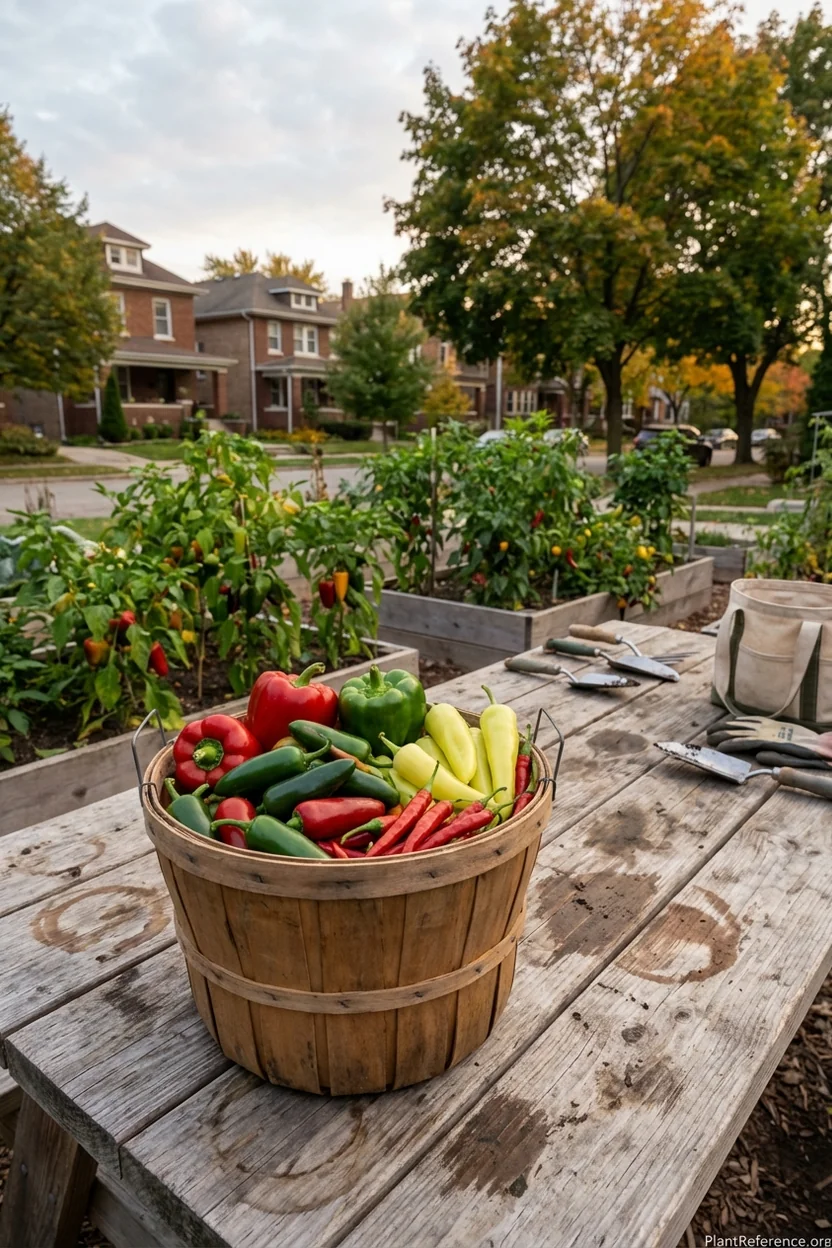
Most peppers can be harvested green or fully ripe, but timing affects both yield and flavor. In Chicago's climate, I recommend harvesting most peppers at the mature green stage to maximize total production before October frost.
Green Harvest Strategy: 🌿Capsicum annuum 'California Wonder' bells develop full size and thick walls while green. Harvest these regularly to encourage continued production. 🌿Capsicum annuum 'Early Jalapeño' peppers reach peak flavor when green with slight glossy sheen.
Color Harvest: Allow some late-season peppers to ripen for color and full flavor development. 🌿Capsicum annuum 'Sweet Banana' peppers are excellent at both yellow and red stages. Red jalapeños develop sweeter, more complex flavors but produce fewer total peppers.
Storage Methods
Fresh peppers store best in the refrigerator for 1-2 weeks. For longer storage, several preservation methods work well with Chicago-grown peppers.
Freezing: Wash, seed, and chop peppers before freezing. No blanching required. Frozen peppers work well in cooked dishes but lose crisp texture. This method preserves the summer harvest for winter cooking.
Drying: 🌿Capsicum annuum 'Cayenne' peppers dry excellently when strung and hung in a dry, well-ventilated area. Chicago's lower humidity in fall creates ideal drying conditions. Dried peppers can be ground into powder or stored whole.
Pickling: 🌿Capsicum annuum 'Sweet Banana' and 🌿Capsicum annuum 'Early Jalapeño' varieties pickle beautifully using standard canning methods. The acidic environment preserves peppers safely for year-round use.
Season Extension
Extend harvest into November using simple protection methods when light frosts threaten.
Container Growing: Move potted peppers into garages or unheated spaces during frost warnings. Many varieties continue producing until hard freeze.
Row Covers: Cover in-ground plants with floating row cover or old sheets when temperatures drop to 35°F (2°C) or below. Often this protection allows harvest through early November in Chicago.
Frequently Asked Questions
Reading about plants and recognising them are different skills. These three build the second.
- Daily PlantIdentify the day’s mystery plant from a close-up photograph.
- Keyed OutWork a dichotomous key, lead by lead, to name a hidden specimen.
- Name That PlantName a specimen from botanical clues dealt hardest first.
Free to play, no account needed
Pat has been gardening in Milwaukee for over thirty years, through every kind of Wisconsin weather. She worked as a school librarian and started gardening seriously when her kids were small—she wanted them to know where food came from. Now retired, she's a certified Master Gardener and runs the plant sale at her local garden club every spring. She specializes in cold-hardy perennials, native wildflower meadows, and the art of getting a vegetable garden producing in Wisconsin's short but intense growing season. Pat is practical and patient—she's seen enough Wisconsin winters to know that gardening here is a long game, and she writes with the steady confidence of someone who's been doing this a long time.