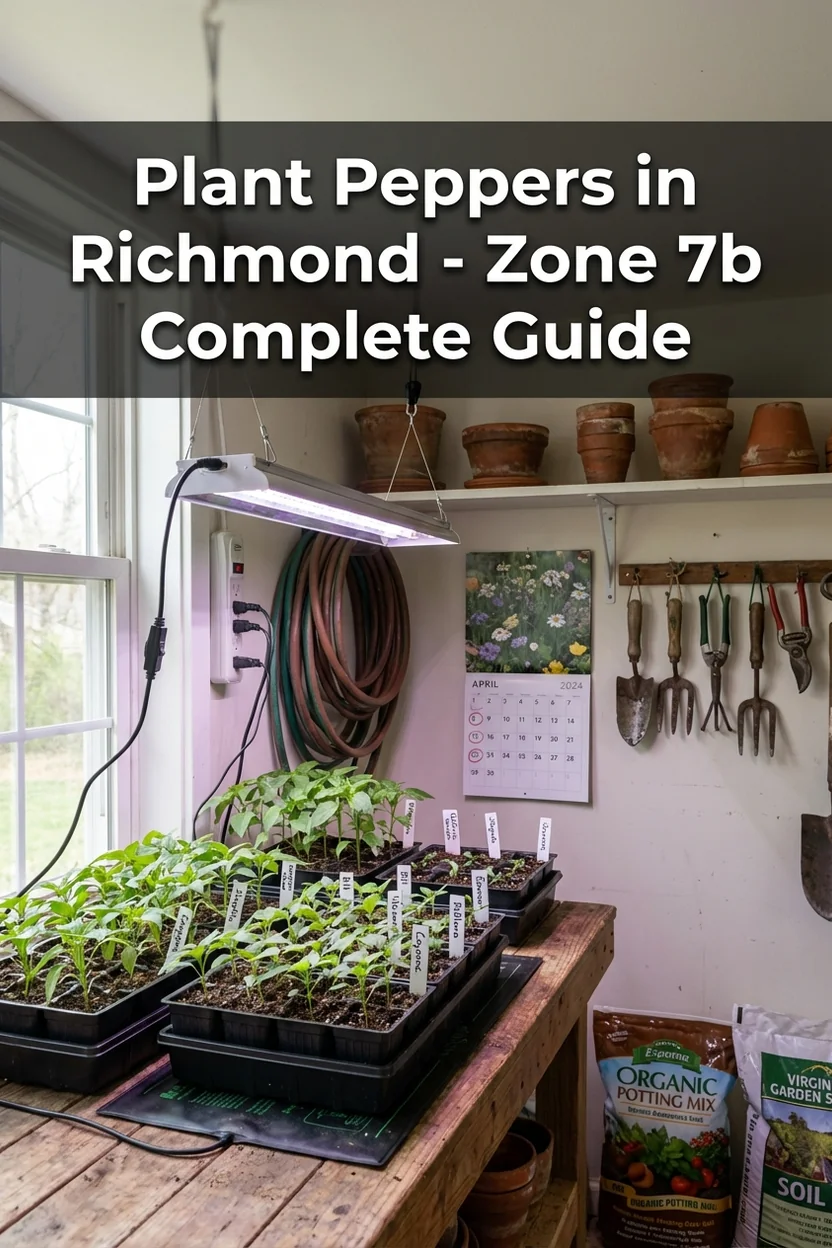
When to Plant Peppers in Richmond: Complete Guide + Best Varieties for Zone 7b
Pets & Toxicity
Recorded toxicity for plants linked in this guide. An unknown status is not a safety assessment.
Toxic to pets: Poblano pepperDetailsHide
Capsicum annuum 'California Wonder' — Toxicity
Non-toxicView Capsicum annuum 'California Wonder' plant profileCapsicum chinense 'Habanero' — Toxicity: Not assessed
Fruit contains capsaicin at 100,000–350,000 Scoville Heat Units — strong enough to cause severe burning on skin, eyes, and mucous membranes through simple contact with cut fruit or the hand that held it. Nitrile gloves are used during handling and food preparation; face and eye contact is avoided. The fruit is irritating rather than toxic in the usual sense, but the heat level can cause significant discomfort and real injury if mishandled. The plant is kept out of reach of children and pets.View Capsicum chinense 'Habanero' plant profileCapsicum annuum 'Jalapeño' — Toxicity: Not assessed
Capsaicin in fruit causes burning sensations in mouth and on skin. Fruit and handling oils are irritating to eyes and mucous membranes but are not toxic in the usual sense. Gloves are used during harvesting and processing; hands are washed thoroughly before touching face. Small amounts are generally safe for pets but can cause digestive upset.View Capsicum annuum 'Jalapeño' plant profileCapsicum annuum 'Poblano' — Toxicity Warning
Toxic to petsView Capsicum annuum 'Poblano' plant profile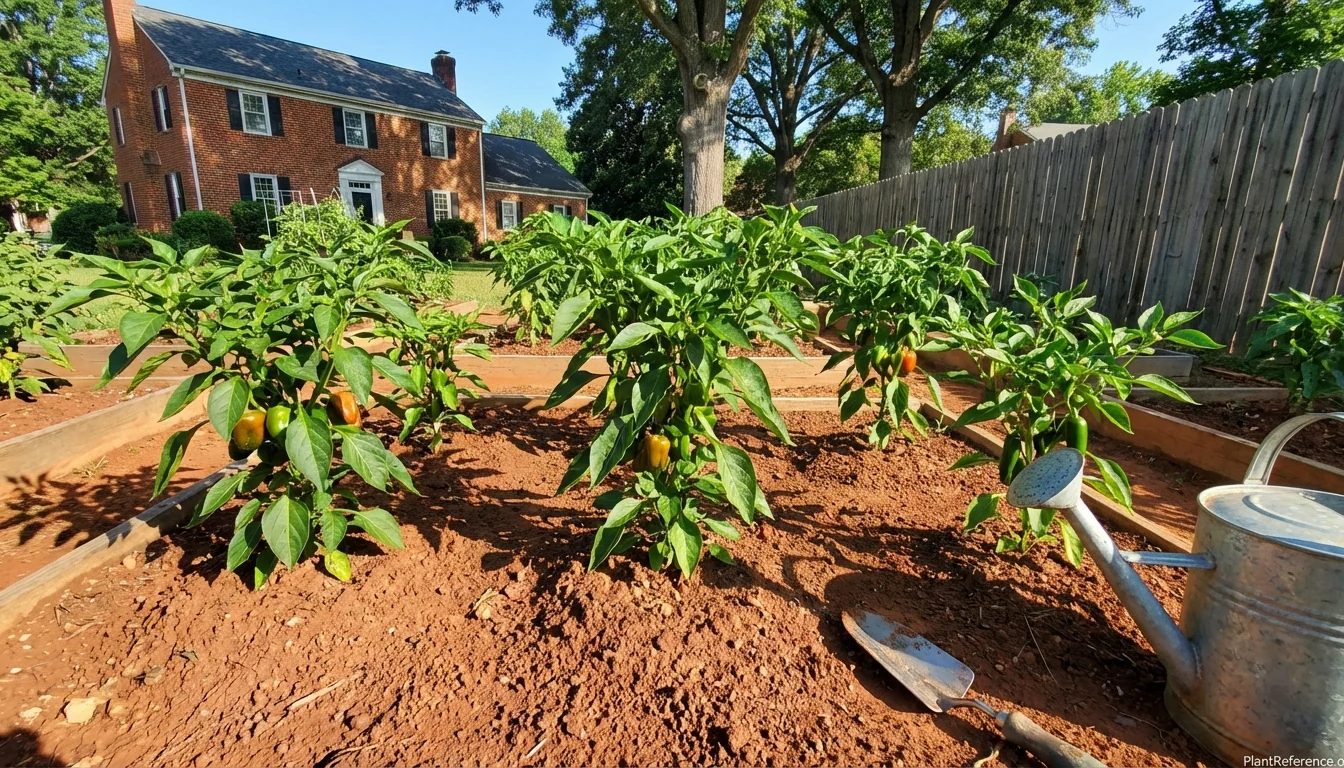
— Image © Plant Reference 2026
After forty years of growing peppers in Virginia, I can tell you that Richmond gardeners have hit the jackpot. Zone 7b gives us nearly 200 frost-free days and enough heat units to ripen everything from sweet bells to fiery habaneros. The secret to pepper success in Richmond isn't complicated—it's timing your plantings with our predictable spring weather and working with our heavy clay soils, not against them.
Best Pepper Varieties for Richmond's Zone 7b Climate
Richmond's Zone 7b climate with 193 frost-free days creates perfect conditions for pepper growing. Our moderate humidity, warm summers, and reliable rainfall support excellent yields when you choose varieties matched to our growing conditions.
The key to success in Richmond is understanding our clay soil drainage patterns and summer heat stress periods. I recommend focusing on varieties that handle brief dry spells well and produce reliably in our humid July and August weather.
Variety | Days to Maturity | Best For | Notes for Richmond Zone 7b |
|---|---|---|---|
60-70 days | Quick harvest, containers | Perfect for Richmond's clay soil in raised beds | |
65-75 days | Pickling, fresh eating | Excellent disease resistance in Virginia humidity | |
70-80 days | Stuffing, fresh eating | Thrives in Richmond's consistent moisture | |
70-80 days | Salsa, hot sauce | Heat stress tolerant for Richmond summers | |
65-80 days | Roasting, cooking | Handles clay soil well with proper drainage | |
70-80 days | Roasting, drying | Productive in Richmond's long growing season | |
70-85 days | Drying, hot sauce | Excellent for Richmond's humid summers | |
90-120 days | Hot sauce, extreme heat | Requires container growing or season extension |
Sweet Pepper Champions for Richmond
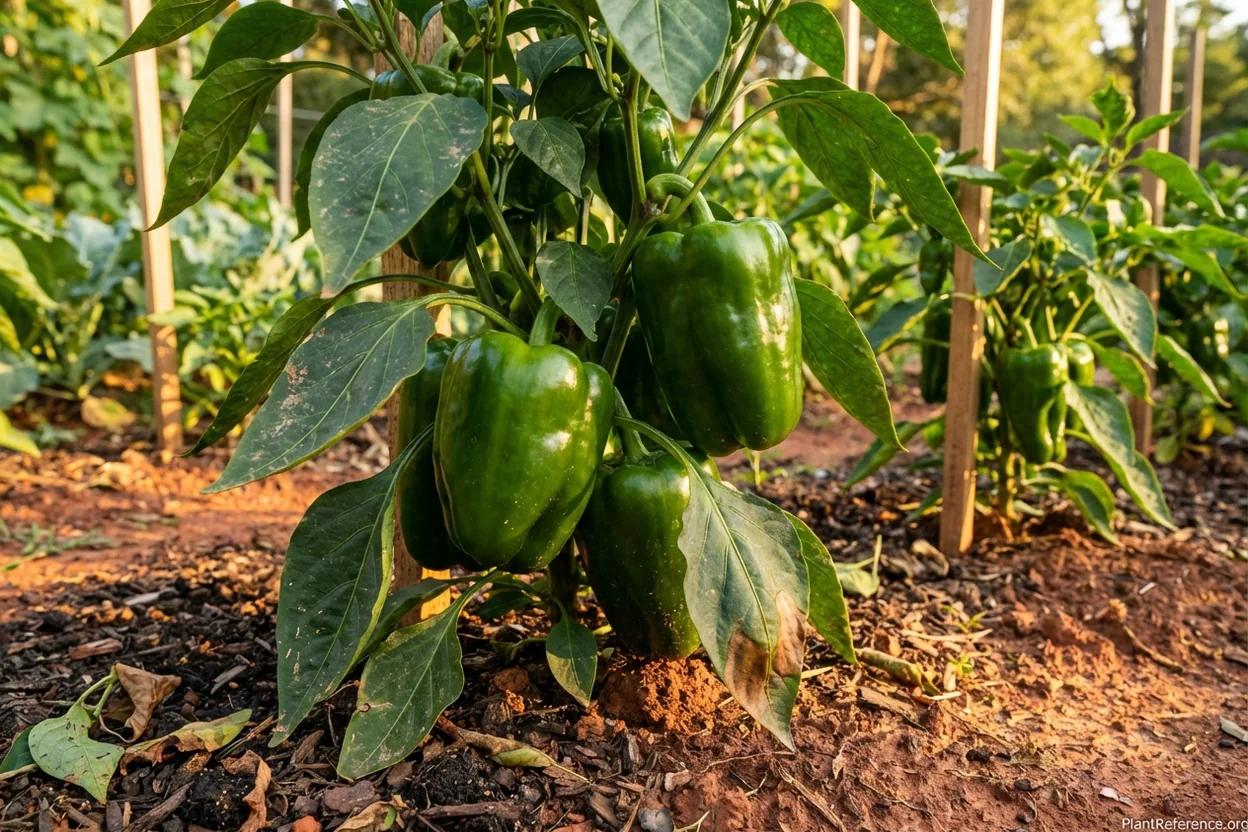
🌿Capsicum annuum 'California Wonder' remains my top recommendation for Richmond gardeners wanting reliable bell peppers. This variety handles our clay soils better than most, producing thick-walled fruits even during summer heat waves. The 70-80 day maturity fits perfectly within our April 15 to October 25 growing window.
🌿Capsicum annuum 'Sweet Banana' excels in Richmond's conditions with outstanding disease resistance. These prolific plants produce continuously through our humid summers without the blossom end rot problems that plague other sweet varieties in clay soils.
Heat-Loving Varieties for Richmond Summers
🌿Capsicum annuum 'Jalapeño' and 🌿Capsicum annuum 'Cayenne' handle Richmond's summer heat stress exceptionally well. Both varieties continue producing through July and August when other peppers slow down. The key is providing consistent moisture during our occasional dry spells.
🌿Capsicum chinense 'Habanero' pushes the limits in Richmond but succeeds with container growing. I grow mine in 7-gallon black pots positioned against a south-facing brick wall to maximize heat accumulation. This method extends the effective growing season and provides the 90-120 days habaneros need to reach full maturity.
Specific Planting Dates for Richmond Gardeners
Richmond's April 15 average last frost date anchors all pepper timing decisions. I've been tracking our actual frost patterns for decades, and April 15 represents the 90% confidence level—meaning only 1 in 10 years will we see frost after this date.
Indoor Seed Starting Timeline
February 15-22: Start Seeds Indoors
Begin all pepper seeds 8 weeks before transplanting. In Richmond, this means President's Day weekend is ideal for seed starting. Use heat mats to maintain soil temperature at 80-85°F (27-29°C) for optimal germination.
🌿Capsicum chinense 'Habanero' requires earlier starting due to slower germination. Begin habanero seeds February 8-15 to ensure adequate growing time.
March 15-22: First Transplant into Larger Pots
Move seedlings from cell packs into 4-inch pots once they develop two sets of true leaves. This step builds stronger root systems before outdoor transplanting.
April 1-8: Begin Hardening Off Process
Start hardening off seedlings by placing them outdoors during warm days (above 60°F/16°C) and bringing them inside at night. Richmond's spring weather allows gradual acclimation over 7-10 days.
Outdoor Planting Schedule
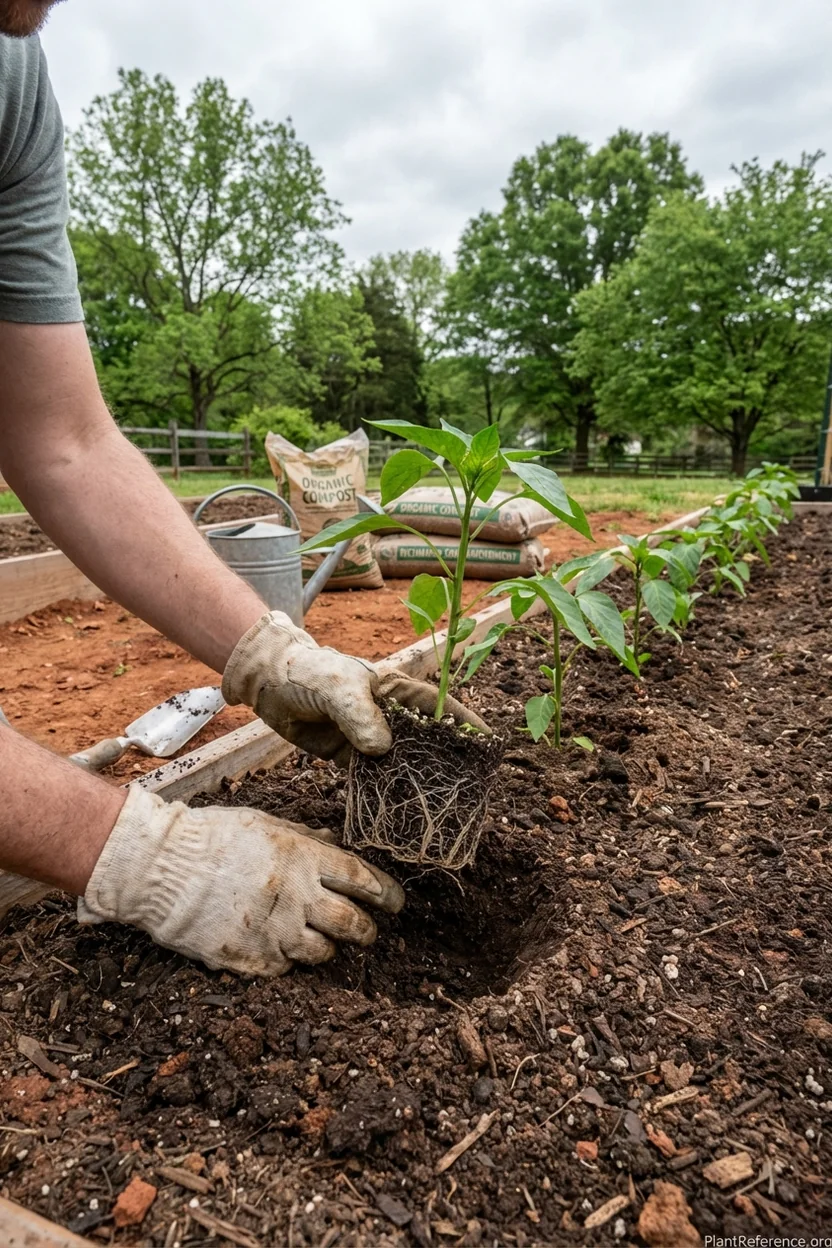
May 1-8: Safe Transplant Window
This represents the optimal transplant timing for Richmond. Soil temperatures consistently reach 60°F (16°C) by early May, and night temperatures remain above 55°F (13°C). Planting during this window avoids the "sulking" that occurs when peppers experience cold soil.
May 15-22: Extended Planting Window
Late planters can still achieve good yields by transplanting through mid-May. 🌿Capsicum annuum 'Shishito' and other quick-maturing varieties planted May 15 will still produce heavily through October.
Harvest Timing Calculations
Based on Richmond's growing conditions, here are specific harvest windows for each variety:
Early Harvest (July 15 - August 15):
🌿Capsicum annuum 'Shishito': First harvest July 10-15
🌿Capsicum annuum 'Sweet Banana': First harvest July 20-25
Main Season Harvest (August 1 - September 30):
🌿Capsicum annuum 'California Wonder': First harvest August 5-10
🌿Capsicum annuum 'Jalapeño': First harvest August 8-15
Late Season Harvest (September 1 - October 20):
🌿Capsicum annuum 'Cayenne': First harvest September 10-15
🌿Capsicum chinense 'Habanero': First harvest September 15-25
Complete Growing Guide for Richmond's Climate
Growing successful peppers in Richmond requires understanding our unique combination of clay soil, summer humidity, and variable rainfall patterns. Here's my proven system developed over four decades of Virginia gardening.
Soil Preparation for Richmond's Clay
Richmond's notorious clay soil presents both challenges and advantages for pepper growing. The clay retains nutrients excellently but can become waterlogged during our spring rains and concrete-hard during summer dry spells.
Clay Soil Amendment Protocol:
Add 2-3 inches of coarse compost to planting beds each spring
Work in coarse sand (not fine sand) at 1 part sand to 3 parts existing soil
Create raised beds 6-8 inches high to improve drainage
Install French drains in low-lying garden areas prone to standing water
Never work clay soil when wet to avoid creating hardpan layers
I always tell Richmond gardeners: "If your clay sticks to your boots, don't work it." Wait for proper moisture levels—the soil should crumble in your hand rather than forming a ball.
Spacing and Support Systems
Richmond's humid summers require increased air circulation to prevent fungal diseases. Space plants wider than recommendations suggest: 20-24 inches between plants and 36 inches between rows.
Support Requirements by Variety:
🌿Capsicum annuum 'California Wonder' and 🌿Capsicum annuum 'Poblano' require substantial support due to heavy fruit load. Use 6-foot stakes or tomato cages rated for 20+ pounds.
🌿Capsicum annuum 'Cayenne' and 🌿Capsicum annuum 'Jalapeño' need moderate support. Four-foot bamboo stakes suffice for these varieties.
🌿Capsicum annuum 'Shishito' typically supports itself but may need staking during Richmond's summer thunderstorms.
Irrigation Strategy for Richmond Climate
Richmond receives approximately 44 inches of annual rainfall, but distribution varies significantly. June and July often bring dry periods requiring supplemental irrigation, while spring and fall provide adequate natural moisture.
Efficient Watering Protocol:
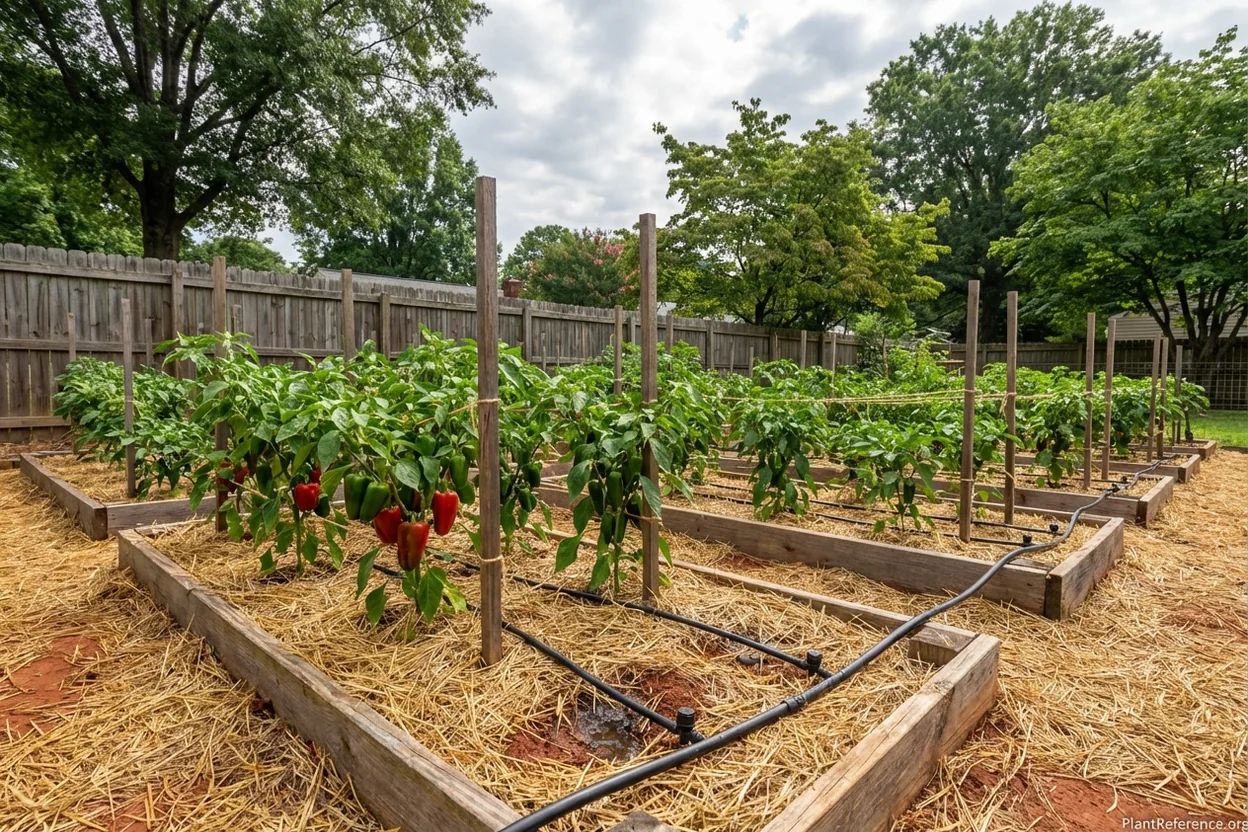
Install drip irrigation or soaker hoses to keep foliage dry
Water deeply twice weekly rather than frequent shallow applications
Apply 1-2 inches per week including rainfall
Mulch heavily with 3-4 inches of straw or shredded leaves
Monitor soil moisture at 4-6 inch depth using a probe or finger test
Richmond's clay soil retains moisture well once properly hydrated, but surface crusting can prevent water penetration. Break up soil crust regularly with light cultivation.
Fertilization Program for Richmond Peppers
Richmond's clay soil typically contains adequate potassium but may lack available nitrogen and phosphorus during peak growing season. My fertilization program addresses these specific deficiencies while avoiding over-fertilization that promotes excessive foliage at the expense of fruit production.
Three-Stage Fertilization Schedule:
Stage 1 - Transplant Establishment (May 1-15): Apply balanced 10-10-10 fertilizer at transplanting, working into soil around root zone. This provides immediate nutrition for establishment without overwhelming young plants.
Stage 2 - Flowering Period (June 15 - July 15): Switch to 5-10-10 fertilizer to promote flower development. Reduce nitrogen to prevent excessive vegetative growth that delays flowering.
Stage 3 - Fruit Production (July 15 - September 30): Apply calcium sulfate monthly to prevent blossom end rot, particularly important in Richmond's clay soils where calcium availability fluctuates with soil moisture levels.
Troubleshooting Richmond-Specific Pepper Problems
Richmond's Zone 7b climate creates specific growing challenges that I've learned to anticipate and manage over decades of pepper growing. Here are the most common issues and my proven solutions.
Clay Soil Drainage Problems
Symptoms: Plants appear stunted with yellowing lower leaves. Soil remains soggy 24-48 hours after rain. Root rot may develop in severe cases.
Richmond-Specific Cause: Our heavy clay soil becomes waterlogged during spring rains (March-May) and summer thunderstorms.
Solution: Create raised beds 8-12 inches high using a mixture of existing soil, coarse compost, and builder's sand. Install tile drainage in perpetually wet areas.
Summer Heat Stress
Symptoms: Flower drop during July-August heat waves. Leaves may show browning edges or wilting despite adequate soil moisture.
Richmond-Specific Cause: Heat waves combining 95°F+ (35°C+) temperatures with high humidity stress plants beyond their tolerance.
Solution: Provide afternoon shade using 30% shade cloth during heat advisories. Increase watering frequency to twice daily during extreme heat.
Late Season Pest Pressure
Symptoms: Increased aphid populations and whitefly infestations during August-September. Sooty mold may develop on leaves.
Richmond-Specific Cause: Richmond's warm, humid late summers create ideal conditions for pest reproduction while beneficial insect populations decline.
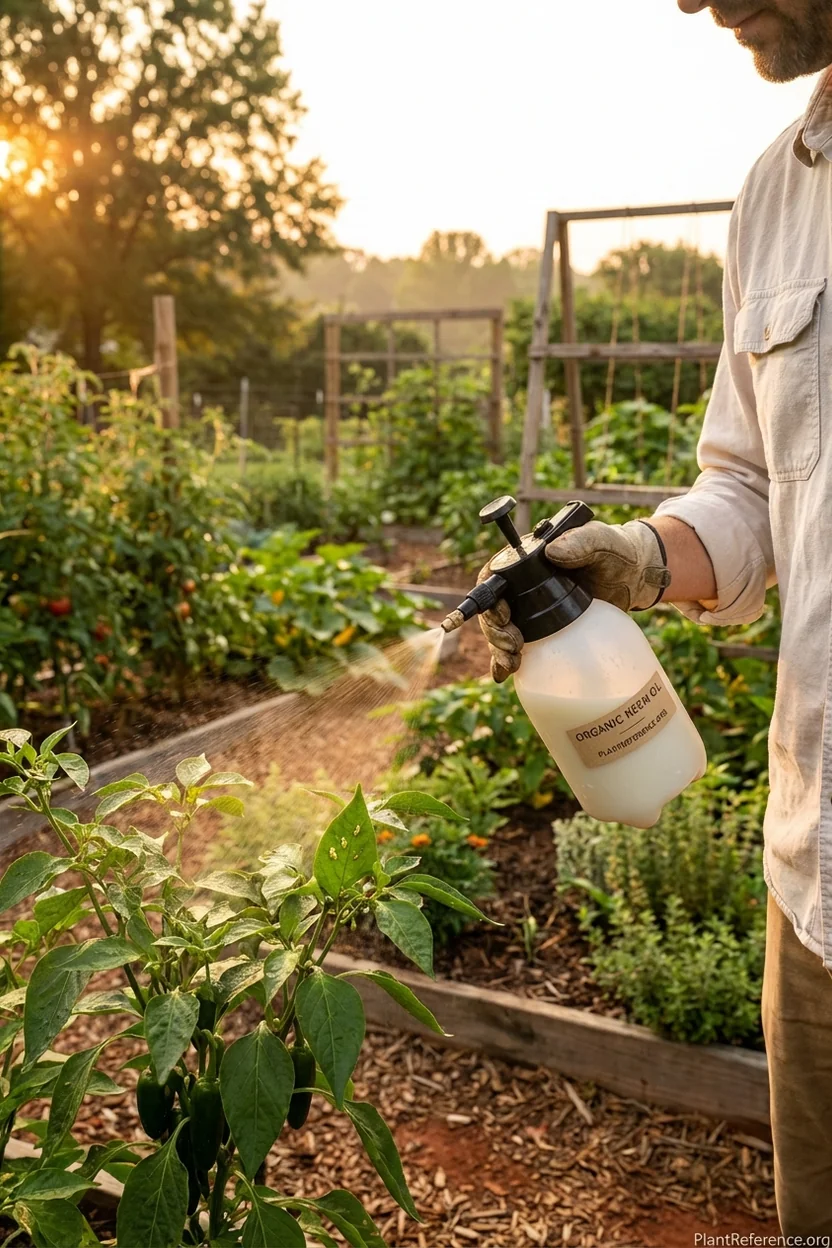
Solution: Install reflective mulch around plants to confuse aphids. Apply neem oil in early evening to avoid leaf burn in high temperatures.
Blossom End Rot in Clay Soils
Symptoms: Dark, sunken spots on pepper bottoms, particularly affecting 🌿Capsicum annuum 'California Wonder' and other large-fruited varieties.
Richmond-Specific Cause: Inconsistent calcium uptake due to fluctuating moisture levels in clay soil during summer dry-wet cycles.
Solution: Maintain consistent soil moisture through mulching and regular irrigation. Apply gypsum (calcium sulfate) in spring to improve calcium availability without altering soil pH.
Fungal Disease Pressure
Symptoms: Leaf spots, stem cankers, or fruit rot during humid periods. Most common in late summer when humidity remains high overnight.
Richmond-Specific Cause: Richmond's summer humidity combined with warm night temperatures creates ideal conditions for bacterial and fungal pathogens.
Solution: Increase plant spacing to 24 inches minimum. Use drip irrigation instead of overhead watering. Remove affected plant material immediately to prevent spread.
Harvest & Storage in Virginia
Richmond's extended growing season allows for multiple harvests from each plant, maximizing yield from your garden investment. Proper timing and storage techniques preserve quality and extend your harvest enjoyment.
Optimal Harvest Timing by Stage
Green Stage Harvest: 🌿Capsicum annuum 'California Wonder' and 🌿Capsicum annuum 'Poblano' reach full size while green, typically 75-85 days after transplanting in Richmond. Green peppers store longer but have milder flavor than fully ripened peppers.
Color Stage Harvest: Allow peppers to develop full color for maximum sweetness and nutritional content. 🌿Capsicum annuum 'Jalapeño' develops characteristic corking and deepens to red when fully mature. This adds 10-14 days to harvest time but significantly improves flavor.
Continuous Harvest Strategy: Pick peppers regularly to encourage continued production. 🌿Capsicum annuum 'Shishito' and 🌿Capsicum annuum 'Sweet Banana' produce continuously through Richmond's long season when harvested every 3-4 days.
Storage Methods for Richmond Climate
Richmond's humid summers require careful post-harvest handling to prevent spoilage and maximize storage life.
Short-term Storage (1-2 weeks): Store unwashed peppers in perforated plastic bags in refrigerator crisper drawer. Richmond's humidity means peppers must be completely dry before storage to prevent condensation buildup.
Long-term Preservation:
Freeze whole small peppers like jalapeños and shishitos without blanching
Dehydrate thin-walled varieties like cayenne using food dehydrator or oven
Pickle sweet banana peppers using traditional Virginia canning methods
Smoke poblanos over hardwood to create chipotle-style peppers
Ferment hot peppers into traditional Virginia-style pepper sauce
Richmond's October 25 first frost date typically allows for end-of-season harvesting of all remaining peppers for preservation. Green tomatoes and peppers can be harvested before frost and ripened indoors over several weeks.
Extending the Season in Richmond
Richmond gardeners can extend the pepper season on both ends using simple techniques that take advantage of our moderate Zone 7b climate.
Spring Season Extension: Use floating row covers or low tunnels to protect transplants from late cold snaps. Richmond occasionally experiences temperatures in the upper 40s during early May. Row covers add 5-10°F protection, ensuring plants continue growing rather than stalling.
Fall Season Extension: 🌿Capsicum chinense 'Habanero' and other long-season varieties benefit from protection during Richmond's first light frosts in mid-to-late October. Covering plants during 30-32°F nights often extends harvest by 2-3 weeks, allowing full ripening of late-set fruits.
Container Growing Advantages: Peppers in containers can be moved to protected locations during weather extremes. Position containers on wheeled plant caddies for easy movement. This technique works particularly well for valuable varieties like habaneros that require every possible growing day in Richmond.
Frequently Asked Questions
Reading about plants and recognising them are different skills. These three build the second.
- Daily PlantIdentify the day’s mystery plant from a close-up photograph.
- Keyed OutWork a dichotomous key, lead by lead, to name a hidden specimen.
- Name That PlantName a specimen from botanical clues dealt hardest first.
Free to play, no account needed
Dot grew up on a small farm in rural Virginia and has maintained a vegetable garden for decades. After retiring from teaching elementary school, she became a Master Gardener volunteer and spends her time mentoring new gardeners at community garden plots in Richmond. She's especially knowledgeable about heirloom varieties, seed saving, and traditional growing methods passed down from her grandmother. Dot's no-nonsense advice comes from extensive trial and error—she's seen every tomato disease, pest problem, and weather disaster imaginable. Her biggest pet peeve is gardeners who overcomplicate simple tasks. "Plants want to grow," she often says. "Your job is to not get in their way."