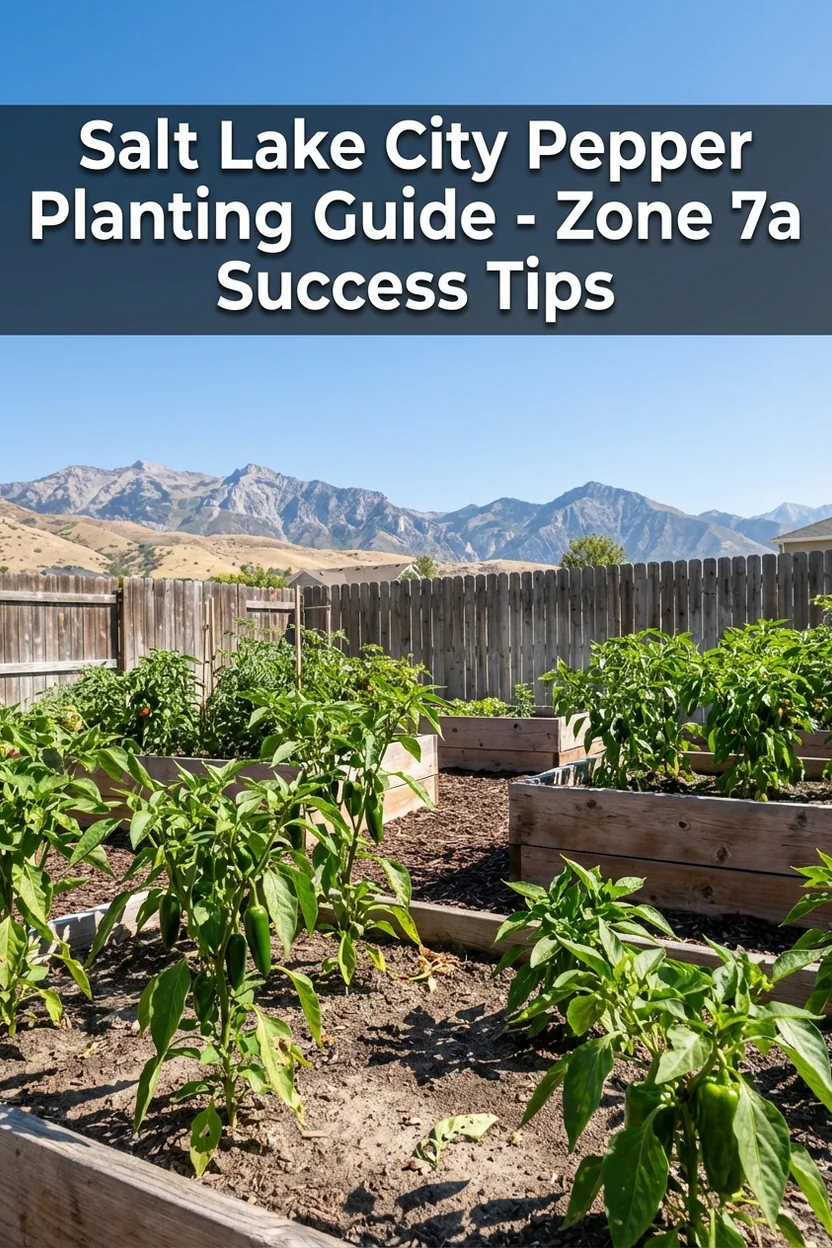
When to Plant Peppers in Salt Lake City: Complete Guide + Best Varieties for Zone 7a
Pets & Toxicity
Recorded toxicity for plants linked in this guide. An unknown status is not a safety assessment.
Toxic to pets: Poblano pepperDetailsHide
Capsicum annuum 'California Wonder' — Toxicity
Non-toxicView Capsicum annuum 'California Wonder' plant profileCapsicum chinense 'Habanero' — Toxicity: Not assessed
Fruit contains capsaicin at 100,000–350,000 Scoville Heat Units — strong enough to cause severe burning on skin, eyes, and mucous membranes through simple contact with cut fruit or the hand that held it. Nitrile gloves are used during handling and food preparation; face and eye contact is avoided. The fruit is irritating rather than toxic in the usual sense, but the heat level can cause significant discomfort and real injury if mishandled. The plant is kept out of reach of children and pets.View Capsicum chinense 'Habanero' plant profileCapsicum annuum 'Poblano' — Toxicity Warning
Toxic to petsView Capsicum annuum 'Poblano' plant profileCapsicum annuum 'Jalapeño' — Toxicity: Not assessed
Capsaicin in fruit causes burning sensations in mouth and on skin. Fruit and handling oils are irritating to eyes and mucous membranes but are not toxic in the usual sense. Gloves are used during harvesting and processing; hands are washed thoroughly before touching face. Small amounts are generally safe for pets but can cause digestive upset.View Capsicum annuum 'Jalapeño' plant profile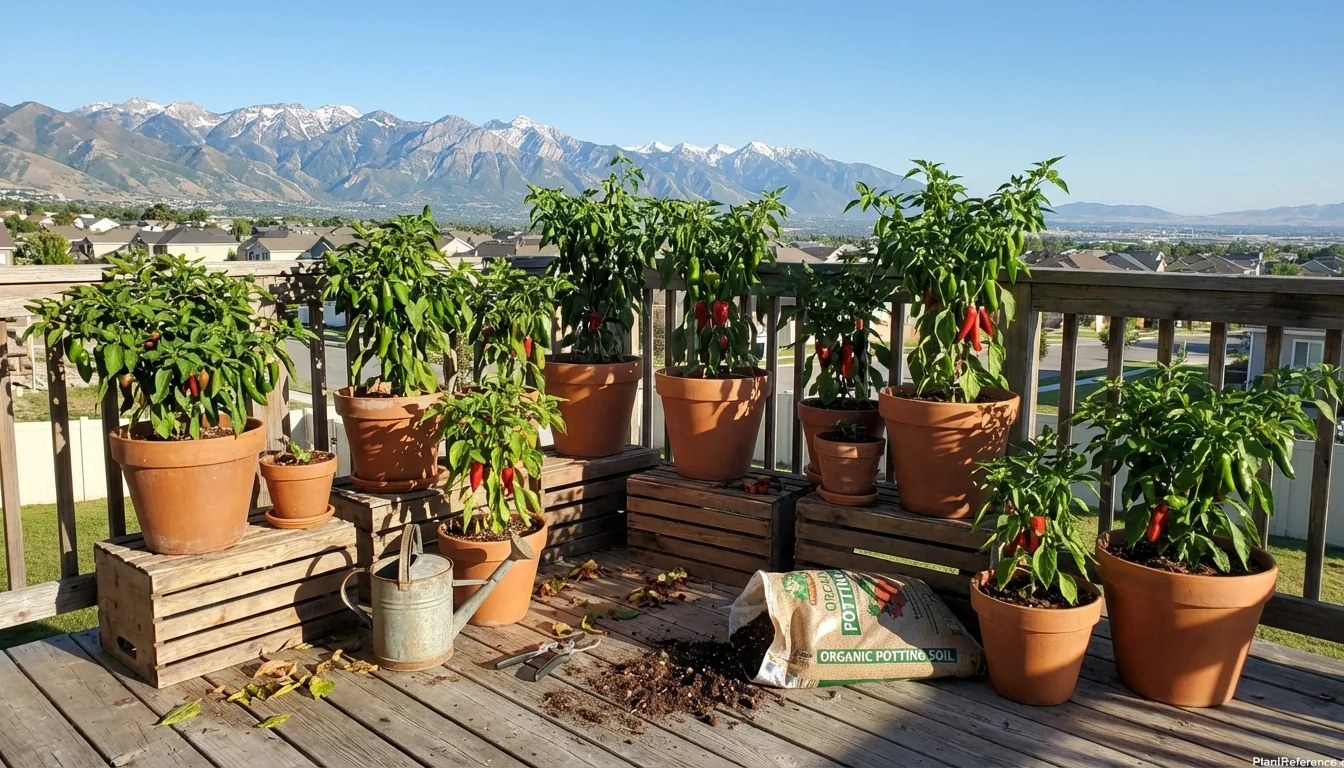
— Image © Plant Reference 2026
Salt Lake City gardeners have a real advantage when it comes to growing peppers—if you know how to work with our Zone 7a climate. After forty years of gardening in mountain communities, I've learned that success with peppers in Salt Lake comes down to timing, variety selection, and understanding how our high altitude affects growing conditions.
The key to pepper success in Salt Lake City is respecting our unique growing conditions. We get 173 frost-free days between April 25 and October 15, which is plenty for most pepper varieties. But our high altitude (4,300 feet) means intense UV radiation, dry air, and cool nights even in summer. These conditions actually work in our favor once you know how to manage them.
Best Pepper Varieties for Salt Lake City's Zone 7a Climate
Salt Lake City's Zone 7a climate with 173 growing days supports nearly all pepper varieties, but some perform better than others in our high-altitude, arid conditions.
Variety | Days to Maturity | Best For | Notes for Salt Lake City |
|---|---|---|---|
65-70 days | Reliable harvest | Handles cool nights well, sets fruit consistently | |
70-75 days | Fresh eating | Thick walls resist sunscald in intense UV | |
75-80 days | Roasting/cooking | Excellent in dry heat, develops thick walls | |
60-65 days | Quick harvest | Matures before cool fall weather | |
70-75 days | Pickling | Thrives in Salt Lake's dry conditions | |
70-80 days | Drying/spice | Low humidity perfect for air-drying | |
90-100 days | Hot sauce | Needs container growing for best results |
The varieties that consistently perform best in Salt Lake City share certain traits: they handle temperature swings well, set fruit reliably despite cool nights, and their thick walls resist the intense UV radiation we get at 4,300 feet elevation.
Top Performers for Salt Lake Conditions
🌿Capsicum annuum 'Early Jalapeño' is my go-to recommendation for new Salt Lake gardeners. These plants handle our cool spring nights without sulking and begin setting fruit when many other varieties are still struggling to establish. The compact plants rarely need staking, and the moderate heat level (2,500-5,000 SHU) develops well in our climate.
🌿Capsicum annuum 'California Wonder' bell peppers develop exceptionally thick walls in Salt Lake's intense sunlight. The UV radiation that burns other vegetables actually improves the flavor and texture of these bells. They require consistent watering due to their large fruit size, but our low humidity reduces disease pressure significantly.
🌿Capsicum annuum 'Poblano' peppers absolutely thrive in Salt Lake's dry heat. The combination of warm days and cool nights develops the thick, flavorful walls that make these peppers perfect for roasting. I've had poblano plants produce until hard frost in October.
Varieties to Approach Carefully
🌿Capsicum chinense 'Habanero' varieties need special attention in Salt Lake City. While our 173-day season is long enough for these heat-lovers to mature, our cool nights can slow their growth significantly. I recommend growing habaneros in large containers (at least 5 gallons) positioned against a south-facing wall to capture and radiate heat.
Large-fruited bell peppers beyond California Wonder can struggle with our intense UV. Varieties like 'Big Bertha' often develop sunscald on the exposed fruit surfaces. If you want to grow large bells, plan on providing 30% shade cloth during the hottest part of summer.
Specific Planting Dates for Salt Lake City
Salt Lake City's last frost date of April 25 and first frost date of October 15 create a reliable 173-day growing window. Here's exactly when to start your pepper seeds and transplant outdoors.
Indoor Seed Starting Schedule
Start seeds indoors: March 1-8
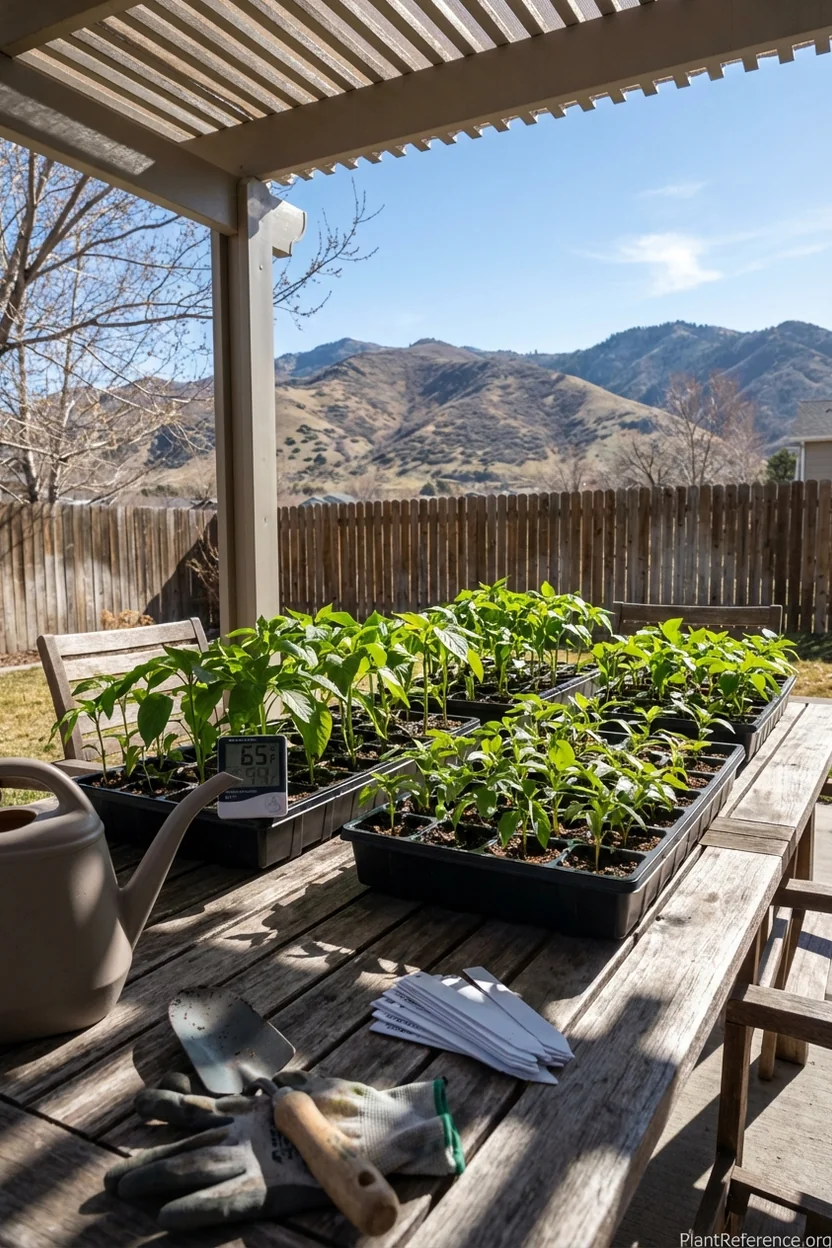
This timing gives you 8 weeks of indoor growing time before transplanting. Pepper seeds need warm soil (80-85°F) to germinate properly, so use a heat mat if your house runs cool. In Salt Lake's dry air, cover seed trays with plastic to maintain humidity during germination.
Seeds typically germinate in 7-14 days with proper heat and moisture. 🌿Capsicum chinense 'Habanero' varieties may take up to 21 days, so be patient. Once seedlings emerge, provide 14-16 hours of light daily using grow lights or a bright south-facing window.
Hardening Off Period
Begin hardening off: April 18-25
Salt Lake's intense UV and dry winds can shock tender seedlings, so the hardening off period is crucial. Start by placing seedlings outside for 2-3 hours in morning shade, gradually increasing exposure over 7-10 days.
Watch for signs of stress: wilting, leaf bleaching, or stunted growth. Our high altitude intensifies UV radiation, so seedlings need time to develop protective compounds in their leaves.
Transplanting Schedule
Safe transplanting window: May 2-9
Wait until nighttime temperatures consistently stay above 55°F (13°C) before transplanting peppers outdoors. Peppers planted in cooler soil will "sulk"—sitting dormant until conditions improve. This delays harvest and reduces overall yield.
Check soil temperature 2 inches deep in early morning. Soil should read at least 60°F before transplanting. If soil is too cool, black plastic mulch installed 1-2 weeks early can raise temperatures by 5-10 degrees.
Fall Planning
Last transplant date: July 15
For a fall crop of quick-maturing varieties like 🌿Capsicum annuum 'Shishito', you can start seeds in late May for transplanting in mid-July. These will mature before our first frost on October 15.
First frost preparation: October 10-15
Begin harvesting all green peppers when nighttime temperatures start dropping into the low 40s. Green peppers will ripen indoors if stored in a warm location.
Complete Growing Guide for Salt Lake City
Success with peppers in Salt Lake City requires adapting your growing methods to our unique high-altitude, semi-arid climate. Here's what forty years of mountain gardening has taught me about growing peppers in Zone 7a.
Soil Preparation and Site Selection
Salt Lake City's clay-based soils need significant amendment for pepper success. Our native soil holds water too long when wet and turns rock-hard when dry—neither condition peppers appreciate.
Soil amendments for Salt Lake clay:
Add 2-3 inches of compost to improve drainage and water retention
Mix in coarse sand (not fine sand) to break up clay structure
Work in aged manure to add organic matter and nutrients
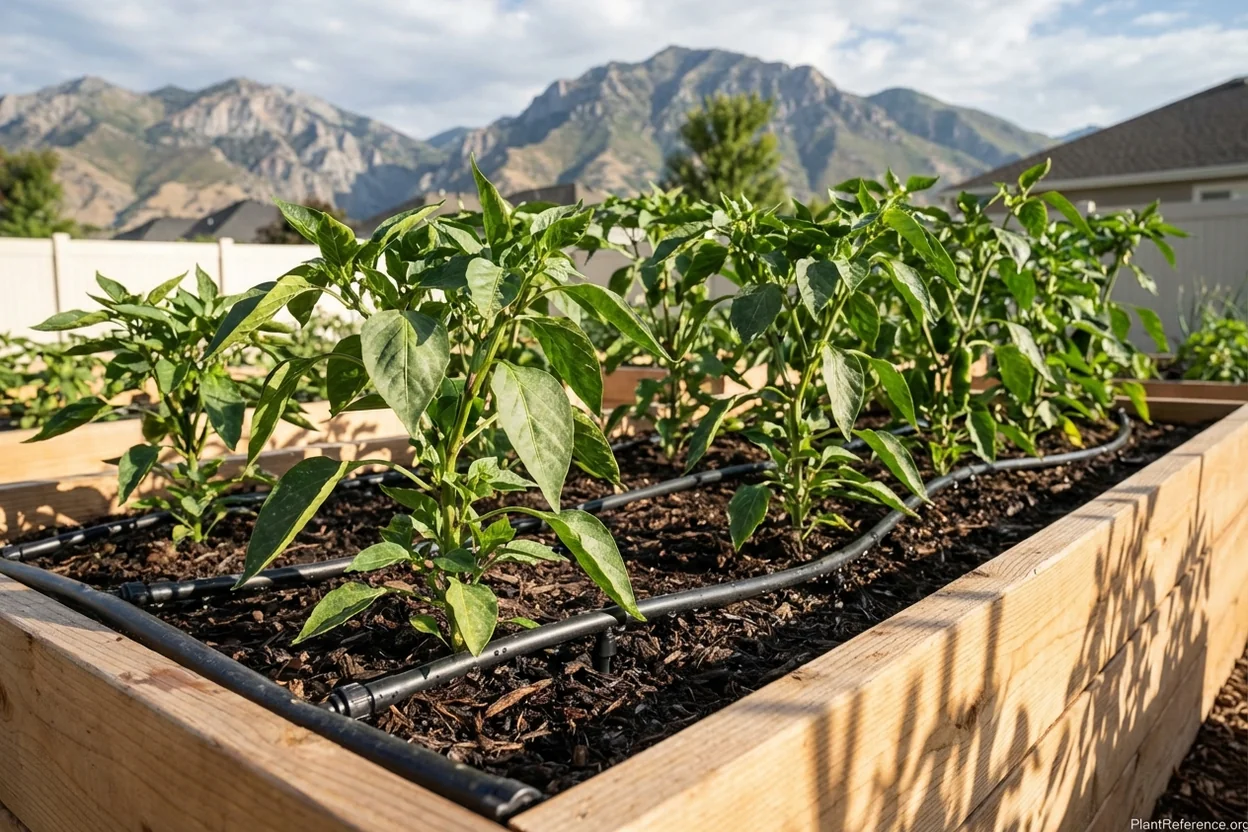
Consider raised beds for improved drainage and soil warming
Choose the sunniest location in your garden—peppers need 6-8 hours of direct sunlight daily. In Salt Lake's intense UV, some afternoon shade can actually benefit large-fruited varieties, but morning sun is essential for proper fruit set.
Site considerations:
South-facing exposure for maximum heat accumulation
Protection from prevailing west winds that can dry out plants
Good air circulation to prevent fungal issues in irrigated gardens
Easy access to water—peppers need consistent moisture
Water Management in Arid Conditions
Salt Lake City's 16-inch annual rainfall means irrigation is mandatory for pepper success. Our low humidity causes rapid moisture loss, but proper watering techniques can turn this challenge into an advantage.
Efficient watering strategies:
Install drip irrigation or soaker hoses to deliver water directly to root zones
Water deeply 2-3 times per week rather than daily shallow watering
Apply 2-3 inches of organic mulch to reduce evaporation
Water early morning to minimize loss to evaporation
The key is maintaining consistent soil moisture without waterlogging. Peppers hate "wet feet," and our clay soils can become anaerobic if overwatered. Check soil moisture by inserting your finger 2 inches deep—water when the top inch feels dry.
Fertilization for High-Altitude Growing
Salt Lake's alkaline soils (pH 7.2-8.0) can lock up certain nutrients, requiring adjusted fertilization strategies. Peppers are moderate feeders but need balanced nutrition throughout the growing season.
Pre-planting soil preparation:
Test soil pH and adjust toward 6.0-7.0 if extremely alkaline
Work in 2-4 inches of compost before planting
Add balanced granular fertilizer (10-10-10) at soil preparation
Season-long nutrition:
Side-dress with compost or aged manure mid-season
Apply liquid fertilizer every 3-4 weeks during active growth
Reduce nitrogen in late summer to encourage fruit ripening
Add calcium if blossom end rot appears on fruit
Managing Extreme Weather
Salt Lake City's weather can be unpredictable—late spring snows, sudden hailstorms, and extreme heat waves all challenge pepper growers. Preparation and quick response keep your crop productive.
Spring protection strategies:
Keep row covers handy for unexpected late freezes
Use Wall-o-Water or similar protection for early transplants
Have backup seedlings ready in case of weather damage
Monitor 10-day forecasts during the critical May establishment period
Summer heat management:
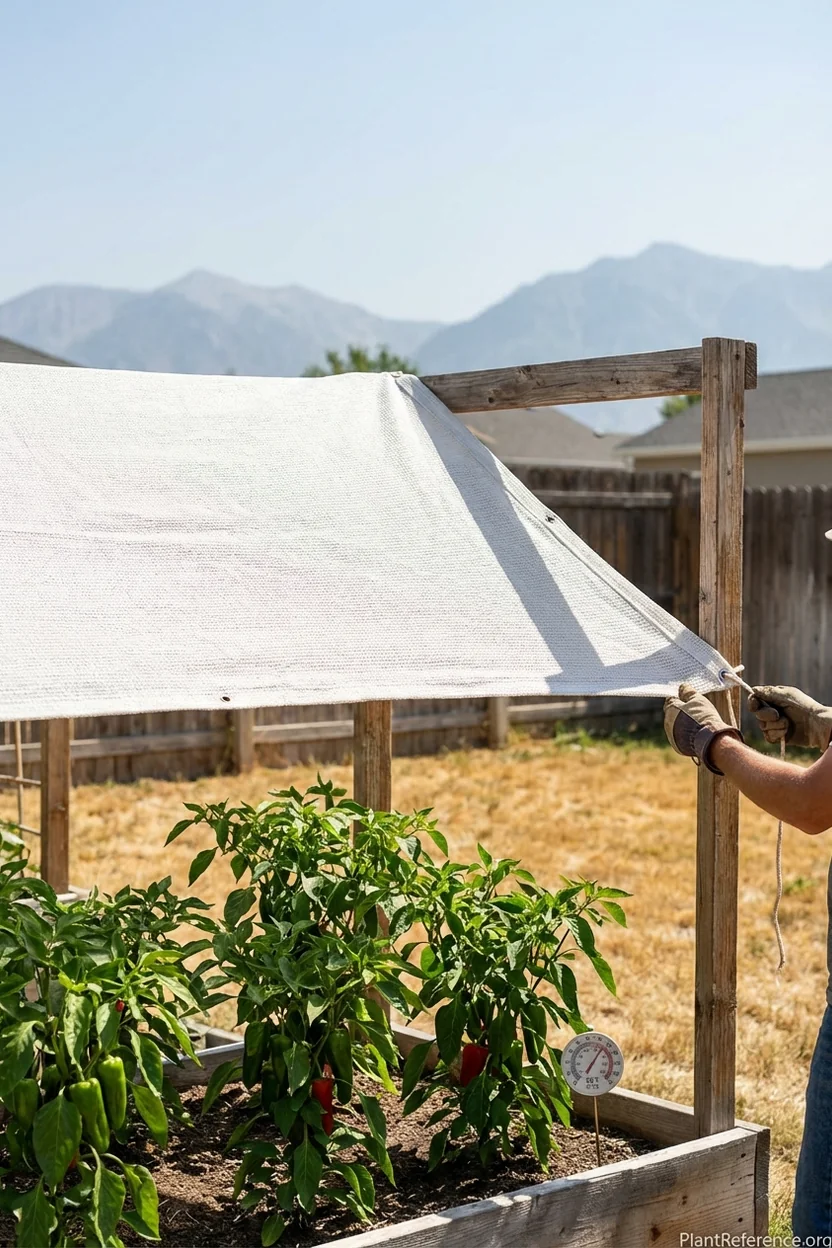
Install shade cloth (30-50%) during heat waves above 95°F
Increase watering frequency during extreme heat
Harvest frequently to keep plants producing
Provide wind protection during dry, hot wind events
Container Growing in Salt Lake City
Container growing offers significant advantages in Salt Lake City's challenging climate. Containers warm faster in spring, provide better drainage than our clay soils, and can be moved for weather protection.
Container specifications:
Use containers at least 5 gallons for standard varieties, 7+ gallons for large types
Choose dark containers to absorb heat and warm soil
Ensure adequate drainage holes—our dry air increases container drainage needs
Position containers for maximum morning sun exposure
Container care adjustments:
Water more frequently than ground-planted peppers
Fertilize more often as nutrients leach out faster
Provide wind protection—containers dry out rapidly in our wind
Move containers against walls or into garages during extreme weather
Troubleshooting Salt Lake City-Specific Problems
Salt Lake City's unique growing conditions create specific challenges that pepper growers must understand and manage. Here's how to identify and solve the most common problems in our Zone 7a climate.
Problem: Slow Spring Growth and "Sulking"
Symptoms: Transplants sit dormant for weeks, leaves may purple, minimal new growth despite warm air temperatures.
Cause: Soil temperatures below 60°F combined with Salt Lake's temperature swings shock pepper plants into dormancy.
Solution: Wait for soil to warm naturally or use black plastic mulch to raise soil temperatures. Don't transplant until nighttime lows consistently stay above 55°F for a week.
Prevention: Check soil temperature with a thermometer 2 inches deep. Install mulch 2-3 weeks before transplanting to pre-warm soil.
Problem: Sunscald on Fruit
Symptoms: White, papery patches on pepper fruit surfaces, especially on south and west-facing sides.
Cause: Salt Lake's intense UV radiation at 4,300 feet elevation burns exposed fruit surfaces.
Solution: Provide 30-50% shade cloth during the hottest part of summer (July-August). Ensure adequate foliage to shade developing fruit.
Prevention: Choose varieties with thick walls like 🌿Capsicum annuum 'California Wonder'. Avoid over-pruning plants that reduces natural fruit shading.
Problem: Blossom Drop During Heat Waves
Symptoms: Flowers form but drop off before setting fruit, especially during temperatures above 90°F.
Cause: Hot days combined with our typically cool nights (often 20-30 degree swings) stress the pollination process.
Solution: Install shade cloth during extreme heat, maintain consistent soil moisture, and avoid high-nitrogen fertilizers during bloom.
Prevention: Choose heat-tolerant varieties and provide afternoon shade during the hottest part of summer.
Problem: Irregular Watering Stress
Symptoms: Blossom end rot on fruit, leaf drop, stunted growth despite adequate rainfall or irrigation.
Cause: Salt Lake's clay soil alternates between waterlogged and bone dry, creating inconsistent moisture availability.
Solution: Improve soil drainage with compost and coarse amendments. Install drip irrigation for consistent moisture delivery.
Prevention: Apply 3-4 inches of organic mulch to moderate soil moisture swings. Check soil moisture regularly rather than relying on surface appearance.
Problem: Late Season Cold Damage
Symptoms: Black, mushy foliage and fruit after early fall cold snaps, premature end to harvest season.
Cause: Salt Lake's elevation creates sudden temperature drops that can occur in late September or early October.
Solution: Harvest all mature fruit when nighttime temperatures drop below 45°F. Cover plants with row covers during cold snaps.
Prevention: Monitor long-range weather forecasts starting in mid-September. Have protection materials ready for unexpected cold.
Harvest & Storage
Salt Lake City's 173-day growing season provides an excellent harvest window from July through October. Proper timing and storage techniques maximize your pepper crop's value and extend the harvest season.
Optimal Harvest Timing
Most pepper varieties begin producing in mid-July when planted on schedule. 🌿Capsicum annuum 'Shishito' and early jalapeños start first, followed by bells and poblanos in early August.
Harvest indicators by variety:
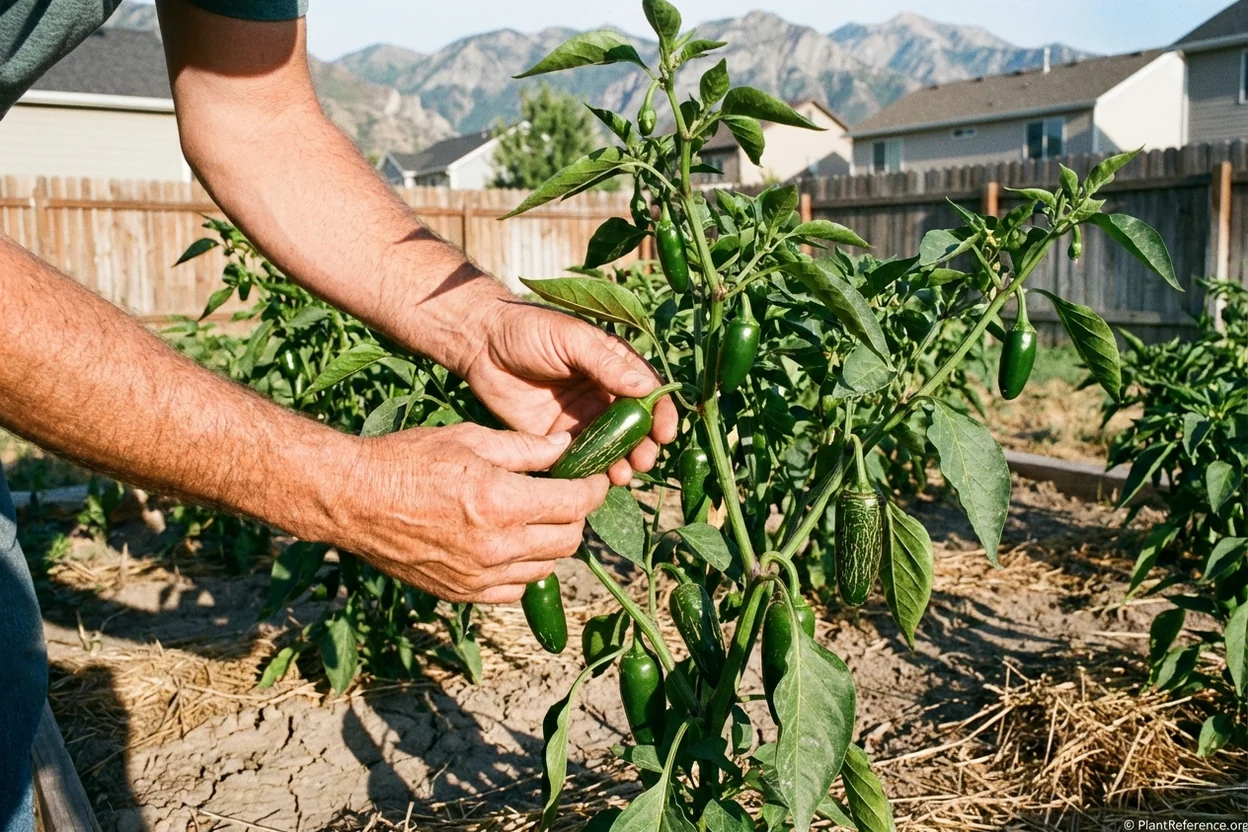
🌿Capsicum annuum 'Jalapeño': Harvest green at 3-4 inches long, or let ripen to red for sweetness
🌿Capsicum annuum 'California Wonder': Pick at full size while green, or wait for color change
🌿Capsicum annuum 'Poblano': Harvest dark green for fresh use, or dry to red for ancho peppers
🌿Capsicum annuum 'Shishito': Pick small and green, before they turn red and develop heat
Regular harvesting encourages continued production. Check plants every 2-3 days during peak season (August-September) to catch peppers at optimal ripeness.
Storage Methods
Salt Lake's dry climate offers excellent conditions for drying peppers, while proper storage extends fresh pepper usage through winter.
Fresh storage: Green peppers store 1-2 weeks in the refrigerator. Ripe colored peppers should be used within a week for best quality.
Freezing: Wash, remove stems and seeds, then freeze in portions. Frozen peppers work well for cooking but lose crisp texture.
Drying: Salt Lake's low humidity makes air-drying simple. String thin-walled varieties like 🌿Capsicum annuum 'Cayenne' and hang in a warm, dry location with good air circulation.
Extending the Season
Fall protection: Row covers can extend harvest 2-3 weeks beyond the first light frost. Remove covers during warm days to prevent overheating.
Green fruit ripening: Harvest all green peppers before hard frost. Store in a warm location (70-75°F) and many will ripen to full color indoors.
Seed saving: Allow some peppers to fully ripen on the plant for seed collection. Salt Lake's dry climate provides excellent conditions for seed drying and storage.
Frequently Asked Questions
Reading about plants and recognising them are different skills. These three build the second.
- Daily PlantIdentify the day’s mystery plant from a close-up photograph.
- Keyed OutWork a dichotomous key, lead by lead, to name a hidden specimen.
- Name That PlantName a specimen from botanical clues dealt hardest first.
Free to play, no account needed
Dot grew up on a small farm in rural Virginia and has maintained a vegetable garden for decades. After retiring from teaching elementary school, she became a Master Gardener volunteer and spends her time mentoring new gardeners at community garden plots in Richmond. She's especially knowledgeable about heirloom varieties, seed saving, and traditional growing methods passed down from her grandmother. Dot's no-nonsense advice comes from extensive trial and error—she's seen every tomato disease, pest problem, and weather disaster imaginable. Her biggest pet peeve is gardeners who overcomplicate simple tasks. "Plants want to grow," she often says. "Your job is to not get in their way."