When to Plant Peppers in Pittsburgh: Complete Guide + Best Varieties for Zone 6b
Pets & Toxicity
Recorded toxicity for plants linked in this guide. An unknown status is not a safety assessment.
Toxic to pets: Poblano pepperDetailsHide
Capsicum annuum 'California Wonder' — Toxicity
Non-toxicView Capsicum annuum 'California Wonder' plant profileCapsicum chinense 'Habanero' — Toxicity: Not assessed
Fruit contains capsaicin at 100,000–350,000 Scoville Heat Units — strong enough to cause severe burning on skin, eyes, and mucous membranes through simple contact with cut fruit or the hand that held it. Nitrile gloves are used during handling and food preparation; face and eye contact is avoided. The fruit is irritating rather than toxic in the usual sense, but the heat level can cause significant discomfort and real injury if mishandled. The plant is kept out of reach of children and pets.View Capsicum chinense 'Habanero' plant profileCapsicum annuum 'Jalapeño' — Toxicity: Not assessed
Capsaicin in fruit causes burning sensations in mouth and on skin. Fruit and handling oils are irritating to eyes and mucous membranes but are not toxic in the usual sense. Gloves are used during harvesting and processing; hands are washed thoroughly before touching face. Small amounts are generally safe for pets but can cause digestive upset.View Capsicum annuum 'Jalapeño' plant profileCapsicum annuum 'Poblano' — Toxicity Warning
Toxic to petsView Capsicum annuum 'Poblano' plant profile
— Image © Plant Reference 2026
Planning your pepper garden in Pittsburgh? You're working with one of the best climates in Pennsylvania for growing peppers. With 178 frost-free days between April 24 and October 19, Pittsburgh's Zone 6b offers an excellent window for most pepper varieties to reach full maturity.
I've been growing peppers in western Pennsylvania for over three decades, and Pittsburgh's climate is nearly ideal for pepper production. The key is understanding that peppers need warm soil—not just warm air—to thrive. Let me walk you through everything you need to know for a successful pepper harvest.
Best Pepper Varieties for Pittsburgh's Climate
Pittsburgh's 178-day growing season gives you flexibility that many northern gardeners don't have. While Zone 4 gardeners struggle with short seasons, you can grow everything from quick-maturing sweet peppers to heat-loving habaneros.
The secret to success lies in matching varieties to your specific goals and experience level. I always tell new gardeners to start with reliable producers, then experiment with specialty varieties once they've mastered the basics.
Sweet Peppers for Pittsburgh
🌿Capsicum annuum 'California Wonder' remains my top recommendation for beginning Pittsburgh gardeners. This thick-walled bell pepper produces reliable yields of large, blocky fruits perfect for stuffing or fresh eating. The 75-day maturity means you'll have ripe red peppers by mid-August when planted on schedule.
🌿Capsicum annuum 'Sweet Banana' adapts beautifully to Pittsburgh's climate. The pale yellow fruits mature quickly—usually within 70 days—making this variety perfect if you're concerned about our occasionally early autumn frosts. The mild, sweet flavor makes these peppers excellent for pickling or fresh salads.
Capsicum annuum 'Italian Sweet' produces long, tapered peppers ideal for frying. These 6-inch fruits mature from green to red and handle Pittsburgh's humidity better than thick-walled bells.
Hot Peppers for Pittsburgh
🌿Capsicum annuum 'Jalapeño' thrives in our Zone 6b climate. The compact plants produce heavy yields of thick-walled pods perfect for salsa and pickling. I've found jalapeños actually develop better flavor here than in hotter climates—the moderate heat prevents the bitter edge you sometimes get in extreme temperatures.
🌿Capsicum annuum 'Cayenne' grows exceptionally well in Pittsburgh. The thin-walled pods dry easily in our late summer weather, giving you homegrown chili powder for winter cooking.
🌿Capsicum annuum 'Poblano' works well here, though the large fruits need strong staking. Plant these against a south-facing wall or fence for extra heat reflection.
🌿Capsicum chinense 'Habanero' requires special attention in Pittsburgh. While our 178-day season is long enough, habaneros need extra heat. I grow these in black containers and position them in the sunniest, most protected spot in the garden.
Variety | Days to Maturity | Best For | Notes for Pittsburgh |
|---|---|---|---|
75 days | Fresh eating, stuffing | Reliable producer in Zone 6b | |
70 days | Pickling, fresh eating | Excellent cool-weather tolerance | |
Capsicum annuum 'Italian Sweet' | 68 days | Frying, roasting | Handles humidity well |
72 days | Salsa, pickling | Develops excellent flavor here | |
80 days | Stuffing, drying | Needs staking and heat | |
75 days | Drying, spice | Dries well in late summer | |
65 days | Fresh eating, frying | Quick harvest before frost | |
95 days | Hot sauce | Needs extra heat and protection |
Specific Planting Dates for Pittsburgh
Pittsburgh's last frost typically occurs April 24, but don't let that fool you into rushing your transplants outside. Peppers need soil temperatures consistently above 60°F (15°C) to grow properly. Cold soil causes what we call "sulking"—the plants just sit there refusing to grow even when air temperatures are warm.
Indoor Seed Starting Schedule
February 25 - March 10: Start seeds indoors 8-10 weeks before transplanting. This timing ensures your seedlings are ready when soil conditions are right, without becoming rootbound in their pots.
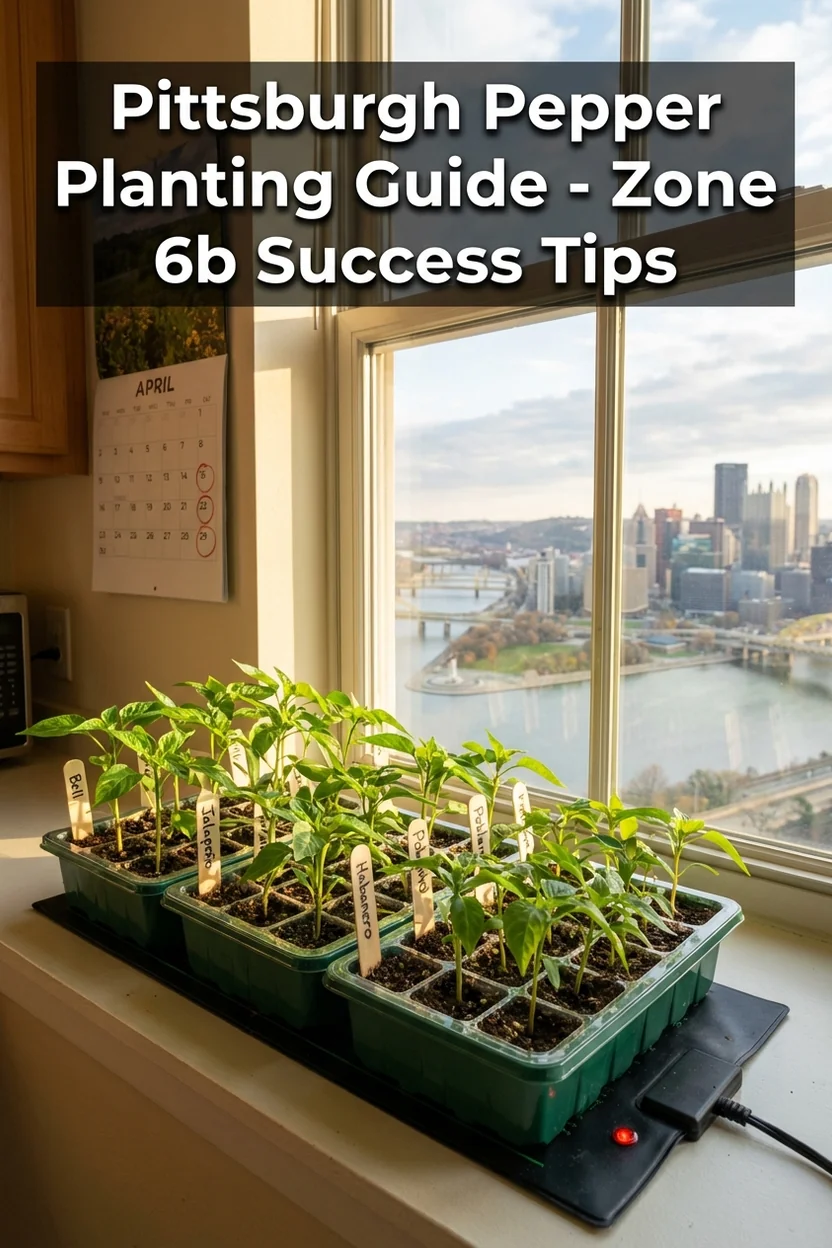
Use bottom heat to maintain soil temperature at 80-85°F (27-29°C). I use a basic heat mat under my seed trays—it makes the difference between germination in 7-10 days versus 3 weeks or more.
March 15 - April 1: Begin hardening off process. Start by placing transplants outside for 2-3 hours during the warmest part of the day, gradually increasing exposure over 10-14 days.
Outdoor Transplanting Schedule
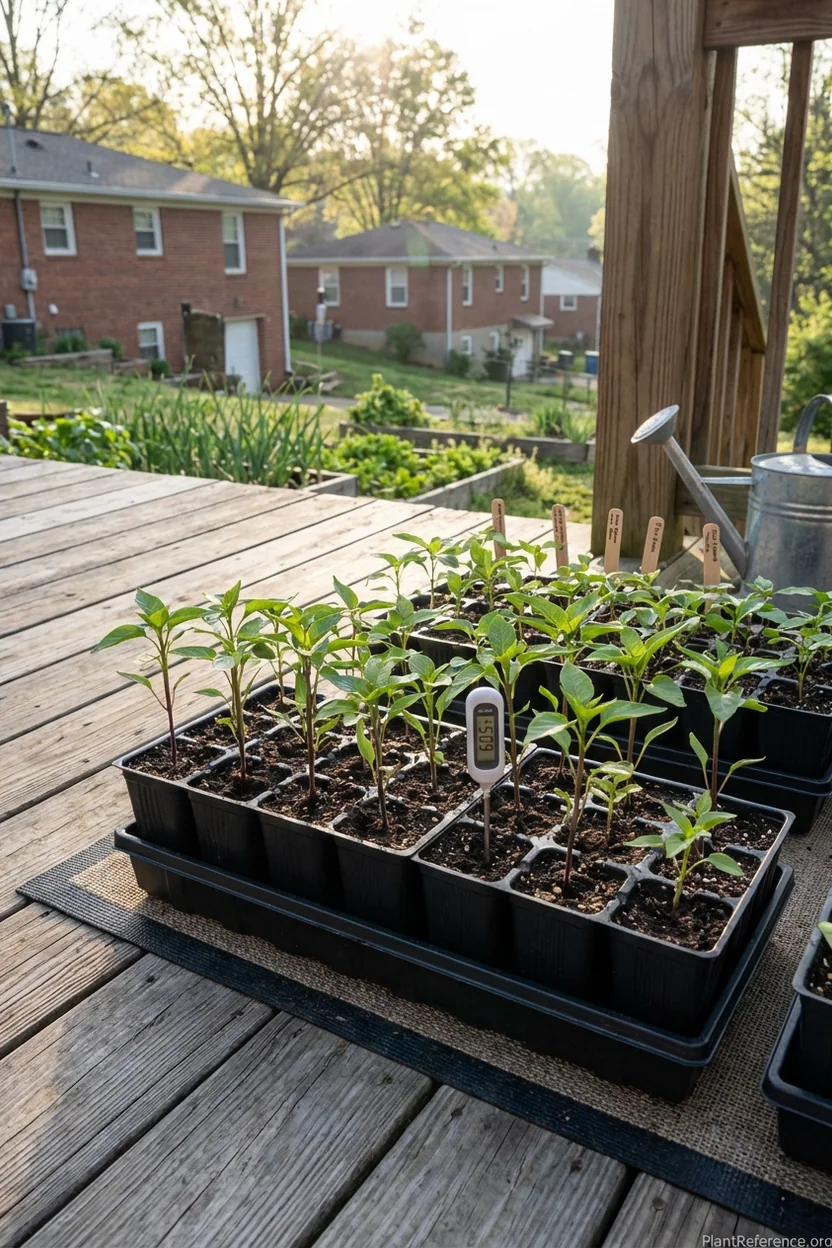
May 1 - May 15: Transplant outdoors when soil temperature reaches 60°F (15°C). Check soil temperature with a thermometer 2-3 inches deep in early morning—that's when it's coolest.
For extra insurance, I use black plastic mulch laid down two weeks before transplanting. This raises soil temperature by 5-10°F (3-6°C) and gives you that margin of safety peppers appreciate.
Late May Backup: If spring weather is unusually cool, wait until late May rather than risk setback. A strong transplant set out May 25 will outproduce a stressed plant set out May 5.
Direct Seeding (Not Recommended)
While some gardeners attempt direct seeding, I don't recommend it in Pittsburgh. Our soil doesn't warm reliably until mid-May, and even then, cool nights can slow germination dramatically. You'll get much better results starting indoors.
Complete Growing Guide for Pittsburgh
Success with peppers in Pittsburgh comes down to managing three factors: heat, moisture, and support. Get these right, and you'll have more peppers than you know what to do with.
Site Selection and Soil Preparation
Choose your sunniest location with at least 6-8 hours of direct sunlight. Peppers are heat-lovers, and Pittsburgh's partly cloudy summers mean every ray of sunshine counts.
Pittsburgh's clay-heavy soils need amendment for peppers. I work in 2-3 inches of compost or aged manure before planting. This improves drainage (peppers hate wet feet) and provides slow-release nutrition throughout the season.
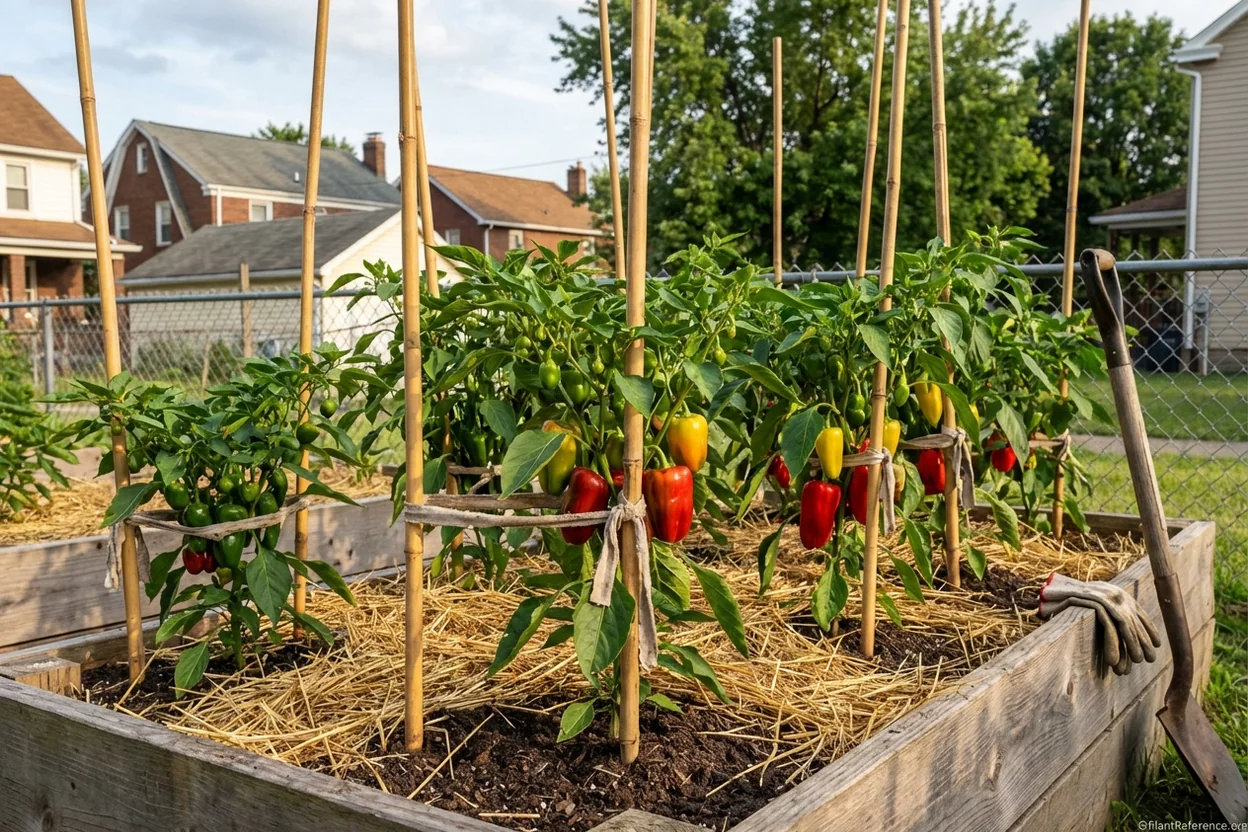
Raised beds work exceptionally well here. The improved drainage and faster soil warming give you a significant advantage, especially in our occasionally wet springs.
Spacing and Support
Plant peppers 18-24 inches apart in rows 30 inches apart. This spacing provides good air circulation—important in our humid summers—while maximizing production.
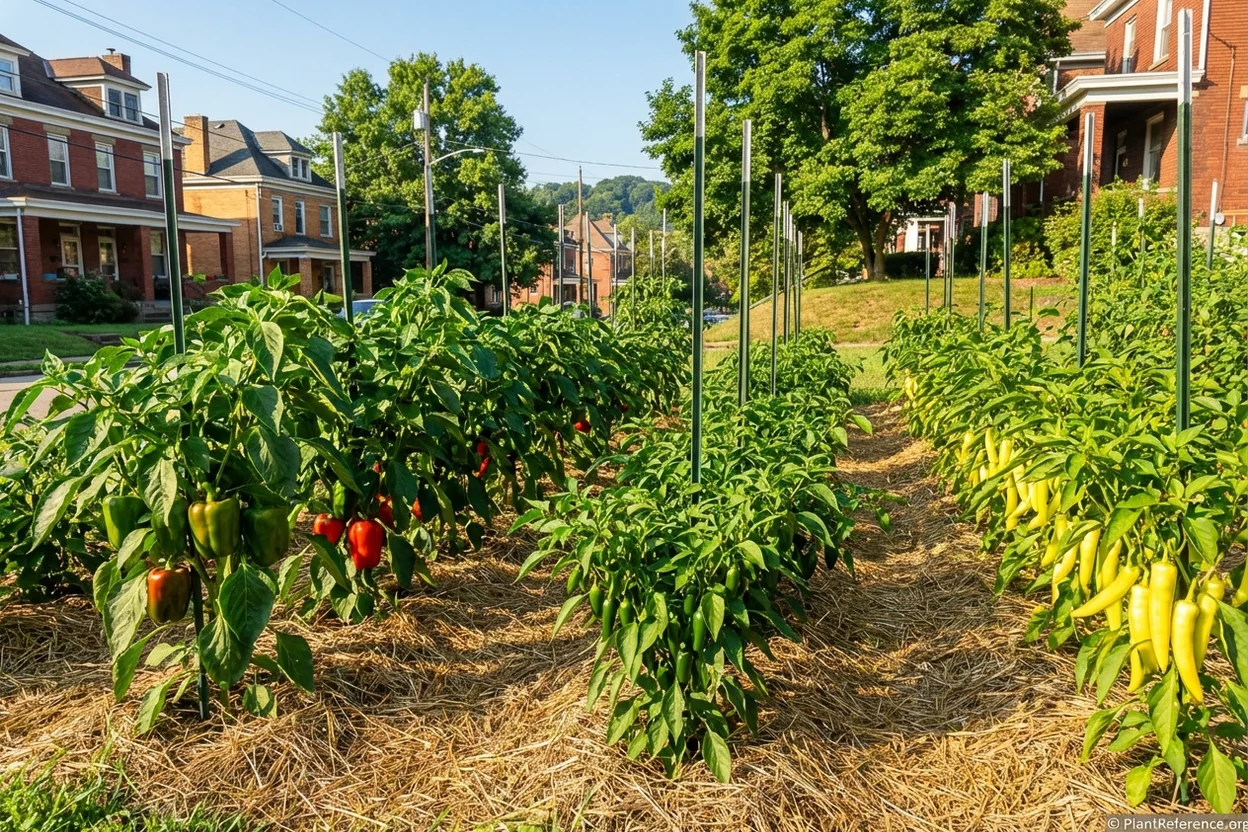
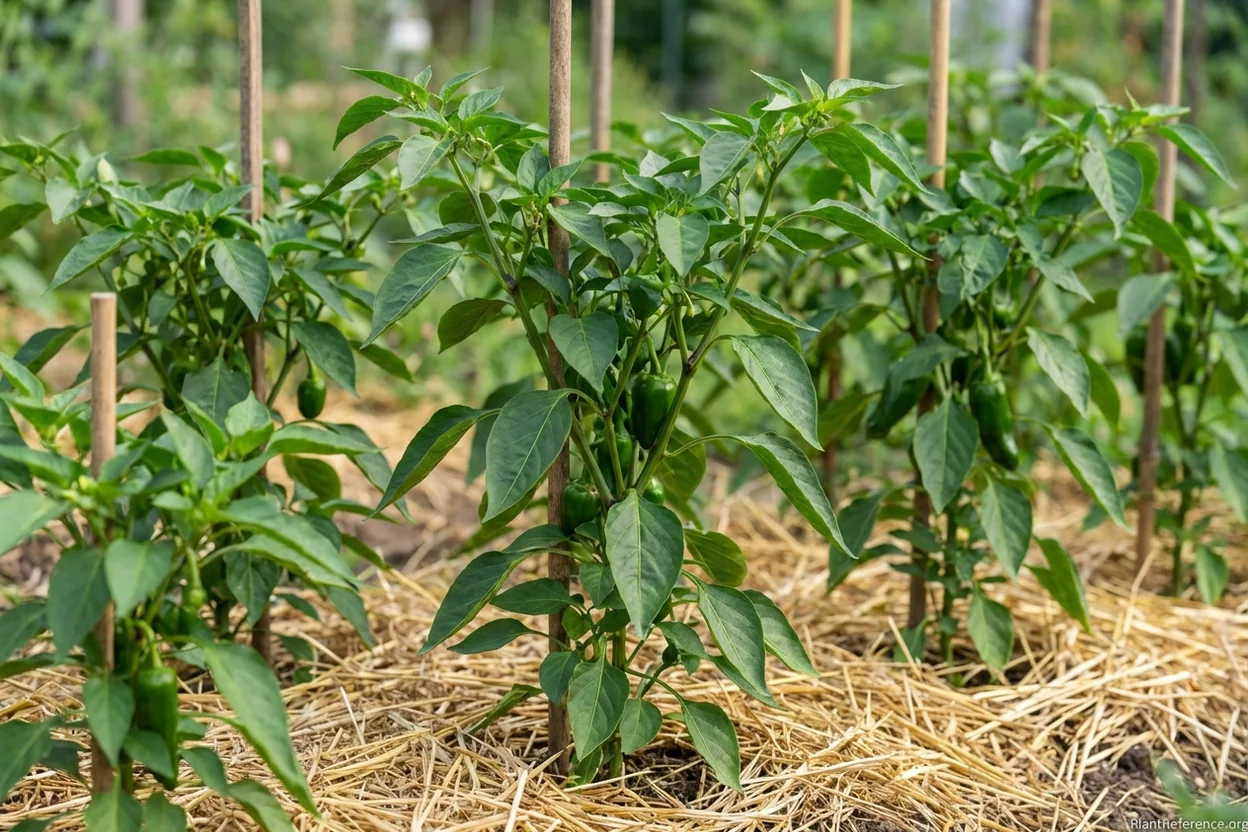
Every pepper plant needs support. Even compact varieties like jalapeños produce heavy fruit loads that can snap stems in Pittsburgh's summer thunderstorms. I use 4-foot bamboo stakes driven 12 inches into the ground, tying plants with soft cloth strips as they grow.
Watering Strategy
Pittsburgh receives about 37 inches of rainfall annually, but it's unevenly distributed. July and August often bring dry spells that stress pepper plants just when they're setting fruit.
Water deeply once or twice weekly rather than light daily watering. This encourages deep root development that helps plants weather dry periods. Apply 1-2 inches per week, including rainfall.
Mulch heavily with 3-4 inches of straw or shredded leaves once soil warms in June. This conserves moisture, suppresses weeds, and keeps soil temperatures stable during our variable summer weather.
Fertilizing Schedule
Peppers are moderate feeders, but they need consistent nutrition throughout their long growing season.
At Planting: Work 2-3 inches of compost into planting area. This provides baseline nutrition and improves soil structure.
4 Weeks After Transplanting: Side-dress with balanced fertilizer (10-10-10) at 2 tablespoons per plant. This supports initial vegetative growth without pushing too much foliage.
When First Fruits Set: Switch to higher phosphorus fertilizer (5-10-10) to support fruit development. Apply every 3-4 weeks through August.
Mid-August: Final feeding with lower nitrogen blend to help existing fruits ripen before frost.
Season Extension Techniques
Pittsburgh's average first frost date is October 19, but frost can arrive earlier in outlying areas. Watch weather forecasts carefully starting in late September.
Row covers or individual plant protection can extend harvest by 2-3 weeks. Even a light frost protection system can mean the difference between green tomatoes and fully ripe red peppers for winter storage.
For valuable plants like habaneros, consider container growing. A pepper in a 5-7 gallon container can be moved to protection during cold snaps, then returned to full sun.
Troubleshooting Pittsburgh-Specific Problems
Every region has its challenges, and Pittsburgh gardeners face several specific issues with pepper production.
Blossom End Rot in Clay Soils
Pittsburgh's heavy clay soils can create calcium availability problems, leading to blossom end rot—dark, sunken spots on the bottom of fruits.
This isn't usually a soil deficiency but a water uptake problem. Inconsistent watering prevents calcium from moving into developing fruits. Maintain consistent soil moisture through mulching and regular watering schedules.
Fungal Diseases from Humidity
Our humid summers create perfect conditions for fungal diseases like bacterial spot and anthracnose.
Prevent these with proper plant spacing (18-24 inches), staking to improve air circulation, and avoid watering foliage. Water at soil level using soaker hoses or drip irrigation.
Cool Spring Setbacks
Late cool spells—common in Pittsburgh through mid-May—can stunt pepper growth severely.
Use row covers, Wall O' Water, or individual plant protectors during cool snaps. Even a few nights below 50°F (10°C) can set plants back weeks.
Pest Management
Cutworms: These soil-dwelling larvae cut stems at ground level. Protect transplants with cardboard collars around stems.
Aphids: Monitor undersides of leaves starting in June. These small insects vector mosaic viruses. Control with insecticidal soap or encourage beneficial insects with diverse plantings.
Hornworms: Large green caterpillars that can defoliate plants quickly. Hand-pick when found, or use Bt (Bacillus thuringiensis) spray for organic control.
Problem | Symptoms | Likely Cause | Quick Fix |
|---|---|---|---|
Blossom End Rot | Dark sunken spots on fruit bottom | Inconsistent calcium uptake from irregular watering | Maintain consistent soil moisture with mulch; water deeply 1-2x weekly |
Bacterial Spot | Small dark lesions on leaves and fruit | High humidity and wet foliage | Improve air circulation; water at soil level only; remove infected leaves |
Anthracnose | Circular brown spots with concentric rings | Fungal disease from humid summers | Space plants 18-24 inches apart; avoid overhead watering; apply copper fungicide if severe |
Aphid Infestation | Curled leaves; sticky residue; stunted growth | Insects vectoring viruses | Spray insecticidal soap; encourage beneficial insects; remove heavily infested leaves |
Cutworm Damage | Seedlings cut at soil level | Soil-dwelling larvae feeding at night | Use cardboard collars around transplant stems; cultivate soil before planting |
Poor Fruit Set | Excessive flowers but few developing fruits | Cool nights or inconsistent watering | Ensure nighttime temps stay above 55°F; mulch to stabilize soil moisture |
Sunscald on Fruit | White or yellow patches on exposed peppers | Intense sun on unprotected fruit | Improve canopy coverage; avoid excessive pruning; provide afternoon shade if temps exceed 95°F |
Harvest & Storage
Harvest timing significantly affects both flavor and storage life of peppers.
When to Harvest
Sweet Peppers: Harvest when fruits reach full size but are still green for best storage life. Allow some to ripen to red for fresh eating—fully ripe peppers have 2-3 times the vitamin C of green peppers.
Hot Peppers: Most develop full heat when green, but flavor complexity improves with ripening. Jalapeños reach peak flavor when they develop brown "corking" on the skin.
Harvesting Technique
Cut—don't pull—peppers from plants using sharp scissors or pruning shears. Pulling can damage branches and reduce future production.
Storage Methods
Fresh Storage: Green peppers keep 2-3 weeks in refrigerator crisper drawer. Ripe peppers last 7-10 days.
Freezing: Wash, seed, and slice peppers before freezing. They lose crispness but retain flavor for cooked dishes.
Drying: Thin-walled varieties like cayenne and shishito dry well. Thread on strings and hang in dry, well-ventilated area.
End-of-Season: Before first hard frost, harvest all peppers regardless of maturity. Green peppers can be pickled, frozen, or used in cooked dishes.
Frequently Asked Questions
Reading about plants and recognising them are different skills. These three build the second.
- Daily PlantIdentify the day’s mystery plant from a close-up photograph.
- Keyed OutWork a dichotomous key, lead by lead, to name a hidden specimen.
- Name That PlantName a specimen from botanical clues dealt hardest first.
Free to play, no account needed
Linda's been growing tomatoes in containers on her suburban Pittsburgh balcony—ever since her kids grew up and she finally had time for hobbies again. She's a medical billing specialist by day and a tomato enthusiast by night and weekend. Linda started documenting her container growing experiments on a simple blog and discovered other renters and condo dwellers were desperate for practical advice. She tests different varieties every season, tracking yields, disease resistance, and flavor in a detailed spreadsheet. Linda's approach is practical and budget-conscious—she saves seeds, reuses containers, and makes her own fertilizer from kitchen scraps. Her specialty is maximizing production in small spaces, and she's perfected the art of growing full-size tomatoes in 5-gallon buckets. She's a Pennsylvania Master Gardener and teaches container growing workshops at her local library.